Outdated Drivers Are Slowing You Down
Recommended Free Tools
Outbyte Driver Updater · freeOne free scan finds every outdated or missing driver and matches the right update for your exact hardware.
Scan My Drivers Free →ThatPainter is reader-supported. When you buy through links on our site, we may earn an affiliate commission. Learn More
Suoniamo la Chitarra is a beginner guitar method by guitarist and composer Roberto Fabbri, published by Carisch. It is designed around short, recognizable melodies: students start with a small set of notes, add notes gradually, and revisit earlier material while playing along with backing tracks. The author’s current publication page says the method contains more than 70 familiar pieces, including “Harry Potter,” “Pirates of the Caribbean” and “The Pink Panther.” That figure and the method’s effectiveness are the author’s descriptions, not the results of an independently published study.
What Suoniamo la Chitarra teaches
The method presents guitar reading and playing through a progressive melody-based sequence. Rather than introducing the entire note range at once, it begins with a limited group of notes and expands that group as the learner advances. Earlier notes and pieces return as new material is added, giving practice a built-in review cycle.


As an Amazon Associate I earn from qualifying purchases.
Familiar tunes are central to the approach. The author’s publication page names more than 70 pieces and highlights “Harry Potter,” “Pirates of the Caribbean” and “The Pink Panther.” An earlier dedicated method page also mentions introductory examples such as “Hot Cross Buns” and “Old MacDonald.” The exact contents can vary by edition, so buyers should check the particular table of contents where available.
Backing tracks and timing
The stated purpose of the accompaniment is not merely entertainment. The author says the tracks accompany the student’s performance and help develop respect for note values and timing. Depending on the edition, accompaniment may be supplied on a CD or through online access. Do not assume that every copy includes a CD or that online resources will remain available indefinitely.
#1 Best Overall

- For Beginning Acoustic or Electric Guitar
- Based on Years of Teaching All Age Students
- Features Over 80 Songs to Play
- 48 Pages
Video support
Roberto Fabbri’s official page points to YouTube video lessons for the method. These videos can make demonstrations easier to follow, but access and availability are controlled by the online service and may change independently of the printed book.
Who is it for?
Carisch and the author position the book for children and young learners, including pupils in lower-secondary music-school settings. One retailer lists a reading age from six, while describing it as an easy method for young guitarists. That catalog information is not a universal readiness test: hand size, coordination, attention span, musical interest, teaching support and the notation/audio format of the chosen edition all matter.
Rank #2
Likely good fit
- A child starting guitar and needing a clearly staged first repertoire.
- A learner motivated by recognizable film, television or traditional melodies.
- A student working with a teacher who can check posture, picking or right-hand technique while the book supplies sequence and songs.
- A family that can confirm whether its edition uses a CD or online accompaniment.
Potentially less suitable
- A player who already reads comfortably and needs advanced harmony, improvisation or chord-based accompaniment.
- A learner expected to work entirely without adult or teacher guidance, especially if technical habits still need correction.
- A student seeking a method centered from the first page on two-part or more fully polyphonic guitar writing.
How to use the book effectively
- Identify the edition. Match the title, Roberto Fabbri’s name, Carisch imprint and the ISBN or EAN on the seller’s page. This matters because physical editions differ in date, page count and accompaniment format.
- Set up the instrument and reading position. A teacher or experienced adult should check sitting position, guitar support, left-hand relaxation and the hand’s starting technique before repetition makes poor habits automatic.
- Learn the small note group first. Read the notes aloud, locate them on the assigned strings and play slowly enough to keep rhythm steady.
- Add the accompaniment only after the notes are secure. Use the track to practice pulse and note duration, not to hide pauses or incorrect pitches.
- Revisit earlier pieces. The method’s progression deliberately returns to known material. Use those pieces to measure smoother reading and steadier timing rather than treating them as finished forever.
- Use the videos as demonstrations. Compare the model performance with the printed notation, but retain the book’s page sequence as the record of what has been learned.
What the editions tell you
Retailer records show that “Suoniamo la Chitarra” is not one perfectly uniform bibliographic object. Libreria Universitaria lists a Carisch edition with EAN 9788882917043 (ISBN 8882917045), 128 pages and a publication date of 1 October 2015; that listing is currently marked out of catalog and not orderable. IBS lists a 2018 Carisch edition with EAN 9788850730551 and 140 pages, and reported its own offer as available in three working days when that record was crawled.
Those are separate retailer records. One seller’s stock or catalog status does not establish availability everywhere, and the dates, pagination and identifiers should not be merged into a single edition claim. Check the live seller record on the day you buy.
| Retailer record | Identifier | Year/date | Extent | Availability note |
|---|---|---|---|---|
| Libreria Universitaria | EAN 9788882917043 / ISBN 8882917045 | 1 October 2015 | 128 pages | Marked out of catalog and not orderable on the cited record |
| IBS | EAN 9788850730551 | 2018 | 140 pages | Record reported an offer available in three working days when crawled |
Is it a complete first-year guitar course?
The documented material supports calling it a beginner-oriented method, not promising a fixed timetable or a guaranteed learning outcome. The sources do not provide an independent controlled comparison with other methods, a named outcome study or a universal point at which every student should finish. A teacher may supplement the book with technique, rhythm, ear training, chords or ensemble work according to the learner’s needs.
What comes after volume 1?
The official catalogue describes volume 2 as a continuation that develops the polyphonic side of guitar playing. It starts from open strings and free stroke, adds traditional melodies and classical teaching repertoire associated with Carulli, Sor, Giuliani and Aguado, and also includes newer popular selections.
The Tool Desk
Outbyte PC Repair FREERepair Windows errors before they cause bigger problemsFix Now →Outbyte Driver Updater FREEFix the driver behind crashes, sound loss and screen glitchesFind Drivers →Rank #4
That description makes volume 2 a plausible next resource for a student ready for more independent parts and classical-style repertoire, but the catalogue does not prescribe a single transition point. A teacher should decide whether the learner can maintain an even free stroke, read the required parts and manage the greater coordination demand.
How to decide before buying
- Confirm the learner’s starting point: complete beginner, returning player or already reading music.
- Preview the notation: make sure the print size, staff layout and note presentation suit the child.
- Verify accompaniment: establish whether the copy has a CD, online tracks or another arrangement.
- Check the identifier: use the ISBN/EAN rather than relying on a generic product title.
- Plan supervision: decide who will correct technique and keep practice short and regular.
- Consider repertoire motivation: recognizable songs can encourage practice, but the child’s actual musical interests remain decisive.
Bottom line for parents and teachers
Suoniamo la Chitarra is best understood as a song-led entry method: gradual note expansion, repeated review, familiar melodies and accompaniment aimed at developing timing. It is a sensible candidate for a young first-time guitarist when an adult or teacher can guide technique and when the buyer verifies the edition’s audio format. Treat the “more than 70 pieces” count, the author’s longevity claims and the video availability as statements from the official publication material, not independent guarantees of results.
Best Value
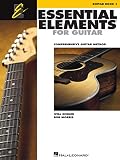
- Features 64 Songs In This Comprehensive Method For Bands And Strings
- Features Cross-Curricular Activities, Songs And More
- Includes Theory, Chords, Notes And More
- Sure To Become A Staple In Guitar Teacher Instruction
- 96 Pages
Frequently Asked Questions
Is Suoniamo la Chitarra suitable for a child who has never played guitar?
It is presented as a beginner method for children and young learners, but readiness depends on coordination, interest, supervision and the edition’s format. A teacher or adult should still guide basic technique.
Does every copy include a CD?
No. The author describes editions with either a CD or online backing-track access. Verify the specific ISBN/EAN and product description before purchasing.
Do these 3 things before closing this tab:
1Clear out junk files and repair common Windows errors2Scan for outdated or missing drivers - takes under a minute3Repair Windows errors before they cause bigger problemsShould a student start volume 2 after finishing volume 1?
Volume 2 is documented as a more polyphonic continuation, but the catalogue does not set a universal handoff point. A teacher should judge the student’s reading, free-stroke control and coordination.
Quick Recap

Product prices and availability are accurate as of the date/time indicated and are subject to change. Any price and availability information displayed on Amazon at the time of purchase will apply.




