Recommended Free Tools
Windows Errors? Fix Them Before They Spread
Free scan · no reinstall
Crashes, No Sound, or Screen Glitches?
Free scan · under a minute
PC Slower Than It Used to Be?
Free scan · Windows 10 & 11
ThatPainter is reader-supported. When you buy through links on our site, we may earn an affiliate commission. Learn More
For most homes, start with flat or matte paint on ceilings, matte or eggshell on general-purpose walls, and satin or semi-gloss on trim. Then adjust for traffic, moisture, cleaning, lighting, and the condition of the surface. A sheen label is only a starting point: the paint’s formulation and product line also determine durability and cleanability.
As an Amazon Associate I earn from qualifying purchases.
What’s actually slowing this PC down?
Pick the symptom - the matching free tool is one click away.
Quick finish guide by surface
The table below gives a practical starting point rather than an inflexible rule. Manufacturer recommendations vary by product, and the same sheen name can look or perform differently from one line to another.
| Surface or location | Starting finish | Why it usually works | When to change it |
|---|---|---|---|
| Most ceilings | Flat or matte | Low reflection helps disguise minor texture, patches, and unevenness. | Use a washable ceiling product or a different sheen only when the room has unusual cleaning or moisture demands. |
| Living rooms, dining rooms, bedrooms | Matte or eggshell | Balances a soft appearance with more practical wipeability than a dead-flat coating. | Choose satin for heavy traffic, frequent wiping, or greater moisture exposure. |
| Hallways, foyers, playrooms | Eggshell or satin | These areas commonly receive fingerprints, scuffs, and repeated cleaning. | Use matte when hiding wall flaws is more important and the product specifically supports the intended cleaning level. |
| Kitchens and laundry rooms | Eggshell or satin | Moderate sheen offers a balance of reflection and cleanability. | Move toward satin when splashes and scrubbing are routine; follow the selected product’s moisture guidance. |
| Bathroom walls | Satin; sometimes eggshell | Satin is often selected for moisture exposure and easier cleaning. | Ventilation, substrate condition, and the paint’s bathroom or mildew-resistance claims matter more than sheen alone. |
| Baseboards, casings, doors, window trim | Satin or semi-gloss | Reflective surfaces make trim details stand out and are generally easier to wipe. | Choose satin to reduce glare or to make small dents less conspicuous; use a higher sheen only when the product and appearance justify it. |
BEHR describes flat as “a low-sheen paint with a non-reflective finish that touches up well and hides minor surface imperfections” in its interior sheen guidance. That describes the optical advantage of a low sheen, not a promise that every flat product has the same washability.
#1 Best Overall
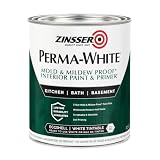
- Self-Priming formula - requires no sanding
- Mold & Mildew-Proof paint film - guaranteed for 5 years
- Resists dirt and moisture on film coating
- Finish is washable and scrubbable with soap and water
- Product contains a mildewcide to prevent the growth of mold and mildew on the paint film only
What a paint finish actually changes
Light reflection and appearance
Sheen is the amount of light a dried film reflects. Flat and matte surfaces scatter light, producing a quiet appearance with little glare. Eggshell and satin return more light, so colors can appear slightly richer and architectural details become more noticeable. Semi-gloss and gloss create stronger highlights and a sharper, more polished look.
Reflection changes with lighting. A satin wall beside a bright window can look considerably more reflective than the same paint in a dim hallway. Before committing to an entire room, view a sample on the actual wall at morning, afternoon, and artificial-light conditions.
Free tools Windows power users keep installed
One-click scans. No signup required.
Imperfections and application marks
Higher sheen can emphasize ridges, nail pops, roller lines, repaired drywall, and wavy trim because those irregularities catch highlights. Low-sheen paint is more forgiving, but it cannot conceal major damage or poor preparation. Skim-coat, sand, prime, or repair the substrate when defects are structural rather than merely cosmetic.
Cleaning and durability
In general, a harder, more reflective film is easier to wipe than a very low-sheen film. However, sheen does not guarantee performance. Binder chemistry, pigment volume, cure time, and the specific product’s scrub rating all matter. Some modern matte paints are formulated for substantial cleaning, while an inexpensive high-sheen coating may still scuff or burnish. Read the technical data and care instructions for the exact product.
Choosing the right finish for ceilings
Flat is the conventional ceiling choice because ceilings receive grazing light that can reveal every patch and drywall seam. A flat surface minimizes those highlights and keeps attention on the room rather than on the plane overhead. Matte can provide a similar appearance with a little more practical performance, depending on the line.
Rank #2

- Use for a variety of indoor and outdoor project surfaces including wood, metal, plaster, masonry or unglazed ceramic
- Water-based acrylic formula is low odor, resist chips and provides long-lasting protection
- Covers up to 120 sq ft and dries to touch in 30 minutes for quick project completion
- Semi-gloss finish minimizes surface imperfections, goes on smoothly and provides excellent hide
- Prior to application sand surfaces with 180/200 grit sandpaper, then wash with a degreaser, allow the surface to dry and apply paint
Use a ceiling-specific product when available. It may be engineered for reduced spatter, longer open time, or easier touch-up, but those benefits are product claims rather than consequences of the word “flat” alone. In a bathroom, a ceiling still needs adequate exhaust ventilation and a coating approved by the manufacturer for that environment; simply switching to semi-gloss does not solve condensation or a leaking substrate.
If the ceiling is exceptionally smooth and you want a slight visual lift, a low-sheen matte can work. Avoid jumping to satin or semi-gloss merely to make a ceiling washable: the added reflection can expose every uneven joint.
Picking a wall finish room by room
Living rooms, dining rooms, and bedrooms
Matte or eggshell is a sound default in lower-abuse rooms. Matte gives the most muted look and best hides minor surface variation. Eggshell adds a modest amount of reflection and is often easier to wipe after ordinary household contact. Bedrooms with children, pets, or furniture that rubs the walls may benefit from satin if the wall is well prepared.
Hallways, entryways, and stairwells
These high-contact zones collect hand marks and shoulder-level scuffs. Eggshell is a middle ground; satin is a stronger cleaning-oriented choice. Because long corridors receive raking light, inspect the wall for repairs before selecting satin. If the surface is imperfect, improve the preparation rather than relying on a darker or glossier color to disguise it.
Kitchens and laundry areas
Eggshell handles ordinary splashes while retaining a relatively soft appearance. Satin is reasonable where grease, detergent residue, or frequent wiping is expected. Keep the product’s cure and cleaning instructions: aggressive scrubbing before full cure can damage even a durable coating.
What’s actually slowing this PC down?
Pick the symptom - the matching free tool is one click away.
Rank #3

- Ready to use, pre-mixed door and trim paint offers a fresh new look on interior or exterior metal, wood and fiberglass
- Water-based paint formula emits less odor and withstands fading for a long lasting finish
- Dries to the touch in 45 minutes, up to 3X faster than traditional oil-based paints
- Durable, chip resistant coating provides ultimate protection with modern curb appeal
- Beautiful satin door paint is available in 6 pre-mix color options for the perfect look
Children’s rooms and playrooms
Choose the lowest sheen that still meets the room’s cleaning demands. A washable matte can preserve a calm appearance, while eggshell or satin provides a margin for fingerprints and art-material smears. Test the actual color and sheen together; stronger reflection can make saturated colors look more intense.
Bathroom paint sheen and moisture decisions
Satin is a common starting point for bathroom walls because it offers more cleanability and moisture tolerance than a very low sheen. BEHR identifies satin for moderate-to-high traffic or some moisture exposure in its sheen guidance. That is guidance, not a universal building standard.
Moisture problems are usually solved first with ventilation, sound plumbing, and a dry substrate. Run the exhaust fan during showers and afterward according to the fan manufacturer’s recommendations. Do not paint over active leaks, recurring condensation damage, peeling film, or mildew without correcting the cause and following the coating manufacturer’s preparation instructions.
Eggshell can be suitable in a well-ventilated powder room with limited shower steam, especially when you prefer less reflection. Semi-gloss may be selected for areas that need frequent wiping, but its glare can make wall patches obvious. Check whether the product is labeled for bathrooms or high-humidity interiors and whether it includes a specific mildew-resistant claim; sheen by itself does not establish either feature.
Outdated Drivers Are Slowing You Down
One free scan finds every outdated or missing driver and matches the right update for your exact hardware.Free scan · exact hardware matchPC Slower Than It Used to Be?
A free scan shows the junk files, broken settings and background clutter dragging Windows down - then fixes them in one click.Free scan · Windows 10 & 11Selecting trim, doors, and architectural details
Trim is often painted satin or semi-gloss so fingerprints can be removed and profiles stand out from the wall. Benjamin Moore notes that semi-gloss is often recommended for moldings and trim in its finish-selection guide. BEHR likewise lists satin and higher sheens for trim in its interior sheen usage guide.
Rank #4

- RUST-OLEUM PAINT WALL LINEN WHITE GA 380220
Satin is the quieter option: it provides some reflection without making every small dent sparkle. Semi-gloss is brighter and often easier to wipe, but it demands careful filling, sanding, and caulking. Use the same sheen on door and window casings when you want a unified look; a separate sheen can intentionally emphasize a mantel, built-in, or paneled door.
For previously painted trim, identify whether the existing coating is oil-based or glossy before recoating. Clean, degloss or sand as appropriate, repair damage, remove dust, and apply the primer specified for the substrate and new paint. A high-sheen finish will not hide failed adhesion underneath.
How to choose a finish systematically
- Identify the surface. Decide whether you are coating a ceiling, broad wall, baseboard, casing, door, or another detail. Different surfaces have different visual and cleaning priorities.
- Rate contact and cleaning. Note fingerprints, furniture rub, children’s activity, pets, food splashes, and how often the surface will be wiped. More contact generally supports moving from matte toward eggshell or satin.
- Assess moisture. Mark rooms with showers, steam, laundry equipment, or condensation. Correct water sources and verify that the product is intended for the environment before relying on a sheen choice.
- Inspect the substrate. Shine a work light across the surface to reveal dents, tape joints, texture, and roller marks. Choose a low sheen for a softer look, but repair significant defects before painting.
- Check the exact product data. Confirm the manufacturer’s recommended uses, scrub or washability information, primer requirements, recoat time, and cure instructions. Finish names are not standardized performance ratings.
- View a real sample. Paint a large test area or a sample board and move it around the room. Evaluate it beside trim, under daylight, and under the final light bulbs.
- Plan touch-ups. Keep the product name, color formula, sheen, batch information, and leftover paint. Even matching labels can touch up differently after aging, so blend repairs across a natural break when possible.
Preparation and application details that affect the final sheen
Uniform sheen starts with a uniform surface. Wash away grease and residue, allow the wall to dry, scrape loose coating, fill holes, sand repairs, and remove dust. Spot-prime porous filler and bare drywall so those areas do not absorb paint at a different rate. On broad repairs, prime the whole wall or use the system recommended by the paint maker to avoid flashing.
Keep a wet edge and maintain a consistent roller nap. Overworking partially dried paint can create shiny “hot spots,” especially in eggshell and satin. Apply the manufacturer’s stated number of coats, respect recoat times, and do not judge final color or sheen until the film has cured. Temperature, humidity, airflow, and substrate porosity all affect drying.
Use painter’s tape only on a sound, cured surface and remove it according to the tape maker’s instructions. For crisp trim lines, many painters cut in the trim first, allow it to dry, then protect it while rolling walls; others reverse the order. The sequence matters less than maintaining a clean edge and preventing wall paint from building a ridge on the trim.
Best Value

- WHAT'S IN THIS 10 PIECE PAINT KIT FOR WALLS: includes one plastic paint tray; one 9 inch roller frame; one 4 inch mini roller frame; two 9 inch microfiber roller covers (1/2 inch nap); two 4 inch microfiber roller covers (1/2 inch nap); one 1 inch flat brush; one 1.5 inch angle sash brush; one 2 inch angle sash brush
- Versatile Application: Perfect for any project, this set includes paint rollers 9 inch for large surfaces and smaller brushes for detail work
- All-in-One Kit: This paint brush set and paint tray combo ensures you have all the paint supplies needed for any home improvement task
- Professional Grade: Get a smooth, even finish with our high-quality paint roller set; ideal for applying interior paint gallon or smaller quantities
- Cost-Effective: This paint brush and roller set provides unbeatable value; includes paint pan and paint trays for easy cleanup and reuse
Common mistakes and how to correct them
Choosing by sheen name alone
“Eggshell,” “satin,” and “matte” are useful categories, not universal specifications. Compare products within the same line and read that line’s data. If two brands use the same name but provide different washability or gloss, the product documentation takes priority.
Using high sheen to hide moisture damage
Glossy paint cannot stop vapor, leaks, or mildew. Find and fix the moisture source, remove unsound material, let the substrate dry, and follow the coating system’s remediation instructions before repainting.
Applying satin over rough walls without preparation
Reflective highlights will make ridges and patches more visible. Sand, skim, prime, and use consistent application technique, or select a lower sheen after considering the room’s cleaning requirements.
Cleaning too soon
A coating can feel dry while still curing. Follow the product’s stated cure period and cleaning method. Abrasive pads, harsh chemicals, or repeated scrubbing can burnish or remove the film.
Expecting every finish to touch up invisibly
Touch-up visibility depends on age, batch, porosity, application method, and lighting. Store leftover paint sealed and labeled, then test a small area. For larger repairs, repaint from corner to corner or across a natural break.
Using manufacturer guidance without losing the room’s design intent
Manufacturer charts are valuable because they connect sheen categories to intended uses. Sherwin-Williams explains the appearance and practical trade-offs in its paint-sheen guide; Benjamin Moore provides room and trim examples in its finish guide. Use those charts alongside the exact label and technical sheet for the product you bought.
The best finish is the one that meets the room’s maintenance demands without creating unwanted glare or exposing defects. A flat ceiling, low-to-medium-sheen wall, and satin or semi-gloss trim form a dependable baseline; surface condition, moisture control, lighting, and product formulation determine the final adjustment.
Quick Recap

Product prices and availability are accurate as of the date/time indicated and are subject to change. Any price and availability information displayed on Amazon at the time of purchase will apply.

