Outdated Drivers Are Slowing You Down
Do these 3 things before closing this tab:
1Fix the driver behind crashes, sound loss and screen glitches2Repair Windows errors before they cause bigger problems3Scan for outdated or missing drivers - takes under a minuteOne free scan finds every outdated or missing driver and matches the right update for your exact hardware.Free scan · exact hardware match
Windows Errors? Fix Them Before They Spread
Repair common Windows errors and clear accumulated junk for a smoother, more stable PC - no reinstall needed.Free scan · no reinstall
ThatPainter is reader-supported. When you buy through links on our site, we may earn an affiliate commission. Learn More
In art, scale is the size of something in relation to a reference: another object, the surrounding space, a familiar human body, or the thing’s actual-world size. Artists use scale to suggest depth, show importance, and shape whether a work feels monumental, intimate, or dramatic. The key question is: compared with what?
What does scale mean in art?
Scale describes a size relationship. A figure might be large compared with the other figures in a painting, small within a landscape, or much larger than a person would be in real life. In a sculpture or installation, its relationship to the viewer and the room may matter as much as its measured dimensions.
As an Amazon Associate I earn from qualifying purchases.
SACE’s visual arts teaching notes define scale in relation to another object or an environment, and also compare an object’s size in an artwork with its actual size. In art history, the term may also describe relationships between parts of an image and the image as a whole. Because usage can vary, state the reference you mean when discussing a work. SACE teaching notes and Khan Academy’s art-history guide both discuss these relationships.
How is scale different from proportion?
Proportion concerns how parts relate to one another or to a whole; scale concerns size in relation to a chosen reference. The ideas are connected, and some teaching contexts use “scale” more broadly, so the comparison itself is often the clearest way to explain what you see.
#1 Best Overall

- 12" triangular architect scale designed to facilitate the drafting and measuring of architectural drawings, such as floor plans, blue Prints, and orthographic projections
- Triangular ruler features 3 sides with 6 different scales, and made from high Impact aluminum, build to last
- Laser etched scales never fading. Architect ruler with enduring laser cut imperial prints for accuracy. They will not wipe or scratch off ever
- Professional grade for accuracy color coded triangular scale for easy and quick selection of the desired scale
- Standard imperial measurements: 1-1/2, 1, 3/4, 3/8, 3/16, 3/32, 1/2, 1/4, 1/8, 3, 16
- Head compared with body: this is a question of proportion within a figure.
- Figure compared with another figure, the frame, a person, or the surrounding space: this is a question of scale.
For example, a statue may have realistic proportions but be larger than life in scale. A painted figure could instead have an unusually large head relative to its body, changing its proportions without necessarily changing its scale relative to the scene.
Recommended Free Tools
How do artists use scale?
To suggest depth
When similar objects are shown at progressively smaller sizes, viewers may read the smaller ones as farther away. Scale is one of several devices artists can use to create the illusion of depth on a flat surface, as noted in the Manitoba visual arts glossary.
Rank #2

- Precision and Accuracy: 12" Triangular Architect's ruler features 3 sides with 6 different scales, You will calculate dimension and perspective for plans and other blueprints without struggling with the guesswork.
- Mterial: Made from high grade anodized aluminum, reliable and skillfully crafted for your most project needs, it’s a workhorse on the drafting table.
- Laser Etched: Architect ruler for laser etched, They will not wipe or scratch off ever.
- Widely Application: Good for technical artist, architect, engineer, plan drawer, hobbyist, modeller, draughtsman, graphic designer, student.
- Portability: Compact and lightweight, ideal for on-the-go use.
To establish emphasis or hierarchy
An artist can make one figure larger than others to signal importance rather than physical distance. Khan Academy’s example of a king shown larger than a servant illustrates this use of relative size to communicate social rank. The figures’ scale within the image carries meaning even if it does not match their real-world heights.
To create drama or tension
Departing from familiar size relationships can make an object arresting or unsettling. Oak National Academy’s lesson on scale explains that artists can use it to create drama or tension, emphasize a point, and affect how viewers interact with a work. Oak National Academy: Principles of Art—Scale.
Rank #3
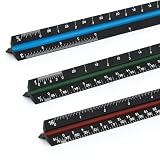
- Excellent readability - These rulers have laser etched white markings on a black background, making them easier to read than printed rulers with poor contrast or markings that are prone to fading and wear.
- PREMIUM QUALITY-This engineering triangle scale is made of anodized aluminum alloy, very solid and sturdy. Designed for maximum durability, this 3 sided metal architect ruler is perfect for lasting use
- TRIPLE SIDED DESIGN-- The classic architect's triple-sided scale included: 1-1/2", 1, 3/4", 3/8", 3/16", 3/32", 1/2", 1/4", 1/8", 3, 16, very convenient and useful for professional use
- Compact and portable design - lightweight, compact structure, metal ruler suitable for use on the go, easy to put in your tool kit or backpack.
- Quality Guarantee——If you are not satisfied with the product or have any questions about the product, please contact us in time, we will give you a satisfactory solution
To shape the viewer’s encounter
A monumental work can confront a viewer through its size and presence; a miniature can invite close, sustained looking. The University of Kentucky Art Museum’s RE:SCALE exhibition page describes examples including a scale model for an architectural installation, scaffolding miniatures, tiny works viewed with magnifying glasses, and a maquette of the museum galleries. Its listed exhibition dates were March 7 through August 8, 2026, so those dates are past.
The Tool Desk
Outbyte Driver Updater FREEFix the driver behind crashes, sound loss and screen glitchesFind Drivers →Outbyte PC Repair FREEClear out junk files and repair common Windows errorsFree Scan →How to analyze scale in a painting or artwork
- Choose the reference. Compare the subject with another object, the frame, its environment, a human viewer, or its real-world size.
- Decide whether the relationship seems realistic or altered. Ask whether the sizes suggest ordinary physical relationships, perspective, symbolic importance, or deliberate exaggeration.
- Describe the effect. Consider whether the scale creates depth, hierarchy, drama, intimacy, or a particular relationship between the work and its viewer.
- Separate scale from proportion. If the issue is the relationship between a figure’s parts, discuss proportion; if it is the figure’s size relative to a reference outside itself, discuss scale.
A precise observation names both the comparison and its effect: “The central figure is larger than the surrounding figures, which gives it visual importance,” or “The sculpture is much larger than a person, making the viewer experience it as monumental.”
Quick Recap
Best Value
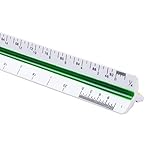
- 12inch Triangular Architect Scale Designed To Facilitate The Drafting And Measuring Of Architectural Drawings, Such As Floor Plans, Blue Prints, And Orthographic Projections
- Triangular Ruler Made From Shatterproof High Impact Heavy Plastic
- Architect Ruler With Durable Imperial Prints For Accuracy. They Will Not Wipe Or Scratch Off
- Color Coded Triangular Scale For Easy And Quick Selection Of The Desired Scale
- Imperial Scale: 1-1/2, 1, 3/4, 3/8, 3/16, 3/32, 1/2, 1/4, 1/8, 3, 16
Rank #4

- 12 INCH ARCHITECTURAL SCALE RULER: Designed for measuring and reading blueprints, floor plans, architectural drawings, engineering plans and construction drawings.
- IMPERIAL SCALE MARKINGS: Features standard imperial scales for accurate drafting, scaling and plan reading, suitable for architects, engineers, students and contractors.
- THREE-SIDED TRIANGULAR DESIGN: The triangular ruler provides multiple scale options in one tool, helping users work faster when switching between drawing scales.
- LASER-ETCHED ALUMINUM: Made from durable aluminum with clear laser-etched markings that are easy to read and designed for long-lasting use.
- FOR OFFICE, SCHOOL & JOBSITE: A practical drafting tool for architecture, engineering, construction, interior design, drafting classes and blueprint reading.

Product prices and availability are accurate as of the date/time indicated and are subject to change. Any price and availability information displayed on Amazon at the time of purchase will apply.




