The Tool Desk
Outbyte Driver Updater FREEScan for outdated or missing drivers - takes under a minuteDriver Scan →Outbyte PC Repair FREEClear out junk files and repair common Windows errorsFree Scan →
ThatPainter is reader-supported. When you buy through links on our site, we may earn an affiliate commission. Learn More
No single DIY product guarantees a professional finish. The result depends first on preparation, then on matching the product and application tool to the surface. For broad walls, a quality paint system applied with the correct roller is usually the practical choice. For cabinets, furniture, and trim, an HVLP sprayer can produce a finer coat when the operator has practiced and follows the coating and equipment instructions. Architectural film is a separate option for specified substrates and requires different installation skills.
Start with the surface, not the product
A professional-looking result is mostly a system: sound substrate, thorough cleaning, repairs, suitable primer, compatible coating or film, and controlled application. Sherwin-Williams’ painting guidance warns that skipped preparation can lead to poor adhesion, uneven coverage, visible blemishes, and premature peeling. A premium product applied over grease, dust, loose paint, or an unrepaired hole will still look unfinished.
As an Amazon Associate I earn from qualifying purchases.
Quick wins for a faster PC:
Repair Windows errors before they cause bigger problemsFix Now →Scan for outdated or missing drivers - takes under a minuteDriver Scan →Clear out junk files and repair common Windows errorsFree Scan →Before buying anything, identify four things:
- Surface: drywall, plaster, wood, previously painted trim, laminate, metal, or another substrate.
- Shape: broad and flat, detailed, profiled, curved, or heavily textured.
- Use: a wall, cabinet, door, piece of furniture, exterior siding, fence, or a decorative refurbishment.
- Coating requirements: the paint or film maker’s limits for cleaning, priming, thinning, drying, and substrate compatibility.
Those answers determine whether a brush, roller, sprayer, or architectural film is sensible. Treat “professional finish” as a target for the complete process rather than a promise printed on one package.
Preparation is the step that makes the finish look professional
Clean before you abrade
Remove dust, oils, cooking residue, wax, and other contaminants using a cleaner appropriate for the surface. Allow it to dry fully. Sanding a greasy surface can spread contamination rather than create a sound base.
#1 Best Overall
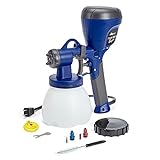
- Life changing paint sprayer: this paint sprayer requires less thinning compared to finish max or other hand-held paint sprayers
- Easy to use for eager Painters: fast and easy setup, multiple spray settings and quick cleaning make this sprayer a top pick for do-it-yourselfers
- Lightweight: despite having more power than the finish max, this paint sprayer is still lightweight in the user’s hand
- Spray everything with less thinning: ideal for spraying a smooth finish on fences, decks, furniture, cabinets, crafts, dressers or anything you want
- Best purchase you will ever make: save money by using this paint sprayer to tackle all of your household painting and staining projects
Repair defects while they are easy to see
Fill holes, dents, open joints, and damaged edges with a compatible repair material. Let repairs dry, sand them flush, and remove sanding dust. On walls and ceilings, a texture product may be appropriate when the existing surface has a matching texture; it is not a substitute for repairing every substrate or for choosing the right paint.
Sand for adhesion and a uniform appearance
Use the level of abrasion suited to the existing finish and the coating instructions. The goal is to remove loose material, reduce gloss where necessary, and smooth transitions—not to create deep scratches that remain visible through a thin topcoat.
Prime when the substrate or coating calls for it
Primer can even out porosity, support adhesion, and isolate repairs or difficult previous finishes. Select it for the actual substrate and the topcoat. Product technical and safety data sheets, such as those provided through BEHR Pro’s technical resources, are the authority for the particular coating; a generic “best primer” cannot be chosen without knowing the surface.
Protect adjacent work
Mask hardware, glass, floors, fixtures, and neighboring surfaces before application. Spraying requires substantially more masking than brushing or rolling because airborne coating can travel beyond the target.
Rank #2

- Paint Grids Rapid 1000W High‑Efficiency Performance: Experience the power of a 1000W motor designed for consistent, professional‑grade coverage. This HVLP spray gun atomizes paint into a fine mist, ensuring a smooth, brush‑free finish on any surface. The advanced high‑power output significantly cuts down project time, making it a reliable choice for both large‑scale house painting and delicate furniture restoration.
- Paint Grids Versatile 3‑Pattern & 4‑Nozzle Configuration: Tailor your spray to the task with 3 adjustable modes: vertical, horizontal, and circular. This tool comes equipped with 4 precision copper nozzles (0.8mm to 2.5mm), allowing you to handle everything from thin stains and sealers to thicker latex paints. The metallic tips provide superior durability and spray consistency compared to standard plastic alternatives.
- Paint Grids Precision Flow & Width Customization: Take full command of your DIY projects with the integrated flow control and width adjustment knobs. By fine‑tuning the output, you can minimize paint waste and prevent messy overspray. Whether you are coating intricate cabinet corners or wide fence panels, the adjustable settings ensure optimal utilization and a flawless layer every time.
- Paint Grids Optimized Maintenance & Quick Disassembly: Engineered for hassle‑free upkeep, the entire unit can be taken apart without additional tools. The detachable design allows for deep cleaning of the fluid path and nozzles. We provide a specialized cleaning brush and clogging needle to ensure that leftover residue is easily removed, keeping the sprayer in peak condition for your next job.
- Paint Grids Complete DIY Kit for Immediate Use: This comprehensive package provides everything needed to start your home improvement journey. Inside, you will find the 1000W sprayer, a high‑volume container, 4 durable copper nozzles, protective gloves, and essential measuring tools like a viscosity cup and filter funnels. The user‑centric design ensures a comfortable grip for long‑term painting sessions.
Which application tool fits each DIY project?
| Tool or route | Best fit | Finish and detail | Skill, safety, and cleanup |
|---|---|---|---|
| Brush | Cutting in, edges, corners, profiles, and small areas | Excellent control in detailed work; visible brush marks are possible if overloaded or overworked | Lowest equipment burden; work with a suitable brush and keep a wet edge |
| Roller | Large, mostly flat walls and ceilings | Fast, even coverage when nap matches the texture; can leave stipple if the cover is wrong | Simple setup and cleanup; protect edges and avoid letting the edge dry |
| Airless sprayer | Large projects such as exterior siding or fences | Efficient coverage over large areas and irregular profiles | Requires practice, extensive masking, ventilation, protective equipment, and prompt cleaning |
| HVLP sprayer | Cabinets, furniture, trim, and other fine-finish work | Can lay down a smooth, controlled coat on suitable pieces | Requires practice and correct paint preparation; follow the sprayer and coating maker’s safety and thinning directions |
| Architectural surface film | Specified interior or exterior remodeling substrates | Decorative colors, patterns, textures, and wraps without conventional paint | Substrate preparation and installation technique are critical; some applications call for trained installers or specified tools |
For walls and ceilings, use a correctly matched roller
A roller is usually the most efficient DIY choice for a broad interior wall or ceiling. Sherwin-Williams recommends a 1/2-inch nap or longer for porous or textured surfaces and a 1/4-inch nap for smoother surfaces when maximizing sheen is important. A long nap holds more coating and reaches texture; a short nap leaves less stipple on a smooth surface.
Use a controlled rolling pattern
- Load the cover evenly, rolling it through the tray until the fibers are saturated without dripping.
- Work a manageable section using an N or W pattern to distribute material.
- Cross-roll to even out the section while it remains wet.
- Finish with light strokes in one direction, keeping pressure consistent.
- Move to the next section before the edge dries so lap marks do not form.
Do not press harder as the roller empties; reload instead. Excessive pressure can create thin spots and uneven sheen. Maintain a wet edge around corners and stop at natural breaks such as inside corners or architectural transitions.
What’s actually slowing this PC down?
Pick the symptom - the matching free tool is one click away.
When a brush should accompany the roller
Use a brush to cut in at ceilings, corners, trim, and fixtures, then roll close to the brushed area while it is still workable. A brush is a detail tool, not generally the fastest way to cover an entire room.
For cabinets, furniture, and trim, consider an HVLP sprayer
For fine-finish work, Sherwin-Williams identifies an HVLP (high-volume, low-pressure) sprayer as a suitable option for cabinets, furniture, and trim. It can produce a smooth, even coat on complex profiles when the material, tip, pressure, and technique are correctly matched. It is not an automatic professional-finish button: practice and careful setup determine the result.
Rank #3

- 【4 Size Nozzles & 3 Spray Patterns】PULENDY paint sprayer is equipped with 4 size nozzles(1mm, 1.5mm, 2mm, 3.0mm), suitable for most painting projects, such as furniture, fences, walls, doors, garden tables and chairs, etc. Adjustable to 3 different spray patterns, horizontal, vertical and circular, making it suitable for a wide range of application scenarios
- 【Convenient Blowing & Cleaning Functions】Before spraying, you can use the dust blowing joint of the paint sprayer to blow away the dust/debris on the surface to get a better surface spraying effect. After spraying, connect the cleaning connector to the faucet to clean the residual paint inside the pipe for easy cleaning
- 【Easy to Use & Clean】The paint sprayer can be easily assembled with no tools, even if you are a beginner, you can easily get started after reading the manual. It is very important to clean the paint sprayer thoroughly after use, it comes with a cleaning brush and a needle to clean paint left in the nozzle part
- 【Adjustable Flow Control】The amount of paint output can be controlled by adjusting the flow control knob to suit a wide variety of projects. According to different spraying effect requirements, reasonable control of paint flow can achieve better effect and avoid paint waste
- 【What You Will Get】1X Paint Sprayer, 4X Size Nozzles, 1 X Paint Filter, 1X Viscosity Cup , 1X Nozzle Cleaning Needle, 1X Cleaning Brush, 1X Dust blowing joint, 1X Clean connector, 1X Pot lid,1X User Manual
Prepare the piece and the workspace
- Remove doors, drawers, and hardware where practical, and label parts so they return to their original locations.
- Clean, repair, sand, and prime according to the coating system.
- Set up a clean, well-ventilated spray area with protection on every nearby surface.
- Wear the protective equipment required by the coating’s safety data and keep ignition sources away from products that require it.
Set up the material and sprayer
Follow the coating maker’s instructions for whether thinning is permitted, which thinner is specified, and how much to use. Never thin by guesswork: changing viscosity alters atomization, coverage, drying, and the risk of runs. Set the sprayer according to its manual and test on scrap or an inconspicuous panel before coating the visible face.
Apply overlapping passes
Keep the gun moving before pulling the trigger and continue moving after releasing it. Hold a consistent distance and make smooth, parallel passes with controlled overlap. Heavy, slow passes cause sags; overly distant or fast passes create dry spray and uneven coverage. Allow the stated recoat time, inspect under good light, and add only the coats the system calls for.
Crashes, No Sound, or Screen Glitches?
Random freezes, missing sound and display glitches usually trace back to one bad driver. Find and replace yours safely.Free scan · under a minuteWindows Errors? Fix Them Before They Spread
Repair common Windows errors and clear accumulated junk for a smoother, more stable PC - no reinstall needed.Free scan · no reinstallClean immediately
Flush the sprayer as soon as the session ends, using the cleaning method specified for that coating. Dried material in the tip, nozzle, or fluid path can ruin the next application and shorten equipment life.
When architectural film is a better route than paint
Architectural surface film is not simply another type of paint. 3M describes its DI-NOC interior finishes for surfaces including walls, columns, doors, cabinets, and complex curved surfaces. The range contains more than 900 patterns, colors, and textures, according to 3M’s product information accessed in 2026. Film can therefore be useful when the design calls for a repeatable wood, stone, metal, color, or texture effect and the existing substrate is suitable.
Rank #4

- Just right for DIY Homeowners and Remodelers looking for more power and mobility when tackling larger projects
- Ideal for projects up to 10 gallons in size, allowing you tackle multiple projects every year
- Fully adjustable pressure control to give you ultimate control to spray paints or stains unthinned at any pressure
- Flexible Suction Tube allows you to spray directly from a 1 or 5-gallon paint bucket
- Supports up to 75 ft of paint hose to reach peaks or second stories without diminishing performance
Interior DI-NOC applications
Interior installation depends on a clean, smooth, sound substrate and accurate handling around edges, seams, corners, and curves. 3M recommends its trained Preferred Installers for interior finishes to help achieve the intended appearance. That recommendation matters most on large, highly visible, or geometrically complex work: a film can telegraph bumps, trap air, misalign a pattern, or lift at an edge when installation is rushed.
Exterior DI-NOC applications
The exterior product guidance is narrower. It specifies smooth, non-porous substrates such as aluminum, galvanized steel, and painted metal. It also lists the 3M PA1 hand applicator as required for installation. Do not transfer those exterior requirements to every substrate or assume that an interior film is suitable outdoors. Check the exact product line, exposure conditions, substrate, and installation instructions.
Film versus paint: the decision
| Question | Paint system | Architectural film |
|---|---|---|
| Substrate | Depends on the primer and coating system selected for the surface | Must meet the specific film maker’s substrate requirements; exterior guidance cited here covers smooth, non-porous metal substrates |
| Design choice | Color and sheen are selected through the coating system | 3M reports more than 900 interior patterns, colors, and textures |
| Application skill | Brush, roller, or sprayer technique; sprayers require practice | Accurate positioning, pressure, seam, edge, and curve handling; trained installation is recommended for interior DI-NOC |
| Special equipment | Tool depends on the application method | Exterior DI-NOC guidance lists the PA1 hand applicator as required |
| Best reason to choose it | Flexible coverage of prepared walls, ceilings, trim, and many paintable surfaces | A specified decorative or remodeling finish where the product is approved for the substrate and use |
Common ways a DIY “professional” finish goes wrong
Peeling or poor adhesion
Contamination, loose old coating, insufficient abrasion, or an incompatible primer are common contributors. Stop, remove unsound material, clean and prepare again, then confirm compatibility in the product documentation.
Uneven sheen or flashing repairs
Porous patches and unprimed repairs absorb paint differently from the surrounding surface. Spot-prime or prime the appropriate area, allow it to dry, and apply the finish consistently.
Best Value

- 【Advanced Air Blower & One-Click Cleaning System】Achieve flawless painting results easily! This upgraded electric paint sprayer features a built-in blowing function to clear surface dust before use with no extra tools required. Paired with a fast flushing system, cleaning brush and unclogging needle, this paint spray gun avoids nozzle clogging and maintains long-term optimal performance.
- 【4 Premium Brass Nozzles & 3 Versatile Spray Modes】Equipped with 4 durable brass nozzles and 3 adjustable spray modes, this flexible paint sprayer handles all painting tasks. It supports horizontal, vertical and circular spraying, perfectly serving as a paint sprayer for furniture for detailed touch-ups and daily renovation work.
- 【Tool-Free Assembly & Beginner-Friendly Ergonomic Design】Featuring tool-free quick assembly, this practical airless paint sprayer is easy to set up for beginners. Lightweight body and ergonomic non-slip handle allow fatigue-free long-time operation for this professional paint gun.
- 【Adjustable Paint Flow Control & Low Waste】Built with an adjustable flow knob, this premium hvlp spray gun supports precise paint output control. You can freely adjust flow rates for large-area coverage or fine detailing, letting this spray paint gun deliver even coats and reduce paint waste.
- 【Standard Usage Tips for Better Finish & Longer Lifespan】Follow standard operating tips to extend the service life of your paint sprayer gun and get perfect finishes: ① Keep upright during use; ② Fasten the suction tube tightly; ③ Clean immediately after use; ④ Cover the nozzle during pauses; ⑤ Use only water-based paint; ⑥ Maintain 15–20cm spraying distance for drip-free painting with your paint sprayer for house painting.
Lap marks and roller texture
Working beyond a drying edge, using the wrong nap, or overworking partially set paint can leave visible bands. Reduce the working section, maintain a wet edge, and match the cover to the surface texture.
Runs, sags, and dry spray from a sprayer
Runs usually indicate too much material in one pass or movement that is too slow. Dry spray can result from excessive distance, low material delivery, or unsuitable viscosity. Test adjustments on scrap, change one setting at a time, and follow the equipment manual.
What’s actually slowing this PC down?
Pick the symptom - the matching free tool is one click away.
Bubbles, misaligned seams, or lifted film
Film defects often trace back to an uneven or contaminated substrate, incorrect pressure, or rushed positioning. Do not install over a surface that fails the film maker’s requirements; on a prominent or curved installation, use a trained installer.
A practical product-selection checklist
- Broad, smooth interior walls: prepare thoroughly, then use a 1/4-inch roller cover when the surface is smooth and sheen preservation is important.
- Textured or porous walls and ceilings: use a 1/2-inch nap or longer, selected to reach the texture without flooding it.
- Detailed trim: brush carefully or spray only after practicing and creating a controlled spray area.
- Cabinets and furniture: an HVLP sprayer is a suitable fine-finish option, provided the coating allows spraying and you follow thinning, safety, and cleaning instructions.
- Large exterior siding or fences: an airless sprayer can cover efficiently, but masking, ventilation, protective equipment, and practice are essential.
- Decorative remodeling on an approved substrate: evaluate architectural film, checking the exact interior or exterior product requirements and installation method.
- Texture matching or isolated damage: use a repair or texture product only for that defined repair, then prepare and coat the whole area as the system requires.
What “professional finish” should mean for a DIY project
Judge the result under the lighting in which the surface will be used, not only under a work light. Look for consistent color and sheen, clean transitions, covered repairs, sound adhesion, and edges that do not draw attention. A roller may be the professional choice for a wall because it is controllable and efficient; an HVLP sprayer may be the better choice for a removable cabinet door; film may be appropriate for an approved architectural surface with a defined design specification. The right product is the one that fits the surface, the coating system, and your ability to execute every preparation and cleanup step.
Quick Recap

Product prices and availability are accurate as of the date/time indicated and are subject to change. Any price and availability information displayed on Amazon at the time of purchase will apply.

