Free tools Windows power users keep installed
One-click scans. No signup required.
Recommended Free Tools
ThatPainter is reader-supported. When you buy through links on our site, we may earn an affiliate commission. Learn More
Prepare a roof for winter by checking visible damage from the ground, clearing and testing drainage, looking for leaks indoors, and having attic air sealing, insulation, ventilation, flashing, or roof repairs assessed before sustained freezing weather. During winter, keep snow, gutters, and downspouts from becoming overloaded, but do not climb onto a snowy or icy roof.
As an Amazon Associate I earn from qualifying purchases.
These steps reduce the conditions that contribute to ice dams and leaks; no checklist can guarantee an ice-dam-free or leak-free winter. The guidance is based largely on U.S. government sources, so local snow loads, roof designs, building codes, and professional practices may differ.
Do these 3 things before closing this tab:
1Repair Windows errors before they cause bigger problems2Fix the driver behind crashes, sound loss and screen glitches3Clear out junk files and repair common Windows errorsWhy winter roof preparation matters
Winter roof problems usually involve two separate risks: water-management failures and unsafe snow or ice loads. Leaves and sticks can block gutters before the first storm. A loose shingle or failed flashing detail can then allow meltwater into the assembly. Snow and ice add weight and can make roof access hazardous.
#1 Best Overall

- The original USA-made Snow Roof Rake
- Rugged - made of the highest quality strong, yet lightweight aluminum
- Smart engineering - rollers prevent shovel head from touching your roof
- Easy to use - remove snow with ease
Ice dams are a specific water-management problem. Heat escaping from the home warms portions of the roof deck, melting snow above them. Meltwater runs toward colder eaves, freezes there, and creates a dam. The backed-up water can move beneath shingles and into the attic, ceilings, walls, and contents. The National Weather Service explains that there is no way to guarantee an ice dam will not damage a home, but reducing heat transfer and maintaining drainage can lower the chance of formation.
Use ground-level observations and safe interior checks as screening tools. Roof work, attic-system changes, and any task requiring roof access belong to a qualified professional.
How ice dams develop at a roof edge
A roof can be covered in snow while its upper surface is warm enough to melt the underside. If the roof edge is colder because it extends beyond the heated building envelope, that water freezes at the eaves. Each freeze cycle can enlarge the dam. New meltwater has nowhere to drain, so it seeks gaps beneath shingles or around roof penetrations.
What’s actually slowing this PC down?
Pick the symptom - the matching free tool is one click away.
Air sealing at the ceiling plane, adequate insulation, and a ventilation strategy suited to the roof assembly can reduce heat transfer to the roof deck. The U.S. Department of Energy describes these measures as ways to reduce or mitigate snowmelt and ice-dam formation, not as a universal recipe that every house can apply identically.
The 11-step pre-winter roof checklist
1. Survey the roof from the ground
Walk around the house in daylight and use binoculars if helpful. Look for shingles that are visibly missing, loose, lifted, cracked, or damaged, along with obvious sagging or displaced roof components. Also note branches rubbing the roof or debris collecting in valleys.
A ground survey cannot verify the condition of underlayment, fasteners, flashing, or roof sheathing. If you see damage, are unsure what you are seeing, or know the roof has reached the end of its expected service life, arrange a professional inspection before snow hides the evidence. Do not treat a ladder or a dry-weather inspection as permission to walk on a roof once it is wet, icy, or snow-covered.
2. Remove leaves and debris from gutters
Clean leaves, needles, sticks, and other debris from every gutter run. Meltwater from a thaw needs an open path; a blocked channel can spill against fascia, siding, or foundation areas and can leave ice at the eaves.
A gutter scoop or other gutter-cleaning tool may make this ground-level maintenance easier, but the source guidance does not identify a required tool or design. If reaching the gutters requires unstable ladder work, hire someone equipped for the job.
Rank #2

- Angled blade offers more use in less space and is effective on low pitched roofs and two-story houses
- 21' reach with 7" x 24" blade provides superior snow removal
- Blade rollers protect your shingles while still providing a close shave
- Lightweight aluminum makes it easy to maneuver and protects against wear and tear
- Easy snap-button handle assembly and disassembly
3. Confirm that downspouts can carry water away
Flush or otherwise check each downspout after clearing it. Make sure its outlet is not blocked by leaves, ice, or compacted soil and that discharged water moves away from the building rather than collecting beside the foundation. The appropriate outlet arrangement depends on the site, grade, and local drainage rules; the cited winter guidance does not establish a universal numerical discharge distance.
4. Look indoors for signs of water entry
Before the first major storm, inspect upper rooms and any safely accessible attic area for brown or damp stains, wet insulation, peeling finishes, musty odors, or daylight where it should not be visible. Check around chimneys, plumbing or exhaust vent penetrations, roof-wall intersections, and valleys when those areas can be observed without entering an unsafe space.
Ice-dam backup can put water into the attic and damage ceilings, walls, structural materials, and belongings. A dry appearance on one day does not prove that a roof is sound; record the location of any mark and have the cause traced before winter precipitation conceals it.
5. Check whether house air is escaping into the attic
Warm air leaking through gaps around ceiling fixtures, wiring, plumbing penetrations, attic hatches, chimneys, and partitions can heat the roof deck. Ask an insulation or building-performance professional to assess the ceiling plane rather than guessing at isolated patches.
Air sealing must respect combustion safety, electrical clearances, moisture control, and the design of the roof assembly. Sealing a visible opening without addressing other leakage paths may not solve the heat-transfer pattern.
6. Review attic insulation with a qualified professional
The National Weather Service’s ice-dam discussion gives source-specific guidance of at least R-30 and says R-38 is preferable in northern climates. Those figures are guidance from that page, not a universal code requirement for every building or climate.
Insulation should be continuous and installed to the intended depth without blocking soffit ventilation or covering equipment that requires clearance. A professional can determine whether the existing material is settled, wet, contaminated, or incompatible with the assembly, and can coordinate insulation work with air sealing.
7. Evaluate attic or roof-assembly ventilation
In a vented attic, the National Weather Service describes airflow entering at soffits and leaving through appropriately located roof vents as important to keeping the attic cold. Ventilation is not a substitute for ceiling air sealing and insulation, and more vents are not automatically better.
Rank #3
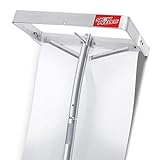
- EFFICIENT SNOW REMOVAL - Our roof rake revolutionizes the tedious task of roof snow removal with its innovative design and efficient performance. Engineered for ease of use, this winter shovel lets you keep both feet firmly on the ground, eliminating ladders. With a practical approach, our extendable shovel protects your roof against the snow loads that cause ice dams and features protective glide pads to prevent damage.
- TELESCOPIC REACH - This snow peeler is designed for convenience and efficiency with the adjustable 9m (30 ft.) telescopic handle, eliminating the need for precarious ladder use. With a sectional handle that allows you to add extensions as needed, our long snow shovel is a versatile solution for low-pitch roofs and challenging-to-reach valleys. This telescopic design is not only practical and user-friendly, but it is also a go-to tool for safeguarding your roof.
- ROOF PROTECTION - Our roof snow rake is not just a tool for snow removal; it's a safeguard for your roof. Engineered with precision and care, our large snow shovel snow rake prioritizes the protection of your home. With its unique design and robust commercial-grade aluminum blade, it effortlessly cuts through fresh and hard-packed snow, preventing the formation of ice dams that can threaten your roof's integrity.
- UNIQUE DESIGN - This roof shovel keeps safety and efficiency at the forefront, allowing users to clear snow effortlessly. Designed for durability and practicality, our snow rake for roof includes protective glide pads to safeguard your roof from damage and a tear-resistant 3m (10 ft.) slide for efficient snow clearance. This solution prevents ice dams and ensures a swift and secure snow removal experience.
- TEAR-RESISTANT SLIDE - This shovel keeps safety and efficiency at the forefront, allowing users to clear snow effortlessly. Designed for durability and practicality, our snowpeeler includes protective glide pads to safeguard your roof from damage. With our big snow shovel, you can confidently tackle snow-covered roofs, knowing that the tear-resistant slide delivers exceptional performance and durability, making snow removal a quick and efficient task.
Roof shape, vent type, baffles, vapor control, and whether the attic is vented or unvented all affect the correct design. Have a contractor assess the complete assembly before adding or closing vents. Altering one part can create moisture or combustion-safety problems if the rest of the system is not considered.
8. Have roof penetrations and flashing checked
Water-management details deserve special attention at valleys, roof-to-wall intersections, chimneys, skylights, and plumbing or mechanical vent stacks. The Department of Energy identifies flashing and moisture-barrier details in these locations as important to a roof assembly’s performance.
A professional should inspect deteriorated metal, lifted counterflashing, failed sealant, exposed fasteners, and membrane or underlayment transitions. Surface caulk is not a substitute for correctly integrated flashing, and covering a problem with a new layer can make later diagnosis harder.
Windows Errors? Fix Them Before They Spread
Repair common Windows errors and clear accumulated junk for a smoother, more stable PC - no reinstall needed.Free scan · no reinstallCrashes, No Sound, or Screen Glitches?
Random freezes, missing sound and display glitches usually trace back to one bad driver. Find and replace yours safely.Free scan · under a minute9. Decide in advance how snow will be managed
The National Weather Service describes a long-handled roof rake that lets a user pull snow from the roof while standing on the ground. It can be an option for suitable roof surfaces and conditions, but it does not make roof access safe and is not appropriate for every roof geometry, snow type, or user.
Read the tool’s instructions, stay clear of falling snow and ice, and keep people, pets, vehicles, and fragile landscaping out of the drop zone. Never climb onto a snowy or icy roof to shovel it. If snow removal is necessary and ground-level work is impractical, use a qualified service.
10. Monitor snow, ice, gutters, and downspouts through winter
After storms and during thaws, look from the ground for accumulating snow, thick icicles, blocked gutters, or water spilling in unusual locations. The National Weather Service advises keeping roof snow to a minimum and keeping gutters and downspouts clear of snow and icicles because heavy accumulation can increase ice-dam and roof-failure risks.
Do not chip at an ice dam with an axe, hammer, or other tool from a ladder. Sudden temperature changes, falling ice, and hidden roof damage make improvised removal dangerous. A roofer can select a method that limits damage to shingles and membranes.
Do these 3 things before closing this tab:
1Clear out junk files and repair common Windows errors2Fix the driver behind crashes, sound loss and screen glitches3Repair Windows errors before they cause bigger problems11. Call the right professional when the work exceeds a visual check
Use a reputable roofing contractor for damaged roof materials, suspected leaks, flashing, structural concerns, or any task requiring roof access. Use an insulation or building-performance contractor for air sealing, insulation levels, ventilation design, or questions about a vented versus unvented assembly. In some homes, both specialties need to coordinate.
Rank #4

- COMPLETE 16' ROOF RAKE SYSTEM — Ready to Clear Snow Right Out of the Box Includes the EZ Smart Adjustable Snow Roof Rake, 16-foot sectional extension pole, and mesh storage bag. Everything you need to start clearing roof snow safely from the ground in one complete package.
- PATENTED ADJUSTABLE DESIGN — Adapts to Changing Roof & Snow Conditions Unlike traditional fixed-width roof rakes, the EZ Smart patented umbrella-style adjustable design lets you smoothly adjust the blade from 3 to 36 inches wide without tools. Open it wide to move more snow in a single pass or narrow it for greater control around valleys, chimneys, skylights, and other roof obstacles.
- HELPS PREVENT ICE DAMS — Remove Roof Snow Safely from the Ground Regular roof snow removal helps reduce snow buildup that can contribute to damaging ice dams. The EZ Smart Roof Rake helps you clear problem areas while keeping your feet safely on the ground instead of climbing onto snowy roofs.
- BUILT TO LAST — The Snow Roof Rake You May Never Need to Replace Designed for years of demanding winter use, the durable roof-safe blade resists bending and breakage that shorten the life of many traditional roof rakes. Built with long-term durability in mind, it may just be the last snow roof rake you'll ever need to buy.
- COMPACT STORAGE — Full-Size Performance, Surprisingly Small Storage The complete 16-foot roof rake system collapses into the included mesh storage bag for compact storage in your garage, workshop, vehicle, or cabin. A full-size roof rake that stores where traditional roof rakes simply can't.
Ask what the inspection will cover, how findings will be documented, and whether proposed changes account for local climate and code requirements. The National Weather Service and Department of Energy both direct homeowners toward qualified professional advice for repairs and building-system changes.
Independent reader supportYour contribution helps us test, update, and keep practical guides available for everyone.Technical figures and how to interpret them
| Figure or condition | What the source says | How to use it |
|---|---|---|
| R-30 | The National Weather Service presents at least R-30 as insulation guidance in its ice-dam prevention discussion. | Use it as a discussion point for an attic assessment, not as a universal code requirement. |
| R-38 | The same National Weather Service page says R-38 is preferable in northern climates. | Regional preference matters; the correct level depends on the home, climate, and applicable requirements. |
| Climate Zone 5 and higher | Department of Energy eaves guidance describes sealing eaves in cold climates for Climate Zone 5 and higher. | This is technical guidance for a described assembly, not a direction to retrofit eaves without professional design. |
| 2-inch airspace | A Department of Energy Building America guide describes a 2-inch airspace under the sheathing where ground snow loads exceed 30 lb/ft². | This is a design detail for applicable assemblies, citing Lstiburek (2011), rather than a general homeowner installation instruction. |
Because these figures come from particular U.S. guidance documents, they should be checked against the home’s location, roof design, snow load, and current local requirements. A contractor should specify how, and whether, they apply.
What to do when you find a warning sign
- Fresh ceiling or attic moisture: Put containers under active drips if it is safe, move vulnerable belongings, and arrange urgent roof or water-entry assessment. Do not open a wet ceiling around electrical equipment.
- Large icicles or an ice ridge: Keep people away from the eaves and do not attempt ladder-based chopping. Request professional evaluation, especially if water is entering.
- Heavy, uneven, or visibly sagging snow: Leave the roof and surrounding drop zone clear and contact a qualified snow-removal or roofing service.
- Gutters pulling away or overflowing: Treat the condition as a drainage or attachment problem. Avoid leaning a ladder against an unstable gutter and have the system repaired.
- Uncertainty about insulation or ventilation: Do not block vents or add insulation at random. Have the full attic assembly assessed first.
A practical timing plan
Before freezing weather
Complete the ground survey, clean gutters and downspouts, check indoor areas for leaks, and schedule roof, flashing, insulation, or ventilation work early enough for repairs to be completed in suitable weather.
Recommended Free Tools
Before a forecast snow event
Confirm that drainage outlets are open, decide who will handle unsafe or excessive snow, and move valuables away from places with a history of leakage. Keep a long-handled roof rake available only if it is appropriate for the roof and can be used from stable ground.
After storms and during thaws
Observe the roof from the ground, check for new icicles or unusual runoff, and look indoors for fresh moisture. Escalate promptly when conditions exceed safe observation or when water is entering the building.
Limits of a winter roof checklist
Preparation lowers risk but cannot eliminate ice dams, leaks, or structural hazards. Weather exposure, roof pitch, roofing materials, insulation levels, attic geometry, and local snow loads vary widely. The cited National Weather Service material comes from Grand Rapids, while the Department of Energy pages describe specific building-science assemblies; neither replaces a site-specific inspection or local code review.
For source details, see the National Weather Service guidance on preventing roof ice dams, the Department of Energy pages on eaves sealed in cold climates and roof moisture barriers and flashing, and the Building America guide to preventing ice dams. Seasonal household safety reminders are also available from the National Weather Service Winter at Home resource.
Quick Recap

Product prices and availability are accurate as of the date/time indicated and are subject to change. Any price and availability information displayed on Amazon at the time of purchase will apply.

