Windows Errors? Fix Them Before They Spread
Outbyte PC Repair · freeRepair common Windows errors and clear accumulated junk for a smoother, more stable PC - no reinstall needed.
Fix My PC Now →ThatPainter is reader-supported. When you buy through links on our site, we may earn an affiliate commission. Learn More
Wiring a circuit means distributing electricity from the service panel through a branch circuit to loads such as receptacles, lights, and appliances. A fuse or circuit breaker is matched to that circuit’s wiring and disconnects power when current rises above a safe level. That protective device is what limits overheating and fire risk; it is not an obstacle to bypass when a circuit trips.
The safe way to understand a circuit is to separate its concepts—source, conductors, loads, and overcurrent protection—from the project-specific decisions that require local code knowledge and inspection. The correct conductor size, breaker rating, connections, grounding, permits, and testing depend on the dwelling, circuit, equipment, and jurisdiction. This guide explains how the system works and when to stop and call a licensed electrician, without turning an unspecified project into a hazardous universal installation recipe.
As an Amazon Associate I earn from qualifying purchases.
The Tool Desk
Outbyte PC Repair FREEClear out junk files and repair common Windows errorsFree Scan →Outbyte Driver Updater FREEFix the driver behind crashes, sound loss and screen glitchesFind Drivers →What a household branch circuit does
The service equipment receives electricity and the panel divides it into branch circuits. Each branch circuit carries power to one or more outlets, lights, or permanently connected appliances, then provides a complete path back through the supply system. The panel contains the circuit’s overcurrent protection: a fuse or breaker that interrupts the circuit if current exceeds the level the wiring can safely carry. The U.S. Consumer Product Safety Commission describes this relationship in its Guide to Home Wiring Hazards.
“Wiring a circuit” therefore is not simply running a cable between a panel and a receptacle. The circuit is a coordinated system. The source, conductors, protective device, boxes and connections, switches, and connected loads must be compatible. Changing one part—such as installing a larger protective device—can defeat the protection intended for the other parts.
#1 Best Overall

- HIGH PERFORMANCE 125A LOAD CENTER - Low voltage load center supports up to 125 amps, providing efficient and reliable power distribution to a variety of electrical equipment, ideal for residential and light commercial use
- NEMA 1 STEEL ENCLOSURE—Constructed of high-quality steel, this main lug load center enclosure meets NEMA 1 standards and is designed for indoor use. Its rugged construction ensures durable protection against dust and other contaminants, making it suitable for use in indoor spaces such as homes, offices, and light commercial applications, providing reliable protection for power distribution systems.
- EXCELLENT SAFETY AND PROTECTION - The main lug circuit breaker panel has 8 spaces that can accommodate up to 8 1-pole plug-in circuit breakers. Can provide excellent circuit protection. This makes the main load center a reliable choice for strengthening safety measures in the distribution system.
- RELIABLE&EASY TO INSTALL - This circuit breaker distribution box is designed for a simple installation process, supports single-phase, 120/240V AC systems, and adopts a three wire configuration. Its intuitive design make it an excellent choice for professionals and DIY enthusiasts, providing reliability and convenience for all users.
- COMPATIBILITY - The load center is compatible with QP Q225, Q230, Q130, Q120, THQL and other series circuit breakers, and is not suitable for 1/2 inch, 3/4 inch and other plug-in circuit breakers
The four concepts to keep straight
- Source: the electrical service and panel supply the circuit.
- Conductors: wires carry current to and from the loads; their material, insulation, routing, and capacity are project-specific.
- Loads: lamps, receptacles, motors, heaters, and appliances use electrical energy.
- Overcurrent protection: a breaker or fuse opens the circuit when current is above the safe limit for the wiring.
How power travels from the panel to a load
When a breaker is on, current leaves the panel on the circuit’s energized conductor, passes through a switch or device when the circuit is closed, and reaches the load. It returns through the circuit’s intended return conductor. A switch controls whether the path is complete; it does not make an energized conductor safe to touch merely because a light is off. The protective device remains connected to the circuit so it can disconnect it during an overcurrent event.
Several outlets or lights may share a branch circuit, while a large appliance may have a circuit arranged specifically for that equipment. The number and type of loads, the conductor properties, the installation method, and the protective device all have to agree. Because none of those project details are specified here, a generic diagram or wire-size table would be misleading and potentially dangerous.
What’s actually slowing this PC down?
Pick the symptom - the matching free tool is one click away.
Typical residential voltage context
Electrical Safety Foundation International (ESFI) describes a typical residential supply as two 120-volt conductors and a neutral. Ordinary household circuits commonly use 120 volts, while certain larger appliance circuits use 240 volts. This is general background, not a design instruction: the voltage available at a particular location, the way conductors are arranged, and the equipment requirements must be verified for the actual installation. ESFI’s overview is Understanding Your Home Electrical System.
What the breaker or fuse protects
Overcurrent protection is sized for the circuit wiring and equipment, not for whatever device happens to be plugged in. If a fault or excessive load causes current to rise, the breaker trips or the fuse opens, stopping the flow before the conductors overheat. A fuse is replaced after it operates; a breaker is reset only after the cause of the trip has been addressed.
Rank #2
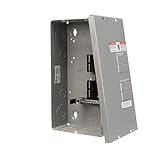
- The product is good to use
- The product is of high quality
- Manufactured in China
ESFI gives a clear example of the danger: putting a 30-amp fuse in a circuit designed for 20 amps can allow the wiring to carry more current than it safely supports, creating a fire hazard. Never solve nuisance trips by installing a larger fuse or breaker. The guidance appears in Fuse and Breaker Breakdown.
Breaker trips are information, not an inconvenience
A trip may result from too many operating loads, a short circuit, a failing appliance, damaged insulation, a loose or deteriorated connection, moisture, or another fault. The breaker is reporting that something needs investigation. Repeatedly resetting it can keep a dangerous condition energized long enough to damage wiring or equipment.
Windows Errors? Fix Them Before They Spread
Repair common Windows errors and clear accumulated junk for a smoother, more stable PC - no reinstall needed.Free scan · no reinstallCrashes, No Sound, or Screen Glitches?
Random freezes, missing sound and display glitches usually trace back to one bad driver. Find and replace yours safely.Free scan · under a minuteIf a breaker trips once while several high-demand devices are operating, turn off or unplug the loads and observe whether the problem returns. If it trips again, trips immediately, will not reset, or the cause is not obvious, leave it off and arrange an inspection. Do not substitute a higher-rated device or bypass the protection.
Warning signs that require an electrician
Some symptoms indicate more than an overloaded receptacle. ESFI’s Home Wiring Safety Tips recommends licensed-electrician inspection when these conditions occur:
Rank #3
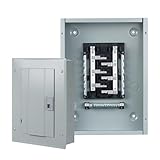
- HIGH PERFORMANCE 125A LOAD CENTER - Low voltage load center supports up to 125 amps, providing efficient and reliable power distribution to a variety of electrical equipment, ideal for residential and light commercial use
- NEMA 1 STEEL ENCLOSURE—Constructed of high-quality steel, this main lug load center enclosure meets NEMA 1 standards and is designed for indoor use. Its rugged construction ensures durable protection against dust and other contaminants, making it suitable for use in indoor spaces such as homes, offices, and light commercial applications, providing reliable protection for power distribution systems.
- EXCELLENT SAFETY AND PROTECTION - The main lug circuit breaker panel has 12 spaces that can accommodate up to 12 1-pole plug-in circuit breakers. Can provide excellent circuit protection. This makes the main load center a reliable choice for strengthening safety measures in the distribution system.
- RELIABLE&EASY TO INSTALL - This circuit breaker distribution box is designed for a simple installation process, supports single-phase, 120/240V AC systems, and adopts a three wire configuration. Its intuitive design make it an excellent choice for professionals and DIY enthusiasts, providing reliability and convenience for all users.
- COMPATIBILITY - The load center is compatible with QP Q225, Q230, Q130, Q120, THQL and other series circuit breakers, and is not suitable for 1/2 inch, 3/4 inch and other plug-in circuit breakers
| Sign | Why it matters | What to do |
|---|---|---|
| Repeated breaker trips or blown fuses | May indicate overload, a fault, damaged equipment, or wiring trouble. | Stop repeatedly resetting or replacing the device; have the circuit evaluated. |
| Flickering or dimming lights | Can signal an unstable connection, overloaded circuit, or supply problem. | Reduce use of the affected circuit and arrange professional inspection. |
| Sparks, buzzing, sizzling, or unusual odor | Suggests arcing, overheating, or a failing connection. | Keep clear, switch off power only if it can be done safely, and call an electrician. |
| Hot, discolored, or melted covers | Heat damage can worsen even when the device still appears to work. | Stop using the device and obtain prompt inspection. |
| Shocks or tingling from a device | Indicates a potentially energized surface or grounding fault. | Do not touch or continue using it; seek professional help. |
| Cracked or damaged insulation | Exposed or deteriorated insulation can cause shock or short-circuit hazards. | Do not tape over the problem as a permanent repair; have wiring assessed. |
For active smoke, fire, or a strong burning smell, leave the area and contact emergency services. Do not investigate a hot panel, sparking device, or energized conductor yourself.
Why a circuit may be overloaded
An overload occurs when operating loads demand more current than the circuit is intended to carry. Portable heaters, kitchen appliances, power tools, and other high-demand equipment can consume much more than lights or chargers. Loads may be spread across several receptacles yet still share the same branch-circuit protection, so counting outlets does not reveal the circuit’s capacity.
Free tools Windows power users keep installed
One-click scans. No signup required.
Temporary symptoms can also come from a defective appliance. If a trip occurs only when one particular device is used, unplug it and do not keep testing it on other receptacles. A qualified person can determine whether the appliance or the fixed wiring is at fault. A trip that occurs with nothing connected, or that happens immediately when reset, points to a condition that should be diagnosed rather than worked around.
What you can check without rewiring
Basic observation can help you describe a problem, but it does not replace testing by a qualified professional. Keep the panel closed and avoid removing covers or exposing conductors. A cautious homeowner can:
Rank #4

- Single-phase, 125 Amp, 120/240-Volt
- Aluminum bus bar
- Galvanized carbon steel construction for corrosion resistance
- NEMA type-1 enclosure designed for use in indoor installations
- Main Lug - breaker not included
- Note which breaker operates or which fuse opens, and record the time and what equipment was running.
- Unplug portable loads from the affected circuit without touching damaged, wet, hot, or sparking equipment.
- Look for visible discoloration, heat, buzzing, flickering, or damaged cords from a safe distance.
- Check whether a problem follows one appliance or affects several rooms, without repeatedly resetting a tripping breaker.
- Give the electrician the circuit number, symptoms, recent changes, and any history of moisture, remodeling, or new equipment.
Do not open the panel, move conductors, replace a breaker, enlarge a fuse, add a receptacle, or make a connection based on a generic online diagram. Even after a breaker is switched off, parts of a service panel can remain energized. Circuit identification and absence-of-voltage testing require appropriate training and equipment.
Code, permits, and why the “right” circuit varies
The National Electrical Code is NFPA 70. The National Fire Protection Association lists a 2026 edition at NFPA 70, National Electrical Code (NEC) (2026). That publication is a technical reference for electrical design, installation, and inspection; it is not proof that the 2026 text is the edition adopted where you live.
States, provinces, cities, and other authorities may adopt different NEC editions, add local amendments, or enforce additional requirements. Permit, inspection, licensing, and homeowner-work rules also vary. Before any new circuit, alteration, panel work, or rewiring, contact the local building or electrical authority and obtain project-specific advice from a licensed electrician. The applicable code may depend on the building type, location, occupancy, equipment, and scope of work.
Independent reader supportYour contribution helps us test, update, and keep practical guides available for everyone.Protection types are not interchangeable
People often use “breaker” as if every protective device performs the same job. A standard overcurrent breaker or fuse limits excessive current. Specialized devices may provide additional protection against particular shock or arcing conditions, but their required locations and installation details depend on the adopted code and circuit characteristics. Do not assume that adding a device, changing its type, or copying a solution from another room makes an installation compliant.
Best Value

- 【Reliable Power Distribution for Home & Light Commercial Use】Designed to manage multiple branch circuits safely, this 125A breaker box efficiently distributes power while protecting each circuit independently—ideal for homes, garages, workshops, and light commercial spaces that need stable and organized electrical control.
- 【125 Amp Rated Electrical Panel for 120/240V Systems】This circuit breaker box supports single-phase 120V/240V AC systems with a 125A current rating, providing dependable capacity for everyday appliances and equipment without overloading risks.
- 【8-Space Main Lug Breaker Panel for Circuit Protection】Featuring 8 breaker spaces, this breaker panel allows installation of up to 8 standard 1-pole circuit breakers, helping isolate and protect individual circuits to enhance overall electrical safety.
- 【Durable NEMA 1 Steel Enclosure for Indoor Installation】Built with a rugged steel housing, this electrical panel box meets NEMA 1 standards for indoor use, offering reliable protection against dust while safeguarding internal wiring in residential and light commercial environments.
- 【Easy Installation & Wide Breaker Compatibility】The circuit breaker panels use a Main Lug, three-wire configuration for straightforward installation, making it suitable for electricians and experienced DIY users. Compatible with standard-size breakers such as QP and THQL series, but not compatible with narrow or specialty breakers, helping you choose the right setup with confidence.
The practical rule is simple: use only equipment identified for the circuit and installed according to the manufacturer’s instructions and locally adopted requirements. A licensed electrician can determine whether additional protection is required and verify that it works with the existing wiring and loads.
A safety-first decision path
If everything is operating normally
Use appliances as intended, avoid overloading receptacle adapters or extension cords, and pay attention to heat, odor, noise, and flicker. Keep cords and electrical equipment away from water and protect wiring from physical damage. Normal operation does not authorize alterations; it only means there is no reported symptom requiring immediate shutdown.
What’s actually slowing this PC down?
Pick the symptom - the matching free tool is one click away.
If a breaker trips once
Turn off or unplug some loads and identify what was running. If the breaker resets and the condition never returns, reduce simultaneous demand and monitor the circuit. If the event repeats, treat it as a fault requiring inspection rather than a routine inconvenience.
If there is heat, arcing, a shock, or damaged wiring
Stop using the affected equipment, keep people away, and obtain a licensed electrician promptly. If there is smoke or fire, leave and call emergency services. Do not touch a suspected energized surface or attempt a panel repair.
Putting the system together
A safe branch circuit is a matched chain: the service supplies the panel, the protective device is rated for the circuit wiring, the conductors and enclosures are installed correctly, and the connected loads stay within the design. The breaker or fuse is the circuit’s safeguard against excessive current, not a component to upgrade when the circuit is inconvenient. Understanding that relationship lets you recognize danger early while leaving conductor selection, connections, testing, code compliance, and any installation work to the people and authorities qualified to perform it.
Further reference
For an accessible overview of household wiring hazards, see the CPSC’s Home Wiring Hazards page and its linked guide. Use the NFPA code publication as a professional reference, not as a substitute for the edition and amendments adopted by your local authority.
Quick Recap

Product prices and availability are accurate as of the date/time indicated and are subject to change. Any price and availability information displayed on Amazon at the time of purchase will apply.

