PC Slower Than It Used to Be?
Free tools Windows power users keep installed
One-click scans. No signup required.
Outbyte PC Repair · freeA free scan shows the junk files, broken settings and background clutter dragging Windows down - then fixes them in one click.
Run a Free PC Scan →ThatPainter is reader-supported. When you buy through links on our site, we may earn an affiliate commission. Learn More
You can create a comfortable outdoor oasis in a very small footprint by working in this order: measure the usable space, decide how you will use it, read its sun and access conditions, then add appropriately sized seating, containers and vertical elements. A balcony, patio, doorstep or narrow yard can support both relaxation and productive container gardening, but the right arrangement depends on light, climate, maintenance time, privacy, building rules and how much weight the structure can safely carry.
Begin with the footprint and the way you will use it
Before buying a chair or planter, draw the area on paper or in a phone note. Measure the usable length and width, and mark every door, gate, stair, drain, hose connection, outlet, railing and access panel. Note where a door swings; that arc is not usable floor area. If the space is irregular, measure each section rather than relying on its widest point.
As an Amazon Associate I earn from qualifying purchases.
Quick wins for a faster PC:
Repair Windows errors before they cause bigger problemsFix Now →Scan for outdated or missing drivers - takes under a minuteDriver Scan →Clear out junk files and repair common Windows errorsFree Scan →Choose one primary purpose
A tiny outdoor room works better when one activity leads the design. Your priority might be a reading seat, morning coffee, two-person dining, gardening, entertaining or a combination. Write the primary use and one secondary use before selecting furniture. A reading balcony may need one comfortable chair and a small side table; a dining nook needs two seats and a table with enough clearance to pull the chairs out; a growing area needs room to reach every pot.
Protect a clear route
Keep a continuous path to the door, gate, storage area and any drain or utility point. Do not fill the only turning area with pots. Floor-level items should be proportional to the footprint: one large bench can be less obstructive than several small chairs, while a collection of deep containers can consume more room than their top view suggests because you also need to reach behind them.
#1 Best Overall

- 【 Vertical Raised Garden Bed with Trellis】Perfect for home gardening lovers, this herb planter outdoor with 4 garden boxes let you plant vegetables, herbs, and flowers in separate plant bed while the 11-inch trellis supports climbing plants like tomatoes, strawberries, vines, and peppers. The balcony raised garden beds outdoor with legs creates an optimal environment for your plants to thrive.
- 【Comfortable Height】This 32-inch raised planter box allows you to effortlessly grow herbs, tomatoes, lettuce, or flowers on balconies, patios, or decks without bending over - perfect for long gardening sessions. Its ergonomic design makes the outdoor planters for porch ideal for gardeners, friends, or anyone passionate about gardening essentials.
- 【Efficient Drainage System】This elevated garden beds outdoor is equipped with drainage hole that allows extra water to escape naturally, preventing root rot and overwatering. The removable tray efficiently collects drained water and soil, keeping indoor/outdoor spaces clean. Ideal for an indoor herb garden, patio, greenhouse, backyard, balcony decor, and other outdoor spaces.
- 【Strong & Stable】Our tall raised garden bed with legs is crafted from sturdy plastic rectangular planter and a robust metal frame. Rust-resistant and weatherproof, the garden boxes outdoor raised stands up to all outdoor climates for long-term use. Solid structure firmly supports heavy plants and tall climbing plants without wobbling. The garden raised bed planters dimensions: 35×7×32 inches, and the flower pots size: 16.8* 7.0* 5.5 inches.
- 【Easy to Assemble】Designed for simplicity, this vertical garden planter assembles quickly without tools. Lightweight and easy to move around for indoor and outdoor layout adjustment. All necessary hardware and instructions are included, ensuring hassle-free setup even for beginners. Please feel free to contact us when you need any help.
Check permissions and structural limits first
Renters, condominium owners and occupants of shared buildings should check lease, association and local rules before attaching a trellis, hanging a planter, screening a railing or installing lighting. The sources used for this guide do not establish a universal balcony load limit or building code. Ask the property manager or a qualified local professional about allowable weight, attachment points, wind exposure and drainage before adding substantial soil, water or masonry.
Read the site before choosing plants or furniture
Map direct sunlight over a full day
Observe the space at several times, including the hours when you expect to use it. Buildings, trees and neighboring walls can turn a supposedly sunny area into shade. Fruiting vegetables generally need at least six hours of full, direct sunlight; Virginia Tech Extension says they often perform better with eight to ten hours. Root and leaf crops tolerate partial shade more readily. These are gardening guidelines, not a climate-independent prescription, so match them to your local growing recommendations.
The Tool Desk
Outbyte PC Repair FREEClear out junk files and repair common Windows errorsFree Scan →Outbyte Driver Updater FREEFix the driver behind crashes, sound loss and screen glitchesFind Drivers →| Site condition | What it means for design | Planting direction |
|---|---|---|
| Six or more hours of direct sun | Use sun-loving seating fabrics and provide shade for people if the area overheats. | Fruiting crops such as tomatoes or peppers can be considered when the container, variety and local season are suitable. |
| Eight to ten hours of direct sun | Plan for faster evaporation and hot container surfaces; check plants more often during heat. | Fruiting vegetables are more likely to meet their light needs, but water demand may rise. |
| Partial shade | Use lighter-colored surfaces or reflective walls carefully, without creating glare. | Leaf and root crops such as lettuce, radishes and carrots are more forgiving than fruiting crops. |
| North-facing balcony or persistent shade | Prioritize a comfortable sitting area, pale finishes and shade-tolerant ornamentals. | UF/IFAS advises selecting shade-tolerant plants for a north-facing balcony; verify choices locally. |
Record wind, rain and temperature patterns
Upper balconies can be windy and dry, while enclosed courtyards may stay humid. A railing can funnel gusts toward tall plants. A wall may radiate heat onto containers. Note where rain reaches the floor and where an overhang blocks it; a sheltered pot may need more hand-watering than one exposed to rain. Choose weather-resistant furniture and secure light, tall or top-heavy items so they cannot tip into a walkway or over a railing.
Identify water, storage and power
Decide how a watering can will travel from the tap to every pot. If you must carry water through the home, reduce the number of thirsty containers or group them near the nearest safe water source. Keep a small tool box or lidded bin for pruners, gloves and saucers. If there is no outdoor outlet, treat lighting as optional and plan for battery-operated or solar options rather than running an improvised extension cord.
Build the layout in layers instead of filling the floor
Depth comes from placing greenery and furnishings at different heights. A practical sequence is a low layer of containers or a narrow bench, a middle layer of seating and tabletop plants, and an upper layer of trellis, wall bracket or hanging foliage where installation is permitted. This layered approach creates visual interest without requiring every item to occupy floor area.
Use a simple zoning sketch
- Draw the boundary and access points. Shade the door swing, gate opening and the route you must keep clear.
- Place the primary activity first. Draw the chair, bench or table at its actual footprint, including space to sit down and stand up.
- Add the largest container. Keep it where you can reach the soil and where its mature plant will not block light to shorter plants.
- Use vertical positions next. Add a trellis, shelf or hanging point only after confirming the wall, railing or ceiling can accept it.
- Test the route. Mark the proposed footprints with cardboard or painter’s tape and walk through the area before purchasing.
Furniture choices for tight footprints
| Furniture option | Useful when | Check before buying |
|---|---|---|
| Foldable bistro table and chairs | You need dining space only at certain times or want an open floor when not eating. | Folded dimensions, chair clearance and a dry storage spot. |
| Storage bench | You want seating plus a place for cushions or small tools. | Ventilation, weather resistance, lid clearance and total loaded weight. |
| Stackable stools | You occasionally host an extra person but cannot leave several chairs out. | Stacked height, stability and a location that does not block the route. |
| Nesting tables | You need a flexible surface for drinks, books or plants. | Smallest table footprint and whether the set can be pulled apart without hitting seating. |
| One compact lounge chair | Reading or resting is the main purpose. | Recline angle, arm width and a side table that does not become a trip hazard. |
These are options, not a universally best layout. Choose the smallest arrangement that supports your primary use and leave enough room to maintain plants and clean the floor.
Rank #2
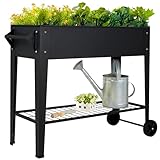
- MOBILE GARDEN ON WHEELS — Two all-terrain wheels and an ergonomic handle let you roll a 200+ lb planted bed wherever sunlight goes. Move your garden across patio, balcony, or backyard in minutes.
- DRAINAGE FOR CONTAINER GROWING — Built-in drainage openings and bottom channels help excess water leave the planting area.
- 32" STANDING HEIGHT — Garden without kneeling or back strain. Five drainage holes and dual cross-channels prevent waterlogging, keeping roots healthy during heavy rain.
- GROW VEGETABLES AND HERBS — Ideal raised bed for tomatoes, herbs, flowers, and greens on patios, balconies, decks, and backyards. Detachable bottom shelf stores tools and supplies.
- ASSEMBLY AND OUTDOOR CARE — Hardware and assembly instructions are included. Protect scratches in the surface coating promptly and follow the care instructions to reduce corrosion during outdoor use.
Choose containers that plants can actually live in
Drainage is non-negotiable
Virginia Tech Extension recommends containers with drainage holes. Without an exit for excess water, roots can remain saturated even when the surface appears dry. Put a saucer or catch tray beneath a pot where runoff could stain a balcony or annoy a neighbor, but empty standing water rather than allowing a container to sit in it indefinitely.
Provide enough root depth and mature volume
Virginia Tech says most plants need containers at least 6 to 8 inches deep, while larger plants need more room. Select the container for the plant’s mature size, not the size of a seedling at purchase. A shallow pot may suit some herbs or leaf crops but can dry quickly; a fruiting plant may become unstable or root-bound in a small vessel. Colorado State Extension also emphasizes mature plant size and container weight when selecting a pot.
Use safe, suitable materials
Do not grow edible plants in containers that previously held toxic products. Clean, food-appropriate vessels or purpose-made garden containers are safer choices. Remember that wet soil and a full water reservoir weigh far more than an empty pot. On a balcony or roof deck, confirm allowable loads before grouping large containers.
Give roots an appropriate growing medium
Use a container medium intended for container plants rather than digging ordinary garden soil into a pot. The medium must drain while retaining enough moisture for the crop. Keep the surface below the rim so watering does not immediately wash over the edge, and leave room to reach the soil without leaning over a railing.
Do these 3 things before closing this tab:
1Repair Windows errors before they cause bigger problems2Scan for outdated or missing drivers - takes under a minute3Clear out junk files and repair common Windows errorsSelect plants by light, scale and harvest goals
Start with the conditions you measured, then narrow the list by mature height, spread, root depth and maintenance. Virginia Tech identifies carrots, radishes and lettuce as space-efficient crops and notes that tomatoes and peppers can bear over a period rather than producing one harvest at once. Dwarf or miniature varieties often mature and bear early, but they may produce less overall than standard varieties.
| Goal | Examples to investigate locally | Selection checks |
|---|---|---|
| Quick, compact harvests | Radishes, lettuce and some carrots | Container depth, sowing season, heat tolerance and succession planting space. |
| Longer harvest window | Tomatoes or peppers | At least six hours of direct sun, mature size, root volume, cage or stake needs and local frost dates. |
| Edible plants in partial shade | Leaf and root crops | Actual hours of sun, local disease pressure and moisture consistency. |
| Decorative vertical growth | Climbing annuals or ornamentals suited to your climate | Vine weight, attachment method, pruning demand and whether the plant is invasive locally. |
Group plants with similar water and light needs. Put shorter sun-loving plants where taller crops or a wall will not shade them; Virginia Cooperative Extension makes this placement point when discussing vertical gardens. Label each pot with the plant name and sowing date so you can adjust care instead of guessing.
Rank #3
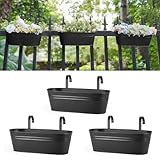
- Balcony Rail Planter: Rectangular outdoor planters was designed to maximize inside growing space allowing dirt and roots to grow strong and deep.This special design can be hung on the balcony, window, garden,railing, anywhere in the room,also can be used as desktop.
- Garden Decor: Imagine your home with colourful flowers, tasty herbs, peppers, succulent strawberries, salad garden, plump tomatoes and much more.Mountable exterior hanging balcony garden decorations.
- Hanging Baskets: This hanging planter is great for home or apartment use and helps you make the most of your porch or patio living space. Grow a mini garden in an elevated space.The pots have drainage holes,you can drill hole with tool knife as you like. It can drain the stagnant water and effectively make the plants grow healthier.
- Countryside Style: Ideal for brightening up dull brick walls and sheds with your favourite flowers, herbs or plants. Perfect for your deck, patio, front porch, balcony or inside your home making an attractive focal point on your balcony.
- Large Size: Planter:15.74" x 6.10" x 5". Hook is 4" x 2.7"x 0.7"(Suitable for rail up to 2.7 inch). Please check the size carefully before purchasing. Pay attention to:The hook is disassembled for transportation,you need to install the iron bucket yourself when it arrive.
Use vertical growing without creating a maintenance problem
Match support to crop weight
Trellises, stakes and cages move foliage above the floor, but the support must carry both the mature plant and wet weather. Heavy crops may need a cage or additional bracing rather than a light decorative trellis. Anchor supports according to the wall or railing manufacturer’s rules; do not drill into a building facade or shared railing without permission.
Choose among support types
- Freestanding trellis: useful when you cannot attach to a wall, provided its base is stable and does not narrow the route.
- Stakes and cages: practical for individual tomatoes, peppers or other upright crops that need help staying stable.
- Wall brackets and shelves: add height for lightweight pots, but verify fasteners, moisture protection and load capacity.
- Hanging planters: keep floor space open, yet they add overhead weight and can drip below; use only where rules and structure permit.
- Living-wall systems: create a dense green surface, but UF/IFAS notes that they distribute water and nutrients, may need a moisture barrier and require ongoing maintenance.
Turn vertical planting into privacy carefully
If a neighbor is close by, containers with vining plants can form a green privacy wall. Kate McGregor, identified by the Associated Press as a House Beautiful editor, described this approach as using strategically placed containers with vining plants when you are “squished up against your neighbor in an urban setting.” Treat it as a possible screen, not an instant barrier: vines need time, support and pruning, and a dense screen can catch wind. Check building rules before adding a screen to a railing or boundary.
Plan watering and feeding around real maintenance time
Container plants usually need more frequent attention than in-ground beds. Colorado State Extension identifies frequent watering and fertilization as disadvantages and explains that exposed container sides increase evaporation. There is no honest universal watering interval: container size, plant, potting medium, weather, wind and local conditions all change demand.
Use a repeatable moisture check
- Inspect the soil surface and the plant’s leaves, but do not rely on wilt alone.
- Push a finger into the medium to the depth appropriate for the plant; if it is dry where roots are active, water thoroughly.
- Apply water slowly until some exits the drainage holes, then allow excess to drain away.
- Recheck pots exposed to afternoon sun, wind or heat more often than sheltered pots.
- Reduce attention only after observing a stable pattern for your exact containers and weather.
Water at the soil rather than repeatedly wetting foliage, and keep runoff from flowing onto a public walkway or the unit below. Fertilize only according to the plant and product directions; excess fertilizer can accumulate in containers. A simple log of watering, rain and plant response helps you adjust without overwatering.
Independent reader supportYour contribution helps us test, update, and keep practical guides available for everyone.Add comfort, privacy and evening light in separate layers
Comfort first
Shade for people can be as important as shade for plants. A movable umbrella or canopy may help where permitted, but account for wind and attachment requirements. Choose cushions that can be removed and stored so damp fabric does not become a maintenance burden. Keep a small tray or side table for drinks rather than placing objects on the floor.
Privacy without sealing the space
Use the least permanent solution that meets your need: a trellis with a manageable vine, a group of containers at different heights or a movable screen approved by the site rules. Leave airflow around plants and do not block emergency egress, fire equipment or a neighbor’s access. A screen should frame the sitting area, not turn the entire footprint into a heavy wall.
What’s actually slowing this PC down?
Pick the symptom - the matching free tool is one click away.
Rank #4
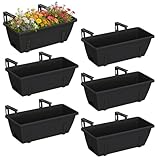
- Multi-purpose application: The railing flower box is equipped with adjustable metal supports. It is suitable for displaying flowers, herbs and small fruits and vegetables on balconies, windowsills or railings. It can withstand long-term outdoor conditions and can be used all year round without worries.
- Dual installation method and width compatibility: The bracket offers two installation options, allowing for easy attachment to railings with widths ranging from 1.6 to 4.9 inches (approximately 4 to 12.5 cm). It is suitable for both indoor and outdoor use.
- Water storage and drainage design: The bottom ventilation holes of the railing planter window box ensure the circulation of water and air preventing root rot. The tray can collect excess water, while also maintaining a certain level of moisture to promote the healthy growth of plants.
- Large capacity space: The size of the flower box is 16.9 x 6.9 x 5.5 inches (approximately 43 x 17.5 x 14 cm). It can accommodate multiple plants such as flowers, herbs, or small vegetables, making it both practical and aesthetically pleasing.
- Installation is convenient: The window planter boxes comes with a detailed illustrated installation manual and the necessary installation tools. Installation can be completed without any additional tools; if you have any questions, please let us assist you.
Optional evening lighting
When there is no outlet, Associated Press coverage suggests battery-operated string lights, solar lanterns or LED candles as possible options. Treat light as an optional final layer. Keep cords and batteries protected from weather according to the product instructions, avoid glare into neighboring windows and remove or secure lightweight fixtures during severe weather. The available evidence does not establish output, lifespan or safety performance for any particular product.
Three adaptable layouts
Balcony reading retreat
Place one compact chair against the solidest wall, with a narrow table beside it. Put two or three low containers along the sunniest edge, leaving the door route open. Add a vertical support only on an approved attachment point, and select plants that match the balcony’s measured light. Keep the total container load conservative until the building’s rules and structural capacity are confirmed.
Narrow side-yard dining strip
Use a foldable table and stackable stools that can be removed for passage. Arrange slim containers along one boundary rather than alternating them on both sides. Train a light vine on a permitted trellis where it will not snag clothing or obstruct a gate. Keep drainage directed away from the foundation and preserve access for maintenance.
Pocket backyard garden room
Define one sitting corner with a bench or two chairs, then place taller plants behind it and edible containers in the brightest zone. A nesting table can serve meals or hold seed trays, while a lidded bench stores tools. Layer low, medium and vertical plants to create depth, but leave enough open ground to move a hose, wheelbarrow or ladder safely.
The Tool Desk
Outbyte PC Repair FREEClear out junk files and repair common Windows errorsFree Scan →Outbyte Driver Updater FREEScan for outdated or missing drivers - takes under a minuteDriver Scan →Common mistakes and practical fixes
| Symptom | Likely cause | Fix |
|---|---|---|
| Plants stay wet or develop root problems | No drainage holes, blocked holes or a saucer holding water. | Clear the drainage path, use a suitable container and empty collected water. |
| Plants wilt quickly on hot days | Small container, exposed sides, wind or a thirsty crop. | Increase container volume where appropriate, group compatible plants, add shade for people and inspect moisture more often. |
| Tomatoes or peppers produce little | Insufficient direct sun, an undersized container, wrong local timing or inadequate support. | Confirm six or more hours of direct sun, check mature-size guidance and local growing recommendations, and add a suitable cage or stake. |
| Shorter plants are weak or pale | A taller plant or wall is blocking light. | Reposition sun-loving shorter crops and prune or support the taller plant as needed. |
| Trellis or planter tips in wind | Top-heavy growth, shallow base or an attachment not designed for the load. | Reduce height, brace the support, move it to a sheltered approved location or remove it during severe weather. |
| Neighbors complain about drips or glare | Runoff, light direction or placement was not considered. | Add a proper catch tray, redirect drainage safely and aim or dim lights away from adjacent spaces. |
| The space feels more crowded after decorating | Too many floor-level pieces or no clear route. | Remove duplicates, fold or stack occasional furniture and move greenery upward where safely possible. |
Use a phased setup so the oasis stays manageable
- Phase one: observe and measure. Track sunlight, wind, rain, access and the times you actually use the space.
- Phase two: install the essential comfort piece. Add the primary chair, bench or table and verify that the route still works.
- Phase three: add a small number of containers. Start with plants whose light, mature size and watering needs fit your schedule.
- Phase four: build upward. Add a trellis, shelf or hanging element only after confirming permission, load and maintenance access.
- Phase five: finish with privacy and light. Add an approved screen or vine and optional battery or solar lighting after the functional pieces succeed.
This order prevents a common small-space failure: spending the available floor area on decorative items before confirming that plants can receive enough light or that you can reach them with water.
Keep the oasis healthy through the season
- Inspect drainage holes, supports and fasteners after heavy rain or strong wind.
- Rotate or reposition portable pots when seasonal sun angles change, while keeping light requirements in mind.
- Prune vines before they cover a route, window, drain or neighboring property.
- Remove dead leaves and fallen fruit so pests and slippery surfaces do not build up.
- Empty saucers, clean furniture and store foldable pieces before severe weather.
- At the end of a crop, refresh the container plan rather than forcing a plant to remain in a pot that is too small.
The most successful small outdoor rooms are edited over time. Keep what supports the way you actually relax or grow, and remove anything that blocks access, demands more care than you can provide or violates a site rule. A modest chair, a few well-matched containers and one safely installed vertical element can be more useful than a crowded collection of furnishings and plants.
Quick Recap

Product prices and availability are accurate as of the date/time indicated and are subject to change. Any price and availability information displayed on Amazon at the time of purchase will apply.

