ThatPainter is reader-supported. When you buy through links on our site, we may earn an affiliate commission. Learn More
Kids’ room storage and decor work best when they support the way a child actually uses the room. Start by mapping activities such as sleeping, playing, dressing, studying, and relaxing; then give frequently used belongings reachable, clearly defined homes and use displays or flexible furniture to make the room feel personal. The ideas below can be adapted to the room’s size, the child’s age and reach, and the activities your family wants to support.
As an Amazon Associate I earn from qualifying purchases.
How should you plan a kids’ room before adding storage?
Begin with the child’s routines, not a shopping list. Decide where play, dressing, reading, homework, hobbies, and rest happen, then place storage near the activity it supports. A room does not need 24 separate solutions: choose a few that address its real bottlenecks, and invite the child to help decide where belongings belong. IKEA’s children’s-room planning guidance similarly emphasizes activity zones and involving the child in planning.
Recommended Free Tools
- Map the activity zones. Sketch the room and mark where the child sleeps, plays, gets dressed, reads, studies, or pursues hobbies. This shows which areas need open floor space, a work surface, or convenient storage. A single area can serve more than one purpose; the goal is to make each routine easy to start and reset.
- Plan from the child’s point of view. Look at the room from the height and perspective of the person who uses it. Ask what they can reach, what they can see, and where they naturally play. A setup that looks tidy to an adult may still be hard for a child to use if favorite items are out of reach.
- Choose storage locations before decor details. Decide where the everyday belongings will go, then use remaining wall or shelf space for displays. This helps keep decorative objects from competing with the surfaces and floor area needed for daily activities.
- Ask the child to help make decisions. Let them choose which books or toys to display, what belongs in a particular bin, or which artwork goes on a ledge. IKEA’s planning page puts the point plainly: “When planning a children’s room, don’t overlook the little ones who live there.”
What are 24 smart kids’ room storage and decor ideas?
Think of these as a menu, not a checklist. The most useful arrangement combines accessible everyday storage, a few personal displays, and enough flexibility to change as the child’s routines and belongings change.
Popular on Amazon

- Great Value Paint Brush Set: Soucolor 20 acrylic paint brushes come in 10 different sizes, making them ideal for fine detailing, model painting, rock painting, nail art, face painting, DIY crafts, and general art projects. The varied brush sizes give you better control for both delicate lines and broader color coverage, while the soft bristles deliver smooth, consistent results on acrylic, oil, watercolor, canvas, wood, ceramic, and more.
- Awesome Set of Paint brushes: Professional paint brushes can cover all of your needs. The multi-purposed brushes are ideal for Watercolor, Oil, Gouache, enamel, Acrylic Painting, Body, Nail, Face Painting, Miniature, Model, Wood, Glass, Cup, Ceramic, Fine work, Art class, Craft Art Painting, DIY Art Crafts etc.
- Soft and long-lasting: The bristles are soft and strong, with nickel metal ferrules and blue wooden handles. After cleaning, the bristles will become soft and fluffy again and will not fall off.
- Easy to clean: it’s very convenient to Wash well in soap and water. Retain shape after drying. the brushes hold up very well. Nice selection to beginners and professionals. Keep them clean and they last a long time.
- Perfect for All Painters & Occasions: Suitable for art beginners, hobbyists and professional artists. Great for art class, home creation, travel painting and DIY handmade projects. A practical art gift for students, teachers, family and craft lovers.
- Put everyday toys on low shelves. Keep the toys a child uses most often within easy reach, so selecting and putting them away does not require adult help every time. Less-used belongings can go in a higher or adult-managed location. A kids’ bedroom storage guide from IKEA uses accessible toy storage as one of its organizing ideas.
- Give each toy category its own bin. Assign separate containers to categories the child recognizes—blocks, cars, dolls, or art materials, for example. Clear categories make it easier to find a particular item and return it to a predictable home. Add labels if they will help the child identify each container.
- Use a low cube shelf as a flexible base. Open compartments make belongings visible, while bins can be added where a category needs to be contained. Leave some compartments open for items the child should see and reach. As the room changes, the mix of open display and bin storage can change too.
- Try a wheeled toy box. A mobile box can gather toys after play and be moved to the edge of the room when more floor space is wanted. Check that the particular product is appropriate for the intended use and follow its assembly and safety instructions; mobility alone is not a reason to leave it in a walkway.
- Make compartments part of the cleanup routine. Separate spaces can give a child a simple sorting prompt: put each kind of object back in its section. Keep the categories broad enough that tidying remains manageable rather than creating a complicated system that is difficult to maintain.
- Display a small selection of favorite books. Put a reachable set where the child can see and choose a book. Rotate the selection when interests change rather than trying to display every book at once. This gives the room a personal touch while keeping the reading choice easy to find.
- Use a wall as a personal display. Pegboards, shelves, or picture ledges can use wall space for artwork and small personal objects. Decide what the display is for before adding it: a ledge for pictures, for instance, has a different job from a place to store everyday toys. Secure wall-mounted items using the product’s installation instructions.
- Set up a small creative station. Keep paper, pens, and craft materials together near the desk or other work surface where they are used. Use a container or organizer that makes supplies visible and easy to return. Store materials that need adult supervision separately at a location appropriate to your household.
- Choose furniture that includes storage when it fits. A piece that serves more than one purpose may make sense if it supports the room’s activities and leaves the needed floor area available. Consider whether the child can use its storage, how it will be installed, and whether its dimensions suit the room before choosing it.
- Keep clothes at a useful height. Plan clothing storage with the child, so they know where items belong and can take part in getting dressed when appropriate. Put the clothes they use most often in the most practical location, and reserve less accessible storage for items that are not part of the everyday routine.
- Add hooks for frequently used items. A reachable hook can give a bag, robe, or frequently used garment a consistent home. Set the height for the child who will use it, and check the wall, fasteners, and product load instructions before installation. Exact placement depends on the child and the room.
- Use the space around the bed thoughtfully. Consider what the bed area needs to support—sleeping, reading, or storing selected belongings—and whether nearby space is already crowded. Some bed designs have associated storage options, but the details depend on the particular product. Check that product’s instructions rather than assuming every bed can safely accommodate extra storage.
- Separate display from overflow. Keep a limited set of favorite books, toys, or objects visible and give the rest a defined home in bins, drawers, or other appropriate storage. This keeps the display intentional without requiring every possession to be on show.
- Make movable storage earn its place. A wheeled box or movable compartment can shift out of the way when the play area needs to be clear. Decide where it should park when not in use, so it does not become an obstacle or simply move clutter from one corner to another.
- Choose adaptable furniture or storage. Modular or updateable systems may suit a room whose needs change. Before committing, check the exact configuration, instructions, and availability in your market; product ranges and components can differ by region.
- Let the child choose part of the decor. Offer a manageable decision, such as selecting which artwork to display or which favorite objects go on a shelf. The display can reflect the child without requiring a complete redesign of the room.
- Use favorite objects as decor. A few beloved toys, books, or soft toys can add personality when displayed deliberately. Choose objects that can be kept in a stable, suitable place, and leave everyday play items easy to retrieve and put away.
- Keep heavier items low. Place heavier belongings in lower storage where practical, and do not rely on furniture placement alone to prevent a unit from tipping. IKEA’s small-space storage guidance includes keeping heavier items low; follow the specific furniture maker’s instructions as well.
- Anchor tall furniture as directed. Follow the supplied instructions and use the hardware specified for the particular unit and wall. IKEA advises fastening large and tall furniture to the wall. Its January 2025 SMÅSTAD buying guide says to secure that system’s furniture 60 cm or taller using its included fittings. That is guidance for the named system, not a universal height threshold for all furniture.
- Keep activity supplies near their work area. Put drawing or craft materials near the surface where the child uses them instead of mixing them into general toy storage. Keeping activity-specific belongings together makes it easier to find what is needed for that task and to put it away afterward.
- Make the reset simple. Favor bins and compartments with clear, easy-to-understand purposes. If returning items to their homes takes too many steps, simplify the categories or move the storage closer to where the activity happens.
- Choose colorful organizers deliberately. Bins and other organizers can contribute to the room’s character as well as hold belongings. Use color to distinguish areas or categories if that helps the child, but make the system understandable without requiring a complicated color code.
- Use wall displays to personalize the room. Combine a small number of meaningful objects or artwork rather than filling every available surface. Keep displays at a useful viewing height and install shelves or boards according to their instructions.
- Revisit the layout as needs change. A child’s interests, activities, and belongings evolve, so a room arrangement should not be treated as permanent. Reassess which items are used, what needs to be reachable, and whether the current zones still make sense. IKEA’s children’s-room gallery offers examples of storage, play, personalization, and room updates, but no single arrangement fits every child or room.
How do you choose between bins, shelves, and wall storage?
Choose by reach, visibility, floor space, flexibility, and installation—not by appearance alone. The right option depends on what goes into it and whether the child needs to see and access those belongings independently.
| Option | Works well for | Consider |
|---|---|---|
| Low open shelf | Frequently used toys, books, and belongings the child should see | Visible items may need a regular reset; check stability and anchoring instructions. |
| Bins or compartments | Sorting categories such as blocks, cars, or art supplies | Use categories the child understands; keep everyday bins reachable. |
| Wheeled box | Gathering toys and moving storage to open floor space | Plan a parking place and keep it out of walkways; follow product instructions. |
| Wall shelves, pegboards, or ledges | Artwork, favorite objects, and selected personal displays | Installation and safe placement depend on the specific wall and product. |
| Higher or closed storage | Less-used belongings or items managed by an adult | Do not put things the child needs independently out of reach. |
A practical rule is to put the most-used belongings in the easiest-to-reach places, then decide which items are better visible and which are better contained. If floor space is tight, consider whether a wall display or suitable furniture with storage can address the need without blocking an activity area. Any particular product still needs to be assessed against its dimensions, installation directions, and local availability.
Also popular on Amazon

- COMPLETE 5-PIECE BRUSH SET FOR EVERY PAINTING TASK — Includes 1 Inch Flat, 1.5 Inch Angle, 2 Inch Flat, 2 Inch Angle Stubby, and 2.5 Inch Angle brush giving you every size professional painters use daily. Get all 5 for less than the price of a single brush from hardware store brands — professional grade performance at a fraction of the cost. Perfect for walls, trim, cabinets, doors, furniture, and detailed cutting-in work on any project.
- ZERO BRISTLE LOSS — GUARANTEED BY PRECISION ADHESIVE BONDING — Every bristle is locked in place with precision-set adhesive that keeps them in the brush — not in your paint job. The coated steel ferrule provides structural support while the adhesive bond ensures clean performance on every stroke. Premium SRT synthetic filaments load more paint and release it evenly for a smooth streak-free finish on walls, ceilings, and trim. Works with latex, oil-based paint, primer, sealer, and wood stain.
- INCLUDES THE ANGLE STUBBY MOST SETS LEAVE OUT — Professional painters know the 2 Inch Angle Stubby is the go-to brush for tight cabinet interiors, window sashes, inside corners, and detailed trim where standard angle brushes are too long. Combined with the 1.5 and 2.5 inch angle sash brushes you have precision cutting-in covered at every scale — baseboards, crown molding, door casings, and ceiling lines.
- FLAT BRUSHES FOR BROAD SMOOTH COVERAGE ON ANY SURFACE — The 1 and 2 inch flat brushes deliver even coverage on walls, furniture, shelving, doors, fences, decks, and wood surfaces. Ideal for applying primers, stains, varnishes, polyurethane, and specialty coatings. Solid wood handles provide all-day comfort and control for both professional contractors and weekend DIY homeowners tackling interior or exterior painting projects.
- TRUSTED BY PROFESSIONAL PAINTERS AND CONTRACTORS NATIONWIDE — Pro Grade delivers professional-grade results at a price that makes sense for crews who go through brushes on every job. Ideal for property managers, remodeling contractors, apartment turnover crews, maintenance teams, and commercial painting operations. Backed by thousands of verified reviews from working painters. Washable and reusable for multiple projects.
How can you make a small kids’ room easier to tidy?
Keep the storage system small and legible: a few activity zones, clear homes for common categories, and a distinction between everyday favorites and overflow. Start by observing where belongings collect, then put a suitable storage home near that spot rather than adding containers without a plan.
What’s actually slowing this PC down?
Pick the symptom - the matching free tool is one click away.
- Keep open floor area for the room’s main play or movement needs.
- Use low shelves or reachable bins for belongings the child uses regularly.
- Move less-used items to higher or adult-managed storage.
- Use walls for appropriate displays, while securing mounted items as directed.
- Keep heavier items low and anchor tall furniture according to its instructions.
- Review the arrangement with the child when their activities or belongings change.
IKEA’s Saudi Arabia small-space guide provides regional examples of bins, low shelves, and placement choices. Its age-group suggestions are examples, not universal prescriptions; adapt storage to the particular child and room. Likewise, named product examples in retailer inspiration should not be treated as proof that a product is available in every market or suitable for every layout.
Also popular on Amazon

- 【All sizes of art brushes】: The 10 sizes of multi-functional brushes have various shapes, making the mixing color easier, which is very suitable for artists, students, teenagers, children and painters at all levels. Wonderful Present ideas for friends and family who like painting!
- 【general brush set】: Professional paint brush can meet all your needs. Multifunctional brush is very suitable for watercolor, oil, gouache, acrylic painting, body, nail, face painting, miniature, model, ceramics, arts and crafts painting, etc.
- 【high quality process】: It is designed with anti falling bristles, anti-rust nickel ferrule and solid wood handle. You can use the brush to focus on the painting and always be creative.
- 【easy to maintain】: After using the brush, it is very convenient to clean the brush with warm soapy water and reshape the tip of the brush. Air dry the brush and place it on top of the top for long use.
- 【100% satisfaction guarantee - buy now】1 packs of set brushes, you can also get friendly customer service, any questions feel free to contact us, within 24 hours to help you! There is no risk in buying our paint brush kit.
How we chose these ideas
The ideas are organized around the practical questions supported by the cited room-planning and storage guidance: can the child reach and return everyday belongings, does the storage suit the activity, does it use the available floor or wall space thoughtfully, can the arrangement adapt, and are installation and safety instructions followed? This is a set of adaptable planning ideas, not a tested ranking of products or storage systems.
Independent reader supportYour contribution helps us test, update, and keep practical guides available for everyone.Frequently Asked Questions
How often should I reorganize my child’s room?
There is no single schedule that suits every child. Revisit the layout when a routine, interest, or set of belongings changes enough that the existing homes no longer work. A quick review with the child can reveal whether the problem is location, reach, or a category that needs simplifying.
Also popular on Amazon

- 【KIDS PAINT BRUSHES SET】Anezus paint brushes for kids come with 10 pcs paint brushes of 5pcs round paintbrushes and 5 flat paint brushes with colorful handles, good for the young artist to explore their creativity in painting and crafting
- 【HIGH QUALITY PAINT BRUSHES FOR KIDS】These toddler paint brushes made of soft hog bristle, bright colored handles and rust proof ferrules. The bristles are firmly fixed in the kids paint brushes and no shedding. Each children paint brush measure 6 1/4 inches (16cm) in length and ferrules 1/2"(1.3cm) diameter, large enough for the little hand to grip and control
- 【WIDE APPLICATIONS】With combination of round and flat craft paint brushes for kids, work great with washable paint, tempera paint and acrylic paint. Great for arts and craft, rock, leather, gesso and ceramic, or body, nail and face art painting.
- 【EASY TO CLEAN 】After using paint brushes for acrylic, oil or watercolor painting, it’s very convenient to clean them with warm soapy water and reshape the paint brush tips. Keep these craft paint brushes clean and they last a long time.
- 【GREAT GIFT IDEA】Perfect for students, teens, kids, children and painters of all levels. Wonderful gift idea for girls, boys and kids who love painting! These all-purpose paint brushes for kids are ideal for kids' school projects, birthday parties, painting parties, art parties, back to school supplies, classroom decoration and more.
Should every toy be visible in a child’s room?
No. A selected display can make favorite items easy to see, while other belongings can be stored out of sight or in adult-managed locations. Choose visibility based on whether the child needs to find and use the item independently.
Can I use the same storage setup for a toddler and an older child?
The organizing principles can stay similar, but the items stored within reach and the child’s activities will differ. Reassess reach, access, and the purpose of each zone as the child grows rather than assuming one arrangement will remain suitable.
Also popular on Amazon
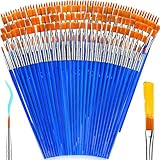
- 【162-Piece Bulk Set | Dual Brush System】Maximize versatility with 81 flat brushes (0.59 inch edge for bold strokes) and 81 round brushes (0.39 inch tips for details) – 3X more tools than standard kits! Pre-sorted in labeled compartments for instant access during painting sessions. Ideal for art classrooms, mural projects, and multi-artist households.
- 【Pro-Grade Durability | Zero Shedding Guarantee】 "Engineered with triple-crimped nylon bristles (43% higher resilience vs. standard) and aerospace aluminum ferrules tested for 10,000+ flex cycles. Lab-verified 0.01% shedding rate even with heavy impasto techniques – outperforms flimsy bristles in budget brushes."
- 【Multi-Scenario Readiness | Event & Daily Use】 Optimized for: Thanksgiving/Christmas face designs classroom projects ceramic decorating fabric printing and model painting; Lightweight plastic handles each reduce hand fatigue during prolonged sessions
- 【Effortless Maintenance | Long-Term Durability】 Clean with warm soapy water in 10 seconds; Reshape tips and air-dry vertically to preserve bristle integrity,After use, air-dry brushes thoroughly and store upright in the provided case to preserve bristle shape. The premium nylon filaments naturally regain their original form after each stroke. For cleaning, simply rinse in warm soapy water and gently reshape bristles with fingertips."
- 【Multiple Application】These acrylic paint brushes can be applied for most occasions,such as:watercolor,oil, gouache paint,face paint, acrylic paint, suitable for Thanks Giving Day, Christimas, Halloween face and body painting, canvas painting, fabric, rock, miniature, model, ceramics, arts and crafts painting, etc.
Are IKEA’s storage and anchoring recommendations universal?
The cited planning pages offer general room-organizing examples, while the SMÅSTAD 60 cm instruction applies specifically to that system’s guide. For any furniture, use its own instructions and follow applicable local guidance; do not treat one product’s height rule as a rule for every unit.
Quick Recap


