Windows Errors? Fix Them Before They Spread
Recommended Free Tools
Repair common Windows errors and clear accumulated junk for a smoother, more stable PC - no reinstall needed.
Fix My PC Now →Free scan · no reinstall
ThatPainter is reader-supported. When you buy through links on our site, we may earn an affiliate commission. Learn More
For a first quilt, start with Strips of Solids, Big Block Style, or Fat Quarter Shop’s The Ultimate Beginner Quilt. The first two use large, straightforward pieces; the third adds a guided PDF and video series. If you already own precut fabric, choose Charm Box for 5-inch squares or Jelly Roll Rail Fence for 2½-inch strips.
This guide separates genuinely easy first quilts from confident-beginner projects, baby quilts, wall quilts, table runners, and mini quilts. Each recommendation includes the finished size, fabric format, technique, and the kind of free access to expect. A free pattern may be a webpage tutorial, a downloadable PDF, a project sheet, or a download that requires an account.
#1 Best Overall

- SEWING, ARTS, AND CRAFTS STAPLE: This Fiskars Rotary Cutter can cut multiple layers of fabric, felt, vinyl, and quilting materials; Ideal for doing arts and crafts for adults; Great addition to your sewing accessories and quilting supplies
- PRECISION ART SUPPLIES: Precision-ground, 45mm rotary blade is perfect for projects and fabric that require precise cutting of multiple layers of materials; Pair with Fiskars Self-Healing Cutting Mat to protect your work surfaces
- LONG LASTING AND RELIABLE: High-grade steel blade provides improved durability and long-lasting sharpness; Fiskars craft supplies and materials are built to last
- COMFORTABLE AND CONVENIENT: Symmetrical stick handle design allows for ambidextrous cutting for right-handed users and left-handed users; Sliding button extends blade during use, locks it into position, and retracts it for safe storage;
- QUALITY TOOLS FOR ARTS AND CRAFTS: From scissors and cutting mats, rotary and paper cutters, to classroom essentials, scissors for kids, and quilting and scrapbooking supplies, Fiskars crafting tools are designed to help you express yourself
Pattern access and website requirements can change. The descriptions below reflect the source information supplied for this guide; check the linked pattern page before cutting fabric.
Start here: five strong choices
You do not need to examine 40 patterns before choosing a first project. Match your experience and fabric to one of these five.
| Best for | Pattern | Finished size | Fabric format | Why choose it | Main caution |
|---|---|---|---|---|---|
| Absolute beginner | Strips of Solids | 45½ × 48½ in. | Fabric strips | Straight bands mean very little point matching. | Keep the strips in order when arranging the rows. |
| Simple square quilt | Big Block Style | 56½ × 64½ in. | 8½-inch squares | Large pieces reduce cutting and seam count. | The larger quilt sandwich is more difficult to handle than the top. |
| Guided learning path | The Ultimate Beginner Quilt | 50½ in. square | Pattern-specific fabric requirements | A free PDF and video series guide the quilter block by block. | It is a sampler-style learning project, not the simplest possible patchwork. |
| Charm-pack project | Charm Box | 36½ × 45½ in. | 5-inch charm squares | Little yardage cutting is needed and the finished quilt is manageable. | Arrange the squares carefully before sewing the rows. |
| Jelly-roll project | Jelly Roll Rail Fence | Crib through king sizes | 2½-inch strips | Strip piecing teaches an efficient basic technique and the source provides a size guide. | Directional fabric and strip order can affect the final pattern. |
If you have never sewn a quilt block before, choose a small wall quilt, table runner, or baby quilt first. If you want a useful quilt rather than a practice piece, a small lap quilt or throw is usually the best compromise. A queen-size quilt can use simple blocks but is still physically demanding to baste, quilt, and turn under a domestic sewing machine.
What free means for quilt patterns
Free patterns are not all delivered in the same way. Look for the access label on each pattern card or source page:
- Free PDF: a downloadable pattern is available at no charge.
- Free tutorial: instructions appear on the webpage, but there may be no printable file.
- Free with account: the pattern costs nothing but requires registration. The Missouri Star roundup, for example, says a free Missouri Star account is needed to download its patterns.
- Free with email signup: an email address is required before the designer sends the file.
- Free one-size version: one size is free while additional sizes or an expanded pattern are paid. Check the fine print before buying fabric.
- Free project sheet: a manufacturer or designer supplies a downloadable sheet, sometimes connected to a particular fabric collection.
- Free for personal use: free does not mean uncopyrighted. Do not redistribute the file or assume that a commercial production license is included.
For comparison, AllPeopleQuilt’s roundup presents more than 40 numbered beginner-oriented projects, while SewCanShe’s collection emphasizes large blocks, shortcuts, strip piecing, and fast construction. Fat Quarter Shop’s beginner list is particularly useful if you want PDFs paired with videos. Quilt with Kim separates beginner, improver, and intermediate projects and advertises downloads without an email address, though site policies can change.
How difficult is beginner, really?
There is no universal quilting authority that makes the word beginner mean one fixed level. A designer may use it to mean easy compared with an advanced sampler; a first-time quilter may reasonably interpret it as a project with no triangles, no templates, and no tricky matching. Those are different standards.
Use these practical categories:
- Absolute beginner: squares, rectangles, or strips; repeated straight seams; little or no point matching.
- Beginner: Four-Patch, Nine-Patch, Rail Fence, Log Cabin, simple sashing, or repeated blocks.
- Confident beginner: half-square triangles, stars, fussy cutting, directional layouts, or more demanding color placement.
- Not ideal as a first quilt: curves, appliqué, foundation paper piecing, tiny pieces, complicated samplers, or numerous templates.
A pattern can be simple to piece and still difficult to finish if it is very large. Conversely, a small star wall hanging may involve more accurate sewing but be easier to quilt because the sandwich is compact. That is why finished size belongs beside the skill label.
Best free patterns for a first quilt
These patterns emphasize large cuts, strips, rectangles, repeated rows, or uncomplicated square units. The skill labels are editorial recommendations based on the construction described by the linked source, not a universal rating assigned by the designer.
What’s actually slowing this PC down?
Pick the symptom - the matching free tool is one click away.
| Pattern | Finished size | Construction | Free access and beginner note |
|---|---|---|---|
| Strips of Solids | 45½ × 48½ in. | Straight bands | Free project page with project link. One of the least stressful first choices because there are few corners to match. |
| Big Block Style | 56½ × 64½ in. | 8½-inch squares | Free project page with project link. Large pieces reduce the amount of cutting and piecing. |
| Make the Connection | 68½ × 84½ in. | Simple repeated units | Free project page with project link. Suitable for scraps, but its larger size makes quilting more demanding. |
| High Light | 65½ × 84½ in. | Giant blocks made from five large pieces | Free project page with project link. The blocks are straightforward; the finished throw is physically bulky. |
| Bold Statement | 65½ × 72½ in. | Large cuts and symmetrical arrangement | Free project page with project link. A quick-to-piece throw for a beginner comfortable managing a larger top. |
| Big Block Throw | 54½ in. square | 18-inch squares | Free project page with project link. A good use for large-scale prints and a low-seam-count design. |
| Scrappy Chic Throw | 50 × 67 in. | Rows of 10-inch precut squares | Free project page with project link. A strong precut-friendly choice with a manageable throw size. |
| Stacked Rectangles Quilt | 62 × 79 in. | 10-inch squares cut into rectangles | Free project page with project link. Teaches row assembly without complex block geometry. |
| It’s a Plaid, Plaid World | 56½ × 62½ in. | Rows of rectangles | Free project page with project link. The plaid effect looks harder than the underlying construction. |
| City Lights Quilt | 50¾ × 54 in. | Rectangles and sashing | Free project page with project link. Good practice for keeping sashing strips straight. |
| Fast and Fun Kids Quilt | 48½ × 55½ in. | Rectangles | Free project page with project link. An approachable child-size quilt with uncomplicated assembly. |
| Strips and Sashing Kid’s Quilt | 45½ × 46 in. | Repeating strips and sashing | Free project page with project link. Small enough to handle and useful for learning rows. |
| Two-Block Kid’s Quilt | 35½ × 49½ in. | Two repeating block types | Free project page with project link. A modest-size project that introduces block organization. |
| Easy Squares Quilt | 34½ × 44½ in. | Squares, setting squares, sashing, and borders | Free project page with project link. A compact first quilt, although borders require careful measuring. |
| Simple Sashing and Rectangles Quilt | 58½ × 81½ in. | Rectangles and sashing | Free project page with project link. Scrappy and orderly, but large enough to challenge a domestic machine. |
| Color Blocking | 43 × 51½ in. | Repeated color blocks | Free project page with project link. More approachable than an intricate block, but color contrast drives the design. |
| Rectangle Shift | 42½ × 54½ in. | Three rows of graphic rectangles | Free project page with project link. A practical introduction to layout and repeated units. |
Beginner skill builders
Choose one of these after a simple square or strip project, or choose one first if you are already comfortable sewing accurately. The patterns are not necessarily difficult, but they introduce more decisions about block construction, orientation, contrast, or fabric placement.
Rank #2

- SEWING, ARTS, AND CRAFTS STAPLE: This Fiskars Quick Change Rotary Cutter can cut multiple layers of fabric, felt, vinyl, and quilting materials; Ideal for doing arts and crafts; Great addition to your sewing accessories and quilting supplies
- PRECISION ART SUPPLIES: Precision-ground, 45mm rotary blade is perfect for projects and fabric that require precise cutting of materials; Pair with Fiskars Self-Healing Cutting Mat to protect your work surfaces
- LONG LASTING AND RELIABLE: High-grade steel blade provides improved durability and long-lasting sharpness; Fiskars craft supplies and materials are built to last
- COMFORTABLE AND CONVENIENT: Easy-to-use loop handle improves comfort and control; Sliding button extends blade during use, locks it into position, and retracts it for safe storage; Blades snap in or out easily for quick replacement
- QUALITY TOOLS FOR ARTS AND CRAFTS: From scissors and cutting mats, rotary and paper cutters, to classroom essentials, scissors for kids, and quilting and scrapbooking supplies, Fiskars crafting tools, express yourself; Ideal for sewing kit gift sets
| Pattern | Finished size | What it teaches | Best for |
|---|---|---|---|
| Room with a View | 56½ × 72½ in. | Framed Four-Patch units and repeated blocks | A second quilt or a confident first-time patchworker. |
| Outside the Box Simple Square Quilt | 72½ in. square | A 16-Patch block with nine alternate layouts | Someone who wants to learn how block rotation changes a quilt. |
| Easy as 1-2-3 | 46½ × 50½ in. | Simple shapes and a controlled color layout | A bright, child-size project. |
| Patriotic Patches | 42½ in. square | Squares and strips with contrast | A compact project for practicing light, medium, and dark values. |
| What a Treat | Verify on pattern page | Precut strips and small-format layout | A quilter willing to confirm the current measurements before cutting. |
| Mango Tango | 54½ in. square | Repeated nine-piece blocks | Practicing consistent block size and repeated construction. |
| Around the Block | 51½ in. square | Oversized Log Cabin construction | A first Log Cabin project after basic squares and strips. |
| Seaworthy Baby Quilt | 34 × 40 in. | Small scrappy layout and novelty-print placement | A baby quilt with visual fabric-placement decisions. |
| Rainbow Zigzags | 42½ × 46½ in. | Rectangles arranged in a directional zigzag | A quilter ready to pay close attention to fabric order. |
| Sunny Skies | 33½ in. square | Small star or wall-quilt construction | A confident beginner; star points require more accuracy than plain squares. |
| Hopscotch | 32½ × 48½ in. | Simple shapes and bright squares | A compact kid-size project. |
| Squares and Sashing Quilt | 36½ × 43¼ in. | 5-inch squares and sashing | A charm-square-style quilt with practice in row alignment. |
| Colorful Steps | 54½ in. square | Rail Fence construction and directional layout | A strip-piecing skill builder. |
| Block Play | Verify on pattern page | Two block sizes and fussy-cut centers | An ambitious beginner; fussy cutting makes it less automatic than the name suggests. |
| Rail Fence Baby Quilt | 37½ × 47½ in. | Rail Fence blocks using light, medium, and dark prints | A compact classic for practicing strip organization. |
| Modern-Day Cowboy Throw | 50½ × 66½ in. | Graphic layout and theme-driven fabric placement | A quilter who can follow a color or directional plan. |
Small-format projects: runners, toppers, wall quilts, and minis
Small projects are excellent for learning cutting, piecing, pressing, basting, quilting, and binding without wrestling with a bed-size quilt. They do not teach every skill involved in a full quilt, however, so treat them as focused practice rather than equivalent substitutes.
| Pattern | Finished size | Project type | Why it is useful |
|---|---|---|---|
| Center Pieces | 20 × 72 in. | Table runner | Uses chain piecing and precut strips; a useful first finish. |
| Charming Floral Table Runner | 14 × 30 in. | Table runner | Uses 5-inch charm squares and quilt-as-you-go construction. |
| Table Wear | 16 × 50 in. | Table runner | Strip-based and small enough to quilt easily on a domestic machine. |
| Seaside Style | 41 × 45 in. | Wall quilt | Large sections keep piecing approachable while fabric placement creates the scene. |
| Easy Squares Table Topper | Verify on pattern page | Table topper | Four-Patch units, setting squares, and rectangles provide compact practice. |
| Fresh Four-Patch Table Topper | 50½ in. square | Table topper | Introduces Four-Patch construction and setting squares. |
| Window Pane Wall Hanging | 36 × 40 in. | Wall hanging | A medallion-style project in which fabric selection matters as much as sewing accuracy. |
Best patterns by fabric format
Charm packs and 5-inch squares
A charm pack normally contains approximately 5-inch squares. It is convenient because most of the variety is already cut, though the usable finished square is smaller after seams. Good choices include:
- Charm Box — 36½ × 45½ inches and compact enough for a first quilt.
- Charm Pack Cherry — designed around 5-inch charm squares.
- Layers of Charm — uses charm packs and layer cakes for a quick beginner-friendly project.
- Charming Floral Table Runner — a small quilt-as-you-go option.
- Squares and Sashing Quilt — a practical project for learning how sashing changes a layout.
- Patchwork Squares Quilt — the free tutorial explains how to use 5-inch precut squares and customize the size.
Jelly rolls and 2½-inch strips
A jelly roll is generally made of 2½-inch-wide strips. It is useful when you want strip piecing and less rotary cutting.
Do these 3 things before closing this tab:
1Scan for outdated or missing drivers - takes under a minute2Repair Windows errors before they cause bigger problems3Fix the driver behind crashes, sound loss and screen glitches- Jelly Roll Rail Fence — a free pattern and size guide from crib through king.
- Jelly Roll Jam II — approximately 36½ × 38½ inches; Fat Quarter Shop says one jelly roll is designed to make two quilts.
- Jelly Snowflake — a 50½-inch square with a free PDF and accompanying video ecosystem.
- Center Pieces and Table Wear — small strip-based projects.
- Colorful Steps and Rail Fence Baby Quilt — useful if you want to learn Rail Fence construction.
Layer cakes and 10-inch squares
A layer cake generally contains approximately 10-inch squares. Large squares are efficient for beginners because they make a quilt grow quickly.
- Layer Cake Carousel — a beginner-friendly lap quilt using one layer cake plus one yard for the border, with a bonus mini-quilt size.
- Scrappy Chic Throw — uses 10-inch precut squares in simple rows.
- Stacked Rectangles Quilt — cuts 10-inch squares into rectangles.
- Layers of Charm — accommodates charm packs and layer cakes.
- Moon Cake Quilt — a 54-inch square using one layer cake and half-square triangles; best as a first triangle project, not necessarily a first-ever quilt.
Fat quarters
A fat quarter is approximately 18 × 21 inches. It gives more cutting flexibility than a precut square and works well for samplers, large blocks, and controlled scrappy quilts. Check each pattern’s fabric chart rather than assuming that any collection of fat quarters will substitute cleanly for yardage. Fat Quarter Shop’s precut guide explains the common dimensions and uses of the major precut formats.
The Ultimate Beginner Quilt is a good choice if you want a structured, block-by-block learning path. Swatch Quilt, at 48 × 60 inches, is another option, but its use of wovens makes it better suited to a confident beginner than someone seeking the most forgiving first project.
Scraps
Scraps are particularly suitable for Make the Connection, Scrappy Chic Throw, Simple Sashing and Rectangles Quilt, Seaworthy Baby Quilt, and Patriotic Patches. Sort scraps by color, value, size, and fabric weight before cutting. A scrappy quilt still needs a unifying plan; repeating one background color or limiting the palette can prevent visual chaos.
Quick wins for a faster PC:
Fix the driver behind crashes, sound loss and screen glitchesFind Drivers →Repair Windows errors before they cause bigger problemsFix Now →Which size should a beginner make?
| Project | Advantages | Trade-offs | Good starting point |
|---|---|---|---|
| Mini or table topper | Fast to cut, baste, quilt, and bind; inexpensive. | May use tiny pieces and does not teach full-size quilt handling. | Practice if you are nervous or have limited time. |
| Table runner | Small quilt sandwich; ideal for straight-line quilting or quilt-as-you-go. | Long rows can still require accurate pressing and does not resemble a bed quilt. | Table Wear or Center Pieces. |
| Baby or kids’ quilt | Manageable size and a satisfying useful finish. | Some baby patterns contain many small blocks, so size alone does not guarantee simplicity. | Two-Block Kid’s Quilt or Rail Fence Baby Quilt. |
| Lap quilt or small throw | Best balance of practical size and manageable handling. | Requires more fabric, more quilting, and a larger work surface. | Big Block Style or Scrappy Chic Throw. |
| Bed or queen quilt | Ambitious and meaningful; simple blocks can create a large design. | More cutting, more seams, a heavier sandwich, and greater domestic-machine quilting difficulty. | Save it for a later project unless you have sewing experience or outside quilting help. |
What you actually need
Essentials
- A sewing machine that makes a reliable straight stitch, or supplies for hand piecing.
- Stable quilting cotton or another stable woven fabric.
- General-purpose thread suitable for piecing.
- Fabric scissors, or a rotary cutter, cutting mat, and acrylic ruler.
- An iron and pressing surface.
- A seam ripper.
- Batting, backing fabric, and binding fabric.
- Pins, clips, or another method for basting the quilt layers.
A rotary cutter, cutting mat, and ruler make repeated accurate cuts much easier, but they are not mandatory for a small practice project. A basic machine and straight stitch are enough for piecing a quilt top; decorative stitches and an expensive quilting machine are optional. Singer’s beginner guide also treats basic straight-stitch equipment as the starting point rather than a requirement for specialized machinery.
Fabric, batting, and backing
Use quilting cotton for the most predictable first experience. Avoid stretchy knits, slippery fabric, loosely woven cloth, and mixed weights until you understand how they behave. Flannel and minky can be used, but they may stretch, shed, shift, or add bulk. Recycled clothing and sheets are possible for practice, but seams, zippers, buttons, grain, and fabric weight can complicate construction.
Rank #3

- Sharp & Sturdy Cutter Blade: The rotary cutter for fabric is equipped with 45mm stainless steel rotary cutter blades, which is exceptionally sharp, long-lasting, and provides a meticulously clean, fray-free cut
- Comfortable Grip: The rotary cutter features an ergonomic rotary cutter handle that is non-slip, providing an effortless, comfortable grip that significantly reduces hand fatigue during extended cutting sessions
- Safety Button Feature: Press from the front to unlock and eject the blade; press from the back to lock. Quick operation with ensured safety
- Wide Application: The rotary cutter can cut batting, foams, leather, multi-layer fabric and quilting materials, making it an great tool for quilting, sewing, patchworking, and all kinds of creative craft projects
- Professional Rotary Cutter Set: The set includes 1 × 45mm rotary cutter and 5 replacement blades. Durable, easy blade replacement. Ideal for craft lovers or as a gift
Buy enough backing and batting to extend beyond all four edges of the quilt top. The exact overage depends on the quilting method and the long-arm or domestic-machine instructions you follow. Do not assume the free piecing pattern includes complete basting, quilting, or binding directions; many free patterns concentrate on making the top.
How to choose fabric without making the quilt harder
- Choose contrast before color. A light, medium, and dark value structure makes block shapes easier to see.
- Use fewer fabric types for the first project. A controlled palette is easier to arrange than 30 unrelated prints.
- Be cautious with directional prints. Stripes, text, and one-way motifs may need to be rotated consistently.
- Large prints need large pieces. A pattern using 18-inch squares can show a large motif; tiny blocks will cut it apart.
- Keep fabric weights compatible. Similar quilting cottons are easier to press and sew together.
- Decide about prewashing before cutting. Prewashing can reduce later shrinkage and reveal bleeding. Skipping it preserves the manufacturer’s sizing and reduces fraying. Consider prewashing especially when using dark reds, deep blues, flannel, or fabrics from different manufacturers. The most important rule is consistency throughout the project.
The ¼-inch seam that makes or breaks the quilt
Most conventional quilt-piecing patterns use a ¼-inch seam allowance. The exact brand of presser foot matters less than sewing a repeatable seam. Some patterns specify a true ¼ inch and others a scant ¼ inch; follow the individual pattern rather than treating a scant seam as a universal rule.
The Tool Desk
Outbyte Driver Updater FREEFix the driver behind crashes, sound loss and screen glitchesFind Drivers →Outbyte PC Repair FREEClear out junk files and repair common Windows errorsFree Scan →- Cut two test pieces from scrap.
- Sew them using the seam allowance specified by the pattern.
- Press the unit as directed.
- Measure the unfinished unit against the pattern measurement.
- Adjust the needle position, seam guide, tape marker, or presser foot before cutting the real fabric.
AllPeopleQuilt’s seam guide explains why tiny seam differences accumulate across multiple strips and distinguishes a true ¼-inch seam from a scant ¼-inch seam. A quarter-inch foot can help, but a regular foot with a marked needle position, painter’s tape, or another stable seam guide can work too.
Before cutting a downloadable pattern
- Print at 100% or Actual Size.
- Turn off Fit to Page or similar automatic scaling unless the pattern explicitly requires it.
- Print and measure the test square or calibration box before cutting.
- Do not rely on a browser preview or mobile printing app without checking its scale.
- Read the entire cutting chart before opening the fabric.
- Label fabric pieces immediately if the pattern uses several sizes.
Also distinguish finished from unfinished measurements. An unfinished block includes the seam allowance. After a standard ¼-inch seam is sewn on each side, the finished size is ½ inch smaller in both directions. Lo & Behold Stitchery’s patchwork tutorial illustrates this distinction clearly.
How to turn a free pattern into a finished quilt
The linked pattern usually handles the quilt-top design. This is the complete path from fabric to a bound quilt:
- Read the pattern completely. Confirm the finished size, fabric requirements, cutting sizes, seam allowance, pressing instructions, and whether the free version includes every size.
- Prepare the fabric. Decide whether to prewash, then press it flat. Trim loose threads and square the fabric before rotary cutting.
- Cut accurately. Keep the ruler aligned with the grain and cut only the pieces required for the current step.
- Make one test unit. Verify seam allowance and unfinished measurement before chain piecing the entire batch.
- Piece the units. Sew with the same seam allowance every time. Chain piecing can save thread and time, but do not mix up pieces with directional designs.
- Press deliberately. Pressing directions vary. Press seams open or to one side as the pattern instructs, and avoid stretching the unit with the iron.
- Square up when appropriate. Trim only when the instructions allow it and preserve the specified unfinished measurement.
- Arrange the blocks or rows. Lay everything out before sewing. Photograph the arrangement if you need to clear the floor or design wall.
- Assemble the quilt top. Match seams where the pattern requires it, but do not stretch fabric to force mismatched edges together.
- Make the quilt sandwich. Place the backing wrong-side up, add batting, and place the quilt top right-side up. Baste the layers with pins, clips, spray, or hand stitches appropriate to your method.
- Quilt the layers. For a first project, use straight lines along seams, a simple crosshatch, or widely spaced diagonal lines. A small quilt is much easier to quilt on a domestic machine than a queen-size sandwich.
- Trim and bind. Trim the quilted edges square, make or use the required binding, attach it to the front, and finish it on the back. Wash and dry according to the fabric and batting instructions.
Quilting the top and finishing the quilt are different tasks. A pattern that gives excellent block instructions may not explain batting choice, basting, machine quilting, binding, or washing. Plan those steps before you begin.
Free tools Windows power users keep installed
One-click scans. No signup required.
Troubleshooting common beginner problems
My blocks are too small
- Measure the unfinished block against the pattern’s unfinished measurement.
- Sew a new test unit and check the actual seam width.
- Confirm whether the pattern expects a true or scant ¼-inch seam.
- Check whether pressing has pulled the fabric out of shape.
- Trim only if the pattern permits it and the block can still retain its required size.
Do not compensate for a consistently inaccurate seam by cutting random pieces larger or forcing the final rows together. Correct the test seam first.
My seams do not match
Check seam allowance, pressing direction, cutting accuracy, and whether one unit has been rotated. Pin or clip the intersection, sew slowly, and avoid stretching the fabric. If the mismatch is substantial, unpick and resew the offending seam rather than hoping later rows will hide it.
My borders are wavy
Measure the quilt center and cut borders to the measured length instead of automatically sewing on a strip that is longer and easing in excess fabric. A border that is too long can create ripples. Press the quilt top flat and check that the center has not stretched before attaching borders.
Rank #4
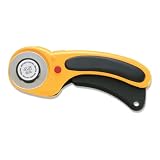
- RAZOR SHARP 45MM ROTARY BLADE - The RTY-2/DX is pre-loaded with an RB45-1H Endurance Rotary Blade. The ultra-sharp rolling razor blade delivers unparalleled sharpness and superior edge retention for twice the life of a standard rotary blade.
- SQUEEZE TRIGGER HANDLE - Easy squeeze handle exposes the blade and self-retracts for safety. The curved handle with anti-slip rubber grip reduces hand fatigue and stress. The integrated grooves help prevent finger slippage.
- QUICK & EASY BLADE REPLACEMENT - OLFA's 45mm Rotary Cutter has a blade system that provides simple and safe blade changes. The dual-action safety lock allows the blade to be locked while open or closed.
- INTRICATE & ACCURATE CUTTING - Provides detailed and precise cutting of a variety of materials including cotton, wool, paper, vinyl, leather, and more. Also fits our Pinking Blade (PIB45-1), Scallop/Peak Blade (SCB45-1), and Wave Blade (WAB45-1).
- THE OLFA STANDARD - As the inventor of the Rotary Cutter in 1979, OLFA has maintained a standard of cutting excellence for our quality and durability. Pairing OLFA brand rotary cutter, blades and cutting mats together will provide optimal results.
The fabric is distorting
Cut with the grain, support the fabric while pressing, and do not drag the iron across small bias-edge units. Half-square triangles are especially vulnerable because their cut edges can stretch. Handle them gently and trim them according to the pattern.
The colors are bleeding
Prewash fabrics when you are concerned about colorfastness, especially strong reds and dark blues. If bleeding appears after quilting, follow a trusted textile-care procedure and test any treatment on a sample first. Always follow the batting and fabric manufacturer’s care guidance.
The quilt sandwich keeps shifting
Use more basting support, work from the center outward, and quilt manageable sections. Reduce the spacing between pins or clips if the layers are moving. A small practice quilt is not only easier to sew; it is easier to keep flat.
My domestic machine struggles with the bulk
Roll or fold only the section that is not under the needle, keep the quilt supported by a table, and use a simple quilting design with adequate spacing. If the quilt is very large, consider having the finished top professionally quilted. Simple piecing does not guarantee simple machine quilting.
Can you sell a quilt made from a free pattern?
Do not assume that you can. Read the designer’s copyright and licensing statement. A free pattern may be intended for personal use and may prohibit copying, redistribution, teaching from duplicated copies, or commercial production. Polka Dot Chair’s guidance on free patterns explicitly notes that free patterns remain copyrighted and are generally intended for personal use. If the license is unclear, contact the designer before selling finished quilts or using the design for classes.
Outdated Drivers Are Slowing You Down
One free scan finds every outdated or missing driver and matches the right update for your exact hardware.Free scan · exact hardware matchWindows Errors? Fix Them Before They Spread
Repair common Windows errors and clear accumulated junk for a smoother, more stable PC - no reinstall needed.Free scan · no reinstallWhy this list is organized differently from ordinary roundups
Large roundup pages are useful discovery tools, but they often place a table runner beside a throw and call both beginner quilts. The source material for this guide includes full throws, baby quilts, wall quilts, table toppers, runners, and minis, so they are separated here by format.
The strongest choice depends on the reader’s actual problem:
- Need the fewest precision seams? Choose Strips of Solids or Table Wear.
- Want large pieces? Choose Big Block Style or Big Block Throw.
- Already own charm squares? Choose Charm Box or Patchwork Squares Quilt.
- Already own a jelly roll? Choose Jelly Roll Rail Fence or Jelly Roll Jam II.
- Need visual instruction? Choose The Ultimate Beginner Quilt or another Fat Quarter Shop pattern with a PDF and video tutorial.
- Want a very quick finish? Choose a table runner, topper, mini, or wall hanging rather than a bed quilt.
- Want to use scraps? Choose Make the Connection, Scrappy Chic Throw, or Simple Sashing and Rectangles Quilt.
Frequently Asked Questions
What is the easiest quilt pattern for a complete beginner?
A one-patch square quilt or a strip quilt is usually the most forgiving. From this list, Strips of Solids is the strongest choice when you want few corners to match, while Big Block Style is a good option when you prefer large squares. A small table runner is even easier to handle, but it will not teach every skill involved in making a full-size quilt.
Can I make a quilt without a rotary cutter?
Yes. You can cut with fabric scissors and a cardboard or paper template, especially for a small project. A rotary cutter, cutting mat, and acrylic ruler make repeated straight cuts faster and more consistent, so they become increasingly useful for larger quilts.
Best Value

- SEWING, ARTS, AND CRAFTS STAPLE: This Fiskars Rotary Cutter can cut batting, foams, multiple layers of fabric, and quilting materials; Ideal for doing arts and crafts for adults or kids; Great addition to your sewing accessories and quilting supplies
- PRECISION ART SUPPLIES: Precision-ground, 60mm rotary blade with titanium coating is perfect for projects and fabric that require precise cutting of thicker materials; Pair with Fiskars Self-Healing Cutting Mat for easy and enjoyable creating
- LONG LASTING AND RELIABLE: Blade with titanium coating is three times harder than steel for improved durability and long-lasting sharpness; Fiskars craft supplies and materials are built to last and backed by a full lifetime warranty
- COMFORTABLE AND CONVENIENT: Easy-to-use loop handle improves comfort and control; Sliding button extends blade during use, locks it into position, and retracts it for safe storage; Blades snap in or out easily for quick replacement
- QUALITY TOOLS FOR ARTS AND CRAFTS: From scissors and cutting mats, rotary and paper cutters, to classroom essentials, scissors for kids, and quilting and scrapbooking supplies, Fiskars crafting tools are designed to help you express yourself
Do I need a quarter-inch presser foot?
No. A quarter-inch foot is helpful but optional. You can use a regular foot with a marked needle position, painter’s tape, or a seam guide. Test your seam on scraps and measure the resulting unit before cutting the project.
Can I use fat quarters for these free patterns?
Often, but not automatically. Fat quarters are approximately 18 × 21 inches and work well for samplers, large blocks, and controlled scrappy quilts. Compare the pattern’s cutting chart with the actual fat-quarter requirements; substituting fat quarters for yardage may change the amount of usable fabric.
Can I quilt the finished top on a regular sewing machine?
Yes, particularly when the quilt is small or medium-sized and you use straight-line quilting. Keep the quilt supported, baste the layers securely, and choose widely spaced lines for a first project. A large quilt sandwich may be difficult even if its piecing is simple, so professional quilting is an option.
Do all free quilt patterns download as PDFs?
No. Some are free webpage tutorials, some provide project sheets, and some offer PDFs. Missouri Star’s free-pattern roundup says a free account is required for downloads, while other designers may request an email address or offer a free version in only one size. Check the access label and source page before shopping.
Can I resize a beginner quilt pattern?
Usually you can add or remove repeated blocks, rows, sashing, or borders, but do not assume every pattern scales cleanly. Changing block dimensions can alter fabric requirements and border measurements. Make the original block first, then calculate the new layout and yardage.
What is the difference between a quilt top and a finished quilt?
The quilt top is the pieced decorative layer. A finished quilt also has batting and backing, is basted and quilted, and has its edges trimmed and bound. Many free patterns explain how to make the top but provide little or no instruction for quilting and binding.
Can I use a free pattern to make quilts for sale?
Only if the pattern’s license permits it. Free patterns remain copyrighted, and some are limited to personal use. Read the designer’s terms or ask for permission before selling finished quilts, teaching the pattern, distributing copies, or using the design commercially.
The Bottom Line
Choose the simplest pattern that matches the fabric you already have, not the most impressive photograph. For a first-ever quilt, start with Strips of Solids, Big Block Style, or a small runner. Choose The Ultimate Beginner Quilt if you want structured video instruction, Charm Box if you own charm squares, and Jelly Roll Rail Fence if you own a jelly roll. Test the ¼-inch seam, print the pattern at actual size, and remember that completing the quilt requires batting, backing, quilting, and binding in addition to piecing the top.
Quick Recap

Product prices and availability are accurate as of the date/time indicated and are subject to change. Any price and availability information displayed on Amazon at the time of purchase will apply.




