Free tools Windows power users keep installed
One-click scans. No signup required.
ThatPainter is reader-supported. When you buy through links on our site, we may earn an affiliate commission. Learn More
The best pantry storage ideas are the ones that make food visible, reachable, and easy to put away: reset the space first, create household-specific zones, then add only the bins, canisters, risers, turntables, or pull-outs that solve a recurring problem. This approach works in a walk-in pantry, a narrow cupboard, or a few kitchen shelves because it improves the existing storage instead of assuming you need a full renovation.
As an Amazon Associate I earn from qualifying purchases.
Start by emptying and cleaning the pantry, checking dates and package condition, and measuring every shelf. Then use the seven ideas below in order of usefulness: the first two establish the system, while the others are optional tools for containment, visibility, access, and replenishment.
Free tools Windows power users keep installed
One-click scans. No signup required.
| Name | Best for | Key spec | Checked |
|---|---|---|---|
| Empty and edit before organizing | Any pantry reset | Remove food, clean shelves, check dates and condition | November 2026 |
| Create clear category zones | Faster daily retrieval | Group by household shopping and cooking routines | November 2026 |
| Labeled bins for loose packets | Snacks, pouches, and small packets | Measure shelf width, depth, and height before buying | November 2026 |
| Selective decanting | Staples that stack or spill | Use labeled, stackable canisters or jars and retain package information | November 2026 |
| Shelf risers | Short items hidden behind taller ones | Check clearance and stability | November 2026 |
| Turntable or pull-out bin | Deep shelves and hard-to-reach bottles | Use only where the organizer improves access without wasting capacity | November 2026 |
| A deliberate restocking method | Keeping categories usable over time | Put new food behind older food so older stock is used first | November 2026 |
How do I start organizing a pantry?
Start with an empty shelf, not a shopping cart. Clearing the pantry shows what you own, exposes crumbs or spills, and prevents you from buying containers for food that will be discarded or moved. Both Consumer Reports’ pantry guidance and The Home Depot’s organization guide put clearing and cleaning before the organizing products.
Popular on Amazon

- Great Value Paint Brush Set: Soucolor 20 acrylic paint brushes come in 10 different sizes, making them ideal for fine detailing, model painting, rock painting, nail art, face painting, DIY crafts, and general art projects. The varied brush sizes give you better control for both delicate lines and broader color coverage, while the soft bristles deliver smooth, consistent results on acrylic, oil, watercolor, canvas, wood, ceramic, and more.
- Awesome Set of Paint brushes: Professional paint brushes can cover all of your needs. The multi-purposed brushes are ideal for Watercolor, Oil, Gouache, enamel, Acrylic Painting, Body, Nail, Face Painting, Miniature, Model, Wood, Glass, Cup, Ceramic, Fine work, Art class, Craft Art Painting, DIY Art Crafts etc.
- Soft and long-lasting: The bristles are soft and strong, with nickel metal ferrules and blue wooden handles. After cleaning, the bristles will become soft and fluffy again and will not fall off.
- Easy to clean: it’s very convenient to Wash well in soap and water. Retain shape after drying. the brushes hold up very well. Nice selection to beginners and professionals. Keep them clean and they last a long time.
- Perfect for All Painters & Occasions: Suitable for art beginners, hobbyists and professional artists. Great for art class, home creation, travel painting and DIY handmade projects. A practical art gift for students, teachers, family and craft lovers.
- Take everything out. Work shelf by shelf or clear the whole cupboard onto a clean counter or table. Do not create a second, hidden pile that you will forget.
- Clean the empty shelves. Remove dust and crumbs and let surfaces dry before food goes back. Cleaning is easier now than around full containers.
- Check dates, seals, and condition. Separate anything past its date, damaged, damp, infested, or otherwise unsuitable according to the product label. When you are unsure about a particular food, follow its label or the relevant food-safety guidance rather than relying on a container to make it safe.
- Group what remains provisionally. Make rough piles such as breakfast, baking, grains and pasta, snacks, cans, oils, and unopened back-stock. These are starting points, not mandatory categories.
- Notice the friction. Identify what repeatedly topples, disappears behind taller packages, gets forgotten at the back, or is difficult to remove. Those observations tell you which organizers, if any, are justified.
- Measure before purchasing. Record each shelf’s clear width, depth, and height, including the space below the shelf above. Measure around hinges, posts, pipes, and door trim as well as the flat shelf.
Keep an inventory of the food you actually buy and use. A pantry that holds fewer, visible items can work better than one filled to its maximum capacity. Planning for maintenance is part of the system, not a separate decorating project.
What category zones make a pantry easier to use?
Create zones around the way your household shops and cooks, then place the most frequently used categories at comfortable reach. A category is useful when everyone can predict where an item belongs; it does not need to match a magazine layout. The Home Depot recommends creating sections, while design guidance collected by Architectural Digest emphasizes fitting the design to access and function.
Possible zones include:
- Breakfast: cereal, oats, spreads, and items used together in the morning.
- Baking: flour, sugar, leaveners, decorations, and small baking packets.
- Grains and pasta: rice, pasta, couscous, and similar dry staples.
- Snacks: packets and bars that need quick, independent access.
- Cans and jars: grouped so labels face forward and heavier items stay on a suitably strong, lower shelf.
- Oils and condiments: bottles that benefit from an upright, contained area.
- Back-stock: unopened duplicates, placed behind or below the working supply.
Use the shelf position to reinforce the zone. Put everyday items where the main user can see and reach them without a step stool. Reserve higher or less convenient shelves for occasional-use food or light back-stock. Keep heavy items low enough to lift safely. If two people use the pantry differently, agree on names and locations before adding labels.
Zones should be broad enough to remain stable. If a “quick dinners” category changes every week, it may be more reliable to use the durable categories “grains and pasta” and “cans.” Conversely, a household that packs lunches daily may need a dedicated lunch or snack zone. The best layout is the one that reflects repeated behavior rather than an idealized template.
Which bins work best for loose packets?
Use a bin when small packets, pouches, or bags fall over, spread across a shelf, or become invisible behind larger packages. A clear or open-front bin lets you see the group while containing it; a front label tells every user what belongs there. Bins are particularly useful for snacks, baking supplies, and small pouches, but they are not automatically an improvement for every category.
- Measure the shelf first. Check width, depth, and height at the tightest points. Include the clearance needed to pull the bin out if it will sit on a deep shelf.
- Match the bin to the task. A shallow container can make snack packets easy to browse; a deeper one may hold back-stock but can hide items. Choose a size that can be lifted and cleaned comfortably.
- Label the front by category. “Snack bars” or “Baking packets” is more useful than a decorative label. If the contents change often, use a replaceable label.
- Leave room to remove items. Do not pack a bin so tightly that taking one packet pulls out five others. A little unused space is the price of access.
- Keep unlike foods separate when it helps. Separate sweet snacks from savory snacks or allergen-sensitive supplies when that matches your household’s needs and the product labels.
Matching sets are optional. One or two bins that solve a real toppling or visibility problem are better than a complete set that consumes shelf space and creates extra containers to wash. Recheck the fit after loading: a bin that technically fits but cannot be pulled forward is not functioning as intended.
When should I decant pantry staples into canisters?
Decant only the dry goods that become easier to see, stack, or portion in a container. Stackable canisters or jars can suit cereal, oats, rice, pasta, or flour, but transferring every package creates work and can remove useful package information. Consumer Reports lists canisters and jars as an option for pantry staples, not a requirement.
Outdated Drivers Are Slowing You Down
One free scan finds every outdated or missing driver and matches the right update for your exact hardware.Free scan · exact hardware matchWindows Errors? Fix Them Before They Spread
Repair common Windows errors and clear accumulated junk for a smoother, more stable PC - no reinstall needed.Free scan · no reinstallAlso popular on Amazon

- COMPLETE 5-PIECE BRUSH SET FOR EVERY PAINTING TASK — Includes 1 Inch Flat, 1.5 Inch Angle, 2 Inch Flat, 2 Inch Angle Stubby, and 2.5 Inch Angle brush giving you every size professional painters use daily. Get all 5 for less than the price of a single brush from hardware store brands — professional grade performance at a fraction of the cost. Perfect for walls, trim, cabinets, doors, furniture, and detailed cutting-in work on any project.
- ZERO BRISTLE LOSS — GUARANTEED BY PRECISION ADHESIVE BONDING — Every bristle is locked in place with precision-set adhesive that keeps them in the brush — not in your paint job. The coated steel ferrule provides structural support while the adhesive bond ensures clean performance on every stroke. Premium SRT synthetic filaments load more paint and release it evenly for a smooth streak-free finish on walls, ceilings, and trim. Works with latex, oil-based paint, primer, sealer, and wood stain.
- INCLUDES THE ANGLE STUBBY MOST SETS LEAVE OUT — Professional painters know the 2 Inch Angle Stubby is the go-to brush for tight cabinet interiors, window sashes, inside corners, and detailed trim where standard angle brushes are too long. Combined with the 1.5 and 2.5 inch angle sash brushes you have precision cutting-in covered at every scale — baseboards, crown molding, door casings, and ceiling lines.
- FLAT BRUSHES FOR BROAD SMOOTH COVERAGE ON ANY SURFACE — The 1 and 2 inch flat brushes deliver even coverage on walls, furniture, shelving, doors, fences, decks, and wood surfaces. Ideal for applying primers, stains, varnishes, polyurethane, and specialty coatings. Solid wood handles provide all-day comfort and control for both professional contractors and weekend DIY homeowners tackling interior or exterior painting projects.
- TRUSTED BY PROFESSIONAL PAINTERS AND CONTRACTORS NATIONWIDE — Pro Grade delivers professional-grade results at a price that makes sense for crews who go through brushes on every job. Ideal for property managers, remodeling contractors, apartment turnover crews, maintenance teams, and commercial painting operations. Backed by thousands of verified reviews from working painters. Washable and reusable for multiple projects.
Choose a container when all of the following are true:
- The food is a dry staple you use often enough to justify refilling.
- The container fits the shelf and the amount you normally purchase.
- The opening is wide enough to empty and clean without residue building up.
- The lid closes securely and the material is appropriate for the food and cleaning routine.
- You can label the contents and retain key information from the original package, such as cooking directions, ingredient details, allergen information, lot information, or the use-by guidance you need.
Before filling, wash and dry the container according to its care instructions. Transfer the food only when both the container and the product are dry. Label the name clearly; add a date or batch note if that helps your household rotate stock. Do not pour a new purchase on top of old contents without checking and using what remains. If you cannot comfortably empty, wash, dry, and refill the vessel, the original package may be the more practical choice.
Canisters also need a capacity check. A tall jar that holds more than one purchase may be awkward to lift, while a narrow jar may leave unused shelf depth. The goal is predictable access, not visual uniformity. Keep the original package or its information available whenever the label contains details you need for safe preparation or dietary decisions.
Are shelf risers worth using?
A shelf riser is worthwhile when a back row of short items is hidden behind taller goods. It raises the rear row so labels and contents are visible without removing the front row. The benefit is visibility and retrieval, not extra shelf area.
Do these 3 things before closing this tab:
1Clear out junk files and repair common Windows errors2Scan for outdated or missing drivers - takes under a minute3Repair Windows errors before they cause bigger problemsMeasure the vertical clearance between shelves before buying. The riser must fit beneath the shelf above with enough room to place and remove the food. Check that its feet sit flat and that it remains stable when loaded; a wobbly platform can create more frustration than a crowded shelf.
Use risers selectively:
- Place shorter cans or jars on the raised rear level and taller items in front only when both rows remain reachable.
- Keep the heaviest products on a stable, low shelf rather than on a high platform.
- Do not force a riser into a shelf whose depth leaves no hand room.
- Leave a clear view of labels; an elevated row that is still blocked has not solved the problem.
Risers are especially useful in cabinets with fixed shelves, where moving the shelf is impossible. If shelf height is adjustable, changing the shelf position may provide the same visibility with fewer parts. Either way, judge the result by whether you can identify and remove an item at a glance.
When should I use a turntable or pull-out bin?
Use a turntable for suitable bottles or condiments that are difficult to reach at the back, and use a pull-out bin when a deep shelf makes an entire group hard to scan. These are conditional solutions: an organizer is useful only if it improves access without taking more capacity than the problem justifies.
Also popular on Amazon

- 【All sizes of art brushes】: The 10 sizes of multi-functional brushes have various shapes, making the mixing color easier, which is very suitable for artists, students, teenagers, children and painters at all levels. Wonderful Present ideas for friends and family who like painting!
- 【general brush set】: Professional paint brush can meet all your needs. Multifunctional brush is very suitable for watercolor, oil, gouache, acrylic painting, body, nail, face painting, miniature, model, ceramics, arts and crafts painting, etc.
- 【high quality process】: It is designed with anti falling bristles, anti-rust nickel ferrule and solid wood handle. You can use the brush to focus on the painting and always be creative.
- 【easy to maintain】: After using the brush, it is very convenient to clean the brush with warm soapy water and reshape the tip of the brush. Air dry the brush and place it on top of the top for long use.
- 【100% satisfaction guarantee - buy now】1 packs of set brushes, you can also get friendly customer service, any questions feel free to contact us, within 24 hours to help you! There is no risk in buying our paint brush kit.
For a turntable, measure the shelf’s width, depth, and height and account for the full circle of the loaded bottles. Leave enough clearance for the turntable to rotate without striking the side walls or shelf above. Select stable, upright items; a crowded or top-heavy load can be difficult to turn safely. Keep drippy bottles on a surface that can be cleaned and inspect the area for spills.
What’s actually slowing this PC down?
Pick the symptom - the matching free tool is one click away.
For a pull-out bin, verify that the bin can travel far enough forward for you to see the back contents. A deep fixed bin that stops halfway may simply create a second hidden layer. Check the handle or front edge, the weight when full, and whether the bin can be removed for cleaning.
Neither tool is mandatory. If moving a few items to a reachable shelf solves the problem, that is usually simpler. Add a turntable or pull-out only after you have identified a recurring access failure and measured the space. Reassess after loading: if the organizer reduces usable capacity, makes labels harder to read, or is cumbersome to clean, remove it rather than preserving it for appearance.
How can a restocking routine keep the pantry organized?
Make replenishment part of the design. Consistent categories and a simple first-in, first-out habit prevent the system from collapsing when groceries arrive. Consumer Reports describes temporarily removing existing contents, placing fresh food below or behind, and returning older food on top so older stock is used first.
- Pause before unloading. Look at the category and identify what is already open or closest to its use-by guidance.
- Bring older stock forward. Move the older package to the front or top where it will be selected first.
- Place the new purchase behind or below it. Keep identical products together without burying the older one.
- Return items to their zones. Put a snack packet back in the snack bin and a new can in the can area immediately rather than creating a temporary pile.
- Adjust the category if it repeatedly overflows. Overflow is evidence that the zone, purchase quantity, or shelf allocation needs review.
For decanted foods, check the remaining quantity before adding anything. Empty and clean the vessel when needed, then refill with the older product first. Never assume that a container’s appearance tells you whether its contents are still suitable; follow the food label and storage directions.
Recommended Free Tools
A short reset at the same time each week or after a grocery trip is often easier to maintain than a large seasonal overhaul. The routine should include wiping a spill, returning a stray item, and checking the back of a zone—not an elaborate reorganization.
What pantry conditions protect food?
Organizers cannot compensate for an unsuitable environment. The Academy of Nutrition and Dietetics recommends a cool cupboard, preferably 50°F–70°F. Texas A&M AgriLife Extension likewise describes pantry storage as cool, dry, and dark and discusses metal, glass, or plastic containers in its safe home food-storage guidance.
Also popular on Amazon

- 【KIDS PAINT BRUSHES SET】Anezus paint brushes for kids come with 10 pcs paint brushes of 5pcs round paintbrushes and 5 flat paint brushes with colorful handles, good for the young artist to explore their creativity in painting and crafting
- 【HIGH QUALITY PAINT BRUSHES FOR KIDS】These toddler paint brushes made of soft hog bristle, bright colored handles and rust proof ferrules. The bristles are firmly fixed in the kids paint brushes and no shedding. Each children paint brush measure 6 1/4 inches (16cm) in length and ferrules 1/2"(1.3cm) diameter, large enough for the little hand to grip and control
- 【WIDE APPLICATIONS】With combination of round and flat craft paint brushes for kids, work great with washable paint, tempera paint and acrylic paint. Great for arts and craft, rock, leather, gesso and ceramic, or body, nail and face art painting.
- 【EASY TO CLEAN 】After using paint brushes for acrylic, oil or watercolor painting, it’s very convenient to clean them with warm soapy water and reshape the paint brush tips. Keep these craft paint brushes clean and they last a long time.
- 【GREAT GIFT IDEA】Perfect for students, teens, kids, children and painters of all levels. Wonderful gift idea for girls, boys and kids who love painting! These all-purpose paint brushes for kids are ideal for kids' school projects, birthday parties, painting parties, art parties, back to school supplies, classroom decoration and more.
- Keep pantry food away from ovens, dishwashers, radiators, direct sun, and other heat-producing appliances.
- Choose a dry location; moisture can damage packages and affect dry goods.
- Use clean, intact containers suitable for the specific food, and keep lids closed.
- Follow each product’s label for storage, use-by, and preparation instructions.
- Inspect shelves and containers for spills or signs of pests and clean promptly.
A jar, bin, or canister does not guarantee freshness or safety. It is an access and organization tool. The food itself, the original label, the storage temperature, and the condition of the package still determine what is appropriate to keep and eat.
Independent reader supportYour contribution helps us test, update, and keep practical guides available for everyone.How do I choose between bins, canisters, risers, and pull-outs?
Choose by the problem you can name, not by a matching aesthetic. Compare each option on five practical criteria: shelf fit and remaining capacity, improvement in visibility or access, ease of cleaning and refilling, suitability for the food or package, and cost relative to how often it solves the problem.
| If the recurring problem is… | Try first | Check before committing |
|---|---|---|
| Packets topple or scatter | A labeled bin | Clearance, lift-out access, and whether the category will stay stable |
| Staples are hard to stack or identify | A labeled canister or jar | Cleaning, package information, capacity, and refill frequency |
| Short items disappear behind tall ones | A shelf riser or shelf-height adjustment | Vertical clearance, stability, and hand room |
| The back of a deep shelf is inaccessible | A pull-out bin or relocation to a shallower shelf | Travel distance, loaded weight, and cleanability |
| Bottles hide behind one another | A suitable turntable or a narrower zone | Rotation clearance, stability, and spill control |
Do not buy an organizer until the measurement and the failure mode agree. A container that is too deep can hide food; a riser that is too tall can make the shelf unusable; a turntable can reduce capacity if its circular footprint wastes corners. The simplest effective change—moving a category, reducing duplicates, or changing shelf height—often deserves the first attempt.
How can I make a small pantry work better?
Small pantries benefit most from visibility and disciplined capacity. Start with the same empty-and-edit reset, then assign only the categories you genuinely use. Give prime space to daily foods and use higher shelves for light, occasional items. Avoid filling every gap: a little clearance lets you read labels and remove one item without moving several others.
Use narrow, shallow bins for categories that otherwise spread, rather than deep boxes that create hidden layers. A single riser can reveal a back row; several risers may reduce usable height. Decant only a staple that is bought regularly and fits the shelf; leave irregularly purchased foods in their original packages. If a deep shelf remains awkward, a pull-out bin can help, but relocating the category may be more space-efficient.
For a cupboard door or very narrow shelf, keep containers light and check that the door closes without pressure. Do not store heavy cans or tall bottles where they can fall when the door opens. The organizing principle remains the same: every zone needs a predictable home, a readable label or package, and enough room to take an item out.
Quick wins for a faster PC:
Fix the driver behind crashes, sound loss and screen glitchesFind Drivers →Clear out junk files and repair common Windows errorsFree Scan →What are the most common pantry-organization mistakes?
- Buying storage before measuring. Correct it by recording clear shelf dimensions and accounting for doors, posts, and overhead clearance.
- Decanting everything. Correct it by reserving canisters for dry goods that genuinely become easier to stack or identify, while preserving needed package information.
- Creating attractive but inaccessible rows. Correct it by testing whether the back item can be seen and removed without unloading the front.
- Overfilling bins. Correct it by leaving hand room and splitting a category only when the split improves access.
- Mixing back-stock with active food. Correct it by marking a back-stock zone and rotating older packages forward.
- Ignoring the environment. Correct it by moving food away from heat and moisture and following the label’s storage directions.
- Using labels that do not match behavior. Correct it by naming zones according to the categories your household actually recognizes and returns.
- Treating an organizer as permanent. Correct it by removing any tool that reduces capacity, visibility, or cleanability after loading.
When the pantry stops working, diagnose the failure rather than restarting from scratch. If items cannot be found, the category or label is unclear. If items cannot be reached, reduce depth or add a pull-out only after measuring. If items will not fit, edit duplicates or change shelf allocation before buying larger containers.
Also popular on Amazon
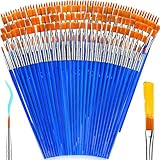
- 【162-Piece Bulk Set | Dual Brush System】Maximize versatility with 81 flat brushes (0.59 inch edge for bold strokes) and 81 round brushes (0.39 inch tips for details) – 3X more tools than standard kits! Pre-sorted in labeled compartments for instant access during painting sessions. Ideal for art classrooms, mural projects, and multi-artist households.
- 【Pro-Grade Durability | Zero Shedding Guarantee】 "Engineered with triple-crimped nylon bristles (43% higher resilience vs. standard) and aerospace aluminum ferrules tested for 10,000+ flex cycles. Lab-verified 0.01% shedding rate even with heavy impasto techniques – outperforms flimsy bristles in budget brushes."
- 【Multi-Scenario Readiness | Event & Daily Use】 Optimized for: Thanksgiving/Christmas face designs classroom projects ceramic decorating fabric printing and model painting; Lightweight plastic handles each reduce hand fatigue during prolonged sessions
- 【Effortless Maintenance | Long-Term Durability】 Clean with warm soapy water in 10 seconds; Reshape tips and air-dry vertically to preserve bristle integrity,After use, air-dry brushes thoroughly and store upright in the provided case to preserve bristle shape. The premium nylon filaments naturally regain their original form after each stroke. For cleaning, simply rinse in warm soapy water and gently reshape bristles with fingertips."
- 【Multiple Application】These acrylic paint brushes can be applied for most occasions,such as:watercolor,oil, gouache paint,face paint, acrylic paint, suitable for Thanks Giving Day, Christimas, Halloween face and body painting, canvas painting, fabric, rock, miniature, model, ceramics, arts and crafts painting, etc.
How do I maintain the system?
Maintenance should be small and repeatable. During a normal grocery trip, return each item to its zone, rotate older stock forward, and wipe any spill immediately. Periodically remove one category, inspect the back of the shelf, and check containers and lids. A full reset is needed when categories no longer reflect what the household buys, not merely because a single packet is out of place.
Keep the layout understandable to anyone who uses the pantry. Labels should be readable from the front, containers should have a clear purpose, and the most-used foods should not require a step stool. If a household member repeatedly leaves one category in the wrong place, treat that as feedback about the layout or label rather than a personal failure.
How do I decide which idea to try first?
Try the first idea—the empty-and-edit reset—before spending money. Then create zones. Only after those two steps should you add a bin, canister, riser, turntable, or pull-out, and each addition should answer a specific recurring problem. This sequence keeps the pantry easier to scan and restock while preserving usable capacity and the information on food packaging.
Frequently Asked Questions
Do pantry containers need to match?
No. Matching containers are optional and can consume space without improving access. Use a container only when its shape, label, and cleanability solve a problem you can identify; a small mix of useful pieces is often more practical than a complete matching set.
Should I keep the original packaging after decanting food?
Keep the original package or its important information whenever you need ingredient, allergen, cooking, lot, or use-by details. A label on the new container identifies the contents, but it does not automatically reproduce all of the information printed on the package.
What temperature is best for a cupboard pantry?
The Academy of Nutrition and Dietetics gives 50°F–70°F as a preferred cool range for cupboard storage. Keep the area dry and dark and away from heat-producing appliances, while following the storage instructions for each specific food.
How can I stop new groceries from hiding older ones?
Before unloading, move older packages to the front or top of their category. Place the fresh purchase behind or below them, then return everything to its zone; this makes the older stock the easier choice.
Are turntables suitable for every pantry shelf?
No. They are conditional tools for suitable bottles or condiments when rotation improves access. Measure the shelf and the loaded turntable, check stability and spill control, and skip it if the circular footprint wastes capacity or makes items harder to remove.
Quick Recap


