Crashes, No Sound, or Screen Glitches?
Free tools Windows power users keep installed
One-click scans. No signup required.
Outbyte Driver Updater · freeRandom freezes, missing sound and display glitches usually trace back to one bad driver. Find and replace yours safely.
Find the Right Drivers →ThatPainter is reader-supported. When you buy through links on our site, we may earn an affiliate commission. Learn More
Patchwork ideas can turn leftover fabric into anything from a geometric block to a small, useful accessory. Patchwork means joining pieces of fabric to form a flat design; the design can become a quilt top, but it can also stand on its own as a coaster, pouch, bag, or other small project. The seven ideas below range from orderly squares to free-form collage, so you can choose by the scraps you have, the look you want, and whether you prefer hand or machine sewing.
You do not need to begin with a bed quilt or a large fabric collection. A small sample or accessory lets you explore a pattern on a manageable scale. For a square-based design, precut squares may be convenient, but use the dimensions and quantities specified by your chosen pattern rather than assuming one bundle will be enough.
As an Amazon Associate I earn from qualifying purchases.
What should you consider before choosing a patchwork idea?
Start with the fabric and the finished use, not with a pattern that demands materials you do not have. Look at the sizes of your pieces, whether you want a regular repeating design or an open-ended composition, and whether you would rather sew by hand or machine. Then consider how precisely the shapes need to be cut and whether the project will be a small object, a block, or a larger panel.
Patchwork and quilting are related, but they are not interchangeable terms. The Victoria and Albert Museum’s introduction to quilting and patchwork defines patchwork as joining fabric pieces into a flat design. Quilting is the stitching together of layers, typically a fabric top, padding, and another fabric layer. A patchwork design may form the top of a quilt; a patchwork panel used for a bag or coaster does not have to become a quilt.
Popular on Amazon

- Great Value Paint Brush Set: Soucolor 20 acrylic paint brushes come in 10 different sizes, making them ideal for fine detailing, model painting, rock painting, nail art, face painting, DIY crafts, and general art projects. The varied brush sizes give you better control for both delicate lines and broader color coverage, while the soft bristles deliver smooth, consistent results on acrylic, oil, watercolor, canvas, wood, ceramic, and more.
- Awesome Set of Paint brushes: Professional paint brushes can cover all of your needs. The multi-purposed brushes are ideal for Watercolor, Oil, Gouache, enamel, Acrylic Painting, Body, Nail, Face Painting, Miniature, Model, Wood, Glass, Cup, Ceramic, Fine work, Art class, Craft Art Painting, DIY Art Crafts etc.
- Soft and long-lasting: The bristles are soft and strong, with nickel metal ferrules and blue wooden handles. After cleaning, the bristles will become soft and fluffy again and will not fall off.
- Easy to clean: it’s very convenient to Wash well in soap and water. Retain shape after drying. the brushes hold up very well. Nice selection to beginners and professionals. Keep them clean and they last a long time.
- Perfect for All Painters & Occasions: Suitable for art beginners, hobbyists and professional artists. Great for art class, home creation, travel painting and DIY handmade projects. A practical art gift for students, teachers, family and craft lovers.
For a first project, a practical sequence is to choose a simple design, gather the supplies that method calls for, cut pieces to the pattern, sew them into blocks or panels, and join those sections if needed. The Crafts Council’s mini English paper-piecing tutorial is one hand-sewing route and recommends starting with a simple design before taking on more complex shapes. The ideas below are arranged by the kind of composition they create—not as a ranking of difficulty.
1. Make a nine-patch or square sampler
A grid of squares is a direct way to explore color and repetition. Arrange nine squares in a three-by-three block, or use a larger arrangement such as a sixteen-patch. A repeated color sequence can create stripes or a simple motif; alternating colors can give the block a checkerboard feel. The Museum of Fine Arts Boston’s quilt-pattern activity uses nine-patch and sixteen-patch structures as examples of geometric pattern making.
What’s actually slowing this PC down?
Pick the symptom - the matching free tool is one click away.
This idea suits scraps that can be cut into consistent squares, and it gives you a clear visual plan before sewing. Lay the pieces out first and rearrange them until the color balance looks intentional. If you want to try several arrangements, make a sampler: use the same square format but change the sequence of colors from block to block. A square sampler can remain a design exercise or become part of a larger panel or quilt top.
Starter materials: square fabric pieces, thread, a needle or sewing machine, and scissors. A ruler, paper template, or rotary cutter and cutting mat can help with consistent cutting, but follow your chosen pattern’s measurements.
2. Build a log-cabin block
A log-cabin block grows outward from a central square. Sew strips around the center one at a time, adding successive strips around the sides to enlarge the block. The result can look orderly while still making use of fabric strips of different colors. The Quilters’ Guild notes that log-cabin blocks work well with scraps and allow flexibility in strip size and fabric choice.
Choose a center fabric first, then decide whether you want the surrounding strips to create a strong contrast or a more gradual color change. Keep track of the order in which you add strips, especially if you are making several blocks and want them to relate to one another. Because the strips surround the center in sequence, this is a natural way to use leftover lengths that are awkward for a square grid. A block can be used alone as a small panel or joined with others for a larger design.
Also popular on Amazon

- COMPLETE 5-PIECE BRUSH SET FOR EVERY PAINTING TASK — Includes 1 Inch Flat, 1.5 Inch Angle, 2 Inch Flat, 2 Inch Angle Stubby, and 2.5 Inch Angle brush giving you every size professional painters use daily. Get all 5 for less than the price of a single brush from hardware store brands — professional grade performance at a fraction of the cost. Perfect for walls, trim, cabinets, doors, furniture, and detailed cutting-in work on any project.
- ZERO BRISTLE LOSS — GUARANTEED BY PRECISION ADHESIVE BONDING — Every bristle is locked in place with precision-set adhesive that keeps them in the brush — not in your paint job. The coated steel ferrule provides structural support while the adhesive bond ensures clean performance on every stroke. Premium SRT synthetic filaments load more paint and release it evenly for a smooth streak-free finish on walls, ceilings, and trim. Works with latex, oil-based paint, primer, sealer, and wood stain.
- INCLUDES THE ANGLE STUBBY MOST SETS LEAVE OUT — Professional painters know the 2 Inch Angle Stubby is the go-to brush for tight cabinet interiors, window sashes, inside corners, and detailed trim where standard angle brushes are too long. Combined with the 1.5 and 2.5 inch angle sash brushes you have precision cutting-in covered at every scale — baseboards, crown molding, door casings, and ceiling lines.
- FLAT BRUSHES FOR BROAD SMOOTH COVERAGE ON ANY SURFACE — The 1 and 2 inch flat brushes deliver even coverage on walls, furniture, shelving, doors, fences, decks, and wood surfaces. Ideal for applying primers, stains, varnishes, polyurethane, and specialty coatings. Solid wood handles provide all-day comfort and control for both professional contractors and weekend DIY homeowners tackling interior or exterior painting projects.
- TRUSTED BY PROFESSIONAL PAINTERS AND CONTRACTORS NATIONWIDE — Pro Grade delivers professional-grade results at a price that makes sense for crews who go through brushes on every job. Ideal for property managers, remodeling contractors, apartment turnover crews, maintenance teams, and commercial painting operations. Backed by thousands of verified reviews from working painters. Washable and reusable for multiple projects.
Starter materials: a center square, fabric strips, thread, needle or sewing machine, scissors, and a ruler or template for cutting. The pattern you follow should determine the strip widths and finished dimensions.
3. Use flying geese or diamonds for directional geometry
Triangles can make a patchwork design feel more directional than a square grid. Arrange triangle units in rows to suggest movement, or combine triangles into diamond shapes for a repeating geometric pattern. Flying geese and diamonds are among the motif ideas shown in MFA Boston’s educational quilt-pattern activity.
This approach is useful when you want the eye to travel across the design rather than simply scan a checkerboard. Before sewing, place the shapes in the order you intend to use them and check how the colors meet at their points. Triangle-based layouts depend on the chosen pattern and its cutting instructions, so use a guide for the shape and dimensions instead of estimating a universal size. If precise points feel like more than you want to tackle, test the arrangement on paper first or make a small sample.
Starter materials: fabric pieces, a pattern or paper guide for the shapes, thread, and a needle or sewing machine. A ruler and rotary cutter with a cutting mat may be useful when the pattern calls for accurately cut geometric pieces.
Recommended Free Tools
4. Turn narrow leftovers into string patchwork
String patchwork joins narrow strips into a larger panel. Once you have a panel, you can use it as a quilt block, border, runner, or part of a bag. The Quilters’ Guild describes string quilts as a way to combine scraps into a larger design, making this a useful direction for leftover strips that are too narrow for a square-based project.
One choice is whether to make the strips look coordinated or deliberately varied. Repeating a few colors can give the panel a planned rhythm; mixing many colors makes the individual scraps more visible. Arrange the strips before sewing so you can see how their widths and colors work together. When the joined piece is large enough for your intended use, treat it as a panel and plan the next step around the accessory or pattern you have chosen.
Also popular on Amazon

- 【All sizes of art brushes】: The 10 sizes of multi-functional brushes have various shapes, making the mixing color easier, which is very suitable for artists, students, teenagers, children and painters at all levels. Wonderful Present ideas for friends and family who like painting!
- 【general brush set】: Professional paint brush can meet all your needs. Multifunctional brush is very suitable for watercolor, oil, gouache, acrylic painting, body, nail, face painting, miniature, model, ceramics, arts and crafts painting, etc.
- 【high quality process】: It is designed with anti falling bristles, anti-rust nickel ferrule and solid wood handle. You can use the brush to focus on the painting and always be creative.
- 【easy to maintain】: After using the brush, it is very convenient to clean the brush with warm soapy water and reshape the tip of the brush. Air dry the brush and place it on top of the top for long use.
- 【100% satisfaction guarantee - buy now】1 packs of set brushes, you can also get friendly customer service, any questions feel free to contact us, within 24 hours to help you! There is no risk in buying our paint brush kit.
Starter materials: narrow fabric strips, thread, a needle or sewing machine, scissors, and a ruler if you need to trim the panel to a particular shape. The amount of fabric depends on the size of the finished panel.
5. Make a free-form crazy patchwork composition
Crazy patchwork uses irregular shapes rather than a repeated grid. Arrange the pieces asymmetrically, then join them into a panel; decorative stitching along the seams or embellishments can add another layer of interest. The Quilters’ Guild connects this style with Victorian-era examples from the mid-to-late nineteenth century, including work in fabrics such as velvet, silk, and brocade. Those historical materials are examples, not requirements for a present-day scrap project.
Do these 3 things before closing this tab:
1Scan for outdated or missing drivers - takes under a minute2Repair Windows errors before they cause bigger problems3Fix the driver behind crashes, sound loss and screen glitchesThis is an option when your fabric pieces are varied in size or when you want the composition to feel less orderly. Lay the shapes out before sewing and pay attention to how the colors and textures balance across the whole arrangement. Decorative seam work can be planned after the pieces are joined. Keep the embellishment proportionate to the scale and intended use of the panel; an elaborate surface treatment is not necessary for the idea to work.
Starter materials: assorted fabric pieces, thread, needle or sewing machine, and scissors. Optional decorative thread or embellishments can be added if they suit your design and intended use.
6. Use appliqué or fabric collage for motifs
Appliqué and fabric collage place smaller shapes on a background rather than building the entire design from a regular grid. Use a contrasting piece to make a motif, combine several shapes into a larger image, or experiment with color and form on a plain background. The Quilters’ Guild identifies appliqué and collage as ways to use scraps; MFA Boston’s quilt activity can also help you explore shapes and color before sewing.
This approach suits a piece of fabric that is too small to carry a whole block but large enough to contribute a shape. It also gives you more freedom in the overall composition: arrange the shapes on the background, move them around, and decide how they relate before joining them. The exact method for securing the shapes depends on the pattern you choose, so use its instructions for the materials and stitching required.
Free tools Windows power users keep installed
One-click scans. No signup required.
Also popular on Amazon

- 【KIDS PAINT BRUSHES SET】Anezus paint brushes for kids come with 10 pcs paint brushes of 5pcs round paintbrushes and 5 flat paint brushes with colorful handles, good for the young artist to explore their creativity in painting and crafting
- 【HIGH QUALITY PAINT BRUSHES FOR KIDS】These toddler paint brushes made of soft hog bristle, bright colored handles and rust proof ferrules. The bristles are firmly fixed in the kids paint brushes and no shedding. Each children paint brush measure 6 1/4 inches (16cm) in length and ferrules 1/2"(1.3cm) diameter, large enough for the little hand to grip and control
- 【WIDE APPLICATIONS】With combination of round and flat craft paint brushes for kids, work great with washable paint, tempera paint and acrylic paint. Great for arts and craft, rock, leather, gesso and ceramic, or body, nail and face art painting.
- 【EASY TO CLEAN 】After using paint brushes for acrylic, oil or watercolor painting, it’s very convenient to clean them with warm soapy water and reshape the paint brush tips. Keep these craft paint brushes clean and they last a long time.
- 【GREAT GIFT IDEA】Perfect for students, teens, kids, children and painters of all levels. Wonderful gift idea for girls, boys and kids who love painting! These all-purpose paint brushes for kids are ideal for kids' school projects, birthday parties, painting parties, art parties, back to school supplies, classroom decoration and more.
Starter materials: a background piece, smaller fabric shapes, thread, needle or sewing machine, and scissors. Paper can help you plan or trace shapes before cutting fabric.
7. Put patchwork into a small accessory
A coaster, pincushion, pouch, or small bag gives a patchwork experiment a defined use without requiring a large panel. The Quilters’ Guild lists small accessories among the ways to use scraps. Pick the accessory first, then choose a patchwork arrangement that fits the pattern’s shape and scale. A simple square design might suit a coaster; a small panel assembled from strips could become part of a pouch or bag.
Small projects are also a way to try a technique before deciding whether to use it on a larger piece. The pattern will determine the finished dimensions and how much fabric you need, so do not assume a particular scrap pile or precut bundle will cover every project. If your goal is to test a color layout rather than finish an object, you can make a small sample block instead.
Starter materials: scraps or fabric squares, thread, needle or sewing machine, scissors, and the pattern for the accessory. Depending on the design, paper templates, pins, a ruler, or rotary-cutting tools may also be useful.
What supplies do you need to begin?
The supplies depend on the pattern and on whether you sew by hand or machine. A simple sewn project may need only fabric, thread, a needle, and scissors. Paper templates can guide hand sewing; pins, a ruler, and a rotary cutter with a self-healing mat may help with some cutting methods, but not every project requires every tool.
Missouri Star’s beginner supply guide lists a pattern, fabric, pins, quilting thread, needles, scissors and/or a rotary cutter, a cutting mat for rotary cutting, and a sewing machine among possible supplies. It also notes that some tools are useful but not necessary. Treat that as a menu to match to your project rather than a mandatory shopping list. If you are following a pattern, its instructions should guide the dimensions, quantities, and any method-specific tools.
Also popular on Amazon
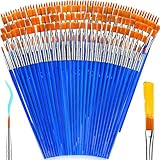
- 【162-Piece Bulk Set | Dual Brush System】Maximize versatility with 81 flat brushes (0.59 inch edge for bold strokes) and 81 round brushes (0.39 inch tips for details) – 3X more tools than standard kits! Pre-sorted in labeled compartments for instant access during painting sessions. Ideal for art classrooms, mural projects, and multi-artist households.
- 【Pro-Grade Durability | Zero Shedding Guarantee】 "Engineered with triple-crimped nylon bristles (43% higher resilience vs. standard) and aerospace aluminum ferrules tested for 10,000+ flex cycles. Lab-verified 0.01% shedding rate even with heavy impasto techniques – outperforms flimsy bristles in budget brushes."
- 【Multi-Scenario Readiness | Event & Daily Use】 Optimized for: Thanksgiving/Christmas face designs classroom projects ceramic decorating fabric printing and model painting; Lightweight plastic handles each reduce hand fatigue during prolonged sessions
- 【Effortless Maintenance | Long-Term Durability】 Clean with warm soapy water in 10 seconds; Reshape tips and air-dry vertically to preserve bristle integrity,After use, air-dry brushes thoroughly and store upright in the provided case to preserve bristle shape. The premium nylon filaments naturally regain their original form after each stroke. For cleaning, simply rinse in warm soapy water and gently reshape bristles with fingertips."
- 【Multiple Application】These acrylic paint brushes can be applied for most occasions,such as:watercolor,oil, gouache paint,face paint, acrylic paint, suitable for Thanks Giving Day, Christimas, Halloween face and body painting, canvas painting, fabric, rock, miniature, model, ceramics, arts and crafts painting, etc.
- For hand sewing: fabric, needle, thread, scissors, and any paper shapes required by the pattern.
- For machine sewing: fabric, thread, scissors, and access to a sewing machine; pins or other cutting tools depend on the pattern.
- For accurate repeated shapes: use the pattern’s templates or measurements. A ruler and rotary cutter with a cutting mat may be useful for rotary cutting.
- For square-based layouts: precut squares can be convenient, but check that their size and quantity suit the design you selected.
Patchwork has a long history of using fabric fragments and extending the life of clothing, as the V&A explains, but reuse is not the only tradition: some makers have bought special fabrics for pleasure. Use scraps if they suit the project; there is no need to make a project from scraps alone.
How do you choose the right idea for your fabric?
Match the project to what you have and what you want to make. If most of your pieces can be cut into consistent squares, try a square sampler. If you have narrow strips, consider a log-cabin block or string panel. Irregular pieces can lend themselves to crazy patchwork or collage, while a small amount of fabric may be enough for a test block or a compact accessory, depending on the pattern.
Quick wins for a faster PC:
Scan for outdated or missing drivers - takes under a minuteDriver Scan →Repair Windows errors before they cause bigger problemsFix Now →Next, consider the sewing experience you want. Paper piecing offers a hand-sewing route, while other patterns may be more convenient to assemble by machine. Then judge the shape work: a grid uses repeated shapes, while triangles and diamonds call for closer attention to the pattern’s cutting directions. Finally, decide whether you want a useful finished object, a decorative panel, or simply a small sample to explore color and pattern.
These are practical ways to choose among the designs, not measured difficulty ratings. The sources do not establish a universal time, cost, or difficulty for each idea; fabric size, pattern, and sewing method all affect what a project involves.
How we picked these seven ideas
The ideas draw on the source material’s examples of square grids, log-cabin blocks, flying-geese and diamond geometry, string patchwork, crazy patchwork, appliqué and collage, and small accessories. They are presented to help beginners and scrap-fabric users compare kinds of fabric, shapes, sewing approaches, and finished uses—not as a claim that one design is objectively best. The V&A, the Quilters’ Guild, MFA Boston, Crafts Council, and Missouri Star sources are linked where they support the definitions, examples, or supply guidance above.
Frequently Asked Questions
Can I make patchwork by hand without a sewing machine?
Yes. English paper piecing is a hand-sewing approach: paper shapes guide the fabric pieces, which are temporarily basted around the templates and then joined. The Crafts Council’s mini tutorial demonstrates this method and is a useful starting point for a simple design.
Is patchwork only made from old or leftover fabric?
No. Historic makers often reused fragments or extended the life of clothing, but the V&A notes that some also bought special fabrics for pleasure. You can use scraps, newly chosen fabric, or a mix, as long as the materials fit your chosen pattern.
Do I need a rotary cutter and cutting mat for patchwork?
Not for every project. They can help with rotary cutting, but scissors and paper templates are also among the suggested supplies, and hand-sewn paper piecing is an option. Let the pattern and cutting method determine which tools are useful.
Quick Recap


