The Tool Desk
Outbyte Driver Updater FREEScan for outdated or missing drivers - takes under a minuteDriver Scan →Outbyte PC Repair FREEClear out junk files and repair common Windows errorsFree Scan →
ThatPainter is reader-supported. When you buy through links on our site, we may earn an affiliate commission. Learn More
Press seams and construction details as you sew—not just when the project is finished. Careful pressing helps seams lie flat and pieces hold their intended shape. For construction, pressing means lifting and placing the iron deliberately; ironing usually means sliding it over fabric to smooth it.
1. Test the iron setting on a scrap
Check the fabric’s care guidance, then test your chosen temperature and steam setting on a scrap of the same material. The right combination depends on both the fabric and the iron. Panasonic North America gives low heat without steam for acrylic and high heat for cotton as examples in its iron guidance; these are not universal settings for every fabric or iron model.
As an Amazon Associate I earn from qualifying purchases.
2. Press as you sew
Press each seam and construction detail while the fabric is still easy to reach, especially before another piece is joined to it or later stitching crosses it. Pressing at these stages helps establish the shape as the project comes together. The University of Florida IFAS Extension and New Mexico State University Extension both describe pressing as part of construction rather than a task to leave entirely until the end.
3. Lift and place instead of gliding
Set the iron down firmly on the area to be pressed, then lift it and move to the next area rather than sliding it back and forth. SINGER Australia’s Pressing Pointers puts it this way: “When pressing, lift and firmly place the iron – do not glide over the fabric, as when ironing.” This controlled action helps avoid pulling fabric out of shape.
#1 Best Overall

- Lets you see as you press
- Protects from shine, scorch, water spots and pressing marks
- Use with dry iron or steam
- 11" x 28"
- Use only on an iron board or protected work surface. Do not use on heat sensitive surfaces.
4. Set the stitching before arranging the seam allowance
First press along the stitching line. Then open the seam allowance or direct it to one side as the pattern and project call for. The choice of direction is not universal: follow the construction instructions rather than assuming every seam should be opened or pressed to the same side. SINGER Australia and New Mexico State University Extension describe setting the stitching before arranging the allowances.
5. Protect the fabric surface
When practical, press from the wrong side. If you need to press the right side, or the fabric might shine or mark, place a press cloth between it and the iron. SINGER Australia notes that a scrap of muslin can serve as a cloth, so you may not need to buy a special one. UF/IFAS adds that a dampened press cloth can provide moisture when the fabric calls for a temperature lower than the iron’s steam setting. Use the fabric’s care guidance and your scrap test to choose heat and moisture.
Rank #2

- Sized at 22" x 30", this sheer silk organza press cloth gives you wide, flexible coverage for garments, appliqué, and precision pressing
- Protects delicate fabrics from shine, scorching, water spots, and unwanted imprint marks during presing
- Allows full steam penetration through its lightweight sheer weave for crisp seams and smooth, professional finishes
- Lets you clearly see darts, pleats, appliqué, and details through the transparent fabric for accurate alignment
- Holds up to everyday use with durable, reusable silk organza that’s machine washable
6. Support curves without stretching them
For curved seams, avoid pulling the fabric flat against a surface. A tailor’s ham or seam roll can support the curve while you press with the iron tip, as SINGER Australia recommends. These are optional aids, not prerequisites; they are most relevant when the shape is difficult to support on a flat ironing board.
Independent reader supportYour contribution helps us test, update, and keep practical guides available for everyone.7. Keep pins, basting, and seam edges out of the way
Remove pins and avoid pressing over basting threads, which can leave marks. On delicate fabric where seam allowances might show through on the right side, SINGER Australia recommends placing strips of brown paper between the allowances and the garment as a barrier.
Quick Recap
Best Value

- All in One Package: this comprehensive package includes 1 mesh cloth about 24 x 16 inches, 1 PTFE fabric about 24 x 16 inches, 1 cotton cloth about 24 x 24 inches, and 1 silk organza cloth about 28 x 28 inches everything you need in one convenient set; Trust these press cloths for ironing to deliver unparalleled garment care, crafting smooth, polished, and protected clothes every time
- PTFE Fabric for High Temperature: PTFE fabric, recommended ironing temperature 400–450 °F; PTFE is a high temperature pro in your ironing cloth arsenal; It excels in handling synthetic fibers, artificial leather, and viscose, thanks to its strong adaptability; Say goodbye to adhesion issues, as this pressing cloth shortens ironing time while providing protection
- Cotton Cloth for Deep Ironing: Cotton fabric, recommended ironing temperature 350–400 °F; the natural purity of cotton makes it an ideal pressing cloth, effectively absorbing excess steam while maintaining the natural texture of fabrics like cotton and linen; This ironing cloth protects clothes by forming a damp buffer, ensuring deep ironing without unwanted shine
- Mesh Cloth for Structural Support: Mesh fabric, recommended ironing temperature 230–320 °F; the elastic structure of the nylon mesh cloth offers excellent physical support to your fabrics, promoting steam circulation for optimal results; Successfully shape and maintain the three dimensional forms of woolen coats, suits, and skirts, balancing wrinkle removal efficiency and shape retention with this ironing cloth to protect clothes
- Silk Organza for Precision Ironing: Silk fabric, recommended ironing temperature 230–270 °F; the transparency of silk organza allows you to observe your ironing work closely; This pressing cloth is nice for delicate lace and tulle, using its microporous design to accelerate steam diffusion; Achieve good smoothed out wrinkles in low temperature environments, preserving the three dimensional beauty of lace and embroidery
Rank #4
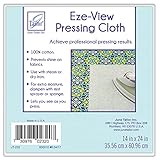
- 100% cotton
- Prevents shine on fabrics
- Use with steam or dry iron
- For extra moisture, dampen with mist sprayer or sponge.
- Allows you to see as you press.
Rank #3

- Easier Ironing: This cotton pressing cloth for ironing is made of comfortable, durable cotton fabric, making ironing easier and more convenient, and improving daily garment care efficiency
- Larger Size for Greater Convenience: This pressing cloth for ironing cotton includes two 19.7x27.5 inch (50x70 cm) ironing cloths, providing wide coverage suitable for home or studio use. Easy to change, enhancing the ironing experience
- Safer Natural Materials: Made from pure cotton fibers, this ironing cloth is breathable and lightweight, evenly distributing heat and absorbing excess moisture to protect clothes from high-temperature damage and maintain their original texture
- Suitable for Various Fabrics: Whether it's cotton, linen, silk, or wool, this press cloth for ironing handles them all with ease, especially suitable for delicate fabrics, making it an ideal tool for garment care and sewing projects
- A Thoughtful and Practical Gift: This ironing cloth to protect clothes is not only a practical household item but also a thoughtful gift for sewing enthusiasts or craft lovers, helping them complete their projects more efficiently
Choose the pressing method for the fabric and shape
| Decision | Choose this approach when… |
|---|---|
| Heat and moisture | The fabric’s care guidance and a scrap test indicate what it can tolerate; do not treat one iron setting as suitable for every material. |
| Wrong side or right side | Press from the wrong side when practical. If pressing the right side or protecting fabric that may shine or mark, use a press cloth. |
| Seam allowance direction | Follow the pattern or project construction: allowances may be opened or directed to one side. |
| Flat support or shaped aid | A flat surface suits flatter sections; a ham or seam roll can support curved seams without forcing them flat. |

Product prices and availability are accurate as of the date/time indicated and are subject to change. Any price and availability information displayed on Amazon at the time of purchase will apply.




