What’s actually slowing this PC down?
Do these 3 things before closing this tab:
1Clear out junk files and repair common Windows errors2Scan for outdated or missing drivers - takes under a minute3Repair Windows errors before they cause bigger problemsPick the symptom - the matching free tool is one click away.
ThatPainter is reader-supported. When you buy through links on our site, we may earn an affiliate commission. Learn More
As an Amazon Associate I earn from qualifying purchases.
You do not need expensive flowers or formal floristry training to make a professional-looking arrangement. The most reliable beginner method is a water-filled vase, properly conditioned stems, a concealed support system, and a deliberate mix of greenery, focal flowers, supporting blooms, and filler. Build the shape first, vary the heights, rotate and edit the design, then maintain the water. The result will look balanced and last substantially longer than a bouquet dropped straight into a vase.
8 Simple Steps to Arrange Flowers Like a Pro
A polished flower arrangement depends less on the price of the flowers than on five controllable details: fresh cuts, clean water, proportion, support, and editing. This method works with grocery-store bouquets, farmers-market flowers, florist stems, or flowers from your garden.
Popular on Amazon
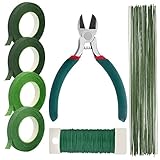
- FLORAL ARRANGEMENT TOOLS INCLUDED – 100 pieces green stem wire 26 gauge, 114 feet green paddle wire 22 gauge, 4 rolls green floral tape and 1 pair wire cutter. These supplies are all you need for DIY flower arrangements, bouquets, and boutonnieres etc.
- 26 GAUGE FLORAL WIRE – Come with 100 pieces and with length of 14 inches, covered with dark green cloth. Flexible enough to shape and bend the way you want as well as durable enough to stay in place, easy to use
- 22 GAUGE PADDLE WIRE – Offers 114 feet, flexible green wire for crafts and projects and ideal for floral arrangements
- AMAZING FLORAL TAPES – 4 rolls in 3 different colors, 30Yard × ½"W. per roll. Strong and stretchable, tears easily. This self-sealing tape is great for finishing corsage and wedding bouquet stems, floral novelties, and artificial flowers. You will need to stretch the wrap as you go - releases the stickiness
- NOTE – If you have any problem for our product, you can click “seller contact” button in your Amazon account to contact us. We will be delighted to help you and reply as soon as we can
Quick-start formula
- Time: Allow roughly 20–40 minutes to arrange after conditioning. Hydrating flowers may take one to several hours or overnight, depending on their condition.
- Best beginner setup: A clean vase, sharp snips, greenery, one focal flower, one supporting flower, filler or texture, clean water, and commercial flower food.
- Best default mechanic: Use crossed stems, a waterproof tape grid, a floral frog, or reusable chicken wire instead of floral foam.
- Starting proportion: Let the tallest flowers extend about 1½–2 times the vase height, then adjust for the flower heads and the location.
- Most important care rule: Keep leaves below the waterline out of the vase and check the water every day.
First, decide what kind of arrangement you are making
The viewing angle determines how you distribute the stems. Decide this before you cut anything.
- All-around arrangement: Designed to be seen from every side. Use it on a dining table, coffee table, kitchen island, or entry table. Build outward in all directions and rotate the vase as you work.
- Front-facing arrangement: Designed mainly for a mantel, sideboard, altar, or wall. Give the intended front the strongest view, while keeping the side profiles tidy.
- Hand-tied bouquet: Stems are added in a spiral in your hand, tied, and then placed in a vase. This is useful for gifts and compact, round bouquets.
- Loose vase arrangement: Stems are placed directly into the container. It is the easiest approach for a natural, asymmetrical, garden-style design.
- Low centerpiece: Keeps sightlines open so people can talk across a dining table. Sit down before you finish and make sure the flowers do not block faces.
- Tall vertical arrangement: Uses height for an entryway, buffet, corner, or other location where a high display will not obstruct conversation.
Iowa State Extension describes both direct-to-vase and hand-tied spiral construction, while UC Agriculture and Natural Resources recommends prioritizing seated sightlines for table centerpieces.
Choose the vase before you cut the flowers
Match the vessel to the eventual shape, not just to the flowers you happen to have.
Free tools Windows power users keep installed
One-click scans. No signup required.
- Use a tall, narrow vessel for long stems, vertical flowers, or a design that needs height.
- Use a low, wide vessel for short stems, a horizontal design, or a conversation-friendly centerpiece.
- Choose a weighted container for branches, sunflowers, hydrangeas, or other top-heavy material.
- A narrow neck gives loose stems useful natural support.
- If you are using a basket or decorative container that is not waterproof, place a waterproof liner inside it.
- Straight-sided vessels can help support flowers such as tulips, which may continue to bend and grow after cutting.
A useful starting point is for the tallest flower to reach roughly 1½–2 times the height of the vase. That is a proportion guide, not a rule. A large flower head may need a shorter stem, while slender line flowers can rise higher. Better Homes & Gardens gives the 1½–2-times range, and AARP suggests approximately 1½ times the container height. For a dining table, the seated sightline matters more than either formula.
Shop by flower role, shape, and condition
You do not need a fixed recipe such as three roses, two fillers, and one type of greenery. Instead, give each material a job.
| Role | What it does | Examples |
|---|---|---|
| Greenery | Frames the design, establishes width, and hides mechanics | Fern, eucalyptus, ivy, ruscus, ornamental grass |
| Line or spike flowers | Add height, direction, and movement | Snapdragon, delphinium, stock |
| Focal flowers | Provide the visual anchors | Rose, sunflower, dahlia, hydrangea, lily, large zinnia |
| Secondary flowers | Bridge the focal blooms and soften the structure | Carnation, alstroemeria, spray rose, daisy, mum |
| Filler and texture | Fill genuine gaps and add surface interest | Baby’s breath, statice, Queen Anne’s lace, berries |
| Detail or floater flowers | Add airiness and movement at the end | Cosmos, sweet pea, yarrow, sedum |
These are design roles, not rigid botanical classifications. A flower normally considered filler can become the focal element if its size, color, or visual weight makes it dominant. The WVU floral-design guide explains these roles and the usual insertion order.
Simple buying rules for beginners
- Choose one dominant color family plus one accent color, or use a monochromatic palette.
- Combine large, medium, and small flower heads so the arrangement has hierarchy.
- Include at least one textural or architectural element, such as berries, grasses, pods, or a spiky flower.
- Use flowers at different stages of opening where appropriate. Do not assume every species should be cut tightly closed.
- Reject stems with slime, crushed ends, severe browning, widespread wilting, or petals that are already dropping.
- For garden flowers, a useful general harvest stage is about half to three-quarters open, although the ideal stage varies by species. Missouri Extension advises avoiding flowers that are fading, shriveling, curling, or losing petals.
- Gather more usable length than you think you need. You can shorten a stem, but you cannot make it longer.
Tools and materials
Minimum kit
- Clean vase or container
- Sharp, clean floral snips, pruning shears, or knife
- Clean water
- Commercial flower preservative
- Bucket or temporary conditioning container
- Waterproof floral tape, a floral frog, or chicken wire if the stems need support
- A towel and a work surface that can get wet
Useful optional tools
- Thorn stripper
- Floral wire
- Waterproof adhesive clay for securing a frog
- A lazy Susan for rotating an all-around arrangement
- Bamboo skewers or sturdy sticks for supporting weak or heavy stems when appropriate
Step 1: Decide the look, location, and palette
Choose the display location and viewing angle, then decide on a shape before placing the first stem. Common choices include a rounded dome, a triangular form, a tall vertical design, a formal symmetrical arrangement, or a loose asymmetrical garden style.
For a first arrangement, a monochromatic or limited palette is easiest to control because the flowers can vary in shape and texture without competing through color. Analogous colors create a soft transition; complementary colors create stronger contrast and require more restraint. Greenery or a neutral flower can separate intense colors.
Do not wait for a perfectly coordinated selection. Seasonal and grocery-store availability can be an advantage: choose one dominant color, one supporting color, and a contrasting texture from what is healthy and available. BHG and AARP both emphasize planning the color and location while remaining flexible about the flowers found.
Expected result: You know whether the arrangement is front-facing or all-around, how tall it can be, what shape you want, and which color will dominate.
Step 2: Choose the vessel and group flowers by role
Wash the vase first if it has not already been cleaned, then lay out the stems by role rather than keeping them in one mixed bundle. Put the greenery together, separate the focal blooms, and make distinct piles for supporting flowers and fillers.
Quick wins for a faster PC:
Repair Windows errors before they cause bigger problemsFix Now →Scan for outdated or missing drivers - takes under a minuteDriver Scan →Also popular on Amazon
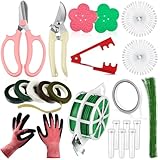
- Comprehensive Floral Arrangement Tool Set: this floral arrangement kit is suitable for flower arranging and crafting; Including 2 tray of white and color corsage pins, 2 flower stem cutters, 3 rose thorn removal tools, 1 pair of gardening gloves, 100 green stem wires, and a variety of additional tools such as 5 rolls of floral tapes, cable ties, double sided tape, and 12 flower branch water storage hoses, providing possibilities for creative flower arranging
- Suitable Sizes for Florist Needs: the floral arrangement supplies include white flower scissors measuring about 6.9 x 1.8 inches/ 17.5 x 4.5 cm, pink flower scissors measuring about 6.7 x 4 inches/ 17 x 10 cm, a metal rose thorn removal tool about 5.5 inches/14 cm long, and a plastic thorn removal tool about 4.7 inches/12 cm long, the floral tapes are about 0.47 inches and 30 yards long, suitable for many floral projects
- Convenient and Easy to Use: the metal rose thorn remover in our florist supplies can easily remove thorns and leaves from the stem, making flower arranging a breeze; Simply hold the rose, place the removal tool right below the stem where you want to remove thorns and leaves, and pull down, which can save your time and energy
- Considerable Design for Flower Hose: floral tools are the ideal accessory for florists and other artisans; The water storage hoses allow you to transport your floral arrangements without worry of water spills, ensuring the longevity of your flowers and adding ease to your craft
- Widely to Use: this garden pruning tools are widely applied in florists, homes and floral art classes, flower arrangements, the making of bouquets and corsages and wreaths in weddings; Also a DIY set for flower lovers and a good helper for Valentine's Day scene decoration
Measure the tallest stems against the vase before making final cuts. Start longer than necessary, especially with garden flowers. Place the vessel where it will be displayed if its surroundings affect the design: a centerpiece needs a different width and height from a mantel arrangement.
Expected result: You have a visual hierarchy rather than a collection of equally prominent stems.
Step 3: Clean the vase and prepare the water
Wash the vase thoroughly with hot, soapy water, rinse away all residue, and fill it with clean water. Add commercial flower food exactly as the packet or product label directs. Flower-food formulas and concentrations differ, so do not guess or assume that one packet can be diluted like another. FloraLife’s dosing guidance warns that inaccurate concentration can negatively affect flower performance.
Commercial preservative is the preferred option because it combines ingredients intended to nourish the flowers and manage microorganisms. If none is available, clean water in a clean vase is a better default than treating sugar, aspirin, vinegar, bleach, tea, or pennies as equivalent recipes. Iowa State Extension, the Royal Horticultural Society, and NC State Extension all favor commercial flower food over improvised household mixtures.
Step 4: Condition and trim every stem
- Remove leaves that would sit below the waterline.
- Remove damaged foliage, spent petals, and visibly decaying material.
- Make a fresh, clean cut with a sharp tool. A cut of about ½–1 inch is a practical home-arranging range.
- Cut at approximately 45 degrees if that is convenient. The essential point is a clean, uncrushed end; the angle also helps prevent the stem from sitting flat against the vase bottom.
- Put each stem in water immediately after cutting.
- Allow the flowers to hydrate in a cool, dark location for one to several hours. Overnight conditioning is useful when the stems are noticeably thirsty or wilted.
NC State recommends a fresh cut at about 45 degrees and at least ½ inch from the end, while Iowa State emphasizes sharp tools and avoiding crushed water-conducting tissue. A 45-degree cut is good practice, not a guarantee of longer vase life.
For flowers cut from the garden, harvest during the cool part of the day, particularly in the morning. The RHS recommends at least two to three hours of conditioning and ideally overnight; NC State suggests one to two hours in a cool, dark place. These recommendations are compatible: one to several hours is helpful, and overnight is better when the flowers need substantial rehydration. Keep the stems in water while you work instead of leaving them on a dry counter.
Step 5: Create a hidden support system
Support is what keeps a wide-mouth vase from turning into a pile of stems. Choose the simplest mechanic that suits the container.
| Support | Best for | Advantages and limits |
|---|---|---|
| Crossed stems | Small or medium vases | Free and quick, but less precise in a very wide opening |
| Waterproof tape grid | Wide-mouth vases | Inexpensive and easy; the tape must be concealed and secured around the rim |
| Floral frog | Short, intentional placements | Reusable and precise; it may need adhesive clay and a suitable vessel |
| Chicken wire | Large, loose arrangements | Reusable and flexible; it can be sharp, rust, stain the vessel, or cause cuts |
| Floral foam | Precise shapes, bowls, and installations | Stable and easy to place, but single-use and environmentally problematic |
How to make a tape grid
- Dry the outside rim of the vase.
- Apply parallel strips of waterproof floral tape across the opening.
- Add a second set of strips perpendicular to the first to create openings.
- Wrap or anchor tape around the rim so the grid cannot lift when stems are inserted.
- Keep the openings large enough for stems to pass without crushing them.
For a small arrangement, begin by placing stems at opposing angles so they support one another. For a larger design, form a loose ball of chicken wire that sits partly above the rim and secure it to the container. Wear gloves and protect the vessel from rust or scratches. Mississippi State Extension documents chicken-wire mechanics and their safety and staining trade-offs.
When to use floral foam
You do not need foam for a basic water-based vase arrangement. If you use wet foam, let the block float and sink on its own while it absorbs water. Do not force it underwater, because trapped air can leave dry areas. Secure the saturated block so it cannot shift, and avoid repeatedly removing and reinserting stems. Used foam should go in the waste stream; do not compost it or place it in garden soil. Iowa State Extension explains foam preparation and why it is single-use and non-compostable.
Reusable mechanics are a sensible default, but no alternative should be advertised as universally equivalent to conventional foam. A 2026 University of Kentucky study compared phenol-formaldehyde foam, basalt-fiber media, and coir-based media with one delphinium cultivar. Traditional foam produced the longest vase life in that test, basalt fiber averaged more than seven days, and coir was shorter-lived and harder to handle. Those results do not establish how every product performs with every flower.
Step 6: Establish the shape with greenery and line flowers
Greenery is the base of the arrangement. Place a few stems outward to establish width, add taller stems to establish height, and use shorter pieces around the rim or base. Leave some natural variation instead of making every stem identical. Use foliage to conceal tape, wire, or the top of a frog.
Also popular on Amazon

- Comprehensive Floral Arrangement Tool Set: this floral arrangement kit is suitable for flower arranging and crafting; Including 2 tray of white and color corsage pins, 2 flower stem cutters, 3 rose thorn removal tools, 1 pair of gardening gloves, 100 green stem wires, and a variety of additional tools such as 5 rolls of floral tapes, cable ties, double sided tape, and 12 flower branch water storage hoses, providing possibilities for creative flower arranging
- Suitable Sizes for Florist Needs: the floral arrangement supplies include white flower scissors measuring about 6.9 x 1.8 inches/ 17.5 x 4.5 cm, pink flower scissors measuring about 6.7 x 4 inches/ 17 x 10 cm, a metal rose thorn removal tool about 5.5 inches/14 cm long, and a plastic thorn removal tool about 4.7 inches/12 cm long, the floral tapes are about 0.47 inches and 30 yards long, suitable for many floral projects
- Convenient and Easy to Use: the metal rose thorn remover in our florist supplies can easily remove thorns and leaves from the stem, making flower arranging a breeze; Simply hold the rose, place the removal tool right below the stem where you want to remove thorns and leaves, and pull down, which can save your time and energy
- Considerable Design for Flower Hose: floral tools are the ideal accessory for florists and other artisans; The water storage hoses allow you to transport your floral arrangements without worry of water spills, ensuring the longevity of your flowers and adding ease to your craft
- Widely to Use: this garden pruning tools are widely applied in florists, homes and floral art classes, flower arrangements, the making of bouquets and corsages and wreaths in weddings; Also a DIY set for flower lovers and a good helper for Valentine's Day scene decoration
For a practical beginner starting point, use about six to eight greenery stems in a criss-cross pattern, then adjust to the vase size. Missouri Extension recommends six to eight greenery stems as a starting structure. Add line or spike flowers next if the design needs vertical movement. Their job is to define direction and outline, not to fill every empty space.
Windows Errors? Fix Them Before They Spread
Repair common Windows errors and clear accumulated junk for a smoother, more stable PC - no reinstall needed.Free scan · no reinstallCrashes, No Sound, or Screen Glitches?
Random freezes, missing sound and display glitches usually trace back to one bad driver. Find and replace yours safely.Free scan · under a minuteStep back and check the silhouette before adding large blooms. You should already see the intended height, width, and general shape.
Expected result: The arrangement has a recognizable framework that will not depend on the focal flowers to hold itself up.
Step 7: Add focal flowers, secondary blooms, and fillers
Place the focal flowers first
Choose the largest or most distinctive blooms and distribute them through the form. Vary their heights and angles. Avoid putting every large flower in a tight central cluster or pointing every head straight sideways. For a natural look, an odd number of focal blooms can help prevent rigid symmetry, but visual weight and spacing matter more than counting.
Rotate an all-around arrangement as you work. For a front-facing design, build the strongest face first, then inspect both side profiles. Keep heavy blooms nearer the center and use shorter stems toward the front if the arrangement is meant to be viewed from one direction.
Use secondary flowers as bridges
Add medium-sized flowers between and around the focal blooms. They should connect the larger heads, soften abrupt gaps, and create depth. Do not make a uniform ring of secondary flowers around the vase; place some deeper into the arrangement and some closer to the edge.
Finish with fillers and delicate details
Use filler flowers, berries, grasses, or airy details to fill genuine gaps, repeat a color, add texture, and conceal remaining mechanics. Place delicate floater flowers last so heavier flowers do not crush or bury them. WVU’s design guide and BHG’s arranging sequence both use this progression from structure to focal blooms to lighter details.
Stop adding flowers when the arrangement has enough air and negative space. Professional-looking designs are often edited down rather than packed full.
Step 8: Edit, inspect, and display
Before putting the arrangement in its final position, turn it slowly and inspect it from every side. If it is front-facing, inspect the front and both side profiles.
- Remove a stem that makes one area feel crowded.
- Shorten a flower that dominates or makes the arrangement top-heavy.
- Add a lower stem on the lighter side if the design is lopsided.
- Move focal flowers apart if they have merged into one mass.
- Add greenery or filler where tape, wire, or the frog is visible.
- Remove any flower that is already collapsing or shedding heavily.
- Confirm that no leaf or flower head is submerged.
- Check that the vase is stable and not easy to tip.
For a dining table, sit in the chairs where guests will sit. If the flowers block faces or conversation, shorten the design, use a lower vessel, or divide the display into several low arrangements. A height ratio is only a starting point; the room and sightline win.
Aftercare: keep the arrangement fresh
- Check the water every day. Top it up with clean water as needed. Flowers can use more water than expected during the first day or two.
- Change the water when it becomes cloudy or smells bad. As a simple beginner routine, change it about every other day; a two-to-four-day interval can also be appropriate when the water remains clean, depending on the flowers and container.
- Clean the vase during a full water change. If the water is slimy or strongly odorous, remove the flowers, wash the vase, recut the stems, and start again with correctly mixed preservative.
- Remove submerged leaves and decaying material immediately. They feed microbial growth and can cloud the water.
- Keep the arrangement cool. Avoid direct sun, radiators, strong heat, hot appliances, drafts, and ripening fruit. Fruit releases ethylene, which can shorten the life of some cut flowers.
- Rearrange as flowers age. Remove a fading bloom and shorten the surviving stems into a smaller vase rather than keeping an increasingly sparse, unstable design in the original container.
These care points align with guidance from the RHS, NC State Extension, and Missouri Extension. Commercial preservative is preferable to improvising a household formula.
Also popular on Amazon

- Nice Women Gift Solution: our comprehensive 207 piece floral kit is the holiday gift for women, moms, friends, and gardeners; Beautifully practical and ready for festive crafting, making it a far more thoughtful gift than ordinary presents; Including 1 garden bag, 80 corsage pins, 3 flower stem cutters, 3 rose thorn removal tools, 1 pair of gardening gloves, 100 green stem wires, and a variety of additional tools such as double sided tape, and 12 flower branch water storage hoses etc
- Complete Tools for Holiday creativity: Unleash holiday creativity with a complete set designed for projects; The kit for crafting festive bouquets, decorating wreaths, and keeping festival flowers fresh; It's the nice companion for seasonal DIY and floral fun; The metallic rose thorn stripper tool in the provided kit stands out as it conveniently removes thorns and leaves from stems, making flower arrangement tasks quicker
- Friendly Design: the metallic rose thorn stripper tool in the provided kit stands out as it conveniently removes thorns and leaves from stems, making flower arrangement tasks quicker; It is designed for efficient application leading to enhanced productivity and reduced fatigue
- Metal Stem Wires: these flower stem threads included in the kit are made from exceptional metal wires, which have been covered with paper to provide a realistic plant stem look; They are flexible yet strong to hold the stamens firmly and maintain the stability of your flower designs
- Multipurpose Garden Bag: the garden bag in this kit is a practical accessory for florists; It facilitates organized storage, arrangement, and transportation of tools and craft items; Keep all tools organized amid hiliday chaos, and use its water-resistant feature to extend the life of fresh flowers. Ideal for carrying supplies to holiday parties, festive workshops, or as a lovely reusable gift bag filled with seasonal joy
When ordinary trimming is not enough
Woody stems
For lilac and similar branches, make a fresh cut and, where appropriate for the species, split or make a second cut to improve water access. Do not pulverize or hammer the end: the RHS warns that crushed woody tissue can encourage bacterial problems.
Hollow stems
Delphinium, amaryllis, and lupins can have hollow stems that struggle to stay upright. Species-specific guidance may recommend filling the stem with water and plugging the base to add support. Handle the stem gently so it does not split.
What’s actually slowing this PC down?
Pick the symptom - the matching free tool is one click away.
Milky or irritating sap
Some sap-producing stems can clog their cut ends. Identify the plant before using a hot-water or brief-heat treatment, protect the flower head from heat, and wear gloves with irritating plants such as euphorbia. Do not casually burn or heat an unknown stem. The RHS gives species-specific guidance for sap-producing stems.
Bent tulips and gerberas
Wrap the bunch loosely in newspaper and stand it deeply in water for at least two hours, ideally overnight. This can help soft stems and heavy flower heads straighten before arranging.
Top-heavy flowers and branches
Shorten the stems, move heavy blooms closer to the center, use a narrower opening or heavier container, and strengthen the base with crossed stems, a tape grid, chicken wire, or a suitable wire or skewer. BHG specifically notes that tall branches and top-heavy flowers may require a weighted vessel.
Tropical flowers and refrigeration
Do not automatically put every arrangement in a household refrigerator. Cool conditions can help many temperate flowers, but tropical flowers may be damaged by temperatures safe for roses or carnations. UC Agriculture and Natural Resources lists gladiolus, bird-of-paradise, protea, some orchids, anthurium, and ginger among notable exceptions to very cold storage. Never store flowers with fruit or vegetables.
Pet safety: lilies and cats
If you have cats, do not bring true lilies in the genera Lilium or Hemerocallis into the home. Plant parts, pollen, and vase water can cause severe kidney injury or death. The common word lily is also used for unrelated plants with different toxicity profiles, so check the exact plant identity. ASPCA identifies the dangerous lily groups and provides plant-safety guidance. If a cat may have been exposed, contact a veterinarian or animal poison-control service immediately.
Fast troubleshooting guide
| Problem | Likely cause | Recovery |
|---|---|---|
| The arrangement is lopsided | Focal blooms were concentrated on one side, or the vase was not rotated | Shorten or remove the dominant stem, add a lower stem to the opposite side, reinforce the base, and inspect from the intended angle. |
| Flowers flop outward | Stems are too long, the opening is too wide, or support is weak | Shorten incrementally, cross the stems, add a grid, frog, or chicken wire, and move heavy heads toward the center. |
| Water is cloudy or smells bad | Submerged leaves, a dirty vase, decaying material, or water left too long | Remove the flowers, wash the vase, strip the waterline, recut the stems, and refill with clean water and correctly mixed preservative. |
| Flowers wilt quickly | Poor hydration, crushed stems, low water, heat, sun, drafts, fruit, or a species-specific issue | Recheck the vase and water, recut cleanly, rehydrate in a cool dark place, move the arrangement, and apply any relevant special treatment. |
| The arrangement looks crowded | Too many stems or focal blooms placed together | Remove one or two stems, separate the focal flowers, and restore pockets of negative space. |
| Mechanics are visible | Too little greenery or filler at the rim, or flowers are sitting too high | Add foliage around the rim, place filler over exposed gaps, lower the flowers, or choose a more suitable container. |
| Foam crumbles or stems will not stay put | The foam has been overworked or a stem hole has loosened | Do not keep reinserting the stem into the same hole. Recut before repositioning; replace badly damaged foam. |
Two useful alternatives to the basic vase method
Direct-to-vase arrangement
This is the best choice for beginners, loose designs, wide vessels, and asymmetrical displays. You can change one stem at a time and work with varied lengths. Its weakness is that stems can drift, so crossed stems or a grid may be necessary.
Hand-tied spiral bouquet
Hold one stem upright, add each subsequent stem at a gentle angle in the same direction, and rotate the bouquet as you work. The result is a compact, stable structure that can be trimmed evenly and transferred to a vase. It is well suited to gifts and round bouquets, but it takes more hand control and is less useful for branch-heavy or strongly asymmetrical designs. Iowa State Extension demonstrates the spiral method.
Common design choices and their trade-offs
- Symmetry: Formal and controlled. Useful for traditional displays, but it can look stiff if every stem is identical.
- Asymmetry: Loose and modern. It still needs balance; one tall or heavy side should be countered by lower mass or width on the other.
- Single color: Forgiving and cohesive. Shape and texture provide the variation.
- Mixed color: More energetic, but intense colors need repetition or neutral foliage to keep the design unified.
- Odd-number groupings: A helpful heuristic for avoiding rigid repetition, not a mandatory rule. Flower size and visual weight matter more than the count.
- Floral foam: Precise and stable for certain installations, but single-use and difficult to dispose of responsibly. Reusable mechanics are usually the better default for a home vase.
Frequently Asked Questions
How tall should flowers be in a vase?
Begin with the tallest flowers at about 1½–2 times the vase height. Adjust for the size of the flower heads, the width of the vessel, and the arrangement’s location. For a dining table, shorten the design until seated guests can see and speak to one another.
PC Slower Than It Used to Be?
A free scan shows the junk files, broken settings and background clutter dragging Windows down - then fixes them in one click.Free scan · Windows 10 & 11Outdated Drivers Are Slowing You Down
One free scan finds every outdated or missing driver and matches the right update for your exact hardware.Free scan · exact hardware matchWhat flowers go into an arrangement first?
Start with greenery to establish the width and height. Add line flowers if the design needs direction, then focal flowers, secondary blooms, filler, and delicate detail flowers last.
Also popular on Amazon

- Rose Thorn Stripper Tool Kit: includes a rose thorn stripper, pruning shears, floral scissors, gardening gloves, floral tape and accessories for preparing roses, flowers and stems
- Remove Thorns and Leaves: this rose stripper tool helps remove thorns and leaves from rose stems, making it suitable for bouquets, floral arrangements and flower preparation
- Tools for Floral Arranging: includes cutting, pruning, stem stripping and floral wrapping tools for preparing roses, bouquets, centerpieces and other flower arrangements
- for Garden and Floral Projects: suitable for trimming flowers, preparing cut stems, arranging bouquets, rose care and everyday gardening projects at home or in floral workspaces
- Complete Floral Tool Set: multiple floral preparation tools are packed together for gardeners, flower arranging enthusiasts and DIY floral projects
Do I need floral foam to arrange flowers?
No. Crossed stems, a waterproof tape grid, a floral frog, or chicken wire can support most home vase arrangements. Foam is useful for some precise shapes, but wet foam is single-use and should not be composted.
How many flowers do I need?
There is no universal number. Use enough greenery to establish the form, several focal blooms, supporting flowers, and filler or texture. A one-flower arrangement can look professional when the vase, spacing, stem lengths, and greenery are deliberate.
Should I use flower food?
Yes, commercial flower preservative is the preferred choice. Mix it exactly according to the product label. If you do not have it, use clean water in a clean vase rather than relying on an untested household recipe.
How often should I change the water?
Check it daily and top it up as needed. Change it when it becomes cloudy or smells bad; changing it about every other day is a simple routine, while some clean arrangements can go two to four days between changes.
Why are my flowers drooping?
Check for crushed or old cuts, low water, submerged leaves, a dirty vase, heat, direct sun, drafts, ripening fruit, or a flower that needs special conditioning. Recut the stems, rehydrate them in a cool dark place, and correct the environmental problem.
Can I use grocery-store flowers?
Yes. Remove damaged material, recut every stem, strip leaves below the waterline, condition the flowers in water, and arrange by role. Healthy stems and good conditioning matter more than where the flowers were purchased.
How do I arrange flowers in a wide vase?
Use crossed stems, a waterproof tape grid, a floral frog, or chicken wire. Build a firm greenery base, keep heavy blooms toward the center, and shorten stems until the design is stable.
Recommended Free Tools
How do I make a low centerpiece for a dining table?
Choose a low, stable vessel, use shorter stems and outward-growing greenery, and test the arrangement from a seated position. If it blocks faces or conversation, reduce its height or divide it into multiple small arrangements.
Can I use flowers from my garden?
Yes. Harvest during the cool part of the day, preferably in the morning, and generally choose blooms that are about half to three-quarters open unless that species has different instructions. Condition them in water before arranging.
Which flowers are unsafe around cats?
Avoid true lilies in the genera Lilium and Hemerocallis in homes with cats. Their plant parts, pollen, and vase water can cause severe kidney injury or death. Confirm the exact plant name because several unrelated plants are also called lilies.
The Bottom Line
To arrange flowers like a professional, work from structure to detail: choose the viewing angle and vessel, condition clean stems, create hidden support, establish the outline with greenery, distribute focal flowers at varied heights, add supporting blooms and filler, then remove anything crowded or unstable. Keep the vase clean, the foliage above the waterline, and the arrangement away from heat, sun, drafts, and fruit. Good mechanics and aftercare will do more for the final result than buying more flowers.
Quick Recap


