Do these 3 things before closing this tab:
What’s actually slowing this PC down?
Pick the symptom - the matching free tool is one click away.
1Scan for outdated or missing drivers - takes under a minute2Clear out junk files and repair common Windows errors3Fix the driver behind crashes, sound loss and screen glitches
ThatPainter is reader-supported. When you buy through links on our site, we may earn an affiliate commission. Learn More
No. A table with a rough, sharp, splintering or protruding edge should not remain within a child’s reach until the hazard is removed. Round and sand wooden edges, eliminate splinters and exposed hardware, and inspect the table for wobbling or tip-over risk. If a reliable repair is not possible, isolate the table from children or replace it. Securely fitted corner or edge bumpers can reduce impact injuries, but they are an added control—not a substitute for repairing or removing a dangerous table.
Are rough-edge tables safe around toddlers?
Accessible rough edges are a foreseeable injury hazard, especially for crawlers, early walkers and toddlers who run, pull themselves up and climb. A child can strike a sharp corner, catch skin or clothing on a splinter, or contact a protruding nail, screw or bolt. A fall against a table can also happen before an adult can intervene, so supervision alone does not make a hazardous edge acceptable.
As an Amazon Associate I earn from qualifying purchases.
Crashes, No Sound, or Screen Glitches?
Random freezes, missing sound and display glitches usually trace back to one bad driver. Find and replace yours safely.Free scan · under a minutePC Slower Than It Used to Be?
A free scan shows the junk files, broken settings and background clutter dragging Windows down - then fixes them in one click.Free scan · Windows 10 & 11Exposure depends on the room as much as on the table. A piece placed beside a play area, at the end of a running route or next to a sofa that invites climbing is more reachable than the same table behind a closed door. Until the edge is made smooth and rounded, place the table outside play and traffic paths, block access, or remove it from the room.
Why can a rough table edge injure a child?
Impact injuries
Children have a low center of gravity and often fall forward while learning to walk. A rigid corner concentrates force in a small area, so a bump that might be minor against a broad, rounded surface can cause a cut or more serious injury against a sharp point.
Popular on Amazon
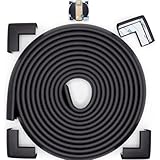
- Child Proof Table Corners and Edges at Home. SLIM-FIT PREMIUM RUBBER FOAM: Shore A 20-N density / 0.3-inch thick / 0.6-inch deep - impact absorbent.
- CLEAN SAFETY: Roving Cove uses safe and pure raw material and was the first brand to make foam safety bumpers without the use of toxic flame-retardant chemicals (SCCPs). Our edge corner guards contain no BPA, no phthalates, no heavy metals, no latex, no SCCPs. Inherently flame-resistant; passed flammability tests under US regulations.
- DENSEST: Density is more important than thickness when it comes to softening impact. Our edge and corner guard measure Shore A 20-N density, much more dense than the industry standard of 13. Soft, high-density premium cushions absorb impact and protect your loved one from the sharp corners and edges in your home (nursery, kitchen, fireplace, coffee table), school, daycare, preschool, hospital, assisted living facility, senior housing, nursing home, factory, office, museum, restaurant and more.
- VALUE PACK: Covers 16.2 feet (194 inches) of surface area: 15 feet (4.6 meters) edge protector + 4 corner protectors. Fits all standard size tables: round table up to 56" diameter, square table up to 44" square and rectangle table up to 36" x 60".
- SECURE ADHESION: Includes authentic easy-to-peel 3M double-sided tape (30 feet of tape for the edge guard, not pre-taped), with 4 corner guards pre-taped. Onyx black color goes well with black or dark color furniture, such as tables, chairs, chests, shelves, stairs and desks. All text and photos/images in this product listing are copyrighted materials. Copyright: 2012 Mayapple Baby LLC, Brooklyn NY, USA. Designed in USA.
Splinters and snags
Wood that is torn, unfinished or weathered can shed splinters when a child touches or pulls along it. A rough edge may also catch sleeves, hair or skin. Sanding must remove the damaged fibers rather than merely covering them.
Protruding hardware
Childcare safety standards identify protruding nails and bolts, sharp points and corners, and splinters as hazards. Check the underside, leg joints and any repaired section, not just the visible tabletop perimeter.
Quick wins for a faster PC:
Repair Windows errors before they cause bigger problemsFix Now →Fix the driver behind crashes, sound loss and screen glitchesFind Drivers →Clear out junk files and repair common Windows errorsFree Scan →Falls caused by instability
An edge problem can coexist with a structural problem. A child pulling up on a table, climbing onto it or loading one side can make a wobbly table move or tip. Edge treatment is incomplete if the legs, joints or base are not sound.
What do child-safety authorities recommend for sharp furniture edges?
The U.S. Consumer Product Safety Commission (CPSC) advises: “Use Corner and Edge Bumpers (12) to help prevent injuries from falls against sharp edges of furniture and fireplaces. Be sure to look for bumpers that stay securely on furniture or hearth edges.” This is practical injury-prevention advice for accessible furniture; it does not declare every table safe once a bumper is attached.
Ireland’s Health Service Executive recommends furniture pads over sharp corners, cushioning hard edges such as window sills, and positioning hard objects so children cannot run into them. The same principle applies to a table: reduce the child’s opportunity to collide with the edge while you correct the underlying condition.
Also popular on Amazon
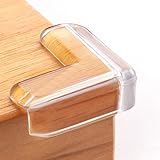
- Keep safe from sharp table corners : Thickened design baby Proof Corner Guards,Stop Child Head Injuries from Tables, Furniture and Sharp Corners. The clear corner protectors can widely Use yours on wood, metal, marble or glass furniture. Recommended Age :0-48 month old. If the table corners are Curved, Not Right Angles, Recommend Choose The Round Corner Protectors
- corner protector baby : Baby table corner protector is thick and natural silicone. As parents, we know that baby love to lick, suck and chew on everything in sight. This corner protectors are friendly to child . Edge Protectors can protect children from Sharp Corners of Cabinets, Tables, Drawers
- Easy to Install : corner proctor including extra hold adhesives, pre-taped , you only need to remove covering then stick on your table corners and press for one minute. Clean the surface before installation to ensure that there are no dust, water, oil, and do not move the corner protector within 24 hours of installation. PLEASE NOTE: The stickness of the tape will be affected at low temperatures, in order to make it stickier, please heat with a hot hair dryer for a few seconds before use
- Clear and Clean : Since these corner protector are clear & transparent, once you put them on you won’t even notice that they are there! They blend seamless with your furniture, maintaining that original look and feel of your furniture
- More Safe: corner protectors for furniture are enough to child proof your home. They dull the sharp corners of furniture, stairs and even the fireplace to provide a safer home for your child to wander and play.Every corner protector you
Caring for Our Children, a national childcare-standard resource, says rigid-material corners and edges should have at least a one-quarter-inch radius unless the material is thinner than one-half inch. It also says wood should be sanded smooth and checked for splintering. That radius is childcare-standard guidance, not a universal residential legal requirement, but it provides a useful target when repairing a home table.
These standards also call for attention to tip-over hazards. CPSC recommends anchoring furniture and appliances to a floor or wall when appropriate because a tip-over can crush a child. Apply that check to the whole table rather than treating the edge in isolation.
How do I childproof a sharp table edge?
Use this order so a temporary control does not get mistaken for a permanent repair.
- Stop access immediately. Move the table away from play and running routes, close the room, use a barrier, or remove the table until the edge has been corrected.
- Inspect every side. Run a visual and careful hand inspection over the tabletop perimeter, corners, underside, legs and joints. Look for sharp points, splinters, loose trim, exposed fasteners, cracks and wobble.
- Decide whether the material can be made sound. A solid edge that can be reshaped and smoothed may be repairable. A board that is split, crumbling or repeatedly sheds splinters should be replaced or the entire table removed from child access.
- Round and sand the exposed edge. Remove the sharp arris and splintered fibers, progressing until the surface is smooth to the touch. Shape corners so they are not pointed; the one-quarter-inch radius in Caring for Our Children is a practical benchmark for rigid material.
- Remove or secure protrusions. Drive, replace or otherwise correct exposed nails, screws, bolts and broken hardware. Do not leave a sharp fastener beneath the tabletop where a child can reach it.
- Fit a suitable bumper if needed. Choose a corner or edge bumper that matches the table profile and remains securely attached. Follow its installation directions and check that a child cannot pull it off or reach a sharp section beside it.
- Check stability. Confirm that the table sits flat, legs and joints are tight, and ordinary pushing or pulling does not make it move. Anchor it when its size, placement or climb-accessible loads create a tip-over risk.
- Reinspect before restoring access. Check the repaired edge, bumper attachment and table stability again after the table has been moved, cleaned or used. Correct any looseness immediately.
How can I round and sand a wooden table edge?
Prepare the work area
Keep children away while the table is being repaired. Remove loose dirt and old, flaking material so you can see the actual wood. If the edge is painted, do not assume the coating has eliminated a sharp profile; the underlying shape still needs to be rounded and smoothed.
Remove the hazard, not just the appearance
Work along the full damaged section, including the transition into each corner. A small untouched sharp spot can remain a contact hazard. Take off splintered fibers and reshape a pointed corner rather than pressing the fibers flat or hiding them under a soft covering.
Also popular on Amazon

- Optimal Density: Other corner protectors are made from too-soft silicone or foam, marketed as being desirably “squishy”. But adhesives don’t stick well to soft materials, so little hands can tug them off easily. Our premium PVC protects while softer alternatives can dent inwards or flake off over time.
- Useful Safety Product: This product should be used under adult's supervision. Our 3rd-party tested protectors will safeguard your home and are loved for their combination of safety and modern looks. For larger tables, try using them on both the top and bottom sides for full crash protection!
- Clear & Discreet: Don’t settle for ugly baby safety products that clash with furniture. Our clear options are stylish and resist discolorization. The spherical design is more dense & protective than flat L-shaped guards, and it’s fuss-free to apply—unlike awkward foam rolls, which need perfectly steady hands to cut and place!
- 1-Minute Installation: Apply our child proofing guards with the 3 custom-cut pieces of high-power adhesive - one for each side, to give you more peace of mind.
- Devoted Customer Service: Should you encounter any issues with your CalMyotis product, please reach out to us and we would be happy to assist you.
Finish and inspect
Continue until no splinter catches on a cloth or fingertip and the corner feels consistently rounded. Wipe away dust, then inspect in strong light and from the child’s likely reach height. Recheck after the table is put back into service because impact, moisture and everyday movement can reopen a split.
Painting or refinishing can be done after the wood is sound and smooth, but a coating is not a safety repair by itself. Keep the table inaccessible until any finish is fully prepared according to its product directions and the edge has passed the same physical inspection.
Should I repair, pad, isolate or replace the table?
The best control depends on whether the edge can be made durable, how much access the child has, and whether the table is stable. Use the following comparison rather than choosing padding automatically.
| Option | Edge hazard removed? | How well it stays effective | Stability and access considerations | Maintenance burden | Total cost |
|---|---|---|---|---|---|
| Repair and round | Yes, when all sharp points, splinters and protrusions are removed | Durable if the wood is sound and the repair is inspected | Does not correct wobble or tip-over by itself; children can still reach the table | Reinspect after use and after any impact | Not stated; depends on damage and materials |
| Padding or bumpers | Reduces contact impact but does not repair a split or protruding fastener | Effective only while securely attached; loose pieces need immediate replacement | Table remains accessible, so stability and climbing loads still matter | Frequent checks for detachment, gaps and wear | Not stated; depends on the product and table profile |
| Isolation | Removes the child’s access rather than changing the edge | Reliable only while the barrier, room or placement remains controlled | Useful for crawlers and toddlers who can reach the table; does not solve a hazard if access is restored | Check barriers and room layout whenever furniture moves | Not stated; depends on the isolation method |
| Replacement | Removes an edge that cannot be made sound | Durable when the replacement is free of sharp points and is maintained | Evaluate the new table for wobble, climb access and tip-over risk | Normal inspection of edges, joints and stability | Not stated; depends on the replacement |
Do corner guards make a wooden table safe for kids?
Corner guards and edge bumpers can reduce injuries from a fall against a hard edge, and CPSC specifically recommends products that stay securely attached. They are most useful when the table has been repaired or when a small residual impact risk remains. They should not be used to conceal a loose board, an active splinter, an exposed fastener or a table that can tip.
Do these 3 things before closing this tab:
1Repair Windows errors before they cause bigger problems2Fix the driver behind crashes, sound loss and screen glitches3Clear out junk files and repair common Windows errorsFit matters. A guard that is too short can leave the adjacent edge exposed; one that does not match the profile can peel away. After installation, pull gently at the guard, inspect its seams and check the surrounding wood. Repeat those checks because cleaning, play and temperature changes can loosen an attachment.
Also popular on Amazon

- Ultra Thick & High Density Shock-Absorbent Protection – Featuring 22-N density and 0.42-inch thick high-density rubber foam, our edge and corner protectors are ultra soft, dense and durable to effectively cushion impact force. These heavy-duty table corner protectors fully cover sharp furniture edges and corners, preventing toddlers and kids from bumping and scratching injuries. It creates a safe exploration environment for curious little ones while protecting your furniture from daily wear and tear
- Premium Safe & Non-Toxic Material – Our furniture corner guards are manufactured with baby-safe formulas and undergo strict internal safety testing, completely free of toxic substances and harmful flame-retardant chemicals. The skin-friendly and odor-free foam rubber material is gentle and harmless to infants, toddlers and pets. It is perfectly safe for daily household use and widely applicable on coffee tables, chairs, bed frames, drawers, shelves, cabinets, walls and all household furniture with sharp corners
- Jumbo Value Pack with Universal Fit – This all-inclusive baby proofing set provides a total 20.5FT protective surface, including 18.1FT flexible edge protectors and 8 L-shaped corner guards. The oversized package fits most household furniture sizes perfectly, compatible with round tables (up to 73” diameter), square tables (up to 57” square) and rectangular tables (up to 37” x 79”). Ideal universal sharp corner protectors for full home baby proofing
- 3M Pre-Taped & Tool-Free Easy Installation – Equipped with premium 3M pre-applied double-sided tape, these cabinet corner protectors require no extra glue or tools for installation. You can freely cut the foam guards into any customized size to fit your furniture edges and corners. The high-adhesion tape stably sticks on wood, glass, tile, steel and ceramic surfaces. Just clean the furniture surface thoroughly and press gently after pasting for stronger, firmer adhesion and long-lasting use
- Reliable After-Sales Service & Worry-Free Purchase – We focus on product quality and customer experience for every furniture corner protector. If you receive defective products or are unsatisfied with our wall corner protectors, we provide professional after-sales solutions including free replacement services. Our professional customer support team responds to all Amazon platform messages within 24 hours to solve your problems quickly, bringing you a risk-free and pleasant shopping experience
How do I check the table for tip-over and other hazards?
- Test for wobble: Apply light pressure from several sides. Movement at a leg or joint signals a repair requirement before children use the table.
- Inspect the base: Look for cracked legs, missing hardware, uneven feet and repairs that no longer hold.
- Consider climb routes: Nearby sofas, boxes or toys can let a child reach the tabletop or pull strongly on an edge.
- Review loads: Heavy objects placed near one side can make a table less stable when a child leans or climbs.
- Anchor where appropriate: Follow CPSC’s advice to anchor furniture and appliances to the floor or wall when the furniture’s design or use creates a tip-over possibility.
- Check the surrounding path: Reposition the table so a child cannot run directly into it from a play area or doorway.
How should precautions change as a child grows?
Crawlers and pull-to-stand babies
These children use furniture for balance and can reach edges from below. Keep the table out of their route, remove climb aids nearby and inspect the underside as carefully as the top.
New walkers and toddlers
Running, sudden falls and attempts to climb increase the chance of an impact. A secure bumper may add protection while a repair is completed, but it does not replace removing the rough edge or controlling access.
Older children
Older children may move chairs, toys or other objects against the table. Recheck the room after rearrangements and teach children not to climb, but continue to rely on a sound table and controlled placement rather than instruction alone.
What’s actually slowing this PC down?
Pick the symptom - the matching free tool is one click away.
When should an old table be removed or replaced?
Remove the table from children’s spaces when the edge remains sharp after repair, the wood continues to splinter, hardware cannot be secured, or the structure wobbles or tips. Replacement is also the practical choice when damage extends through a board or when repeated repairs fail. Store the table where children cannot reach it until disposal or a reliable rebuild.
If a table is sound but simply has square corners, rounding and smoothing may be sufficient. If the problem combines sharp edges with structural weakness, treat the structural issue as decisive; a padded corner cannot make an unstable table dependable.
Also popular on Amazon
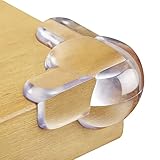
- Breathe Easier as Your Kid Explores… Protect your cutie from bumping their head to sharp corners with our baby safety corner protectors. Wappa Baby makes babyproofing your furniture edges easier, safer, and faster than ever with our patent pending design.
- New Shape for Improved Protection… With a combination of ball-shaped and L-shaped designs, our corner protector for babies offers better bumper protection and prevents babies from swallowing them should they grab onto it.
- Keep Your Furniture Stylish… Don't let babyproofing keep you from having your own style at home. Our transparent PVC materials blend seamlessly with any furniture to maintain its original look and feel.
- Install in a Minute… Our corner protector's extra wide design makes it applicable to tables or furniture with corner edges. Meanwhile, the strong adhesive makes for easy and long-lasting installation.
- Make Your Babyproofing Journey Easy… Thanks to our combination of durability and decor-friendly aesthetics, Wappa Baby makes for the ideal choice for babyproofing corners and edges. But don't just stop here; check out our page for more reliable items to safeguard your precious one!
What maintenance keeps a repaired table safe?
- Inspect edges, corners, fasteners and joints whenever the table is moved.
- Run a cloth over repaired wood to detect a new splinter or rough spot.
- Check bumpers for peeling, gaps, brittleness or child-accessible loose pieces.
- Look for new wobble after cleaning, seasonal movement or a collision.
- Keep chairs, boxes and toys from creating an unintended climbing route.
- Repeat the inspection at the child’s current reach height as mobility changes.
A table is ready for normal household access only when its edge is rounded and smooth, its wood and hardware are sound, its protective devices remain attached, and its placement does not create a predictable collision or tip-over route.
Frequently Asked Questions
Are foam edge guards enough for a table with deep splinters?
No. A guard may reduce impact, but deep splinters or exposed hardware remain defects underneath and beside it. Remove access and repair or replace the damaged section before relying on padding.
Free tools Windows power users keep installed
One-click scans. No signup required.
Can I leave a repaired table in a playroom while the finish dries?
Keep children out of the area until the finish has been handled according to its product directions and the surface is no longer vulnerable to contact. A drying coating does not make an unfinished sharp edge safe.
What if my table has rounded corners but a jagged underside?
Treat the underside as an accessible hazard if a child can crawl beneath, pull up or reach under the tabletop. Smooth or remove the jagged material and correct any protruding fasteners before returning the table to use.
How often should I inspect a table protected with bumpers?
Inspect it whenever the table is moved, cleaned or struck, and whenever a child begins climbing or reaching higher. Also check routinely for peeling, gaps and loose pieces because attachment quality determines whether the bumper continues to help.
Quick Recap


