What’s actually slowing this PC down?
Crashes, No Sound, or Screen Glitches?
Random freezes, missing sound and display glitches usually trace back to one bad driver. Find and replace yours safely.Free scan · under a minutePC Slower Than It Used to Be?
A free scan shows the junk files, broken settings and background clutter dragging Windows down - then fixes them in one click.Free scan · Windows 10 & 11Pick the symptom - the matching free tool is one click away.
ThatPainter is reader-supported. When you buy through links on our site, we may earn an affiliate commission. Learn More
As an Amazon Associate I earn from qualifying purchases.
For most first-time buyers, get the Bambu Lab A1. It is the easiest general-purpose filament printer for PLA, PETG, and TPU, with automatic calibration and a useful 256 × 256 × 256 mm build volume. Choose the Bambu Lab P1S instead if you need an enclosure or expect to print ABS and ASA. Choose a resin printer such as the Elegoo Mars 5 Ultra only when miniature-level detail is more important than easy cleanup and chemical handling.
This is a 2025 buying guide, so prices and availability should be checked at the time of purchase. The recommendations below are use-case picks—not a claim that one printer is objectively best at everything.
Quick picks
| Printer | Technology | Best for | Build volume | Enclosed? | Main drawback |
|---|---|---|---|---|---|
| Bambu Lab A1 | FDM/FFF | Most beginners and general-purpose printing | 256 × 256 × 256 mm | No | Not recommended for ABS, ASA, nylon, PC, or fiber-filled materials |
| Bambu Lab A1 Mini | FDM/FFF | Small desks and the lowest-cost entry | 180-mm-class | No | Small build area limits toys, props, helmets, and large parts |
| Bambu Lab P1S | FDM/FFF | Best enclosed all-rounder | 256 × 256 × 256 mm | Yes | Enclosure is not the same as an actively heated chamber |
| Elegoo Centauri Carbon | FDM/FFF CoreXY | Affordable enclosed speed | 256 × 256 × 256 mm | Yes | Support, availability, and real-world material results vary by region and filament |
| QIDI Plus4 | FDM/FFF CoreXY | Large engineering parts | 305 × 305 × 280 mm | Yes; actively heated | More complex than a beginner-focused printer; filament loading can be awkward |
| Prusa MK4S | FDM/FFF | Repairability, documentation, and enthusiast use | 250 × 210 × 220 mm | No | Costs more than some faster, more automated competitors and lacks a built-in enclosure |
| Prusa CORE One | FDM/FFF CoreXY | Enclosed Prusa ecosystem | 250 × 220 × 270 mm | Yes; active control up to 55°C | Premium price and smaller footprint than the QIDI Plus4 |
| Elegoo Mars 5 Ultra | Resin/MSLA | Miniatures and detailed small models | 153.36 × 77.76 × 165 mm | Covered vat, but still requires ventilation | Washing, curing, gloves, ventilation, and resin waste are unavoidable |
| Anycubic Photon Mono M7 Pro | Resin/MSLA | Larger high-detail resin work | 223 × 126 × 230 mm | Covered vat, but still requires ventilation | Higher resin and post-processing costs |
Specifications are manufacturer-listed unless otherwise noted. Prices and availability change frequently. For example, the Centauri Carbon launched with a stated US preorder price of $299.99 in February 2025, while a June 2025 deal report listed the P1S at $699 against a stated $899 usual MSRP. Treat those as dated price references, not permanent prices.
Popular on Amazon

- One-Click Automatic Printing: Experience hassle-free 3D printing with the Adventurer 5M Series. Enjoy automatic bed leveling for flawless first layers, ensuring consistent adhesion and saving time with no manual adjustments required.
- 12X Ultra Fast Printing: Featuring a CoreXY structure with 600mm/s travel speed and 20000mm/s² acceleration, the AD5M maximizes efficiency, reduces production cycles, and ensures high precision, making it ideal for rapid prototyping and mass production.
- Smart and Efficient Design: Quick 3-second nozzle changes, a high-flow 32mm³/s nozzle, and fast 35-second warm-up to 200°C deliver stable high-speed printing. Its dual-sided PEI platform and versatile options provide easy removal and adaptability for various creative projects.
- Superior Print Quality & Adaptability: Combines a 280°C direct drive extruder with dual-fan cooling and vibration compensation. Includes a standard 0.4mm nozzle and accepts optional sizes from 0.25mm to 0.8mm to fit various printing needs.
- Real-Time App Monitoring: Monitor print progress, adjust settings, and receive instant status alerts remotely with the Flash Studio. Smart mobile control ensures a seamless, effortless printing experience anytime, anywhere.
1. Best beginner FDM printer: Bambu Lab A1
The Bambu Lab A1 is the best starting point for most people who want to make household parts, toys, organizers, desk accessories, cosplay components, or paintable models. It combines a full-size 256-mm cube build area with automatic calibration, a built-in camera, filament runout and tangle sensors, and a straightforward software workflow.
Bambu lists a 300°C maximum hotend temperature, a 100°C maximum bed temperature, and a maximum toolhead speed of 500 mm/s. Its recommended materials are PLA, PETG, TPU, and PVA; Bambu specifically does not recommend ABS, ASA, PC, PA, or fiber-reinforced filaments for this machine. See the official A1 specifications for the current material and hardware list.
Do these 3 things before closing this tab:
1Fix the driver behind crashes, sound loss and screen glitches2Repair Windows errors before they cause bigger problems3Scan for outdated or missing drivers - takes under a minuteIndependent testing from Tom’s Hardware found the A1 fast, quiet, reliable, and easy to use. A deliberately aggressive speed Benchy took 19 minutes in that review, but that should not be interpreted as the expected time for every normal-quality print.
Why it is beginner-friendly
- Automatic calibration: the printer handles bed-level and first-layer checks instead of requiring a new owner to manually adjust multiple screws.
- Useful size: 256 × 256 × 256 mm is large enough for most everyday objects and many cosplay or display parts.
- Good starter materials: PLA is forgiving, PETG is tougher for many household parts, and TPU enables flexible feet, bumpers, and gaskets.
- Low learning curve: the automated workflow removes much of the traditional setup and tuning burden.
Automatic calibration does not mean automatic success. A dirty build plate, wet filament, a damaged nozzle, poor supports, an unstable table, or a badly designed model can still cause a failed print.
A1 limitations
The A1 is an open-frame printer. That makes it accessible and easy to see, but it is a poor choice for regular ABS, ASA, nylon, polycarbonate, and fiber-filled filament printing. Those materials benefit from a controlled, warm environment and, in the case of abrasive composites, wear-resistant hardware.
Its moving bed also needs a stable surface and clearance behind and in front of the printer. Measure the operating space, not merely the printer’s footprint. The optional A1 Combo adds the AMS Lite multicolor feeder, which requires additional room. The AMS Lite cannot handle TPU; TPU needs to be loaded through the external spool path, according to Tom’s Hardware’s testing.
The Tool Desk
Outbyte Driver Updater FREEScan for outdated or missing drivers - takes under a minuteDriver Scan →Outbyte PC Repair FREEClear out junk files and repair common Windows errorsFree Scan →If buying an old-stock or used A1, check the serial number and purchase history. Bambu Lab says A1 printers sold after January 30, 2024 are not from the recalled batch and include the relevant heatbed-cable fixes; this matters primarily when evaluating an older machine.
2. When the A1 Mini is the better choice
The Bambu Lab A1 Mini makes sense when desk space and purchase price matter more than capacity. It offers the same general plug-and-play, full-automatic-calibration approach and optional four-color AMS Lite workflow in a smaller package. Its build area is approximately 180 mm, so it is well suited to miniatures, small toys, brackets, replacement knobs, and desk accessories.
Do not choose the A1 Mini as a false bargain if you already expect to print large organizers, helmets, substantial functional parts, or several objects at once. A smaller printer can force you to split models into more pieces, increasing assembly time and reducing the practical value of the initial saving. The official A1 Mini page should be checked for the current configuration and price.
3. Best enclosed all-rounder: Bambu Lab P1S
Choose the Bambu Lab P1S over the A1 when an enclosure is central to your plans. It uses a fast CoreXY motion system, has the same useful 256 × 256 × 256 mm build volume, includes a built-in camera, and can be paired with Bambu’s AMS system for multicolor printing. The P1S product listing covers its current enclosure, connectivity, and accessory configuration.
Quick wins for a faster PC:
Repair Windows errors before they cause bigger problemsFix Now →Scan for outdated or missing drivers - takes under a minuteDriver Scan →The enclosure helps maintain a more stable environment, reduces drafts, and makes ABS and ASA more practical than they are on the open-frame A1. It also makes the printer a more suitable choice for a workshop shared with children or pets—provided the machine itself is placed where they cannot reach it.
P1S versus A1
- Buy the A1 for PLA, PETG, and TPU, the simplest setup, and a lower-complexity first printer.
- Buy the P1S for an enclosure, CoreXY motion, more demanding materials, and the option of an enclosed AMS multicolor system.
- Do not buy the P1S solely for its speed rating. Normal print time depends on layer height, acceleration, flow rate, cooling, geometry, infill, supports, and filament profiles.
An enclosure is not an actively heated chamber. The P1S can be a better environment for demanding materials than an open printer, but success still depends on dry filament, bed preparation, model geometry, chamber temperature, and the material profile. It should not be described as equivalent to the actively heated QIDI Plus4 or Prusa CORE One.
When the X1 Carbon is worth the premium
The Bambu Lab X1 Carbon is a premium alternative rather than the automatic best choice. It adds a hardened steel nozzle and extruder gears, a 300°C hotend, support for more demanding materials including PA, PC, and carbon- or glass-fiber-reinforced polymers, lidar-assisted first-layer inspection, and AI-based spaghetti detection. The official X1 Carbon specifications list its material and sensor capabilities.
It is justified when you will actually use abrasive or engineering filaments, want the extra sensors, or prefer a more premium package. For a beginner printing mostly PLA, the A1 or P1S usually addresses the real need more efficiently.
4. Best affordable enclosed CoreXY: Elegoo Centauri Carbon
The Elegoo Centauri Carbon is one of the most important additions to a 2025 shortlist. It launched in February 2025 with a stated US preorder price of $299.99, bringing an enclosed 256 × 256 × 256 mm CoreXY printer into a lower price tier. Elegoo lists automatic calibration, camera monitoring, a 320°C maximum nozzle temperature, a 500 mm/s maximum speed, and compatibility with PLA, PETG, ABS, ASA, TPU, PC, PA, and fiber-reinforced filaments. Those specifications are available from the launch announcement and product page.
Tom’s Hardware found the Centauri Carbon strong on out-of-box experience and selected it as its fastest affordable printer of 2025. It is a compelling choice for buyers who want the enclosure and fast CoreXY format without moving to a premium price.
What to watch before buying
Manufacturer-listed material compatibility is not a guarantee that every spool will print easily. PETG, nylon, PC, and composite filaments still need appropriate drying, profiles, nozzle hardware, and careful temperature management. Check local stock, warranty terms, replacement parts, and seller support before choosing it over a more established ecosystem. Also make sure you are comparing the original Centauri Carbon rather than later Centauri Carbon 2 models.
The 500 mm/s figure is a maximum advertised toolhead speed, not a promise that a large, detailed object will print at that speed with good surfaces. In practice, acceleration, volumetric flow, cooling, and geometry are often the limiting factors.
Also popular on Amazon

- Vivid Multi-Color Printing: Bring your creations to life with vibrant, multi-color prints. This printer supports up to 4 colors simultaneously, giving you endless creative possibilities.
- 1-Click Auto Leveling: Enjoy smooth, uninterrupted prints with the advanced 1-Click Auto Leveling feature that automatically calibrates your print bed for optimal results every time.
- Ultra-Fast 12X Printing Speed: The AD5X features a Core XY structure with speeds up to 600mm/s and acceleration of 20,000mm/s². Its stable design boosts both efficiency and print quality, making it ideal for rapid prototyping and batch production.
- Exceptional Print Quality: The AD5X delivers outstanding print results with its advanced dual-channel cooling fan, vibration compensation system, and 300°C direct-drive extruder.
- Versatile Nozzle Options: The AD5X supports four nozzle sizes (0.25mm to 0.8mm) for full creative control. The 0.4mm nozzle comes pre-installed for versatile, everyday printing. For specialized tasks, optionally upgrade to the ultra-fine 0.25mm nozzle for miniature details, or to the 0.6mm/0.8mm nozzles to slash print time on large, sturdy models.
5. Best printer for large technical parts: QIDI Plus4
The QIDI Plus4 is a specialist machine for people who need large functional parts or routinely print materials such as ABS, ASA, nylon, and polycarbonate. Its 305 × 305 × 280 mm build volume is substantially larger than the 256-mm class, and its second-generation actively heated chamber reaches 65°C according to QIDI’s specifications.
That extra space is valuable for large brackets, enclosures, engineering prototypes, props, and helmet components. A 300-mm-class printer can reduce the number of seams when a model would otherwise need to be split across several 256-mm-wide sections.
Tom’s Hardware’s review found the heated chamber useful for ABS, PC, nylon, and other difficult filaments, with good print quality and strong results using carbon-fiber nylon. The review also reported difficult filament loading and noted that color capability was not available at the time of testing. QIDI lists compatibility with the QIDI Box multicolor accessory, so verify the current accessory status before purchase.
The Plus4 is not the default beginner recommendation. Its size, chamber, higher-temperature materials, and operating complexity are valuable only if you need them. It also requires more physical space, more ventilation planning, and more attention to filament storage than a basic PLA printer.
Do these 3 things before closing this tab:
1Fix the driver behind crashes, sound loss and screen glitches2Clear out junk files and repair common Windows errors3Scan for outdated or missing drivers - takes under a minute6. Best open ecosystem and enthusiast printer: Prusa MK4S
The Prusa MK4S remains a strong choice for a buyer who values repairability, documentation, long-term support, and a mature enthusiast ecosystem more than the newest headline speed. It offers excellent first-layer calibration and print quality and is available as either a kit or an assembled machine; the official specifications and independent review cover those configurations.
Its 250 × 210 × 220 mm build volume is slightly narrower than the 256-mm cube offered by the A1, P1S, and Centauri Carbon. It is also open-frame, so ABS, ASA, nylon, and similar materials are less convenient than they are on a properly enclosed printer.
The MK4S is a particularly sensible choice for an experienced maker, educator, or repair-minded owner who expects to keep a printer for years and wants detailed documentation and accessible replacement parts. It is less compelling for someone whose sole priority is the most automated workflow per dollar.
7. Best enclosed Prusa: Prusa CORE One
The Prusa CORE One is the more relevant Prusa recommendation for 2025 buyers who want an enclosure. Prusa announced it on November 19, 2024, with first shipments planned for January 2025. It uses a CoreXY motion system, has a 250 × 220 × 270 mm build volume, and provides active chamber temperature control up to 55°C. See the announcement and current technical comparison.
The Tool Desk
Outbyte Driver Updater FREEFix the driver behind crashes, sound loss and screen glitchesFind Drivers →Outbyte PC Repair FREEClear out junk files and repair common Windows errorsFree Scan →Choose the CORE One when you want Prusa’s software, documentation, repair-oriented philosophy, and support ecosystem with a more modern enclosed design. It is a better match than the MK4S for regular ABS, ASA, nylon, and other materials that benefit from controlled temperatures.
The decision is straightforward: choose the MK4S for the open-frame enthusiast platform and lower entry into the Prusa ecosystem; choose the CORE One for an enclosure and active chamber control. Neither should be selected merely because the brand name replaces all tuning and maintenance.
8. Best resin printer for miniatures: Elegoo Mars 5 Ultra
The Elegoo Mars 5 Ultra is the strongest beginner-oriented resin recommendation for tabletop miniatures, highly detailed models, jewelry prototypes, and small display pieces. It has a 7-inch 9K monochrome LCD, 18-µm XY resolution, a 405-nm COB light source, automatic leveling, an AI camera, and sensors for resin shortage, residue, and leveling failure. Its build volume is 153.36 × 77.76 × 165 mm. The official specification page lists the current details.
Tom’s Hardware found it a reliable first resin printer, particularly for gamers and people learning miniature printing. The fine XY resolution can reproduce tiny facial features, armor details, lettering, and ornamental forms that are difficult to produce cleanly on a filament printer at similar scale.
The resin workflow is not plug-and-play
Resin is often the right technology for detail, but it is not simply a higher-quality version of FDM. After printing, parts generally need to be washed, dried, and UV-cured. Supports must be removed, uncured resin must be kept off skin and surfaces, and contaminated waste must be handled safely.
Before buying, budget for:
- Nitrile or other chemically suitable gloves.
- Eye protection.
- Ventilation or suitable extraction.
- A wash-and-cure machine or a carefully managed alternative workflow.
- Isopropyl alcohol or the cleaning fluid specified for the resin.
- Filters, containers, paper towels, replacement vat film, and a way to cure contaminated waste before disposal.
NIOSH warns that vat-photopolymerization printing can expose users to uncured resin particles and gases and recommends ventilation, eye protection, suitable chemical-resistant gloves, and other controls. Resin described as low-odor or water-washable should not be treated as harmless; follow its safety data sheet and local disposal rules. Prusa’s resin handling guidance is also useful background.
9. Best larger high-detail resin printer: Anycubic Photon Mono M7 Pro
The Anycubic Photon Mono M7 Pro is the better resin choice when a Mars-class printer is too small but you still want fine detail. Its manual lists a 10.1-inch 14K LCD and a 223 × 126 × 230 mm build volume, with USB and WLAN connectivity. The manual provides the detailed specifications.
The larger platform is useful for printing more miniatures in one batch, larger statues, jewelry masters, and detailed models that would need to be split on the Mars 5 Ultra. TechRadar included it among its 2025 hobbyist recommendations for modeling, jewelry, and precision-focused work.
Recommended Free Tools
Its greater capacity does not remove resin’s operating costs. Larger vats use more resin, failed prints waste more material, and the washing, curing, ventilation, glove, and waste requirements remain. Anycubic’s product pages and bundles change, so treat the listed $549 US figure as a dated product-page reference rather than a permanent price.
Also popular on Amazon
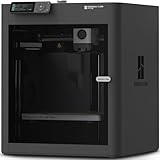
- Up to 16 Colors: Bring your designs to life with vibrant multi-color/multi-material printing capabilities, perfect for showcasing your creativity. Note: Connecting Bambu Lab AMS is required.
- 500mm/s and 20000 mm/s² Acceleration True High Speed: Don't wait around for your masterpieces. Lightning-fast printing speed lets you focus on creating, not waiting.
- Enclosed Design: Fully enclosed body improves print performance for advanced filaments. Automatic Bed Leveling: Say hello to high-quality, successful prints. Auto bed leveling makes 3D printing such an easy thing.
- Set Up in 15 Minutes: Spend more time printing and less time setting up. User-friendly design ensures a hassle-free assembly experience for all skill levels.
- Supported Filament: Ideal: PLA, PETG, TPU, PVA, PET ABS, ASA; Capable : PA, PC; Not Recommended: Carbon/Glass Fiber Reinforced Polymer.
FDM versus resin: which technology should you buy?
| Consideration | FDM/FFF filament | Resin/MSLA/SLA |
|---|---|---|
| How it works | Melts plastic filament and deposits it layer by layer | Cures liquid photopolymer resin with UV light |
| Best detail | Good for larger forms, functional parts, and visible layer-line control | Usually finer detail on miniatures, small text, jewelry, and intricate models |
| Best strength and practicality | Usually better for larger household parts, brackets, organizers, prototypes, and cosplay | Parts can be detailed but may be brittle or require a resin chosen for toughness |
| Typical materials | PLA, PETG, TPU, ABS, ASA, nylon, PC, and composites depending on the printer | Standard, tough, flexible, castable, water-washable, and specialty photopolymer resins |
| Cleanup | Remove supports and possibly sand, fill, or prime before painting | Wash, dry, cure, remove supports, and manage uncured chemical waste |
| Workspace | Generally simpler, but emissions and heat still require sensible ventilation | Needs stronger chemical-handling and ventilation planning |
| Build size | Often larger and more convenient for props and functional objects | Often smaller in X and Y, though tall objects can fit in the Z direction |
| Best buyer | First-time owners, makers, households, cosplayers, and prototype builders | Miniature painters, model makers, jewelry designers, and detail-focused hobbyists |
Tom’s Guide gives the same basic distinction: FFF printers use melted filament, while SLA-style printers cure liquid resin and generally produce finer detail. The practical difference is that FDM is usually the cleaner, stronger, more forgiving choice for useful objects, while resin is the detail specialist.
Build volume: measure the object you actually plan to print
Printer categories can hide important dimensional limits. A 180-mm-class machine may be perfect for miniatures and small toys but frustrating for helmets. A 256-mm cube is a strong general-purpose size. A 300-mm-class printer becomes worthwhile for large props, helmets, oversized organizers, and large functional parts.
Check all of these separately:
- Build volume: the maximum printable width, depth, and height.
- External dimensions: the physical size of the printer itself.
- Operating clearance: room for a moving bed, open doors, removable panels, and ventilation.
- Accessory clearance: space for an AMS, spool holder, lid, wash station, or filament dryer.
Tom’s Guide specifically recommends checking both total print volume and the individual width, depth, and height dimensions. A printer with a large Z height may still be unable to print a wide object in one piece.
Speed: advertised maximums are not normal print times
Maximum toolhead speed is only one variable. Practical throughput also depends on acceleration, volumetric flow rate, layer height, nozzle diameter, cooling, geometry, wall count, infill, travel moves, supports, purge towers, and the material profile.
Independent reviews show why benchmark claims need context. Tom’s Hardware recorded a 12-minute-58-second speed Benchy for the QIDI Plus4, while also explaining that a speed Benchy is not a print-quality measurement. The A1’s 19-minute speed Benchy was likewise produced with an aggressive test profile. A detailed model printed with fine layers and supports can take much longer.
Look for phrases such as fast for its class or fast in short benchmark prints, not the assumption that a printer will print every model at 500 or 600 mm/s.
Enclosures, heated chambers, and materials
An enclosure and a heated chamber are different things. An enclosure reduces drafts, helps retain heat, contains some noise and particles, and makes ABS or ASA more practical. An actively heated chamber directly controls the print environment and is more useful for warping-sensitive engineering materials.
Crashes, No Sound, or Screen Glitches?
Random freezes, missing sound and display glitches usually trace back to one bad driver. Find and replace yours safely.Free scan · under a minutePC Slower Than It Used to Be?
A free scan shows the junk files, broken settings and background clutter dragging Windows down - then fixes them in one click.Free scan · Windows 10 & 11| Material | Common use | Important requirement |
|---|---|---|
| PLA | Toys, models, organizers, prototypes | The easiest starting material; it is not ideal for high heat |
| PETG | Tougher household parts and brackets | Can string and benefits from dry storage |
| TPU | Flexible feet, gaskets, bumpers, and phone cases | A reliable direct-drive filament path helps; some multicolor feeders cannot handle it |
| ABS/ASA | Heat-resistant or outdoor parts | Enclosure, ventilation, and warp control are important |
| Nylon/PA | Strong functional components | Very moisture-sensitive; dry storage and controlled printing conditions matter |
| PC | High-temperature functional parts | Demanding; needs a genuinely suitable printer, bed, and chamber |
| Carbon- or glass-filled filament | Stiff, wear-resistant parts | Needs an abrasion-resistant nozzle and suitable extruder; fiber filling does not guarantee toughness in every direction |
For straightforward PLA, the A1 is the sensible pick. For enclosed ABS and ASA work, consider the P1S or Centauri Carbon. For regular nylon, PC, or composite printing, the QIDI Plus4, CORE One, X1 Carbon, or another genuinely suitable machine is a better starting point.
Do not call PLA environmentally friendly without qualification. The EPA notes that PLA is advertised as biodegradable, but that does not mean a printed object will harmlessly decompose in a home compost bin or ordinary landfill.
Is multicolor printing worth it?
Multicolor systems are useful for signs, logos, toys, decorative models, classroom projects, and painted-reference objects. They are less useful for single-color functional parts, where color changes add time and purge waste without improving performance.
Separate three questions before paying for the accessory:
What’s actually slowing this PC down?
Pick the symptom - the matching free tool is one click away.
- How many colors or materials can it load?
- Can it feed flexible TPU or abrasive filament reliably?
- How much purge waste does each color change produce?
The A1 Combo uses the AMS Lite, while the P1S and X1 Carbon can use enclosed AMS systems. The A1’s AMS Lite limitation with TPU is particularly important. Multicolor systems can also create significant purge waste, as noted in Tom’s Hardware’s A1 review. For a painter or model maker, multicolor can reduce some painting work on decorative pieces, but it does not replace priming, sanding, or painting when a high-quality surface is required.
Independent reader supportYour contribution helps us test, update, and keep practical guides available for everyone.Software, cloud access, and privacy
Convenience features differ by exact model and firmware. Before purchasing, check whether the printer supports local USB printing, Wi-Fi, Ethernet, smartphone control, camera access, firmware updates, and offline operation. Also check whether a cloud account is required for the workflow you want.
Bambu, Prusa, QIDI, Elegoo, and Creality offer different combinations of local and cloud-based tools. That is a practical trade-off, not a simple brand ranking. If local control or privacy is important, verify the exact model’s current firmware and slicer requirements before buying; do not assume that every printer in a product family works the same way offline.
What a printer really costs
FDM setup budget
- Printer and at least one spool of filament.
- A spare nozzle or hotend.
- Build plate or adhesive products if the model requires them.
- Filament dryer or dry box for PETG, nylon, PC, TPU, and other moisture-sensitive materials.
- Storage containers, maintenance tools, and replacement parts.
- Optional enclosure, camera, AMS, or ventilation equipment.
Resin setup budget
- Printer and resin.
- Wash-and-cure machine or a managed washing and curing setup.
- Isopropyl alcohol or the manufacturer-approved cleaning fluid.
- Nitrile gloves, eye protection, paper towels, filters, and containers.
- Ventilation or extraction.
- Replacement vat film, LCD protection, and a method for curing contaminated waste.
A cheap resin printer can therefore cost more to start and operate than an inexpensive FDM printer. Resin also has a shorter, more involved path between pressing Print and holding a finished object.
Free tools Windows power users keep installed
One-click scans. No signup required.
Safety and workspace planning
Neither technology should be treated as a harmless appliance. The EPA reports that filament printers can emit volatile organic compounds and ultrafine particles, while NIOSH identifies risks associated with both fused-filament fabrication and vat photopolymerization systems. Use the EPA research and NIOSH guidance when planning ventilation.
- Children and pets: prefer a physically inaccessible, enclosed setup. An open-frame printer with automatic leveling is not automatically child-safe.
- Apartments: FDM is usually more practical than resin, but both technologies need sensible ventilation and a stable, nonflammable workspace.
- Resin: prevent skin contact, keep uncured resin away from drains and household surfaces, and follow the resin’s SDS and local waste rules.
- Unattended printing: cameras, filament sensors, thermal protection, and power-loss recovery reduce some risks but do not make overnight printing risk-free.
- Noise: depends on speed, cooling fans, enclosure panels, furniture, and room acoustics. Avoid treating a manufacturer’s or reviewer’s general “quiet” description as a universal decibel rating.
Which printer should you buy for a specific project?
Household parts and useful objects
Buy an FDM printer. The A1 is the simplest choice; the P1S or Centauri Carbon is better if you want an enclosure; the QIDI Plus4 is justified for large or high-temperature parts.
Also popular on Amazon

- 600mm/s Speed & CoreXY Structure — Powered by an all-metal CoreXY frame and 20,000mm/s² acceleration, Adventurer 5M Pro reaches speeds up to 600mm/s. Integrated vibration compensation algorithms eliminate ghosting and ringing for smooth, high-precision surface finishes.
- 3-Second Quick-Swap Nozzle & Auto Leveling — Features a tool-free, quick-release nozzle mechanism for effortless 3-second replacements across multiple sizes (0.25/0.4/0.6/0.8mm). One-click full auto-leveling ensures precise bed calibration and a perfect first layer every time.
- Dual Filtration System & Quiet Enclosure — Built with an integrated dual filtration system and a fully enclosed chamber to ensure a clean printing environment and thermal stability. Powered by low-noise motion control, it operates quietly under 50dB for seamless home, office, or classroom use.
- 280°C High-Temp Extruder & Broad Material Compatibility — With a 280°C max nozzle temperature and a 110°C heated bed, it reliably prints engineering materials like ABS, ASA, and PETG-CF, as well as standard PLA and PETG.
- Smart Camera & Mobile Control — Features a built-in camera for real-time monitoring and time-lapse video creation. Monitor progress, adjust settings, and receive instant status alerts via Flash Studio. Integrated with filament detection, power loss recovery, and a 4.3-inch touchscreen for effortless operation.
Tabletop miniatures
Buy the Mars 5 Ultra for an approachable small resin workflow or the Photon Mono M7 Pro for more build volume. Budget for washing, curing, ventilation, gloves, and waste handling before purchasing.
A helmet or large cosplay prop
Check dimensions rather than printer labels. A 256-mm cube may require splitting a helmet into several sections. A 300-mm-class printer such as the QIDI Plus4 can reduce seams and assembly work, though the model’s exact orientation still determines whether it fits.
Carbon-fiber filament
Verify the nozzle, extruder gears, material profile, drying requirements, chamber, and bed temperature. A hardened nozzle is important, but carbon-filled filament does not automatically produce a stronger part in every direction; printed parts remain affected by layer adhesion and orientation.
Children, pets, or shared living space
Favor an enclosed, physically inaccessible FDM printer and plan ventilation. Resin requires a particularly controlled workspace because uncured resin and contaminated cleaning materials must be managed as chemical waste.
Older recommendations and professional exceptions
The established Tom’s Guide list, updated May 28, 2025, named the Formlabs Form 3+ overall, the FlashForge Adventurer 4 for value, and the Prusa Mini+ for beginners. That article remains useful as a snapshot of its testing, but it should not be treated as a complete consumer guide to the 2025 market.
The Form 3+ is a professional resin-workflow choice, not a sensible default for most households: Tom’s Guide reported a starting price of $3,750 and no third-party resin support. It belongs in a specialist section for businesses, design studios, and users who value Formlabs’ workflow and ecosystem enough to accept the cost and material restrictions.
Free tools Windows power users keep installed
One-click scans. No signup required.
The Adventurer 4 lacks automatic bed leveling and automatic filament loading according to the same coverage, while the Prusa Mini+ can be difficult to find. Newer choices such as the A1, P1S, Centauri Carbon, Plus4, CORE One, Mars 5 Ultra, and Photon Mono M7 Pro better reflect the decisions a 2025 buyer actually faces.
How these recommendations were selected
Official manufacturer pages were used for build dimensions, temperature limits, listed materials, connectivity, sensors, and accessory compatibility. Independent reviews from Tom’s Hardware and TechRadar were used for setup experience, print quality, workflow, practical limitations, and speed context. The ranking does not rely on maximum advertised speed or resolution alone, and it does not claim hands-on testing that was not performed.
For a machine expected to run for years, also investigate replacement nozzles, build plates, fans, belts, hotends, resin vats, firmware support, documentation, and customer service. A slightly cheaper printer is not a bargain if its proprietary parts are difficult to obtain.
Buying checklist
- What will you print? Household parts and props usually favor FDM; miniatures and intricate small models usually favor resin.
- What is the largest object? Compare width, depth, and height—not only the advertised build-volume figure.
- Which materials? PLA is easiest. PETG and TPU add capability. ABS, ASA, nylon, PC, and composites need a more capable environment.
- Do you need an enclosure? Choose one for drafts, ABS/ASA, shared spaces, or improved temperature stability.
- Do you need an actively heated chamber? Consider the QIDI Plus4 or Prusa CORE One for regular demanding-material work.
- Do you need multicolor? Account for accessory cost, space, TPU limitations, and purge waste.
- Can you ventilate safely? This is essential for resin and sensible for FDM.
- What is the complete budget? Include filament or resin, drying, washing, curing, tools, spare parts, and safety equipment.
- Do you need local or offline printing? Check the exact model and firmware rather than assuming.
- How much do you value repairability? Prusa’s ecosystem is especially attractive to owners who want documentation and long-term serviceability.
Buying used: checks that matter
For a used machine, identify the exact model revision and check recall status. Ask for operating hours, inspect the nozzle and build plate, test a first layer and a larger print, and confirm that replacement parts remain available. Check whether the sale includes proprietary accessories such as an AMS, camera, power supply, resin vat, or special build plate. A low price is less attractive if those components must be replaced immediately.
The Tool Desk
Outbyte Driver Updater FREEScan for outdated or missing drivers - takes under a minuteDriver Scan →Outbyte PC Repair FREEClear out junk files and repair common Windows errorsFree Scan →Frequently Asked Questions
Is FDM or resin better for a beginner?
FDM is usually the better first technology because it is cleaner and simpler for toys, household parts, organizers, prototypes, and cosplay. Resin is the better choice for miniature-level detail, but it requires washing, curing, ventilation, gloves, and careful uncured-resin waste handling.
Is the Bambu Lab A1 better than the P1S?
Neither is universally better. Choose the A1 for PLA, PETG, and TPU and the simplest general-purpose workflow. Choose the enclosed P1S if you expect to print ABS or ASA, want a CoreXY machine, or want an enclosed AMS multicolor setup.
Do I need an enclosed 3D printer?
Not for most PLA, PETG, and TPU printing. An enclosure is useful for ABS and ASA, reducing drafts, improving temperature stability, and restricting access around children or pets. It is not the same as an actively heated chamber.
Can I print ABS on an open-frame printer?
It may be possible, but it is generally less reliable because ABS and similar materials can warp and release emissions. An enclosure, suitable ventilation, correct bed preparation, dry filament, and an appropriate profile improve the chances of success.
Do I need a filament dryer?
Not necessarily for a first spool of PLA, but drying becomes increasingly important with PETG, TPU, nylon, PC, and many composite filaments. Wet filament can cause stringing, bubbling, weak layers, and inconsistent surfaces even when the printer is calibrated.
Is multicolor 3D printing worth it?
It is worthwhile for signs, logos, toys, decorative models, and classroom projects. It is usually unnecessary for single-color functional parts and can create purge waste. Check whether the feeder supports TPU and abrasive materials before buying a multicolor package.
Can I leave a 3D printer running overnight?
Monitoring cameras, filament sensors, thermal protection, and power-loss recovery help, but no consumer printer is risk-free when unattended. Use a clean, stable setup, follow the manufacturer’s safety instructions, and do not treat AI failure detection as a substitute for supervision.
How much extra equipment does a resin printer need?
At minimum, plan for suitable gloves, eye protection, ventilation, cleaning fluid, containers, filters, paper towels, a wash-and-cure workflow, and a method for curing and disposing of contaminated waste. These costs can make a cheap resin printer more expensive to operate than an entry-level FDM printer.
Quick wins for a faster PC:
Repair Windows errors before they cause bigger problemsFix Now →Fix the driver behind crashes, sound loss and screen glitchesFind Drivers →What should I buy with an FDM printer?
Start with quality PLA, spare filament, a spare nozzle or hotend, basic cleaning and maintenance tools, and a way to store filament dry. Add a dryer for moisture-sensitive materials and an enclosure only when your materials or workspace justify it.
The Bottom Line
For the broadest range of first projects, buy the Bambu Lab A1. It is the easiest recommendation for PLA, PETG, and TPU without forcing a beginner to pay for capabilities they may never use. Move up to the P1S for an enclosure, the Centauri Carbon for affordable enclosed CoreXY speed, or the QIDI Plus4 for large engineering parts and its actively heated chamber. Choose the Mars 5 Ultra or Photon Mono M7 Pro only when fine resin detail justifies the additional cleanup and safety workflow.
Quick Recap


