Crashes, No Sound, or Screen Glitches?
Random freezes, missing sound and display glitches usually trace back to one bad driver. Find and replace yours safely.
Find the Right Drivers →Free scan · under a minute
As an Amazon Associate I earn from qualifying purchases.
ThatPainter is reader-supported. When you buy through links on our site, we may earn an affiliate commission. Learn More
The best alternative to white kitchen paint depends on what you are coating. For wood cabinets, choose a cabinet-specific waterborne alkyd or urethane enamel in satin or semi-gloss. Warm greige, beige, muted green, blue, charcoal, and near-black all work when their undertones relate to the countertop and backsplash. Laminate and melamine can be painted, but only with thorough degreasing, 220-grit scuff sanding, and a bonding primer before the enamel. Granite and quartz are usually better left unpainted; change the cabinet, backsplash, lighting, or hardware color around the stone instead. Laminate countertops can accept paint with a non-porous-surface primer and protective sealer, although they need gentler care and periodic refinishing.
Popular on Amazon

- Ultra-White Brilliance: Experience the transformative power of Titanium Infusion, an ultra-white hue inspired by the artist’s palette – perfect for a modern, timeless look.
- One-Day Transformation: Redefine your kitchen cabinets in a single day with our brush-and-roll application - no professional help needed.
- All-Inclusive Kit: Each package covers 100 square feet, ideal for the typical kitchen, and includes all the necessary tools for a flawless finish.
- Eco-Friendly & Safe: Enjoy the peace of mind with our low-VOC, water-based formula, ensuring a safer painting experience.
- Effortless Transformation: No stripping or priming required; our paint adheres beautifully to wood, laminate, and metal cabinets with minimal preparation.
What can you paint instead of white on each kitchen surface?
Use the substrate—not the color trend—as the starting point. A coating that levels beautifully on a wood door can peel from slick melamine, while a painted stone countertop can lose the visual and resale advantages that made the stone valuable.
| Surface | Recommended system | Color directions beyond white | Main caution |
|---|---|---|---|
| Solid wood or wood veneer cabinets | Cabinet enamel, preferably a waterborne alkyd or urethane-modified enamel; prime where the wood or existing finish requires it | Warm greige, beige, muted sage, blue, charcoal, or near-black | Ordinary wall paint is less resistant to scratches, stains, and fading |
| Laminate or melamine cabinets | Degreaser, 220-grit scuff sanding, non-porous-surface bonding primer, then cabinet, door, and trim enamel | Any of the cabinet colors above, sampled on the actual surface | Insufficient cleaning or sanding is the common route to peeling |
| Granite or quartz countertops | Normally keep the stone and coordinate surrounding colors | Use cabinet, backsplash, wall, lighting, or hardware color to shift the palette | Painting requires specialty coatings and can reduce the appeal of a premium surface |
| Laminate or Formica countertops | Degreaser, 220-grit scuff sanding, non-porous primer, thin topcoat layers, and food-safe polyurethane or epoxy sealer | Coordinate with the existing pattern and cabinet undertones | Painted laminate needs gentler cleaning and eventual touch-ups |
“Formica” is a laminate brand, so the laminate-countertop process applies to Formica surfaces as well. Always make a small adhesion test in a concealed spot before committing to a visible area.
How do I choose a cabinet color that works with my countertop and backsplash?
Choose a color whose undertone belongs in the fixed surfaces. A warm stone with cream, tan, or brown flecks usually suits a warm greige or beige; a cool gray or blue-veined surface can support muted blue, sage, or a cooler gray. Sample large pieces of poster board or a door-sized test area, and check them in morning, afternoon, and evening light.
Free tools Windows power users keep installed
One-click scans. No signup required.
Warm greige and beige for a quiet whole-kitchen change
Warm greige and beige soften a kitchen without creating the stark contrast of bright white. They are useful when the floor, backsplash, or countertop already contains warm minerals. Compare the sample beside the stone rather than against a white wall, because adjacent white can make a beige appear more yellow than it will in the finished room.
Also popular on Amazon
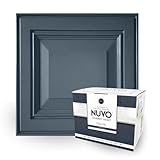
- Regal Navy Elegance: Oxford Blue, a bold, true navy, mirrors the official color of the prestigious English University, ideal for both modern and classic decor.
- One-Day Transformation: Redefine your kitchen cabinets in a single day with our brush-and-roll application - no professional help needed.
- All-Inclusive Kit: Each package covers 100 square feet, ideal for the typical kitchen, and includes all the necessary tools for a flawless finish.
- Eco-Friendly & Safe: Enjoy the peace of mind with our low-VOC, water-based formula, ensuring a safer painting experience.
- Effortless Transformation: No stripping or priming required; our paint adheres beautifully to wood, laminate, and metal cabinets with minimal preparation.
Muted green or blue for color without visual noise
Muted sage and dusty blue add color while remaining compatible with natural wood, veined stone, and brushed metal hardware. Their gray content keeps them from looking as bright as a saturated accent color. Use the backsplash grout and the least prominent countertop undertone as tie-breakers when two samples seem close.
Charcoal or near-black for an island or lower cabinets
Charcoal and near-black create a high-contrast island or lower-cabinet treatment while allowing upper cabinets to remain lighter. Sherwin-Williams showcases Jasper, Night Owl, Tricorn Black, Peppercorn, Mindful Gray, and Felted Wool as cabinet color examples. Dark colors show dust, fingerprints, and surface irregularities more readily, so meticulous preparation and a consistent sheen matter.
What paint system is best for wood kitchen cabinets?
Use a cabinet enamel rather than ordinary interior wall paint. Consumer Reports summarizes expert guidance that cabinet coatings contain more resin and better resist the scratches, stains, and fading produced by frequent handling and cleaning. Two current examples are Benjamin Moore Advance, a waterborne alkyd with a furniture-quality finish, and Sherwin-Williams Emerald Urethane Trim Enamel, a water-based, urethane-modified alkyd intended for frequently cleaned areas.
Recommended Free Tools
Prepare the wood and existing finish
- Remove doors, drawers, and hardware; label each piece so reassembly does not become a puzzle.
- Wash away cooking grease and polish residue. Paint cannot bond reliably to a contaminated surface.
- Repair dents, open joints, and chipped edges. Sand repaired areas smooth and remove dust.
- Prime bare wood, stained areas, or finishes that may bleed. Natural wood may call for shellac, an oil-based primer, or a high-quality latex primer depending on the species, grain, and existing finish.
- Apply the cabinet enamel in controlled, thin coats with the product’s recommended brush, roller, or sprayer. Keep doors flat while the coating levels, and protect them from dust while they dry.
- Allow the coating to cure according to its label before reinstalling hardware or subjecting doors to heavy use. “Dry” and “fully cured” are not the same state.
Why waterborne alkyd and urethane enamels are practical
These formulations combine water cleanup with a harder, more furniture-like film than conventional wall paint. Satin and semi-gloss provide enough washability for kitchen traffic without exaggerating every sanding mark. High-gloss can also be durable, but its reflection makes dents, roller texture, and uneven edges conspicuous.
Also popular on Amazon

- Classic Charcoal Elegance: Earl Grey offers a cool, charcoal grey shade, reminiscent of the distinguished British tea, perfect for adding sophistication and depth to any decor.
- One-Day Transformation: Redefine your kitchen cabinets in a single day with our brush-and-roll application - no professional help needed.
- All-Inclusive Kit: Each package covers 100 square feet, ideal for the typical kitchen, and includes all the necessary tools for a flawless finish.
- Eco-Friendly & Safe: Enjoy the peace of mind with our low-VOC, water-based formula, ensuring a safer painting experience.
- Effortless Transformation: No stripping or priming required; our paint adheres beautifully to wood, laminate, and metal cabinets with minimal preparation.
Can laminate or melamine cabinets be painted without peeling?
Yes, but laminate is unforgiving. The smooth factory layer must be cleaned, abraded, and primed so the enamel has a mechanical and chemical foothold. Behr’s cabinet guidance and Sherwin-Williams’ smooth-surface workflow both emphasize degreasing, scuff sanding, and a primer made for non-porous surfaces; Consumer Reports recommends a high-quality water-based acrylic urethane primer or sealer for laminate or melamine.
Laminate-cabinet procedure
- Inspect every panel. Replace or repair lifting edges, swollen particleboard, and loose laminate before painting; coating over movement will not stabilize it.
- Remove doors, drawer fronts, and hardware. Clean the boxes and panels with a strong household degreaser, then rinse as directed and let them dry completely.
- Scuff-sand with 220-grit abrasive until the sheen is uniformly dulled. Do not sand through the laminate at corners and edges.
- Remove all dust and apply a bonding primer labeled for laminate, melamine, or other non-porous surfaces. Follow its recoat window rather than recoating by feel.
- Apply cabinet, door, and trim enamel in several thin coats. Heavy coats can remain soft, sag, or telegraph the roller texture.
- Keep painted parts separated while they cure. Closing a door too soon can make the faces stick together or imprint the edges.
- Test adhesion on a hidden area before painting the entire kitchen, especially when the existing laminate is glossy or has a factory texture.
Is an all-in-one cabinet kit a shortcut?
Rust-Oleum Cabinet Transformations is marketed for wood, laminate, metal, and melamine. The manufacturer says the kit includes Krud Kutter cleaner/degreaser, bond coat, and top coat, offers up to 100 square feet of coverage, has 14 tint choices, and permits cabinet use after 24 hours. Those are manufacturer claims for the 2026 product page, not an independent comparative result. Coverage varies with the number of doors, porosity, application method, and coats, so measure your surfaces and still perform a hidden-area adhesion check.
Should you paint granite or quartz countertops?
Usually, no. Sherwin-Williams describes painted granite and quartz as a poor general-purpose project because they demand extensive preparation and costly specialty coatings. Covering a premium stone can also reduce the material’s visual and resale appeal. A color change around the stone is normally safer and more reversible.
The Tool Desk
Outbyte Driver Updater FREEScan for outdated or missing drivers - takes under a minuteDriver Scan →Outbyte PC Repair FREERepair Windows errors before they cause bigger problemsFix Now →Better ways to change a stone countertop’s appearance
- Repaint cabinets in a color that repeats a minor stone undertone rather than competing with the dominant pattern.
- Change the backsplash or grout color to bridge the stone and the new cabinets.
- Use wall color, under-cabinet lighting, pendants, and hardware to shift the balance of warm and cool tones.
- Keep a near-black or charcoal color to an island or base cabinets if the stone needs visual weight below eye level.
These changes preserve the countertop’s original surface and avoid the specialized coating and maintenance burden associated with painting it.
Also popular on Amazon

- Warm Cream Elegance: Antique White offers a warm, light cream shade reminiscent of ancient Egyptian Ivory, perfect for both classic and contemporary settings.
- One-Day Transformation: Redefine your kitchen cabinets in a single day with our brush-and-roll application - no professional help needed.
- All-Inclusive Kit: Each package covers 100 square feet, ideal for the typical kitchen, and includes all the necessary tools for a flawless finish.
- Eco-Friendly & Safe: Enjoy the peace of mind with our low-VOC, water-based formula, ensuring a safer painting experience.
- Long-Lasting Durability: Achieve a long-lasting, satin finish that withstands daily usage without the need for extra sealers or topcoats.
How do you paint a laminate or Formica countertop?
Laminate countertops are paintable, but they should be treated as a finish system rather than as ordinary wall space. Sherwin-Williams recommends degreasing, 220-grit scuff sanding, a primer for non-porous surfaces, several thin coats, and a food-safe polyurethane or epoxy sealer.
- Remove caulk, soap film, wax, and cooking grease. Degrease the entire worktop, backsplash return, and front edge.
- Scuff-sand with 220-grit paper, including the edge profile. Stop when the gloss is gone; aggressive sanding can expose the substrate.
- Vacuum and wipe away residue, then apply the non-porous-surface primer evenly.
- Apply multiple thin layers of the chosen countertop coating, respecting the label’s drying and recoat times. Keep the surface free from dust and avoid flooding the sink cutout or edge.
- Seal with a food-safe polyurethane or epoxy product rated for the intended countertop use. Follow its complete cure schedule before placing appliances, dishes, or food on the surface.
- Renew caulk after the coating has cured, using a bead that will not trap water at the sink and backsplash.
Sherwin-Williams’ 2026 guidance says a well-sealed painted laminate countertop may last two to three years before touch-ups and up to five years before a complete refinish. Those are expected maintenance intervals from the manufacturer, not a guarantee for every kitchen. Painted laminate should be cleaned gently and protected from cutting, standing water, abrasive powders, and hot pans.
Should kitchen cabinets be satin, semi-gloss, or gloss?
Satin and semi-gloss are the practical defaults for most kitchens. They provide a washable film while limiting the reflection that exposes every flaw. Gloss can work on a very smooth, carefully prepared surface, but it makes sanding scratches, dents, and uneven panel edges easier to see.
| Sheen | Best use | Advantages | Trade-offs |
|---|---|---|---|
| Satin | Most cabinet doors and drawer fronts | Soft reflection, good everyday cleanability, forgiving of minor texture | Less dramatic than higher sheens; still requires thorough prep |
| Semi-gloss | High-touch kitchens, trim, and areas needing frequent wiping | More reflective and washable; clear visual separation from walls | Shows more surface irregularity than satin |
| Gloss | Highly polished, exceptionally smooth cabinetry | Strong reflection and a hard-looking finish | Highlights defects, dust, and application marks |
What do cabinet paint, primer, and kits cost?
US prices below were displayed on manufacturer pages checked October 28, 2026. Retailer, tint, package size, and availability can change the total.
Also popular on Amazon

- Sophisticated Grey Hue: Driftwood offers a chic, sophisticated grey tone that effortlessly adds a touch of elegance and modernity to any cabinet.
- One-Day Transformation: Redefine your kitchen cabinets in a single day with our brush-and-roll application - no professional help needed.
- All-Inclusive Kit: Each package covers 100 square feet, ideal for the typical kitchen, and includes all the necessary tools for a flawless finish.
- Eco-Friendly & Safe: Enjoy the peace of mind with our low-VOC, water-based formula, ensuring a safer painting experience.
- Effortless Transformation: No stripping or priming required; our paint adheres beautifully to wood, laminate, and metal cabinets with minimal preparation.
| Product path | Published price or coverage | What the figure means |
|---|---|---|
| Benjamin Moore Advance Interior Paint | $35.99–$88.99 | Manufacturer-page range across satin, semi-gloss, and high-gloss products; varies by size and participating retailer |
| Benjamin Moore Fresh Start primer | $21.99–$54.99 | Manufacturer-page range that varies by size and participating retailer |
| Sherwin-Williams Emerald Urethane Trim Enamel | $130.49 list price | Price displayed for the SW9530 one-gallon configuration; a sale shown on that page ended October 25, 2026 and is not treated as current |
| Behr Cabinet, Door & Trim Enamel | Not stated by the manufacturer guidance reviewed | Check a retailer at the time of purchase |
| Rust-Oleum Cabinet Transformations | Not stated by the manufacturer guidance reviewed | Manufacturer claims up to 100 square feet of coverage and 14 tint choices; verify package price and coverage for your kit |
Your complete budget also includes degreaser, abrasive sheets, primer, filler, drop cloths, replacement hardware or hinges, and a sealer for a countertop. A low paint price does not compensate for replacing doors that were painted before swollen edges or delamination were repaired.
How do you prevent the most common failures?
- Peeling on laminate: Re-clean, remove residue, scuff uniformly, and use a primer specifically labeled for non-porous surfaces. Do not apply another topcoat over a loose film.
- Sticky doors: The coating was closed or reassembled before sufficient cure. Separate the parts, allow the label’s cure period, and sand only damaged areas before touching up.
- Visible brush or roller marks: Use thinner coats, maintain a wet edge, and avoid repeatedly brushing paint that has begun to set. Glossy products magnify this problem.
- Bleed-through from wood: Spot-prime knots, tannins, and stained areas with a primer suited to the contaminant before applying enamel.
- Color looks wrong in place: Recheck the sample beside the countertop and backsplash under morning and evening light. A color that looked neutral alone may reveal a strong green, pink, yellow, or blue undertone in context.
- Countertop chips or stains: Treat painted laminate as a maintained finish, not as stone. Use cutting boards, trivets, mild cleaners, and prompt repairs at worn edges.
Which approach fits your kitchen?
Use this decision path before buying paint:
- Identify the substrate. Wood can usually go directly to cabinet-enamel preparation; laminate and melamine require the bonding-primer workflow; granite and quartz normally should remain unpainted.
- Choose the color from fixed materials. Pull an undertone from the countertop or backsplash, then test the candidate in changing daylight and artificial light.
- Choose the sheen for use and surface quality. Start with satin; move to semi-gloss when frequent wiping is the priority, and reserve gloss for exceptionally smooth work.
- Choose a complete system. Count degreaser, abrasive, primer, enamel, and—only for laminate countertops—a suitable protective sealer.
- Plan curing and access. Keep doors and drawers off the boxes long enough for the coating to harden, and schedule countertop painting when the sink and cooking area can remain out of service.
There is no single “best” non-white paint independent of the surface. A well-prepared wood cabinet in warm greige, a properly primed sage melamine door, and an unpainted quartz counter coordinated with charcoal lowers can all be durable choices because each uses the correct system for the material.
Frequently Asked Questions
Can I use regular wall paint on kitchen cabinets?
It may adhere to a properly primed surface, but cabinet enamels are the safer choice for doors and drawer fronts because they contain more resin and are designed to resist the scratches, stains, and repeated cleaning that wall paint faces less often. If wall paint is already present, verify that the surface is sound before applying a compatible primer and enamel.
How long should cabinet doors stay off the hinges after painting?
Use the coating label’s cure schedule, not merely its touch-dry time. Reinstalling or closing doors while the film is still soft can create sticking, edge imprints, and premature wear; a small hidden test piece can confirm that the finish is hard enough to handle.
Is a painted laminate countertop safe for food preparation?
Only when the topcoat is fully sealed with a product specifically rated as food-safe for countertop use and has completed its cure schedule. Even then, use cutting boards and trivets; the painted surface is not a substitute for a cutting slab or heat-resistant worktop.
Do dark cabinet colors make a kitchen look smaller?
Dark lowers or an island can add depth without making the entire room feel closed in, especially when upper cabinets, walls, or lighting remain lighter. Test a large sample in the actual room because gloss, daylight direction, and countertop pattern affect perceived weight more than the color name alone.
When should laminate cabinets be replaced instead of painted?
Replacement is usually more sensible when the laminate is lifting over large areas, the substrate is swollen from moisture, or doors are structurally warped. Paint can change color and sheen, but it cannot restore a stable panel beneath a failing laminate layer.
Quick Recap

Product prices and availability are accurate as of the date/time indicated and are subject to change. Any price and availability information displayed on Amazon at the time of purchase will apply.

