Free tools Windows power users keep installed
One-click scans. No signup required.
ThatPainter is reader-supported. When you buy through links on our site, we may earn an affiliate commission. Learn More
Snapseed is the best genuinely free photo editor for most phone users. On a computer, Affinity by Canva is the strongest polished Photoshop-style option currently available without an Adobe subscription, while GIMP is the best open-source choice. Photopea is the best editor that runs in a browser, and photographers working with RAW files should start with darktable or RawTherapee.
As an Amazon Associate I earn from qualifying purchases.
There is no single best app for every job. A phone editor, RAW developer, layer-based compositor and social-design tool solve different problems. This guide separates them and explains what each app’s version of “free” actually includes. It reflects US availability and pricing information checked on August 10, 2026; features, prices and regional availability can change.
Quick answer: which free photo editor should you use?
| App | Best for | Platforms | Free model | Account | RAW | Why choose it |
|---|---|---|---|---|---|---|
| Snapseed | Everyday phone editing | iOS, Android | Fully free; no ads or watermark according to its current Google Play listing | No subscription required | Yes, with device and file-compatibility limits | The best balance of manual control, speed and genuinely unrestricted editing |
| Lightroom Mobile | Color grading, presets and organization | iOS, Android, selected web and desktop workflows | Free core tier; many advanced tools and cloud features are premium | Adobe account required | Typically a premium workflow on mobile | Excellent for consistent edits across a collection of photographs |
| Photoshop on mobile | Layers, masks and compositing on a phone | iPhone, iPad, Android | Free tools with paid expansion and possible AI credits | Adobe account-oriented | Not primarily a RAW developer | The most capable mobile choice for composites and selective edits |
| Canva | Social posts, thumbnails and text-heavy designs | Web, iOS, Android, desktop access | Free tier; premium assets, tools and AI are restricted | Yes for the normal cloud workflow | Not a RAW-first editor | Fastest way to turn a photograph into a finished design |
| Adobe Express | Quick branded content and background removal | Web, iOS, Android | Free tier with limited assets and AI | Usually account-based | No serious RAW workflow | Useful if you want templates and Adobe integrations without Photoshop |
| Photopea | Photoshop-style editing without installing software | Browser | Free with ads | No account needed for local editing | Some RAW support | Layers, masks and PSD support on a Chromebook or locked-down computer |
| Affinity by Canva | Professional desktop editing without an Adobe subscription | Mac, Windows, iPad | Currently free, but account-linked and potentially supplemented by paid features | Canva account and possible entitlement checks | Yes in its photo workflow | A polished alternative combining photo, vector and layout tools |
| GIMP | Open-source pixel editing and composites | Linux, macOS, Windows | Fully free and open source | No subscription required | Best paired with a RAW developer | Powerful layers, masks, plug-ins and scripting with no paywall |
| darktable | RAW development and photo cataloguing | Linux, macOS, Windows and other supported systems | Fully free and open source | No subscription required | Yes; this is its central purpose | A serious Lightroom-style photography workflow |
| RawTherapee | Technical RAW processing and batch work | Windows, macOS, Linux | Fully free and open source | No subscription required | Yes; highly detailed controls | Fine-grained RAW adjustment and processing profiles |
| Krita | Painting, illustration and image compositing | Windows, macOS, Linux | Fully free and open source | No subscription required | Not its main purpose | Excellent brushes, layers, masks and PSD compatibility |
| Google Photos | Built-in corrections and library editing | Android, iOS, web | Free app; some AI tools vary by device, region and account | Google account for many library features | Limited compared with a RAW developer | Convenient when your photos are already in Google Photos |
Shortest recommendation: install Snapseed for ordinary phone edits. Choose Affinity or GIMP for desktop layer work, Photopea when you cannot install software, darktable or RawTherapee for camera RAW files, and Canva or Adobe Express when the photograph is part of a poster, thumbnail or social-media design.
#1 Best Overall
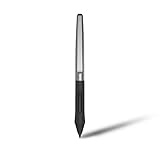
- Battery-free Stylus - Only COMPATIBLE to Huion Inspiroy H640P/H950P/H1060P/H610Pro V2/HS610/HS64/H420X/H580X/H610X; Never worry about pen-charging, and eco-friendly of use; Without operating battery, the pen is only 16g in weight, and its front end is made of wearable silicone for soothing feel.
- NOT COMPATIBLE with iPad, other Graphics Tablet or Huion Graphics Monitor GT Series; Huion provides one year warranty.
- Two Customizable Pen Buttons - Set the function to your reference like eraser, fasten your working efficiency; Palm rejection design of dual keys on both sides of the pen helps reduce touch frequency and realize most effective creation.
- Long-lasting Lifespan - First of Huion's products features battery-free stylus, say goodbye to charging cables; Don't need to worry about the potential battery leakage and run-out.
- 8192 Levels of Pen Pressure Sensitivity - Enjoy the accuracy and precision when drawing; Having 233 PPS report rate, 5080LPI resolution, you can paint or draw or sketch smoothly on your Huion Inspiroy series Tablets.
What does “free” mean?
“Free photo editor” can describe products with very different costs and restrictions. Before comparing features, identify which category an app belongs to:
| Label | What it means | Examples |
|---|---|---|
| Fully free | Ordinary editing does not require a subscription or paid tier. | Snapseed, GIMP, darktable, RawTherapee |
| Free with ads | The editor is usable without payment, but advertising supports the service. | Photopea |
| Free with account | No subscription is necessarily required, but signing in or checking an online entitlement may be necessary. | Affinity, Canva and Adobe Express |
| Free tier | Basic editing is free, while advanced tools, cloud sync, AI, assets or exports may be paid. | Lightroom, Photoshop mobile, Photoshop Express, Canva |
| Free for a narrow task | One action, such as background removal, is free even though the complete editor is limited. | Some background-removal and AI tools |
| Free download, not free use | The app can be installed at no cost, but useful editing or export features are locked. | Some portrait, filter and AI apps |
A free download is not automatically a free workflow. Check whether you can save an editable project, export at full resolution, produce a transparent PNG, remove the watermark and use the result without consuming a limited trial or AI credit.
Choose in under a minute
- Editing only on an iPhone or Android phone?
- Choose Snapseed for free manual editing without ads, subscriptions or watermarks.
- Choose Lightroom for presets, consistent color and organization.
- Choose Photoshop on mobile for layers, masks, object removal and composites.
- Choose Canva or Adobe Express for text, templates, collages and social graphics.
- Need to edit on a computer without installing anything? Use Photopea.
- Want a full desktop editor without an Adobe subscription? Choose Affinity for a polished professional workflow or GIMP for open-source software.
- Working with camera RAW files? Use darktable for a library and Lightroom-like workflow, or RawTherapee for technical control and batch processing.
- Only need to remove a background? Try the Adobe Express background-removal tool, but check its file-size, account and usage conditions.
Best free mobile photo editors
1. Snapseed — best completely free mobile editor
Snapseed is the default recommendation for most people editing photographs on a phone. Google’s current listing describes more than 30 tools and filters, RAW support, masking, batch editing and non-destructive editing. It also states that Snapseed has no subscriptions, purchases, advertisements or watermarks. It is available on iPhone and iPad as well as Android.
Recommended Free Tools
Its useful tools include exposure and color adjustments, curves, HSL controls, perspective correction, healing, selective edits and masking. That is enough for correcting a photograph, retouching a small distraction, preparing artwork for a portfolio or producing a clean social-media image without encountering a premium gate.
Choose Snapseed if you want
- A genuinely free editor for everyday phone photography.
- Manual control rather than only one-tap filters.
- RAW import on a supported device and file type.
- Local, quick editing without a cloud subscription.
- Editable edits that can be revisited or reverted.
Do not choose it if you need
- A searchable catalog for thousands of photographs.
- A full desktop keyboard-and-mouse workflow.
- Complex multi-layer composites with text and many image elements.
- Automatic cloud synchronization across a large collection.
Snapseed’s export behavior is worth understanding. Its official help documentation distinguishes between keeping an editable edit stack and exporting a flattened JPEG. Its file-size guidance says the app preserves the original resolution up to device limits, but the exact result can vary by device. RAW compatibility and maximum output also depend on the phone and the file. The Android listing was updated on July 8, 2026, so older reviews may not describe the current app exactly; iOS and Android features may not arrive at the same time.
2. Lightroom Mobile — best for color consistency and organization
Adobe Lightroom Mobile is the better choice when editing is part of a photography workflow rather than a one-off correction. It is particularly useful for presets, consistent color across many images, organization and integration with Adobe’s wider ecosystem.
The free tier provides core editing and organization, but it is not accurate to call Lightroom completely free. Adobe’s current documentation lists features such as masking, healing, geometry, batch editing, RAW editing, cloud synchronization and other advanced functions among premium capabilities, although the exact division can vary by platform and plan. Consult Adobe’s mobile FAQ and premium-feature guide before building a workflow around a particular tool.
Choose Lightroom if you want
- Presets and repeatable color treatment.
- Organization and search alongside editing.
- A path from phone photography to Adobe desktop work.
- Consistent results across a series of images.
Watch for
- The Adobe account requirement.
- Whether RAW editing is included in the plan and platform you are using.
- Which masking, healing, geometry and batch tools are premium.
- The difference between editing locally and syncing through Adobe cloud storage.
Cloud synchronization is not the same as an independent backup. Adobe’s cloud-storage documentation explains how free and premium tiers differ. Before cancelling a plan or moving libraries, export originals and editable work you need to retain.
3. Photoshop on mobile — best for layers and compositing
Photoshop on mobile is the most powerful free mobile option for users who need a layer-based workflow. Adobe describes selections and layers, masks and blending, Tap Select, background replacement, object removal, Generative Fill and Generative Expand among its mobile capabilities. Current listings cover iPhone, iPad and Android.
This makes it a strong choice for creating a composite, replacing a background, combining photographed artwork with a new scene or making a thumbnail that needs several separate elements. It is also useful for creators who already understand Photoshop’s logic and want a mobile extension of that workflow.
What is free and what may cost extra?
The app offers free tools, but expanded features are sold through Adobe’s Photoshop Mobile & Web plan. AI features can depend on a plan, credits, account status, region and device. Check the current mobile updates and the store listing for the exact feature set on iOS or Android.
Photoshop mobile should not replace Snapseed as the easiest recommendation for casual edits. It is more capable, but its layer-based interface is more complex and its advanced tools are more closely tied to Adobe’s account and paid ecosystem.
4. Photoshop Express — best for quick corrections, portraits and collages
Photoshop Express is designed for speed rather than a full Photoshop workflow. It is useful for one-tap enhancements, red-eye correction, dehaze, cropping, perspective correction, portrait retouching, collages, text and stickers.
Adobe’s current iOS listing also describes RAW and TIFF import. However, the app has a Premium tier and many precise controls, effects and retouching options are paid. Store prices are specific to country, platform, taxes and promotions and can change, so treat the US App Store listing as a current reference rather than a permanent price list.
Choose Photoshop Express when you want a polished result quickly. Choose Snapseed when you want more unrestricted manual control, and choose Photoshop mobile when you need layers and compositing.
Rank #2

- New upgraded version: Battery-free Stylus with 8192 Levels Pressure does not require charging, The report rate of the H420X graphic tablet has increased to 300 PPS, making lines quicker and smoother, and feel like a real pen. The pen also has 2 customizable buttons on the side that allow you to switch between right-clicking and the eraser etc instantly
- Graphic design tablet H420X is only 7mm in thickness and 167g in weight. A slim and compact design with a active area of 4.17x2.6 inches and dimension of 6.77x4.3 inches make it perfect for limited desktop space and easy to carry out when on a trip.
- H420X huion drawing tablet is compatible with Windows 7 or later, Mac OS 10.12 or later, and Android 6.0 or later. Huion H420X drawing pad has good compatibility with most drawing software including Adobe Photoshop, Paint tool sai, Corel Painter, Illustrator, Sketchbook, Manga Studio, Clip Studio Paint, Fireworks, Comic Studio, SAI, Krista, Infinite Stratos, Pixologic ZBrush and other major graphics applications, and more. H420X is NOT compatible with iOS.
- H420X computer graphics tablets also can be used for playing OSU games, signing documents, taking notes, and more. No need to install the driver. Just plug and play!
- The note taking tablet is also easier to handwrite write, edit, and annotate with a stylus for online education, e-learning, remote working, or web conference. HUION H420X also is compatible with XSplit, Zoom, Microsoft Teams, Word, Excel, PowerPoint, OneNote, and more
5. Canva — best when a photo is part of a design
Canva is not primarily a professional photo editor, but it is often the fastest way to turn a photograph into a finished communication. It excels at Instagram posts, YouTube thumbnails, flyers, invitations, collages, product cards, text overlays and resizing one design for several platforms.
As of the research date, Canva’s Free plan is listed at $0 and includes more than 1,000 design types, 1.6 million-plus templates, 4.7 million-plus free photos, videos, graphics and audio, 5GB of storage, access to Affinity and limited AI allowances. The Canva Free page and pricing page are the right places to verify the current limits.
Some templates, stock elements, background-removal tools and AI features are premium. A design can appear free until a paid element is included, so inspect the asset labels before export. Canva is a poor replacement for a RAW developer, detailed masking tool or color-managed retouching application, but an excellent choice when the final output needs type, layout and a specific social-media dimension.
6. Adobe Express — best for quick branded content
Adobe Express is Canva’s closest counterpart in this list. It combines templates, simple photo effects, Adobe assets, branding tools and quick actions such as background removal. Adobe’s current Free plan lists more than 100,000 templates, 1 million-plus assets, more than 4,000 fonts, 5GB of storage, standard editing tools and 10-day version history.
Recommended Free Tools
The free background-removal quick action accepts JPEG, PNG and WebP files up to 40MB and exports a transparent PNG. That is useful for a single product image or portrait, but do not confuse a free quick action with unlimited access to every background-editing and generative feature inside the complete service.
Express is a good fit for branded social content and Adobe users who do not need Photoshop’s detailed layer controls. It is less suitable for RAW development, advanced retouching or a large local photo library.
7. Google Photos — best built-in library editor
Google Photos may already be all you need for basic corrections. It provides cropping, filters, lighting and color controls, automatic corrections and, on supported devices and accounts, tools such as Magic Eraser and AI Enhance.
AI availability is not universal. Google’s iOS and Android editing documentation identifies conditions involving device, RAM, operating system, language, account, country and staged rollout. A feature visible in a tutorial may therefore be absent from your phone.
Google Photos is convenient because editing and organization are already connected, but it is not a substitute for GIMP, Affinity or a dedicated RAW developer. Its cloud and account dependence also deserve consideration for private or client images.
Built-in alternatives: Apple Photos
Before installing an app, iPhone, iPad and Mac users should check Apple Photos. Apple says compatible devices can edit Apple ProRAW files in Photos, although ProRAW itself depends on a compatible Pro model and operating-system version. See Apple’s ProRAW documentation and RAW and Photos guidance for current compatibility.
Built-in editors are especially sensible for cropping, exposure, color, straightening and organizing images. Move to Snapseed, Lightroom or a desktop application when you need more specialized retouching, cataloguing or compositing.
Best free desktop and browser editors
1. Affinity by Canva — best polished free Photoshop alternative
Affinity by Canva is the major change that older free-editor lists often miss. Canva announced in October 2025 that its new combined Affinity application—covering photo editing, vector design and page layout—would be free for everyone. It is currently offered for Mac, Windows and iPad, subject to country availability.
The Tool Desk
Outbyte PC Repair FREERepair Windows errors before they cause bigger problemsFix Now →Outbyte Driver Updater FREEFix the driver behind crashes, sound loss and screen glitchesFind Drivers →Affinity is the strongest recommendation for a reader who wants a professional-feeling, layer-based desktop application without an Adobe subscription. It is suited to image correction, retouching, masks, composites, vector elements and page layouts in one environment. It is also a particularly good fit for artists who want to combine photographed work, scanned textures, typography and painted elements.
The important conditions
- Affinity access is linked to a Canva account.
- The current Affinity terms describe possible online entitlement checks.
- The terms also allow for certain paid features or add-ons, so “free” does not mean that every future capability is guaranteed to be free.
- Affinity is not open-source software.
- It is not a Lightroom-style catalog-first manager; you may need darktable or another library tool for browsing and organizing a large camera collection.
Canva says Affinity stores work locally and that Affinity content is not used to train or develop Canva’s AI features; that statement does not remove the account and entitlement conditions in the terms. Read both the explanation of why Affinity is free and the legal terms if local storage, privacy or offline access is important to your work.
2. Photopea — best Photoshop-style editor in a browser
Photopea is the best no-install option for a Chromebook, shared computer or occasional Photoshop-style task. It supports raster and vector editing, layers, masks, blend modes, PSD files and 8-, 16- and 32-bit color depth. It can also work offline after the site has loaded.
Rank #3

- Work for both hands - Huion Artist Glove with two fingers; The package includes one unit of glove which can be used on both hand, free size; 20cm in length, 8cm in width.
- Anti-fouling design - It can prevent smudges from your hand on a Graphic Tablet, Graphics Monitor or some other items, leaving no more scratch. Note: The glove cannot prevent accidental touching from the touch screen, it just can reduce the friction between your hand and the tablet surface.
- Comfortable Material - Made from Soft Lycra and Nylon, extremely flexible, comfortable to work with; It can reduce friction between your hand and the surface.
- Classic color - The glove is black, peaceful and charming color; And the most important point is that this color is soiling resistant so you do not need to wash it frequently.
- Flexible using - Works perfectly for sketching, inking, coloring and digital drawing on graphics tablets.
Photopea’s main advantage for privacy is its local-file model. Its documentation says files opened from your computer are processed on the device rather than uploaded. Optional cloud-storage integrations are a separate matter. The free version is supported by advertising.
Photopea uses PSD as its main editable format and can export formats including JPG, PNG, SVG and PDF. Save an editable PSD early rather than relying on browser history. Photopea’s privacy policy warns that closing the browser before saving can lose work because the project is being processed in the browser. The safe workflow is:
- Open the image.
- Save an editable PSD immediately.
- Continue editing and save periodically.
- Export a flattened JPG or PNG only after the editable project is safe.
- Keep the PSD and final export as separate files.
Browser memory and processor limits become important with large RAW files, very large canvases and documents containing many layers. Photopea is remarkably capable, but it is not automatically as comfortable as a native desktop application for demanding work.
3. GIMP — best open-source Photoshop alternative
GIMP is the best choice when open-source licensing, local files and a broad desktop toolset matter more than a gentle learning curve. The current stable release listed by GIMP is 3.2.4, released April 17, 2026, with downloads for Linux, macOS and Windows.
GIMP’s official documentation covers layers, channels, selections, masks, transformations, scripting, plug-ins, broad file-format support and multiple undo operations. It is excellent for pixel editing, restoration, retouching, composites and preparing images for print or publication. GIMP 3 also applies most GEGL filters as non-destructive layer effects by default, according to its filter documentation.
What’s actually slowing this PC down?
Pick the symptom - the matching free tool is one click away.
That non-destructive behavior should not be confused with Photoshop-style adjustment layers across the entire application. Save the native project file and keep important source layers intact. GIMP can open and manipulate many formats, but it is not the most streamlined choice for importing, rating, cataloguing and batch-developing thousands of camera RAW files. Pair it with darktable or RawTherapee for that workflow.
4. darktable — best free Lightroom-style RAW workflow
darktable is built around photography workflow rather than isolated pixel manipulation. It combines a photo database and library with non-destructive RAW development, metadata, ratings, color management and batch/export tools.
The project’s current release is darktable 5.6.0, released June 21, 2026. The release announcement includes packages for Windows, macOS and Linux and warns users to consider migration and backups because the newer library and configuration are not simply interchangeable with the older 5.4 series.
darktable is the right starting point for a photographer who wants to keep RAW originals, apply reversible adjustments, manage metadata and export many images efficiently. Its own FAQ makes an important qualification: darktable is an alternative to Lightroom, not a direct replacement, and its learning curve can be steep.
Free tools Windows power users keep installed
One-click scans. No signup required.
Use darktable when the work is primarily exposure, white balance, tone, color, lens and detail adjustments. Send a rendered image to GIMP, Affinity or Photopea when you need extensive layers, text or pixel-level compositing.
5. RawTherapee — best for technical RAW control
RawTherapee is a free, cross-platform RAW processor released under GPLv3. Its current stable download is RawTherapee 5.12, released May 28, 2025.
It is aimed at users who want detailed control over RAW interpretation, processing profiles, batch adjustments, synchronization across images and a persistent export queue. The project documents batch adjustment and synchronization as well as its batch-processing queue.
RawTherapee is less beginner-friendly than a phone editor and is not a general Photoshop replacement. It does not focus on layer-based text, multi-image compositions or extensive retouching. A practical free combination is RawTherapee for developing the RAW file followed by GIMP, Affinity or Photopea for compositing.
Outdated Drivers Are Slowing You Down
One free scan finds every outdated or missing driver and matches the right update for your exact hardware.Free scan · exact hardware matchWindows Errors? Fix Them Before They Spread
Repair common Windows errors and clear accumulated junk for a smoother, more stable PC - no reinstall needed.Free scan · no reinstall6. Krita — best free tool for painting and illustration
Krita is primarily a digital-painting application, not a photography catalog or streamlined photo editor. It belongs on this list because it is excellent for artists who need a powerful brush engine, layers, masks, PSD support, color management, HDR workflows and image compositing.
Choose Krita for painting over a photograph, building an illustration from a reference image, combining scanned artwork with digital marks or creating a composite that depends on brushes. Choose darktable or RawTherapee for camera RAW development and Affinity, GIMP or Photopea for a more conventional photographic retouching workflow.
Rank #4
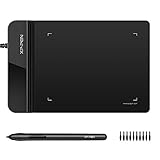
- Ultra thin tablet: Active Area 4 x 3 inches. Fully utilizing our 8192 levels of pen pressure sensitivity―Providing you with groundbreaking control and fluidity to expand your creative output. Please note: The 4 x 3 inches is very small, please confirm that it will meet your needs before you purchase it
- OSU game: Designed for OSU! gameplay, drawing, painting, sketching, E-signatures etc. No need to install drivers for OSU! It's also designed for both right and left hand users
- Accurate Pen Performance: StarG430S computer graphics tablet is the perfect replacement for a traditional mouse! The XPPen advanced Battery-free PN01 stylus does not require charging, allowing for constant uninterrupted Draw and Play, making lines flow quicker and smoother, enhancing overall performance
- Compact and Portable: The G430S art tablet is only 2 mm thick, it’s as slim as all primary level graphic tablets,Ultra-thin and portable, allowing you hold it in one hand and carry it on the go. This graphic drawing tablet supports Mac. However, since the product interface is micro USB to USB-A, if your computer is a Mac and does not have a USB-A port, you will need to purchase an OTG transfer adapter to ensure compatibility with your Mac. So please confirm your computer port before you purchase it
- PLEASE NOTE: The XPPen StarG 430 is compatible with the Windows system 11/10/8/7(32/64 bit), and the Mac OS X version 10.10 or later, but it is incompatible with iOS and iPad OS. If your computer is a Mac, you need to grant permission to the Mac preferences first. Please go to our official website, and according to the guide: XPPen>Support>FAQ, find out the Star G430 and click, then click the question according to your Mac system. There are detailed guidelines for installing the driver so your tablet will work correctly. It's possible incompatible with the customer's own EMR system or other signature system. Please feel free to contact us to confirm the compatibility before your purchase
Best free editor by task
| Task | Best first choice | Why | Alternative |
|---|---|---|---|
| Quick phone corrections | Snapseed | Strong manual tools without a subscription, ads or watermark | Google Photos |
| Consistent color across many photos | Lightroom Mobile | Presets, organization and Adobe workflow | darktable on desktop |
| Portrait or selfie retouching | Photoshop Express or Snapseed | Fast retouching in Express; more manual control in Snapseed | Lightroom |
| Background removal | Adobe Express quick action | Accepts common image formats and exports a transparent PNG within its stated limits | Photoshop mobile |
| Layers and mobile compositing | Photoshop on mobile | Selections, layers, masks and background tools | Photopea on a tablet browser |
| Social-media posts and thumbnails | Canva | Templates, text, stock assets and platform-specific layouts | Adobe Express |
| PSD editing without installation | Photopea | Browser-based layers, masks and PSD workflow | GIMP |
| Professional desktop photo editing | Affinity | Polished photo, vector and layout tools in one application | GIMP |
| Open-source pixel editing | GIMP | Layers, masks, plug-ins, scripting and local editing | Krita for painting-heavy work |
| RAW cataloguing | darktable | Library, metadata, non-destructive edits and export workflow | Lightroom’s free tier, with its plan limitations |
| Technical RAW development | RawTherapee | Detailed controls, profiles and batch processing | darktable |
| Painting and illustration | Krita | Brushes, masks, layers and compositing | GIMP |
Understand the editing model before choosing
Many disappointing recommendations come from comparing apps that were never designed for the same job.
- Pixel editor: changes pixels, selections and layers. It is best for retouching, restoration, composites and graphic work. GIMP, Affinity, Photopea and Photoshop mobile fit here.
- RAW developer: interprets the sensor data in a camera RAW file and produces a rendered image. It is best for exposure, white balance, color and batch development. darktable and RawTherapee are the specialist choices.
- Template or design editor: combines images with text, layouts and prebuilt assets. Canva and Adobe Express are best for social posts, thumbnails and promotional graphics.
- Photo library editor: combines organization, search, backup or synchronization with basic editing. Lightroom, darktable and Google Photos fit this model to different degrees.
- Painting and illustration tool: prioritizes brushes, strokes and canvas work. Krita is the specialist option.
No single free app is equally strong at RAW development, cataloguing, advanced layers, painting and social layout. A two-app workflow is often faster and more capable than forcing one application to do everything.
Do these 3 things before closing this tab:
1Fix the driver behind crashes, sound loss and screen glitches2Repair Windows errors before they cause bigger problems3Scan for outdated or missing drivers - takes under a minutePractical free workflows
For a phone photographer
- Use your phone’s built-in Photos editor or Google Photos for a quick crop and automatic correction.
- Open the image in Snapseed for exposure, curves, healing, perspective or selective adjustments.
- Export a final JPEG at the original resolution where the device permits.
- Use Canva or Express only if the final image needs text, a border, a template or a social-media layout.
For camera RAW files
- Import a RAW file into darktable if you want a catalog and reversible, Lightroom-like workflow, or RawTherapee if you want highly technical controls and batch processing.
- Make the exposure, white-balance, tone and color adjustments in the RAW developer.
- Export a rendered image in a suitable format.
- Open that result in GIMP, Affinity or Photopea if you need layers, extensive retouching, text or a composite.
- Keep the original RAW, the editable project and the final export as separate files.
For a painter or illustrator photographing finished work
Use Snapseed or Lightroom to correct perspective, exposure and color after photographing the artwork. Use Affinity, GIMP or Photopea to remove a background, combine the work with a mockup or prepare a layered portfolio image. Use Krita when you need to paint corrections or add digital illustration. Finish in Canva or Adobe Express if the image must become a promotional post, event graphic or thumbnail.
Independent reader supportYour contribution helps us test, update, and keep practical guides available for everyone.How to test a free editor before committing
Marketing pages and star ratings do not reveal whether an app fits your actual files. Use the same short test for every candidate:
- Import one ordinary JPEG and one RAW file, if you use a camera.
- Crop and straighten the image.
- Adjust exposure, white balance and contrast.
- Remove a small distraction.
- Apply a selective edit or mask.
- Add text or a second image if compositing matters to you.
- Export a full-resolution JPG and, where needed, a transparent PNG.
- Check for a watermark, unexpected compression and missing metadata.
- Save and reopen the editable project to confirm that your changes remain editable.
- Repeat the key operation offline if privacy or travel use matters.
This is an evaluation procedure, not a claim that every app supports every step. The point is to test the exact camera, phone, browser and export format you intend to use.
Important limitations and failure modes
“Free” but paid export
Some apps let you complete an edit and only reveal a payment requirement when you try to export. Check full-resolution output, PNG transparency, watermark behavior, number of allowed exports and whether the native project can be saved before doing serious work. Also check the license for stock assets and templates if the image will be used commercially; a free editor does not make every included asset free for every use.
Quick wins for a faster PC:
Scan for outdated or missing drivers - takes under a minuteDriver Scan →Clear out junk files and repair common Windows errorsFree Scan →Fix the driver behind crashes, sound loss and screen glitchesFind Drivers →Free AI does not mean unlimited AI
Generative features may be restricted by daily credits, a subscription, age or account requirements, region, language, device capability or staged rollout. This applies particularly to background replacement, generative fill, object removal and AI enhancement. Google Photos explicitly lists device, RAM, operating-system, language, account and regional conditions for some AI tools. Adobe’s Photoshop mobile expansion can involve paid plans or credits. Verify the current terms on the exact platform you use.
RAW support can mean several different things
An app may claim RAW support while doing only one of the following:
- Opening DNG but not your camera’s proprietary RAW format.
- Importing the RAW and immediately converting it.
- Displaying or editing the embedded JPEG preview.
- Supporting the camera but not a particular lens profile.
- Allowing RAW import while putting RAW adjustments behind a premium tier.
- Processing the file at a reduced resolution because of device memory.
Test one actual file from your camera. Snapseed’s current listing says it supports multiple RAW types, while Adobe’s Lightroom mobile documentation identifies RAW editing as a premium feature in its current plan description. Neither statement means every camera, platform or workflow will behave identically.
Metadata can disappear
Editing and sharing may remove GPS coordinates, camera and lens information, copyright details, capture date or color-profile data. Snapseed’s help center documents metadata issues on iOS. If metadata matters, compare the original and exported file with a metadata viewer and retain the original separately.
Cloud sync is not backup
A service can synchronize edits without preserving a complete independent copy of your originals. It may keep smart previews, stop syncing after a subscription ends, restrict cloud storage after a limit or store projects in a proprietary catalog. Before cancelling a Lightroom, Canva, Adobe Express or Google Photos service, export the originals and editable projects you need. Local copies remain important even when a service advertises synchronization.
Browser editors can lose unsaved work
Photopea’s local processing is a privacy advantage, but it also means the browser tab is part of the temporary workspace. Save an editable PSD as soon as you begin, save periodically and do not close or refresh the tab before saving. Browser memory limits also make very large documents and multi-layer files less comfortable than they are in a native desktop app.
Device performance matters
Large images, RAW files, masks, many layers and generative AI can exceed a phone’s memory or a browser’s available resources. An app-store listing may show a feature that is unavailable on an older device. Check the current store listing or support documentation for minimum operating-system and hardware requirements, and test your largest real file before switching workflows.
Mobile versus desktop versus browser editing
| Approach | Advantages | Trade-offs |
|---|---|---|
| Mobile app | Fast, convenient, camera-connected and easy to share | Smaller screen, less precise masking, limited memory and more platform-specific features |
| Native desktop app | Better for layers, large files, color management, batch processing and keyboard-and-mouse precision | Requires installation and learning time; cataloguing and editing may require separate applications |
| Browser editor | No installation, useful on Chromebooks and shared computers, easy to access from many systems | Depends on browser memory, saving discipline and loaded site resources; free versions may show ads |
| Cloud-first editor | Synchronization, templates, collaboration and access across devices | Account, storage, internet and subscription limits may affect the workflow; cloud sync is not backup |
Final recommendations by reader
- Most phone users: Start with Snapseed.
- Phone photographers who organize and color-grade collections: Try Lightroom, but treat it as a free tier rather than a completely free editor.
- Mobile compositors: Use Photoshop on mobile if you need layers and masks; accept the greater complexity and possible AI limits.
- People making social posts: Choose Canva for templates and layout, or Adobe Express if Adobe assets and quick actions fit better.
- Chromebook and shared-computer users: Use Photopea, and save the PSD immediately.
- Desktop users wanting a polished all-rounder: Try Affinity by Canva, remembering the Canva-account and entitlement conditions.
- Open-source advocates and Linux users: Choose GIMP for pixel editing and composites.
- RAW photographers: Choose darktable for cataloguing or RawTherapee for technical development, then pair either with a layer editor when necessary.
- Painters and illustrators: Choose Krita for brush-based work and use a photo or RAW editor before it when the source is a camera photograph.
Frequently Asked Questions
What is the best completely free photo editor in 2026?
For phones, Snapseed is the best general recommendation: its current Google Play listing describes more than 30 tools, RAW support, masking and batch editing without subscriptions, in-app purchases, ads or watermarks. On desktop, choose GIMP for open-source pixel editing, darktable or RawTherapee for RAW work, or Affinity by Canva for a more polished professional layer workflow with the qualification that it requires a Canva account and may have paid features or add-ons.
Is Snapseed still free in 2026?
Yes. Google’s current listing describes Snapseed as having no subscriptions, purchases, advertisements or watermarks. It is available for iOS and Android. RAW compatibility, output limits and feature timing can still vary by device and platform, so keep the original file and test your own workflow.
Best Value

- Word-first 16K Pressure Levels: The upgraded stylus features 16,384 levels of pressure sensitivity and supports up to 60 degrees of tilt, delivering smoother lines and shading for a natural drawing experience. With no battery or charging needed, it operates like a real pen, making it easy for beginners to create effortlessly. This functionality helps novice artists develop their skills and explore their creativity without the intimidation of complex tools
- Designed for Beginners: This drawing pad desinged with 8 customizable shortcuts for both right and left-hand users, express keys create a highly ergonomic and convenient work platform
- Perfectly Adapted for Android: The XPPen Deco 01 V3 art tablet supports connections with Android devices running version 10.0 and above. It is recommended to download the XPPen Tools Android application, which adapts to your smartphone's screen aspect ratio, ensuring accurate mapping. It also supports mapping on Android screens with different aspect ratios in portrait mode
- Large Drawing Space, Bigger Bold Inspiration: This expansive drawing pad has10 x 6.25-inch helps you break through the limit between shortcut keys and drawing area
- Easy Connectivity for Beginners: The Deco 01 V3 offers USB-C to USB-C connectivity, plus adapters for USB C. This ensures easy connection to various devices, allowing beginner artists to set up quickly and focus on their creativity without compatibility concerns. Whether using a laptop, tablet, or desktop, the Deco 01 V3 provides a seamless experience, making it an ideal choice for those just starting their digital art journey
Is Lightroom actually free?
Lightroom Mobile has a free core tier, but it is not completely free. Adobe’s current documentation places some advanced features—including parts of masking, healing, geometry, batch editing, RAW editing and cloud synchronization—within premium plans. The exact division depends on platform and plan, and an Adobe account is required.
Is Affinity really free?
Affinity by Canva is currently offered free for everyone on Mac, Windows and iPad, according to Canva’s announcement. It is not the same as open-source software: the current terms link access to a Canva account, describe possible online entitlement checks and allow for certain paid features or add-ons. Availability can also vary by country.
Does Affinity require a Canva account?
Yes, the current Affinity additional terms link access to a Canva account and describe possible online entitlement verification. Canva says Affinity work is stored locally, but local storage does not eliminate the account requirement.
Crashes, No Sound, or Screen Glitches?
Random freezes, missing sound and display glitches usually trace back to one bad driver. Find and replace yours safely.Free scan · under a minuteWindows Errors? Fix Them Before They Spread
Repair common Windows errors and clear accumulated junk for a smoother, more stable PC - no reinstall needed.Free scan · no reinstallWhich free app is best for RAW photos?
Choose darktable if you want a Lightroom-style library, metadata and non-destructive workflow. Choose RawTherapee if you want detailed technical RAW controls, processing profiles and batch work. Neither is a full layer-based compositor, so pair one with GIMP, Affinity or Photopea when you need text, layers or complex retouching.
Which free editor works without downloading software?
Photopea is the strongest browser option. It supports layers, masks, PSD files, raster and vector editing, and can work offline after loading. Its free version displays ads. Save an editable PSD immediately because closing the browser before saving can lose unsaved work.
Which free photo editor exports without a watermark?
Snapseed’s current Google Play listing explicitly says it has no watermarks. GIMP, darktable, RawTherapee, Krita and the normal Affinity workflow are not built around imposed export watermarks. For freemium apps such as Lightroom, Photoshop Express, Photoshop mobile, Canva and Adobe Express, verify the exact export path and asset before relying on a free result.
Which free app is best for removing backgrounds?
The Adobe Express background-removal quick action is a convenient choice for a narrow task. Adobe says it accepts JPEG, PNG and WebP files up to 40MB and exports a transparent PNG. Photoshop on mobile is better when background removal is part of a larger layer-based composite. AI availability, accounts, quotas and plan requirements can change.
Recommended Free Tools
Can free apps edit PSD files?
Yes. Photopea is particularly strong for opening and saving PSD documents in a browser. GIMP, Affinity and Krita also support PSD workflows, although compatibility with every Photoshop feature is not guaranteed. Keep a copy of the original PSD and check complex effects, fonts, masks and smart-object-like elements after opening.
Are free photo editors safe for private photos?
Privacy depends on the product and how you use it. Photopea says local files are processed on your device, although advertising and optional cloud-storage functions are separate considerations. Native tools such as GIMP, darktable, RawTherapee and Krita can work with local files. Canva, Lightroom, Adobe Express and Google Photos involve accounts, cloud features or synchronization, so read their current policies and keep local copies of sensitive work.
What is the best free photo editor for iPhone?
Snapseed is the best general free choice. Use Lightroom for presets and organization, Photoshop on mobile for layers and composites, Photoshop Express for fast portrait edits and collages, and Canva or Adobe Express for designs containing text. Apple Photos may already cover basic corrections and compatible Apple ProRAW editing.
What is the best free photo editor for Android?
Snapseed is the strongest general recommendation for Android. Google Photos is convenient for built-in library editing, Lightroom is better for presets and organization, Photoshop on mobile is better for layers, and Canva or Adobe Express are better for templates and social graphics. Check Android-specific requirements for RAW and AI tools.
Quick wins for a faster PC:
Repair Windows errors before they cause bigger problemsFix Now →Scan for outdated or missing drivers - takes under a minuteDriver Scan →Clear out junk files and repair common Windows errorsFree Scan →What is the best free photo editor for Chromebook?
Photopea is the best fit because it runs in a browser and supports layers, masks and PSD files without installation. It processes locally opened files on the device according to its documentation, but browser memory and unsaved-work risks matter. GIMP may be an option only where your Chromebook supports a compatible Linux desktop installation.
Can a free editor replace Photoshop?
For many tasks, yes—but no single replacement matches every Photoshop workflow. Affinity and GIMP are strong desktop alternatives, Photopea is useful in a browser, Photoshop on mobile brings layers to phones, and Krita is excellent for painting. RAW development, cataloguing, advanced retouching, AI and exact PSD compatibility may require different tools or a two-app workflow.
Can one free app handle RAW, layers and photo organization?
Not equally well. darktable is strongest for RAW development and organization but is not a layer compositor. GIMP, Affinity and Photopea are stronger for layers but are not catalog-first RAW managers. A practical free workflow is darktable or RawTherapee for RAW development followed by GIMP, Affinity or Photopea for compositing, with Canva or Adobe Express added only when a designed social layout is needed.
The Bottom Line
Start with Snapseed if you want one free phone editor. Choose Affinity or GIMP for desktop layer work, Photopea when installation is not possible, darktable or RawTherapee for RAW photography, and Canva or Adobe Express when the finished image needs typography and layout. The most important distinction is not the number of features in an app listing—it is whether “free” still allows the edit, editable save and export you actually need.
Quick Recap





