Crashes, No Sound, or Screen Glitches?
What’s actually slowing this PC down?
Pick the symptom - the matching free tool is one click away.
Random freezes, missing sound and display glitches usually trace back to one bad driver. Find and replace yours safely.Free scan · under a minute
PC Slower Than It Used to Be?
A free scan shows the junk files, broken settings and background clutter dragging Windows down - then fixes them in one click.Free scan · Windows 10 & 11
ThatPainter is reader-supported. When you buy through links on our site, we may earn an affiliate commission. Learn More
For most bookshelves, choose a satin furniture or cabinet enamel. Satin gives shelves a subtle pearl-like sheen, wipes clean more easily than ordinary matte paint, and is less revealing than gloss when the wood or laminate is not perfectly smooth. Benjamin Moore says homeowners favor ADVANCE Interior satin for its durability and sleek appearance, while Behr describes satin enamel as easy to clean with medium-high durability.
Choose matte when a soft, low-glare look matters most or the bookcase has dents, scratches, and uneven areas you cannot completely remove. Choose gloss only when you want a dramatic reflective finish and can prepare an exceptionally smooth surface. Gloss is durable and easy to wipe, but it magnifies every defect and is usually best sprayed.
Free tools Windows power users keep installed
One-click scans. No signup required.
As an Amazon Associate I earn from qualifying purchases.
Why is satin the best default finish for a bookshelf?
Satin is the most balanced option for a bookshelf that will be handled, dusted, and cleaned regularly. It reflects a controlled amount of light without creating the mirror-like effect of gloss, and its moderate sheen helps disguise small surface flaws that a high-gloss coating would emphasize.
Benjamin Moore recommends ADVANCE Interior paint for wood or laminate bookshelves and says homeowners favor its satin finish for “superior durability and a sleek look.” Behr describes satin enamel as having a pearl-like finish that is easy to clean and lists it for interior furniture. These descriptions are qualitative rather than results from a directly comparable abrasion test, so they should guide your choice without being treated as a numeric ranking.
Popular on Amazon
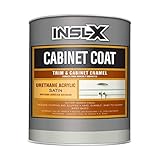
- The ultimate acrylic cabinet paint for a “factory-like” finish when refurbishing kitchen and bathroom cabinets, shelving, furniture, trim, and crown molding.
- Delivers an ultra smooth, durable finish.
- Super adhesion to hard-to-coat surfaces without primer.
- Durable satin cabinet finish that resists chipping, scuffing, food stains, grease & water.
- 87 – 112 square foot coverage per quart.
Satin is also easier to apply successfully than gloss. Ordinary brush or roller techniques can produce a good result when the surface is prepared correctly, while gloss demands flatter repairs, cleaner edges, more consistent film thickness, and more careful control of brush marks. For a family bookcase, home office shelving, or any piece where books will be removed repeatedly, satin is the safest all-around recommendation.
What is the difference between matte, satin, and gloss paint?
The finishes differ mainly in how much light they reflect, how readily they show surface defects, and how easily the painted surface can be wiped without burnishing.
| Finish | Appearance | Cleaning and wear | How defects look | Application demands | Best use on a bookshelf |
|---|---|---|---|---|---|
| Matte | Soft, flat, and very low glare | Usually less washable than higher sheens; repeated rubbing can burnish the surface | Hides minor dents, scratches, and unevenness best | Most forgiving of small preparation and application flaws | Display-focused shelves, dark rooms, or imperfect furniture where a quiet appearance is the priority |
| Satin | Subtle, pearl-like sheen | Easy to clean with moderate-to-high durability compared with ordinary matte | Reveals fewer flaws than gloss but gives a cleaner look than matte | Manageable with a good brush or roller technique | Most regularly used bookshelves and general furniture |
| Gloss | Bright, highly reflective surface | Strong cleanability and durability, but marks and smears can be conspicuous | Magnifies dents, brush marks, scratches, and uneven preparation | Requires the smoothest substrate and most careful application; Benjamin Moore advises spraying high gloss | Statement pieces that have been meticulously repaired and prepared |
“Matte,” “satin,” and “gloss” are sheen categories, not guarantees of identical performance across every brand or product. A furniture enamel formulated for cabinets can behave differently from a general-purpose wall paint in the same nominal sheen. Read the label for the specific coating, surface, recoat instructions, and approved substrates.
Should bookshelves be matte or satin?
Choose satin for most bookshelves; choose matte when hiding surface irregularities and reducing glare is more important than maximum washability.
When matte is the better choice
- The bookcase has small dents, shallow scratches, or uneven filler work that would remain visible under a reflective coating.
- The shelves are mainly decorative and will not be wiped or touched frequently.
- You want a calm, powdery appearance in a room where reflected light would be distracting.
- You are repainting older furniture and want the finish to be forgiving of minor brush or roller variation.
Matte absorbs more light, so it visually softens the edges of imperfections. Its trade-off is maintenance: lower-sheen surfaces are generally less washable, and repeated rubbing can create shiny burnished patches. A matte finish can therefore look excellent on a display bookcase but be less suitable for shelves that collect fingerprints, spills, or heavy dust.
Crashes, No Sound, or Screen Glitches?
Random freezes, missing sound and display glitches usually trace back to one bad driver. Find and replace yours safely.Free scan · under a minuteWindows Errors? Fix Them Before They Spread
Repair common Windows errors and clear accumulated junk for a smoother, more stable PC - no reinstall needed.Free scan · no reinstallWhen satin is better
- Books are moved often and the shelf edges or dividers will be touched repeatedly.
- You expect to wipe dust, fingerprints, or occasional marks from the surface.
- You want a finish that looks refined without the pronounced reflections of gloss.
- You need a practical coating for a home office, playroom, living room, or other frequently used space.
Sherwin-Williams describes satin as providing cleanability while hiding minor imperfections. That combination explains why satin is the usual compromise: it offers more practical maintenance than ordinary matte without demanding the flawless preparation that gloss requires.
Is gloss paint too shiny for a bookcase?
Gloss is not automatically too shiny, but it is unforgiving. It suits a deliberately dramatic piece, a smooth modern bookcase, or a design where reflected light is part of the effect. It is a poor choice for rough timber, dented shelves, visible filler, or a surface that cannot be prepared evenly.
Also popular on Amazon
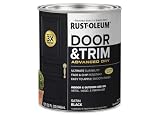
- Ready to use, pre-mixed door and trim paint offers a fresh new look on interior or exterior metal, wood and fiberglass
- Water-based paint formula emits less odor and withstands fading for a long lasting finish
- Dries to the touch in 45 minutes, up to 3X faster than traditional oil-based paints
- Durable, chip resistant coating provides ultimate protection with modern curb appeal
- Beautiful satin door paint is available in 6 pre-mix color options for the perfect look
A glossy film reflects light directly back toward the viewer. Dents and ridges create bright and dark patches, while brush marks become visible lines. Even dust and fingerprints can stand out more than they would on satin. The result can look excellent when the substrate is flat and the coating is laid down evenly, but preparation errors remain part of the finished appearance.
Benjamin Moore advises that if you choose a high-gloss sheen, it is best to spray the paint. Spraying can produce a more uniform film, but it requires suitable equipment, masking, ventilation, and practice with the particular product. If you brush or roll gloss, work methodically, maintain a wet edge, avoid overworking partially drying paint, and follow the label’s application limits.
What paint will hold up to books rubbing against it?
Use a furniture or cabinet enamel in satin when books will repeatedly slide against shelves and dividers. The available data’s official product guidance identifies satin enamel as a durable, cleanable option for interior furniture; it does not provide a single abrasion number that can rank every matte, satin, and gloss paint.
Durability depends on more than sheen. The coating’s formulation, the condition of the substrate, film thickness, drying conditions, and whether the paint has fully cured all affect how it handles friction. A well-prepared surface coated with an appropriate furniture enamel is more dependable than a poorly prepared surface covered with a shinier general-purpose paint.
Allow each coat to dry fully before adding another or loading the shelves. Benjamin Moore specifically warns about blocking, the condition in which objects stick to the paint. Books placed on a coating that is not fully dry can pull the film, leave impressions, or make adjacent painted surfaces adhere to one another. Use the product label’s recoat and cure guidance rather than relying only on a surface that feels dry to the touch.
Can I use cabinet paint on a bookshelf?
Yes. Cabinet and furniture enamels are intended for the kind of hard, cleanable finish a bookshelf often needs. HGTV Home Cabinet & Furniture enamel, for example, is a urethane enamel made for furniture and cabinets and is offered in matte, satin, and semi-gloss. Benjamin Moore recommends ADVANCE Interior for wood or laminate bookshelves.
“Cabinet paint” is not one universal formula, so check the product label before buying. Confirm that the coating is approved for the bookshelf’s substrate, that the intended sheen is available, and that the preparation instructions match the existing finish. Follow the manufacturer’s drying, sanding, ventilation, and cleanup requirements exactly.
Also popular on Amazon
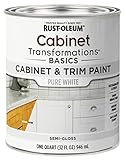
- CABINET TRANSFORMATION: Refresh outdated cabinets, vanities, furniture and trim with rich Pure White color and a smooth semi-gloss finish
- DURABLE PERFORMANCE: Easy-to-clean finish resists dirt and grime while standing up to household chemicals
- SMOOTH APPLICATION: Outstanding flow and leveling help create a beautiful finish with brush, roller, pad applicator or airless sprayer
- FAST PROJECT COMPLETION: Dries to touch in 30 minutes, recoats in 2 hours and is ready for normal use after 24 hours
- INTERIOR CABINET COATING: Ideal for kitchens, bathrooms, laundry rooms and other interior cabinet and trim applications
For most projects, a satin cabinet or furniture enamel is the practical starting point. A matte version can be appropriate when visual softness and defect hiding matter most. A semi-gloss option, where offered, gives more reflection and cleanability than satin without reaching the full visual intensity of gloss.
How should I prepare a bookshelf before painting?
Preparation determines whether the selected sheen looks intentional. Clean first, repair damage, dull glossy coatings, remove dust, and prime exposed substrate before applying the finish coat.
- Remove the contents and hardware. Take every book and removable shelf out of the unit. Remove knobs, brackets, doors, and other hardware that would interfere with an even coat.
- Clean away contaminants. Dust, grease, polish residue, and grime can prevent adhesion and leave visible defects. Use a cleaner appropriate for the existing material, then allow the surface to dry completely.
- Inspect and repair. Fill dents, chips, and holes with a compatible repair material. Let repairs dry, then sand them level with the surrounding surface. Gloss will reveal even shallow ridges, so inspect repairs from several angles under strong light.
- Sand glossy areas dull. HGTV Home’s Cabinet & Furniture enamel instructions call for sanding glossy surfaces to remove their shine. The purpose is to create a uniformly dull surface, not to remove every trace of the old coating.
- Remove sanding dust. Vacuum or wipe the entire unit with a clean method suitable for the substrate. Dust left on the surface becomes texture in the new film.
- Prime exposed areas. Spot-prime bare patches, and prime wood, plywood, or composition board as directed by the product. Priming helps create a consistent base where repairs or exposed fibers would otherwise absorb paint differently.
- Mask adjacent surfaces. Protect walls, floors, glass, and finished hardware. Masking is especially important for gloss because overspray, drips, and uneven edges are conspicuous.
- Check the surface before coating. Run a hand over the shelves, look across them with side lighting, and correct remaining ridges or dust nibs. This inspection matters most when choosing satin or gloss.
Do not skip cleaning because the bookcase looks visually clean. Invisible oils and furniture products can cause fisheyes, adhesion failures, or uneven sheen. Do not skip primer on bare areas when the product instructions call for it; unprimed patches can flash through the finish as dull or shiny spots.
How do I apply matte, satin, or gloss paint?
Applying matte
Matte is the most forgiving sheen, but it still benefits from thin, even coats. Work in manageable sections, keep a wet edge, and avoid repeatedly brushing areas that have begun to set. Overworking can create texture or uneven color even when the final surface is low-luster.
Applying satin
Use a quality brush for edges and profiles and a suitable roller for broad shelf surfaces when the product permits both. Lay off each section consistently so the subtle sheen appears uniform. Satin can hide minor imperfections, but it will still show lap marks, drips, and dust if the film is applied unevenly.
Applying gloss
Gloss requires the highest level of surface preparation. Repair and sand until the substrate is smooth, remove every trace of dust, and avoid conditions that cause the coating to dry too quickly. Benjamin Moore’s guidance favors spraying high gloss. If you use a brush or roller, use the product’s approved tool, avoid excessive back-and-forth strokes, and inspect the surface under angled light before it dries.
For every sheen, respect the label’s maximum recoat window, minimum drying conditions, and recommended number of coats. More paint is not automatically more durable; heavy or partially dried coats can sag, wrinkle, or remain soft longer.
Quick wins for a faster PC:
Clear out junk files and repair common Windows errorsFree Scan →Fix the driver behind crashes, sound loss and screen glitchesFind Drivers →Repair Windows errors before they cause bigger problemsFix Now →Also popular on Amazon
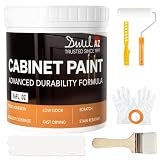
- 𝙉𝙊𝙏𝙀: Intentional headspace allows room for stirring, dipping, and transit. The stated paint quantity remains unchanged. If you have any questions, please contact our customer service team.
- 【BETTER COVERAGE】 For dark-colored cabinets, two or more coats are recommended for a smooth, even finish. It is normal for the original color to show through after the first coat. Actual coverage depends on the original color, application technique, and amount of paint used.
- 【WATER BASED & LOW ODOR】 DWIL cabinet paint features a water-based, low-odor formula for a more comfortable indoor painting experience without the strong odor commonly associated with oil-based paint.
- 【COMPLETE PAINT KIT】 This kitchen cabinet paint kit includes paint and essential application tools for easy DIY makeovers. No primer or top coat is required on properly prepared surfaces. Suitable for cabinets, vanities, doors, drawers, tables, and other wood furniture.
- 【FAST DRYING & EASY APPLICATION】 This wood paint dries to the touch in approximately 2 hours. Apply thin, even coats and allow sufficient drying time before recoating. The 16oz size covers up to 80 sq. ft., depending on surface conditions and application method.
Which finish is best for wood, laminate, and composition board?
The finish choice can remain satin across different substrates, but preparation changes with the existing material.
Wood
Wood may have open grain, previous varnish, repairs, or areas of exposed fiber. Clean it, repair defects, sand as directed, and prime bare or porous areas when the product calls for it. A smooth, sealed base is particularly important for gloss.
Laminate
Benjamin Moore lists ADVANCE Interior for laminate bookshelves. Laminate is often smooth and glossy, so follow the coating manufacturer’s instruction to sand glossy surfaces dull and prime where required. Do not assume that a coating approved for wood automatically covers every laminate; verify the label before application.
Plywood and composition board
HGTV Home’s Cabinet & Furniture enamel instructions call for priming wood, plywood, or composition board before painting. Pay attention to exposed edges and repaired areas, which can absorb paint differently from sealed faces and produce an uneven sheen.
The Tool Desk
Outbyte PC Repair FREERepair Windows errors before they cause bigger problemsFix Now →Outbyte Driver Updater FREEScan for outdated or missing drivers - takes under a minuteDriver Scan →What are the most common bookshelf-painting problems?
The books stick to the shelves
This is blocking. It usually means the coating has not dried or cured sufficiently, coats were applied too heavily, or the surfaces were loaded before the product’s specified time. Remove the books carefully, allow the coating to dry fully according to the label, and avoid stacking or closing painted parts until the manufacturer’s guidance permits it.
The finish looks patchy
Patchiness can come from uneven absorption, insufficient priming, inconsistent film thickness, or different levels of sanding. Correct the base, prime exposed or repaired areas as directed, and apply the next coat evenly. Satin and gloss make changes in reflection easier to see, so inspect under consistent lighting.
Brush marks are visible
Brush marks are most apparent in satin and gloss. They can result from overworking paint as it sets, using an unsuitable brush, applying too little material, or coating an uneven substrate. Follow the product’s tool recommendations and concentrate on preparation before adding another coat.
Also popular on Amazon

- WATER-BASED WOOD FURNITURE PAINT – Designed for refreshing wood furniture and decorative wood surfaces with a smooth satin finish. Suitable for cabinets, tables, chairs, doors, trim and other everyday wood projects.
- FOR INDOOR & OUTDOOR WOOD PROJECTS – Use on wood furniture around the home as well as selected outdoor wood projects such as chairs, tables and other prepared wooden surfaces. A practical option for updating existing pieces with a clean new finish.
- SMOOTH SATIN FINISH – Applies by brush or roller and builds an even finish over properly prepared wood. For most projects, apply 2–3 thin coats and allow each coat to dry before recoating for a more consistent appearance.
- SIMPLE SURFACE PREPARATION – Remove loose paint, dust, oil, wax and other residue before application. Previously painted, sealed or glossy surfaces should be lightly sanded as needed to help improve adhesion and achieve a smoother finish.
- MADE FOR FURNITURE REFRESH PROJECTS – Suitable for wood cabinets, tables, doors, chairs, shelving, trim and other wooden pieces. Available in classic White and Black options for coordinating with a range of interior and exterior decorating styles.
The new paint peels or scratches easily
Poor cleaning, an unsanded glossy surface, incompatible layers, or painting over unprepared bare material can compromise adhesion. Remove loose coating, clean the area, dull the glossy surface, and prime as required by the product instructions before recoating.
The surface is shinier than expected
Sheen can appear different under daylight, warm bulbs, and angled light. Confirm that the can’s label matches the selected finish and that the surface has dried evenly. If the appearance is still too reflective, the practical remedy is a compatible lower-sheen topcoat after the existing film is fully prepared according to the manufacturer’s instructions.
How do I choose the right finish for my bookshelf?
Use the following decision sequence rather than choosing by color alone.
- Start with use. If books are moved often or the shelves are wiped regularly, favor satin or another furniture enamel with a cleanable sheen.
- Assess the surface. If dents, scratches, or uneven repairs remain, matte hides them best; satin is the compromise; gloss requires correction.
- Decide how much reflection you want. Matte is quiet, satin has a restrained pearl-like glow, and gloss is intentionally dramatic.
- Match the application method. Matte is forgiving, satin is manageable with brush or roller, and high gloss may be best sprayed.
- Confirm the substrate and label. Verify that the product is approved for wood, laminate, plywood, or composition board as applicable, and follow its preparation and drying instructions.
- Plan for drying time. Do not return books until the coating has dried and cured according to the product directions, particularly where books will press against shelf surfaces.
| Your priority | Most suitable choice | Reason |
|---|---|---|
| Balanced durability, cleaning, and appearance | Satin furniture or cabinet enamel | Moderate sheen, practical cleaning, and better defect tolerance than gloss |
| Hide minor damage and minimize glare | Matte furniture enamel | Absorbs more light and disguises small irregularities |
| Maximum visual drama on a very smooth piece | Gloss furniture or cabinet enamel | Highly reflective and durable, but preparation and application are demanding |
| More reflection than satin without full gloss | Semi-gloss, if the chosen furniture product offers it | An intermediate option available in some cabinet and furniture enamel lines |
What should I buy for a typical bookshelf project?
Look for a labeled interior furniture or cabinet enamel in satin. The paint should explicitly list the substrate you are coating and provide instructions for cleaning, sanding, priming, application tools, recoat time, and curing. Buy enough material to maintain consistent coverage across the visible faces; stopping midway and restarting later can make it harder to keep sheen and color uniform.
If you select gloss, a paint sprayer becomes a relevant secondary tool because Benjamin Moore recommends spraying high-gloss paint. Spraying is not a shortcut around preparation: the bookshelf still needs cleaning, repairs, sanding, dust removal, masking, and appropriate priming. If you select matte, prioritize a product intended for furniture rather than assuming any flat wall paint will withstand shelf contact.
Recommended Free Tools
Keep the finish family consistent across shelves, sides, and trim unless the product instructions specifically support a different system. Mixing unrelated coatings can create adhesion or sheen problems. When in doubt, follow the technical directions printed for the exact product rather than relying on the sheen name alone.
Frequently Asked Questions
How can I prevent books from sticking to freshly painted shelves?
Blocking happens when painted surfaces contact one another before the coating has dried or cured enough. Follow the product’s stated recoat and cure times, use thin even coats, and keep books off the shelves until that guidance allows normal contact.
Does laminate need special preparation before bookshelf paint?
Treat glossy laminate as a slick substrate: clean it thoroughly, sand the sheen dull, remove all dust, and use the primer specified by the furniture enamel instructions. Benjamin Moore lists ADVANCE Interior for laminate, but the label for your chosen product controls what preparation is acceptable.
When is semi-gloss a better choice than satin?
Semi-gloss can suit a bookshelf when you want more reflected light and cleanability than satin provides but do not want the full mirror effect of gloss. Availability and formulation vary, so choose it only when the furniture or cabinet enamel is labeled for the intended substrate.
Do these 3 things before closing this tab:
1Repair Windows errors before they cause bigger problems2Fix the driver behind crashes, sound loss and screen glitches3Clear out junk files and repair common Windows errorsWhy does the same sheen look different on two bookcases?
Reflection depends on the underlying smoothness, repairs, film thickness, lighting, and the paint formula itself. A satin coating over a uniformly primed surface can look more even than the same nominal sheen over unsealed repairs or a glossy, poorly sanded base.
Quick Recap


