Crashes, No Sound, or Screen Glitches?
Free tools Windows power users keep installed
One-click scans. No signup required.
Random freezes, missing sound and display glitches usually trace back to one bad driver. Find and replace yours safely.Free scan · under a minute
Windows Errors? Fix Them Before They Spread
Repair common Windows errors and clear accumulated junk for a smoother, more stable PC - no reinstall needed.Free scan · no reinstall
ThatPainter is reader-supported. When you buy through links on our site, we may earn an affiliate commission. Learn More
Birds can damage a roof or nearby wood, but a bird simply sitting on the roof is not proof of harm. Woodpeckers may drum, search for insects, excavate nest cavities or wedge acorns beneath wooden shakes or shingles; pigeons and other flocking birds more often roost, nest or leave corrosive droppings. Identify the species and behavior first, then match the response to the problem: inspect and repair damaged wood, use properly installed exclusion where needed, and check wildlife rules before disturbing a nest.
What kinds of bird activity can damage a roof?
Birds do not all damage buildings in the same way, and “birds are eating the roof” is usually too broad a diagnosis. A woodpecker may be making a nest cavity, searching for insects, drumming to communicate or storing food. Pigeons and other nuisance birds are more likely to roost or nest at eaves, ledges, roof peaks and openings. Droppings can accumulate on roofs and building surfaces, creating sanitation concerns and potentially corroding materials.
As an Amazon Associate I earn from qualifying purchases.
The distinction matters because a deterrent for a bird that lands on a ledge may do little for a woodpecker working on siding or trim. Likewise, covering a small hole will not keep birds from returning to an untreated roosting spot elsewhere on the building. U.S. Fish & Wildlife Service guidance on woodpeckers and homes describes several different reasons for pecking, while Cornell’s bird-management guidance discusses exclusion options for nuisance birds.
- Pecking or excavation: Look for fresh holes in wood siding, trim, fascia or other wooden parts of the building. A cavity may be a nest site, an insect search, or another behavior; do not assume the visible hole explains the cause.
- Drumming: Repeated tapping can be a communication behavior rather than an attempt to eat roofing. It can still be noisy and may damage the surface being struck.
- Stored acorns: Acorn woodpeckers may wedge acorns beneath wooden shakes or shingles, as UC IPM’s woodpecker guidance notes. This is a specific behavior, not evidence that all woodpeckers feed on roofs.
- Roosting or nesting: Birds at eaves, ledges, roof peaks or openings may be using a sheltered perch or access point. The relevant issue may be blocked access or repeated congregation, rather than pecked roof material.
- Droppings: Accumulations can foul surfaces and raise sanitation concerns. The response should address where birds gather and how they gain access, as well as safe cleanup and any material damage.
Not every bird on a roof indicates a problem. Focus on persistent activity, fresh damage, droppings, blocked openings or signs that birds are entering a building.
Popular on Amazon

- Great Value Paint Brush Set: Soucolor 20 acrylic paint brushes come in 10 different sizes, making them ideal for fine detailing, model painting, rock painting, nail art, face painting, DIY crafts, and general art projects. The varied brush sizes give you better control for both delicate lines and broader color coverage, while the soft bristles deliver smooth, consistent results on acrylic, oil, watercolor, canvas, wood, ceramic, and more.
- Awesome Set of Paint brushes: Professional paint brushes can cover all of your needs. The multi-purposed brushes are ideal for Watercolor, Oil, Gouache, enamel, Acrylic Painting, Body, Nail, Face Painting, Miniature, Model, Wood, Glass, Cup, Ceramic, Fine work, Art class, Craft Art Painting, DIY Art Crafts etc.
- Soft and long-lasting: The bristles are soft and strong, with nickel metal ferrules and blue wooden handles. After cleaning, the bristles will become soft and fluffy again and will not fall off.
- Easy to clean: it’s very convenient to Wash well in soap and water. Retain shape after drying. the brushes hold up very well. Nice selection to beginners and professionals. Keep them clean and they last a long time.
- Perfect for All Painters & Occasions: Suitable for art beginners, hobbyists and professional artists. Great for art class, home creation, travel painting and DIY handmade projects. A practical art gift for students, teachers, family and craft lovers.
How can I tell whether birds are causing the damage?
Start by documenting what you see before choosing a fix. Note the bird’s appearance if you can do so safely, the exact location, the time and pattern of activity, and whether the bird is pecking, perching, carrying nesting material or entering a gap. A clear photo from the ground can help distinguish repeated use of one spot from a passing visit.
What’s actually slowing this PC down?
Pick the symptom - the matching free tool is one click away.
Then inspect the affected area from a safe position. Look for fresh holes, splintering, loose or displaced wooden shakes, nesting material, droppings and openings around eaves or vents. Do not climb onto a roof or reach into a cavity to investigate a bird or nest. If the roof is steep, high, unstable or visibly damaged, use a qualified professional to assess it.
Woodpecker holes are not the only possible explanation for damaged wood. The U.S. Fish & Wildlife Service recommends checking for insect damage and rotting wood, which may attract woodpeckers. Carpenter bee tunnels in unpainted wood can also provide a route by which larvae attract woodpeckers, according to Cornell’s IPM guidance. Finding rot or insects does not prove that they caused a particular hole, but it identifies conditions worth addressing.
A practical first-pass inspection can separate the main possibilities:
Also popular on Amazon

- COMPLETE 5-PIECE BRUSH SET FOR EVERY PAINTING TASK — Includes 1 Inch Flat, 1.5 Inch Angle, 2 Inch Flat, 2 Inch Angle Stubby, and 2.5 Inch Angle brush giving you every size professional painters use daily. Get all 5 for less than the price of a single brush from hardware store brands — professional grade performance at a fraction of the cost. Perfect for walls, trim, cabinets, doors, furniture, and detailed cutting-in work on any project.
- ZERO BRISTLE LOSS — GUARANTEED BY PRECISION ADHESIVE BONDING — Every bristle is locked in place with precision-set adhesive that keeps them in the brush — not in your paint job. The coated steel ferrule provides structural support while the adhesive bond ensures clean performance on every stroke. Premium SRT synthetic filaments load more paint and release it evenly for a smooth streak-free finish on walls, ceilings, and trim. Works with latex, oil-based paint, primer, sealer, and wood stain.
- INCLUDES THE ANGLE STUBBY MOST SETS LEAVE OUT — Professional painters know the 2 Inch Angle Stubby is the go-to brush for tight cabinet interiors, window sashes, inside corners, and detailed trim where standard angle brushes are too long. Combined with the 1.5 and 2.5 inch angle sash brushes you have precision cutting-in covered at every scale — baseboards, crown molding, door casings, and ceiling lines.
- FLAT BRUSHES FOR BROAD SMOOTH COVERAGE ON ANY SURFACE — The 1 and 2 inch flat brushes deliver even coverage on walls, furniture, shelving, doors, fences, decks, and wood surfaces. Ideal for applying primers, stains, varnishes, polyurethane, and specialty coatings. Solid wood handles provide all-day comfort and control for both professional contractors and weekend DIY homeowners tackling interior or exterior painting projects.
- TRUSTED BY PROFESSIONAL PAINTERS AND CONTRACTORS NATIONWIDE — Pro Grade delivers professional-grade results at a price that makes sense for crews who go through brushes on every job. Ideal for property managers, remodeling contractors, apartment turnover crews, maintenance teams, and commercial painting operations. Backed by thousands of verified reviews from working painters. Washable and reusable for multiple projects.
| What you observe | What it may indicate | What to check next |
|---|---|---|
| Repeated pecking at wood, with fresh chips or holes | Woodpecker activity; possible insect attraction, drumming or excavation | Wood condition, signs of insects, and whether activity is confined to one area |
| Birds repeatedly landing or gathering at a ledge | Perching or roosting behavior | Whether a ledge-specific barrier is suitable and whether nearby openings allow entry |
| Birds going in and out at an eave, vent or gap | Access to a sheltered space or possible nest site | Whether birds are actively nesting before considering exclusion |
| Acorns or other stored material beneath wooden shakes or shingles | Possible food-storage behavior by acorn woodpeckers | The extent of the affected area and any loosened or displaced roofing material |
| Droppings concentrated below a perch | Repeated roosting or congregation | The perch location, affected surfaces and safe ways to prevent access |
These clues guide an inspection; they are not a substitute for identifying the bird or establishing the cause. If the evidence is ambiguous, avoid sealing a cavity or installing a barrier until you know whether birds are using it.
What should I do if a woodpecker is pecking my house?
For ongoing woodpecker damage, physical exclusion is the best-supported intervention in the cited guidance. UC IPM calls bird netting the most effective way to stop woodpecker damage to a building, and the U.S. Fish & Wildlife Service also describes netting as typically effective. Inspect and address damaged or decaying wood and possible insect activity as part of the response, but do not rely on that repair alone if pecking continues.
UC IPM describes lightweight netting with 3/4-inch mesh stretched from the eaves down to a lower point, or placed over a flat affected surface with at least 3 inches of clearance. The purpose is to keep birds from reaching the surface, not to press netting against it. UC IPM’s installation guidance warns that covering only part of a building may lead birds to move to an unprotected area. The Fish & Wildlife Service likewise describes netting from the outer eaves down the side of a building as typically effective.
- Map the activity. Identify each affected surface and note whether birds are pecking, drumming or entering a cavity. Consider the whole area, not just the most obvious hole.
- Check the substrate. Look for rot and possible insect damage in the wood. Arrange appropriate repair or pest assessment where signs point to a secondary building issue.
- Choose exclusion that covers the target. For a woodpecker reaching a wall or trim surface, consider properly installed bird-exclusion netting for the affected area. Plan the coverage so birds cannot simply reach an adjacent untreated section.
- Install without trapping or blocking wildlife. Before closing off a cavity or access route, determine whether birds are nesting there and check the applicable rules. Netting must be secured and positioned so it does not entangle birds.
- Inspect and maintain the barrier. Netting can develop holes or come loose. Check that it remains intact and that the protected surface has not shifted beyond its coverage.
- Repair damage at the right time. Once it is lawful and safe to do so, fill and paint holes as appropriate for the material. The Fish & Wildlife Service advises delaying measures around an active nest until young have permanently left.
Netting is an exclusion method, not a roof repair. It does not replace an assessment of a leak, loose roofing or damaged wood. For a large or high area, a professional familiar with wildlife exclusion and the building material may be safer than an improvised installation.
Also popular on Amazon

- 【All sizes of art brushes】: The 10 sizes of multi-functional brushes have various shapes, making the mixing color easier, which is very suitable for artists, students, teenagers, children and painters at all levels. Wonderful Present ideas for friends and family who like painting!
- 【general brush set】: Professional paint brush can meet all your needs. Multifunctional brush is very suitable for watercolor, oil, gouache, acrylic painting, body, nail, face painting, miniature, model, ceramics, arts and crafts painting, etc.
- 【high quality process】: It is designed with anti falling bristles, anti-rust nickel ferrule and solid wood handle. You can use the brush to focus on the painting and always be creative.
- 【easy to maintain】: After using the brush, it is very convenient to clean the brush with warm soapy water and reshape the tip of the brush. Air dry the brush and place it on top of the top for long use.
- 【100% satisfaction guarantee - buy now】1 packs of set brushes, you can also get friendly customer service, any questions feel free to contact us, within 24 hours to help you! There is no risk in buying our paint brush kit.
How do I keep pigeons or other birds from roosting on a roof?
For roosting birds, focus on the place they perch or the opening they use. Mesh or netting may suit an eave, vent or other access point; a ledge-specific device may be more appropriate where the problem is birds landing on a narrow perch. Cornell lists netting, spikes, post-and-wire systems, electrified systems and parallel wires as possible exclusion approaches, but these are not interchangeable fixes.
PC Slower Than It Used to Be?
A free scan shows the junk files, broken settings and background clutter dragging Windows down - then fixes them in one click.Free scan · Windows 10 & 11Outdated Drivers Are Slowing You Down
One free scan finds every outdated or missing driver and matches the right update for your exact hardware.Free scan · exact hardware matchChoose a barrier by asking what it must do: block entry into a space, prevent landing on a ledge, or keep birds away from a larger surface. Also consider how much area it covers, whether birds can shift to an untreated spot, the visibility of the installation and the inspection it will require. A device at one perch is not a complete answer if birds can simply use a nearby ledge or opening.
For openings, first confirm that birds are not nesting inside. Then select a suitable mesh or netting and secure it so the opening is closed without creating an entanglement hazard. For a perch, use a purpose-built ledge intervention appropriate to that location and keep it maintained. If the birds are roosting over a large roof area or entering a complicated eave space, a wildlife-exclusion professional can help assess coverage and installation risks.
Will scare devices, sticky products or paint solve the problem?
Scare devices and repellents are not reliable universal fixes. UC IPM says frightening devices or repellents more often fail to produce the desired result against woodpeckers, and Cornell notes that birds can become accustomed to fear-provoking stimuli. A tactic that briefly changes behavior may not prevent return if the bird can still reach the same surface or opening.
Also popular on Amazon

- 【KIDS PAINT BRUSHES SET】Anezus paint brushes for kids come with 10 pcs paint brushes of 5pcs round paintbrushes and 5 flat paint brushes with colorful handles, good for the young artist to explore their creativity in painting and crafting
- 【HIGH QUALITY PAINT BRUSHES FOR KIDS】These toddler paint brushes made of soft hog bristle, bright colored handles and rust proof ferrules. The bristles are firmly fixed in the kids paint brushes and no shedding. Each children paint brush measure 6 1/4 inches (16cm) in length and ferrules 1/2"(1.3cm) diameter, large enough for the little hand to grip and control
- 【WIDE APPLICATIONS】With combination of round and flat craft paint brushes for kids, work great with washable paint, tempera paint and acrylic paint. Great for arts and craft, rock, leather, gesso and ceramic, or body, nail and face art painting.
- 【EASY TO CLEAN 】After using paint brushes for acrylic, oil or watercolor painting, it’s very convenient to clean them with warm soapy water and reshape the paint brush tips. Keep these craft paint brushes clean and they last a long time.
- 【GREAT GIFT IDEA】Perfect for students, teens, kids, children and painters of all levels. Wonderful gift idea for girls, boys and kids who love painting! These all-purpose paint brushes for kids are ideal for kids' school projects, birthday parties, painting parties, art parties, back to school supplies, classroom decoration and more.
Avoid sticky bird repellents. Colorado State University Extension warns that sticky products can trap or fatally injure birds and harm other animals. For continuing damage, prioritize diagnosing the attraction and using physical exclusion rather than relying on an unverified repellent.
Painting is useful as part of an appropriate wood repair and maintenance plan, but the cited guidance does not establish paint alone as a dependable bird deterrent. The U.S. Fish & Wildlife Service recommends filling and painting woodpecker holes; that is a repair step, not a guarantee that birds will stop visiting. If damaged wood is unpainted, deteriorated or affected by insects, address those conditions while also excluding birds where activity continues. Do not paint over an active nest or use repair work to block birds inside.
Independent reader supportYour contribution helps us test, update, and keep practical guides available for everyone.When can I repair a hole or close an opening?
Repair promptly once the area is unoccupied and it is lawful to do so; do not seal an active nest or trap birds inside. The U.S. Fish & Wildlife Service recommends filling and painting woodpecker holes but advises waiting to take measures around an active nest until the young have permanently left. If you cannot tell whether a cavity is active, seek species- and location-specific guidance before closing it.
After the birds have left, match the repair to the building material. A hole in wood may need filling and painting, while a displaced shake or another roofing defect may require a roofer’s assessment. Paint can protect a properly prepared and repaired wood surface, but it cannot restore a compromised roof assembly or replace missing exclusion. If a leak or structural concern is present, treat that as a building repair issue rather than waiting for a deterrent to work.
In the United States, most native birds, including woodpeckers, and their nests and eggs are protected under federal law. The treatment of introduced species and the legality of particular control methods can vary. Check with the relevant wildlife agency before handling birds, nests or eggs, or using a control method; do not assume rules in one state or country apply everywhere.
Free tools Windows power users keep installed
One-click scans. No signup required.
Also popular on Amazon
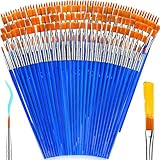
- 【162-Piece Bulk Set | Dual Brush System】Maximize versatility with 81 flat brushes (0.59 inch edge for bold strokes) and 81 round brushes (0.39 inch tips for details) – 3X more tools than standard kits! Pre-sorted in labeled compartments for instant access during painting sessions. Ideal for art classrooms, mural projects, and multi-artist households.
- 【Pro-Grade Durability | Zero Shedding Guarantee】 "Engineered with triple-crimped nylon bristles (43% higher resilience vs. standard) and aerospace aluminum ferrules tested for 10,000+ flex cycles. Lab-verified 0.01% shedding rate even with heavy impasto techniques – outperforms flimsy bristles in budget brushes."
- 【Multi-Scenario Readiness | Event & Daily Use】 Optimized for: Thanksgiving/Christmas face designs classroom projects ceramic decorating fabric printing and model painting; Lightweight plastic handles each reduce hand fatigue during prolonged sessions
- 【Effortless Maintenance | Long-Term Durability】 Clean with warm soapy water in 10 seconds; Reshape tips and air-dry vertically to preserve bristle integrity,After use, air-dry brushes thoroughly and store upright in the provided case to preserve bristle shape. The premium nylon filaments naturally regain their original form after each stroke. For cleaning, simply rinse in warm soapy water and gently reshape bristles with fingertips."
- 【Multiple Application】These acrylic paint brushes can be applied for most occasions,such as:watercolor,oil, gouache paint,face paint, acrylic paint, suitable for Thanks Giving Day, Christimas, Halloween face and body painting, canvas painting, fabric, rock, miniature, model, ceramics, arts and crafts painting, etc.
How should I choose a bird-exclusion option?
Match the intervention to the bird’s behavior and the building feature involved. The most useful distinction is whether birds are reaching a surface, landing on a ledge, or entering a space.
| Problem to address | Potentially suitable approach | Important limitation |
|---|---|---|
| Woodpecker reaching a wall, trim or other broad surface | Properly installed bird netting with clearance from the surface | Coverage must account for adjacent unprotected areas; netting needs inspection and maintenance. |
| Birds entering an eave, vent or other opening | Suitable mesh or netting over the opening | First confirm the space is not occupied by an active nest; secure the barrier to avoid trapping birds. |
| Birds repeatedly landing on a ledge | A ledge-specific option such as spikes, post-and-wire or parallel wires | These approaches target perching and are not substitutes for covering a larger damaged surface. |
| Droppings below a recurring roost | Identify and exclude access to the specific perch or sheltered location | Birds may shift to another untreated perch; sanitation and material cleanup may still be needed. |
These are categories, not a recommendation for a particular product or a claim that every installation will work. Consider visibility, installation access, maintenance, coverage and risk to birds and other animals. There is no single deterrent supported as the right choice for every species and roof configuration.
What should I do first?
Take a sequence that avoids unnecessary damage and unsafe wildlife handling:
- Observe from the ground and identify the species or likely group, location and behavior.
- Photograph fresh damage and note whether birds are entering a cavity or simply using a perch.
- Inspect for rot or insect activity where woodpeckers are working; arrange an appropriate assessment if needed.
- Check whether there may be an active nest and consult local wildlife guidance before closing openings or handling wildlife.
- Choose an exclusion method suited to the specific surface, ledge or opening, and plan enough coverage to prevent birds shifting nearby.
- Repair the building material after the area is clear, then maintain the barrier and recheck for new activity.
The available authoritative guidance does not establish a typical repair cost or how often residential roofs are damaged by birds. The scope can vary widely: a small repair to wood, a broad netting installation and a roof-material repair are different jobs, so obtain a site-specific assessment rather than relying on a generalized cost estimate.
Quick wins for a faster PC:
Scan for outdated or missing drivers - takes under a minuteDriver Scan →Clear out junk files and repair common Windows errorsFree Scan →Fix the driver behind crashes, sound loss and screen glitchesFind Drivers →Frequently Asked Questions
Do birds sitting on my roof mean there is damage?
No. A bird may be passing through or using the roof as a perch without harming it. Look for repeated activity, fresh holes, concentrated droppings or birds entering an opening before deciding that intervention is needed.
Can paint by itself stop a woodpecker from returning?
The cited guidance supports filling and painting holes as repair, not paint as a stand-alone deterrent. If activity continues, identify possible insect or wood-condition issues and consider physical exclusion rather than relying on another coat.
Are bird nests protected everywhere?
No single rule applies worldwide. In the United States, most native birds and their nests and eggs are protected under federal law, but treatment of introduced species and specific control methods varies; elsewhere, consult the relevant local wildlife authority.
Quick Recap


