PC Slower Than It Used to Be?
The Tool Desk
Outbyte Driver Updater FREEFix the driver behind crashes, sound loss and screen glitchesFind Drivers →Outbyte PC Repair FREERepair Windows errors before they cause bigger problemsFix Now →Outbyte PC Repair · freeA free scan shows the junk files, broken settings and background clutter dragging Windows down - then fixes them in one click.
Run a Free PC Scan →ThatPainter is reader-supported. When you buy through links on our site, we may earn an affiliate commission. Learn More
For most residential ceilings, quality interior paint is the better default. It usually requires less preparation, costs less to enter, is easier to touch up, and is more forgiving when a room has condensation or needs occasional cleaning. Wallpaper is the better choice when the ceiling is dry, smooth, sound and intentionally designed as a feature—especially for a pattern, mural or texture that paint cannot reproduce easily.
The decision is not simply paint versus wallpaper. Paint performance depends on the ceiling-rated product and finish; wallpaper performance varies greatly among paper, vinyl, plastic-coated, metallic and textile materials. Moisture behind any wallcovering can cause trouble, and no finish can compensate for leaks, damp plasterboard or a failing substrate.
As an Amazon Associate I earn from qualifying purchases.
Free tools Windows power users keep installed
One-click scans. No signup required.
This guide compares preparation, installation, humidity tolerance, cost, cleaning, repair, removal and room suitability so you can choose a ceiling finish without treating a trade estimate or a wall product specification as a universal residential guarantee.
What is better for a ceiling, wallpaper or paint?
Choose paint unless the ceiling itself is meant to be a major decorative element. Paint is the practical option for bedrooms, hallways, living rooms and most kitchens because it can be renewed in the same colour and touched up after minor damage. Choose wallpaper only after confirming that the ceiling is dry, smooth and structurally sound, and that you are prepared for more exacting alignment, adhesive control and eventual removal.
Popular on Amazon

- ACRYLIC PAINT & PRIMER (2 in 1) – PRO matte black paint with 35%+ high-performance binder delivers strong adhesion, smooth coverage and a rich charcoal-black, low-sheen finish on properly prepared surfaces.
- INTERIOR & EXTERIOR VERSATILITY – Multi-surface black paint for walls, ceilings, trim, drywall, baseboards, moldings, concrete and previously painted surfaces; also works as black outdoor paint for properly prepared exterior walls.
- SMOOTH APPLICATION & FAST DRYING – Professional-grade formula flows evenly with minimal dripping and works with brush, roller or paint sprayer. Touch dry in about 1 hour; recoat in 2–4 hours at 77°F.
- DURABLE & WASHABLE FLAT FINISH – Scrubbable matte black wall paint resists everyday wear, household cleaners and fading while maintaining a clean, modern appearance in residential and commercial spaces.
- MORE COVERAGE, LESS WORK – Covers approximately 300–400 sq. ft. per gallon depending on surface porosity. Low VOC, low odor and easy soap-and-water cleanup. Made in USA.
That recommendation follows the guidance of Dulux, Asian Paints, the Wallcoverings Association, RONA and other manufacturers and trade sources. It is a decision rule, not a claim that every paint outlasts every wallpaper or that every wallpaper fails in moisture.
How do ceiling paint and wallpaper compare?
The table gives the practical differences first. The details and exceptions appear in the following sections.
| Decision factor | Interior ceiling paint | Ceiling wallpaper |
|---|---|---|
| Substrate preparation | Repair defects, clean the surface and use a product whose label permits ceiling use. Local repairs can be primed before coating. | Requires a clean, dry, structurally sound surface free of grease, mildew and stains. Unevenness, contamination and weak areas are especially visible or damaging. |
| Humidity and condensation | Washable, moisture-resistant interior paint is generally the safer finish where condensation or repeated cleaning is expected, but the moisture source must be corrected first. | Depends on the material. Vinyl and plastic-coated products tolerate wiping better than ordinary paper; grasscloth and other absorbent materials can warp or become mouldy. |
| Upfront cost | Generally lower and more flexible because fewer companion supplies are needed, according to Dulux and Asian Paints. Exact rates vary by region, product and labour. | Adds wallcovering, paste, possible sizing or primer, pattern matching, surface levelling and installation labour. No single geography-wide rate is established. |
| Installation difficulty | Painting is comparatively DIY-friendly, although overhead work still needs safe access and careful cutting around fittings. | More demanding: paste, positioning, smoothing, seams and temporary support must all be controlled overhead. This is a practical implication of ceiling work, not a reported ceiling-specific test. |
| Cleaning and touch-up | Touch-up with retained paint is straightforward when the colour and finish still match. Select a washable product where the label and room require it. | Only washable products should be wiped, and even those should not be saturated. Matching a damaged pattern can be difficult; textured papers may not be washable. |
| Removal and future changes | Recoat after cleaning and repairing the surface. | Plan to remove the covering, clean adhesive residue, repair the substrate and prime before repainting. Sherwin-Williams generally advises against painting directly over wallpaper. |
| Visual effect | Offers colour and sheen, but not the same repeat pattern, mural or woven texture. | Provides motifs, complex repeats, murals and textures that paint does not easily reproduce. |
| Best room profile | Most dry or moderately humid residential rooms, and rooms that need easy refreshes. | A dry, well-ventilated room with a deliberately decorative ceiling and a ceiling appropriate for the selected material. |
When is paint the stronger ceiling choice?
It is easier to prepare and renew
Dulux describes paint as easier to apply and generally more economical than wallpaper at comparable premium quality because it needs fewer accompanying supplies. Asian Paints likewise presents paint as flexible across budgets and easier to touch up and refresh. That matters on a ceiling, where a small stain or fixture repair may be more practical to correct with a small amount of matching paint than with a new length of patterned covering.
It handles ordinary maintenance more simply
Paint lets you clean the surface according to the product label and recoat a worn area without matching a repeat. Keep a labelled container of the final colour and finish; a touch-up can still flash if the old coating has faded or the sheen differs, so repainting a whole continuous section may be needed for an invisible result.
It is the safer default around moisture
Where condensation, occasional splashes or repeated cleaning are likely, choose an interior product whose label permits ceiling use and whose specifications suit the room. Manufacturer comparisons cited by the sources identify washable paint as safer in high-moisture areas than vulnerable wallcoverings. Paint is not waterproofing: repair a roof, plumbing, ventilation or condensation problem before coating.
When does wallpaper make sense on a ceiling?
The ceiling is an intentional feature
Wallpaper earns its extra preparation when the design is the point. Asian Paints and RONA describe wallcoverings as offering broad ranges of colours, motifs and textures, including effects that paint cannot easily create. A repeat pattern, mural or textile-like surface can make a ceiling read as part of the room’s architecture rather than a blank plane.
The Tool Desk
Outbyte PC Repair FREEClear out junk files and repair common Windows errorsFree Scan →Outbyte Driver Updater FREEFix the driver behind crashes, sound loss and screen glitchesFind Drivers →Also popular on Amazon

- Ready-mixed, grab-n-go white ceiling paint
- Excellent hide to brighten a ceiling that has dulled over time; Covers approximately 300 - 400 sq. ft. per gallon
- Durable flat finish that minimizes surface imperfections
- Spatter resistance for easier ceiling application
- Use on properly prepared or previously painted drywall, plaster, masonry, wood or metal materials
The substrate is already suitable
Wallpaper is a design choice only after the ceiling passes a condition check: it must be dry, smooth, structurally sound and free of grease, mildew and stains. The Wallcoverings Association gives those conditions for wallcovering surfaces, and Sangetsu notes that wallpaper is generally less than 1 mm thick and cannot conceal substrate unevenness. A covering may visually distract from minor imperfections, but it does not replace crack repair, levelling or moisture remediation.
You accept a less forgiving future repair
Wallpaper can be the right finish if you can obtain enough material for the whole project and accept that a later patch may show a colour or batch difference. Pattern alignment and seam placement are visible design work, not details that can be hidden with a quick second coat.
Which wallpaper materials are suitable for a ceiling?
“Wallpaper” is not one performance class. Check the product’s own cleaning, humidity, adhesive and installation instructions before buying; the following comparison describes the tendencies reported by RONA, Asian Paints and wallcovering guidance.
| Material or construction | Useful characteristic | Ceiling concern |
|---|---|---|
| Ordinary paper | Can provide printed colour and pattern at a relatively simple material level. | RONA says paper types tear easily and are difficult to clean and strip. They are a poor fit for a ceiling exposed to frequent wiping or condensation. |
| Vinyl | More durable and wipeable than ordinary paper, with greater resistance to spills. | “Wipeable” does not mean immune to moisture behind seams or compatible with every ceiling adhesive. Follow the product instructions. |
| Plastic-coated or washable products | Can tolerate light cleaning when the manufacturer permits it. | Asian Paints advises using only a lightly damp cloth and mild soap, avoiding excessive water and testing an inconspicuous area. Some textured papers cannot be washed. |
| Grasscloth and other absorbent textiles | Bring natural texture and visual depth. | RONA warns that grasscloth can warp or become mouldy when it absorbs moisture. These materials are best reserved for reliably dry, well-ventilated rooms. |
| Metallic, heavily textured or specialty coverings | Create effects that paint cannot readily reproduce. | Surface, cleaning and adhesive limits vary. A very thin covering still telegraphs unevenness, and the product’s instructions control what is acceptable. |
How should you prepare a ceiling before either finish?
Preparation determines whether the finish stays attached and looks uniform. Both options need a sound substrate, but wallpaper is particularly unforgiving because its wet adhesive loads the surface while curing.
- Find and correct moisture. Investigate roof leaks, plumbing, condensation and ventilation before decorating. Do not seal active dampness beneath paint or wallpaper.
- Check structural soundness. Remove loose material and repair cracks, holes, failed joints or friable plasterboard. A decorative covering cannot stabilise a weak ceiling.
- Clean thoroughly. The Wallcoverings Association specifies a surface free of grease, mildew and other stains. Remove residues that could interfere with paint or adhesive and allow the surface to dry completely.
- Level visible irregularities. Sand or fill repairs and remove ridges. Sangetsu’s observation that wallpaper is generally under 1 mm thick means bumps and seams can remain visible through it.
- Use the right primer or sizing. For wallpaper, Asian Paints recommends primer or sizing where appropriate; the product and substrate determine which. For paint, prime repaired, stained or otherwise problematic areas as directed by the paint manufacturer.
- Confirm compatibility. Read the ceiling, substrate, adhesive and cleaning instructions as a set. A heavy covering, a non-porous surface and a water-based adhesive can require a different preparation sequence than a breathable paper product.
The Wallcoverings Association explains why weakness matters: water-based adhesive stresses the substrate as it cures. On a damp or poorly bonded ceiling, that stress can produce adhesion failure even when the wallpaper itself is intact.
How do you paint a ceiling successfully?
- Select a ceiling-permitted interior paint. Match the finish to the room and the cleaning requirement. In a room with children or pets, Dulux India identifies its washable SuperClean emulsion as an example of a washable home product; other brands have their own specifications.
- Protect the room and fixtures. Cover floors and furniture, isolate light fittings safely and use stable access equipment. Overhead work increases the consequence of drips and missed edges.
- Prepare and prime repairs. Fill defects, sand smooth, remove dust and spot-prime stains or repaired areas when the label calls for it. A uniform surface reduces flashing between repaired and existing areas.
- Cut in and roll in manageable sections. Keep a wet edge where the product instructions require it and avoid overworking paint as it begins to set. Follow the stated recoat and ventilation guidance rather than assuming a coat is ready because it feels dry.
- Inspect in the room’s normal light. Look for holidays, lap marks, roller texture and missed edges after the coat has dried. Correct defects before replacing furniture or fittings.
- Store the remainder. Keep the container sealed, labelled with the room and date, and note the colour, sheen and product name. This is more useful for future touch-ups than trying to recreate a colour from memory.
How do you install wallpaper on a ceiling?
Follow the covering and adhesive manufacturer’s method; ceiling installation instructions can differ from wall instructions. The sequence below translates the general wallcovering requirements into an overhead project, while the need for temporary support is a practical inference rather than a measured performance finding.
Also popular on Amazon

- PAINT + PRIMER IN ONE: Evolve’s paint-and-primer formula helps you get great coverage from the start, sealing your surface and reducing the extra work of multiple coats.
- AVAILABLE IN MULTIPLE SHEENS, COLORS & SIZES: Choose from a curated palette of designer colors in Flat, Eggshell, Satin, and Semi-Gloss sheens to match any style, room, or project. Available in 1-Gallons & 5-Gallons.
- SATIN SHEEN - Smooth & Durable: Soft, silky luster with added durability for high-use areas like kitchens, baths, and kids’ rooms. Resists scuffs and stains while keeping a polished look.
- STAIN & SCRUB RESISTANT: Built to last in real spaces, Evolve helps resist marks, scuffs, and water spotting, so your home continues to look polished and well-maintained.
- DESIGNED FOR MOISTURE-PRONE AREAS: Formulated to perform well in bathrooms, kitchens, entryways, laundry rooms, and other high-humidity spaces.
- Dry-fit the design. Decide where the first run will start, how the repeat will align and where seams will fall relative to lights and architectural breaks. Measure every run and retain enough material for pattern matching.
- Prepare a clean, smooth, dry ceiling. Complete repairs, remove contamination and apply the specified primer or sizing. Do not begin while the substrate or room is damp.
- Cut and label runs in order. Keep the sequence and pattern direction clear. Confusing the order overhead can force a seam or repeat error that is hard to disguise.
- Apply the compatible adhesive evenly. Use the amount and booking time specified for the product. Excess paste can stain or contribute to slippage; too little can leave weak adhesion.
- Support the run while positioning it. Use a second person, a clean support surface or the manufacturer’s approved method so the pasted material does not fold, stretch or contaminate itself. Do not rely on improvised support that could damage the covering or create a fall hazard.
- Smooth from the centre outward. Asian Paints recommends this direction to move air and excess adhesive toward the edges. Work gently to avoid stretching seams or marking delicate textures.
- Close seams and trim carefully. Align the repeat before pressing the seam, then trim against a straight edge around fittings and corners. A wallpaper seam roller or smoothing tool may help when the product instructions permit it.
- Allow the covering to dry under controlled conditions. Asian Paints reports common drying of 24–48 hours, but some materials and conditions can take up to two weeks. Do not judge the final colour or adhesion too early, and avoid forcing heat that could distort the covering.
Asian Paints warns that bubbles discovered after drying are difficult to correct without creasing. Sangetsu also cautions that insufficient drying can contribute to discoloration, peeling or mould growth. Those warnings make patience and moisture control more important overhead than a quick visual finish.
Will wallpaper peel in a humid room?
It can, but humidity alone is not a universal failure prediction. The risk depends on the covering, adhesive, ventilation, condensation, substrate and whether moisture gets behind the material. Paper and grasscloth are more vulnerable to tearing, warping or mould; vinyl and plastic-coated products are generally more wipeable and durable, but their seams and the substrate behind them can still be affected.
Do these 3 things before closing this tab:
1Scan for outdated or missing drivers - takes under a minute2Repair Windows errors before they cause bigger problems3Fix the driver behind crashes, sound loss and screen glitchesAsian Paints identifies moisture behind wallpaper as a cause of bubbling or lifting and recommends fixing leaks or seepage before re-fixing peeled sections. Treat recurring condensation as a building or ventilation problem, not as a reason to select a “waterproof” label and leave the source unresolved.
How do cleaning and touch-ups differ?
Paint
Use the cleaning method on the paint label. Washable interior products are the logical choice where fingerprints, cooking residue or pet activity make cleaning likely. If a patch is needed, use the saved product, confirm the same sheen and blend the repair as the label recommends; older paint may have aged, making a full section more uniform than a small dab.
Wallpaper
Only clean a wallpaper that is identified as washable. Asian Paints advises a lightly damp cloth and mild soap, not soaking, and recommends testing an inconspicuous spot because some textured papers cannot be washed. RONA’s distinction is important: ordinary paper is easier to tear and harder to clean and strip, while vinyl is more resistant to spills and easier to wipe.
What happens when you want to change the finish?
Paint normally gives you a recoat path after cleaning, repairing and priming as needed. Wallpaper usually gives you a removal project. Sherwin-Williams says it typically does not recommend painting over wallpaper because seams may not lie flat, paint moisture can cause blistering or peeling, and adhesion over heavy vinyl may be minimal.
PC Slower Than It Used to Be?
A free scan shows the junk files, broken settings and background clutter dragging Windows down - then fixes them in one click.Free scan · Windows 10 & 11Crashes, No Sound, or Screen Glitches?
Random freezes, missing sound and display glitches usually trace back to one bad driver. Find and replace yours safely.Free scan · under a minuteAlso popular on Amazon

- High Coverage Wall Repair: Provides reliable, high-coverage performance to effectively conceal scratches, stains, and minor imperfections, delivering visible results fast with wall touch up paint made for real home repairs
- Water-Based & Low Odor Formula: Formulated with water based paint that releases minimal odor, making it a smart and comfortable choice for indoor wall repairs without overwhelming smells.
- Wide Application for Home Touch-Ups: Designed for versatile use as interior wall paint, suitable for flat walls and ceilings in apartments, bedrooms, and rental spaces, covering everyday touch-up needs with one solution.
- Easy to Use – No Professional Skills Needed: Simply clean the surface, attach the built-in roller, and apply evenly to the damaged area. This paint repair kit is designed for smooth control and fast results, allowing anyone to complete small wall touch-ups in minutes—no professional tools or experience required.
- Complete Touch-Up Kit with Built-In Roller: Includes 17.64oz of ready-to-use white paint with an integrated roller brush, eliminating the need for additional tools and making application quick and convenient for immediate wall repairs.
Plan to remove the wallpaper, clean adhesive residue, repair any damaged or uneven substrate and prime before repainting. The Wallcoverings Association’s clean, dry, sound-surface requirement still applies after stripping. If a future change is likely, that extra labour is a meaningful cost of choosing a patterned ceiling today.
Independent reader supportYour contribution helps us test, update, and keep practical guides available for everyone.Which is cheaper and easier to maintain?
Paint generally has the lower and more flexible entry cost. Dulux attributes that advantage to the smaller supply list, while Asian Paints describes paint pricing as flexible across budgets and repainting as easier. Wallpaper adds the covering itself, adhesive, possible sizing or primer, pattern matching, levelling and installation time.
There is no defensible single price without a location, ceiling area, substrate condition, product grade and labour arrangement. A low-cost wallpaper can become expensive after surface repairs and waste from matching; a premium washable paint can cost more initially but remain simpler to renew. Compare complete systems rather than a tin of paint against one roll of wallpaper.
Does wallpaper last longer than paint on a residential ceiling?
Do not use a universal lifespan number. The Wallcovering Installers Association presents a commercial lifecycle model based on the Hite Report in which vinyl wallcoverings can last longer than painted surfaces under normal commercial use, but that is trade context, not a dated, ceiling-specific residential study.
Quick wins for a faster PC:
Scan for outdated or missing drivers - takes under a minuteDriver Scan →Clear out junk files and repair common Windows errorsFree Scan →Fix the driver behind crashes, sound loss and screen glitchesFind Drivers →In a home, service life is shaped by moisture, sunlight, cleaning, impact, product quality, installation and the condition of the substrate. A well-installed vinyl covering in a dry room may remain attractive for years, while a damp ceiling can damage any finish quickly. Treat manufacturer care instructions and the room’s conditions as more useful than a generic year count.
Which finish suits each room?
Bathroom or laundry room
Paint is usually the prudent choice because condensation and cleaning are expected. Use a ceiling-approved, washable or moisture-resistant product where specified, and improve ventilation and repair leaks before decorating. Wallpaper belongs here only when the room is reliably dry and the selected material and adhesive explicitly support the conditions.
Also popular on Amazon
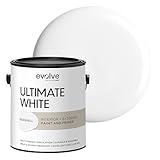
- ALL-IN-ONE PAINT AND PRIMER: Saves time and effort by priming, sealing, and finishing in one step for smooth, efficient coverage
- MULTIPLE SHEENS & SIZES – INTERIOR & EXTERIOR: Ultimate White bright white paint and primer is available in Flat, Eggshell, Satin, and Semi-Gloss sheens for walls, trim, doors, and more. Offered in 1-Gallon and 5-Gallon sizes to suit any interior or exterior painting project.
- EGGSHELL SHEEN – SOFT & DURABLE: Subtle sheen with a smooth finish that balances elegance and durability. Ideal for dining rooms, hallways, family rooms and exterior surfaces. Easy to clean.
- DURABLE & EASY TO CLEAN: Water-based, fast-drying formula delivers a washable finish designed for everyday wear in moisture-prone areas.
- EXCEPTIONAL HIDE & COVERAGE: High-opacity formula delivers brilliant white coverage with fewer coats, even over darker colors.
Kitchen
Paint makes grease cleaning and future touch-ups simpler. Wallpaper can work in a well-ventilated kitchen if it is a suitable wipeable product and the ceiling remains dry, but ordinary paper and absorbent grasscloth create avoidable maintenance risk.
Bedroom, dining room or living room
These are the strongest candidates for a feature ceiling because humidity is often lower and the visual effect can be appreciated. Paint remains the practical default; wallpaper becomes reasonable when the design, smooth substrate and willingness to manage installation justify it.
Recommended Free Tools
Hallway, rental or frequently redecorated room
Choose paint when fast colour changes, inexpensive touch-ups or a future handover matter. Wallpaper’s removal and substrate-repair requirements make frequent changeovers less convenient.
What should you check before deciding?
- Is the ceiling demonstrably dry, with leaks and condensation sources corrected?
- Is it smooth enough that a thin wallcovering will not reveal ridges, joints or repairs?
- Will the room need frequent wiping, and does the chosen material allow it?
- Can you obtain enough wallpaper from a compatible batch for repairs or pattern matching?
- Are you budgeting for paste, sizing or primer, surface levelling, waste and skilled installation rather than material alone?
- Would a future owner or tenant prefer a neutral, easily repainted ceiling?
- Can you provide safe overhead support and keep the room undisturbed while the adhesive dries?
If several answers are uncertain, paint avoids more failure modes. If every answer supports a dry, smooth, design-led installation, wallpaper can turn the ceiling into a deliberate architectural feature.
Frequently Asked Questions
Can wallpaper hide cracks or a textured ceiling?
It should not be used to hide structural cracks, loose material or pronounced texture. Sangetsu notes that wallpaper is generally less than 1 mm thick and cannot conceal substrate unevenness, so repair and level the ceiling first; a pattern may distract from only minor, properly prepared imperfections.
Is vinyl wallpaper waterproof enough for a bathroom ceiling?
Vinyl is more wipeable and durable than ordinary paper, but that does not make the ceiling assembly waterproof. Condensation or a leak can still reach seams, adhesive and the substrate, so ventilation and moisture repairs remain essential and the product instructions control whether the application is allowed.
Should I buy extra wallpaper for a future repair?
Yes, if you choose wallpaper, retain labelled material from the same purchase and keep the pattern direction documented. A later replacement may be difficult to match because colour, texture and repeat alignment are more noticeable than a paint touch-up.
Can I paint over wallpaper when I redecorate?
Sherwin-Williams generally advises against it because seams can remain visible, paint moisture may cause blistering or peeling, and heavy vinyl may provide little adhesion. The dependable changeover is to strip the covering, remove adhesive, repair the substrate and prime before painting.
Quick Recap


