What’s actually slowing this PC down?
Pick the symptom - the matching free tool is one click away.
ThatPainter is reader-supported. When you buy through links on our site, we may earn an affiliate commission. Learn More
The Chicago Architecture Biennial (CAB) is a free public program that uses architecture and design to ask civic questions through exhibitions, installations, performances, talks, films and projects in Chicago. Its strongest work makes those questions visible beyond a gallery, but its temporary format also sets a clear limit: a short-lived installation can create contact and collaboration without repairing the long-term disinvestment that shaped a site.
As an Amazon Associate I earn from qualifying purchases.
The latest edition listed by CAB, the sixth, was SHIFT: Architecture in Times of Radical Change, held from September 19, 2025, through February 28, 2026. That edition has ended. The practical details below distinguish CAB’s continuing mission from the dates, venues and visitor guidance that applied only to SHIFT.
Crashes, No Sound, or Screen Glitches?
Random freezes, missing sound and display glitches usually trace back to one bad driver. Find and replace yours safely.Free scan · under a minuteWindows Errors? Fix Them Before They Spread
Repair common Windows errors and clear accumulated junk for a smoother, more stable PC - no reinstall needed.Free scan · no reinstallWhat is the Chicago Architecture Biennial?
CAB describes itself as a convening platform where participants explore innovative ideas and collectively imagine the future of design. In practice, that means a citywide cultural program rather than one museum exhibition: architects, artists, designers, community groups and audiences meet through built installations, displays, public programs and temporary interventions.
Popular on Amazon

- Great Value Paint Brush Set: Soucolor 20 acrylic paint brushes come in 10 different sizes, making them ideal for fine detailing, model painting, rock painting, nail art, face painting, DIY crafts, and general art projects. The varied brush sizes give you better control for both delicate lines and broader color coverage, while the soft bristles deliver smooth, consistent results on acrylic, oil, watercolor, canvas, wood, ceramic, and more.
- Awesome Set of Paint brushes: Professional paint brushes can cover all of your needs. The multi-purposed brushes are ideal for Watercolor, Oil, Gouache, enamel, Acrylic Painting, Body, Nail, Face Painting, Miniature, Model, Wood, Glass, Cup, Ceramic, Fine work, Art class, Craft Art Painting, DIY Art Crafts etc.
- Soft and long-lasting: The bristles are soft and strong, with nickel metal ferrules and blue wooden handles. After cleaning, the bristles will become soft and fluffy again and will not fall off.
- Easy to clean: it’s very convenient to Wash well in soap and water. Retain shape after drying. the brushes hold up very well. Nice selection to beginners and professionals. Keep them clean and they last a long time.
- Perfect for All Painters & Occasions: Suitable for art beginners, hobbyists and professional artists. Great for art class, home creation, travel painting and DIY handmade projects. A practical art gift for students, teachers, family and craft lovers.
The biennial emerged from Chicago’s 2012 Cultural Plan, which envisioned a platform for the city’s cultural leadership, and launched its inaugural edition in 2015. CAB’s official history reports more than 400 projects from 40 countries and more than 2.2 million visitors across its first five editions. Those totals show the scale of the platform, but they do not by themselves prove that a project changed a neighborhood or produced lasting policy.
Access is a central part of the idea. CAB says its program is free and open to the public, although a particular event, building or guided activity can have its own hours, capacity rules or registration requirements. Always treat the current edition’s visitor page as the authority for logistics.
How does the biennial turn architecture into civic conversation?
The program combines several formats so that architecture is encountered as an argument, a performance, a place to gather and an object to examine. A visitor might move from a conventional exhibition to a film, talk or performance, then encounter a temporary structure in a park or a project developed with people who use a site every day.
Do these 3 things before closing this tab:
1Scan for outdated or missing drivers - takes under a minute2Repair Windows errors before they cause bigger problems3Fix the driver behind crashes, sound loss and screen glitches- Exhibitions: galleries and cultural institutions provide room for drawings, models, installations, research and historical context.
- Public-space projects: outdoor work tests how design behaves when it is exposed to weather, traffic, informal use and people who did not arrive as an art audience.
- Performances, talks and films: these formats let participants debate questions that an object alone cannot resolve.
- Distributed sites: spreading work across the city makes the program feel less like a single fair and more like a set of encounters connected by a theme.
This mix is why CAB can be meaningful even for visitors who do not follow architectural theory. The program gives abstract issues—housing, public investment, climate, migration, technology or political change—a physical setting and a social audience. It also asks visitors to compare the polished language of an exhibition with the uneven conditions of the city outside it.
Where did SHIFT take place?
For the 2025–26 edition, SHIFT: Architecture in Times of Radical Change, CAB presented more than 100 projects by architects, artists and designers from 30 countries. The opening exhibitions were at the Chicago Cultural Center, Graham Foundation, Stony Island Arts Bank and on the grounds of the Griffin Museum of Science and Industry. CAB later added a site at 840 N. Michigan Avenue and an outdoor installation in Millennium Park. You can review the edition’s official overview and participating locations through the SHIFT program page and sites listing.
Also popular on Amazon

- COMPLETE 5-PIECE BRUSH SET FOR EVERY PAINTING TASK — Includes 1 Inch Flat, 1.5 Inch Angle, 2 Inch Flat, 2 Inch Angle Stubby, and 2.5 Inch Angle brush giving you every size professional painters use daily. Get all 5 for less than the price of a single brush from hardware store brands — professional grade performance at a fraction of the cost. Perfect for walls, trim, cabinets, doors, furniture, and detailed cutting-in work on any project.
- ZERO BRISTLE LOSS — GUARANTEED BY PRECISION ADHESIVE BONDING — Every bristle is locked in place with precision-set adhesive that keeps them in the brush — not in your paint job. The coated steel ferrule provides structural support while the adhesive bond ensures clean performance on every stroke. Premium SRT synthetic filaments load more paint and release it evenly for a smooth streak-free finish on walls, ceilings, and trim. Works with latex, oil-based paint, primer, sealer, and wood stain.
- INCLUDES THE ANGLE STUBBY MOST SETS LEAVE OUT — Professional painters know the 2 Inch Angle Stubby is the go-to brush for tight cabinet interiors, window sashes, inside corners, and detailed trim where standard angle brushes are too long. Combined with the 1.5 and 2.5 inch angle sash brushes you have precision cutting-in covered at every scale — baseboards, crown molding, door casings, and ceiling lines.
- FLAT BRUSHES FOR BROAD SMOOTH COVERAGE ON ANY SURFACE — The 1 and 2 inch flat brushes deliver even coverage on walls, furniture, shelving, doors, fences, decks, and wood surfaces. Ideal for applying primers, stains, varnishes, polyurethane, and specialty coatings. Solid wood handles provide all-day comfort and control for both professional contractors and weekend DIY homeowners tackling interior or exterior painting projects.
- TRUSTED BY PROFESSIONAL PAINTERS AND CONTRACTORS NATIONWIDE — Pro Grade delivers professional-grade results at a price that makes sense for crews who go through brushes on every job. Ideal for property managers, remodeling contractors, apartment turnover crews, maintenance teams, and commercial painting operations. Backed by thousands of verified reviews from working painters. Washable and reusable for multiple projects.
Calling this “citywide” is useful only if it remains specific. These venues span different parts of Chicago and different kinds of public institution, but they do not represent every neighborhood. A location list is therefore more informative than a broad claim that the entire city participated.
What does The Available City show about local participation?
The 2021 edition, The Available City, is CAB’s clearest example of taking the question of public space outside established cultural buildings. Marianela D’Aprile’s account in ICON describes projects at 15 vacant lots, developed with community organizations and local participants. The feature places those sites within a city containing more than 10,000 vacant lots—a figure reported in 2021, not a current municipal count.
Do these 3 things before closing this tab:
1Repair Windows errors before they cause bigger problems2Scan for outdated or missing drivers - takes under a minute3Clear out junk files and repair common Windows errorsOne project, Sounding Boards Garden, reused storefront plywood artworks in a site with planters, seating, a performance stage and a memorial area. Reuse mattered here not only as a material choice but as a way to keep an earlier public artwork in circulation while giving a vacant parcel a new social purpose. The result was legible to passers-by: a lot became a place to sit, perform, remember and meet.
That is a documented opportunity for collaboration, not proof of permanent neighborhood transformation. D’Aprile’s article emphasizes the projects’ limited time and physical scale and warns that temporary activation cannot, by itself, repair long-running public disinvestment or substitute for durable public investment. David Brown, the 2021 artistic director, summarized the opening this way: “If the city wants to do more of this, I would welcome the conversation.” The invitation is significant precisely because it leaves the next step unresolved.
For a fuller account of the vacant-lot projects and their constraints, read D’Aprile’s ICON feature on The Available City.
Also popular on Amazon

- 【All sizes of art brushes】: The 10 sizes of multi-functional brushes have various shapes, making the mixing color easier, which is very suitable for artists, students, teenagers, children and painters at all levels. Wonderful Present ideas for friends and family who like painting!
- 【general brush set】: Professional paint brush can meet all your needs. Multifunctional brush is very suitable for watercolor, oil, gouache, acrylic painting, body, nail, face painting, miniature, model, ceramics, arts and crafts painting, etc.
- 【high quality process】: It is designed with anti falling bristles, anti-rust nickel ferrule and solid wood handle. You can use the brush to focus on the painting and always be creative.
- 【easy to maintain】: After using the brush, it is very convenient to clean the brush with warm soapy water and reshape the tip of the brush. Air dry the brush and place it on top of the top for long use.
- 【100% satisfaction guarantee - buy now】1 packs of set brushes, you can also get friendly customer service, any questions feel free to contact us, within 24 hours to help you! There is no risk in buying our paint brush kit.
Is the Chicago Architecture Biennial’s engagement meaningful?
It can be, when the program changes who gets to occupy a site, speak about it or shape what happens there. It is less convincing when “community” is used only as a theme while decisions, resources and visibility remain concentrated in professional or institutional hands.
The Tool Desk
Outbyte PC Repair FREEClear out junk files and repair common Windows errorsFree Scan →Outbyte Driver Updater FREEScan for outdated or missing drivers - takes under a minuteDriver Scan →A useful way to judge a project is to ask four questions:
- What question does the work pose? A clear question—about a vacant lot, a public institution or a changing climate—gives visitors something more substantial than visual novelty.
- Who helped make it? Look for named community organizations, residents, performers, educators or local partners, rather than assuming that a neighborhood location equals participation.
- Where does the work operate? A gallery can support concentrated research; a street, lot or park must negotiate everyday use and competing claims on space.
- What remains afterward? Documentation of an event or installation is not evidence of a lasting institution, policy change, maintenance commitment or new investment.
Using these tests keeps the biennial’s achievements and limits in view. CAB can create access, attention and relationships that would not otherwise occur. It cannot guarantee that a temporary project will survive, that a vacant lot will receive permanent funding or that a single cultural program will solve structural problems.
Why does colour matter in an architecture biennial?
Colour is not merely decoration in this context. Bright surfaces, reused materials, planted areas, lighting and temporary structures help visitors notice a site and understand that an ordinary route has become a place for public exchange. Colour can signal invitation, mark a performance area or make a civic argument visible from a distance.
At its best, visual intensity works with social purpose: a garden offers shade or seating, a stage supports a local event, and a reused surface carries memory as well as pattern. At its weakest, colour can make a difficult condition look solved for the duration of a photograph. The distinction depends on how a project is made, who controls it and what happens when the exhibition closes.
Quick wins for a faster PC:
Fix the driver behind crashes, sound loss and screen glitchesFind Drivers →Clear out junk files and repair common Windows errorsFree Scan →Also popular on Amazon

- 【KIDS PAINT BRUSHES SET】Anezus paint brushes for kids come with 10 pcs paint brushes of 5pcs round paintbrushes and 5 flat paint brushes with colorful handles, good for the young artist to explore their creativity in painting and crafting
- 【HIGH QUALITY PAINT BRUSHES FOR KIDS】These toddler paint brushes made of soft hog bristle, bright colored handles and rust proof ferrules. The bristles are firmly fixed in the kids paint brushes and no shedding. Each children paint brush measure 6 1/4 inches (16cm) in length and ferrules 1/2"(1.3cm) diameter, large enough for the little hand to grip and control
- 【WIDE APPLICATIONS】With combination of round and flat craft paint brushes for kids, work great with washable paint, tempera paint and acrylic paint. Great for arts and craft, rock, leather, gesso and ceramic, or body, nail and face art painting.
- 【EASY TO CLEAN 】After using paint brushes for acrylic, oil or watercolor painting, it’s very convenient to clean them with warm soapy water and reshape the paint brush tips. Keep these craft paint brushes clean and they last a long time.
- 【GREAT GIFT IDEA】Perfect for students, teens, kids, children and painters of all levels. Wonderful gift idea for girls, boys and kids who love painting! These all-purpose paint brushes for kids are ideal for kids' school projects, birthday parties, painting parties, art parties, back to school supplies, classroom decoration and more.
How can you experience the biennial?
Because SHIFT ended on February 28, 2026, its former visitor instructions should not be treated as current event information. CAB’s SHIFT visitor page said most sites were reachable by public transit and directed visitors to Chicago Transit Authority routes, walking and biking options, plus a free Bloomberg Connects guide with maps, tours, videos and visitor information. Those instructions applied to that edition. For a future program, start with the official CAB visit page and confirm dates, opening hours, accessibility, reservations and any site-specific restrictions.
- Check the edition status. Confirm that the program is open and note the closing date before planning a trip.
- Map the sites. Group venues by area rather than assuming every location can be covered in one visit. Include travel time between cultural institutions and outdoor projects.
- Read the project descriptions. Identify which works involve local partners, which are performances with fixed times and which are self-guided installations.
- Verify access details. Check building hours, accessibility information, registration requirements and weather contingencies for outdoor work.
- Allow time for context. Talks, films and performances often explain a project’s civic question more clearly than a quick walk-through.
- Revisit the question of permanence. After seeing a temporary work, look for information about maintenance, transfer, documentation or follow-up rather than assuming the installation will remain.
How do the editions differ?
Comparing editions is more useful than treating the biennial as a single fixed exhibition. The themes change, and so does the balance between institutional displays and work embedded in neighborhoods or public space.
| Edition or program | Documented emphasis | Scale or setting | What it helps you examine |
|---|---|---|---|
| Inaugural edition, 2015 | Launch of the platform envisioned through Chicago’s Cultural Plan | Beginning of CAB’s recurring public program | How a city positions architecture as cultural leadership |
| The Available City, 2021 | Vacant lots, local collaboration and temporary public-space activation | 15 reported lots, including Sounding Boards Garden | What participation can look like outside established venues—and where temporary work stops |
| CAB 5: This is a Rehearsal, 2023 | Documented through a 352-page catalogue | Publication record rather than current event access | How a biennial’s ideas can be revisited after the installations close |
| SHIFT: Architecture in Times of Radical Change, 2025–26 | Architecture responding to radical change | More than 100 projects from 30 countries at multiple Chicago sites | How an international program uses several institutions and public spaces to frame urgent change |
CAB reports cumulative totals of more than 400 projects from 40 countries and over 2.2 million visitors across its first five editions. Those figures describe reach, not a ranking of artistic quality or a measurement of civic outcomes.
What are the practical limits of a temporary cultural intervention?
Temporary work has real advantages: it can be installed quickly, test an idea before a permanent commitment and invite people to use a neglected place in a new way. It can also lower the threshold for experimentation because the project does not have to serve one fixed program forever.
The same temporariness creates risks. A site may lose seating, planting or performance space when the biennial closes. Residents may contribute time without gaining control over future decisions. Attention may concentrate on the most photogenic intervention while less visible maintenance, ownership and funding questions remain unanswered. A responsible reading therefore separates three claims: that a project happened, that people participated and that the project caused lasting change. The supplied documentation supports the first two for the cited examples, not the third.
Also popular on Amazon
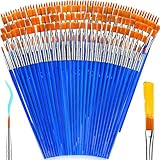
- 【162-Piece Bulk Set | Dual Brush System】Maximize versatility with 81 flat brushes (0.59 inch edge for bold strokes) and 81 round brushes (0.39 inch tips for details) – 3X more tools than standard kits! Pre-sorted in labeled compartments for instant access during painting sessions. Ideal for art classrooms, mural projects, and multi-artist households.
- 【Pro-Grade Durability | Zero Shedding Guarantee】 "Engineered with triple-crimped nylon bristles (43% higher resilience vs. standard) and aerospace aluminum ferrules tested for 10,000+ flex cycles. Lab-verified 0.01% shedding rate even with heavy impasto techniques – outperforms flimsy bristles in budget brushes."
- 【Multi-Scenario Readiness | Event & Daily Use】 Optimized for: Thanksgiving/Christmas face designs classroom projects ceramic decorating fabric printing and model painting; Lightweight plastic handles each reduce hand fatigue during prolonged sessions
- 【Effortless Maintenance | Long-Term Durability】 Clean with warm soapy water in 10 seconds; Reshape tips and air-dry vertically to preserve bristle integrity,After use, air-dry brushes thoroughly and store upright in the provided case to preserve bristle shape. The premium nylon filaments naturally regain their original form after each stroke. For cleaning, simply rinse in warm soapy water and gently reshape bristles with fingertips."
- 【Multiple Application】These acrylic paint brushes can be applied for most occasions,such as:watercolor,oil, gouache paint,face paint, acrylic paint, suitable for Thanks Giving Day, Christimas, Halloween face and body painting, canvas painting, fabric, rock, miniature, model, ceramics, arts and crafts painting, etc.
What can you read after visiting?
The catalogue CAB 5: This is a Rehearsal records the 2023 biennial in a 352-page volume, ISBN 978-1-7367436-3-8, co-published with CAB. The MAS Context listing currently marks it sold out, so availability should be checked before you plan to buy it. It is useful as a record of how a past edition translated projects and arguments into a durable publication, not as evidence that the installations remain accessible.
The official About CAB page is the best source for CAB’s stated mission and history. The CAB home page is the place to look for any later announcement, rather than relying on SHIFT’s archived dates.
How should you think about the biennial’s legacy?
Think of CAB as civic infrastructure for conversation, not a substitute for civic infrastructure itself. Its exhibitions and projects can make architecture public, connect international practices with Chicago sites and give local collaborators a visible platform. The strongest examples also make their own limits clear: they show what a temporary cultural program can open up while leaving questions of ownership, maintenance and long-term investment for the city and its partners to answer.
Frequently Asked Questions
Is the Chicago Architecture Biennial free to attend?
CAB describes the biennial as free and open to the public. Individual events or buildings may still have capacity limits, registration requirements or different opening hours, so check the visitor information for the specific edition.
When is the next Chicago Architecture Biennial?
The latest edition listed in the supplied material is SHIFT, which ran through February 28, 2026. No later dates are established here; use CAB’s official home and About pages for a confirmed announcement rather than inferring a schedule.
Can I still visit SHIFT installations?
SHIFT was a temporary program and its published run has ended. Some host institutions may retain related displays or documentation, but that would be a separate current offering and must be confirmed directly with the venue.
What is the CAB 5 catalogue?
CAB 5: This is a Rehearsal is a 352-page record of the 2023 biennial, ISBN 978-1-7367436-3-8, co-published with CAB. The MAS Context page currently marks it sold out, so check availability before seeking a copy.
What’s actually slowing this PC down?
Pick the symptom - the matching free tool is one click away.
Quick Recap


