Do these 3 things before closing this tab:
1Clear out junk files and repair common Windows errors2Scan for outdated or missing drivers - takes under a minute3Repair Windows errors before they cause bigger problemsThatPainter is reader-supported. When you buy through links on our site, we may earn an affiliate commission. Learn More
For most horizontal deck boards that are in sound condition, choose a quality semi-transparent or penetrating deck stain. It leaves more grain visible, lets the wood move moisture more safely, and is generally better suited to the abrasion and repeated wetting that boards and stair treads receive. Choose exterior paint when you need an opaque color, want to conceal substantial surface defects, or are coating a suitable vertical or low-wear component with a properly prepared substrate and a product rated for that exposure.
As an Amazon Associate I earn from qualifying purchases.
The right answer can change with wood species, pressure treatment, moisture content, previous coatings, exposure, and the product label. Paint is not automatically longer-lasting, and stain is not automatically maintenance-free. The useful decision is whether your surface, appearance goal, and maintenance tolerance match the finish system.
PC Slower Than It Used to Be?
A free scan shows the junk files, broken settings and background clutter dragging Windows down - then fixes them in one click.Free scan · Windows 10 & 11Outdated Drivers Are Slowing You Down
One free scan finds every outdated or missing driver and matches the right update for your exact hardware.Free scan · exact hardware matchWhat is the difference between deck paint and deck stain?
Paint forms an opaque film over the wood. Stain penetrates, or partly penetrates, the surface and leaves more of the wood texture and grain visible. Sherwin-Williams summarizes the distinction this way: “Paint creates a solid coating on top of the surface, while stain soaks into the wood, preserving its natural texture.”
Popular on Amazon

- SEMI TRANSPARENT EXTERIOR WOOD STAIN: Our outdoor wood stain and sealer allows the natural wood grain to show through, highlighting the beauty of your decks, fences and sidings and preserving its natural look.
- ULTIMATE UV PROTECTION DECK SEALER: Shields wood from damaging UV rays, preventing fading & graying. Lasts longer than deck paint for wood decks, siding or fences & is better for the planet because it's water based with less than 50 g/l VOC content.
- WOOD DECK STAIN AND SEALER IN ONE: This outdoor wood protector serves a dual purpose as both a stain and sealer. It adds color to your wood and seals it, designed to penetrate deep into wood pores for maximum protection and longevity.
- BEAUTIFUL WOOD STAIN COLORS: Our semi-transparent wood deck stain comes in stunning colors that dry to a flat and natural-looking finish. Enhance the beauty of your exterior wood with our natural, cedar, light walnut, gray, and dark walnut colors.
- EFFECTIVE ON DAMP WOOD FOR FASTER APPLICATION: Our wood stain sealer works on damp wood, cutting down wait times between cleaning and staining. Once your wood deck is visibly dry, it's ready for staining, speeding up your project.
| Factor | Deck paint | Deck stain |
|---|---|---|
| Appearance | Uniform, opaque color; grain is largely hidden | Clear, toner, or semi-transparent colors that show more grain; solid stain is more opaque |
| How it protects | Creates a continuous film on top of the substrate | Penetrates or partially penetrates, depending on the formula |
| Moisture movement | A film can trap moisture if the system or substrate is unsuitable | Moisture-permeable penetrating products reduce the risk of water being trapped beneath a brittle film |
| Best visual use | Opaque color, coordinated painted elements, or concealing defects | Natural-looking boards where the wood itself is worth showing |
| Preparation burden | Usually more cleaning, priming, and between-coat time | Still needs a clean, dry surface, but often involves fewer coating steps |
| Wear behavior | Can chip, scratch, crack, or peel when the product or preparation is wrong | Usually fades as pigment wears; unsuitable solid or film-forming products can also peel |
| Refreshing | Often requires managing the existing film before recoating | Generally easier to refresh when the previous coat is compatible and sound |
“Stain” is not one performance category. A clear sealer, lightly pigmented toner, semi-transparent stain, and solid-color stain can behave very differently. Read the label for deck use, walking-surface suitability, moisture requirements, coats, and recoat instructions rather than choosing by the word on the front of the can.
Is paint or stain better for deck boards?
For horizontal boards and stair treads, a penetrating or semi-transparent deck stain is generally the safer starting point when the wood is sound. Those areas are repeatedly walked on, abraded by furniture and grit, and wetted by rain or washing. The Southern Forest Products Association says, “At a minimum, a clear water-repellent coating is recommended for decking boards. If you want color, semi-transparent stains are best.”
The USDA Forest Products Laboratory likewise says, “Decks are usually finished with penetrating clears, lightly pigmented clears, or semitransparent stains.” The guidance reflects the surface’s movement and wear, not a rule that every paint product will fail. A paint or solid-color coating can work only when its technical data, preparation system, and exposure rating support a walking deck.
The Tool Desk
Outbyte PC Repair FREEClear out junk files and repair common Windows errorsFree Scan →Outbyte Driver Updater FREEScan for outdated or missing drivers - takes under a minuteDriver Scan →Use a product specifically rated for horizontal decking. Ordinary exterior paint or a solid stain intended for siding may not have the abrasion and moisture performance a deck requires. The Timber Decking & Cladding Association (TDCA) states in its 2022 guidance, “Moisture permeable coatings are highly recommended – penetrating products rather than film forming.”
When should you choose a semi-transparent or penetrating stain?
Choose this category when the boards are reasonably sound, you want grain and texture to remain visible, and you can accept periodic refreshing. It is the best fit for a natural or lightly colored appearance and for a deck where moisture movement is a concern.
Sound wood with a visible-grain goal
Stain works with the wood rather than trying to hide it. Semi-transparent pigment can even out color while retaining a sense of species, board pattern, and texture. Clear and toner products preserve still more grain but generally offer less color change and can require more frequent attention than more heavily pigmented products.
Also popular on Amazon

- PENETRATING OIL-BASED WOOD STAIN – Advanced conditioning oils penetrate deep into wood fibers while drying oils lock in protection, helping prevent cracking, peeling, and premature wood deterioration.
- UV & WATER RESISTANT PROTECTION – Seals and Protects decks, fences, siding, logs, outdoor furniture, docks, and other exterior wood surfaces from sun damage, water intrusion, and weathering.
- EASY TO APPLY & MAINTAIN – Can be applied in direct sunlight and warm temperatures. Maintenance coats typically require cleaning and reapplication without extensive sanding, stripping, or media blasting.
- FOR CEDAR, REDWOOD, PINE & PRESSURE-TREATED WOOD – Ideal for softwood decking, fencing, railings, pergolas, gazebos, wood siding, and exterior wood structures. Select Amber, Mahogany, or Black Walnut for hardwood species such as IPE and Mahogany.
- PROFESSIONAL-GRADE RESULTS – Trusted by wood restoration professionals for long-lasting beauty, rich color retention, water repellency, and a natural-looking finish that enhances wood grain.
Exposed boards that get wet and walked on
Penetrating products avoid relying on a thick surface film to survive every impact. They are not immune to wear, but the failure pattern is often a gradual loss of color rather than large sheets of coating separating from the substrate. Product instructions still control; some stains are decorative products rather than deck-floor finishes.
A maintenance plan that allows refreshing
Stain is easier to renew when the existing finish is compatible and the wood is clean and dry. That convenience does not mean you can skip preparation. Dirt, failed coating, excess moisture, and an incompatible previous product can prevent uniform penetration and leave patchy results.
When does exterior paint make sense on a deck?
Paint is sensible when an opaque, consistent color is more important than visible grain, when the wood has defects you need to conceal, or when you are finishing a suitable vertical or low-wear component. It can coordinate a deck’s rails, fascia, posts, privacy screens, or other painted exterior elements with the house.
Opaque color or design matching
Paint provides the broadest color control and hides the underlying tone of different boards. That is useful when you want a strong color statement or a close visual match to painted trim and siding. A solid-color stain may also look opaque, but it is not interchangeable with paint; its deck rating and film behavior must be verified separately.
Boards with substantial cosmetic defects
Paint can conceal discoloration, uneven tone, and some surface imperfections that a translucent stain would emphasize. It cannot make unsound boards safe. Replace or repair structural or severely deteriorated wood before selecting a finish, and do not use color to disguise a surface that cannot hold a coating.
Free tools Windows power users keep installed
One-click scans. No signup required.
Vertical and low-abrasion components
Vertical parts shed water differently and receive less foot traffic than floors and treads. A suitable exterior coating may therefore be reasonable on those parts even when a penetrating stain is the better choice for walking boards. Keep the product and preparation system consistent with each component’s exposure.
Also popular on Amazon

- NO LAPS, RUNS OR STREAKS: Goof Proof formula with no back brushing required; ideal for exterior wood projects
- OUTSTANDING DURABILITY: No cracking, chipping, flaking or peeling with excellent moisture resistance and UV protection; great for outdoor decks, fences, wood siding and more
- CAN WITHSTAND RAIN WITHIN MINUTES OF APPLICATION: Can also be applied in direct sunlight
- HIGH AND LOW TEMPERATURE APPLICATION: Requires no wet-line application, the product will blend itself and can be applied in any temperature range for proper application
- EASY TO APPLY AND MAINTAIN: Low odor formula may be applied using sprayer, roller or brush onto the wood's surface; no sanding or stripping required for reapplication
What lasts longer, deck paint or stain?
There is no universal winner because durability depends on the wood, exposure, preparation, product, and maintenance. Sherwin-Williams gives a broad figure of 5–10 years for paint and 2–8 years for stain under optimal conditions, while warning that paint can chip or scratch and stain tends to fade. Those are general manufacturer figures, not guarantees for a particular deck.
The TDCA’s 2016 example guidance gives shorter, finish-specific maintenance intervals: about one year for clear sealers, two to three years for translucent stains, and up to five years for solid stains. These are example intervals, not promises. A shaded deck with sound boards and moderate exposure may behave differently from a sunny, wet, heavily trafficked deck.
| Finish example | Published maintenance or life figure | How to interpret it |
|---|---|---|
| Paint | 5–10 years under optimal conditions (Sherwin-Williams; publication year not stated) | A broad potential life range; chipping, scratching, preparation, and exposure determine whether the film reaches it |
| Stain, generally | 2–8 years under optimal conditions (Sherwin-Williams; publication year not stated) | A broad range covering different stain types and conditions; fading is expected as the finish wears |
| Clear sealer | About one year (TDCA, 2016) | Example refresh interval, not a guarantee |
| Translucent stain | Two to three years (TDCA, 2016) | Example refresh interval, not a guarantee |
| Solid stain | Up to five years (TDCA, 2016) | Example upper interval; deck suitability and wear resistance remain essential |
Compare maintenance events, not just the longest number on a label. A finish that fails by gradual fading may be easier to manage than one that leaves contrasting bare patches after localized peeling, particularly when pigmented coatings are neglected.
Can you paint pressure-treated decking?
You can coat pressure-treated decking only after the wood has dried sufficiently and the chosen product’s instructions permit it. Sherwin-Williams advises waiting at least six months before staining new pressure-treated wood. After rain, wait 24–48 hours before application, then confirm the label’s moisture and weather requirements.
Identify whether the boards are treated, how long they have been installed, and whether they are still holding construction moisture. New treated wood that is not ready can prevent stain from penetrating evenly or interfere with adhesion of a film-forming system. Do not assume that a calendar date alone proves readiness; the product instructions and the wood’s actual condition control.
How should wood condition and exposure affect the choice?
Start with the substrate and use, then choose the appearance. This sequence prevents a color preference from forcing an unsuitable coating onto a high-wear surface.
Also popular on Amazon

- 【STAIN & SEAL】- DWIL Outdoor Wood Stain combines staining and sealing in one product. It penetrates deeply into the wood to nourish and protect it from the inside, while adding beautiful bleached gray color. At the same time, it forms a protective seal on the surface to increase durability and help resist everyday wear and tear.
- 【WATERPROOF & UV PROTECTION】- This semi-transparent outdoor deck stain is designed to protect wood from drying and cracking under direct sunlight, helping your deck stay looking new for longer. Its special waterproof formula causes water to bead up on the surface, preventing moisture from soaking into the wood and protecting it from water damage.
- 【FAST DRYING】- DWIL water based wood stain dries quickly and provides strong, even color penetration. It is suitable for all indoor and outdoor wood surfaces, including decks, fences, cabinets, doors, floors, and more.
- 【SAFE TO USE】- Our outdoor stain uses a water-based formula. It has low odor, is non toxic, and easy to use. Safe for users, pets, and the environment!
- 【QUALITY YOU CAN TRUST】- With over 20 years of production experience, we are committed to providing the highest quality products to our customers. If you have any questions or suggestions, our professional customer service team is always ready to assist you.
| Your situation | More defensible starting point | Reason and caution |
|---|---|---|
| Sound horizontal boards; grain is attractive | Semi-transparent or penetrating stain | Preserves grain and is generally better supported for wet, abrasive walking surfaces |
| Opaque color required; boards are suitable and well prepared | Deck-rated paint or a deck-rated solid-color system | Offers color control, but film or solid coatings need stronger preparation and can show wear |
| Significant cosmetic discoloration or minor surface defects | Paint, if the substrate can hold it | Hides more than translucent stain; it does not repair unsound wood |
| Vertical rails, posts, or trim | Paint or stain matched to the component | Lower abrasion can make a suitable exterior paint practical; follow the product’s exposure rating |
| Very wet or moisture-prone location | Moisture-permeable penetrating product | Reduces the chance of trapping water beneath a brittle film; verify the label |
| Existing unknown or failing coating | Do not choose by color alone | Remove or prepare the old finish as the new manufacturer directs; compatibility is product-specific |
How do you prepare a deck before painting or staining?
Preparation determines whether either finish can perform. The exact cleaner, stripper, drying time, primer, coats, and recoat window belong to the product label, but the decision sequence is consistent.
What’s actually slowing this PC down?
Pick the symptom - the matching free tool is one click away.
- Identify the substrate. Record the wood species, whether it is pressure-treated, whether the surface is horizontal or vertical, and what finish is already present. A system suitable for rails may not be suitable for walking boards.
- Assess the existing coating. Look for intact, chalking, peeling, cracked, or bare areas. A failing film must be removed or otherwise prepared according to the new product manufacturer’s instructions; do not assume a stain can simply be painted over.
- Clean the wood. Use the cleaner or stripper specified as compatible with the finish you selected. Remove dirt and failed material, and avoid leaving residue that can block penetration or weaken adhesion.
- Allow the substrate to dry. Pressure-treated wood needs the drying period specified for the product; Sherwin-Williams advises at least six months before staining new treated wood. After rain, allow 24–48 hours, then follow the label’s moisture limit.
- Choose a deck-rated product. Confirm that it is intended for horizontal decking or the particular vertical component. Check abrasion, moisture, temperature, coat, and recoat requirements before buying.
- Plan the finish schedule. Decide how often you can refresh the surface and what failure pattern you can tolerate. Neglected pigmented coatings can create stark differences between protected and worn areas.
- Apply only within label conditions. Respect the stated temperature, moisture, coat thickness, drying, and recoat instructions. A product that is suitable in principle can still fail when applied outside those limits.
Preparation is especially important when changing systems. The old coating may be compatible with one product and incompatible with another, so the new manufacturer’s instructions—not a generic “paint over stain” rule—determine whether stripping, sanding, priming, or another treatment is required.
Can you put paint over old deck stain?
Sometimes, but never blindly. Compatibility depends on the specific old stain, the new paint, the condition of the film, and the substrate. Remove failing finish and prepare any remaining coating exactly as the new product manufacturer directs.
A sound, compatible surface still needs cleaning and drying before coating. If the old stain is peeling, cracked, contaminated, or unknown, painting over it can lock the failure into the new system. A test area approved by the product instructions may reveal adhesion or color problems before the whole deck is committed, but the label’s requirements remain decisive.
Independent reader supportYour contribution helps us test, update, and keep practical guides available for everyone.How should you apply and refresh each finish?
Stain
Apply stain only to the clean, dry surface and within the label’s weather and moisture limits. Work with the product’s stated coat and recoat schedule, and keep the appearance goal in mind: a semi-transparent product will reveal variations that paint would cover. When the finish begins to fade, a compatible refresh is usually simpler than rebuilding a failing film, but the surface still has to be cleaned and any loose material removed.
Paint
Paint generally demands more preparation, including the cleaning, priming, and between-coat timing required by the system. Use a product rated for the specific deck component and exposure. Inspect high-traffic boards and treads for chips, scratches, cracks, or peeling rather than waiting for a large failure; localized repairs may otherwise leave visible differences between new and worn film.
Also popular on Amazon
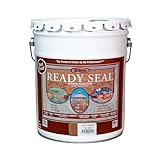
- NO LAPS, RUNS OR STREAKS: Goof Proof formula with no back brushing required; ideal for exterior wood projects
- OUTSTANDING DURABILITY: No cracking, chipping, flaking or peeling with excellent moisture resistance and UV protection; great for outdoor decks, fences, wood siding and more
- CAN WITHSTAND RAIN WITHIN MINUTES OF APPLICATION: Can also be applied in direct sunlight
- HIGH AND LOW TEMPERATURE APPLICATION: Requires no wet-line application, the product will blend itself and can be applied in any temperature range for proper application
- EASY TO APPLY AND MAINTAIN: Low odor formula may be applied using sprayer, roller or brush onto the wood's surface; no sanding or stripping required for reapplication
Solid-color stain
Solid-color stain occupies a middle visual position because it can look opaque while remaining a stain product. It deserves the same caution as paint on walking surfaces. Southern Pine warns that solid products show wear on frequently used pathways, and the USDA warns that solid-color stains not formulated for decks can peel.
What common failures should you expect, and how do you correct them?
- Peeling or flaking film: Treat it as a preparation or compatibility problem until the product instructions establish otherwise. Remove failing material, clean, dry, and rebuild the approved system rather than burying loose coating.
- Chips and scratches on painted boards: Foot traffic and furniture can damage an opaque film. Repair according to the paint system’s instructions and reassess whether a penetrating deck product is more appropriate for the walking surface.
- Rapid fading: Fading is a normal way many stains show wear. Confirm that the product is suitable for the exposure, then refresh after cleaning and drying when the label allows it.
- Uneven or blotchy color: Moisture, dirt, residual stripper, an incompletely removed prior finish, or uneven penetration can all contribute. Correct the substrate first; adding another coat without resolving the cause can make contrast worse.
- Trapped moisture beneath a brittle coating: On moisture-prone decking, a film-forming system can be a poor match. Consider a moisture-permeable penetrating product that is rated for the surface, subject to the manufacturer’s instructions.
- Bare patches after neglect: Pigmented coatings can leave obvious differences between worn and protected areas. Set a maintenance reminder based on the product’s guidance instead of waiting for widespread failure.
- Wear on stairs and pathways: These areas receive concentrated abrasion. Avoid ordinary paint or solid-color products that are not formulated for decks, and choose a system whose instructions address walking surfaces.
What is the practical decision rule?
Use this order of questions:
- What surface are you coating? Treat horizontal boards and stair treads as high-wear surfaces; separate them from rails, posts, and other vertical parts.
- Is the wood sound and worth showing? If yes, start with a penetrating or semi-transparent stain. If defects need hiding, evaluate paint only after confirming the substrate can support it.
- How opaque must the color be? Choose stain for visible grain and paint or an approved solid-color system for an opaque appearance.
- How much moisture movement is expected? Favor a moisture-permeable penetrating product where wetting is frequent, and avoid assuming a film is suitable simply because it is labeled exterior.
- How much preparation and maintenance can you provide? Paint typically asks more at the start; stain usually asks for periodic refreshing. Pick the failure pattern you can manage.
- What does the label permit? Product instructions override general guidance for wood species, pressure treatment, existing coatings, temperature, moisture, coats, and recoat timing.
For most sound deck floors, that process leads to a semi-transparent or penetrating stain. For an opaque design, substantial cosmetic concealment, or an appropriate vertical component, it can lead to paint. The decisive factors are use, substrate, moisture, and maintenance—not color alone.
Frequently Asked Questions
Is exterior acrylic latex paint suitable for every deck?
No. It is a conditional option for suitable, properly prepared exterior wood, not a universal recommendation for horizontal deck boards. Confirm that the exact product is rated for the component and exposure, especially where foot traffic and repeated wetting are severe.
What supplies are useful for a semi-transparent deck-stain project?
A deck cleaner compatible with the finish, synthetic-bristle brushes, rollers where the label permits them, sanding sponges or other preparation tools specified by the manufacturer, gloves, and drop cloths are common supporting items. The coating itself should be identified as a semi-transparent deck stain for decks rather than a general exterior stain.
Is solid-color stain the same thing as deck paint?
No. Solid-color stain can look opaque but remains a different product category with its own formulation and limits. Some solid stains are suitable for decks, while products not formulated for decking can peel, and heavily trafficked paths can show wear.
Why can two decks using the same finish need different maintenance schedules?
Sun, rain, foot traffic, wood condition, moisture content, prior coatings, and the exact product all change how a finish wears. Published intervals are examples or optimal-condition ranges, so the deck’s exposure and the label’s inspection guidance matter more than a single calendar promise.
Should I choose the same finish for deck boards and railings?
Not necessarily. Boards and stair treads endure concentrated abrasion, while rails and other vertical parts have different exposure and wear. A stain may be preferable on the floor even when a compatible exterior paint is chosen for a vertical element.
Quick Recap


