Do these 3 things before closing this tab:
Quick wins for a faster PC:
Fix the driver behind crashes, sound loss and screen glitchesFind Drivers →Clear out junk files and repair common Windows errorsFree Scan →Scan for outdated or missing drivers - takes under a minuteDriver Scan →1Clear out junk files and repair common Windows errors2Fix the driver behind crashes, sound loss and screen glitches3Repair Windows errors before they cause bigger problems
ThatPainter is reader-supported. When you buy through links on our site, we may earn an affiliate commission. Learn More
The best free quilt-as-you-go (QAYG) patterns are not all built the same way. Some have you sew and quilt fabric strips directly onto batting and backing; others quilt individual blocks and join them with sashing, cover strips, or a no-sashing seam. That difference determines whether you need hand sewing, how much bulk reaches your sewing machine, and how difficult the finished quilt will be to align.
This guide separates complete projects from block tutorials, video lessons, and QAYG-adjacent patterns. It includes genuinely free projects for jelly rolls, scraps, denim, plush fabric, charm squares, and ordinary quilting cotton, with the finished size, construction method, format, and likely finishing work explained before you choose.
As an Amazon Associate I earn from qualifying purchases.
The Tool Desk
Outbyte PC Repair FREERepair Windows errors before they cause bigger problemsFix Now →Outbyte Driver Updater FREEScan for outdated or missing drivers - takes under a minuteDriver Scan →Free Quilt-As-You-Go Patterns
Link and availability audit: August 10, 2026.
Best free QAYG patterns at a glance
Use this table to choose by construction method rather than by appearance alone. A project described as a free pattern may actually be a downloadable PDF, a written tutorial, a video, or only a block lesson, so the format is identified for every recommendation.
| Project | Finished size | Best for | QAYG construction | Free format | Hand sewing and machine notes |
|---|---|---|---|---|---|
| Pattern Poole String Quilt | Varies by project plan | A first full quilt; video learners | One repeating stitch-and-flip string block; blocks are joined with cover strips | Free project guide and video | The accompanying video includes a fully machine-sewn cover-strip method |
| QAYG Strip Quilt by Sew Can She | About 45 × 50 in. | Jelly rolls, beginners, reversible quilts | Each front and back strip is quilted to batting before the next strip is added | Free written tutorial with embedded videos | Manageable on a domestic machine; follow the creator’s video for the finishing details |
| Jelly Roll Rail Fence QAYG Quilt | About 52½ × 63 in.; smaller option about 41½ × 62 in. | A larger jelly-roll quilt | Five jelly-roll lengths are sewn to each quilted 10½-in. block; 30 blocks form six rows of five | Free PDF | Uses separate front and back joining strips; the front strip is slipstitched over the seam |
| QAYG Denim and Scraps Quilt | About 62½ × 75 in. | Old jeans, scraps, and improv piecing | Quarter-blocks become 30 wonky-diamond blocks, which are arranged in rows before the false back is added | Free written tutorial with video support | A walking foot is strongly recommended; final backing work may still require feeding the completed quilt through the machine |
| QAYG Table Mat | 15-in. square | The safest first QAYG project | Strips are sewn through the top, batting, and backing as they are added | Free pattern page with instructions | Trim the unit and bind it with four 2½ × 21-in. strips |
| QAYG Place Mat | 18 × 12 in. | A quick practice project or matching set | Nine strips are added one at a time to a batting-and-backing foundation | Free pattern page | A walking foot is recommended to reduce puckering |
| Charming Floral Table Runner | 14 × 30 in. | Charm-square users | Three rows of three charm squares are quilted through batting and backing as strips and rows are added | Free pattern page | Uses nine 5-in. squares and 2½-in. strips |
| Summertime Watermelon Table Runner | 11 × 28 in. | Novelty sewing and video learners | Red strips are sewn from the center outward onto a shaped batting-and-backing foundation | Free downloadable instructions and video | Trim to the watermelon shape; piping, binding, and buttons add finishing work |
| Flip & Sew Carrot Table Runner | 13 × 32¼ in. including stem | Seasonal décor and shape-based practice | Orange strips are sewn through batting and backing, then trimmed to shape | Free pattern page | The stem uses fusible web, stabilizer, pleats, and topstitching |
| Pineapple Chunks | About 10¼ × 14 in. plus leaves | A small novelty topper | Flying Geese rows are pieced first and then added QAYG-style to batting and backing | Free pattern page | Leaves require fusible web and appliqué-style finishing |
| Wrapped Up Plush Throw | 45 × 57 in. | Cuddle or plush fabric | Plush strips are sewn through batting and backing with a stitch-and-flip method | Free pattern page | Uses a size 90/14 needle, washable basting spray, and an even-feed foot |
| All Aflutter | 52½ × 20½ in. | An advanced wall quilt or bargello-style project | Strip-set tubes are cut into bands and sewn as QAYG rows onto batting and backing | Free pattern page | Use a 1.5–2.0 mm stitch length when joining narrow strip sets to help prevent raveling |
What quilt-as-you-go actually means
Quilt-as-you-go is a family of construction methods in which quilting happens on small blocks, strips, rows, or sections during construction instead of waiting until the entire quilt top has been assembled into one large sandwich.
#1 Best Overall
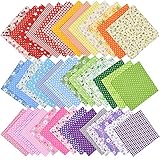
- 42 pieces 9.8 inches x9.8 inches (25cm x 25cm), fabric patchwork in 6 different color series, 7 pieces in each color, the sufficient quantity and bright colors will meet your various sewing needs in daily life,
- Material: 100% High Quality Cotton which is sweat and absorb moisture, environmentally friendly, soft, soft and breathable and it is safe for our health, suitable for all seasons. Color is Red/Pink/Yellow/Green/Blue/Purple.
- Vivid pattern design: we provide you 42 different floral patterns on patchwork bundles, which allow you to choose and mix them to decorate different fabric, the patterns are colorful and elegant, will enhance the whole effect.
- the set of quilting squares are easy to sew on. The precut squares are convenient for you to make various crafts or small quilting projects.
- Wide range of uses: Suitable for bag, wallet, purse, baby clothes, quilting patchwork, kids bedding, quilts, costumes, hand puppets, face masks, tablecloths, decorations, doll dresses, tissue holders, patchwork quilts for presents, quilt blocks, pillow covers, cushion covers and any DIY sewing craft projects.
That definition includes several different workflows:
- Piecing directly onto batting and backing, quilting each new addition as it is sewn.
- Quilting individual blocks or sections and joining them afterward.
- Using front and back sashing, cover strips, or joining strips to connect finished units.
- Joining blocks edge to edge with a no-sashing technique.
- Making individually finished units, such as self-bound potholder blocks or hexagons.
Some strip-based QAYG projects are nearly finished once the last strip is quilted and the outside edge is bound. Block-based methods are different: they move the difficult part from handling a large quilt sandwich to squaring blocks, joining batting, aligning seams, and finishing backing joins. American Patchwork & Quilting describes QAYG as combining piecing and quilting so that binding is the primary remaining step, but that description does not cover every block-by-block method. See its QAYG pattern collection for the broader range of projects.
What’s actually slowing this PC down?
Pick the symptom - the matching free tool is one click away.
Which free QAYG pattern should you choose?
Best first project: QAYG Table Mat
The 15-in. QAYG Table Mat demonstrates the classic method without requiring a full-size quilt. It uses five fat quarters, a 16-in. backing square, and a 16-in. batting square. A 3-in. center square is surrounded by strips sewn through all three layers. Once the unit is quilted, trim it and bind the edge.
This is a good choice if you want to learn how the layers feed through your domestic machine before committing to a throw quilt.
Best full quilt with a video: Pattern Poole String Quilt
Pattern Poole’s String Quilt is a strong choice for a beginner who wants a complete project rather than a demonstration block. It uses one repeating string block and stitch-and-flip construction. The free project guide is paired with a full-length video, and the creator explains how to join the blocks with cover strips. The video includes a machine-sewn joining approach, making it particularly useful for quilters trying to avoid hand finishing.
Best for jelly rolls: Sew Can She Strip Quilt
The Sew Can She QAYG Strip Quilt finishes at approximately 45 × 50 inches in the example shown. It calls for 24 front center strips, 24 back center strips, five front border strips, five back border strips, and five binding strips, generally cut 2½ × 42 inches. Batting can be cut into 2¼-in. strips, substituted with batting scraps, or taken from approximately 1½ yards of 60-in.-wide batting.
Windows Errors? Fix Them Before They Spread
Repair common Windows errors and clear accumulated junk for a smoother, more stable PC - no reinstall needed.Free scan · no reinstallOutdated Drivers Are Slowing You Down
One free scan finds every outdated or missing driver and matches the right update for your exact hardware.Free scan · exact hardware matchEach fabric strip is paired with a backing strip and batting, then quilted before the next strip is added. It is practical on a domestic machine and can produce a reversible quilt, but there are many long seams, so accurate cutting and pressing matter.
Best larger traditional quilt: Jelly Roll Rail Fence
The free Jelly Roll Rail Fence QAYG PDF, originally designed by Fiona Law of The Cotton Reel and published in Popular Patchwork, makes a quilt approximately 52½ × 63 inches. The materials include one jelly roll, 30 batting squares, 30 backing squares, and separate front and back joining strips.
Each 10½-in. quilted block receives five jelly-roll lengths. The 30 blocks are joined into six rows of five. A smaller version uses six rows of four blocks and finishes at approximately 41½ × 62 inches. This design involves more cutting and joining-strip work than a simple strip quilt, but its quantities and assembly sequence are unusually explicit.
Best for denim and scraps: QAYG Denim and Scraps Quilt
If your priority is using old jeans, see the two-part Scrap Fabric Love denim QAYG tutorial. The example finishes at about 62½ × 75 inches. One hundred twenty quarter-blocks become 30 full wonky-diamond blocks arranged in six rows of five. The creator estimates approximately 10–15 pairs of jeans, although the actual amount depends on jean size and the usable shape of each leg.
Recommended Free Tools
There is an important qualification: this version uses a preferred false-back method. The top and batting are joined first, and the backing is added afterward. That means the completed quilt may still need to pass through the machine throat for the final quilting. It is therefore useful for reducing the bulk during block quilting, but not necessarily for avoiding a large quilt sandwich altogether. A walking foot is strongly recommended, and a denim needle may help depending on your machine.
Best no-sashing options
For edge-to-edge patchwork where visible sashing would interrupt the design, compare Pattern Poole’s no-sashing Island Home method and Teresa DownUnder’s no-sashing video tutorial. Pattern Poole uses continuous straight-line quilting and recommends a walking foot. Teresa DownUnder demonstrates a method that can be adapted to individual blocks, strips, halves, or quarters of a quilt.
Rank #2
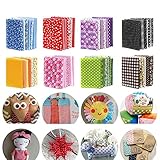
- Size:4 inch x 4 inch(10cm x 10cm) pre-cut squares.
- Material:100% cotton fabric,soft,comfortable and breathable.
- Style:150 pieces totally,more than 50 different random patterns printed in various colors and designs.
- Easy to tinker,ideal for many crafts and sewing DIY crafts,dresses of the dolls.
- Cotton fabric:Perfect for forms,costumes,decorating and school projects,suitable for quilts,pillow cases,small bags,toys,coin bags,tablecloths,really an endless list of possibilities.
No-sashing QAYG can look cleaner, but it is not automatically easier. The blocks must be accurately squared, batting edges must meet without overlapping, and the backing join often needs hand sewing or careful fusible tape work.
Best small gifts and table projects
- QAYG Place Mat: An 18 × 12-in. project using nine 2½ × 14-in. top strips, a 14 × 20-in. batting piece, a 14 × 20-in. backing piece, and binding. Each strip is sewn through all layers and finger-pressed open before the next one is added.
- Charming Floral Table Runner: A 14 × 30-in. runner for nine 5-in. charm squares, 2½-in. strips, and 20 × 38-in. batting and backing. The squares are arranged in three rows of three, with strips and rows quilted through the foundation in both directions.
- Summertime Watermelon Table Runner: An 11 × 28-in. novelty project with a center-out strip technique. The instructions also suggest a lemon-and-lime color alternative.
- Flip & Sew Carrot Table Runner: A 13 × 32¼-in. runner including the stem. For year-round use, the same method can be trimmed into a 13 × 26-in. rectangular topper.
- Pineapple Chunks: A small 10¼ × 14-in. topper, plus leaves, using QAYG after the Flying Geese rows are pieced.
Best for plush fabric: Wrapped Up
Wrapped Up is a 45 × 57-in. plush throw made with a stitch-and-flip QAYG method. The fabric is warmer and less cooperative than ordinary quilting cotton: stretch, nap, and shifting layers can all create problems. The instructions specify a size 90/14 needle, washable basting spray, and an even-feed foot. Keep the nap pointing consistently in one direction and test the combination of fabric, batting, needle, and thread on a scrap first.
Best advanced wall quilt: All Aflutter
All Aflutter finishes at 52½ × 20½ inches. It uses strip-set tubes cut into bands and sewn onto a batting-and-backing foundation as QAYG rows. Fussy-cut butterfly appliqués are added after the quilted unit is bound. It is better suited to an experienced quilter because the strip sets, narrow joins, and later appliqué require precision. The instructions recommend a shorter 1.5–2.0 mm stitch length when joining narrow strip sets to limit raveling during handling.
Six QAYG construction methods
| Method | How it works | Advantages | Trade-offs | Best use |
|---|---|---|---|---|
| Strip-based flip-and-sew | Strips are added and quilted directly through top, batting, and backing | Simple, compact, and often nearly complete after the last strip | Long seams can ripple; mistakes become harder to correct after quilting begins | Placemats, runners, string quilts, jelly-roll quilts |
| Block-by-block with sashing | Blocks are quilted separately and connected with front and back strips | Small units are easy to quilt; sashing hides slight edge inconsistencies | Visible sashing changes the design; some joining strips require hand stitching | Samplers, throws, blocks made over time |
| No-sashing | Quilted sections are sewn edge to edge; batting and backing are joined separately | Preserves a continuous patchwork appearance | Requires accurate squaring and careful batting/backing joins | Edge-to-edge patchwork |
| False back | Top and batting are quilted and joined first; backing is attached afterward | Can keep the back uninterrupted and lets blocks be quilted close to the edge | The finished quilt may still need to go through the machine throat | Small quilts or machines that can handle the final stitching |
| Self-binding or potholder | Backing extends beyond the top and batting, then folds over to bind or join the unit | Each block can be completely finished by itself | Accurate cutting is essential; folded edges become bulky with thick fabric | Small gifts, mats, potholders, individually finished blocks |
| Hexagon QAYG | Individual hexagonal top, batting, and backing units are finished and then joined | Portable, modular, and suitable for hand embellishment | Joining is often hand work; templates and specialized patterns may not be free | Small units, portable projects, decorative quilts |
1. Strip-based flip-and-sew QAYG
This is the most accessible method for many beginners. The foundation stays relatively small while each new strip is quilted immediately.
- Cut the backing and batting to the required foundation size.
- Place the backing wrong side up and lay the batting on top.
- Position the first top strip right side up.
- Place the next strip right side down over the first strip.
- Sew the seam through the top fabrics, batting, and backing.
- Flip the new strip open and finger-press or press it flat.
- Continue adding strips until the foundation is covered.
- Trim the quilted unit to the specified size.
- Bind the outside edge.
The AllPeopleQuilt place mat instructions use this exact basic sequence. Keep the strip edges aligned, avoid pulling the fabric through the machine, and smooth all three layers before every seam.
2. Quilt individual blocks and join them with sashing
- Piece each block.
- Layer each block with batting and backing.
- Quilt the blocks individually.
- Measure and square every block to a common size.
- Arrange the blocks and label their positions.
- Join blocks with front and back sashing or joining strips.
- Join completed rows using the same method.
- Finish the outside edge with binding.
Geta’s Quilting Studio tutorial recommends measuring the smallest quilted block first and trimming all other blocks to match. Heavy quilting can distort a block, cut off points, or consume the ¼-in. seam allowance needed for joining, so do not assume that blocks cut to the same size will still match after quilting.
In Geta’s example for 15-in. quilted blocks, the front joining strip is 1⅛ inches wide and the back strip is 1¾ inches wide and folded lengthwise. The seam is ¼ inch, and the back strip is finished by slipstitching it over the join. These measurements belong to that specific method and block size; they are not universal QAYG dimensions.
3. No-sashing QAYG
A no-sashing method is useful when blocks should appear to touch directly. The cleaner appearance comes with less tolerance for error.
A written St. James handout gives this general sequence:
- Plan the quilt in sections rather than assembling the entire top first.
- Cut backing approximately 2 inches larger than the finished section.
- Cut batting to the unfinished section size.
- Label each section by row and block position.
- Quilt each section, stopping approximately 1 inch from the edge.
- Sew two top pieces together with a ¼-in. seam.
- Trim the batting so the edges meet rather than overlap.
- Join the batting with fusible batting tape or hand stitching.
- Trim the backing to leave approximately ¾–1 inch of seam allowance.
- Fold the backing over the join and hand sew it down, or use fusible tape and quilt through the seam.
- Add quilting across the join from the front.
Stopping the quilting short of the edge is important: the unquilted margin provides room for joining. Three- and four-way intersections are more difficult than straight joins, so practice the method on two small sections first.
4. False-back QAYG
False-back QAYG quilts the top and batting first, joins those units, and adds the backing afterward. In Scrap Fabric Love’s comparison of QAYG methods, the process is:
- Quilt each block or section with its top and batting, leaving out the final backing.
- Join the quilted blocks right sides together with a ¼-in. seam.
- Press the seams.
- Add backing across the completed quilt.
- Stitch in the ditch or otherwise quilt the backing to the top and batting.
The advantage is a neat, uninterrupted back and quilting close to the block edges. The disadvantage is decisive for many QAYG users: the completed quilt can still need to be pushed through the sewing machine’s throat. Avoid this method for a large bed quilt if your main reason for choosing QAYG is to avoid machine bulk.
Rank #3

- Pre-Cut Consistency:Each piece is a 10×10-inch precut fabric square (with a tolerance of 0.2 inches). These blue fabric squares serve as quilt squares, charm pack fabric, and layer cake fabric all at once; they’re ideal for quilt kits with fabric and pattern, and their uniform size supports seamless assembly whether you're using them as blue fabric scraps, quilting fabric, or authentic cotton fabric — including gingham fabric prints and other vintage fabric–inspired motifs.
- Cohesive Blue Palette:The full set features 25 distinct patterns — all rooted in a harmonious blue color family. This makes the blue fabric scraps exceptionally versatile: perfect as quilting fabric for modern projects or nostalgic pieces, as blue fabric squares for scrappy quilts, or as curated elements within precut quilt kits — with gingham fabric variations and tonal textures reinforcing both contemporary and vintage fabric aesthetics — all on premium cotton fabric.
- Quilting & Craft:Designed for real-world use, these quilt squares simplify every stage — from piecing to binding. As quilting fabric, they offer the trusted hand-feel and stability of natural cotton fabric; as precut fabric squares, they eliminate measuring and cutting; and as blue fabric scraps, they lend themselves beautifully to patchwork, doll clothes, pillows, and holiday decor — whether used alone or combined in quilt kits with fabric and pattern.
- Authentic Cotton Fabric Performance:Made from cotton fabric, This makes them suitable as layer cake fabric units, charm pack fabric selections, or blue fabric squares for intricate applique, gingham fabric–based designs, or vintage fabric–themed accessories — all while maintaining true cotton fabric integrity.
- Endless Creative Applications:In addition to traditional quilting, these blue fabric squares open doors to bags, home decor, toys, and more. Their blue fabric scraps nature invites mixing and matching; their precut quilt kits compatibility supports structured learning or group projects; and the inclusion of gingham fabric patterns, tonal prints, and vintage fabric–style motifs ensures relevance across skill levels — all built on the trusted foundation of cotton fabric.
5. Self-binding or potholder QAYG
In a self-binding method, the backing is cut 1–2 inches wider than the top and batting. After quilting, the excess backing folds around the edge to bind the unit or connect it to the next unit. This is useful for small gifts and individually finished blocks, but accuracy matters. Thick batting, denim, or plush fabric can make the folded edges bulky, and the back may not look as continuous as it would with a conventional backing.
6. Hexagon QAYG
Hexagon QAYG generally uses matching top, batting, and backing shapes. The backing is folded around the edges, each unit is quilted or embellished, and the finished hexagons are joined by hand or machine.
Missouri Star’s hexagon tutorial is free to view, but its dedicated 2½-in. template and related commercial pattern are sold separately; see the template listing. It should therefore be labeled as a free tutorial with paid specialty supplies, not as a completely free downloadable hexagon pattern.
Free QAYG block tutorials: useful, but not complete quilt patterns
A block tutorial can teach the QAYG construction without explaining how to assemble a full quilt. Check the scope before cutting fabric.
Pattern Poole QAYG-along blocks
Pattern Poole’s free tulip block tutorial explains that the blocks can be joined with the creator’s cover-strip methods or with a joining-strip method, provided the batting is cut appropriately. The same QAYG-along includes free flying-geese, string, and other block lessons.
The crazy-patchwork flower block describes a 36-block lap-quilt concept, but it remains a block tutorial rather than a complete standalone quilt pattern. Use it when you want to design your own layout or sampler.
Scottish Thistle QAYG Block
The Scottish Thistle QAYG Block is suitable for a decorative block, pillow, bag, or sampler. Fabric pieces are quilted directly onto batting and backing in a defined order. The creator explicitly does not provide a personally tested method for joining the blocks into a large quilt, so treat it as a free QAYG block tutorial—not a complete quilt pattern.
Choose a method by your actual priority
| Your priority | Most suitable approach | What to watch for |
|---|---|---|
| Avoid a large quilt sandwich entirely | Strip-based QAYG or block-by-block joining | Block methods still require careful joining and may require hand work |
| Keep patchwork edge to edge | No-sashing QAYG | Accurate squaring and batting/backing joins are essential |
| Add a design accent between blocks | Front sashing or cover strips | Sashing changes the finished dimensions and visual design |
| Have a clean continuous backing | False-back construction | The final quilting may still involve the full quilt |
| Use scraps or improvise | String blocks, strip QAYG, or denim blocks | Scraps vary in grain and thickness; trim often |
| Use a jelly roll | Sew Can She Strip Quilt or Jelly Roll Rail Fence | Long seams and joining strips need consistent pressing |
| Make a first project | Table Mat or Place Mat | Use thin batting and practice feeding the layers evenly |
| Avoid hand sewing | A strip method or Pattern Poole’s machine-sewn cover-strip approach | Many bindings and joining methods still include hand-finishing options |
| Use plush fabric | Wrapped Up stitch-and-flip method | Control nap and stretch; use an even-feed foot and the specified needle |
| Use denim | A block method with a walking foot | Seam intersections can become too thick for a domestic machine |
Supplies and machine setup
Walking or even-feed foot
A walking foot helps the top, batting, and backing move through the machine at a similar rate. It is repeatedly recommended for QAYG: the AllPeopleQuilt place mat instructions recommend one to reduce puckering, and Pattern Poole recommends one for continuous straight-line quilting.
A walking foot is strongly recommended, not a universal technical requirement. Test your machine and layers on a sample. If the underside develops tucks or the top fabric creeps, stop and switch to a walking or dual-feed foot rather than trying to correct the whole project later.
Batting
- Thin or lightweight batting is generally easier to quilt and join.
- Fusible batting can help hold sections in place, although nonfusible batting works with additional basting or pinning.
- The St. James handout notes that any batting can work and that fusible batting makes positioning easier.
- For denim or plush, avoid adding unnecessary thickness. Thick batting combined with heavy fabric creates bulky joins and may exceed the machine’s comfortable capacity.
Backing
Use a non-directional backing for your first block-based project. Directional fabric can easily end up upside down or twisted when blocks are rotated or joined. Reversible QAYG intentionally uses different front and back fabrics; the Sew Can She strip quilt uses coordinated strip-based designs on both sides.
What’s actually slowing this PC down?
Pick the symptom - the matching free tool is one click away.
Needles, thread, and basting
- For plush or stretch fabric, the Wrapped Up instructions specify a size 90/14 needle.
- For denim, a denim needle may help, but the appropriate choice depends on your machine and the number of layers at each seam.
- Use a thread weight and stitch length appropriate to the fabric. Dense quilting can distort small blocks.
- Use washable basting spray, pins, or additional temporary basting when layers shift. Follow the pattern’s instructions if it specifies a particular product.
- Keep a rotary cutter, ruler, and square-up ruler available. QAYG block edges often need trimming after quilting.
Marking and labeling
Mark foundation centers and placement lines before sewing. For block quilts, label every unit by row and column before quilting. A system such as 1-1 for row one, block one prevents a directional backing or carefully arranged design from being reversed. The St. James handout specifically recommends this kind of labeling.
Independent reader supportYour contribution helps us test, update, and keep practical guides available for everyone.How to join quilted blocks without guessing
Before joining
- Lay every finished block on a design wall or clean floor in its final arrangement.
- Photograph the layout.
- Check the direction of the front and backing fabric.
- Label a consistent corner on every block.
- Measure the smallest quilted block.
- Square the remaining blocks to that size only if doing so will not remove important points, appliqué, or the seam allowance.
Scrap Fabric Love recommends checking the layout before joining, while Geta’s method emphasizes measuring the smallest block because quilting can change the dimensions.
Rank #4

- Pre-cut quilting fabric were made of 100% cotton with a sateen weave.200-thread count
- Cotton fabric squares :10 by 10 inch (25.4cm x 25.4cm) . 50PCS,50 different Patterns. 1 pieces of each pattern
- These quilting squares are ideal for many sewing projects .Fabric bundles are perfect for sewing face mask,potholders,cushion covers, costumes, wallets, purses, baby clothes, kids’ bedding, hand puppets, tablecloths and more.
- Each piece of fabric is very beautiful, and colorful crafts can be made. The incision is clean and even. This sewing material will be very suitable for durable patchwork quilts or other crafts. Easy to handle, cut and glue.
- It is a very good choice for quilting beginners. Little girls will like this pre-cut fabric square very much.Don't be offended if there are half pieces, it's extra and not within 50 pieces.
With front and back joining strips
This is often the most forgiving block method. A front strip covers the seam on the quilt face, while a wider back strip bridges the backing and batting join. Sew the front strip as directed, press carefully, and secure the back strip by machine or hand according to the pattern. Do not copy dimensions from another pattern without recalculating for your block size, seam allowance, and desired finished strip width.
With no sashing
Stop quilting short of the edges, join the top sections with a ¼-in. seam, butt the trimmed batting edges together, and secure the batting. Then fold the prepared backing seam allowance over the join and secure it before adding quilting across the seam from the front. Fusible batting tape can simplify the center of the join, but it does not replace accurate trimming.
At row intersections
Join individual blocks into rows first whenever the pattern permits. Press each row, check its length against the next row, and then join rows. A three- or four-way intersection concentrates seam and batting bulk, so press seams open where the method and materials allow and avoid stacking all allowances in one direction.
Common QAYG problems and recoveries
The blocks no longer match
Likely causes: quilting distortion, uneven seam allowances, or different amounts of quilting.
- Measure the smallest block.
- Square the other blocks to that size.
- Check whether trimming will remove points or appliqué edges.
- If the pattern relies on points at the outer edge, use lighter quilting near the perimeter on future blocks.
Geta’s tutorial warns that heavy quilting can distort blocks and remove the ¼-in. seam allowance needed for accurate joining.
The quilt puckers
Likely causes: no walking foot, inadequate basting, pulling the fabric, uneven feeding, or plush nap and stretch shifting during stitching.
- Stop and smooth all layers before continuing.
- Reduce sewing speed.
- Use a walking or even-feed foot.
- Baste more densely.
- For plush, keep the nap oriented consistently and use the specified needle.
The sashing is wavy
Likely causes: inconsistent ¼-in. seams or strips cut off-grain.
- Cut sashing on the straight grain.
- Mark the midpoint of long strips and rows.
- Match the centers first, then pin outward.
- Use the same seam allowance on every join.
These are the alignment practices recommended in Geta’s sashing tutorial.
There is a ridge between blocks
Likely causes: overlapping batting, thick batting, bulky seams, or an unsecured backing join.
- Trim batting edges so they meet rather than overlap.
- Use thinner batting on future blocks.
- Press seams open where appropriate.
- Secure abutting batting with fusible batting tape or a narrow hand stitch.
- Use a protective layer when pressing heat-sensitive or polyester batting.
The St. James no-sashing instructions specifically call for trimming batting to butt together and joining it with fusible tape or hand stitching.
Free tools Windows power users keep installed
One-click scans. No signup required.
The backing is twisted or upside down
Cause: blocks were not labeled or directional fabrics were not checked before joining.
Recovery: If the seam has not been secured, unpick it and correct the orientation. Otherwise, decide whether the error is acceptable before continuing. For the next project, photograph the layout, label the same corner of every block, and choose a non-directional backing.
Best Value

- Aesthetic Cottagecore Greenery Theme: this fabric bundle includes 20 different prints in a coordinated sage green and greenery color palette; Patterns feature classic gingham checkers, retro polka dots, fresh spring leaves, and delicate florals; Designed to ensure no duplicates, giving you a diverse selection for mix-and-match patchwork projects
- Pre-cut Quilting Fabric: each sage green fabric square is precut to approximately 10 x 10 inches (25.4 x 25.4 cm), standardizing them as quilting layer; This eliminates the need for tedious manual measuring and initial trimming, allowing beginners and experienced quilters alike to start sewing immediately
- Resistant Poly-cotton Material: our sage green patchwork squares are made from polyester , known for its strength, softness, and comfort; The breathability of polyester makes it ideal for use in many applications, ensuring your project will stand the test of time
- Easy to Modify and Customize: these green fabric squares for quilting are suitable for crafts, DIY, sewing, purses, patchwork, quilting, and other sewing projects; You can use them to make holiday decorations, or to create anything you can think of, like doll clothes, pillows, quilts and clothes
- Versatile Holiday Craft Supplies: the versatility of this floral green fabric scrap goes far beyond traditional quilting; Let your imagination run wild and use these squares to design stylish coin purses, custom doll clothes, decorative throw pillows, festive tablecloths, or scrapbooking accents; Perfect for summer sewing projects and personalized gifts
The machine cannot handle denim or plush
- Reduce the number of layers joined at once.
- Use a walking or dual-feed foot.
- Press seams open before crossing another seam, where suitable for the fabric.
- Try a denim needle for denim.
- Break the quilt into smaller sections.
- Choose a strip or block method instead of a false-back method that requires final quilting through the completed quilt.
Patterns that are QAYG-adjacent, not strict QAYG
A small project is not automatically quilt-as-you-go. The defining question is whether quilting occurs during the construction of the sections or only after the complete top has been assembled.
The Rainbow Table Runner appears in the AllPeopleQuilt QAYG roundup, but its individual instructions first assemble the complete top and then layer it with batting and backing for quilting. That is a conventional quilt-top-first workflow, not strict piece-and-quilt-as-you-go construction. It can be a useful strip project, but it should not be presented as a model QAYG pattern.
Windows Errors? Fix Them Before They Spread
Repair common Windows errors and clear accumulated junk for a smoother, more stable PC - no reinstall needed.Free scan · no reinstallCrashes, No Sound, or Screen Glitches?
Random freezes, missing sound and display glitches usually trace back to one bad driver. Find and replace yours safely.Free scan · under a minuteLikewise, do not assume that every page titled QAYG includes a complete quilt assembly plan, a printable PDF, or machine-only finishing. Before downloading or cutting, check:
- Whether the page is a full pattern or only a block tutorial.
- Whether the instructions are written, downloadable, video-based, or a mixture.
- Whether the backing is quilted during construction or added later.
- Whether joining strips, binding, or backing folds are machine sewn or slipstitched.
- Whether templates or course notes cost extra.
What QAYG does—and does not—promise
- It does not always mean you will never handle a large quilt. False-back methods can still require final quilting through the machine throat.
- It does not automatically eliminate hand sewing. Sashing, no-sashing joins, self-binding, hexagons, and traditional binding may include hand stitching.
- Not every QAYG project is beginner-friendly. A strip placemat is approachable; denim, plush, appliqué, curved shapes, and large block joins require additional control.
- The top is not always finished when quilting is complete. Block methods may still need joining, backing work, and binding.
- No-sashing is not necessarily easier. Its appearance is cleaner, but it demands more accurate block sizes and joins.
- Many traditional patterns can be adapted, but not automatically. Conversion can change seam allowances, block dimensions, sashing, borders, backing continuity, and the final quilting plan.
- A walking foot is highly useful, not universally mandatory. The correct choice depends on the machine, fabric, batting, and method.
How to use free pattern links responsibly
Open the original creator’s page rather than relying on a reposted PDF or an old roundup. Blog posts, videos, download buttons, and pattern availability can change. Confirm whether the current page offers a printable file, written instructions, or video only, and read any notes about paid templates or course materials.
Use free instructions for your own project, but do not redistribute a creator’s PDF, copy its photographs, or repackage the tutorial as your own. Linking to the original designer also gives you the best chance of finding updated measurements, corrections, and companion videos.
Frequently Asked Questions
What is the easiest free quilt-as-you-go pattern for a beginner?
The 15-inch QAYG Table Mat is the simplest starting point because it uses the classic strip-through-top, batting, and backing method without requiring block joining. The 18 × 12-inch QAYG Place Mat is another compact option and specifically recommends a walking foot to reduce puckering.
Do these 3 things before closing this tab:
1Scan for outdated or missing drivers - takes under a minute2Clear out junk files and repair common Windows errors3Fix the driver behind crashes, sound loss and screen glitchesCan quilt-as-you-go be done entirely by machine?
Sometimes. Strip-based projects and Pattern Poole’s cover-strip method can be machine sewn, but other QAYG methods may call for slipstitching a back joining strip, hand-sewing a backing fold, joining hexagons, or hand-finishing the binding. Check the individual instructions rather than assuming that QAYG means no hand sewing.
Is a false-back quilt-as-you-go method good for a large quilt?
Usually not if your main goal is to avoid pushing a large quilt through the machine throat. False-back QAYG quilts the top and batting first but adds and quilts the backing afterward, so the completed quilt may still need to be handled as a large sandwich.
Do I need a walking foot for QAYG?
You can sometimes sew QAYG without one, but a walking foot is strongly recommended for many projects because it helps move the top, batting, and backing evenly. It is particularly useful for long strip seams, straight-line quilting, denim, and layers that tend to pucker.
Are all free QAYG patterns downloadable PDFs?
No. The verified free options in this guide include downloadable PDFs, written web tutorials, printable pattern pages, and video tutorials. Some are complete quilt patterns, while others are only block lessons. Missouri Star’s hexagon tutorial is free to view, but its dedicated template and related pattern are commercial products.
Quick wins for a faster PC:
Repair Windows errors before they cause bigger problemsFix Now →Scan for outdated or missing drivers - takes under a minuteDriver Scan →The Bottom Line
For the least-risk first project, start with the QAYG Table Mat or Place Mat. Choose Pattern Poole’s String Quilt for a complete quilt with a video, Sew Can She’s Strip Quilt for a jelly-roll-friendly reversible project, and the denim tutorial for upcycling jeans. Most importantly, identify the joining method before cutting: the difference between strip-based, sashed, no-sashing, false-back, and self-binding QAYG determines whether the project truly solves your machine-capacity problem.
Quick Recap

Product prices and availability are accurate as of the date/time indicated and are subject to change. Any price and availability information displayed on Amazon at the time of purchase will apply.




