The Tool Desk
Do these 3 things before closing this tab:
1Repair Windows errors before they cause bigger problems2Fix the driver behind crashes, sound loss and screen glitches3Clear out junk files and repair common Windows errorsOutbyte PC Repair FREERepair Windows errors before they cause bigger problemsFix Now →Outbyte Driver Updater FREEScan for outdated or missing drivers - takes under a minuteDriver Scan →
ThatPainter is reader-supported. When you buy through links on our site, we may earn an affiliate commission. Learn More
Chuck Hoberman wants buildings to change by using hinged, scissor-like structures, sensors and automated controls that let roofs, screens and façades respond to sun, wind, heat and programmed events. His projects turn a static envelope into an adjustable instrument: parts expand when protection is needed, fold into the structure when openness is useful, and sometimes move for theatrical effect.
The idea is more than a mechanical novelty. Hoberman argues that a building able to respond in real time constitutes “a new typology of what architecture can be.” The projects documented in Architectural Record’s 2007 profile and its 2010 follow-up show how that thesis works at several scales, from an expanding roof coffer to a 15-story adaptive skin.
As an Amazon Associate I earn from qualifying purchases.
Free tools Windows power users keep installed
One-click scans. No signup required.
What is transformable architecture?
Transformable architecture is building design in which significant physical components can change position or configuration after construction. Instead of treating the façade, roof or interior as fixed, the architect gives it a controlled range of movement. Hinges, linkages, folding panels, telescoping members or other deployable units provide the motion; sensors, software and motors decide when and how it occurs.
Hoberman started with simple scissor-like linkages. The same geometric principle lets a small object expand and collapse while keeping a coordinated pattern, then scales into architectural roofs and screens. A useful distinction is between a building that merely has movable furniture and one whose environmental envelope changes. Hoberman concentrates on the latter, because the envelope mediates sunlight, wind, heat and views before those forces reach occupied rooms.
Popular on Amazon

- Great Value Paint Brush Set: Soucolor 20 acrylic paint brushes come in 10 different sizes, making them ideal for fine detailing, model painting, rock painting, nail art, face painting, DIY crafts, and general art projects. The varied brush sizes give you better control for both delicate lines and broader color coverage, while the soft bristles deliver smooth, consistent results on acrylic, oil, watercolor, canvas, wood, ceramic, and more.
- Awesome Set of Paint brushes: Professional paint brushes can cover all of your needs. The multi-purposed brushes are ideal for Watercolor, Oil, Gouache, enamel, Acrylic Painting, Body, Nail, Face Painting, Miniature, Model, Wood, Glass, Cup, Ceramic, Fine work, Art class, Craft Art Painting, DIY Art Crafts etc.
- Soft and long-lasting: The bristles are soft and strong, with nickel metal ferrules and blue wooden handles. After cleaning, the bristles will become soft and fluffy again and will not fall off.
- Easy to clean: it’s very convenient to Wash well in soap and water. Retain shape after drying. the brushes hold up very well. Nice selection to beginners and professionals. Keep them clean and they last a long time.
- Perfect for All Painters & Occasions: Suitable for art beginners, hobbyists and professional artists. Great for art class, home creation, travel painting and DIY handmade projects. A practical art gift for students, teachers, family and craft lovers.
His work combines three kinds of change:
- Environmental response: shading or ventilation elements open and close as solar exposure, temperature or wind conditions change.
- Spatial flexibility: a roof, curtain or screen can alter the size, enclosure or appearance of a space.
- Symbolic movement: a kinetic structure can perform for an audience, as the Hoberman Arch did during the 2002 Winter Olympics.
These categories can overlap. A shade that reduces heat gain is practical infrastructure, but its changing shadow pattern also changes how people perceive the building.
How does Hoberman’s scissor mechanism work?
A scissor linkage uses pairs of crossing arms joined at pivots. When the arms rotate, the distance between adjacent joints changes, allowing a chain or grid to expand and contract in a coordinated motion. Repeating the unit creates a deployable surface rather than a single moving joint. The mechanism can be designed to disappear into a shallow cavity or structural grid when retracted.
For architecture, the geometry must be engineered around loads, tolerances, drainage, weather seals, fire requirements, maintenance access and safe stopping positions. The movement is therefore not simply a giant toy mechanism. A control system may combine photo sensors, temperature or wind data and a building-management system, while actuators move many linked units together. The design objective is a predictable envelope that can occupy more than one useful state.
The best-known demonstration of the underlying geometry is the Hoberman Sphere. Architectural Record describes the sphere as Hoberman’s best-known object, produced in palm-sized toy versions as well as giant sculptures. Watching the sphere expand and collapse makes the abstract idea legible: a compact package can become a larger, patterned surface without every part moving independently. In buildings, that same principle is distributed across roofs, atria or façade cavities.
What changes at Aldar Central Market in Abu Dhabi?
At Aldar Central Market, Hoberman Associates worked with Foster + Partners on three plazas, each about 4,500 square feet. Operable anodized-aluminum square coffers sit within a gridded roof. They expand to limit intense sunlight and wind, then retract into the surrounding structure when daylight and breezes are desirable.
The roof therefore has two deliberate states rather than one compromise. In its protective configuration, the coffers provide a denser overhead screen. In its retracted configuration, they largely disappear into the roof, reopening the space to sky and air. The changing units also cast shifting patterns of shadow and light, so the environmental response becomes part of the market’s visual experience.
This project illustrates an important design test: movement must produce a useful environmental difference, not just motion for its own sake. The roof’s deployment is tied to comfort and exposure, while its retraction preserves openness. Because the units are integrated into the roof grid, the mechanism is conceived as architecture’s structure and finish at the same time.
Also popular on Amazon

- COMPLETE 5-PIECE BRUSH SET FOR EVERY PAINTING TASK — Includes 1 Inch Flat, 1.5 Inch Angle, 2 Inch Flat, 2 Inch Angle Stubby, and 2.5 Inch Angle brush giving you every size professional painters use daily. Get all 5 for less than the price of a single brush from hardware store brands — professional grade performance at a fraction of the cost. Perfect for walls, trim, cabinets, doors, furniture, and detailed cutting-in work on any project.
- ZERO BRISTLE LOSS — GUARANTEED BY PRECISION ADHESIVE BONDING — Every bristle is locked in place with precision-set adhesive that keeps them in the brush — not in your paint job. The coated steel ferrule provides structural support while the adhesive bond ensures clean performance on every stroke. Premium SRT synthetic filaments load more paint and release it evenly for a smooth streak-free finish on walls, ceilings, and trim. Works with latex, oil-based paint, primer, sealer, and wood stain.
- INCLUDES THE ANGLE STUBBY MOST SETS LEAVE OUT — Professional painters know the 2 Inch Angle Stubby is the go-to brush for tight cabinet interiors, window sashes, inside corners, and detailed trim where standard angle brushes are too long. Combined with the 1.5 and 2.5 inch angle sash brushes you have precision cutting-in covered at every scale — baseboards, crown molding, door casings, and ceiling lines.
- FLAT BRUSHES FOR BROAD SMOOTH COVERAGE ON ANY SURFACE — The 1 and 2 inch flat brushes deliver even coverage on walls, furniture, shelving, doors, fences, decks, and wood surfaces. Ideal for applying primers, stains, varnishes, polyurethane, and specialty coatings. Solid wood handles provide all-day comfort and control for both professional contractors and weekend DIY homeowners tackling interior or exterior painting projects.
- TRUSTED BY PROFESSIONAL PAINTERS AND CONTRACTORS NATIONWIDE — Pro Grade delivers professional-grade results at a price that makes sense for crews who go through brushes on every job. Ideal for property managers, remodeling contractors, apartment turnover crews, maintenance teams, and commercial painting operations. Backed by thousands of verified reviews from working painters. Washable and reusable for multiple projects.
How does the City of Justice in Madrid use responsive shading?
Hoberman’s shading system for Madrid’s Regional Appeal Courts and High Court of Justice uses perforated anodized-aluminum cellular units inspired by tree leaves. Hexagonal, triangular and rhomboid modules fold into narrow bundles concealed in the atria’s diagrid. When deployed, they provide a patterned solar screen; when folded, they occupy a much smaller zone.
The reported quantities show how a deployable idea scales across different spaces:
- The Regional Court has 121 units, each measuring 9 by 9 feet.
- Eight perimeter atria contain 168 units, each measuring 7 by 11 feet.
- The High Court has 115 units, each measuring 3.5 by 13 feet.
Solar-gain diagrams were used to locate the units, rather than applying an identical screen everywhere. Computer sensors control the roof response, allowing the atria’s shading to react to changing conditions. That combination of analysis, modular geometry and automated operation is central to Hoberman’s approach: first identify where protection is needed, then give those locations a mechanism that can vary over time.
What’s actually slowing this PC down?
Pick the symptom - the matching free tool is one click away.
The Madrid system also clarifies why cellular units are useful. A solid fixed wall would block light and views continuously. A deployable lattice can admit more daylight or openness when conditions permit, while presenting a denser filter during periods of high solar exposure. The trade-off is that every moving module adds coordination, hardware and inspection requirements.
What does the POLA Ginza tower reveal about an adaptive façade?
The POLA Ginza tower in Tokyo is a 15-story mixed-use building with an adaptive southeast elevation. Its three-foot-deep double-skin cavity contains 185 operable polycarbonate shutters. Photo sensors and a building-management system control the translucent shutters, which can change the façade’s shading condition as the day changes.
Architectural Record reported that the system could reduce heat gain by as much as 10 percent. That figure belongs to the 2010 report and should not be treated as a universal performance promise for every kinetic façade. Actual savings depend on orientation, glazing, climate, controls, occupancy and how the system is operated.
The shutters have a second role after dark: they move as part of a nighttime lighting scheme. In daylight, their movement is tied to environmental moderation; at night, it communicates the building’s presence. The project therefore joins building-performance logic with a public visual identity, without pretending those goals are identical.
The Tool Desk
Outbyte PC Repair FREEClear out junk files and repair common Windows errorsFree Scan →Outbyte Driver Updater FREEFix the driver behind crashes, sound loss and screen glitchesFind Drivers →Also popular on Amazon

- 【All sizes of art brushes】: The 10 sizes of multi-functional brushes have various shapes, making the mixing color easier, which is very suitable for artists, students, teenagers, children and painters at all levels. Wonderful Present ideas for friends and family who like painting!
- 【general brush set】: Professional paint brush can meet all your needs. Multifunctional brush is very suitable for watercolor, oil, gouache, acrylic painting, body, nail, face painting, miniature, model, ceramics, arts and crafts painting, etc.
- 【high quality process】: It is designed with anti falling bristles, anti-rust nickel ferrule and solid wood handle. You can use the brush to focus on the painting and always be creative.
- 【easy to maintain】: After using the brush, it is very convenient to clean the brush with warm soapy water and reshape the tip of the brush. Air dry the brush and place it on top of the top for long use.
- 【100% satisfaction guarantee - buy now】1 packs of set brushes, you can also get friendly customer service, any questions feel free to contact us, within 24 hours to help you! There is no risk in buying our paint brush kit.
POLA Ginza also demonstrates the value of a cavity. The moving elements are not exposed as a thin, unsupported layer; they operate inside a dedicated three-foot zone between skins. That depth provides room for the shutters to move and for the façade to present different states, but it must also be coordinated with structure, cleaning and access.
Why was the Hoberman Arch important?
For the 2002 Winter Olympics in Salt Lake City, Hoberman expanded the sphere concept into a fan-shaped kinetic stage curtain known as the Hoberman Arch. It opened and closed for ceremonies and medal events, showing that large-scale transformable structures can function as civic theater as well as environmental equipment.
The Arch matters because it separates two questions that are often confused. A kinetic building component does not have to save energy to be architecturally meaningful; it can frame an event, reveal a stage or create a memorable public ritual. Conversely, an environmental screen does not become effective merely because it moves. Hoberman’s broader practice accommodates both performance and utility, but each project still needs a clear reason for its range of motion.
Are adaptive façades practical?
They can be practical when the movement solves a specific environmental or spatial problem and when the mechanism is designed as part of the building from the beginning. Hoberman’s documented projects show three credible applications: retractable roof shading at Aldar Central Market, sensor-controlled atrium protection in Madrid, and a double-skin shutter system at POLA Ginza.
Recommended Free Tools
Practicality should be evaluated across four questions:
- What condition triggers movement? Sun angle, solar gain, wind or a scheduled event should be identifiable inputs. A vague promise that the façade is “smart” is not enough.
- What changes physically? Review the unit geometry, travel distance, retracted location and the loads carried in each state. A unit that folds into a diagrid has different structural implications from one that slides on an exposed track.
- What does the change improve? Look for documented outcomes such as the POLA Ginza report of up to 10 percent lower heat gain, or a clear increase in shade, airflow or usable openness.
- How is failure handled? The design needs safe default positions, manual or service access, sensor overrides and a plan for a stalled unit. These are engineering requirements, not optional software features.
Moving parts also create obligations that fixed façades avoid: periodic inspection, replacement of actuators or pivots, recalibration of sensors and coordination with cleaning and access systems. The more independent units a project has, the more important it becomes to monitor their status and isolate a fault without disabling the entire envelope. Those considerations do not invalidate kinetic design; they determine whether its benefits justify its complexity.
What did Hoberman mean by a “new typology”?
In the 2007 Architectural Record profile, Hoberman said: “This formula creates an adaptive building and responds in real time. By having the building capable of changing, you also have a new typology of what architecture can be.” A typology is normally a recognizable building type, such as a courtyard house or tower. Hoberman proposes that responsiveness itself can become a defining type.
Also popular on Amazon

- 【KIDS PAINT BRUSHES SET】Anezus paint brushes for kids come with 10 pcs paint brushes of 5pcs round paintbrushes and 5 flat paint brushes with colorful handles, good for the young artist to explore their creativity in painting and crafting
- 【HIGH QUALITY PAINT BRUSHES FOR KIDS】These toddler paint brushes made of soft hog bristle, bright colored handles and rust proof ferrules. The bristles are firmly fixed in the kids paint brushes and no shedding. Each children paint brush measure 6 1/4 inches (16cm) in length and ferrules 1/2"(1.3cm) diameter, large enough for the little hand to grip and control
- 【WIDE APPLICATIONS】With combination of round and flat craft paint brushes for kids, work great with washable paint, tempera paint and acrylic paint. Great for arts and craft, rock, leather, gesso and ceramic, or body, nail and face art painting.
- 【EASY TO CLEAN 】After using paint brushes for acrylic, oil or watercolor painting, it’s very convenient to clean them with warm soapy water and reshape the paint brush tips. Keep these craft paint brushes clean and they last a long time.
- 【GREAT GIFT IDEA】Perfect for students, teens, kids, children and painters of all levels. Wonderful gift idea for girls, boys and kids who love painting! These all-purpose paint brushes for kids are ideal for kids' school projects, birthday parties, painting parties, art parties, back to school supplies, classroom decoration and more.
That claim shifts the design question from “What shape should this building have?” to “What states should this building be able to occupy?” A roof may be open in mild weather and screened in harsh sun. An atrium may admit diffuse light in one condition and become a shaded buffer in another. A façade may present a calm, translucent surface during the day and a coordinated luminous pattern at night.
Hoberman has also argued that “the envelope plays the single largest role in building performance,” a point quoted in the 2010 Architectural Record report. The envelope is where exterior forces meet interior comfort, so a controllable envelope can address conditions before mechanical systems compensate with heating or cooling. That does not make every moving skin efficient, but it explains why Hoberman focuses on the boundary between building and climate.
Independent reader supportYour contribution helps us test, update, and keep practical guides available for everyone.How should a designer evaluate a transformable system?
Start with the building’s changing conditions, not with a favorite mechanism. A practical sequence is:
- Map exposure. Study sun paths, prevailing winds, glare zones and seasonal extremes. Use those diagrams to identify where a fixed wall or roof creates a recurring problem.
- Define useful states. Describe the open, shaded, ventilated, closed and maintenance positions in plain language. If two positions do not produce meaningfully different performance or use, the mechanism may be unnecessary.
- Select the smallest repeatable unit. Hoberman’s projects use squares, cellular leaf-like modules and shutters. A repeatable unit simplifies fabrication and lets the control system address only the areas that need to move.
- Reserve retraction space. Show where every panel, arm and actuator goes when the system is closed. Aldar’s coffers disappear into the roof grid; Madrid’s units fold into the atrium diagrid; POLA’s shutters occupy a three-foot cavity.
- Connect sensors to clear rules. Specify which readings trigger movement, how often the system updates and when operators can override it. Avoid controls that chase every minor fluctuation and cause unnecessary motion.
- Verify maintenance and safety. Provide inspection routes, replaceable components, lockout procedures and safe positions for power loss, storms or fire. Treat these requirements as part of the architectural section.
- Document performance honestly. Separate modeled results, monitored results and design intent. The POLA Ginza heat-gain figure is a reported project result, not a guarantee for another building.
This process keeps kinetic architecture from becoming an expensive façade gesture. It also preserves the architectural opportunity Hoberman emphasizes: a building can be designed as a controlled sequence of states rather than a single frozen image.
Did Hoberman’s commercial vision materialize?
The 2010 Architectural Record report said the Adaptive Building Initiative hoped to make unitized dynamic-envelope systems commercially available within three to five years. That was a forecast recorded at the time, not evidence of the organization’s current status. The supplied project documentation does not establish what happened after that window, so present-day availability should not be inferred from the historical statement.
Quick wins for a faster PC:
Repair Windows errors before they cause bigger problemsFix Now →Fix the driver behind crashes, sound loss and screen glitchesFind Drivers →The projects themselves remain useful case studies because they document different scales of deployment and different reasons for movement. They also show that “adaptive” is not one product category. A retractable market roof, an atrium shade and a double-skin shutter wall may share linkage logic while requiring entirely different structures, controls and maintenance plans.
What can readers learn from a Hoberman Sphere?
The sphere is a compact physical lesson in transformable geometry. Expand it slowly and the relationship between pivots, scissor arms and surface area becomes visible; collapse it and the same parts nest into a smaller volume. That intuition helps explain why architectural units can fold into a roof grid or façade cavity instead of remaining permanently deployed.
Also popular on Amazon
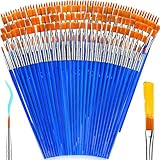
- 【162-Piece Bulk Set | Dual Brush System】Maximize versatility with 81 flat brushes (0.59 inch edge for bold strokes) and 81 round brushes (0.39 inch tips for details) – 3X more tools than standard kits! Pre-sorted in labeled compartments for instant access during painting sessions. Ideal for art classrooms, mural projects, and multi-artist households.
- 【Pro-Grade Durability | Zero Shedding Guarantee】 "Engineered with triple-crimped nylon bristles (43% higher resilience vs. standard) and aerospace aluminum ferrules tested for 10,000+ flex cycles. Lab-verified 0.01% shedding rate even with heavy impasto techniques – outperforms flimsy bristles in budget brushes."
- 【Multi-Scenario Readiness | Event & Daily Use】 Optimized for: Thanksgiving/Christmas face designs classroom projects ceramic decorating fabric printing and model painting; Lightweight plastic handles each reduce hand fatigue during prolonged sessions
- 【Effortless Maintenance | Long-Term Durability】 Clean with warm soapy water in 10 seconds; Reshape tips and air-dry vertically to preserve bristle integrity,After use, air-dry brushes thoroughly and store upright in the provided case to preserve bristle shape. The premium nylon filaments naturally regain their original form after each stroke. For cleaning, simply rinse in warm soapy water and gently reshape bristles with fingertips."
- 【Multiple Application】These acrylic paint brushes can be applied for most occasions,such as:watercolor,oil, gouache paint,face paint, acrylic paint, suitable for Thanks Giving Day, Christimas, Halloween face and body painting, canvas painting, fabric, rock, miniature, model, ceramics, arts and crafts painting, etc.
The toy does not reproduce the loads, weather exposure or control systems of a building. Its value is conceptual: it shows that movement can be organized, repeatable and reversible. For students, artists and clients, a physical model can make the difference between hearing that a structure is “kinetic” and understanding exactly how its geometry changes.
What is the lasting significance of Hoberman’s approach?
Hoberman’s contribution is a design vocabulary for buildings that respond instead of merely withstand. His scissor-based units connect a familiar expanding object to roofs, atria, façades and public stages. The Abu Dhabi, Madrid, Tokyo and Salt Lake City examples demonstrate that the same ambition can address climate control, spatial openness, building identity and spectacle.
Windows Errors? Fix Them Before They Spread
Repair common Windows errors and clear accumulated junk for a smoother, more stable PC - no reinstall needed.Free scan · no reinstallCrashes, No Sound, or Screen Glitches?
Random freezes, missing sound and display glitches usually trace back to one bad driver. Find and replace yours safely.Free scan · under a minuteThe strongest lesson is conditional rather than universal: movement is valuable when it creates a useful environmental or human outcome, and it is credible only when structure, controls and maintenance are designed together. In that sense, Hoberman’s changing buildings are not machines added to architecture. They are architecture conceived as a system with more than one deliberate state.
Frequently Asked Questions
Is a Hoberman Sphere the same mechanism used in Hoberman’s buildings?
It uses the same family of coordinated scissor-like linkages, but a toy sphere is not a structural or environmental model of a building. Architectural versions must carry wind and weather loads, integrate with roofs or façades, and include sensors, actuators, safety controls and maintenance access.
How much energy does a kinetic façade save?
The documented POLA Ginza report cited a possible heat-gain reduction of up to 10 percent for that specific 15-story tower and shutter system. There is no single savings rate for adaptive façades; climate, orientation, glazing, control settings and occupancy determine the result.
Can adaptive building systems operate without sensors?
They can be manually scheduled or operated, but Hoberman’s documented examples use automated inputs: computer sensors at Madrid’s City of Justice and photo sensors linked to a building-management system at POLA Ginza. Automation lets the envelope respond to changing conditions instead of relying entirely on occupants or operators.
What happens if one moving façade panel fails?
The project should provide a safe default position, service access and a way to isolate the failed unit while the rest of the system continues operating. Those provisions are part of engineering and maintenance planning; the supplied project reports do not publish a universal failure procedure.
Where are Hoberman’s best-known architectural projects?
The documented examples include Aldar Central Market in Abu Dhabi, the City of Justice in Madrid, the POLA Ginza tower in Tokyo and the Hoberman Arch created for the 2002 Winter Olympics in Salt Lake City. Their mechanisms and purposes differ, so they are best understood as a portfolio of transformable strategies rather than one standardized building system.
Quick Recap


