Quick wins for a faster PC:
Repair Windows errors before they cause bigger problemsFix Now →Fix the driver behind crashes, sound loss and screen glitchesFind Drivers →Clear out junk files and repair common Windows errorsFree Scan →
ThatPainter is reader-supported. When you buy through links on our site, we may earn an affiliate commission. Learn More
Urban wildlife recovery depends on habitat, not simply the number of trees planted. Trees can supply canopy, flowers, fruit, nesting cavities and shade, but many native species also need ground cover, shrubs, open foraging areas, safe movement routes and connected habitat patches. The practical answer to “Are trees enough to bring wildlife back?” is no: tree planting is one layer of an urban biodiversity strategy. A stronger approach starts with the needs of target species, maps existing habitat, adds the missing vegetation layers and connects patches across streets, developments and waterways.
Why aren’t trees enough to bring wildlife back to cities?
A tree count is a poor substitute for a habitat assessment. Canopy may improve temperature, stormwater management and visual amenity, yet a site can remain unsuitable for a particular bird, mammal, reptile or insect if it lacks food at the right height, dense cover, nesting material, undisturbed ground or a route to another viable patch.
As an Amazon Associate I earn from qualifying purchases.
Urban biodiversity is also species-specific. A large eucalypt with hollows may matter to a cavity-nesting bird, while a small insect-eating bird may depend on low shrubs and grass. Pollinators can need a sequence of flowering plants rather than a single avenue of mature trees. Ground-dwelling animals may be harmed if understorey is cleared to create a tidy park. “More green” is therefore not a single intervention; it is a question of which plants, in what structure, over what area, and connected to what else.
The 2016 article identified in a City of Melville urban-forest bibliography uses the phrase “concrete jungle” in its title, but its publisher page was inaccessible for verification. Its detailed examples and quotations should not be treated as checked evidence here. The more recent studies below provide a firmer basis for planning decisions.
Popular on Amazon

- Great Value Paint Brush Set: Soucolor 20 acrylic paint brushes come in 10 different sizes, making them ideal for fine detailing, model painting, rock painting, nail art, face painting, DIY crafts, and general art projects. The varied brush sizes give you better control for both delicate lines and broader color coverage, while the soft bristles deliver smooth, consistent results on acrylic, oil, watercolor, canvas, wood, ceramic, and more.
- Awesome Set of Paint brushes: Professional paint brushes can cover all of your needs. The multi-purposed brushes are ideal for Watercolor, Oil, Gouache, enamel, Acrylic Painting, Body, Nail, Face Painting, Miniature, Model, Wood, Glass, Cup, Ceramic, Fine work, Art class, Craft Art Painting, DIY Art Crafts etc.
- Soft and long-lasting: The bristles are soft and strong, with nickel metal ferrules and blue wooden handles. After cleaning, the bristles will become soft and fluffy again and will not fall off.
- Easy to clean: it’s very convenient to Wash well in soap and water. Retain shape after drying. the brushes hold up very well. Nice selection to beginners and professionals. Keep them clean and they last a long time.
- Perfect for All Painters & Occasions: Suitable for art beginners, hobbyists and professional artists. Great for art class, home creation, travel painting and DIY handmade projects. A practical art gift for students, teachers, family and craft lovers.
What does biodiversity-sensitive urban design change?
Biodiversity Sensitive Urban Design (BSUD) puts ecological objectives at the start of a project rather than adding planting after the building, road layout and drainage systems are fixed. A 2021 peer-reviewed Fishermans Bend case study describes a process for identifying biodiversity objectives and translating them into planning and design recommendations. Its authors write: “Considering biodiversity requirements at the start of an urban development allows for strategic, intentional design with biodiversity enhancement in mind.” Read the BSUD case study for the full framework.
In practice, that means a project team should:
- Define the ecological outcome. Select locally relevant native species or habitat communities, not an abstract target such as “more greenery.” A target might be a breeding territory for a small bird, a continuous pollinator route or protection of an existing wetland edge.
- Establish the site’s ecological baseline. Map remnant vegetation, mature trees, soil, water, existing nests or territories, invasive plants and barriers such as busy roads. Include nearby parks and private gardens because wildlife uses the landscape beyond the development boundary.
- Specify habitat functions. Translate each target species’ requirements into design elements: forage height, shrub density, hollow-bearing trees, leaf litter, mud, water, basking sites, shelter and seasonal food.
- Reserve space before detailed design. Protect habitat footprints and movement routes in the structure plan, street cross-sections and open-space network. A leftover planting strip rarely provides the same result as a deliberately connected habitat corridor.
- Design for maintenance and change. Set out watering during establishment, weed control, pruning limits, replacement planting and monitoring responsibilities. Habitat quality can decline if shrubs are repeatedly clipped, leaf litter is removed or irrigation favours invasive species.
BSUD does not mean every project must recreate a reserve. It means the ecological purpose of each green element is explicit and checked against local species and constraints.
Windows Errors? Fix Them Before They Spread
Repair common Windows errors and clear accumulated junk for a smoother, more stable PC - no reinstall needed.Free scan · no reinstallCrashes, No Sound, or Screen Glitches?
Random freezes, missing sound and display glitches usually trace back to one bad driver. Find and replace yours safely.Free scan · under a minuteWhich vegetation layers do urban animals actually use?
Wildlife habitat is vertically and horizontally structured. A resilient planting plan usually combines ground, shrub and canopy layers, then adds water, soil features and retained dead wood where appropriate. The exact mix depends on the species and region.
| Layer or feature | What it can provide | Questions for a project brief |
|---|---|---|
| Ground layer | Seeds, insects, cover, nesting material, leaf litter and movement for small fauna | Will soil, litter and low plants remain, or will mowing and paving remove them? |
| Grass and low vegetation | Open foraging areas and access to ground-level prey | Is there a varied mosaic rather than uniformly short turf? |
| Mid-storey shrubs | Shelter, nesting sites, flowers, fruit and protection from predators and wind | Are shrubs dense enough and tall enough for the target species? |
| Canopy trees | Shade, foliage, flowers, fruit, perches and, over time, hollows | Are species and spacing suitable for mature size and local climate? |
| Water and wet edges | Drinking, breeding, aquatic prey and humidity | Can water be retained safely through dry periods without creating a pollution trap? |
| Dead wood and cavities | Nesting and roosting opportunities for species that use hollows or decaying timber | Can safe habitat features be retained or deliberately incorporated? |
Layering also reduces the risk of a single failure. If one tree species flowers briefly, shrubs and ground plants can provide food at other times. Conversely, dense planting everywhere is not automatically beneficial: some species need open grass or bare ground to forage.
What does the Fishermans Bend superb fairy-wren example show?
The Fishermans Bend case study is a useful illustration because it starts with a species’ observed habitat use rather than a generic tree target. The Victorian Government’s account reports that superb fairy-wrens forage in low vegetation and grassed areas and use dense, scrubby mid-storey habitat. Native shrubs can provide shelter and nesting sites. A plan that planted only tall trees would therefore omit important parts of the bird’s habitat.
The same case study proposes planting native shrubs and trees around existing superb fairy-wren territories to improve connectivity and potentially enable new territories. “Potentially” matters: this is a design proposal, not a measured demonstration that new territories resulted. The recommendation is best read as a way to close habitat gaps around known territories, subject to local conditions, ongoing management and future monitoring. Consult the Victorian Fishermans Bend BSUD case study and the Fishermans Bend Urban Ecology Study for the site-specific context.
Do these 3 things before closing this tab:
1Repair Windows errors before they cause bigger problems2Fix the driver behind crashes, sound loss and screen glitches3Clear out junk files and repair common Windows errorsAlso popular on Amazon

- COMPLETE 5-PIECE BRUSH SET FOR EVERY PAINTING TASK — Includes 1 Inch Flat, 1.5 Inch Angle, 2 Inch Flat, 2 Inch Angle Stubby, and 2.5 Inch Angle brush giving you every size professional painters use daily. Get all 5 for less than the price of a single brush from hardware store brands — professional grade performance at a fraction of the cost. Perfect for walls, trim, cabinets, doors, furniture, and detailed cutting-in work on any project.
- ZERO BRISTLE LOSS — GUARANTEED BY PRECISION ADHESIVE BONDING — Every bristle is locked in place with precision-set adhesive that keeps them in the brush — not in your paint job. The coated steel ferrule provides structural support while the adhesive bond ensures clean performance on every stroke. Premium SRT synthetic filaments load more paint and release it evenly for a smooth streak-free finish on walls, ceilings, and trim. Works with latex, oil-based paint, primer, sealer, and wood stain.
- INCLUDES THE ANGLE STUBBY MOST SETS LEAVE OUT — Professional painters know the 2 Inch Angle Stubby is the go-to brush for tight cabinet interiors, window sashes, inside corners, and detailed trim where standard angle brushes are too long. Combined with the 1.5 and 2.5 inch angle sash brushes you have precision cutting-in covered at every scale — baseboards, crown molding, door casings, and ceiling lines.
- FLAT BRUSHES FOR BROAD SMOOTH COVERAGE ON ANY SURFACE — The 1 and 2 inch flat brushes deliver even coverage on walls, furniture, shelving, doors, fences, decks, and wood surfaces. Ideal for applying primers, stains, varnishes, polyurethane, and specialty coatings. Solid wood handles provide all-day comfort and control for both professional contractors and weekend DIY homeowners tackling interior or exterior painting projects.
- TRUSTED BY PROFESSIONAL PAINTERS AND CONTRACTORS NATIONWIDE — Pro Grade delivers professional-grade results at a price that makes sense for crews who go through brushes on every job. Ideal for property managers, remodeling contractors, apartment turnover crews, maintenance teams, and commercial painting operations. Backed by thousands of verified reviews from working painters. Washable and reusable for multiple projects.
The lesson is transferable as a method, not as a universal planting recipe: identify what the focal species uses, locate existing territories or habitat, and add the missing layers and links. A Melbourne recommendation should not be copied into another city without checking native species, climate, soils, predators and land-use history.
Does urban green space help regional bird conservation?
Urban areas can contribute to regional conservation, but they do not do so automatically. A 2024 study, “Beyond the concrete jungle: The value of urban biodiversity for regional conservation efforts,” surveyed more than 300 km² across 11 cities and 24 rural settlements, as well as agricultural and natural habitats. Its design included more than 2,000 random point locations. In that sampled region, some urban green spaces were among the more species-rich habitats.
The same research reported negative effects of urbanisation on diversity measures and a greater prevalence of species adapted to human environments. Those findings qualify any claim that a city park is equivalent to intact habitat. A green space can support many adaptable generalists while still losing specialists, altering community composition or failing to connect populations that need larger, quieter areas.
The study’s geographic scope and bird-focused measures matter. Its results cannot be presented as a universal ranking of every city, taxon or park. For a local project, ask which species are being supported, which are missing, and whether the intervention improves persistence or merely increases observations of already common urban users. The published study is available through PubMed.
Recommended Free Tools
Why does connectivity matter as much as planting area?
A habitat patch is useful only if animals can reach it, remain there and move between resources. Roads, walls, wide expanses of pavement, bright lighting, domestic predators and heavily managed lawns can turn nearby green spaces into isolated islands. Two parks that look close on a map may be functionally disconnected for a small bird, lizard or insect.
Connectivity can be designed at several scales:
- Within a site: link a garden, courtyard, rain garden and street verge with continuous or stepping-stone planting.
- Across a neighbourhood: align street trees, shrub beds, drainage corridors and park edges so animals encounter cover and food rather than repeated exposed gaps.
- Across the city: protect riparian strips, remnant vegetation and larger reserves as anchors, then use smaller patches to connect them.
- Across seasons: provide overlapping flowering, fruiting and insect resources so a route does not become a food desert for part of the year.
Connectivity is not simply a line of trees. For the Fishermans Bend fairy-wren proposal, the relevant connection includes shrubs and other habitat around existing territories. The design must match the animal’s movement and shelter needs, not the visual appearance of a corridor.
Also popular on Amazon

- 【All sizes of art brushes】: The 10 sizes of multi-functional brushes have various shapes, making the mixing color easier, which is very suitable for artists, students, teenagers, children and painters at all levels. Wonderful Present ideas for friends and family who like painting!
- 【general brush set】: Professional paint brush can meet all your needs. Multifunctional brush is very suitable for watercolor, oil, gouache, acrylic painting, body, nail, face painting, miniature, model, ceramics, arts and crafts painting, etc.
- 【high quality process】: It is designed with anti falling bristles, anti-rust nickel ferrule and solid wood handle. You can use the brush to focus on the painting and always be creative.
- 【easy to maintain】: After using the brush, it is very convenient to clean the brush with warm soapy water and reshape the tip of the brush. Air dry the brush and place it on top of the top for long use.
- 【100% satisfaction guarantee - buy now】1 packs of set brushes, you can also get friendly customer service, any questions feel free to contact us, within 24 hours to help you! There is no risk in buying our paint brush kit.
How should planners choose plants for wildlife?
Choose plants by ecological function and local suitability, then verify availability with local ecological authorities or qualified practitioners. The Melbourne case study supports the use of native shrubs for fairy-wren shelter and nesting, but it does not establish that a generic seed mix or a plant sold in another country is suitable everywhere.
A practical selection checklist is:
- Is the species indigenous or demonstrably appropriate to the local ecological community?
- Does it provide the required food, shelter, nesting material or structure at the season wildlife needs it?
- Will it tolerate the site’s soil, salt, heat, drought, flooding, shade and pollution without intensive inputs?
- Will mature height, root behaviour and canopy spread fit utilities, buildings, paths and sight-line requirements?
- Does the planting palette include several species and layers, reducing dependence on one plant?
- Can the plants be sourced with known provenance and established without damaging remnant habitat?
“Native” alone is not a guarantee. A plant can be native to a broad region yet mismatched to a particular soil or habitat community. Conversely, a non-local ornamental may offer nectar but fail to provide the nesting structure or seasonal resources a target species requires. Selection should be documented against the chosen habitat objective.
How can a development measure whether its design helps wildlife?
Set a baseline before construction and define evidence that would change management. Useful records can include habitat maps, vegetation structure, flowering periods, nest or territory observations, bird or insect surveys, road-kill records and the condition of connecting patches. The method and timing should be appropriate to the target species; a one-off count cannot answer a question about breeding success or long-term movement.
Use monitoring to distinguish implementation from outcome:
- Implementation: Were the planned shrubs, trees, ground cover, water features and barriers delivered?
- Condition: Are plants surviving, reaching the intended structure and remaining free of invasive weeds?
- Use: Are target species visiting, foraging, sheltering or nesting?
- Connectivity: Are animals using the links between patches, or do gaps and hazards remain?
- Adaptation: If the outcome is weak, should management alter mowing, pruning, lighting, predator controls, watering or additional planting?
Do not claim success from planting completion alone. The 2021 BSUD work provides a planning process, and the Fishermans Bend connectivity recommendation is explicitly prospective. A credible project reports what was installed, what was observed and what remains uncertain.
How do scale and place alter the answer?
There is no universal “right” size or planting pattern. A 2026 study in eastern Los Angeles County found that relationships among greenspace, vegetation cover and wildlife varied with scale. Its findings should not be transferred directly to Melbourne or any other city, but they reinforce a general planning rule: analyse the site at the scale at which the animal responds.
Also popular on Amazon

- 【KIDS PAINT BRUSHES SET】Anezus paint brushes for kids come with 10 pcs paint brushes of 5pcs round paintbrushes and 5 flat paint brushes with colorful handles, good for the young artist to explore their creativity in painting and crafting
- 【HIGH QUALITY PAINT BRUSHES FOR KIDS】These toddler paint brushes made of soft hog bristle, bright colored handles and rust proof ferrules. The bristles are firmly fixed in the kids paint brushes and no shedding. Each children paint brush measure 6 1/4 inches (16cm) in length and ferrules 1/2"(1.3cm) diameter, large enough for the little hand to grip and control
- 【WIDE APPLICATIONS】With combination of round and flat craft paint brushes for kids, work great with washable paint, tempera paint and acrylic paint. Great for arts and craft, rock, leather, gesso and ceramic, or body, nail and face art painting.
- 【EASY TO CLEAN 】After using paint brushes for acrylic, oil or watercolor painting, it’s very convenient to clean them with warm soapy water and reshape the paint brush tips. Keep these craft paint brushes clean and they last a long time.
- 【GREAT GIFT IDEA】Perfect for students, teens, kids, children and painters of all levels. Wonderful gift idea for girls, boys and kids who love painting! These all-purpose paint brushes for kids are ideal for kids' school projects, birthday parties, painting parties, art parties, back to school supplies, classroom decoration and more.
For one species, a courtyard may be a feeding patch; for another, only a connected neighbourhood network is meaningful. A citywide canopy map can hide the absence of shrubs at street level, while a small-site plan can miss barriers outside the property boundary. Use nested mapping—site, neighbourhood and regional context—and state which scale supports each design decision.
Local conditions also include governance and maintenance. A habitat corridor that crosses several landowners needs agreements about irrigation, pruning, access and replacement planting. Lighting design, dog access, cat management and construction timing can determine whether vegetation functions as habitat.
Independent reader supportYour contribution helps us test, update, and keep practical guides available for everyone.What should an urban wildlife plan contain?
A concise but complete plan can be organised around six deliverables:
- Target species and rationale: Explain why each species or habitat community matters locally and what evidence supports its requirements.
- Existing-assets map: Show remnant vegetation, mature trees, water, soil, territories, nesting sites and nearby habitat.
- Habitat schedule: List ground, shrub, canopy and non-vegetation features, with dimensions or performance requirements where known.
- Connectivity diagram: Identify stepping stones, corridors, barriers and crossings at site and neighbourhood scales.
- Delivery and maintenance specification: Assign responsibility, timing, establishment care, pruning rules, weed control and replacement triggers.
- Monitoring and review: State the baseline, survey method, reporting dates and management actions if outcomes differ from expectations.
This format keeps biodiversity decisions visible in planning approvals, landscape documentation and handover requirements instead of leaving them as an informal aspiration.
What are the most common mistakes?
- Counting canopy instead of habitat: A tree-total target can reward the wrong species or omit shrubs and ground cover.
- Planting isolated “green islands”: Attractive pockets may remain unreachable or too small for the target animal.
- Using one universal palette: Plants suitable for Melbourne’s fairy-wren habitat may be inappropriate in another region.
- Removing natural mess: Constant mowing, leaf-litter removal and aggressive pruning can eliminate food and shelter.
- Ignoring conflict and safety: Visibility, roots, fire requirements, access and utilities need design solutions rather than blanket removal of habitat.
- Overclaiming outcomes: A proposed connectivity benefit is not evidence that a population increased.
- Stopping at the property line: Wildlife movement and threats continue across streets, fences and neighbouring parcels.
Each mistake is avoidable when the project begins with a species-and-landscape question instead of a planting quota.
How can residents apply the same principle?
Residents cannot redesign an entire urban region, but they can make a garden or shared courtyard more useful by retaining multiple vegetation layers, choosing locally appropriate native plants, reducing unnecessary mowing and coordinating planting with neighbours. A small patch is more valuable when it connects to another patch and when management avoids sudden loss of cover.
Also popular on Amazon
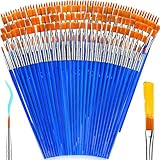
- 【162-Piece Bulk Set | Dual Brush System】Maximize versatility with 81 flat brushes (0.59 inch edge for bold strokes) and 81 round brushes (0.39 inch tips for details) – 3X more tools than standard kits! Pre-sorted in labeled compartments for instant access during painting sessions. Ideal for art classrooms, mural projects, and multi-artist households.
- 【Pro-Grade Durability | Zero Shedding Guarantee】 "Engineered with triple-crimped nylon bristles (43% higher resilience vs. standard) and aerospace aluminum ferrules tested for 10,000+ flex cycles. Lab-verified 0.01% shedding rate even with heavy impasto techniques – outperforms flimsy bristles in budget brushes."
- 【Multi-Scenario Readiness | Event & Daily Use】 Optimized for: Thanksgiving/Christmas face designs classroom projects ceramic decorating fabric printing and model painting; Lightweight plastic handles each reduce hand fatigue during prolonged sessions
- 【Effortless Maintenance | Long-Term Durability】 Clean with warm soapy water in 10 seconds; Reshape tips and air-dry vertically to preserve bristle integrity,After use, air-dry brushes thoroughly and store upright in the provided case to preserve bristle shape. The premium nylon filaments naturally regain their original form after each stroke. For cleaning, simply rinse in warm soapy water and gently reshape bristles with fingertips."
- 【Multiple Application】These acrylic paint brushes can be applied for most occasions,such as:watercolor,oil, gouache paint,face paint, acrylic paint, suitable for Thanks Giving Day, Christimas, Halloween face and body painting, canvas painting, fabric, rock, miniature, model, ceramics, arts and crafts painting, etc.
Record what wildlife actually uses, share observations with local conservation groups or councils, and avoid introducing plants or animals that are invasive in the region. Where a project borders a creek, reserve or known habitat, seek advice before disturbing soil or removing mature vegetation. The goal is not to make every yard identical; it is to create a varied, connected network of functioning habitat.
What is the bottom line for city designers?
Plant trees, but do not stop there. Start with the habitat requirements of locally relevant species, retain and restore ground and shrub layers, connect existing patches, design for maintenance, and measure ecological outcomes rather than planting volume. Urban green space can support regional biodiversity—as the 2024 bird study suggests in its sampled region—but only when its structure, composition, scale and connections suit wildlife instead of merely looking green.
Quick wins for a faster PC:
Repair Windows errors before they cause bigger problemsFix Now →Fix the driver behind crashes, sound loss and screen glitchesFind Drivers →Frequently Asked Questions
Can a small urban garden really help wildlife?
Yes, especially when it supplies a missing resource and links to other habitat. Its value depends on local species, vegetation structure, management and connectivity, so a small connected patch can be more useful than a larger isolated lawn.
Should every city replace lawns with dense shrubs?
No. Some animals need open grass or low vegetation foraging areas, while others need dense cover. Design a mosaic of layers and open spaces around the requirements of the species being supported.
How long does it take for new urban habitat to work?
Different functions mature at different rates: ground cover can establish quickly, while canopy, dense shrub structure and tree hollows take much longer. Set short-term establishment checks and longer-term wildlife monitoring rather than promising an immediate population response.
Can artificial nest boxes replace natural habitat?
Nest boxes can address a specific shortage for some species, but they do not replace food, shelter, movement routes or appropriate microclimate. They should be treated as a targeted supplement within a broader habitat plan.
Quick Recap


