Free tools Windows power users keep installed
One-click scans. No signup required.
ThatPainter is reader-supported. When you buy through links on our site, we may earn an affiliate commission. Learn More
Concrete facades can generate electricity when photovoltaic (PV) modules are integrated into precast concrete panels or attached to the outside of a concrete building as solar cladding. The concrete is the façade structure or substrate—not the electricity generator. The right approach depends on whether a project is new construction or a retrofit, how much sun the facade receives, and how the PV assembly fits the building envelope and its appearance.
As an Amazon Associate I earn from qualifying purchases.
What does “PV in a concrete facade” mean?
The phrase can describe two different assemblies. In a concrete-integrated system, PV modules are built into a precast concrete façade element. In a PV-cladding system, photovoltaic panels or glass are mounted outside an existing wall, which may be concrete. Both can add electricity-generating surfaces to a building, but they are not the same product or construction detail.
What’s actually slowing this PC down?
Pick the symptom - the matching free tool is one click away.
In either case, the PV modules generate the electricity. Concrete can provide the architectural surface, panel, or substrate, and the facade assembly can contribute to the building envelope. Ordinary concrete does not become a solar cell simply because it faces the sun. This distinction matters when comparing project examples, specifying products, or interpreting energy figures.
Popular on Amazon

- Great Value Paint Brush Set: Soucolor 20 acrylic paint brushes come in 10 different sizes, making them ideal for fine detailing, model painting, rock painting, nail art, face painting, DIY crafts, and general art projects. The varied brush sizes give you better control for both delicate lines and broader color coverage, while the soft bristles deliver smooth, consistent results on acrylic, oil, watercolor, canvas, wood, ceramic, and more.
- Awesome Set of Paint brushes: Professional paint brushes can cover all of your needs. The multi-purposed brushes are ideal for Watercolor, Oil, Gouache, enamel, Acrylic Painting, Body, Nail, Face Painting, Miniature, Model, Wood, Glass, Cup, Ceramic, Fine work, Art class, Craft Art Painting, DIY Art Crafts etc.
- Soft and long-lasting: The bristles are soft and strong, with nickel metal ferrules and blue wooden handles. After cleaning, the bristles will become soft and fluffy again and will not fall off.
- Easy to clean: it’s very convenient to Wash well in soap and water. Retain shape after drying. the brushes hold up very well. Nice selection to beginners and professionals. Keep them clean and they last a long time.
- Perfect for All Painters & Occasions: Suitable for art beginners, hobbyists and professional artists. Great for art class, home creation, travel painting and DIY handmade projects. A practical art gift for students, teachers, family and craft lovers.
These systems are forms of building-integrated photovoltaics (BIPV) when the PV is incorporated into the building envelope or facade design. The integration can shape the facade’s appearance and construction as well as add a source of on-site electricity. The term alone, however, does not tell you whether the modules are embedded in precast concrete, installed as a rainscreen, or used in another facade assembly.
How are PV modules integrated into precast concrete?
One route is to make the concrete facade element around a planned arrangement of PV modules. In the PVPC system described in a 2019 study, PV panels and insulation were inserted into a reserved groove in a concrete wall. The prototype was factory-constructed and demonstrated in the field; the researchers used operating data from the site to validate their simulation, according to the paper’s abstract.
A current named example in the available sources is HERING’s SOLAR.con facade. HERING describes it as fair-faced architectural concrete with small PV modules integrated into precast elements. Module orientation, shape, and position can be adapted to the building’s geometry, location, and solar path. The company presents the system for both new construction and renovation, with project-specific planning.
That design approach can make the PV part of the intended facade composition rather than an array of standard panels applied without regard to the concrete surface. Module layout may respond to the building’s shape and the desired appearance, but the amount and placement of PV still have to be considered against solar exposure and the project’s energy goals. A patterned or carefully composed facade is not automatically a high-yield one.
HTWK Leipzig’s SOLAR.con project description likewise concerns small PV modules integrated into precast exposed concrete. It describes the aim as developing an architecturally refined curtain-wall exposed-concrete facade with small modules optimized for yield. The page reports that earlier element variants were at Technology Readiness Level 3 and that the project aimed to prototype a modular facade at TRL 5. Those statements indicate a research and development path; they should not be read as proof of a standardized, widely available product or a completed rollout.
Also popular on Amazon

- COMPLETE 5-PIECE BRUSH SET FOR EVERY PAINTING TASK — Includes 1 Inch Flat, 1.5 Inch Angle, 2 Inch Flat, 2 Inch Angle Stubby, and 2.5 Inch Angle brush giving you every size professional painters use daily. Get all 5 for less than the price of a single brush from hardware store brands — professional grade performance at a fraction of the cost. Perfect for walls, trim, cabinets, doors, furniture, and detailed cutting-in work on any project.
- ZERO BRISTLE LOSS — GUARANTEED BY PRECISION ADHESIVE BONDING — Every bristle is locked in place with precision-set adhesive that keeps them in the brush — not in your paint job. The coated steel ferrule provides structural support while the adhesive bond ensures clean performance on every stroke. Premium SRT synthetic filaments load more paint and release it evenly for a smooth streak-free finish on walls, ceilings, and trim. Works with latex, oil-based paint, primer, sealer, and wood stain.
- INCLUDES THE ANGLE STUBBY MOST SETS LEAVE OUT — Professional painters know the 2 Inch Angle Stubby is the go-to brush for tight cabinet interiors, window sashes, inside corners, and detailed trim where standard angle brushes are too long. Combined with the 1.5 and 2.5 inch angle sash brushes you have precision cutting-in covered at every scale — baseboards, crown molding, door casings, and ceiling lines.
- FLAT BRUSHES FOR BROAD SMOOTH COVERAGE ON ANY SURFACE — The 1 and 2 inch flat brushes deliver even coverage on walls, furniture, shelving, doors, fences, decks, and wood surfaces. Ideal for applying primers, stains, varnishes, polyurethane, and specialty coatings. Solid wood handles provide all-day comfort and control for both professional contractors and weekend DIY homeowners tackling interior or exterior painting projects.
- TRUSTED BY PROFESSIONAL PAINTERS AND CONTRACTORS NATIONWIDE — Pro Grade delivers professional-grade results at a price that makes sense for crews who go through brushes on every job. Ideal for property managers, remodeling contractors, apartment turnover crews, maintenance teams, and commercial painting operations. Backed by thousands of verified reviews from working painters. Washable and reusable for multiple projects.
HERING’s listing for its Burbach SOLAR.con demonstrator identifies 274 oriented PV modules. That count is a feature of that demonstrator listing, not a generation figure: the available information does not establish how much electricity the installation produces. Module count alone cannot predict yield without information about module output, orientation, shading, operating conditions, and other project details.
What electricity yield can a concrete-integrated PV facade produce?
There is no universal yield figure for a concrete PV facade. Output varies with the installed PV area and module characteristics, the facade’s orientation and exposure, shading, and the specific layout. A published study provides a useful example of what one configuration reported, but its result should not be treated as a general expectation for other buildings.
In the 2019 Applied Energy paper on a precast concrete facade integrated with PV panels, the abstract reports approximately 62.56 kWh per square metre annually for electricity generation in its PVPC case. That is a study-specific figure, not a forecast for every facade, city, or project. Before using it to estimate a building’s production, a design team would need to assess the proposed system and actual site conditions.
The same abstract reports 64.34 kWh/m² per year in electricity saved for the air-conditioning system because of the PVPC facade’s thermal-resistance effect. This is not extra electricity generated by the PV modules. It is a separate reported saving associated with the facade’s thermal performance. Keep the two figures distinct: one is the paper’s approximate PV generation figure, and the other is its reported air-conditioning electricity saving.
Company scenarios also need careful framing. In a 2017 announcement, Holcim described a collaboration with Heliatek to deliver prefabricated Ductal concrete panels with an integrated thin-film solar-generation system. The announcement estimated that a 10-storey commercial building with 60% of its facade covered by that system could generate approximately 30% of the building’s annual energy. This is a conditional company scenario, not a general measured result for concrete facades. It is not directly comparable with the study’s per-square-metre generation figure.
Also popular on Amazon

- 【All sizes of art brushes】: The 10 sizes of multi-functional brushes have various shapes, making the mixing color easier, which is very suitable for artists, students, teenagers, children and painters at all levels. Wonderful Present ideas for friends and family who like painting!
- 【general brush set】: Professional paint brush can meet all your needs. Multifunctional brush is very suitable for watercolor, oil, gouache, acrylic painting, body, nail, face painting, miniature, model, ceramics, arts and crafts painting, etc.
- 【high quality process】: It is designed with anti falling bristles, anti-rust nickel ferrule and solid wood handle. You can use the brush to focus on the painting and always be creative.
- 【easy to maintain】: After using the brush, it is very convenient to clean the brush with warm soapy water and reshape the tip of the brush. Air dry the brush and place it on top of the top for long use.
- 【100% satisfaction guarantee - buy now】1 packs of set brushes, you can also get friendly customer service, any questions feel free to contact us, within 24 hours to help you! There is no risk in buying our paint brush kit.
Is PV cladding on an existing concrete building the same thing?
No. A retrofit PV rainscreen can put electricity-generating panels or glass outside a concrete wall, but that does not make the PV modules part of the concrete panel itself. It is a separate facade assembly attached to the building. This route can be relevant when the concrete facade already exists and a project is considering an exterior cladding system.
Recommended Free Tools
Onyx Solar’s Black Box project illustrates the distinction: its solid concrete exterior walls were transformed with amorphous-silicon photovoltaic glass panels in a rainscreen cladding system. The PV glass is mounted as cladding; it is not described as PV embedded in the concrete. The example demonstrates a retrofit route, but it does not establish that the same design or output will suit another building.
The IEA Solar Heating and Cooling Programme’s Task 16 report documents another example of PV elements integrated into rainscreen overcladding on the south facade of an existing building. At the Northumberland Building demonstration, the report describes 465 PV laminates rated at 85 W each, with more than 39 kW of installed capacity. This is a historic PV-cladding example, not a concrete-embedded system. Its capacity should not be read as expected annual energy generation or as a direct comparison with the PVPC study.
Separate from both concrete-integrated modules and PV-glass rainscreens, SERIS describes coloured BIPV panels that can replicate the appearance of concrete. That is a visual approach to integrating PV into a facade; it is not evidence that the PV cells are embedded in concrete. When comparing examples, ask what the PV component is and how it is attached—not just whether the building looks like it has a concrete solar facade.
Which facade approach suits a new build or a retrofit?
Precast concrete-integrated PV is a design option to evaluate when a project can coordinate the concrete elements and PV layout as part of its facade design. HERING presents SOLAR.con for new construction and renovation, but actual suitability depends on the individual project and supplier confirmation. A retrofit rainscreen is a distinct option to investigate when PV is to be mounted outside an existing wall, as in the Black Box example.
Also popular on Amazon

- 【KIDS PAINT BRUSHES SET】Anezus paint brushes for kids come with 10 pcs paint brushes of 5pcs round paintbrushes and 5 flat paint brushes with colorful handles, good for the young artist to explore their creativity in painting and crafting
- 【HIGH QUALITY PAINT BRUSHES FOR KIDS】These toddler paint brushes made of soft hog bristle, bright colored handles and rust proof ferrules. The bristles are firmly fixed in the kids paint brushes and no shedding. Each children paint brush measure 6 1/4 inches (16cm) in length and ferrules 1/2"(1.3cm) diameter, large enough for the little hand to grip and control
- 【WIDE APPLICATIONS】With combination of round and flat craft paint brushes for kids, work great with washable paint, tempera paint and acrylic paint. Great for arts and craft, rock, leather, gesso and ceramic, or body, nail and face art painting.
- 【EASY TO CLEAN 】After using paint brushes for acrylic, oil or watercolor painting, it’s very convenient to clean them with warm soapy water and reshape the paint brush tips. Keep these craft paint brushes clean and they last a long time.
- 【GREAT GIFT IDEA】Perfect for students, teens, kids, children and painters of all levels. Wonderful gift idea for girls, boys and kids who love painting! These all-purpose paint brushes for kids are ideal for kids' school projects, birthday parties, painting parties, art parties, back to school supplies, classroom decoration and more.
Neither route is automatically better. Integration into precast elements makes the PV module arrangement part of the concrete panel design; an outer rainscreen instead creates a cladding layer outside the existing wall. They differ in assembly, appearance, envelope detailing, and how the PV system is supported. The available data does not provide a robust price, payback, warranty, or head-to-head performance comparison, so those cannot be resolved by choosing a label such as “integrated” or “cladding.”
For a building with existing concrete, do not assume that its surface can simply carry a PV facade without investigation. The support and attachment approach, the wall and envelope details, the amount of usable facade, and access for maintenance are project-specific questions. For a new build, the same questions should be considered while the facade geometry, concrete panels, insulation, and PV arrangement are being coordinated.
Independent reader supportYour contribution helps us test, update, and keep practical guides available for everyone.What should a project team assess before choosing a system?
Facade PV is a building-envelope decision as well as an energy decision. The available examples point to several questions that should be answered before selecting a system or making a yield claim:
- Solar exposure and orientation: Which facade areas receive useful sun, and how will the sun’s path relate to the proposed module positions? HERING describes adapting SOLAR.con module layout to location and solar path, underscoring why a generic yield figure is not enough.
- Shading and geometry: How do the building’s shape and surrounding conditions affect the usable PV area? A facade can have substantial surface area but still be constrained by its orientation, geometry, or shading.
- Assembly type: Are the PV modules incorporated into precast concrete, or are PV panels or glass attached as an external rainscreen? Specify the actual assembly so design, procurement, and performance claims refer to the same thing.
- Appearance and module layout: How should module shape, orientation, position, and visible concrete areas relate to the architectural design? A layout optimized for facade composition may not be the layout that maximizes the PV area, so project priorities need to be explicit.
- Envelope and insulation details: How will the PV assembly relate to insulation and the rest of the wall construction? The PVPC study describes PV panels and insulation in a reserved groove; that configuration is an example, not a universal detail to copy without engineering.
- Structure and attachment: What support does the selected assembly require, and how will the concrete element or existing wall accommodate it? The sources do not provide a common attachment specification, so this must be addressed for the actual building and system.
- Access and maintenance: How will the PV facade be accessed for inspection or maintenance, and what parts of the assembly may need attention? The supplied examples do not establish universal maintenance requirements, so ask the project supplier and design team for system-specific information.
- Project yield and economics: What output is forecast for the actual site, and what assumptions are behind the forecast? Ask for the projected generation and any claimed building-energy savings as separate quantities; the 2019 study shows why they should not be conflated.
- Availability and approvals: Is the system available for the project’s location, and what local engineering and code checks apply? The evidence here does not establish current regional availability, code compliance, installed price, or payback. These need confirmation from the supplier and local project professionals.
How should you read claims about “solar concrete”?
Start by identifying what is actually photovoltaic. If the claim refers to small modules installed in precast concrete, it describes a concrete-integrated PV facade. If it refers to PV glass or laminates mounted in front of a concrete wall, it describes PV cladding or a rainscreen. If panels merely look like concrete, that is a surface appearance—not proof that the cells are embedded in concrete.
Do these 3 things before closing this tab:
1Clear out junk files and repair common Windows errors2Fix the driver behind crashes, sound loss and screen glitches3Repair Windows errors before they cause bigger problemsNext, check what a quoted number measures. A generation figure, an installed-capacity figure, and an estimate of building energy covered are different measures. The PVPC paper reports annual generation per square metre and a separate air-conditioning electricity saving; the IEA report gives installed capacity for a rainscreen demonstration; Holcim’s announcement gives a conditional estimate for a specified building scenario. Treat each within its own context rather than ranking them as though they were the same kind of result.
Also popular on Amazon
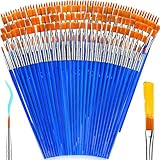
- 【162-Piece Bulk Set | Dual Brush System】Maximize versatility with 81 flat brushes (0.59 inch edge for bold strokes) and 81 round brushes (0.39 inch tips for details) – 3X more tools than standard kits! Pre-sorted in labeled compartments for instant access during painting sessions. Ideal for art classrooms, mural projects, and multi-artist households.
- 【Pro-Grade Durability | Zero Shedding Guarantee】 "Engineered with triple-crimped nylon bristles (43% higher resilience vs. standard) and aerospace aluminum ferrules tested for 10,000+ flex cycles. Lab-verified 0.01% shedding rate even with heavy impasto techniques – outperforms flimsy bristles in budget brushes."
- 【Multi-Scenario Readiness | Event & Daily Use】 Optimized for: Thanksgiving/Christmas face designs classroom projects ceramic decorating fabric printing and model painting; Lightweight plastic handles each reduce hand fatigue during prolonged sessions
- 【Effortless Maintenance | Long-Term Durability】 Clean with warm soapy water in 10 seconds; Reshape tips and air-dry vertically to preserve bristle integrity,After use, air-dry brushes thoroughly and store upright in the provided case to preserve bristle shape. The premium nylon filaments naturally regain their original form after each stroke. For cleaning, simply rinse in warm soapy water and gently reshape bristles with fingertips."
- 【Multiple Application】These acrylic paint brushes can be applied for most occasions,such as:watercolor,oil, gouache paint,face paint, acrylic paint, suitable for Thanks Giving Day, Christimas, Halloween face and body painting, canvas painting, fabric, rock, miniature, model, ceramics, arts and crafts painting, etc.
Finally, ask whether the claim comes from a measured project, a study, or a company scenario, and whether its building and location resemble the project under consideration. The available sources do not establish a universal price or payback period, nor a direct field comparison of the concrete-integrated systems discussed here. A credible project decision therefore needs a design-specific facade and energy assessment, not a single headline percentage.
Frequently Asked Questions
Can existing concrete be used as the surface for solar panels?
Yes, a project can add PV panels or glass outside an existing concrete wall as cladding or a rainscreen. That is different from embedding PV modules in a newly made precast concrete element, and the attachment and facade details need project-specific review.
Does solar concrete produce electricity without PV cells?
The systems described here generate electricity through photovoltaic modules, panels, glass, or laminates. Concrete can form or support the facade assembly, but the cited examples do not describe ordinary concrete itself as the electricity-generating material.
Can PV panels be made to look like concrete?
SERIS describes coloured BIPV panels that can replicate concrete visually. That addresses appearance; it does not establish that the PV modules are embedded in a concrete panel.
Does a facade with PV reduce cooling demand as well as generate electricity?
It may have a thermal effect, but the result depends on the particular wall and system. In the 2019 PVPC study, the reported air-conditioning electricity saving is a separate quantity from PV generation, so it should not be added to output as if the modules produced it.
Quick Recap


