Outdated Drivers Are Slowing You Down
Free tools Windows power users keep installed
One-click scans. No signup required.
Outbyte Driver Updater · freeOne free scan finds every outdated or missing driver and matches the right update for your exact hardware.
Scan My Drivers Free →ThatPainter is reader-supported. When you buy through links on our site, we may earn an affiliate commission. Learn More
A digital photograph is not captured as a finished grid of colored squares. It is produced through a chain of measurement and interpretation: scene light → lens → sensor photosites → electrical charge → digital numbers → reconstructed color → processed image pixels → display light.
The sensor records samples of incoming light. Software then interprets those measurements to create the RGB image you see on a screen or save as a JPEG. Understanding that distinction explains RAW files, white balance, noise, HDR, demosaicing, megapixels, and many familiar photographic artifacts.
As an Amazon Associate I earn from qualifying purchases.
1. Light carries the information
A camera begins with visible light: electromagnetic radiation whose wavelength contributes to perceived color. Sunlight, lamps, screens, and other sources illuminate a scene. Objects then absorb, transmit, and reflect different portions of that light toward the camera.
The camera receives scene radiance—light traveling from the subject toward the lens. Its intensity and spectral distribution contain information about shape, texture, illumination, and color. However, a camera does not measure “color” as a complete human-like perception. It measures light intensity through filters with different spectral responses, then infers color from those measurements.
#1 Best Overall

- 【74 Inch Tall Tripod and Compact Tripod】 This tall camera tripod has a height adjustment range of 19-74 inches. It can meet the needs of daily work. This compact tripod comes with a carrying bag for outdoor and indoor shooting. This compact tripod weighs 3.14 lbs / 1.4 kg and is easy to store and stow
- 【Tripod for All Camera and Phone】Standard 1/4" screw mount compatible with all cameras ( Canon, Nikon, Fujifilm, Olympus, Panasonic), DSLR, SLR, and digital cinema cameras, also spotting scopes, projector, compact camcorders, binoculars. The 360° phone mount is compatible with iPhone 17 16 15 14 13 12 11 Pro/XS/XR/MAX/8/8 Plus/X/7 Plus/7/6s Plus/6s/6 Plus/6/Samsung Galaxy S22/ S21 Series/ Galaxy Z Flip/ NOTE/ One Plus 1+Series
- 【Professional 3-Way Pan Head】VICTIV Professional camera tripod stand is equipped with a stable and smooth 3-way pan head, it allows 360° horizontal panoramic shots, 180° up and down shots, and 90° vertical portraits. Non-slip pads provide great grip. You can also hang a backpack on the weight hook for extra stability
- 【Video Tripod for Photography】The video camera tripod is suitable for outdoor and indoor shooting. It can meet the daily shooting needs of video producers, video bloggers, and youtube users. Camera tripods for Photography, food shooting, live streaming, scenery shooting, and portrait shooting, etc
- 【Complete Tripod Units】What You Get: 1X Tripod for cell phone and camera, 1X Universal Phone Holder, 1X Extra Quick Release Plate,1X 3-way Pan Head, 1X Handle, 3X Non-slip pads. Please contact us anytime if any questions
Exposure is the amount of light reaching the sensor. Aperture affects the opening through which light enters, shutter duration controls how long the sensor collects it, and ISO usually changes amplification and rendering rather than causing the sensor to collect more photons. Final-image brightness is a processed value and is not necessarily proportional to physical light.
2. The lens creates a two-dimensional optical image
Light reflected from each point of a subject enters the lens. Curved lens elements bend the rays so that rays from corresponding scene points converge at corresponding locations on the sensor plane. The result is a real, two-dimensional optical projection—and it is inverted before processing turns it upright.
Focusing adjusts the optical system so that a chosen range of subject distances forms the sharpest image at the sensor. The aperture controls both incoming light and depth of field. Focal length affects angle of view and magnification, while shutter duration determines how long movement can blur during capture.
The lens is not perfect. Aberrations can produce blur, distortion, vignetting, reduced contrast, or color fringing. Atmospheric haze, camera shake, subject movement, diffraction, and inaccurate focus can also limit detail before the sensor records anything.
3. The sensor samples the optical image
A digital image sensor is an array of light-sensitive locations called photosites or sensels. Each photosite collects light from a small area of the optical projection. A 4,000 × 3,000 raster, for example, contains 12,000,000 output pixels, or 12 megapixels.
Several terms describe different parts of this system:
The Tool Desk
Outbyte PC Repair FREEClear out junk files and repair common Windows errorsFree Scan →Outbyte Driver Updater FREEScan for outdated or missing drivers - takes under a minuteDriver Scan →- Photosite or sensel: a physical light-collecting location on the sensor.
- Pixel pitch: the center-to-center spacing between neighboring photosites.
- Sensor resolution: the number of sampled locations.
- Optical resolution: the detail the lens and scene can deliver.
- Output resolution: the dimensions of the saved or displayed image.
More photosites can provide more spatial samples when the lens, focus, stability, lighting, and processing support them. More megapixels do not automatically mean more visible detail. A high-resolution sensor cannot recover texture blurred by motion or an imperfect lens.
4. Photosites turn photons into charge
During an exposure, photons enter each photosite. Photodetector material converts detected photons into accumulated electrical charge. In general, more detected photons produce a larger signal.
A useful, though simplified, analogy is a rain bucket:
Rank #2

- Camera mount tripod stand with zippered storage bag
- Adjustable height from 16.1inch to 50inch with 3-section,lever-lock legs for simple adjustments
- Folds down quickly and made of lightweight aluminum; It weighs only 1.23 lbs,lightweight and portable, easy to carry for travel,hiking,camping,etc
- 3-way head allows for tilt and swivel motion;portrait or landscape options;Built in Bubble Level,fast and accurate positioning
- Quick-release plate helps ensure fast transitions between shots
- Photons are the rain.
- The photosite is the bucket.
- Accumulated charge is the water level.
- Amplification is a gain applied when measuring that level.
- The analog-to-digital converter turns the measurement into a number.
The analogy has limits. Photons arrive statistically, so identical-looking areas can produce slightly different measurements. This creates shot noise. Readout electronics add read noise; heat and long exposures can increase dark current; fixed spatial variations can create pattern noise; and digital conversion introduces quantization error.
Quick wins for a faster PC:
Repair Windows errors before they cause bigger problemsFix Now →Scan for outdated or missing drivers - takes under a minuteDriver Scan →Each photosite has finite storage capacity, called its full-well capacity. Once it fills, additional light cannot be represented accurately. This is highlight clipping: detail in the saturated area is lost rather than merely hidden.
5. Analog signals become digital numbers
The charge is read as an analog signal, converted to a voltage, and often amplified. Readout electronics send that signal to an analog-to-digital converter (ADC), which maps a continuous measurement to a finite numerical code.
An N-bit ADC can represent up to 2N levels:
| Bit depth | Maximum code levels |
|---|---|
| 8-bit | 256 |
| 10-bit | 1,024 |
| 12-bit | 4,096 |
| 14-bit | 16,384 |
| 16-bit | 65,536 |
Bit depth describes numerical precision; it does not automatically equal dynamic range or photographic stops. Dynamic range is the span between the weakest usable signal and the strongest non-clipped signal. It depends on capacity, photon statistics, read noise, gain, readout design, and processing. More bits cannot restore detail that was clipped or overwhelmed by noise.
6. How a camera records color
A bare monochrome photosite primarily measures how much light reaches it. It does not independently record a complete red, green, and blue value. Most conventional single-sensor color cameras place a color-filter array (CFA) over the photosites.
What’s actually slowing this PC down?
Pick the symptom - the matching free tool is one click away.
The familiar Bayer pattern repeats a 2 × 2 arrangement containing one red-filtered position, two green-filtered positions, and one blue-filtered position. Green receives twice as many samples because luminance detail is closely related to the visual system’s sensitivity to green-weighted light.
A red-filtered site records a red-weighted measurement, but not the green and blue values at that exact location. The same applies to green- and blue-filtered sites. A complete RGB image must therefore be reconstructed later.
Bayer is common, not universal. Other systems include three-sensor cameras using beam splitters, layered sensors, non-Bayer patterns, RGBW or panchromatic designs, monochrome sensors, and specialized infrared, ultraviolet, scientific, or multispectral cameras.
7. Demosaicing reconstructs full-color pixels
Demosaicing estimates the missing color components at each sensor location. For a red-filtered sample, an algorithm examines surrounding red, green, and blue measurements to estimate a complete RGB value. It performs reconstruction, not simple resizing.
Do these 3 things before closing this tab:
1Fix the driver behind crashes, sound loss and screen glitches2Repair Windows errors before they cause bigger problems3Scan for outdated or missing drivers - takes under a minuteRank #3

- 75in Extendable Camera Tripod: This tripod for camera phone can extend to a height of 75 inches by adjusting the flip locks, which can be quickly adjusted to any desired height to meet the needs of various shooting scenarios. Both the ball head and center column are equipped with level for easy real-time level calibration, ensuring perfectly level shots.Good Digital Camera Accessory Kits for you.
- 3-in-1 Detachable Center Column: The center column supports quick detachment, allowing for flexible use as a monopod or selfie stick (Max Height:43.9 in / 111.5 cm). Camera phone tripod stand can also be installed upside down for low-angle macro shooting. This 3-in-1 multi-functional design simplifies shooting equipment, saves carrying space, and enhances practicality and cost-effectiveness, making it suitable for travelers, outdoor enthusiasts, and content creators.
- 3-Level Angle Adjustment For Various Terrains: The camera tripod legs can be adjusted to three angles using the angle adjustment locks, allowing it to spread almost horizontally to achieve a minimum height of 15.35in(39cm) for low-angle shooting. Each leg adjusts independently in both angle and length, ensuring the tripod stand steadily on stairs, rocky trails, or uneven ground—making it ideal for outdoor-photographers and hikers shooting in unpredictable environments.
- Remote Control & Flexible Ball Head: Equipped with a 360° ball head, which supports free rotation in both horizontal and vertical directions. When shooting vlogs or live streams, you can flexibly switch angles and landscape/portrait modes without moving the tripod. In addition, this phone tripod has a built-in remote control with a maximum 10m control distance. Whether it's selfies, group photos, or long-distance shooting, one-button control makes shooting easier and more convenient.
- Sturdy & Stability: Constructed from aluminum alloy, this DSLR camera tripod features thickened tubes and anti-slip rubber feet that provide stronger grip on various surfaces, effectively preventing image shake. Its bottom hook allows for hanging weights, increasing counterweight and further enhancing overall stability, ensuring smooth footage even outdoors.[Max load 8kg/17.64lb (vertical) or 3kg/6.61lb(45° tilt)]
Fast methods may interpolate neighboring values. More advanced algorithms analyze edges and textures to avoid smearing color across boundaries. Some modern systems use machine-learning methods. These can improve difficult areas, but inferred or plausible detail should not be confused with guaranteed original information.
Demosaicing can fail where the scene contains fine repeating patterns such as fabric, roof tiles, fences, or screens. Possible results include:
- false color;
- moiré;
- zippering along high-contrast edges;
- color fringing;
- smeared fine texture; and
- repeating-pattern errors.
These artifacts arise because the scene’s detail interacts with the sensor’s sampling grid. An anti-aliasing filter, optical quality, focus, and processing strategy all influence the result.
8. The image processor creates a photograph
After sensor readout and color reconstruction, the camera or RAW converter applies a sequence of corrections and rendering decisions. A typical workflow can include:
Recommended Free Tools
- black-level and sensor calibration;
- bad-pixel correction;
- white-balance interpretation;
- lens and shading correction;
- demosaicing;
- color matrices and camera profiles;
- noise reduction;
- sharpening;
- tone curves and contrast adjustments; and
- conversion to an output color space.
White balance
Illumination changes the color of the light reaching the sensor. A white object under tungsten lighting produces a warmer response than it does in daylight. White balance adjusts relative channel gains so neutral objects appear neutral, or so the photographer can choose a deliberate color treatment.
“Accurate” color and “pleasing” color are not always identical. Camera profiles, color matrices, tone curves, and saturation choices may produce a preferred interpretation rather than a scientifically neutral one.
Tone mapping and HDR
Sensor measurements are often more linear and wider-ranging than the image intended for ordinary viewing. Tone curves compress that range into displayable values. HDR workflows may combine multiple exposures or use computational processing to preserve or simulate detail across bright and dark regions. If highlights were clipped in every available capture, software cannot recover their original information.
9. RAW versus JPEG
A RAW file generally stores minimally processed, sensor-derived measurements together with metadata. It may also contain compression, a preview image, and manufacturer-specific encoding. Calling it a “digital negative” is useful only as an analogy; RAW is not one universal format and is not necessarily uncompressed.
Windows Errors? Fix Them Before They Spread
Repair common Windows errors and clear accumulated junk for a smoother, more stable PC - no reinstall needed.Free scan · no reinstallCrashes, No Sound, or Screen Glitches?
Random freezes, missing sound and display glitches usually trace back to one bad driver. Find and replace yours safely.Free scan · under a minuteRAW postpones many rendering decisions. A converter can often provide greater flexibility with exposure interpretation, white balance, highlights, shadows, color, and tonal transitions. It cannot undo clipping, motion blur, missed focus, optical limitations, or photon noise.
Rank #4
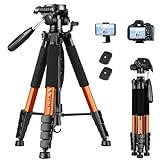
- 【74 Inch Tall Tripod and Compact Tripod】 This tall camera tripod has a height adjustment range of 19-74 inches. It can meet the needs of daily work. This compact tripod comes with a carrying bag for outdoor and indoor shooting. This compact tripod weighs 3.14 lbs / 1.4 kg and is easy to store and stow.
- 【Tripod for All Camera and Phone】Standard 1/4" screw mount and 3/8" screw compatible with all cameras ( Canon, Nikon, Fujifilm, Olympus, Panasonic), DSLR, SLR, and digital cinema cameras, also spotting scopes, projector, compact camcorders, binoculars. The 360° phone mount is compatible with iPhone 17 16 15 14 13 12 11 Pro/XS/XR/MAX/8/8 Plus/X/7 Plus/7/6s Plus/6s/6 Plus/6/Samsung Galaxy S22/ S21 Series/ Galaxy Z Flip/ NOTE/ One Plus 1+Series.
- 【Professional 3-Way Pan Head】VICTIV Professional camera tripod stand is equipped with a stable and smooth 3-way pan head, it allows 360° horizontal panoramic shots, 180° up and down shots, and 90° vertical portraits. Non-slip pads provide great grip. You can also hang a backpack on the weight hook for extra stability.
- 【Video Tripod for Photography】The video camera tripod is suitable for outdoor and indoor shooting. It can meet the daily shooting needs of video producers, video bloggers, and youtube users. Camera tripods for Photography, food shooting, live streaming, scenery shooting, and portrait shooting, etc.
- 【Complete Tripod Units】What You Get: 1X Tripod for cell phone and camera, 1X Universal Phone Holder, 1X Extra Quick Release Plate,1X 3-way Pan Head, 1X Handle, 3X Non-slip pads. Please contact us anytime if any questions.
JPEG is a rendered RGB image. Before saving it, the camera normally performs demosaicing, white balance, color rendering, contrast and tone adjustments, noise reduction, sharpening, and compression. JPEG is convenient and can look excellent, but much of that processing is baked in. Lossy compression may create blocking, ringing, texture loss, and color-subsampling artifacts, especially after repeated saves.
| Format | What it preserves | Typical strength |
|---|---|---|
| RAW | Sensor-derived measurements and metadata | Maximum rendering flexibility |
| JPEG | Rendered, compressed RGB image | Small and immediately shareable |
| TIFF/PSD | Processed image data, often with editing structure | Intensive editing and archiving |
| PNG | Lossless raster image | Graphics and repeated saving |
10. From image file to screen
When software opens an image, it decodes the file and interprets its RGB values within a color space such as sRGB or Adobe RGB. Color management may use ICC profiles to translate those values for a particular display.
The display then converts image values into drive signals for its physical pixels. Those elements emit or modulate light, which reaches your eyes and is interpreted by your visual system:
File values → color management → display drive values → emitted light → human perception.
RGB numbers are not universal physical colors. Their meaning depends on the assigned color space, transfer curve or gamma-like function, display gamut, brightness, contrast, ambient light, and calibration. The same file can therefore look different on two screens, especially when one has a wider gamut or a different brightness setting.
11. Sensor photosites are not displayed pixels
These terms are related but describe different things:
- Sensor photosite: a physical detector that gathers light.
- RAW sample: a numerical record associated with a photosite.
- Processed image pixel: a complete rendered color and brightness value.
- Screen pixel: a physical display element that emits or modulates light.
A Bayer sensor location may initially contain only one color-weighted measurement, while a processed image pixel contains three-channel RGB data. A screen pixel then turns those values back into light. Similar dimensions do not make these objects interchangeable.
Do these 3 things before closing this tab:
1Scan for outdated or missing drivers - takes under a minute2Repair Windows errors before they cause bigger problems3Fix the driver behind crashes, sound loss and screen glitches12. Why images contain noise, blur, and artifacts
Image quality is limited by the entire imaging system, not only by megapixel count.
- Shot noise: random variation in photon arrival.
- Read noise: variation introduced by sensor readout electronics.
- Dark current: charge generated without incoming light, increased by heat and long exposures.
- Pattern noise: fixed or semi-fixed spatial variation.
- Quantization error: approximation caused by finite digital code levels.
- Blur: caused by focus errors, movement, diffraction, optics, or atmospheric conditions.
- Color and moiré artifacts: often linked to CFA sampling and demosaicing.
Higher ISO can make noise more visible because it changes gain and output rendering, but visible noise also depends on exposure, photon count, sensor architecture, readout design, and noise reduction. Larger photosites can collect more photons per site at a given exposure, yet sensor size, generation, quantum efficiency, microlenses, and processing also matter. There is no single rule that larger pixels are always better.
Best Value

- Lightweight and Portable: Weighing just 1.4 lbs, this camera tripod stand is perfect for travel and outdoor photography. Made from premium aluminum-magnesium alloy and durable engineering plastic, its stable structure ensures you can capture high-quality videos and photos.
- Camera and Phone Tripod: This versatile tripod supports most devices with a 1/4-inch threaded hole, including cameras Canon eos r50/r10/g7x/g7z/m50/t5/t6/t6i/t8i/t7/sx740/70d, Nikon d3100/d3500/d3400/coolpix p950/z6iii/d750/coolpix b500, etc, projectors, laser levels, ring lights, telescopes, and more. It features a universal phone holder compatible with most smartphones, offering 360° rotation and two universal cold shoe mounts.
- Tall Camera Tripod: Offers an ideal height range of 15 to 71 inches. The section below the tripod head is constructed from sturdy aluminum alloy, ensuring stability even when fully extended to 71 inches. The tripod head enables 360° horizontal rotation, 180° tilt, and a 90° side flip. A high-precision bubble level guarantees perfect panoramic videos and photos.
- Versatile Extension: More than a tripod, it doubles as a selfie stick. The detachable center column extends up to 25 inches, perfect for selfies. This travel tripod with remote, which you can use to take photos or videos remotely.
- Package Includes: 1 tripod, 1 phone holder, 1 Bluetooth remote, 1 carrying bag, and 1 user manual.
Brightening shadows can reveal captured information, but it also magnifies noise, banding, color shifts, and quantization limits. Lowering exposure afterward cannot restore clipped highlights unless another frame or channel retained the missing detail.
13. Phones add computational photography
Phone cameras follow the same basic physical chain, but computation plays a larger role. A phone may combine multiple frames, cameras, focal lengths, or exposure levels. Its pipeline can include HDR merging, local tone mapping, face and subject detection, multi-frame noise reduction, super-resolution, semantic color adjustments, skin-tone rendering, and machine-learning demosaicing or denoising.
What’s actually slowing this PC down?
Pick the symptom - the matching free tool is one click away.
Computational photography does not eliminate the sensor pipeline. It adds substantial processing before the final image is shown or saved. The result may be more useful or attractive than a single raw measurement, while also representing a stronger interpretation of the scene.
14. A simple end-to-end example
Imagine photographing a person beside a bright window and wearing a red shirt.
- The window and room illuminate the scene. The shirt reflects more red-weighted light than other wavelengths.
- The lens projects the room and subject as an inverted image onto the sensor.
- The aperture and shutter determine how much light reaches the photosites and for how long.
- Bayer-filtered sites record separate red-, green-, and blue-weighted samples. Window-facing sites may approach saturation while shadow sites collect relatively few photons.
- The sensor converts charge to analog voltages, applies gain, and sends the readings to the ADC.
- The ADC assigns finite digital codes to those measurements.
- RAW processing corrects black level and sensor characteristics, interprets white balance, and demosaics the mosaic into full RGB pixels.
- Noise reduction, color profiling, sharpening, and tone mapping balance the bright window against the darker room.
- A JPEG encoder compresses the rendered image, or the software exports another format.
- The display maps the file’s color-space values to its own light-emitting pixels.
At no point does the sensor contain the same finished RGB photograph that you see. The final image is the outcome of optics, photon measurement, electronics, algorithms, file encoding, display technology, and human perception.
Choosing software for the pipeline
Software choices matter most after capture, when measurements become a usable photograph:
- Lightroom: a broad catalog-and-RAW workflow for organization, synchronization, and development. Adobe’s official pages have shown conflicting 2026 US pricing signals, so verify the checkout price and renewal terms.
- Photoshop: suited to layer-based retouching, compositing, and pixel-level editing; Adobe’s Photography plan combines it with Lightroom.
- Capture One Pro: a professional RAW-conversion and file-management alternative with desktop and iOS support, particularly relevant to color control and tethered workflows. Check the live pricing page for current regional pricing.
- DxO PureRAW: specialized RAW preprocessing focused on demosaicing, denoising, and lens correction. It can export results for Lightroom Classic, Photoshop, Affinity Photo, Capture One, and other editors, but it is not a complete catalog or compositing application.
These tools do not change the fundamental capture chain. They offer different ways to interpret, correct, organize, and render the measurements that the camera recorded.
The complete picture
Digital image formation is best understood as a collaboration between physics and computation. Light carries scene information; the lens projects it; photosites convert photons into charge; electronics digitize the signal; and algorithms reconstruct color, suppress noise, correct imperfections, shape tones, and prepare an output file. A display then turns numerical values into light again.
The most important distinction is simple: a sensor records samples of light, while a finished image is reconstructed from those samples. Pixels are the endpoint of that chain—not miniature scenes stored inside the camera.
Sources: Canon RAW Image Fundamentals, Adobe Camera Raw documentation, Adobe on demosaicing, AMD Demosaic documentation, Cambridge in Colour on camera sensors, and Adobe Research on computational imaging.
Free tools Windows power users keep installed
One-click scans. No signup required.
Quick Recap

Product prices and availability are accurate as of the date/time indicated and are subject to change. Any price and availability information displayed on Amazon at the time of purchase will apply.




