PC Slower Than It Used to Be?
The Tool Desk
Outbyte Driver Updater FREEFix the driver behind crashes, sound loss and screen glitchesFind Drivers →Outbyte PC Repair FREERepair Windows errors before they cause bigger problemsFix Now →Outbyte PC Repair · freeA free scan shows the junk files, broken settings and background clutter dragging Windows down - then fixes them in one click.
Run a Free PC Scan →ThatPainter is reader-supported. When you buy through links on our site, we may earn an affiliate commission. Learn More
A home can inspire fashion through its wallpaper, windows, furniture, colors, and memories—not just through a recognizable house-shaped accessory. Designers have translated domestic details into prints, embroidery, silhouettes, and even runway settings. The examples show several distinct approaches: copying a visible motif, interpreting a room’s atmosphere, telling a family story, or using architecture as a design reference.
What does it mean for a home to inspire fashion?
It means using a lived interior or a building as creative material. A designer might reproduce a window or wallpaper pattern, or take a less literal cue from a home’s light, color relationships, collected objects, or emotional character. The result might be a garment, an accessory, a whole collection, or the environment in which clothes are presented.
As an Amazon Associate I earn from qualifying purchases.
Recommended Free Tools
That distinction matters: a dress that borrows a curtain’s drape and a runway set made to feel like a living room both connect fashion with domestic space, but they do different work. One puts an interior reference on the body; the other makes the room around the clothes part of the experience. These examples document individual creative choices, not a measured trend across the fashion industry.
How can a room become a garment?
A designer can carry an interior into clothing by translating its visible features—such as a window shape, wallpaper pattern, or curtain—into a detail that works on the body. The reference may remain recognizable, or it may be transformed through color, texture, embroidery, or silhouette.
Popular on Amazon

- Great Value Paint Brush Set: Soucolor 20 acrylic paint brushes come in 10 different sizes, making them ideal for fine detailing, model painting, rock painting, nail art, face painting, DIY crafts, and general art projects. The varied brush sizes give you better control for both delicate lines and broader color coverage, while the soft bristles deliver smooth, consistent results on acrylic, oil, watercolor, canvas, wood, ceramic, and more.
- Awesome Set of Paint brushes: Professional paint brushes can cover all of your needs. The multi-purposed brushes are ideal for Watercolor, Oil, Gouache, enamel, Acrylic Painting, Body, Nail, Face Painting, Miniature, Model, Wood, Glass, Cup, Ceramic, Fine work, Art class, Craft Art Painting, DIY Art Crafts etc.
- Soft and long-lasting: The bristles are soft and strong, with nickel metal ferrules and blue wooden handles. After cleaning, the bristles will become soft and fluffy again and will not fall off.
- Easy to clean: it’s very convenient to Wash well in soap and water. Retain shape after drying. the brushes hold up very well. Nice selection to beginners and professionals. Keep them clean and they last a long time.
- Perfect for All Painters & Occasions: Suitable for art beginners, hobbyists and professional artists. Great for art class, home creation, travel painting and DIY handmade projects. A practical art gift for students, teachers, family and craft lovers.
For her spring 2025 ready-to-wear collection, Vivetta Ponti said that looking for new curtains for her home gave her first ideas. She described wanting pale pastel curtains that would nod to the colors and patterns of the Sanderson wallpapers in her home. The collection’s reported details included pastel colors, rose prints, lily-of-the-valley embroidery, a light-blue moiré pillow top, and fabric draped like an open curtain. The reference was more than a print copied from a room: it shaped the collection’s palette and the way fabric fell.
Ponti also connected the palette to the character of a particular home, saying, “The pastel colors throughout the collection reminded me of 1980s interiors.” Her example shows how a domestic starting point can guide several design decisions at once. A curtain can suggest color and drape; a wallpaper can offer a pattern or a set of colors; the imagined person who lives in that space can help make the collection feel coherent. Read Architectural Digest’s account of Ponti’s collection and other home-inspired designs for the original reporting.
Free tools Windows power users keep installed
One-click scans. No signup required.
Accessories can make the architectural reference unusually literal. A house-shaped bag designed by Vivetta with Rosantica was reported as featuring 2,500 colored crystals. For spring/summer 2023, Nicolas Ghesquière designed Louis Vuitton’s Maison de Famille bag after the Vuitton family home in Asnières. These are specific examples of objects shaped by a house reference; the reporting does not establish whether either item is currently available.
What changes when the source is a family home?
A family home brings personal history into the design, so the inspiration can carry more than a visual resemblance. Its rooms may hold memories, inherited objects, and the habits of the people who lived there. A pattern can therefore function as storytelling as well as decoration.
New York designer Samantha Pleet described her grandmother’s Tudor-style home as a source for her brand and her spring/summer 2016 collection. She recalled an interior with floral wallpaper, drapes, antiques, and coordinated displays of objects such as opaline glass. Some rooms paired wallpaper and drapes, often using a monochromatic theme such as green or pink. Pleet called the house “a bohemian jewel box,” emphasizing its collected, maximalist character rather than a polished, uniform finish.
Also popular on Amazon
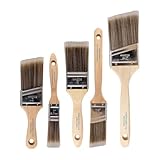
- COMPLETE 5-PIECE BRUSH SET FOR EVERY PAINTING TASK — Includes 1 Inch Flat, 1.5 Inch Angle, 2 Inch Flat, 2 Inch Angle Stubby, and 2.5 Inch Angle brush giving you every size professional painters use daily. Get all 5 for less than the price of a single brush from hardware store brands — professional grade performance at a fraction of the cost. Perfect for walls, trim, cabinets, doors, furniture, and detailed cutting-in work on any project.
- ZERO BRISTLE LOSS — GUARANTEED BY PRECISION ADHESIVE BONDING — Every bristle is locked in place with precision-set adhesive that keeps them in the brush — not in your paint job. The coated steel ferrule provides structural support while the adhesive bond ensures clean performance on every stroke. Premium SRT synthetic filaments load more paint and release it evenly for a smooth streak-free finish on walls, ceilings, and trim. Works with latex, oil-based paint, primer, sealer, and wood stain.
- INCLUDES THE ANGLE STUBBY MOST SETS LEAVE OUT — Professional painters know the 2 Inch Angle Stubby is the go-to brush for tight cabinet interiors, window sashes, inside corners, and detailed trim where standard angle brushes are too long. Combined with the 1.5 and 2.5 inch angle sash brushes you have precision cutting-in covered at every scale — baseboards, crown molding, door casings, and ceiling lines.
- FLAT BRUSHES FOR BROAD SMOOTH COVERAGE ON ANY SURFACE — The 1 and 2 inch flat brushes deliver even coverage on walls, furniture, shelving, doors, fences, decks, and wood surfaces. Ideal for applying primers, stains, varnishes, polyurethane, and specialty coatings. Solid wood handles provide all-day comfort and control for both professional contractors and weekend DIY homeowners tackling interior or exterior painting projects.
- TRUSTED BY PROFESSIONAL PAINTERS AND CONTRACTORS NATIONWIDE — Pro Grade delivers professional-grade results at a price that makes sense for crews who go through brushes on every job. Ideal for property managers, remodeling contractors, apartment turnover crews, maintenance teams, and commercial painting operations. Backed by thousands of verified reviews from working painters. Washable and reusable for multiple projects.
Her collection translated elements of that setting into clothing: window and wallpaper details informed designs, and a blue-and-green floral pattern was recreated. Pleet said, “My whole brand is inspired by my grandmother’s home,” and described personal storytelling as an important element of her clothes. In this approach, the designer does not need to reproduce a room exactly. A pattern can recall a particular house, but its meaning also comes from the human history attached to it.
This is one reason a home-based design can feel different from a general floral or architectural motif. A viewer may recognize the pattern without knowing its origin; the designer’s account supplies the personal context. Pleet’s description suggests that the source’s imperfections and accumulated objects were part of the inspiration, not details to be tidied away. The home becomes a record of how people arrange and live with things.
How is a home different from an architectural reference?
A home is usually a place to be lived in, remembered, and furnished; an architectural reference may instead begin with a building, architect, structure, or way of shaping space. The two can overlap, but the emphasis shifts from personal domestic life toward form, construction, light, or historical style.
Architectural Digest has documented designers drawing on buildings and architectural works, including Rosie Assoulin’s use of Carlo Scarpa’s Brion Cemetery, Stella Jean’s references to Haiti’s gingerbread houses, and Phillip Lim’s interest in Luis Barragán’s house. These examples are useful precedents, rather than evidence about a current season. In the case of Stella Jean, the available data notes the climate-aware forms of the gingerbread houses; an architectural reference can therefore involve how a structure responds to its setting, not just its appearance.
Lim described being drawn to images of Barragán’s home in the suburbs of Mexico City, praising its “precision, light, color, and shadow.” His account points to a translation that need not reproduce a doorway or floor plan. The balance of color and light can become a design principle: an influence expressed through relationships and mood rather than a direct copy. The Architectural Digest feature on designers inspired by architecture provides further examples of this building-to-fashion connection.
Also popular on Amazon
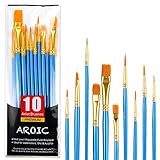
- 【All sizes of art brushes】: The 10 sizes of multi-functional brushes have various shapes, making the mixing color easier, which is very suitable for artists, students, teenagers, children and painters at all levels. Wonderful Present ideas for friends and family who like painting!
- 【general brush set】: Professional paint brush can meet all your needs. Multifunctional brush is very suitable for watercolor, oil, gouache, acrylic painting, body, nail, face painting, miniature, model, ceramics, arts and crafts painting, etc.
- 【high quality process】: It is designed with anti falling bristles, anti-rust nickel ferrule and solid wood handle. You can use the brush to focus on the painting and always be creative.
- 【easy to maintain】: After using the brush, it is very convenient to clean the brush with warm soapy water and reshape the tip of the brush. Air dry the brush and place it on top of the top for long use.
- 【100% satisfaction guarantee - buy now】1 packs of set brushes, you can also get friendly customer service, any questions feel free to contact us, within 24 hours to help you! There is no risk in buying our paint brush kit.
Museum commentary on Stéphane Rolland also places architecture among the influences informing a fashion practice. The Victoria and Albert Museum describes his passion for architecture, sculpture, and photography as evident throughout his collections. It dates the launch of his Haute Couture House to 2007 and his ready-to-wear range to 2011. That institutional account supports the idea that architectural interests can shape a designer’s broader visual language, not only a single garment.
Can a room inspire a fashion show as well as the clothes?
Yes. A show’s setting can evoke a room or use interior-like objects, making the audience encounter fashion within an interpretation of domestic space. In this case, the home reference is part of presentation rather than a motif sewn into a garment.
For Acne Studios’ spring 2025 runway environment, creative director Jonny Johansson drew ideas after seeing artist Jonathan Lyndon Chase’s exhibition “Now I’m Home, Lips That Know My Name.” Chase designed an installation of couches, chairs, and soft sculptures, creating an abstracted living-room feeling. He said the conversations with the fashion house centered on making something “immersive yet tender and a bit alien.” Those qualities show how the familiar arrangement of a living room can be altered rather than recreated as a realistic set.
A living-room-like environment also changes how clothes are framed: instead of appearing against a neutral backdrop, garments share a space with furniture and sculptural forms. The setting can create a mood or a narrative context, while the clothes remain the collection’s focus. The documented example is a particular collaboration and presentation, not proof that room-like runways are now standard.
What’s actually slowing this PC down?
Pick the symptom - the matching free tool is one click away.
What happens when fashion textiles move into furniture?
The exchange can run in both directions: interiors inspire clothing, and fashion fabrics or ways of thinking about form can move into furniture. Designer Batsheva Hay used upholstery fabrics for furniture pieces and compared the process to designing a dress, because the fabric takes the shape of the form it covers.
Also popular on Amazon

- 【KIDS PAINT BRUSHES SET】Anezus paint brushes for kids come with 10 pcs paint brushes of 5pcs round paintbrushes and 5 flat paint brushes with colorful handles, good for the young artist to explore their creativity in painting and crafting
- 【HIGH QUALITY PAINT BRUSHES FOR KIDS】These toddler paint brushes made of soft hog bristle, bright colored handles and rust proof ferrules. The bristles are firmly fixed in the kids paint brushes and no shedding. Each children paint brush measure 6 1/4 inches (16cm) in length and ferrules 1/2"(1.3cm) diameter, large enough for the little hand to grip and control
- 【WIDE APPLICATIONS】With combination of round and flat craft paint brushes for kids, work great with washable paint, tempera paint and acrylic paint. Great for arts and craft, rock, leather, gesso and ceramic, or body, nail and face art painting.
- 【EASY TO CLEAN 】After using paint brushes for acrylic, oil or watercolor painting, it’s very convenient to clean them with warm soapy water and reshape the paint brush tips. Keep these craft paint brushes clean and they last a long time.
- 【GREAT GIFT IDEA】Perfect for students, teens, kids, children and painters of all levels. Wonderful gift idea for girls, boys and kids who love painting! These all-purpose paint brushes for kids are ideal for kids' school projects, birthday parties, painting parties, art parties, back to school supplies, classroom decoration and more.
That analogy points to a shared design problem. A garment and a chair are both shaped objects that must accommodate a form, and the material’s pattern and behavior affect the result. The objects serve different purposes, but the designer can carry visual language between them. Hay also described dress and collected objects as part of how someone presents a sense of self: “The way someone dresses and displays the things they collect is a visual summary of the self.”
That observation makes the overlap more than a matter of matching fabrics. Clothing and interiors are both visible parts of everyday life, and both can express taste through color, pattern, texture, and selection. A designer may be interested not only in how a room looks, but in what its objects say about the person who lives there.
Independent reader supportYour contribution helps us test, update, and keep practical guides available for everyone.Is fashion’s relationship with interiors new?
No. Museum interpretation places fashion and interior decoration in a longer history, rather than treating the connection as a recent invention. The Museum at FIT’s exhibition Designing Women: Fashion Creators and Their Interiors presented designers through at least one garment or accessory alongside an interior image.
Recommended Free Tools
The museum’s overview says that from the late nineteenth century, women founded couture houses while interior decoration became a viable profession. By the interwar years, designers increasingly used interior decoration to enhance their brands and personal lives. This is useful historical context for understanding why the creative fields can appear together: both involve shaping visual environments and expressing taste. It does not establish that one field directly caused the other, or identify a single beginning for the relationship. The Museum at FIT’s exhibition overview frames the connection through designers’ lives and work.
Today’s reported examples add contemporary cases to that longer relationship. Ponti’s curtains and wallpaper, Pleet’s grandmother’s home, and the living-room-like runway installation each show a different way to connect domestic space with fashion. They should be understood as documented creative practices by named designers, not as a quantified account of how common home inspiration is.
Also popular on Amazon

- 【162-Piece Bulk Set | Dual Brush System】Maximize versatility with 81 flat brushes (0.59 inch edge for bold strokes) and 81 round brushes (0.39 inch tips for details) – 3X more tools than standard kits! Pre-sorted in labeled compartments for instant access during painting sessions. Ideal for art classrooms, mural projects, and multi-artist households.
- 【Pro-Grade Durability | Zero Shedding Guarantee】 "Engineered with triple-crimped nylon bristles (43% higher resilience vs. standard) and aerospace aluminum ferrules tested for 10,000+ flex cycles. Lab-verified 0.01% shedding rate even with heavy impasto techniques – outperforms flimsy bristles in budget brushes."
- 【Multi-Scenario Readiness | Event & Daily Use】 Optimized for: Thanksgiving/Christmas face designs classroom projects ceramic decorating fabric printing and model painting; Lightweight plastic handles each reduce hand fatigue during prolonged sessions
- 【Effortless Maintenance | Long-Term Durability】 Clean with warm soapy water in 10 seconds; Reshape tips and air-dry vertically to preserve bristle integrity,After use, air-dry brushes thoroughly and store upright in the provided case to preserve bristle shape. The premium nylon filaments naturally regain their original form after each stroke. For cleaning, simply rinse in warm soapy water and gently reshape bristles with fingertips."
- 【Multiple Application】These acrylic paint brushes can be applied for most occasions,such as:watercolor,oil, gouache paint,face paint, acrylic paint, suitable for Thanks Giving Day, Christimas, Halloween face and body painting, canvas painting, fabric, rock, miniature, model, ceramics, arts and crafts painting, etc.
How can you recognize the kind of home inspiration at work?
Ask what has crossed from the interior into fashion. The answer helps distinguish a direct motif from a broader influence, a personal memory from an architectural reference, and a garment detail from a show setting.
- Direct motif: Look for a recognizable window, house shape, wallpaper design, or curtain-like drape. The house-shaped bags and Ponti’s open-curtain draping are reported examples.
- Atmosphere or palette: Notice color relationships, light, shadow, or a period feeling that may be inspired by an interior without depicting it. Ponti connected her pastel palette with 1980s interiors; Lim emphasized the balance of light, color, and shadow in Barragán’s house.
- Personal memory: Look for a designer’s account of a lived place or family history that gives a pattern meaning beyond its appearance. Pleet’s account of her grandmother’s home is a clear example.
- Space for presentation: Consider whether furniture, sculptures, or a room-like setting shapes how a collection is shown. The Acne Studios spring 2025 environment belongs in this category.
- Cross-disciplinary design: Check whether the designer carries material or visual ideas from clothing into an interior object. Hay’s use of upholstery fabrics for furniture illustrates this direction of exchange.
These are practical ways to read the examples, not formal categories used by the designers or museums. A single collection may combine more than one approach. The central question is whether the home is being quoted as an image, remembered as a place, interpreted as a mood, or used as a setting.
Quick wins for a faster PC:
Scan for outdated or missing drivers - takes under a minuteDriver Scan →Clear out junk files and repair common Windows errorsFree Scan →Why does the home remain such a rich source for designers?
A home offers many kinds of visual material at once: architecture, furnishings, textiles, color, light, and objects collected over time. It can also carry a biography. That combination lets a designer move between formal decisions—such as the shape of a window or the fall of a curtain—and more intimate ones, such as the memory attached to a room.
The documented examples make the range clear. Ponti began with a home project and translated curtains and wallpaper into palette, print, embroidery, and drape. Pleet drew on a family interior and treated pattern as a vehicle for personal storytelling. Lim discussed a building through its precision and play of light and color. Chase’s installation made an abstract living room part of a runway environment, while Hay carried upholstery textiles into furniture.
In each case, a home can serve as more than a backdrop to fashion. It can provide a visual vocabulary, a personal narrative, a design problem, or a space in which clothes are encountered. That breadth is what makes the house a muse: not simply a shape to copy, but a place full of forms and meanings that a designer can choose to carry elsewhere.
Frequently Asked Questions
Did designers only start taking inspiration from interiors recently?
No. The Museum at FIT places the relationship in a history reaching back to the late nineteenth century and notes that designers used interior decoration to enhance brands and personal lives by the interwar years. Its exhibition paired garments or accessories with interior images to explore those connections.
Do these 3 things before closing this tab:
1Clear out junk files and repair common Windows errors2Fix the driver behind crashes, sound loss and screen glitches3Repair Windows errors before they cause bigger problemsCan a fashion collection be inspired by a home without showing a house print?
Yes. A designer can translate a home through palette, light, shadow, fabric behavior, or memory instead of depicting a building. Phillip Lim’s comments about the precision, light, color, and shadow of Luis Barragán’s home illustrate that more interpretive route.
What is the book Art to Wear about?
Architectural Digest identifies the 1986 book Art to Wear as a visual example of garments depicting domestic interiors. The available source information does not establish its current edition or availability.
Quick Recap


