Outdated Drivers Are Slowing You Down
PC Slower Than It Used to Be?
A free scan shows the junk files, broken settings and background clutter dragging Windows down - then fixes them in one click.Free scan · Windows 10 & 11Outdated Drivers Are Slowing You Down
One free scan finds every outdated or missing driver and matches the right update for your exact hardware.Free scan · exact hardware matchOutbyte Driver Updater · freeOne free scan finds every outdated or missing driver and matches the right update for your exact hardware.
Scan My Drivers Free →ThatPainter is reader-supported. When you buy through links on our site, we may earn an affiliate commission. Learn More
Shade-loving plants are ornamentals that can grow with limited direct sunlight, but “shade” is not one uniform condition. The 25 plants below cover foliage perennials, flowering plants, ferns, annual color, groundcovers and shrubs for part shade through deep shade. Use the list as a starting point, then match each plant to your measured light, soil moisture, root competition and local climate.
For a working rule, University of Vermont Extension defines part shade as about four to six hours of direct sun daily and full shade as fewer than four hours. NC State uses a different framework—partial shade (about two to six hours), deep shade (less than two hours to no direct sun), dappled sunlight and deciduous shade—so plant tags and local Extension advice should take precedence over any universal label.
As an Amazon Associate I earn from qualifying purchases.
At a glance
| Name | Best for | Key spec | Checked |
|---|---|---|---|
| Hosta (Hosta spp.) | Bold foliage beds | Part to full shade; foliage color | November 2026 |
| Coral bells (Heuchera spp.) | Colorful low foliage | Shade perennial; varied foliage and early-summer flower stems | November 2026 |
| Foam flower (Tiarella spp.) | Native edging | Shade perennial with low foliage and flower stems | November 2026 |
| Wild ginger (Asarum canadense) | Groundcover-like planting | Part to full shade | November 2026 |
| Cast iron plant (Aspidistra elatior) | Very dim, sheltered beds | Part to full shade | November 2026 |
| Jack-in-the-pulpit (Arisaema triphyllum) | Distinctive woodland flowers | Part to full shade | November 2026 |
| Trillium (Trillium spp.) | Woodland spring display | Part to full shade | November 2026 |
| Astilbe (Astilbe spp.) | Flowering shade borders | Shade perennial; verify moisture and cultivar | November 2026 |
| Virginia bluebells (Mertensia virginica) | Seasonal native color | Shade perennial | November 2026 |
| Bleeding heart (Dicentra spp.) | Spring flowers | Shade perennial | November 2026 |
| Lenten rose (Helleborus × hybridus) | Early-season interest | Shade perennial | November 2026 |
| Toad lily (Tricyrtis spp.) | Late-season flowers | Shade perennial | November 2026 |
| Cardinal flower (Lobelia cardinalis) | Moist shade | Shade perennial; verify moisture and regional fit | November 2026 |
| Sensitive fern (Onoclea sensibilis) | Wet woodland areas | Native; medium-to-wet soil; part to full shade | November 2026 |
| Royal fern (Osmunda regalis) | Large fern structure | Shade fern; verify site moisture | November 2026 |
| Autumn fern (Dryopteris erythrosora) | Fern groundcover | Shade groundcover | November 2026 |
| Japanese painted fern (Athyrium niponicum) | Textural foliage | Shade fern | November 2026 |
| Christmas fern (Polystichum acrostichoides) | Evergreen-leaning structure | Shade fern | November 2026 |
| Ajuga/bugleweed (Ajuga reptans) | Low groundcover | Part to full shade | November 2026 |
| Impatiens (Impatiens spp.) | Seasonal flower color | Shade-tolerant annual; frequent irrigation may be needed | November 2026 |
| Begonia (Begonia spp.) | Long summer color | Shade-tolerant annual; frequent irrigation may be needed | November 2026 |
| Fuchsia (Fuchsia spp.) | Container or seasonal displays | Shade-tolerant annual | November 2026 |
| Red twig dogwood (Cornus sericea) | Winter stems | Partial-shade tolerant; red winter stems | November 2026 |
| Chokeberry (Aronia arbutifolia) | Fall color and fruit interest | Partial-shade tolerant; flowering or fruiting may be reduced in shade | November 2026 |
| Mountain hydrangea (Hydrangea arborescens) | Shrub-scale shade planting | Part to full shade; verify cultivar and name | November 2026 |
This is an editorial grouping, not a tested ranking. Light and moisture performance varies by species, cultivar and region.
How should you measure a shady site before planting?
Spend a day observing the bed instead of relying on a label such as “shady.” The NC State Extension shade guide recommends recording sun exposure, direction, intensity, soil wetness or dryness, and competition from nearby roots.
Popular on Amazon

- Great Value Paint Brush Set: Soucolor 20 acrylic paint brushes come in 10 different sizes, making them ideal for fine detailing, model painting, rock painting, nail art, face painting, DIY crafts, and general art projects. The varied brush sizes give you better control for both delicate lines and broader color coverage, while the soft bristles deliver smooth, consistent results on acrylic, oil, watercolor, canvas, wood, ceramic, and more.
- Awesome Set of Paint brushes: Professional paint brushes can cover all of your needs. The multi-purposed brushes are ideal for Watercolor, Oil, Gouache, enamel, Acrylic Painting, Body, Nail, Face Painting, Miniature, Model, Wood, Glass, Cup, Ceramic, Fine work, Art class, Craft Art Painting, DIY Art Crafts etc.
- Soft and long-lasting: The bristles are soft and strong, with nickel metal ferrules and blue wooden handles. After cleaning, the bristles will become soft and fluffy again and will not fall off.
- Easy to clean: it’s very convenient to Wash well in soap and water. Retain shape after drying. the brushes hold up very well. Nice selection to beginners and professionals. Keep them clean and they last a long time.
- Perfect for All Painters & Occasions: Suitable for art beginners, hobbyists and professional artists. Great for art class, home creation, travel painting and DIY handmade projects. A practical art gift for students, teachers, family and craft lovers.
- Record direct sun. Note when sunlight reaches the soil and total the hours. Four to six hours fits UVM’s part-shade definition; fewer than four hours fits its full-shade definition. NC State’s partial-shade range begins at about two hours, while deep shade can mean less than two hours or no direct sun.
- Describe the light quality. Dappled light beneath an open canopy is different from a north-facing wall or dense evergreen branches. Deciduous trees also change the amount of light between spring, summer and autumn.
- Check soil below the surface. Shade may slow evaporation, but tree roots can make a bed surprisingly dry. Feel the soil a few inches down before watering and note whether it stays wet after rain.
- Map root competition. Large trees and shrubs compete for water and nutrients. In heavily rooted spots, use smaller plants, containers that can be moved, or a layer of organic matter and mulch rather than digging aggressively through major roots.
- Match scale and purpose. Decide whether you need a groundcover, a low foliage plant, a fern, seasonal flowers or a shrub. Check the mature size and cultivar requirements on the plant tag.
Which foliage perennials handle shade?
Foliage gives a shade garden structure after flowers fade. Mississippi State Extension notes that few shade plants bloom continuously and recommends combining leaf shape, size, texture and color; its shade-garden guidance supports several of these choices.
1. Hosta (Hosta spp.)
Hostas are a dependable starting point for part- to full-shade foliage beds. Mississippi State lists them for both conditions, and NC State includes them among shade perennials. Choose by mature leaf size and color, then leave enough space for the clump rather than planting tightly.
2. Coral bells (Heuchera spp.)
Coral bells bring varied foliage colors and early-summer flower stems, according to UVM Extension. Their lower profile makes them useful along paths or in front of larger hostas and ferns. Cultivar light tolerance differs, so confirm the tag when a selection has unusually bright foliage.
3. Foam flower (Tiarella spp.)
Foam flower is a low-growing perennial with flower stems that UVM identifies as native; NC State also lists it for shade. It suits an edge or woodland-style planting where a spreading, lower layer is needed. Verify the species and moisture preference for your region.
4. Wild ginger (Asarum canadense)
Mississippi State lists wild ginger for part to full shade, and NC State includes it in its shade selections. Its groundcover-like habit can knit together open spaces beneath taller plants. Use local guidance to confirm that the species is appropriate and available in your area.
5. Cast iron plant (Aspidistra elatior)
Cast iron plant appears on both Mississippi State’s part-to-full-shade list and NC State’s shade-perennial list. It is a useful candidate for a sheltered, dim bed where flowering is less important than durable foliage. Protect it from conditions outside the cultivar’s hardiness range.
The Tool Desk
Outbyte Driver Updater FREEScan for outdated or missing drivers - takes under a minuteDriver Scan →Outbyte PC Repair FREEClear out junk files and repair common Windows errorsFree Scan →Which flowering perennials add seasonal color in shade?
Flowering shade plants are best combined for succession rather than expected to bloom continuously. The following entries come from NC State and Mississippi State shade lists; moisture and regional suitability still need checking.
Also popular on Amazon

- COMPLETE 5-PIECE BRUSH SET FOR EVERY PAINTING TASK — Includes 1 Inch Flat, 1.5 Inch Angle, 2 Inch Flat, 2 Inch Angle Stubby, and 2.5 Inch Angle brush giving you every size professional painters use daily. Get all 5 for less than the price of a single brush from hardware store brands — professional grade performance at a fraction of the cost. Perfect for walls, trim, cabinets, doors, furniture, and detailed cutting-in work on any project.
- ZERO BRISTLE LOSS — GUARANTEED BY PRECISION ADHESIVE BONDING — Every bristle is locked in place with precision-set adhesive that keeps them in the brush — not in your paint job. The coated steel ferrule provides structural support while the adhesive bond ensures clean performance on every stroke. Premium SRT synthetic filaments load more paint and release it evenly for a smooth streak-free finish on walls, ceilings, and trim. Works with latex, oil-based paint, primer, sealer, and wood stain.
- INCLUDES THE ANGLE STUBBY MOST SETS LEAVE OUT — Professional painters know the 2 Inch Angle Stubby is the go-to brush for tight cabinet interiors, window sashes, inside corners, and detailed trim where standard angle brushes are too long. Combined with the 1.5 and 2.5 inch angle sash brushes you have precision cutting-in covered at every scale — baseboards, crown molding, door casings, and ceiling lines.
- FLAT BRUSHES FOR BROAD SMOOTH COVERAGE ON ANY SURFACE — The 1 and 2 inch flat brushes deliver even coverage on walls, furniture, shelving, doors, fences, decks, and wood surfaces. Ideal for applying primers, stains, varnishes, polyurethane, and specialty coatings. Solid wood handles provide all-day comfort and control for both professional contractors and weekend DIY homeowners tackling interior or exterior painting projects.
- TRUSTED BY PROFESSIONAL PAINTERS AND CONTRACTORS NATIONWIDE — Pro Grade delivers professional-grade results at a price that makes sense for crews who go through brushes on every job. Ideal for property managers, remodeling contractors, apartment turnover crews, maintenance teams, and commercial painting operations. Backed by thousands of verified reviews from working painters. Washable and reusable for multiple projects.
6. Jack-in-the-pulpit (Arisaema triphyllum)
Mississippi State lists Jack-in-the-pulpit for part to full shade, and NC State includes it among shade perennials. Its distinctive woodland form makes a strong focal accent among ferns and broad foliage. Confirm local availability and site conditions before planting.
7. Trillium (Trillium spp.)
Trilliums are listed by Mississippi State for part to full shade and by NC State for shade perennial plantings. They fit naturalistic woodland designs where spring interest is welcome. Buy from a reputable nursery and check the species’ regional requirements.
8. Astilbe (Astilbe spp.)
NC State includes astilbe in its shade-perennial list. Place it where the soil conditions suit the selected cultivar, and avoid assuming that every astilbe performs equally in dry root-filled ground. Grouping several plants can make its seasonal flower display easier to see.
Free tools Windows power users keep installed
One-click scans. No signup required.
9. Virginia bluebells (Mertensia virginica)
Virginia bluebells are included in NC State’s shade-perennial selections. They work in a woodland-style composition with ferns and other spring-interest plants. Verify the plant’s behavior and space needs for your climate before committing to a large planting.
10. Bleeding heart (Dicentra spp.)
Bleeding heart appears on NC State’s shade-perennial list. Use it as a seasonal flowering layer beneath shrubs or among foliage plants, leaving room for neighboring plants as the season progresses. Cultivar labels provide the most reliable guidance on light and moisture.
11. Lenten rose (Helleborus × hybridus)
NC State lists Lenten rose among shade perennials. Its early-season timing can bridge the gap before many summer plants flower. Confirm hardiness and soil requirements locally, especially in regions with very wet or very dry shade.
12. Toad lily (Tricyrtis spp.)
Toad lily is included in NC State’s shade-perennial list and is a candidate when you want later-season flowers in a dim border. Check mature height and cultivar details so it does not disappear behind taller foliage.
Also popular on Amazon

- 【All sizes of art brushes】: The 10 sizes of multi-functional brushes have various shapes, making the mixing color easier, which is very suitable for artists, students, teenagers, children and painters at all levels. Wonderful Present ideas for friends and family who like painting!
- 【general brush set】: Professional paint brush can meet all your needs. Multifunctional brush is very suitable for watercolor, oil, gouache, acrylic painting, body, nail, face painting, miniature, model, ceramics, arts and crafts painting, etc.
- 【high quality process】: It is designed with anti falling bristles, anti-rust nickel ferrule and solid wood handle. You can use the brush to focus on the painting and always be creative.
- 【easy to maintain】: After using the brush, it is very convenient to clean the brush with warm soapy water and reshape the tip of the brush. Air dry the brush and place it on top of the top for long use.
- 【100% satisfaction guarantee - buy now】1 packs of set brushes, you can also get friendly customer service, any questions feel free to contact us, within 24 hours to help you! There is no risk in buying our paint brush kit.
13. Cardinal flower (Lobelia cardinalis)
NC State lists cardinal flower for shade, but its moisture and regional fit should be verified for the exact species and site. It is most sensible for a bed that stays suitably moist rather than a dry area beneath thirsty tree roots.
Which ferns are suited to low-light gardens?
Ferns supply texture and form when flowers are intermittent. NC State’s fern list and UVM’s descriptions support the following choices, but soil moisture and winter conditions vary by region.
14. Sensitive fern (Onoclea sensibilis)
UVM identifies sensitive fern as native and suited to medium-to-wet soils in part to full shade. It is a strong candidate for a damp woodland edge, rain garden margin or other consistently moist site. Do not place it in a bed that dries hard between watering.
15. Royal fern (Osmunda regalis)
Royal fern appears on both Mississippi State and NC State shade lists. Its larger form is useful where a planting needs vertical fern structure. Check the available space and moisture conditions before selecting it for a small border.
Quick wins for a faster PC:
Fix the driver behind crashes, sound loss and screen glitchesFind Drivers →Repair Windows errors before they cause bigger problemsFix Now →16. Autumn fern (Dryopteris erythrosora)
Mississippi State lists autumn fern as a shade groundcover, and NC State includes it among shade ferns. Use it to create a lower textural layer beneath shrubs or taller perennials. Confirm cultivar size and local winter performance.
17. Japanese painted fern (Athyrium niponicum)
Japanese painted fern is included in NC State’s shade-fern list. Its value is primarily foliage texture and contrast, so combine it with plants that have different leaf shapes. Site-specific moisture and cultivar instructions matter more than the common name.
18. Christmas fern (Polystichum acrostichoides)
NC State lists Christmas fern among shade ferns. It can provide a dependable fern framework in a woodland composition, provided the species and cultivar are suitable for your climate and soil.
Also popular on Amazon

- 【KIDS PAINT BRUSHES SET】Anezus paint brushes for kids come with 10 pcs paint brushes of 5pcs round paintbrushes and 5 flat paint brushes with colorful handles, good for the young artist to explore their creativity in painting and crafting
- 【HIGH QUALITY PAINT BRUSHES FOR KIDS】These toddler paint brushes made of soft hog bristle, bright colored handles and rust proof ferrules. The bristles are firmly fixed in the kids paint brushes and no shedding. Each children paint brush measure 6 1/4 inches (16cm) in length and ferrules 1/2"(1.3cm) diameter, large enough for the little hand to grip and control
- 【WIDE APPLICATIONS】With combination of round and flat craft paint brushes for kids, work great with washable paint, tempera paint and acrylic paint. Great for arts and craft, rock, leather, gesso and ceramic, or body, nail and face art painting.
- 【EASY TO CLEAN 】After using paint brushes for acrylic, oil or watercolor painting, it’s very convenient to clean them with warm soapy water and reshape the paint brush tips. Keep these craft paint brushes clean and they last a long time.
- 【GREAT GIFT IDEA】Perfect for students, teens, kids, children and painters of all levels. Wonderful gift idea for girls, boys and kids who love painting! These all-purpose paint brushes for kids are ideal for kids' school projects, birthday parties, painting parties, art parties, back to school supplies, classroom decoration and more.
Which groundcovers and annuals work in shade?
Groundcovers fill difficult soil-level spaces, while annuals provide one-season color. Annuals often need more irrigation than established perennials, particularly where tree roots intercept rainfall.
19. Ajuga or bugleweed (Ajuga reptans)
Mississippi State lists ajuga for part to full shade. Its low habit makes it useful where turf struggles, but confirm local recommendations about spread and maintenance before planting a large area.
20. Impatiens (Impatiens spp.)
UVM lists impatiens as shade-tolerant annuals, and Mississippi State notes that impatiens can provide extended summer color with frequent irrigation. They suit seasonal beds and containers, especially when you can monitor moisture rather than relying only on rainfall.
21. Begonia (Begonia spp.)
Begonias are another UVM shade-tolerant annual, and Mississippi State includes them among plants that may need frequent irrigation for extended summer color. Use them where watering access is convenient and remove spent plants at the end of the season.
22. Fuchsia (Fuchsia spp.)
UVM lists fuchsia among shade-tolerant annuals. It is particularly practical for a container or movable display, allowing you to adjust light exposure and watering as the season changes. Confirm the cultivar’s temperature and moisture requirements locally.
Do these 3 things before closing this tab:
1Fix the driver behind crashes, sound loss and screen glitches2Repair Windows errors before they cause bigger problems3Scan for outdated or missing drivers - takes under a minuteWhich shrubs provide structure in partial shade?
Shrubs anchor a shade design with stems, fruit or fall color, but partial-shade tolerance does not guarantee equal flowering or fruiting. Allow room for mature size and verify cultivar nomenclature before purchase.
23. Red twig dogwood (Cornus sericea)
UVM describes red twig dogwood as partial-shade tolerant and notes its red winter stems. Use it where winter structure matters, with enough space for the shrub’s eventual spread. Check local guidance on moisture and pruning.
Also popular on Amazon
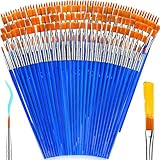
- 【162-Piece Bulk Set | Dual Brush System】Maximize versatility with 81 flat brushes (0.59 inch edge for bold strokes) and 81 round brushes (0.39 inch tips for details) – 3X more tools than standard kits! Pre-sorted in labeled compartments for instant access during painting sessions. Ideal for art classrooms, mural projects, and multi-artist households.
- 【Pro-Grade Durability | Zero Shedding Guarantee】 "Engineered with triple-crimped nylon bristles (43% higher resilience vs. standard) and aerospace aluminum ferrules tested for 10,000+ flex cycles. Lab-verified 0.01% shedding rate even with heavy impasto techniques – outperforms flimsy bristles in budget brushes."
- 【Multi-Scenario Readiness | Event & Daily Use】 Optimized for: Thanksgiving/Christmas face designs classroom projects ceramic decorating fabric printing and model painting; Lightweight plastic handles each reduce hand fatigue during prolonged sessions
- 【Effortless Maintenance | Long-Term Durability】 Clean with warm soapy water in 10 seconds; Reshape tips and air-dry vertically to preserve bristle integrity,After use, air-dry brushes thoroughly and store upright in the provided case to preserve bristle shape. The premium nylon filaments naturally regain their original form after each stroke. For cleaning, simply rinse in warm soapy water and gently reshape bristles with fingertips."
- 【Multiple Application】These acrylic paint brushes can be applied for most occasions,such as:watercolor,oil, gouache paint,face paint, acrylic paint, suitable for Thanks Giving Day, Christimas, Halloween face and body painting, canvas painting, fabric, rock, miniature, model, ceramics, arts and crafts painting, etc.
24. Chokeberry (Aronia arbutifolia)
UVM notes chokeberry’s fall color and partial-shade tolerance, while cautioning that it may flower or fruit less heavily in shade than in full sun. Choose it for multi-season structure rather than maximum fruit production in a dark site.
25. Mountain hydrangea (Hydrangea arborescens)
Mississippi State lists mountain hydrangea for part to full shade. The source renders the botanical name as “arborescen,” so verify the accepted name and cultivar on the nursery label. Confirm mature size, moisture needs and regional hardiness before planting.
What’s actually slowing this PC down?
Pick the symptom - the matching free tool is one click away.
How do you keep a shade garden healthy?
Shade reduces evaporation but does not eliminate maintenance. UVM advises occasional watering and weeding and recommends checking moisture below the surface before irrigating. Mississippi State also notes that moisture-demanding annuals can require frequent watering and may compete with tree roots.
- Water by soil condition. Probe several inches down; irrigate when the root zone is becoming dry, not automatically on a fixed schedule.
- Mulch carefully. Organic matter and mulch can improve difficult soil, but keep mulch off plant crowns and trunks and do not bury exposed tree roots.
- Weed routinely. Young shade plants compete poorly with established weeds, even when the bed looks cool and sheltered.
- Use containers strategically. NC State suggests movable containers for difficult spots. Containers also let you relocate annuals when seasonal light changes.
- Review plants each season. If a plant declines, reassess light, moisture, root competition and cultivar fit before adding more water or fertilizer.
How were these 25 plants selected?
The list combines plants named in UVM, Mississippi State and NC State Extension resources and organizes them by garden role rather than claiming a universal ranking. Selection criteria were documented shade tolerance, useful form or seasonal interest, coverage of different moisture conditions, and a mix of foliage plants, flowers, ferns, annuals, groundcovers and shrubs. Because the sources serve regional audiences, confirm climate, native status, potential invasiveness, deer pressure and cultivar performance with your local Extension service, botanical garden or nursery before buying.
Frequently Asked Questions
Can I grow shade plants beneath large evergreen trees?
You can, but evergreen canopies often combine low light with intense root competition and dry soil. Start with a small test area, add organic matter without cutting major roots, and consider movable containers where the ground remains too dry.
How can I tell whether a shaded bed is actually too wet?
Check the soil several inches below the surface after a normal dry spell and again after rain. Persistent saturation calls for plants suited to wet conditions, such as sensitive fern, rather than simply watering less frequently.
Recommended Free Tools
Will shade plants flower all summer?
Usually not. Mississippi State Extension notes that few shade plants bloom continuously, so combine plants with different flowering seasons and rely on foliage texture, form and color for the periods between blooms.
Is container growing useful for a low-light garden?
Yes. NC State specifically suggests containers that can be moved in difficult shade, and containers make it easier to adjust light exposure, protect roots and control irrigation for annuals such as impatiens, begonias and fuchsia.
Quick Recap


