Recommended Free Tools
Crashes, No Sound, or Screen Glitches?
Free scan · under a minute
PC Slower Than It Used to Be?
Free scan · Windows 10 & 11
Outdated Drivers Are Slowing You Down
Free scan · exact hardware match
ThatPainter is reader-supported. When you buy through links on our site, we may earn an affiliate commission. Learn More
The right Lowe’s paint purchase starts with the surface, not the color chip. Identify whether you are painting an interior or exterior surface, choose a coating that suits that material, select a sheen for the room’s traffic and moisture, then decide whether primer and a particular brush or roller nap are necessary. Finish by buying protection, repair and cleanup supplies.
As an Amazon Associate I earn from qualifying purchases.
The Tool Desk
Outbyte PC Repair FREEClear out junk files and repair common Windows errorsFree Scan →Outbyte Driver Updater FREEFix the driver behind crashes, sound loss and screen glitchesFind Drivers →For most smooth or semi-smooth interior walls, that usually means a water-based latex paint, an eggshell or satin sheen, a 3/8-inch synthetic roller cover and synthetic brushes. Bare, stained, repaired, glossy or dramatically different-colored surfaces often need primer first. The exceptions—oil-based coatings, rough masonry, cabinets, trim and specialty finishes—require different choices.
How do I choose paint at Lowe’s?
Use this order so that a product’s color or promotional label does not obscure the practical requirements of the job.
Popular on Amazon

- SHED-RESISTANT FABRIC: High-quality woven fabric helps minimize lint and shedding for a smooth, professional-looking finish.
- EXCELLENT PAINT PICKUP AND RELEASE: Dense roller fabric holds and distributes paint evenly for consistent coverage and efficient application.
- 3/8 IN. NAP: Ideal for semi-smooth surfaces, including walls, ceilings, and other lightly textured areas.
- DURABLE CONSTRUCTION: Features a double-thick polypropylene core that resists water, solvents, and cracking for reliable performance.
- VERSATILE PAINT COMPATIBILITY: Suitable for use with all paints, enamels, primers, urethanes, and epoxies for a variety of interior and exterior painting projects.
- Identify the surface and location. Note whether it is drywall, previously painted plaster, bare wood, trim, a door, a cabinet, masonry or another material, and whether it is indoors or outdoors.
- Choose the coating chemistry. Water-based latex is the common interior choice; oil-based or alkyd paint is useful where a harder, smoother, more scratch-resistant film is needed; exterior and specialty coatings are formulated for narrower conditions.
- Select the sheen. Match reflectivity and cleanability to traffic, moisture and the appearance you want.
- Decide on primer. Bare, stained, repaired, glossy or strongly contrasting surfaces generally need a primer rather than a direct topcoat.
- Match applicators to the paint and texture. Use brush fiber and roller nap that suit both the coating and the surface.
- Buy preparation, protection and cleanup supplies. A good finish depends on repairing and cleaning the surface as much as on the paint itself.
Product availability, prices and item numbers vary by market and over time, so use the product label and the in-store or online specification for the exact item you are considering rather than relying on a fixed price or inventory assumption.
Which type of paint should I buy?
Water-based latex, oil-based paint, exterior coatings and specialty products solve different problems. The table below is a practical starting point; the manufacturer’s instructions for the specific product take precedence.
Do these 3 things before closing this tab:
1Fix the driver behind crashes, sound loss and screen glitches2Repair Windows errors before they cause bigger problems3Scan for outdated or missing drivers - takes under a minute| Paint type | Best fit | Advantages | Trade-offs or cautions |
|---|---|---|---|
| Water-based latex | Many interior walls and ceilings | Easy cleanup, quick drying, less odor and a wide range of finishes | Can show brush marks more readily and may chip or peel on some surfaces |
| Oil-based or alkyd | Areas needing a hard, smooth film and resistance to nicks or scratches | Durable, hard and smooth finish | Longer drying time, stronger odor, higher VOCs and solvent cleanup |
| Exterior paint | Outdoor walls and other exterior surfaces | Formulated for weather and mildew resistance and UV protection | Use only where the label permits; interior products are not substitutes for exterior formulations |
| Specialty paint | A defined decorative or moisture-related purpose | Options include chalkboard, magnetic, chalky, metallic and mildew-resistant finishes | Use for the stated purpose rather than as a general replacement for wall paint |
When is latex the sensible default?
Choose latex when you want straightforward water cleanup, faster drying and lower odor for a compatible interior surface. Synthetic brushes and synthetic roller covers are the normal pairing. Check the label if the surface is unusually slick, contaminated, previously coated with oil or exposed to conditions the product does not cover.
When does oil-based paint make more sense?
Oil-based paint is suited to situations where hardness, smoothness and resistance to nicks or scratches matter more than quick drying and easy cleanup. Plan ventilation and allow the longer drying time stated on the label. Cleanup requires the solvent specified by the manufacturer, commonly mineral spirits or paint thinner for these products.
Also popular on Amazon

- Shed-resistant and high capacity For Today's Paints; flat, eggshell, satin
- HydroFlow technology provides controlled release, presents sagging
- Exclusive lager-colored fabric for fastest coverage, non-matting for longer life
- Green double -thick polypropylene core resists water, solvents, and cracking
- For semi-smooth surfaces
When should I use a specialty coating?
Choose a specialty product only when its stated function matches the project: a chalkboard or magnetic surface, a chalky or metallic decorative effect, or mildew resistance in a suitable moisture-prone application. Confirm surface preparation and compatible primer requirements before treating it like ordinary wall paint.
What paint sheen is best for each room?
Sheen affects reflected light, how readily a surface can be wiped or scrubbed and how much surface irregularity it reveals. Use the room’s traffic and moisture level as the deciding factors.
| Sheen | Good uses | Why |
|---|---|---|
| Flat | Bedrooms, dining rooms, ceilings and other low-traffic areas | Low reflectivity suits quieter spaces |
| Eggshell | Family rooms and hallways | Slight shine with better wipeability than flat paint |
| Satin | High-traffic or moisture-prone kitchens and bathrooms | More scrub-cleanable than lower-sheen finishes |
| Semi-gloss | Children’s rooms and high-moisture spaces | High durability and cleanability |
| Gloss | Doors, cabinets, decorative moulding and trim | Highly reflective and durable-looking for detailed surfaces |
Do not choose sheen in isolation. A glossy finish can draw attention to dents, patches and uneven drywall, while a flat finish is less suited to surfaces that must be washed frequently. If appearance and cleanability conflict, prioritize the room’s maintenance demands and prepare the surface carefully.
Do I need primer before painting?
Primer improves adhesion and helps the topcoat look uniform. Lowe’s guidance identifies several cases where it is needed rather than optional:
Also popular on Amazon
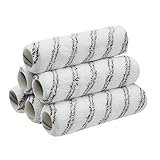
- Efficient Performance: 3/8-inch nap holds an ample amount of paint for time-saving convenience and fast, even paint application
- Shed Resistant: designed to not leave small pieces behind, helping to ensure a clean, professional-looking finish
- Versatile: for use with all paints and stains; suitable for interior and exterior projects, including walls, ceilings, house siding, and more; works best on smooth and semi-smooth surfaces
- Washable and Reusable: durable, long-lasting paint roller covers can be easily cleaned and re-used, again and again
- NOTE: Soak roller cover in water for 2 minutes to remove any loose fibers; spin out excess water prior to use
- Bare drywall
- Stained areas
- Freshly repaired or patched areas
- Bare wood
- High-gloss existing finishes
- A drastic change in color
Paint-and-primer-in-one can save a step on some already sound, compatible surfaces, but the condition and material of the project should determine the product. It is not a reason to skip the primer required for bare, stained, repaired or difficult surfaces.
How do I paint latex over existing oil-based paint?
First test the existing finish with alcohol as directed by the coating guidance. Sand the surface, then apply a bonding primer before using the latex topcoat. Skipping that compatibility check can leave the new coating with poor adhesion.
What preparation does primer not replace?
Primer does not eliminate cleaning, filling or sanding. Remove surface dirt, fill holes and cracks with spackling or hole filler, let repairs dry, sand them smooth and remove dust before priming or painting. Caulk appropriate joints and protect adjacent areas with tape and drop cloths.
What brush and roller nap should I use?
Match the applicator to both paint chemistry and surface texture. For latex, use synthetic brushes and synthetic roller covers. Natural-bristle brushes and natural-fiber roller covers are intended primarily for oil-based or alkyd coatings, subject to the individual manufacturer’s instructions.
Also popular on Amazon

- PURDY PAINT ROLLER COVERS – Purdy WhiteDove roller covers provides a smooth, lint-free finish. Handcrafted in the USA, this Purdy roller paint cover is ideal for drywall, ceilings, and floors.
- FOR LATEX & OIL-BASED PAINTS – From semi-smooth to semi-rough surfaces, use this paint applicator with latex and oil-based paints, primers, stains and clears in any sheen.
- LINT-FREE FINISH – Made with premium woven fabric, this professional painting tool comes in a variety of naps to work best with your painting area. When the finish matters, woven fabric prevents lint and provides an exceptional finish with less stipple.
- KEEP ON ROLLING - Purdy roller covers feature durable polypropylene cores that are resistant to all paints, stains and solvents, extending their life. Ultra-durable roller cover cores eliminate bending, allowing even contact with the wall.
- PURDY – From the first Purdy brush built in 1925 to the wide range of painting supplies and products we make today, one thing has stayed true – our dedication to craft and quality. And it's still at the heart of every tool we make.
| Surface or task | Recommended roller nap or brush | Practical use |
|---|---|---|
| Very smooth doors and cabinets | 1/4-inch nap | Creates a smoother application on very smooth surfaces |
| Smooth to semi-smooth walls and ceilings | 3/8-inch nap | Lowe’s recommended general choice for these surfaces |
| Semi-smooth to semi-rough surfaces | 1/2-inch nap | Holds more paint for added texture |
| Rough surfaces | 3/4-inch nap | Reaches deeper texture |
| Very rough masonry | 1-inch or longer nap | Reaches pronounced masonry irregularities |
| Corners, edges and cutting in | Angled brush | Helps form a controlled line at trim and adjoining surfaces |
| Larger brushwork | Flat brush | Covers broader areas than an angled cutting-in brush |
A 3/8-inch synthetic paint roller cover is the key starting category for smooth and semi-smooth walls and ceilings. Move to a shorter nap for very smooth doors or cabinets and a longer nap only as texture demands; an unnecessarily long nap can leave more texture than you want.
What decorating supplies do I need before I start?
Build the cart in three groups so a missing preparation item does not stop the job halfway through.
Preparation and protection
- Surface cleaner
- Primer when the surface requires it
- Painter’s tape, not ordinary masking tape
- Drop cloths or plastic sheeting
- Caulk
- Putty knife
- Spackling or hole filler
- Fine-to-medium sandpaper
- Safety glasses
Application
- Angled and flat brushes appropriate to the coating
- Correct roller covers and a roller frame
- Mini roller or edger for tight spaces
- Paint tray and tray liners
- Extension pole
- Ladder
- Stir stick
- Bucket
Cleanup
- Bucket
- Soap
- Rags
- Sponges
- Paper towels
- Gloves
- Mineral spirits or paint thinner for oil-based products, as directed by the label
Use safety glasses during cleaning, sanding and overhead work. Keep the cleanup method in mind when choosing the paint: water-based products generally clean with water and soap, while oil-based products require the specified solvent.
How should I organize the painting process?
- Clean and inspect. Remove dirt and identify peeling paint, stains, holes, cracks, glossy areas and bare material.
- Repair and sand. Fill defects, allow repairs to dry, sand with fine-to-medium paper and remove dust.
- Protect adjoining surfaces. Lay drop cloths or plastic sheeting and apply painter’s tape to trim and edges that need protection.
- Prime where required. Use the primer suited to the surface and the topcoat, including bonding primer for the oil-to-latex situation described above.
- Mix for consistent color. If using multiple cans of the same color, combine them in a separate bucket before application so the color is uniform across the room.
- Keep a wet edge. Work methodically so a fresh pass overlaps paint that has not dried at its edge.
- Roll manageable sections. Lowe’s checklist guidance uses a 3-by-3-foot W pattern, then fills the section without letting the edges dry prematurely.
- Cut in and detail. Use the angled brush at corners and around trim; use a mini roller or edger where the full roller cannot fit.
- Remove tape at the right time. Pull painter’s tape before the paint dries, following a steady angle to reduce the chance of lifting the fresh finish.
- Clean with the correct method. Wash water-based tools with soap and water; use mineral spirits or paint thinner for oil-based products only as the product instructions permit.
How should I compare two plausible Lowe’s products?
When labels leave you with two reasonable choices, compare the factors that change the result rather than choosing on color or price alone.
Also popular on Amazon

- PAINT ROLLER SET: Super-Micro roller frame, 2 pcs microfiber mini roller covers with 3/8" nap, the painting tool works great on smooth to semi smooth surfaces like drywall.
- DETAIL PAINTING: Made of a durable and lint-free microfiber fabric thermally bonded to poly core for maximum strength and reuse. Corner paint roller works great for quick smooth painting around edges, doors, windows and tight spots.
- ERGONOMIC ROLLER FRAME: 3 inch Roller frame is comfortable to hold, and easy to control with rubber gripped ergonomic frame handle and standard 1.5" cage diameter.
- CONNECTS WITH EXTENSION POLE: Durable synthetic handle can connect to standard threaded extension poles that gives you extra reach.
- WORKS WITH ALL PAINTS: Works with oil based and water based paints. 3/8" nap best for matte to semi gloss sheen.
- Coating type: water-based versus oil-based or alkyd.
- Surface compatibility: whether the label permits use on your exact substrate.
- Sheen: the balance of reflectivity, appearance and cleanability.
- Moisture and traffic exposure: whether the room needs a more scrub-cleanable or durable finish.
- Primer requirement: especially for bare, repaired, stained, glossy or dramatically different-colored surfaces.
- Applicator match: brush fiber, roller nap, roller width and extension reach.
- Coverage information: use the product’s stated coverage and account for the surface condition rather than assuming every gallon performs identically.
- Cleanup: water and soap versus the solvent specified for oil-based products.
For applicators, compare surface texture, paint chemistry, width, reach and the finish you want. A longer nap is not automatically better, and a natural-bristle brush is not the default for latex.
What are the most common selection mistakes?
- Choosing sheen before considering use. A low-sheen finish may be harder to clean in a busy or damp room, while a highly reflective finish can emphasize surface flaws.
- Skipping primer on a difficult surface. Bare drywall, stains, repairs, bare wood, gloss and major color changes are warning signs.
- Using the wrong roller nap. A nap suited to rough masonry can leave unwanted texture on a smooth cabinet door; a short nap may not reach a rough wall.
- Pairing latex with the wrong brush fiber. Synthetic is the normal choice for latex; reserve natural fibers primarily for oil-based or alkyd coatings unless the label says otherwise.
- Using masking tape. Lowe’s checklist specifically calls for painter’s tape.
- Buying only paint. Without cleaner, filler, sandpaper, protection and cleanup materials, surface defects and spills become harder to manage.
- Assuming paint-and-primer-in-one solves every surface. The substrate and existing finish still determine whether a dedicated primer is necessary.
Frequently Asked Questions
Can I use paint-and-primer-in-one on a patched wall?
A patched area is one of the situations in which primer is generally needed for a uniform finish. Follow the product label and prime the repair rather than assuming a combination product removes that requirement.
Recommended Free Tools
What should I do if the existing wall paint is glossy?
Treat gloss as a primer warning. Test the existing coating as directed, sand the surface to prepare it and use a primer suited to the new paint before applying the topcoat.
Is a longer roller nap always better for coverage?
No. Nap should follow texture: shorter for very smooth surfaces, 3/8 inch for smooth to semi-smooth walls and progressively longer for rougher surfaces. Using a nap that is too long can leave an unnecessarily textured finish.
Why should multiple cans of the same color be mixed together?
Combining them in a separate bucket before painting helps keep the color uniform across the room instead of exposing subtle can-to-can variation from one section to another.
When should I choose a specialty paint instead of standard wall paint?
Use specialty paint when you specifically need a chalkboard, magnetic, chalky, metallic or mildew-resistant result. Confirm that the label supports your surface and location before purchase.
Quick Recap


