Recommended Free Tools
Crashes, No Sound, or Screen Glitches?
Do these 3 things before closing this tab:
1Clear out junk files and repair common Windows errors2Fix the driver behind crashes, sound loss and screen glitches3Repair Windows errors before they cause bigger problemsFree scan · under a minute
PC Slower Than It Used to Be?
Free scan · Windows 10 & 11
Outdated Drivers Are Slowing You Down
Free scan · exact hardware match
ThatPainter is reader-supported. When you buy through links on our site, we may earn an affiliate commission. Learn More
Keep thrifted furniture outside or in an isolated, easy-to-clean area until it has passed inspection, dry vacuuming, material-safe cleaning and a final recheck. Look closely for bed bugs, eggs, shed skins, mold, moisture, stains and structural damage before loading it. Remove the odor source rather than masking it, use only cleaners labeled for the exact surface, and let every absorbent part dry completely. Do not bring a piece indoors if an active infestation, severe mold or rodent contamination, persistent dampness, or unsafe damage remains. Steam can help with suitable fabrics and crevices, but it can also discolor or damage upholstery and leather.
As an Amazon Associate I earn from qualifying purchases.
Can thrifted furniture have bed bugs or other contamination?
Yes. Used upholstered furniture can carry bed bugs, eggs, shed skins, mold, moisture, dirt and other contamination. An odor is not a reliable way to identify or rule out bed bugs: a piece can smell clean and still harbor insects in seams or frame joints, while a musty smell can come from moisture or mold without any insects.
The safest approach is to treat every secondhand piece as an inspection and containment job until you know what you have. EPA guidance emphasizes physical inspection and thorough vacuuming, with vacuum contents sealed and discarded outdoors. Cornell Integrated Pest Management guidance similarly calls for inspecting upholstered-furniture seams and vacuuming cushions, pillows, undersides, backs and bottoms.
Popular on Amazon

- EVERY PURCHASE SAVES PETS. Every purchase makes it possible for BISSELL to continue our support of BISSELL Pet Foundation and its mission of saving pets in need.
- SAVE YOUR SANCTUARY: Tackle spills and pet stains while removing dander, dust, and pollen allergens.
- CLEANS MORE THAN CARPET: Spray, scrub, and suction to remove embedded dirt and stains from upholstery, car interiors, pet beds, and more.
- INCLUDES: 4” Tough Stain Tool with removeable lens, HydroRinse self-cleaning hose tool, and 8oz. BISSELL Little Green Formula.
- EASY STORAGE: Conveniently stores in small spaces - perfect for cabinets, closets, and more.
What should I inspect before loading a thrifted piece?
Inspect it at the seller, donation center or curbside location whenever possible. A bright flashlight, disposable gloves and a phone camera make the examination easier and give you a record of care labels or damage.
Check the places pests and moisture hide
- Run the light along every seam, welt, fold, button, tuft and cushion edge.
- Lift cushions and inspect their undersides, zipper areas and interior-facing edges.
- Examine the back, bottom cloth, dust cover, casters, frame joints and screw recesses.
- Look for live or dead insects, pale eggs, dark spotting, shed skins and unexplained blood marks.
- Press cautiously for dampness and note musty areas, water rings, bubbling veneer, swollen particleboard or soft wood.
- Check for tears, exposed foam, broken springs, unstable legs and odors that return after a few minutes in fresh air.
Ask the owner or seller where the furniture came from and whether it was stored in a home, garage, basement or other damp location. Provenance does not prove safety, but it can reveal a reason to increase caution. Photograph the manufacturer label and material-care symbols before the piece is moved.
When is a quick inspection not enough?
Skip a visibly infested item, furniture that is wet through, or a piece with widespread mold, rodent feces or structural failure. Do not assume a low price compensates for contamination that cannot be isolated and dried safely. For questionable but potentially salvageable pieces, arrange professional pest-management or upholstery advice before transport rather than improvising treatment inside your home.
How do I transport thrifted furniture without spreading pests?
Containment begins before the furniture enters a vehicle. Keep a suspect item outdoors or in an isolated, easy-to-clean space while you work. Do not carry visibly infested furniture through bedrooms, hallways or other living areas.
- Separate it from clean belongings. Leave clothing, rugs and other porous items away from the piece. If the furniture must be moved during bed-bug treatment, EPA guidance recommends sealed bags for items being transported.
- Protect the vehicle. Use a clean, disposable barrier under the item and avoid placing cushions loose among household goods. Inspect and vacuum the loading area after unloading.
- Keep coverings contained. Bag disposable inspection materials and do not reuse them indoors. Do not seal damp furniture in plastic for long periods; trapped moisture can worsen odors and mold.
- Unload into isolation. Put the piece on a hard, cleanable surface with room to inspect all sides. Keep it away from walls and other furniture so seams and undersides remain accessible.
What is the safest first cleaning step?
Dry vacuuming comes before wet cleaning, deodorizer or steam. A crevice attachment removes loose dirt, insects, shed skins and debris without adding moisture that can set stains or feed mold.
Also popular on Amazon

- REVERSE TOUGH SPOTS & STAINS THROUGHOUT YOUR HOME: Shark StainStriker portable carpet and upholstery cleaner is a time machine that delivers powerful tough stain elimination. It’s loaded with a lineup of tools that give you maximum cleaning performance on carpets, rugs, stairs, cars, and more.
- POWERFUL TOUGH STAIN ELIMINATION: Shark’s dual-activated solution delivers 20x more stain-fighting power* to break-down and remove tough stains with no heat or pre-treat required
- REMOVES TOUGH ODORS: Instantly & permanently removes stubborn, lingering odors – even pet urine and smoke. ^
- ULTRA-POWERFUL SUCTION: Pulls out embedded spots and stains and locks away dirt and odor to deliver like-new results.
- WHOLE HOME CLEANING: Tackle food stains, spills, embedded dirt, & pet messes throughout your home: carpets, area rugs, couches, upholstery & more.
- Vacuum seams, folds, button channels, cushion edges, the back, underside and frame joints slowly.
- Use the attachment around zippers, staples and cracks without tearing fabric or dust covers.
- Vacuum removable cushions on every side and vacuum the empty frame before replacing them.
- Stop if you find live insects or extensive contamination; isolate the item and contact a qualified pest professional.
- Immediately seal the vacuum contents in a bag and discard it outdoors. Clean the vacuum according to its instructions before using it elsewhere.
Vacuuming is a removal step, not a guarantee that bed bugs or eggs are gone. Reinspect after cleaning and again before indoor placement.
How should I clean upholstered furniture?
Follow the manufacturer’s care label and use a product explicitly labeled for the exact upholstery or soft surface. CDC defines cleaning as removing most germs, dirt and impurities; it recommends surface-appropriate products, laundering removable items when allowed, vacuuming soft surfaces and drying them completely.
For fabric upholstery
- Identify the fabric and care code before applying liquid. If the label is missing, start with dry vacuuming and seek an upholstery professional before wet treatment.
- Test any cleaner in a hidden area and allow the test spot to dry fully. Stop if color transfers, the weave changes, a ring forms or the area stays damp.
- Apply the smallest amount that the label permits. Avoid saturating cushions, batting, foam and the backing, which can retain moisture.
- Blot rather than scrub aggressively; friction can spread a stain and damage fibers.
- Provide cross-ventilation and airflow until the interior as well as the surface is dry.
For leather, vinyl and mixed materials
Use only a cleaner labeled for that material. Leather can discolor or develop a damaged finish from steam, excess water or unsuitable chemicals; vinyl and coated surfaces can also react to solvents. Treat wood trim, metal hardware and fabric panels separately according to their own care requirements rather than applying one product to the whole piece.
For foam and stuffing
Absorbent filling is the hardest part to verify. EPA notes that many antimicrobial products are not intended for absorbent fabrics or upholstery, and its soft-surface guidance does not provide a general disinfecting method for upholstered-furniture stuffing and backing. If foam remains stained, wet or foul-smelling after safe surface cleaning and complete drying, replacement or professional assessment is safer than repeated chemical applications.
Can I wash removable covers and cushions?
Only launder removable covers when the manufacturer permits it. Check the zipper, label and construction; some covers are not designed to be removed, and washing can shrink fabric or distort seams.
Recommended Free Tools
Also popular on Amazon

- AMERICA'S #1 BRAND IN PORTABLE DEEP CLEANING: Trusted by over 7 million households.
- TAKE THE STRESS OUT OF MESS: Scientifically proven to lift and remove 100+ common messes and stains.
- ULTRA-POWERFUL TRIPLE ACTION FORMULA: Permanently removes stains and powerfully eliminates odors for “like new” results.
- LARGE 48OZ. CLEAN WATER TANK: Clean more, uninterrupted, with large capacity clean water tank.
- EASY STAIN REMOVAL: Just spray, scrub & suction.
- Vacuum the cover and cushion first so loose debris does not become wet mud.
- Follow the stated water temperature, cycle, detergent and drying method. Do not substitute high heat unless the care instructions allow it.
- Dry the cover and cushion completely before reassembly. Feel thick seams and the center of the cushion, not just the outer fabric.
- Inspect the empty cushion cover and the cushion insert for insects, staining or odor before putting them back together.
If a cover cannot be washed safely, keep it isolated and ask an upholstery professional about cleaning. Do not put a damp cover back on a cushion to dry in place.
Should I use a steam cleaner?
Steam is an option for suitable furniture and for bed-bug treatment in cracks and fabrics, but it is not universally safe or effective. Cornell warns that steam can damage or discolor some fabrics and leather. EPA says steam cleaners can reach cracks and fabrics in furniture, while also warning against unsafe room-heating schemes.
Use steam only when all of these conditions are met
- The furniture and machine instructions permit steam on the specific material.
- A hidden-area test dries without discoloration, tide marks, texture change or finish damage.
- You can keep the tool moving rather than holding it over one spot.
- You have enough ventilation and time for the piece to dry completely.
Steam is not a reason to skip vacuuming. Vacuum first, steam only the compatible areas, then vacuum or wipe according to the equipment instructions and recheck seams after drying. Never try to kill bed bugs by raising indoor temperature with a thermostat, propane space heater or fireplace; EPA says that approach does not work and is dangerous.
How do I clean wood, metal and hard surfaces?
Hard surfaces tolerate less guesswork than upholstery but can still be damaged by excess water, solvents and trapped moisture in joints.
- Dry dust and vacuum cracks, drawer tracks, undersides and hardware.
- Identify the finish: painted, sealed, waxed, veneered, unfinished or unknown.
- Choose a cleaner labeled for that surface and follow its dilution and contact instructions.
- Dampen a cloth rather than flooding the piece. Keep liquid away from unfinished edges, end grain, joints and hardware openings.
- Wipe residue as directed and dry the surface promptly. Open drawers and doors so hidden areas can air out.
For painted furniture, test in an inconspicuous spot because aggressive cleaners can dull or soften a coating. If veneer lifts, joints swell or a musty odor comes from inside the construction, stop wet cleaning and seek a furniture-restoration assessment.
Also popular on Amazon

- Powerful Steam Cleaner: This steam cleaner heats up in just 15 seconds, releasing high-temperature steam at 221°F (105°C) and 3 bar of pressure, instantly dissolving stubborn grease, grime, stains, and bacteria. With a power output of 1500 watts, it effortlessly removes dirt and is a reliable helper for everyday household cleaning.Suitable voltage: 110 V–120 V
- 6-Level Adjustable Touch Control: Simply press the “+” or “-” buttons on the handheld steam cleaner to easily switch between six steam intensity settings to suit your cleaning needs. Whether you’re cleaning tire treads or the upholstery and trim inside your car, this car detailing steam cleaner ensures that all surfaces look brand new. It’s smart, efficient, and easy to use
- Portable Handheld Steam Cleaner Design: The ergonomic handle and intuitive water tank design make filling and draining a breeze. The large 1.25-liter water tank supports extended cleaning sessions, allowing you to clean multiple areas efficiently and without interruption. Equipped with a 6.6-foot steam hose and a 4.92-foot power cord, this steam cleaner allows for easy maneuverability throughout the room
- Family-Friendly: Our steam cleaner uses only pure steam to powerfully remove dirt and grease—with no chemical additives, no toxic fumes, and no residue. We help create a healthy, safe living environment so you can breathe easy while cleaning
- Widely Used: The handheld steam cleaner is a true all-purpose cleaning expert and the perfect choice for homes, offices, and car interiors. Whether it’s tile grout, bathroom corners, car interiors, or furniture surfaces, it delivers deep cleaning power with high-temperature steam. With just one machine, you can easily tackle a variety of surfaces, including hard floors, carpets, and fabric upholstery. The perfect gift for Thanksgiving and Christmas,Mother's Day and Father's Day gifts
What is the right way to deodorize thrifted furniture?
Deodorizing works only when the odor source is removed or neutralized. Fragrance sprays can hide a smell temporarily while leaving moisture, residue or contamination behind.
Use this order
- Find the source. Inspect for damp foam, spills, pet residue, smoke deposits, mold, dirty dust covers and odor trapped in drawers or cavities.
- Remove loose contamination. Vacuum thoroughly and dispose of contents outside.
- Clean the compatible surface. Use the care label and product label, testing an unseen spot first.
- Ventilate. Place the furniture in a protected, well-ventilated area with all accessible compartments open.
- Dry fully. Do not judge success while fabric, foam, wood joints or backing is still damp.
- Recheck later. Odors that return after drying indicate a source still remains or contamination has penetrated material that surface cleaning cannot reach.
There is no authoritative universal deodorizer for every upholstery, filling, wood finish or contamination type. Select a product only when its label names the exact surface, test it first and stop if it causes discoloration, moisture retention or finish damage.
When is a disinfectant appropriate?
Disinfection is conditional, not a default step for every thrifted item. CDC advises using products suitable for the surface and following the label’s contact time and ventilation requirements. EPA cautions that many antimicrobial products are not intended for absorbent fabrics or upholstery.
The Tool Desk
Outbyte Driver Updater FREEScan for outdated or missing drivers - takes under a minuteDriver Scan →Outbyte PC Repair FREERepair Windows errors before they cause bigger problemsFix Now →- Read the entire label for the furniture material, dilution, application method, contact time and required personal protection.
- Never mix cleaning products. Increase ventilation during and after chemical use.
- Do not spray a hard-surface disinfectant onto cushions, foam or stuffing unless the label specifically permits that exact use.
- Clean visible soil first when the label requires it; dirt can interfere with a disinfectant’s contact.
- Keep people and pets away for the label’s stated period, then ventilate and dry as directed.
If the label does not clearly cover the surface, do not use the product there. A compatible cleaning process followed by complete drying is safer than an unapproved disinfectant treatment.
Independent reader supportYour contribution helps us test, update, and keep practical guides available for everyone.How do I handle suspected bed bugs?
Treat suspected bed bugs as a pest-control problem, not an odor problem. Isolate the furniture, inspect every seam and crevice, dry-vacuum thoroughly and seal vacuum contents for outdoor disposal.
Also popular on Amazon
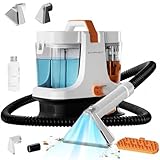
- Strong Suction Power: With 18,000 PA of suction, effortlessly eliminate stubborn pet stains and spots from carpets, upholstery, car interiors, and more. Experience the deep clean you and your pets deserve!
- Versatile Brushes for Precision Cleaning:Equipped with a 3" hand tool for stubborn stains, a 5" wide tool for larger messes, and an integrated CreviceCollector Tool to tackle dirt in tight gaps, the Starrybot upholstery cleaner ensures both precision and efficiency.
- Efficient Tank Design for Easy Cleaning:The 60oz clean water tank and 40oz dirty water tank design provide efficient and hassle-free cleaning. The 6.5ft hose allows you to clean large areas without having to move the carpet cleaner machine constantly.
- Compact and Portable Design:Weighing only 10.4 lbs, the Starrybot carpet cleaner is lightweight and easy to maneuver. Its compact build and detachable handle make it simple to store and transport, making it an ideal cleaner for both home and car use.
- Enjoy Your Purchase: With the peace of mind that comes from our one-year warranty, you can focus on keeping your home clean and fresh without worrying about unexpected issues. Trust Starrybot to deliver quality and performance you can count on!
Practical options
- Professional treatment: Use a qualified pest-management provider when live bugs, eggs or repeated signs remain.
- Steam: Consider it only on materials that tolerate steam, after a hidden-area test and with the tool kept moving.
- Disposal: If an infestation cannot be safely eliminated, EPA advises responsible disposal rather than moving the item indoors or passing it to someone else.
Cornell guidance does not recommend hand washing or freezing as control options for this upholstered-furniture use case. Do not rely on a household freezer, improvised heat or a single pass with a cleaner as proof of eradication.
How do I decide whether to keep, clean professionally or discard it?
| Condition | Reasonable next step | Do not do |
|---|---|---|
| Dry, structurally sound piece with no pest signs | Vacuum, clean by material, ventilate and reinspect | Skip the care-label check |
| Persistent odor but no visible infestation | Trace the source; seek upholstery advice if odor returns after complete drying | Mask it with repeated fragrance or saturating sprays |
| Suspected bed bugs or eggs | Isolate, vacuum, arrange qualified pest control or discard responsibly | Carry it through living areas or heat a room with a fireplace or propane heater |
| Wet, stained or deeply absorbent sleep furniture | Obtain professional assessment; discard when it cannot be dried and cleaned safely | Re-cover and use it while the interior remains damp |
| Severe mold, rodent contamination or structural damage | Professional assessment or responsible disposal | Keep applying chemicals without resolving the source |
CDC healthcare guidance treats persistently wet or stained mattresses as a reason for discard, a useful caution for highly absorbent sleep furniture. A sofa or chair is not automatically identical to a mattress, but the same risk applies when contamination has penetrated filling that cannot be cleaned and dried reliably.
Free tools Windows power users keep installed
One-click scans. No signup required.
What is the complete clean-and-deodorize workflow?
- Ask and document. Ask about provenance, photograph labels and record materials, stains, damage and odor.
- Inspect before loading. Use bright light on seams, folds, buttons, cushions, undersides, backs and joints.
- Contain transport. Keep the piece separate from household goods and isolate it on arrival.
- Dry vacuum. Use a crevice tool on all accessible surfaces; seal and discard contents outdoors.
- Choose a material-specific method. Launder removable items only when permitted, use labeled upholstery products on fabric and compatible cleaners on hard surfaces.
- Use steam cautiously. Test a hidden area, keep the tool moving and follow both furniture and machine instructions.
- Ventilate and dry. Leave cushions separated and compartments open until no dampness remains.
- Reinspect. Check pest-prone areas, odor, staining and structural condition after drying.
- Make the final decision. Bring it indoors only when contamination is resolved and the piece is safe to maintain; otherwise use a licensed professional or responsible disposal.
What mistakes make thrifted furniture harder to save?
- Bringing the item inside before inspecting the underside and cushions.
- Using one cleaner on fabric, leather, painted wood and unfinished wood without checking labels.
- Soaking foam or backing that cannot be removed and dried separately.
- Applying deodorizer before removing the odor source.
- Assuming a clean appearance rules out bed bugs.
- Discarding vacuum contents in an indoor bin.
- Mixing chemicals or ignoring required contact time and ventilation.
- Using a thermostat, propane heater or fireplace to heat a room for bed-bug control.
- Putting covers or cushions back together while their centers are still damp.
Do resale rules affect how secondhand upholstered furniture is handled?
Yes, requirements vary by state and may be stricter for businesses than for private household purchases. Virginia says used upholstered furniture offered for resale must be properly sanitized under its program. Pennsylvania requires secondhand upholstered articles to be disinfected through a registered business and uses a yellow tag to identify articles disinfected before sale or rental.
If you are buying for resale, accepting donations for a business or moving furniture across state lines, check the applicable state and local rules and use a properly licensed sanitation or pest-management provider. A private cleaning routine does not substitute for a required regulated process.
Frequently Asked Questions
How long should thrifted furniture stay outside before I use it?
There is no universal safe number of hours or days. Keep the piece isolated until inspection, cleaning and drying are complete, then recheck seams and odor; outdoor time alone does not eliminate bed bugs or prove that hidden foam is dry.
Can baking soda or air freshener remove a thrift-store smell?
They may reduce a surface impression temporarily, but they do not establish that the odor source is gone or that the furniture is free of contamination. Source removal, compatible cleaning, ventilation and complete drying are the dependable sequence.
Do these 3 things before closing this tab:
1Fix the driver behind crashes, sound loss and screen glitches2Repair Windows errors before they cause bigger problems3Scan for outdated or missing drivers - takes under a minuteShould I throw away cushions if they smell musty?
Not automatically. First determine whether the cushion can be cleaned and dried according to its care instructions; discard or obtain professional advice when staining, moisture or contamination penetrates filling that cannot be safely restored.
Is a yellow tag proof that used furniture is safe everywhere?
No. Pennsylvania’s yellow tag identifies secondhand upholstered articles disinfected through its registered process, but requirements and tags differ by jurisdiction. Treat any tag as evidence of that program’s process, not a substitute for your own inspection.
Quick Recap


