Free tools Windows power users keep installed
One-click scans. No signup required.
The Tool Desk
Outbyte PC Repair FREERepair Windows errors before they cause bigger problemsFix Now →Outbyte Driver Updater FREEFix the driver behind crashes, sound loss and screen glitchesFind Drivers →ThatPainter is reader-supported. When you buy through links on our site, we may earn an affiliate commission. Learn More
You can often save a paint roller after the paint dries, but the correct cleaner depends on the coating. Remove the cover from the frame, scrape away hardened paint, and read the paint label. Use warm water and dish soap for water-based latex or acrylic paint; use only the solvent specified by the paint manufacturer for oil-based or other solvent-based paint. Work with ventilation and suitable gloves whenever a solvent is involved, keep paint and cleaning liquid out of household drains, and dry the cover completely without crushing its nap.
As an Amazon Associate I earn from qualifying purchases.
If the fibers are shedding, permanently matted, or still rigid after an approved cleaning method, replacing the cover is usually the better way to obtain a smooth finish.
Do these 3 things before closing this tab:
1Clear out junk files and repair common Windows errors2Scan for outdated or missing drivers - takes under a minute3Repair Windows errors before they cause bigger problemsWhat is the safest way to remove dried paint from a roller?
The safest sequence is mechanical removal first, chemistry second, then thorough rinsing and drying. Scraping off the thick shell reduces the amount of cleaner required and lowers the chance of damaging the roller’s fibers or adhesive.
Popular on Amazon
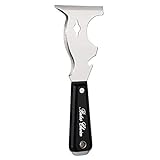
- Bates paint scraper tool 10 in 1 easy to use and convenient.
- A must have tool in your home, Rust-resistant steel blade with wood grip designed .
- This is a multi purpose tool and is ideal for home improvement projects like applying joint compound, puttying windows, scraping paint, removing loose putty, removing loose paint, removing vinyl or paper wall covering.
- Patching dents cracks holes in plaster with soft grip designed to last for long jobs without hand discomfort
- Package includes: 10 in 1 paint scraper tool
- Separate the cover from the frame. Do not try to clean a sleeve while it is still mounted.
- Identify the coating. Read the can label or product data to determine whether it is water-based or oil/solvent-based. Colour and appearance are not reliable indicators.
- Scrape off the hard layer. Hold the sleeve over a tray, empty can, cardboard, or newspaper. Use a roller scraper, putty knife, or suitable multi-tool and work along the length of the cover.
- Use the matching cleaner. Warm water and dish soap are appropriate for most water-based coatings. Oil-based coatings require the solvent named on the paint or roller-cover instructions.
- Rinse or wash as directed. Continue until the runoff is clear and no slippery or tacky cleaner remains.
- Remove excess liquid without twisting. Use a roller spinner or the frame to sling out water, then stand or hang the sleeve so the nap is not crushed.
- Inspect before storage. A sleeve that remains hard, sheds fibers, or has a permanently flattened nap should be replaced.
How do I identify the paint before choosing a cleaner?
Read the paint can, technical data sheet, or cleanup instructions. Bunnings advises checking whether the product is water-based or oil-based before selecting a cleaner and warns against relying on colour or appearance alone.
Water-based paint
Labels may use terms such as latex, acrylic, water cleanup, or soap-and-water cleanup. These coatings generally respond to warm water and dish soap, even when the dried residue needs repeated working and rinsing.
Oil-based or solvent-based paint
Labels typically specify a solvent for cleanup. Mineral spirits or paint thinner are common examples, but they are not universal instructions: use them only when the paint or roller-cover label permits them. Some specialty coatings require a different product.
When the label is missing
Do not guess based on colour, sheen, or how hard the residue feels. A solvent that attacks an adhesive or synthetic fiber can ruin a cover, while water may do little to a solvent-based coating. If the product identity cannot be established, replacing an inexpensive cover may be safer than experimenting with an unknown solvent.
What supplies should I gather?
Prepare the work area before wetting or dissolving the paint. Keep separate containers for dirty liquid and clean rinsing water.
- Paint roller scraper, putty knife, or multi-tool
- Tray, disposable cardboard, newspaper, or an empty paint can for catching scrapings
- Bucket large enough for the cover
- Dish soap and warm water for water-based paint
- The solvent named by the paint manufacturer for oil-based paint
- Gloves and, when the label calls for them, eye or face protection
- Strong ventilation or an outdoor work area for solvent cleaning
- Clean water for the final rinse
- Roller spinner or the roller frame for removing excess water
- Sealed, compatible waste container for dirty solvent or paint residue
A dedicated brush-and-roller cleaner can be useful for hardened residue, but check its label for the coating and fiber types it supports. A product marketed for wet paint is not automatically suitable for dried paint.
Also popular on Amazon

- 【4-In-1 Painter's Tool】Ideal paintbrush comb for flat, angled paint brush of all sizes, Paint roller cleaner tool for 2", 4", 9", 12", 18" paint roller covers, Can opener tool, Bottle opener. An affordable painting tool that covers your basic brush and roller cleaning needs.
- 【Paint Brush Comb】Smooth, long teeth on the paint brush cleaner effectively separate bristles and quickly remove paint from brushes without damaging them. A great cleaning tool to keep your brushes in good shape and cuts cleanup time in half.
- 【Mini & Large Roller Cleaner】2 curved areas help remove paint from small to large paint roller covers of different fabrics and naps, saving paint and cleanup efficiency. Fits 2 to 18-inch roller covers (microfiber, foam, lambswool, etc) with nap heights of 1/4", 1/3", 3/8", 1/2", 3/4", 4/5" and beyond. Keeps rollers in good condition.
- 【Lightweight & Sturdy】Paint comb roller cleaner is made of tough plastic with a stainless steel can opener at the rear, light yet durable for long-term use, each weighing 67 grams. Ergonomic, non-slip grip for confident control.
- 【Easy to Clean】Simply rinse for repeated use. Hanging hole at the end for easy storage and carrying on the go. A handy painter's tool to get all the paint off multiple sizes of paint brushes and paint rollers for extended lifespan.
How do I remove the dried paint mechanically?
Mechanical removal should precede soaking. Behr includes a scraping tool in its roller-cleaning supplies, and Lowe’s begins its roller procedure by scraping excess paint.
Quick wins for a faster PC:
Repair Windows errors before they cause bigger problemsFix Now →Fix the driver behind crashes, sound loss and screen glitchesFind Drivers →- Take the sleeve off the frame and hold it horizontally over your collection surface.
- Starting at one end, draw the scraper along the sleeve in the direction of the pile. Use controlled pressure rather than stabbing into the fabric.
- Rotate the cover and repeat until flakes and thick ridges are gone.
- Pick loose chips from between the fibers. Do not pull aggressively on individual strands.
- Collect all scrapings. Dried paint belongs in the waste stream required by your local rules, not in a drain.
Scraping will not normally remove paint that has bonded deep in the nap. Its purpose is to reduce the hardened mass so the correct water-based cleaner or solvent can reach the remaining film.
How do I clean dried latex or acrylic paint with water?
For a water-based coating, use warm water and dish soap, then massage, rinse, and repeat. Lowe’s specifies this approach, and Behr likewise recommends repeated washing and rinsing.
- Fill a bucket with warm water and add enough dish soap to make the water slippery, not heavily foamy.
- Submerge the scraped cover. Let the water work into the pile, then gently massage the fibers with gloved fingers.
- Work from the ends toward the center to loosen caked paint without twisting the sleeve.
- Lift the cover and allow the dirty water to drain into the collection container. Do not pour paint-filled water into a household sink or floor drain.
- Rinse in clean water. Rotate the sleeve so every section is flushed.
- Repeat the warm soapy wash and clean-water rinse until the runoff is clear and the pile moves freely.
Do not leave the cover submerged indefinitely. Prolonged soaking can affect the adhesive that joins the nap to the core, especially on lower-cost sleeves. If the paint has become a hard shell, a product whose label specifically allows dried paint on roller covers may be more effective than endless soaking.
Can a dedicated cleaner help with stubborn water-based residue?
Sherwin-Williams describes M-1 as a water-based cleaner that restores dried synthetic brushes and roller covers and removes hardened latex and oil-based paints. Follow that product’s label for compatible materials, contact time, ventilation, rinsing, and disposal; do not assume the same directions apply to another cleaner.
Free tools Windows power users keep installed
One-click scans. No signup required.
What is the correct method for dried oil-based paint?
Oil-based and other solvent-based coatings require the solvent named by the paint manufacturer. Purdy instructs users to follow the paint maker’s solvent choice and not soak the cover.
Also popular on Amazon

- PAINT ROLLER CLEANER: Painting made easy! With our paint roller cleaner tool, you can save time and money while effortlessly cleaning excess paint from roller sleeves; Easily cleans excess paint in just one easy swipe
- STOP WASTING PAINT: Don't waste paint anymore! The Touch Up Cup paint removal tool takes just one swipe to remove most of the paint, allowing you to utilize paint cans and rollers to their maximum potential
- A PAINTING ESSENTIAL: The Roller Saver is a durable and long-lasting essential for any DIY or commercial painter; Say goodbye to single-use cleaners and hello to well-made household painting accessories
- 3 SIZE NAPS: No matter the size of your roller, our paint sleeve cleaner can handle it. With this paint remover tool, you can easily clean roller sleeves with 1/4 inch (6mm), 3/8 inch (10mm), and 1/2 inch (15mm) naps with just one swipe
- PROUDLY MADE IN THE USA: Buy with confidence and make painting a breeze with our efficient paint roller cleaner
- Move the work outdoors or to an area with strong cross-ventilation. Keep the container away from flames, sparks, heaters, children, and pets.
- Put on the gloves and eye or face protection specified on the paint and solvent labels.
- After scraping, place a manageable amount of the approved solvent in a compatible container. Use only enough to work through the cover.
- Roll or squeeze the solvent through the pile so it dissolves the remaining film. Do not twist, wring, or leave the sleeve soaking unless the label explicitly directs that method.
- Express the dirty solvent into a suitable waste container. Repeat with fresh solvent when the label calls for it rather than continuing to circulate contaminated liquid.
- Wash the cover afterward with warm soapy water if the paint and solvent instructions permit it. Lowe’s includes a warm soapy wash after solvent cleaning.
- Rinse as directed and remove excess liquid without wringing.
Mineral spirits and paint thinner are common examples, not blanket recommendations. The permitted solvent can vary by resin, additive, and roller-fiber material. If the label says a solvent is unsuitable for the applicator, do not use it merely because it dissolves the paint.
How should I rinse, spin, and dry the roller cover?
Cleaning is not complete until the cover is free of paint and cleaner and is fully dry. Behr, Purdy, and Dulux all emphasize removing excess liquid and storing the cover without crushing the nap.
- Rinse with the liquid specified by the cleaner or paint instructions. For a water-based process, this is normally clean water; for a solvent process, follow the solvent label before introducing water.
- Mount the cover on a roller spinner or the frame and spin it over a collection container. Spinning removes liquid while preserving the pile better than hand wringing.
- Inspect the ends and the inside of the sleeve, where paint can remain trapped.
- Stand the cover on one end or hang it in a clean, ventilated place. Keep it away from dust, direct heat, and anything that can flatten the pile.
- Wait until it is completely dry before placing it in a bag, box, or cabinet. Trapped moisture can leave the nap clumped and can encourage deterioration of the adhesive.
Never twist or wring a roller cover. Those actions can permanently mat the fibers and distort the sleeve.
Recommended Free Tools
When should I use a brush-and-roller cleaner instead of household supplies?
A dedicated product is most useful when scraping and the coating’s ordinary cleanup method leave a hard residue. Choose it by label, not by the promise that it works on every applicator.
| Method | Paint supported | Best use | Main precautions |
|---|---|---|---|
| Warm water and dish soap | Most water-based latex and acrylic coatings | Routine cleanup and softened dried residue | Use repeated rinses; avoid prolonged soaking and keep dirty water out of drains |
| Manufacturer-specified solvent | Oil-based or solvent-based coatings when the label permits | Dissolving residue that water cannot remove | Ventilation, protective equipment, fire control, compatible container, and hazardous-waste handling |
| Dedicated brush-and-roller cleaner | Only the coatings and fibers listed on its label | Hardened paint that survives the normal method | Follow contact time, rinsing, material compatibility, and disposal instructions |
| Replacement cover | Any coating when the sleeve is damaged | Matted, shedding, or permanently hard covers | Discard the old cover according to local paint-waste rules |
Rust-Oleum describes its Brush-Wash Cleaner & Renewer as removing dried paint from most types of paint applicators. “Most” is not “all,” so verify the label against your specific cover and paint.
How do I avoid damaging the roller?
The nap and the adhesive holding it to the core are the parts most easily ruined during recovery.
Also popular on Amazon

- 10 in 1 Putty Knife: A mutifunctional paint scraper for home Improvement and professional painters
- Paint Scraper Materials: The polished rust proof stainless steel blade ensures higher efficiency and longer life
- More Comfortable Use: PP and TPR handle with ergonomic design makes the grip more easy, firm and secure
- Mutiple Uses Help More: This scraper san be used in many situations, including applying and removing putty, shoveling paint and glue, pulling nails, opening cans, cleaning rollers and more
- An Ideal Tool for Long Use: Guaranteed by solvent resistant handle, precision ground steel blade, and our after sales service
- Do not use an unsuitable liquid. A solvent can soften adhesive or attack synthetic fibers; water can be ineffective against oil-based film.
- Do not twist or wring. Squeezing lengthwise or spinning is gentler than torsion.
- Do not scrape across the pile with excessive force. Remove the shell without cutting or tearing the fabric.
- Do not mix cleaners. Combine products only when a label explicitly permits it.
- Do not leave solvent-soaked material exposed. Close containers and manage used liquid and rags as directed by local hazardous-waste rules.
- Do not store while damp. Drying upright or hanging prevents a flattened, lumpy finish on the next project.
What safety and disposal rules apply?
Paint and solvent residues are household chemicals, not ordinary rinse water. Bunnings advises gloves, suitable eye or face protection, and ventilation when using mineral spirits, paint thinner, or other solvents.
- Read the paint, cleaner, and roller-cover labels before starting; their formulas and permitted solvents vary.
- Use ventilation strong enough to prevent concentrated vapour buildup. Outdoor work is preferable when the label allows it.
- Keep containers closed whenever you are not actively dispensing product.
- Keep solvents and paint away from open flames, ignition sources, children, and pets.
- Never pour paint, solvent, or contaminated wash water into a household sink, toilet, storm drain, or floor drain. Purdy’s instruction is explicit: “Do not clean directly in the sink.”
- Collect sludge, scrapings, and used solvent in compatible containers and follow your local hazardous-waste or household chemical disposal service.
- Do not transfer an unknown solvent to an unlabelled bottle.
How can I tell whether the cover is worth saving?
After cleaning and complete drying, flex the pile and inspect the sleeve under good light. Saving it makes sense only if the cover can still lay down an even film without shedding or leaving ridges.
Signs it can be reused
- The nap springs back instead of staying flattened.
- No hard lumps remain between the fibers.
- The cover does not shed strands when lightly brushed.
- The adhesive bond and core remain intact.
Signs to replace it
- Fibers shed or pull out. Sherwin-Williams lists shedding as a reason to replace a roller.
- The nap is permanently matted, glazed, or uneven.
- The sleeve remains hard after the approved cleaner has been used as directed.
- The cover has torn, separated from its core, or developed a distorted shape.
A damaged cover can transfer texture, loose fibers, or dried specks to a fresh coating. The cost of a replacement sleeve is often lower than correcting an uneven finish.
How long can a properly maintained roller last?
Sherwin-Williams states that a high-quality roller may last three to six months or up to five projects with proper care. That is a manufacturer guideline, not a controlled durability study, and actual life depends on the cover material, paint chemistry, cleaning method, storage, and workload.
Prompt cleanup is still preferable to recovery after a complete dry-out. Sherwin-Williams notes that once paint begins to dry on equipment, it can be much more difficult to remove.
What should I do when the paint type or cleaner is uncertain?
Pause before applying liquid. Check the original can, product data sheet, or the manufacturer’s technical support information for the cleanup instruction and compatible applicator materials.
Also popular on Amazon

- RUGGED & CORROSION-RESISTANT: Made of strong 420 stainless steel that flexes without breaking. Stays sharp and resists rust, even with frequent use
- MINI ROLLER CLEANER: sized to effectively clean mini rollers
- LARGE ROLLER CLEANER: Large diameter Mini Roller Cleaner- sized to effectively clean large diameter mini rollers or even short napped regular covers
- STANDARD ROLLER CLEANER: sized to effectively clean standard size covers from short to long length naps
- PAINT BRUSH CLEANER: Fine tipped, long toothed comb works great to separate bristles and allow deep cleanse/removal of paint from brush head
- Identify the coating and the roller-fiber material if possible.
- Scrape off loose material while the sleeve is dry.
- Choose only a cleaner whose label names that coating and applicator type.
- Test the cleaner on a small section or sacrificial area if the label allows testing.
- Stop if the nap softens, the adhesive becomes tacky, colour transfers from the fibers, or the core swells.
- Replace the cover when compatibility cannot be established.
This conservative approach costs less than repairing a finish damaged by a softened adhesive, contaminated rinse, or incompatible solvent.
Frequently Asked Questions
Can I use vinegar to remove dried paint from a roller?
The supplied cleaning guidance does not establish vinegar as an approved treatment for dried roller paint. Use the paint label’s water-cleanup method or specified solvent instead, because an improvised acidic cleaner may not dissolve the coating and could affect the cover material.
Can I leave a paint roller soaking overnight?
Overnight soaking is not a general recommendation. Extended contact can weaken the adhesive or alter the nap, so follow the cleaner’s stated contact time and use mechanical removal plus repeated cleaning instead.
Why is my cleaned roller leaving lint or texture?
Lint, texture, or ridges usually indicate shedding fibers, a permanently matted nap, embedded hard paint, or an unevenly damaged cover. Once the sleeve is fully dry, replace it if the pile does not recover or continues shedding.
How should I store a roller between coats on the same day?
For a short interruption, follow the paint manufacturer’s advice for keeping the applicator usable; do not assume that wrapping or sealing is suitable for every coating. For storage after cleaning, the cover must be completely dry and supported so its nap is not crushed.
Quick Recap


