Outdated Drivers Are Slowing You Down
Recommended Free Tools
Outbyte Driver Updater · freeOne free scan finds every outdated or missing driver and matches the right update for your exact hardware.
Scan My Drivers Free →ThatPainter is reader-supported. When you buy through links on our site, we may earn an affiliate commission. Learn More
The lowest price per gallon is not necessarily the lowest-cost paint job. Compare each product by the amount of paint needed to produce the same finished area: divide container price by labeled one-coat coverage, multiply by the number of planned coats, then add primer, preparation, delivery, tinting, and expected waste. Round the result up to whole containers. A $55 gallon covering 550 square feet for one coat can cost less per finished square foot than a $42 gallon covering 400 square feet, even before a porous wall forces extra paint or primer.
What is the right way to compare paint prices?
Use the same room, sheen, product tier, color, substrate, and coat count for every candidate. The basic comparison is:
As an Amazon Associate I earn from qualifying purchases.
Quick wins for a faster PC:
Repair Windows errors before they cause bigger problemsFix Now →Scan for outdated or missing drivers - takes under a minuteDriver Scan →Effective cost per finished square foot = (container price ÷ labeled one-coat coverage) × planned coats
This is a screening calculation, not a guarantee of actual consumption. Add the costs that a gallon-price comparison leaves out: primer, patching and sanding, masking, delivery, tinting, equipment, and paint left over at the end. If a product is sold in several container sizes, calculate the job with the actual package size you would buy and round the quantity up to complete containers.
Popular on Amazon

- Great Value Paint Brush Set: Soucolor 20 acrylic paint brushes come in 10 different sizes, making them ideal for fine detailing, model painting, rock painting, nail art, face painting, DIY crafts, and general art projects. The varied brush sizes give you better control for both delicate lines and broader color coverage, while the soft bristles deliver smooth, consistent results on acrylic, oil, watercolor, canvas, wood, ceramic, and more.
- Awesome Set of Paint brushes: Professional paint brushes can cover all of your needs. The multi-purposed brushes are ideal for Watercolor, Oil, Gouache, enamel, Acrylic Painting, Body, Nail, Face Painting, Miniature, Model, Wood, Glass, Cup, Ceramic, Fine work, Art class, Craft Art Painting, DIY Art Crafts etc.
- Soft and long-lasting: The bristles are soft and strong, with nickel metal ferrules and blue wooden handles. After cleaning, the bristles will become soft and fluffy again and will not fall off.
- Easy to clean: it’s very convenient to Wash well in soap and water. Retain shape after drying. the brushes hold up very well. Nice selection to beginners and professionals. Keep them clean and they last a long time.
- Perfect for All Painters & Occasions: Suitable for art beginners, hobbyists and professional artists. Great for art class, home creation, travel painting and DIY handmade projects. A practical art gift for students, teachers, family and craft lovers.
Coverage figures are not interchangeable promises. Benjamin Moore says one gallon covers 400–450 square feet with one coat (2012). Sherwin-Williams gives a typical range of 350–400 square feet per gallon, with no publication date stated on the cited page. Behr says certain interior products cover 250–400 square feet per gallon for one coat. Formula, sheen, surface condition, and application method can move your result well outside the label estimate.
Why does price per gallon give the wrong impression?
A gallon is a package, not a finished amount of wall. Two products in identical gallon cans may cover different areas, and one may need another coat to hide the old color. The useful unit is the cost of the completed surface, not the cost of the liquid in the can.
PC Slower Than It Used to Be?
A free scan shows the junk files, broken settings and background clutter dragging Windows down - then fixes them in one click.Free scan · Windows 10 & 11Crashes, No Sound, or Screen Glitches?
Random freezes, missing sound and display glitches usually trace back to one bad driver. Find and replace yours safely.Free scan · under a minuteA simple comparison
| Candidate | Illustrative container price | Label coverage, one coat | Planned coats | Effective cost per finished sq ft |
|---|---|---|---|---|
| Paint A | $42 | 400 sq ft | 2 | $42 ÷ 400 × 2 = $0.21 |
| Paint B | $55 | 550 sq ft | 2 | $55 ÷ 550 × 2 = $0.20 |
These are illustrative arithmetic examples, not current retail quotes. Paint B costs $13 more per container but $0.01 less per finished square foot under the stated assumptions. If Paint A also needs primer or extra paint on a porous wall, its total job cost can exceed Paint B by a wider margin.
When the gallon price still matters
Container price remains important for cash flow and for the final rounded purchase. A product that wins on theoretical unit cost may require an additional full container because of package sizes or a small amount of unavoidable waste. Compare both the continuous unit calculation and the actual checkout total.
How do I measure the area that will actually be painted?
Measure the surfaces in the same way for every product. Benjamin Moore’s guide totals wall lengths, multiplies by height, and subtracts doors and windows. Sherwin-Williams likewise starts with measured dimensions, and Behr notes that openings reduce paintable area.
Also popular on Amazon

- COMPLETE 5-PIECE BRUSH SET FOR EVERY PAINTING TASK — Includes 1 Inch Flat, 1.5 Inch Angle, 2 Inch Flat, 2 Inch Angle Stubby, and 2.5 Inch Angle brush giving you every size professional painters use daily. Get all 5 for less than the price of a single brush from hardware store brands — professional grade performance at a fraction of the cost. Perfect for walls, trim, cabinets, doors, furniture, and detailed cutting-in work on any project.
- ZERO BRISTLE LOSS — GUARANTEED BY PRECISION ADHESIVE BONDING — Every bristle is locked in place with precision-set adhesive that keeps them in the brush — not in your paint job. The coated steel ferrule provides structural support while the adhesive bond ensures clean performance on every stroke. Premium SRT synthetic filaments load more paint and release it evenly for a smooth streak-free finish on walls, ceilings, and trim. Works with latex, oil-based paint, primer, sealer, and wood stain.
- INCLUDES THE ANGLE STUBBY MOST SETS LEAVE OUT — Professional painters know the 2 Inch Angle Stubby is the go-to brush for tight cabinet interiors, window sashes, inside corners, and detailed trim where standard angle brushes are too long. Combined with the 1.5 and 2.5 inch angle sash brushes you have precision cutting-in covered at every scale — baseboards, crown molding, door casings, and ceiling lines.
- FLAT BRUSHES FOR BROAD SMOOTH COVERAGE ON ANY SURFACE — The 1 and 2 inch flat brushes deliver even coverage on walls, furniture, shelving, doors, fences, decks, and wood surfaces. Ideal for applying primers, stains, varnishes, polyurethane, and specialty coatings. Solid wood handles provide all-day comfort and control for both professional contractors and weekend DIY homeowners tackling interior or exterior painting projects.
- TRUSTED BY PROFESSIONAL PAINTERS AND CONTRACTORS NATIONWIDE — Pro Grade delivers professional-grade results at a price that makes sense for crews who go through brushes on every job. Ideal for property managers, remodeling contractors, apartment turnover crews, maintenance teams, and commercial painting operations. Backed by thousands of verified reviews from working painters. Washable and reusable for multiple projects.
- Measure each wall. Record length and height in feet. Multiply each pair and add the wall areas together.
- Subtract openings. Measure doors and windows and subtract their areas. If an opening will be painted on the trim or inside reveal, count those surfaces separately rather than subtracting them.
- Add other surfaces in the scope. Include the ceiling, baseboards, crown molding, doors, cabinets, or built-ins when they will receive the same product. Keep different products or sheens in separate area totals.
- Choose the coat plan. State whether the finish requires one coat, two finish coats, or a primer plus finish coats. Use the same plan while comparing products.
- Divide by coverage and multiply by coats. Apply the formula to each candidate’s labeled coverage.
- Round up containers. A fraction of a gallon still requires a full package unless the retailer sells a suitable smaller size. Record the expected leftover.
For a quick check, write the dimensions on a room sketch. Separating walls, ceiling, and trim prevents a high-coverage wall paint from being incorrectly compared with a different product used on a small trim area.
Free tools Windows power users keep installed
One-click scans. No signup required.
How many gallons do two coats really require?
Use the one-coat label coverage as the denominator, then multiply by the number of coats. For example, 720 square feet of paintable wall at 400 square feet per gallon requires 1.8 gallons for one coat and 3.6 gallons for two coats before rounding. The purchase would normally be four one-gallon containers, subject to the product’s package options and the retailer’s advice.
A whole-container calculation
| Paintable area | Label coverage | Coats | Unrounded requirement | One-gallon containers to buy |
|---|---|---|---|---|
| 720 sq ft | 400 sq ft/gal | 2 | 720 ÷ 400 × 2 = 3.6 gal | 4 |
| 720 sq ft | 550 sq ft/gal | 2 | 720 ÷ 550 × 2 = 2.62 gal | 3 |
The second option uses one fewer gallon container in this example, but the difference is not automatically savings. Check the price of each package, whether the label coverage applies to your surface, and how much usable paint will remain.
What coverage should I expect from different paints?
Published ranges provide a starting point, not a universal conversion table.
| Source and product context | Published one-coat coverage | Qualification |
|---|---|---|
| Benjamin Moore | 400–450 sq ft per gallon | 2012 guidance; described as a rough estimate. |
| Sherwin-Williams | 350–400 sq ft per gallon | Typical range on the cited page; requirements vary by application method and surface type or condition. |
| Behr ULTRA Interior Paint and Primer or BEHR PREMIUM PLUS Interior Paint & Primer | 250–400 sq ft per gallon | One-coat statement for the listed interior products. |
Do not average these ranges and treat the result as a product specification. They describe different formulas and guidance. Use the exact coverage printed for the product and sheen you are pricing, and retain a screenshot or note of the label because formulas and packaging can change.
Quick wins for a faster PC:
Repair Windows errors before they cause bigger problemsFix Now →Scan for outdated or missing drivers - takes under a minuteDriver Scan →Clear out junk files and repair common Windows errorsFree Scan →Also popular on Amazon
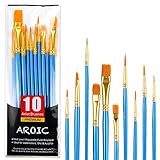
- 【All sizes of art brushes】: The 10 sizes of multi-functional brushes have various shapes, making the mixing color easier, which is very suitable for artists, students, teenagers, children and painters at all levels. Wonderful Present ideas for friends and family who like painting!
- 【general brush set】: Professional paint brush can meet all your needs. Multifunctional brush is very suitable for watercolor, oil, gouache, acrylic painting, body, nail, face painting, miniature, model, ceramics, arts and crafts painting, etc.
- 【high quality process】: It is designed with anti falling bristles, anti-rust nickel ferrule and solid wood handle. You can use the brush to focus on the painting and always be creative.
- 【easy to maintain】: After using the brush, it is very convenient to clean the brush with warm soapy water and reshape the tip of the brush. Air dry the brush and place it on top of the top for long use.
- 【100% satisfaction guarantee - buy now】1 packs of set brushes, you can also get friendly customer service, any questions feel free to contact us, within 24 hours to help you! There is no risk in buying our paint brush kit.
Why can a wall use more paint than the label predicts?
Labels are based on a stated surface and application basis. Actual walls can consume more because the substrate absorbs paint, the film is applied too thinly or thickly, or the color change demands additional hiding.
- Porous or unsealed drywall, plaster, wood, or masonry: pores draw in binder and pigment. A dedicated primer can reduce absorption and make finish coverage more predictable.
- Rough or textured surfaces: peaks, valleys, and profile depth increase the surface area and leave less paint per visible square foot.
- Previously unpainted surfaces: new substrate often needs a primer or extra finish material compared with a sound, sealed coating.
- Dramatic color changes: moving from a very dark color to white, or the reverse, may require additional coats or a tinted primer.
- Application method: roller nap, sprayer settings, brush loading, and back-rolling affect transfer and film thickness. Sherwin-Williams specifically warns that requirements vary with application method and surface condition.
- Sheen and product tier: gloss, satin, eggshell, and flat products can have different formulas and hiding characteristics. Compare the same sheen and tier when price is the question.
Build an expected coverage penalty into your planning rather than quietly assuming the best-case label number. If a wall is heavily textured or absorbent, compare candidates using a conservative coverage assumption and then verify with a small test area.
Should primer be included in the paint-price comparison?
Yes, whenever one option needs primer or another option’s label does not cover the same preparation. Primer is part of the finished coating system, so its price and coverage belong in the job total.
Include these primer questions
- Is the substrate bare, chalky, patched, stained, glossy, or otherwise unsuitable for direct finish paint?
- Does the selected finish product state that it can serve as primer on this surface, or does it only combine paint and primer for limited repainting conditions?
- Will the color change need a tinted primer or an additional finish coat?
- Does the primer come in a different container size or have a different coverage rate?
Calculate primer separately: primer price divided by its labeled coverage, multiplied by its planned coats, then add the finish-paint calculation. A low-priced finish paint can lose its advantage if it requires a full primer coat while a comparable system does not.
Windows Errors? Fix Them Before They Spread
Repair common Windows errors and clear accumulated junk for a smoother, more stable PC - no reinstall needed.Free scan · no reinstallOutdated Drivers Are Slowing You Down
One free scan finds every outdated or missing driver and matches the right update for your exact hardware.Free scan · exact hardware matchHow should I compare products with different container sizes?
First calculate the gallons or litres required, then map that requirement to the packages actually sold. A half-full remainder is not the same as a half-price purchase.
Also popular on Amazon

- 【KIDS PAINT BRUSHES SET】Anezus paint brushes for kids come with 10 pcs paint brushes of 5pcs round paintbrushes and 5 flat paint brushes with colorful handles, good for the young artist to explore their creativity in painting and crafting
- 【HIGH QUALITY PAINT BRUSHES FOR KIDS】These toddler paint brushes made of soft hog bristle, bright colored handles and rust proof ferrules. The bristles are firmly fixed in the kids paint brushes and no shedding. Each children paint brush measure 6 1/4 inches (16cm) in length and ferrules 1/2"(1.3cm) diameter, large enough for the little hand to grip and control
- 【WIDE APPLICATIONS】With combination of round and flat craft paint brushes for kids, work great with washable paint, tempera paint and acrylic paint. Great for arts and craft, rock, leather, gesso and ceramic, or body, nail and face art painting.
- 【EASY TO CLEAN 】After using paint brushes for acrylic, oil or watercolor painting, it’s very convenient to clean them with warm soapy water and reshape the paint brush tips. Keep these craft paint brushes clean and they last a long time.
- 【GREAT GIFT IDEA】Perfect for students, teens, kids, children and painters of all levels. Wonderful gift idea for girls, boys and kids who love painting! These all-purpose paint brushes for kids are ideal for kids' school projects, birthday parties, painting parties, art parties, back to school supplies, classroom decoration and more.
| Item to record | Why it changes the decision |
|---|---|
| Container price and volume | Determines the cost of each usable unit and the checkout total. |
| Label coverage for that container | Some labels state coverage per gallon; convert consistently when package volumes differ. |
| Number of containers after rounding | Controls the money paid and the leftover quantity. |
| Leftover paint value | Matching paint can be useful for future repairs; an unusual color or short shelf life may make excess less valuable. |
| Delivery, tinting, and pickup costs | Small unit-cost differences can disappear when fees are added. |
When two packages produce the same usable amount, choose the one with the lower delivered job total, not the lower nominal price per gallon.
Is a small test area useful for estimating coverage?
A small, marked test area can reveal whether a wall is unusually absorbent or whether the color is likely to need another coat. It is an indicative check, not a laboratory measurement or a promise that the same rate will hold everywhere.
- Choose a representative section that includes the actual substrate and texture.
- Mark its boundaries with painter’s tape; many painter’s-tape rolls are 60 yards (180 feet or 54.8 metres) long, according to 3M’s guidance.
- Measure the test area and note the paint volume used, keeping the same roller, brush, dilution, and technique planned for the job.
- Allow the coat to dry fully, inspect hiding and absorption, and decide whether primer or another coat is needed.
- Remove the tape carefully and use the observation to adjust your planning, while retaining a safety margin for edges, tools, and variation.
What should be on a fair paint-price comparison sheet?
Make one row per candidate and fill every row with equivalent assumptions.
| Field | Entry |
|---|---|
| Product and sheen | Exact line, finish, and color. |
| Container size and price | Retail price for the package you can buy; note whether a discount is one-time or recurring. |
| Labeled coverage | One-coat coverage in the same units for every row. |
| Paintable area | Walls minus openings, plus any ceiling or trim in scope. |
| Finish coats | Same planned count for every candidate. |
| Primer and preparation | Products, quantities, patching, sanding, cleaning, and masking. |
| Surface adjustment | Conservative allowance for porosity, texture, or a major color change. |
| Rounded containers | Actual packages required, not the decimal result. |
| Fees and leftovers | Delivery, tinting, pickup, and the practical value of remaining paint. |
| Finished-area cost | Total job cost divided by the finished square feet. |
Which product is the better value?
Choose the candidate with the lowest credible total cost for the required finish, not automatically the lowest calculated number. Use this decision sequence:
- Eliminate products that do not meet the required sheen, durability, color, or substrate compatibility.
- Set one area, coat count, and preparation plan.
- Calculate the label-based cost per finished square foot.
- Apply a realistic coverage allowance for texture, porosity, application method, and color change.
- Add primer, preparation, delivery, tinting, and equipment.
- Round to whole containers and compare the actual purchase totals.
- Consider whether leftover paint has value for future touch-ups.
- If the result is close, favor the system with more predictable hiding or the product whose technical data clearly matches the surface.
This approach separates a genuine coverage advantage from a cheap gallon that merely shifts cost into extra coats, primer, or an additional trip to the store.
Also popular on Amazon

- 【162-Piece Bulk Set | Dual Brush System】Maximize versatility with 81 flat brushes (0.59 inch edge for bold strokes) and 81 round brushes (0.39 inch tips for details) – 3X more tools than standard kits! Pre-sorted in labeled compartments for instant access during painting sessions. Ideal for art classrooms, mural projects, and multi-artist households.
- 【Pro-Grade Durability | Zero Shedding Guarantee】 "Engineered with triple-crimped nylon bristles (43% higher resilience vs. standard) and aerospace aluminum ferrules tested for 10,000+ flex cycles. Lab-verified 0.01% shedding rate even with heavy impasto techniques – outperforms flimsy bristles in budget brushes."
- 【Multi-Scenario Readiness | Event & Daily Use】 Optimized for: Thanksgiving/Christmas face designs classroom projects ceramic decorating fabric printing and model painting; Lightweight plastic handles each reduce hand fatigue during prolonged sessions
- 【Effortless Maintenance | Long-Term Durability】 Clean with warm soapy water in 10 seconds; Reshape tips and air-dry vertically to preserve bristle integrity,After use, air-dry brushes thoroughly and store upright in the provided case to preserve bristle shape. The premium nylon filaments naturally regain their original form after each stroke. For cleaning, simply rinse in warm soapy water and gently reshape bristles with fingertips."
- 【Multiple Application】These acrylic paint brushes can be applied for most occasions,such as:watercolor,oil, gouache paint,face paint, acrylic paint, suitable for Thanks Giving Day, Christimas, Halloween face and body painting, canvas painting, fabric, rock, miniature, model, ceramics, arts and crafts painting, etc.
What mistakes make paint comparisons unreliable?
- Using different coat counts: one product at one coat cannot be fairly compared with another at two.
- Mixing sheens or tiers: a budget flat and a premium satin solve different requirements.
- Ignoring openings or adding them twice: measure and subtract doors and windows once, then include trim separately if it is painted.
- Using a single optimistic coverage number: rough and porous surfaces rarely behave like smooth sealed walls.
- Forgetting container rounding: 2.1 gallons still means buying enough complete containers.
- Comparing shelf prices instead of delivered totals: delivery, tinting, and pickup fees can reverse a small advantage.
- Treating illustrative arithmetic as a market quote: prices change by retailer, location, promotion, and date.
- Buying an unverified color match: a leftover can is valuable only if it remains identifiable and usable for the intended touch-up.
What is the practical shopping checklist?
- Measure every wall and subtract doors and windows.
- List ceilings, trim, doors, and other surfaces separately.
- Record each candidate’s exact product line, sheen, color, container size, price, and labeled coverage.
- Use one coat plan and one preparation standard across all candidates.
- Price primer and surface preparation where required.
- Allow for porous, rough, textured, previously unpainted, or dramatic-color surfaces.
- Calculate effective cost per finished square foot.
- Round up to complete containers and note likely leftover paint.
- Add delivery, tinting, masking, and other job costs.
- Use a marked test area when the surface is uncertain, treating the result as indicative.
Frequently Asked Questions
Does higher coverage always mean better paint?
No. Coverage is only one value measure. Sheen, washability, durability, color accuracy, substrate compatibility, and the number of coats needed for acceptable hiding can justify a product with a higher calculated cost.
How much extra paint should I buy for touch-ups?
There is no universal percentage because waste depends on room geometry, application method, texture, and package sizes. Keep a clearly labeled, sealed remainder from the same color and sheen rather than adding an arbitrary allowance to every job.
Can I compare paint sold in litres with paint sold in gallons?
Yes, but convert both volume and coverage to the same units before calculating. Do not assume that a litre-to-gallon conversion preserves the label’s coverage claim; use the coverage stated for the specific package or product data sheet.
What if the label does not state coverage?
Ask the retailer or manufacturer for the product’s technical data before using it in a cost comparison. If coverage remains unavailable, mark it as not stated and compare only the parts of the job that can be documented instead of guessing.
Quick Recap


