Free tools Windows power users keep installed
One-click scans. No signup required.
ThatPainter is reader-supported. When you buy through links on our site, we may earn an affiliate commission. Learn More
Plant covers can reduce frost damage to tender trees and shrubs, but they are not a guarantee against a hard freeze. The right choice depends on what needs protecting: a whole canopy, one small plant, a row or bed, or only a vulnerable trunk. For a cold night, a fabric cover that reaches the ground and is secured against wind is often the simplest approach; structures such as cold frames and hoop tunnels suit larger areas or longer use.
As an Amazon Associate I earn from qualifying purchases.
These seven options have different strengths and limits. In particular, plastic needs support and daytime ventilation, while trunk wraps protect only the trunk—not leaves, flowers or branches.
Recommended Free Tools
How should you choose a plant cover?
Start with the part of the plant at risk, then consider how long the cold is expected to last and whether you can remove or ventilate the cover the next day. A small shrub can often be covered with fabric for one night; a row of plants may call for hoops; and a trunk wrap is relevant only when the trunk itself is the concern.
Popular on Amazon

- Great Value Paint Brush Set: Soucolor 20 acrylic paint brushes come in 10 different sizes, making them ideal for fine detailing, model painting, rock painting, nail art, face painting, DIY crafts, and general art projects. The varied brush sizes give you better control for both delicate lines and broader color coverage, while the soft bristles deliver smooth, consistent results on acrylic, oil, watercolor, canvas, wood, ceramic, and more.
- Awesome Set of Paint brushes: Professional paint brushes can cover all of your needs. The multi-purposed brushes are ideal for Watercolor, Oil, Gouache, enamel, Acrylic Painting, Body, Nail, Face Painting, Miniature, Model, Wood, Glass, Cup, Ceramic, Fine work, Art class, Craft Art Painting, DIY Art Crafts etc.
- Soft and long-lasting: The bristles are soft and strong, with nickel metal ferrules and blue wooden handles. After cleaning, the bristles will become soft and fluffy again and will not fall off.
- Easy to clean: it’s very convenient to Wash well in soap and water. Retain shape after drying. the brushes hold up very well. Nice selection to beginners and professionals. Keep them clean and they last a long time.
- Perfect for All Painters & Occasions: Suitable for art beginners, hobbyists and professional artists. Great for art class, home creation, travel painting and DIY handmade projects. A practical art gift for students, teachers, family and craft lovers.
Extension guidance emphasizes that covers are more useful against frost than against extreme cold. The University of Florida Institute of Food and Agricultural Sciences puts it plainly: “Covers are better at protecting plants from frost than from extreme cold.” A cover can help conserve warmth near a plant, but its effect varies with material, grade, how it is installed, the plant and the weather. It cannot make a tender plant reliably hardy in conditions far beyond its tolerance.
| Cover type | Best fit | Coverage | Main management need |
|---|---|---|---|
| Frost cloth or floating row-cover fabric | Short cold spells; shrubs, small trees or rows | Canopy or row | Secure edges; support it where needed |
| Sheets and blankets | Temporary overnight protection | One plant or a small group | Remove after sunrise; keep fabric from resting on foliage when possible |
| Burlap or similar fabric | Breathable wrapping or shielding | Selected shrub or container | Do not assume a fixed temperature benefit |
| Plastic sheeting on a frame | Temporary enclosure for a plant or bed | Canopy or area | Keep plastic off leaves and open or vent on sunny days |
| Cloches or hot caps | One small plant | Individual plant | Vent transparent covers in sunshine |
| Cold frames or hoop tunnels | Longer-term protection or season extension | Bed or row | Open for ventilation; plan for sturdy support |
| Trunk wraps or collars | Specific young, grafted or frost-susceptible trees | Trunk only | Match the wrap to local, species-specific guidance |
1. Does frost cloth protect shrubs and small trees?
Frost cloth—also called floating row-cover fabric—is a purpose-made permeable material that can be draped over an individual plant or stretched across a supported row. Unlike an impermeable plastic sheet, it allows light, air and water to pass through, according to the University of Wisconsin–Madison Division of Extension. It is a flexible option when the plant is too large for a cloche but the cold event is short enough that a temporary cover makes sense.
Wisconsin Extension reports that row-cover fabric can create conditions 5–10°F warmer and provide frost protection as low as 28°F in the guidance it describes. Colorado State University Extension gives a figure of up to 10°F of frost protection, depending on material and grade. Those are institutional guidance figures, not a guarantee for every fabric, plant or garden. A loose edge, a gap at ground level, wind, the fabric’s weight and the specific temperature all affect the result.
Quick wins for a faster PC:
Clear out junk files and repair common Windows errorsFree Scan →Fix the driver behind crashes, sound loss and screen glitchesFind Drivers →For an individual shrub, drape fabric so it covers the canopy and reaches the ground, then secure the edges against wind. If the material is heavy or the branches are fragile, support it with stakes or a frame so the fabric does not press on the foliage. For rows, hoops can hold the fabric above plants and clips or weights can help keep it in place. The key is not simply to cover the top: a cover that leaves the sides open may not hold warmth as effectively as one that reaches the soil.
2. Can sheets and blankets protect plants overnight?
Yes. Dry bedsheets, quilts, blankets or towels can serve as temporary overnight covers when frost threatens, especially for a manageable plant or small group. UF/IFAS lists bedsheets and quilts among possible covers, and Nebraska Extension includes sheets, blankets and towels in its short-term frost advice. They are practical when a gardener needs to protect plants quickly with fabric already on hand.
Put the cover on around nightfall, before temperatures drop, and remove it after sunrise, following Nebraska Extension’s guidance. Colorado State advises removing blankets during the day so the soil can absorb warmth again. If the fabric stays on through a sunny day, it can block light and interfere with the plant’s normal daytime conditions. Avoid letting a heavy cover bear down on tender branches; use stakes or other supports if needed.
Also popular on Amazon

- COMPLETE 5-PIECE BRUSH SET FOR EVERY PAINTING TASK — Includes 1 Inch Flat, 1.5 Inch Angle, 2 Inch Flat, 2 Inch Angle Stubby, and 2.5 Inch Angle brush giving you every size professional painters use daily. Get all 5 for less than the price of a single brush from hardware store brands — professional grade performance at a fraction of the cost. Perfect for walls, trim, cabinets, doors, furniture, and detailed cutting-in work on any project.
- ZERO BRISTLE LOSS — GUARANTEED BY PRECISION ADHESIVE BONDING — Every bristle is locked in place with precision-set adhesive that keeps them in the brush — not in your paint job. The coated steel ferrule provides structural support while the adhesive bond ensures clean performance on every stroke. Premium SRT synthetic filaments load more paint and release it evenly for a smooth streak-free finish on walls, ceilings, and trim. Works with latex, oil-based paint, primer, sealer, and wood stain.
- INCLUDES THE ANGLE STUBBY MOST SETS LEAVE OUT — Professional painters know the 2 Inch Angle Stubby is the go-to brush for tight cabinet interiors, window sashes, inside corners, and detailed trim where standard angle brushes are too long. Combined with the 1.5 and 2.5 inch angle sash brushes you have precision cutting-in covered at every scale — baseboards, crown molding, door casings, and ceiling lines.
- FLAT BRUSHES FOR BROAD SMOOTH COVERAGE ON ANY SURFACE — The 1 and 2 inch flat brushes deliver even coverage on walls, furniture, shelving, doors, fences, decks, and wood surfaces. Ideal for applying primers, stains, varnishes, polyurethane, and specialty coatings. Solid wood handles provide all-day comfort and control for both professional contractors and weekend DIY homeowners tackling interior or exterior painting projects.
- TRUSTED BY PROFESSIONAL PAINTERS AND CONTRACTORS NATIONWIDE — Pro Grade delivers professional-grade results at a price that makes sense for crews who go through brushes on every job. Ideal for property managers, remodeling contractors, apartment turnover crews, maintenance teams, and commercial painting operations. Backed by thousands of verified reviews from working painters. Washable and reusable for multiple projects.
Fabric needs to reach the ground to make use of warmth stored in the soil. Secure its edges so wind does not lift it, but do not wrap a plant so tightly that the cover crushes it. A sheet or blanket is a short-term measure, not an all-winter enclosure, and its performance is not specified by a universal temperature rating.
3. When is burlap a useful choice?
Burlap is a breathable fabric option for shielding shrubs or insulating containers. It can suit a plant where a fabric barrier is useful and a rigid enclosure is impractical. As with other materials, the coverage area and installation matter: burlap around a container is not equivalent to a canopy cover, and wrapping one portion of a shrub does not protect every exposed leaf or branch.
Do not assign burlap a fixed number of degrees of frost protection. The available guidance supports its use for shrub protection and container insulation but does not establish a universal temperature benefit. For a cold night, use the same basic principles that apply to other fabric covers: protect the plant area that is actually vulnerable, secure the material against wind and avoid crushing branches. Do not assume that a fabric left in place through changing weather is automatically appropriate for the whole winter.
4. How do you use plastic sheeting without damaging a plant?
Plastic sheeting can form a temporary greenhouse-like cover when held up by a frame. The frame matters: keep the plastic from touching foliage, because leaves in contact with cold plastic can be injured. UF/IFAS and the University of Arizona Cooperative Extension warn about foliage touching plastic; Arizona’s guidance advises cloth or paper when draping insulation directly over plants.
Extend the plastic over the support and secure it so wind cannot dislodge it, while maintaining space between the sheet and the plant. Close or secure the enclosure for the cold period as appropriate, then open or vent it during sunny weather. Colorado State warns that a closed plastic frame can heat rapidly in the sun. A plastic cover that is useful overnight can become too warm during the day if left sealed.
Plastic is therefore less forgiving than a breathable fabric: it needs a structure, a gap around foliage and active daytime management. It may be useful for an area that needs a temporary enclosure, but it should not be treated as a sheet to throw directly over a shrub and forget. If you cannot check and ventilate it when conditions change, a simpler fabric cover may be easier to manage.
Also popular on Amazon

- 【All sizes of art brushes】: The 10 sizes of multi-functional brushes have various shapes, making the mixing color easier, which is very suitable for artists, students, teenagers, children and painters at all levels. Wonderful Present ideas for friends and family who like painting!
- 【general brush set】: Professional paint brush can meet all your needs. Multifunctional brush is very suitable for watercolor, oil, gouache, acrylic painting, body, nail, face painting, miniature, model, ceramics, arts and crafts painting, etc.
- 【high quality process】: It is designed with anti falling bristles, anti-rust nickel ferrule and solid wood handle. You can use the brush to focus on the painting and always be creative.
- 【easy to maintain】: After using the brush, it is very convenient to clean the brush with warm soapy water and reshape the tip of the brush. Air dry the brush and place it on top of the top for long use.
- 【100% satisfaction guarantee - buy now】1 packs of set brushes, you can also get friendly customer service, any questions feel free to contact us, within 24 hours to help you! There is no risk in buying our paint brush kit.
5. Are cloches and hot caps right for small plants?
Cloches and hot caps cover one plant at a time, making them useful for a small specimen that does not need a full row structure. Wisconsin Extension defines a cloche as a transparent structure covering an individual plant and notes that it needs ventilation on sunny days. Some hot caps are made to serve the same individual-plant purpose.
Because transparent covers can warm quickly in sunlight, plan how you will vent or remove them during the day. Their small footprint is an advantage for a single plant but a limitation for a mature shrub or tree canopy. Nebraska Extension notes that some water-filled hot caps can be useful for individual plants, while milk-jug and waxed-paper versions are typically ineffective. Do not assume every homemade cap works equally well; the material and design matter.
6. Should you build a cold frame or hoop tunnel?
Cold frames and hoop tunnels cover a bed or row rather than one individual plant. They make more sense when a gardener wants a structure for a larger area, longer-term protection or season extension, and can manage its ventilation. Wisconsin Extension discusses cold frames and hoop houses as season-extending structures; Colorado State provides guidance on frame construction and opening covers.
PC Slower Than It Used to Be?
A free scan shows the junk files, broken settings and background clutter dragging Windows down - then fixes them in one click.Free scan · Windows 10 & 11Outdated Drivers Are Slowing You Down
One free scan finds every outdated or missing driver and matches the right update for your exact hardware.Free scan · exact hardware matchCompared with a sheet or a single-plant cloche, a frame or tunnel needs more setup and a clear plan for opening it. Cold-frame lids need to open on sunny days to prevent overheating, Wisconsin Extension cautions. Colorado State also warns that a closed plastic-covered frame can heat rapidly in sun. The structure should be sturdy enough for the conditions it will face, and the covering should be arranged so it does not rest on the plants.
Consider four practical questions before building: how much area needs covering, whether the structure can withstand local weather, how easily you can open it to vent, and where it can be stored or kept when not needed. A tunnel may be convenient for a row, but it is not automatically the best solution for one small shrub. Conversely, draping a blanket over many plants can be awkward if a supported structure would make access and ventilation easier.
7. Do trunk wraps protect the whole tree?
No. Trunk wraps and collars protect a limited part of selected trees; they are not canopy covers. UF/IFAS recommends commercial wraps for some grafted or budded plants. The University of Arizona Cooperative Extension discusses trunk wrapping for young citrus and other frost-sensitive trees, while Nebraska Extension describes white PVC collars as a way to reduce frost cracking on susceptible trunks.
Also popular on Amazon

- 【KIDS PAINT BRUSHES SET】Anezus paint brushes for kids come with 10 pcs paint brushes of 5pcs round paintbrushes and 5 flat paint brushes with colorful handles, good for the young artist to explore their creativity in painting and crafting
- 【HIGH QUALITY PAINT BRUSHES FOR KIDS】These toddler paint brushes made of soft hog bristle, bright colored handles and rust proof ferrules. The bristles are firmly fixed in the kids paint brushes and no shedding. Each children paint brush measure 6 1/4 inches (16cm) in length and ferrules 1/2"(1.3cm) diameter, large enough for the little hand to grip and control
- 【WIDE APPLICATIONS】With combination of round and flat craft paint brushes for kids, work great with washable paint, tempera paint and acrylic paint. Great for arts and craft, rock, leather, gesso and ceramic, or body, nail and face art painting.
- 【EASY TO CLEAN 】After using paint brushes for acrylic, oil or watercolor painting, it’s very convenient to clean them with warm soapy water and reshape the paint brush tips. Keep these craft paint brushes clean and they last a long time.
- 【GREAT GIFT IDEA】Perfect for students, teens, kids, children and painters of all levels. Wonderful gift idea for girls, boys and kids who love painting! These all-purpose paint brushes for kids are ideal for kids' school projects, birthday parties, painting parties, art parties, back to school supplies, classroom decoration and more.
These examples address different situations, so do not treat one wrap as appropriate for every tree. A wrap that protects a vulnerable trunk cannot shield leaves, flowers or fruit from frost. Identify the concern—such as a young or grafted trunk, or susceptibility to frost cracking—and follow guidance for the species and local conditions. If the canopy also needs protection, a trunk wrap alone is not enough.
The Tool Desk
Outbyte PC Repair FREERepair Windows errors before they cause bigger problemsFix Now →Outbyte Driver Updater FREEFix the driver behind crashes, sound loss and screen glitchesFind Drivers →How do you put a cover on for a cold night?
For a short-term cover, the goal is to trap warmth rising from the soil without damaging the plant or creating a daytime heat problem. Use these steps as a practical sequence, then adjust for the cover type and local guidance.
- Decide what needs protection. Choose a canopy cover for exposed leaves and branches, a structure for a bed or row, or a trunk wrap only when the trunk is the specific concern.
- Set up support before draping material. Use stakes, hoops or a frame when needed to keep a cover from resting on foliage. This is especially important for plastic and for heavy blankets.
- Cover fully to the ground. Extend the edges to the soil so the cover can hold warmth radiating from it. A cover suspended only over the top leaves open sides.
- Secure against wind. Use weights, clips or another suitable method at the edges. Check that the material has not shifted and exposed the plant.
- Put short-term covers on around nightfall. Nebraska Extension recommends this timing for overnight protection. Do not wait until the plant has already been exposed to the coldest part of the night.
- Remove or ventilate after sunrise. Take off short-term sheets and blankets after sunrise, or open plastic enclosures and cold frames on sunny days. Transparent and plastic-covered structures can heat rapidly.
- Reassess for a severe freeze. Covers are not a guarantee against extreme cold. If a forecast is beyond the plant’s tolerance, use local species-specific advice rather than assuming a cover will make conditions safe.
What can go wrong with plant covers?
The cover touches foliage. This is a particular risk with plastic, which can injure leaves in contact with it. Put plastic on a frame; use stakes or supports for fabric where needed.
The sides are left open. A cover that stops above the ground may not trap soil warmth as intended. Extend it to the ground and secure it against wind.
A cover stays sealed in sunshine. Plastic enclosures, cloches and cold frames can overheat. Vent them on sunny days or remove a temporary fabric cover after sunrise as appropriate.
Free tools Windows power users keep installed
One-click scans. No signup required.
A small cover is mistaken for whole-plant protection. A trunk collar does not protect a canopy; a cloche is generally intended for one plant, not a mature shrub. Match the method to the area at risk.
Also popular on Amazon
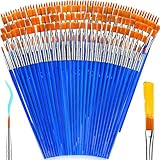
- 【162-Piece Bulk Set | Dual Brush System】Maximize versatility with 81 flat brushes (0.59 inch edge for bold strokes) and 81 round brushes (0.39 inch tips for details) – 3X more tools than standard kits! Pre-sorted in labeled compartments for instant access during painting sessions. Ideal for art classrooms, mural projects, and multi-artist households.
- 【Pro-Grade Durability | Zero Shedding Guarantee】 "Engineered with triple-crimped nylon bristles (43% higher resilience vs. standard) and aerospace aluminum ferrules tested for 10,000+ flex cycles. Lab-verified 0.01% shedding rate even with heavy impasto techniques – outperforms flimsy bristles in budget brushes."
- 【Multi-Scenario Readiness | Event & Daily Use】 Optimized for: Thanksgiving/Christmas face designs classroom projects ceramic decorating fabric printing and model painting; Lightweight plastic handles each reduce hand fatigue during prolonged sessions
- 【Effortless Maintenance | Long-Term Durability】 Clean with warm soapy water in 10 seconds; Reshape tips and air-dry vertically to preserve bristle integrity,After use, air-dry brushes thoroughly and store upright in the provided case to preserve bristle shape. The premium nylon filaments naturally regain their original form after each stroke. For cleaning, simply rinse in warm soapy water and gently reshape bristles with fingertips."
- 【Multiple Application】These acrylic paint brushes can be applied for most occasions,such as:watercolor,oil, gouache paint,face paint, acrylic paint, suitable for Thanks Giving Day, Christimas, Halloween face and body painting, canvas painting, fabric, rock, miniature, model, ceramics, arts and crafts painting, etc.
A frost measure is treated as a hard-freeze solution. Published guidance describes frost protection, not a universal guarantee for severe cold. The numeric benefits reported for row covers depend on material and grade, and actual results also depend on installation and conditions.
Which cover is the most practical?
For a single cold night and a shrub that can be covered, start with breathable frost cloth or a dry sheet or blanket, supported as needed and extended to the ground. For a small individual plant, a cloche or suitable hot cap may be easier to place. For a bed or row that needs repeated or longer-term coverage, consider a cold frame or hoop tunnel if you can ventilate it. Use a trunk wrap only for the specific trunk-protection situations for which it is recommended.
No material removes the need to consider the plant and forecast. The most useful cover is the one that protects the vulnerable part, stays in place, avoids foliage injury and can be opened or removed when the sun returns.
How were these seven cover types selected?
The categories are an evidence-based organization of options described in university extension guidance, not a claim that every gardening authority publishes the same seven-item list. They were grouped by the area they cover—canopy, single plant, row or trunk—and by whether they are short-term materials or structures that require support and ventilation. The cited temperature figures are included only as attributed guidance, not as product guarantees.
Frequently Asked Questions
Should I water the soil before covering a plant for frost?
The cited guidance for this article does not establish a watering schedule for every plant or soil. Check local advice for the species and site, especially if the soil is already wet or poorly drained; a cover does not correct waterlogging or other root problems.
Can I leave frost cloth on a shrub all winter?
A cover suited to a temporary frost night is not automatically suitable for continuous winter use. Consider light, airflow, wind, snow load and whether the material could rub or press on branches, and follow the fabric maker’s care instructions.
Does a plant cover stop frost damage to flowers and fruit?
A canopy cover may shield exposed plant parts, but the result depends on how fully it encloses the plant and the severity and duration of the cold. A trunk wrap cannot protect flowers or fruit; use local crop- or species-specific guidance for those vulnerable tissues.
What should I look for when buying frost-protection fabric?
Check the product label for its intended use, material, grade, coverage dimensions and installation instructions. The extension guidance’s temperature figures vary by material and grade, so do not assume a fabric’s performance from its name alone.
Quick Recap


