Outdated Drivers Are Slowing You Down
What’s actually slowing this PC down?
Pick the symptom - the matching free tool is one click away.
Outbyte Driver Updater · freeOne free scan finds every outdated or missing driver and matches the right update for your exact hardware.
Scan My Drivers Free →ThatPainter is reader-supported. When you buy through links on our site, we may earn an affiliate commission. Learn More
Colorful outdoor planters for winter and Christmas start with a container that can handle your local freeze-thaw conditions and drain well. For a quick seasonal display, build a base of evergreen boughs, add bright berries or twigs as a focal point, and finish with cones, seed pods, trailing greenery, or ornaments. If you want living color, choose plants for your site’s winter hardiness, light, and moisture conditions rather than relying on a general plant list.
How do you make an outdoor planter look colorful in winter?
Use contrast, texture, and a clear focal point. Evergreen foliage supplies a dependable green foundation; red berries or bright stems add color; and cones, seed pods, or ornaments provide smaller details. Trailing foliage can soften the rim, while upright branches give the arrangement height.
As an Amazon Associate I earn from qualifying purchases.
Quick wins for a faster PC:
Clear out junk files and repair common Windows errorsFree Scan →Scan for outdated or missing drivers - takes under a minuteDriver Scan →Penn State Extension adapts the familiar “thriller, filler, spiller” design to winter containers. The thriller is the feature that draws the eye, such as a cluster of bright branches or a holiday ornament. Filler materials—evergreen boughs, cones, and seed pods—make the display feel full. Spiller elements extend over the edge, often using evergreen branches. You do not need all three categories in equal amounts: a narrow pot may suit one strong vertical feature, while a broad container can support a fuller mix.
For a Christmas palette, combine evergreen foliage with red berries or twigs and pinecones. A seasonal ornament can make the display read more explicitly as holiday décor. Cornell Cooperative Extension also lists solar string lights, glitter, and painted twigs as possible accents in its guidance on decorative winter landscapes. Keep accents subordinate to the greenery and focal color so the arrangement remains legible from the street or walkway.
Popular on Amazon

- Great Value Paint Brush Set: Soucolor 20 acrylic paint brushes come in 10 different sizes, making them ideal for fine detailing, model painting, rock painting, nail art, face painting, DIY crafts, and general art projects. The varied brush sizes give you better control for both delicate lines and broader color coverage, while the soft bristles deliver smooth, consistent results on acrylic, oil, watercolor, canvas, wood, ceramic, and more.
- Awesome Set of Paint brushes: Professional paint brushes can cover all of your needs. The multi-purposed brushes are ideal for Watercolor, Oil, Gouache, enamel, Acrylic Painting, Body, Nail, Face Painting, Miniature, Model, Wood, Glass, Cup, Ceramic, Fine work, Art class, Craft Art Painting, DIY Art Crafts etc.
- Soft and long-lasting: The bristles are soft and strong, with nickel metal ferrules and blue wooden handles. After cleaning, the bristles will become soft and fluffy again and will not fall off.
- Easy to clean: it’s very convenient to Wash well in soap and water. Retain shape after drying. the brushes hold up very well. Nice selection to beginners and professionals. Keep them clean and they last a long time.
- Perfect for All Painters & Occasions: Suitable for art beginners, hobbyists and professional artists. Great for art class, home creation, travel painting and DIY handmade projects. A practical art gift for students, teachers, family and craft lovers.
Think about the view from more than one angle. A planter against a wall may need its tallest branches at the back, with color concentrated toward the front. A pot visible from all sides should have a balanced center and materials distributed around it. The same basic palette can work in either position; the difference is how you orient the focal point and fill the space.
Which materials make a winter planter colorful?
Mix natural materials with different colors, shapes, and textures, and use only what is suitable and available in your area. Penn State names winterberry holly, bayberry, red-twig dogwood, cones, yucca, iris, and seed pods as possible materials for winter arrangements. Evergreen boughs can anchor the design, while colored stems or berries supply its brightest notes.
The Tool Desk
Outbyte Driver Updater FREEScan for outdated or missing drivers - takes under a minuteDriver Scan →Outbyte PC Repair FREERepair Windows errors before they cause bigger problemsFix Now →- Evergreen boughs: Make a green base and can be arranged upright or angled over the rim.
- Bright twigs: Red-twig dogwood is one example of a stem that can create a strong color accent without relying on flowers.
- Berries: Winterberry holly and bayberry are among the natural materials Penn State identifies. Use materials you can collect responsibly and safely.
- Cones and seed pods: Add texture and help fill spaces between branches.
- Ornaments and lights: A few seasonal pieces can shift the arrangement toward a Christmas look; Cornell includes solar string lights and ornaments among its suggestions.
Gathering materials from your own landscape can make an arrangement feel connected to its setting, but do not overharvest a shrub or tree. Avoid collecting berries or seed heads from invasive plants. Penn State also cautions that short-needled eastern hemlock drops its needles quickly, so it may not hold its appearance as well as other evergreen choices. Do not assume every cut branch or berry is appropriate for your location or safe around children and pets; identify materials before bringing them indoors or placing them within reach.
Evergreen branches can replace fall color in a container as the season changes and remain part of the display until the potting mix thaws. To extend one arrangement beyond Christmas, use an ornament or other holiday accent that can be removed or swapped later. The evergreen structure, colorful twigs, and cones can continue to look seasonal after the most explicitly Christmas-themed details come down.
How can you reuse a planter that already has plants in it?
You can often refresh an existing container instead of starting over. Penn State advises keeping perennial root masses in place and adding evergreen stems to a settled container, while removing spent annual stems. The established roots and firm base can help support the new branches, including stems that may bear snow.
Before inserting cut materials, check whether the existing potting mix is stable enough to hold them upright. Add and settle fresh potting mix if needed, then position the largest branches first. Work outward with smaller boughs and fillers. Do not force stems through a dense root mass if doing so would damage plants you intend to keep. A loose, unstable arrangement is more likely to shift in wind or under snow, so use the container’s existing structure to your advantage.
Recommended Free Tools
Also popular on Amazon

- COMPLETE 5-PIECE BRUSH SET FOR EVERY PAINTING TASK — Includes 1 Inch Flat, 1.5 Inch Angle, 2 Inch Flat, 2 Inch Angle Stubby, and 2.5 Inch Angle brush giving you every size professional painters use daily. Get all 5 for less than the price of a single brush from hardware store brands — professional grade performance at a fraction of the cost. Perfect for walls, trim, cabinets, doors, furniture, and detailed cutting-in work on any project.
- ZERO BRISTLE LOSS — GUARANTEED BY PRECISION ADHESIVE BONDING — Every bristle is locked in place with precision-set adhesive that keeps them in the brush — not in your paint job. The coated steel ferrule provides structural support while the adhesive bond ensures clean performance on every stroke. Premium SRT synthetic filaments load more paint and release it evenly for a smooth streak-free finish on walls, ceilings, and trim. Works with latex, oil-based paint, primer, sealer, and wood stain.
- INCLUDES THE ANGLE STUBBY MOST SETS LEAVE OUT — Professional painters know the 2 Inch Angle Stubby is the go-to brush for tight cabinet interiors, window sashes, inside corners, and detailed trim where standard angle brushes are too long. Combined with the 1.5 and 2.5 inch angle sash brushes you have precision cutting-in covered at every scale — baseboards, crown molding, door casings, and ceiling lines.
- FLAT BRUSHES FOR BROAD SMOOTH COVERAGE ON ANY SURFACE — The 1 and 2 inch flat brushes deliver even coverage on walls, furniture, shelving, doors, fences, decks, and wood surfaces. Ideal for applying primers, stains, varnishes, polyurethane, and specialty coatings. Solid wood handles provide all-day comfort and control for both professional contractors and weekend DIY homeowners tackling interior or exterior painting projects.
- TRUSTED BY PROFESSIONAL PAINTERS AND CONTRACTORS NATIONWIDE — Pro Grade delivers professional-grade results at a price that makes sense for crews who go through brushes on every job. Ideal for property managers, remodeling contractors, apartment turnover crews, maintenance teams, and commercial painting operations. Backed by thousands of verified reviews from working painters. Washable and reusable for multiple projects.
If you are changing a display from fall to winter, remove exhausted annual growth and assess which perennials are still healthy. Keep established perennial roots where appropriate, then use evergreen branches and seasonal accents to cover bare spaces. This can preserve the shape and visual presence of a familiar pot without requiring a complete replanting. The arrangement can remain in place until the mix thaws, when you can make spring plans.
What kind of planter can stay outside in freezing weather?
There is no single container material guaranteed to survive every winter. Choose a pot made for outdoor exposure, check that it drains, and consider the product’s construction and the conditions where it will sit. Penn State cautions that pottery and terracotta can break in freezing conditions and recommends storing them to prevent damage. Plastic or metal pots left outside need plenty of drainage holes.
Other extension guidance provides options rather than a universal guarantee. Cornell identifies concrete, wood, and high-quality resin as possible weatherproof container materials. NC State Extension explains that unglazed ceramic can absorb water, which may freeze and crack the pot, and describes wood and plastic containers as suitable for year-round outdoor use. The exact result still depends on the container, its drainage, exposure, and local weather.
The Royal Horticultural Society’s winter container guidance suggests frost-proof terracotta, plastic, fibreglass, or wood containers. “Frost-proof” is a useful product description, but it is not a substitute for checking the container’s care guidance and deciding whether its intended exposure matches yours. A sheltered porch, an exposed balcony, and a spot where meltwater collects can put different demands on the same kind of pot.
Drainage matters because water left in a container can contribute to freezing-related problems. Make sure water can escape through the drainage holes, and avoid leaving the pot sitting in a saucer full of water. The RHS suggests raising containers on pot feet or bricks to aid drainage. Elevation can also keep the base from sitting directly on a cold, wet surface; it does not make a fragile pot frost-proof.
In severe weather, the RHS suggests wrapping containers to reduce root damage. Use protection appropriate to your climate and the plants in the pot, and do not block drainage. If the pot is vulnerable or the forecast and exposure make breakage likely, moving it to a protected place is a more cautious option than assuming decorative wrapping will solve every risk. A container’s plant roots may need winter protection even if the pot itself is durable.
Also popular on Amazon

- 【All sizes of art brushes】: The 10 sizes of multi-functional brushes have various shapes, making the mixing color easier, which is very suitable for artists, students, teenagers, children and painters at all levels. Wonderful Present ideas for friends and family who like painting!
- 【general brush set】: Professional paint brush can meet all your needs. Multifunctional brush is very suitable for watercolor, oil, gouache, acrylic painting, body, nail, face painting, miniature, model, ceramics, arts and crafts painting, etc.
- 【high quality process】: It is designed with anti falling bristles, anti-rust nickel ferrule and solid wood handle. You can use the brush to focus on the painting and always be creative.
- 【easy to maintain】: After using the brush, it is very convenient to clean the brush with warm soapy water and reshape the tip of the brush. Air dry the brush and place it on top of the top for long use.
- 【100% satisfaction guarantee - buy now】1 packs of set brushes, you can also get friendly customer service, any questions feel free to contact us, within 24 hours to help you! There is no risk in buying our paint brush kit.
When choosing a container, weigh practical needs alongside appearance: freeze resistance, drainage, weight, size, and placement all matter. A heavy pot may be stable but difficult to move; a lightweight one may be easier to reposition but more exposed to wind. A colorful finish can contribute to the display, but only after the container’s material and drainage suit its outdoor use.
What living plants can you put in outdoor pots in winter?
Choose winter plants by local hardiness, light exposure, and the conditions of the container. The RHS lists winter bedding plants such as pansies, violas, primulas, and polyanthus; evergreen shrubs including box, bay, skimmia, euonymus, ivy, and Gaultheria; hardy evergreen ferns for shade; heuchera for colored foliage; small evergreen grasses such as Carex; and evergreen herbs for sunny positions. Clemson Extension also discusses cold-hardy vegetables and herbs, along with plants that have colorful or evergreen foliage, for fall-through-winter displays.
Do these 3 things before closing this tab:
1Scan for outdated or missing drivers - takes under a minute2Clear out junk files and repair common Windows errors3Fix the driver behind crashes, sound loss and screen glitchesThese are starting points, not a guarantee that every plant will thrive in every winter or container. Check a plant’s local hardiness and match it to the site’s sun or shade, wind exposure, drainage, and available space. A plant that is hardy in the ground may still need attention in a pot, where its roots are more exposed to cold than they would be in surrounding soil. Ask a local nursery or extension service whether a particular choice suits your conditions if the hardiness or exposure is uncertain.
Plan the planting around the look you want as well as survival. Use a small evergreen shrub or upright grass for structure, heuchera or winter bedding for foliage or flower color, and a trailing plant such as ivy to soften the edge. For a shaded position, the RHS’s hardy evergreen ferns are one option; for a sunny position, it lists evergreen herbs. The right combination depends on whether you want visible flowers, year-round foliage, height, or a plant that spills over the pot.
Containers also need ongoing attention. The RHS notes that smaller plants are more susceptible to overwatering and underwatering, so check their moisture rather than watering by habit. It also says container plants generally do not need winter feeding. Avoid treating winter as a reason to keep every pot constantly wet, and account for rainfall and drainage as well as the plant’s needs.
How do you assemble a winter or Christmas planter?
Start with a stable container and decide whether the arrangement will be made from cut materials, living plants, or a combination. Then build from the largest structural elements to the smallest accents.
Also popular on Amazon

- 【KIDS PAINT BRUSHES SET】Anezus paint brushes for kids come with 10 pcs paint brushes of 5pcs round paintbrushes and 5 flat paint brushes with colorful handles, good for the young artist to explore their creativity in painting and crafting
- 【HIGH QUALITY PAINT BRUSHES FOR KIDS】These toddler paint brushes made of soft hog bristle, bright colored handles and rust proof ferrules. The bristles are firmly fixed in the kids paint brushes and no shedding. Each children paint brush measure 6 1/4 inches (16cm) in length and ferrules 1/2"(1.3cm) diameter, large enough for the little hand to grip and control
- 【WIDE APPLICATIONS】With combination of round and flat craft paint brushes for kids, work great with washable paint, tempera paint and acrylic paint. Great for arts and craft, rock, leather, gesso and ceramic, or body, nail and face art painting.
- 【EASY TO CLEAN 】After using paint brushes for acrylic, oil or watercolor painting, it’s very convenient to clean them with warm soapy water and reshape the paint brush tips. Keep these craft paint brushes clean and they last a long time.
- 【GREAT GIFT IDEA】Perfect for students, teens, kids, children and painters of all levels. Wonderful gift idea for girls, boys and kids who love painting! These all-purpose paint brushes for kids are ideal for kids' school projects, birthday parties, painting parties, art parties, back to school supplies, classroom decoration and more.
- Check the pot and position. Confirm that the container suits the local freeze-thaw exposure and has working drainage. Place it where it will be displayed, and raise it on pot feet or bricks if drainage needs help.
- Prepare the base. For a cut-material arrangement in a settled container, remove spent annual stems and keep perennial roots you intend to retain. Add and settle potting mix if the base needs support for new branches.
- Set the focal element. Place the tallest or most colorful branches, berries, or a seasonal ornament where they will be visible. In a one-sided display, this may be toward the back; in a pot viewed from all sides, keep the arrangement balanced.
- Add evergreen boughs. Fill around the focal element, varying branch height and direction. Include some boughs that angle over the rim if you want a spiller effect.
- Fill gaps with texture and color. Add cones, seed pods, colored twigs, or other appropriate materials. Leave enough space for each element to register rather than compressing everything into a solid mass.
- Finish and check stability. Add a small number of ornaments or lights if desired. Make sure branches are secure, the pot drains freely, and decorations will not obstruct a path.
- Maintain and adapt. Keep living plants watered according to their needs and check for shifting materials after severe weather. Remove or swap holiday accents when you want the display to transition into the rest of winter.
If you are planting a living arrangement, choose plants that share compatible site needs rather than combining them solely for color. A sunny-site herb and a shade-loving fern will not make a sensible pair in one pot if the container cannot provide both conditions. Decide on exposure first, then choose foliage, flowers, and plant habits that fit it.
Independent reader supportYour contribution helps us test, update, and keep practical guides available for everyone.How do you choose between cut greenery and living plants?
Cut materials are the simpler route when you want a fast seasonal display or a Christmas-specific palette. They let you use evergreen boughs, bright stems, berries, cones, and ornaments without committing to plants that must survive the site. Living plants make more sense when you want a container that continues growing and can contribute structure or foliage beyond the holiday season.
There is no need to choose only one. An existing container can hold perennial roots while cut evergreen stems and removable accents provide seasonal color. That approach reuses the pot and can preserve its established structure, while allowing the decorative parts to change as the season does. Whatever you choose, the essentials remain the same: suit the plants or materials to their conditions, keep the pot stable, and make sure water can drain.
What should you avoid when decorating winter planters?
Avoid choosing a container for appearance alone if it cannot handle the location or drain properly. Do not assume every ceramic or terracotta pot will tolerate freezing, or that a material described as weatherproof is appropriate for every exposure. Also avoid leaving plastic or metal containers outside without adequate drainage.
What’s actually slowing this PC down?
Pick the symptom - the matching free tool is one click away.
For plant choices, do not treat a general list as a local hardiness guarantee. Check the plant’s needs and the site’s light and winter conditions. For natural decorations, do not overharvest, collect from invasive plants, or use materials you cannot confidently identify. Finally, avoid relying on short-needled eastern hemlock if you need foliage to stay neat; Penn State notes that its needles drop quickly.
How can you make one arrangement last beyond Christmas?
Build the display around elements that read as winter rather than relying entirely on holiday ornaments. Evergreen boughs, colored twigs, cones, and suitable berries can remain in place after Christmas. Use wired or otherwise removable ornaments so you can take them out or exchange them without rebuilding the arrangement. Penn State notes that a wired ornament can be swapped as the season changes.
Also popular on Amazon
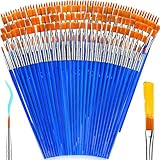
- 【162-Piece Bulk Set | Dual Brush System】Maximize versatility with 81 flat brushes (0.59 inch edge for bold strokes) and 81 round brushes (0.39 inch tips for details) – 3X more tools than standard kits! Pre-sorted in labeled compartments for instant access during painting sessions. Ideal for art classrooms, mural projects, and multi-artist households.
- 【Pro-Grade Durability | Zero Shedding Guarantee】 "Engineered with triple-crimped nylon bristles (43% higher resilience vs. standard) and aerospace aluminum ferrules tested for 10,000+ flex cycles. Lab-verified 0.01% shedding rate even with heavy impasto techniques – outperforms flimsy bristles in budget brushes."
- 【Multi-Scenario Readiness | Event & Daily Use】 Optimized for: Thanksgiving/Christmas face designs classroom projects ceramic decorating fabric printing and model painting; Lightweight plastic handles each reduce hand fatigue during prolonged sessions
- 【Effortless Maintenance | Long-Term Durability】 Clean with warm soapy water in 10 seconds; Reshape tips and air-dry vertically to preserve bristle integrity,After use, air-dry brushes thoroughly and store upright in the provided case to preserve bristle shape. The premium nylon filaments naturally regain their original form after each stroke. For cleaning, simply rinse in warm soapy water and gently reshape bristles with fingertips."
- 【Multiple Application】These acrylic paint brushes can be applied for most occasions,such as:watercolor,oil, gouache paint,face paint, acrylic paint, suitable for Thanks Giving Day, Christimas, Halloween face and body painting, canvas painting, fabric, rock, miniature, model, ceramics, arts and crafts painting, etc.
Keep the container and arrangement in good condition as winter progresses. Check that branches remain upright, drainage is clear, and any living plants are not staying too wet or drying out. The cut arrangement can remain until the potting mix thaws; at that point, assess the container and its plants before making a spring change.
How do you tailor the display to your region?
Use local winter conditions—not a generic idea photo—as the final test for plant and container choices. The extension and horticultural sources offer useful materials and plant categories, but they do not establish one universally best planter or combination. Check hardiness for your area, then account for whether the pot is exposed to wind, repeated freezing and thawing, shade, or prolonged wetness.
Where winters are severe, prioritize a suitable outdoor container, reliable drainage, and locally hardy plants; consider raising or protecting the pot as conditions require. In milder or sheltered locations, a broader range of plants may work, but container moisture still deserves attention. In all regions, a cut-material arrangement can provide strong seasonal color without asking a living plant to perform outside its conditions.
The most reliable design is the one that fits both the view and the weather: a stable pot, a green foundation, one or two intentional color accents, and materials chosen for the site. That framework can be adapted to a doorstep, balcony, porch, or garden entrance without assuming the same plant list or winter protection works everywhere.
Frequently Asked Questions
Can I use artificial branches or berries in a winter planter?
Artificial pieces can be used as decorative accents, but the extension guidance cited here focuses on natural materials and does not assess artificial products. Check that any outdoor decoration is labeled for outdoor use and secure it so wind cannot carry it away.
Should I water outdoor pots in winter?
Living container plants still need moisture, but their needs vary with the plant, weather, and drainage. Check the potting mix and the plant rather than following a fixed schedule; the RHS cautions that small container plants are particularly vulnerable to both overwatering and underwatering.
Free tools Windows power users keep installed
One-click scans. No signup required.
Are winterberry holly berries safe around pets or children?
The sources for this article do not establish berry toxicity or safety. Identify the plant and consult a reliable local poison-control or veterinary resource before using berries where children or animals may reach them.
Can I leave Christmas lights on an outdoor planter all winter?
Cornell lists solar string lights as an accent, but the cited guidance does not provide product-specific weather or electrical safety instructions. Follow the light maker’s outdoor-use and installation directions, and remove the lights if they are damaged or cannot be kept safely clear of wet conditions.
Quick Recap


