ThatPainter is reader-supported. When you buy through links on our site, we may earn an affiliate commission. Learn More
A small retro room feels cluttered when too many objects and oversized pieces compete for the same visual and physical space. The reliable fix is to condense and contain: measure the room, choose one era-defining focal piece, right-size the furniture, move storage upward or out of sight, and edit displays by category. Keep the 1960s or 1970s character through a controlled palette, repeated materials, one strong wall moment, and warm layered lighting. The aim is not to remove vintage personality; it is to give the eye a clear hierarchy and leave circulation paths open.
As an Amazon Associate I earn from qualifying purchases.
Why does retro decor make a small room feel cluttered?
Retro rooms often accumulate visually assertive shapes, saturated colors, patterned textiles, ceramics, records, art and furniture with substantial profiles. In a large room those signals can be separated. In a small room they overlap, so the eye cannot tell what matters most and everyday movement becomes harder.
The Tool Desk
Outbyte PC Repair FREEClear out junk files and repair common Windows errorsFree Scan →Outbyte Driver Updater FREEFix the driver behind crashes, sound loss and screen glitchesFind Drivers →Clutter is therefore a planning problem as much as a tidiness problem. A room can be clean yet feel crowded if a deep cabinet narrows the route to the door, several small tables interrupt the same walkway, or every shelf is filled. Pottery Barn describes the practical principle as “Condense and contain is the motto of small-space living.” The design goal is to reduce competition, not erase the period.
Popular on Amazon

- Enhanced Safety with Dual Hinges: Our storage bench for bedroom is equipped with dual safety hinges; Allowing the lid to open wider and more smoothly. Enjoy quiet operation and protection against finger pinching
- Button Tufting with Diamond Stitching: Our versatile ottoman bench with storage features high-quality, soft and breathable fabric with no unpleasant odors. The lid is adorned with button tufting and delicate diamond stitching; Enhancing its modern design
- Powerful and Versatile: This bench with storage and seating offers ample storage space. This storage ottoman bench for bedroom is perfect for storing board games and controllers that you want to keep within easy reach blankets or magazines
- Superior Quality and Load-Bearing: Enhance your bedroom's style with this storage bench, built with a solid wood frame and sturdy Square legs, It supports up to 330 lbs. Offering added safety for your family
- Assembly Instructions: First, connect the metal connectors to the side panels without tightening the screws to avoid misalignment. After assembling the four frames; Securely tighten all screws; Finally. Attach the cover panel to complete the assembly
Scale and hierarchy matter. Peter Spalding of Daniel House Club calls “Scale and symmetry … the driving factors in making a space feel big and easy to read.” One or two pieces can carry the strongest retro signal while quieter items repeat their color, material or proportion.
How do I measure and map the room before changing the decor?
Measure before editing, painting or buying. A measured plan prevents the common mistake of replacing one crowded arrangement with another that looks attractive in a store but blocks your real-life routines.
- Record the shell. Measure every wall, alcove and recess. Mark the position and width of doors, the direction each door swings, windows, radiators and outlets.
- Mark circulation. Draw the clear paths needed to enter, sit, open storage, make the bed or reach a window. Include the space needed to pull out drawers and cabinet doors.
- Note fixed constraints. Photograph outlet locations and heating equipment, and record anything that cannot move. These details determine where lamps, shelves and cabinets can safely go.
- Define zones. IKEA recommends setting zones on a measured layout before purchasing furniture. Identify the smallest practical footprint for seating, work, media, reading or sleeping rather than allowing each activity to spread.
- Test with temporary outlines. Use painter’s tape or folded newspaper on the floor to mark proposed furniture footprints. Walk the routes at different times of day before committing.
Do not fill every measured area. The plan is a limit, not a target. Empty floor and wall space are what make a carefully chosen retro object legible.
Which retro element should lead the room?
Choose the most distinctive retained item as the lead element, then make every other decision support it. A teak cabinet, sculptural lamp, patterned rug or period chair can serve as the focal point; the right choice is the piece with the clearest character and the best fit.
Use one unmistakable signal
Start by asking which object would make the room read as retro if everything else were neutral. Keep that piece visible and give it breathing room. If the lead is a patterned rug, keep nearby upholstery and wall color quieter. If it is a cabinet, avoid placing another large, highly decorated storage piece directly beside it.
Repeat, do not compete
Supporting pieces can echo one color, wood tone, metal finish or rounded proportion from the lead. Repetition creates a coherent story without requiring every object to look period-specific. A modern compact table, for example, can sit comfortably with a vintage chair when its finish or silhouette relates to the chair.
Paint to frame the focal point
Use paint as a backdrop rather than another competing statement. A pale, subtly varied base can reflect light and make the room feel more open, while a stronger retro color works best as a controlled accent on one wall or a single painted piece. Pottery Barn advises pale, subtly varied palettes when spaciousness is the priority; the retro character can then come from the lead object and textiles.
How do I choose furniture that fits a small retro room?
Replace oversized or redundant pieces with fewer items that fit the measured footprint. Apartment- or studio-scale seating is generally easier to place than a deep sofa designed for a larger room, and floating selected furniture away from the walls can create breathing room when circulation allows it.
Check depth, not just width
A cabinet or sofa can fit between two walls yet still dominate because of its depth. Compare the full footprint, including doors, drawers and the space needed to use them. A narrow vertical cabinet may hold as much as a broad low unit while preserving a walkway.
Also popular on Amazon
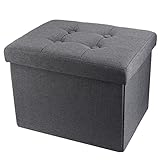
- 【ottoman】Our ottoman has the better size and Relaxed color,Length 17 x width 13 x height 13 inches and Grey,It is also a comfortable footstool,Proper size and thickened sponge pad can make him a good footrest,Sitting on the sofa and putting your feet on the ottoman can relax your legs, relax your whole body and enjoy the pleasant time
- 【Magic storage space】When our storage ottoman is assembled, we have 43L storage space,Put tools, blankets, books, magazines, sports equipment, dog leashes, etc. that can be temporarily used in the room to reduce the clutter.
- 【Multipurpose ottoman】Storage ottoman footstool can be used as a coffee table, small seat, chair stool, bed footstool, fishing stool, catapult good for study, bedroom, living room,dormitory,etc.
- 【Easy to assemble and to fold】Folding storage ottoman design, unfolded size: 17*13*13", only 17 "L x 13 "W x 2.5 "H when folded,Our storage ottoman is very easy to set up, without any tools.
- 【Strong and durable】This storage ottoman is made of quality E1 MDF, strong and durable, has the load bearing capacity up to 400lbs. The solid fixed plate and thicker high quality MDF wood give the bench a sturdy and non-deforming frame, you can safely stand on the bench or use it as a ladder or climbing tool
Choose one substantial seat group
Several small chairs and occasional tables often create more visual stops than one correctly scaled sofa or chair pair. Keep the number of pieces that perform the same function to a minimum. A storage footstool can replace a separate ottoman and side table if it provides the needed surface and seating.
Vintage upholstery or new compact upholstery?
A correctly scaled secondhand piece from the 1960s through the 1980s can preserve authentic proportions and may be reupholstered to suit the room. A new compact sofa offers predictable dimensions and easier maintenance. Measure both options against the same taped floor plan; period appeal is not useful if the piece blocks a door or leaves no place to move.
Windows Errors? Fix Them Before They Spread
Repair common Windows errors and clear accumulated junk for a smoother, more stable PC - no reinstall needed.Free scan · no reinstallOutdated Drivers Are Slowing You Down
One free scan finds every outdated or missing driver and matches the right update for your exact hardware.Free scan · exact hardware match| Choice | Strength in a small room | Watch for |
|---|---|---|
| Correctly scaled vintage upholstery | Authentic silhouette and the option to reupholster | Unknown condition, deeper-than-expected frames and dimensions that vary by piece |
| New compact upholstery | Predictable measurements and simpler maintenance | May lack the distinctive period profile that would otherwise carry the room |
| Multiple small tables or chairs | Flexible surfaces or seating | Repeated legs and edges can interrupt circulation and increase visual noise |
What storage works with retro furniture?
Use vertical, wall-mounted and closed storage to protect floor space and create visual quiet. IKEA recommends combining open storage for frequently used or curated items with closed drawers and cabinets for everything else. KonMari also points to overlooked locations such as the area above a door and the space under a bed.
Open storage for a short, intentional display
Open shelves are useful when they hold a few objects you use or genuinely want to see. Leave visible gaps around those objects; a shelf packed edge to edge turns every item into background noise. Group books, ceramics or framed prints by category instead of scattering them across the room.
Closed storage for visual calm
Doors and drawers hide cables, paperwork, spare textiles and collections that do not need to be on view. A tall narrow bookcase with some closed compartments, a wall cabinet or a low cabinet under a window can contain more than several floor bins while presenting fewer visual edges.
Use overlooked height
Wall-mounted shelves, hooks, over-door shelves and high cabinets move storage above the main circulation zone. Artem Kropovinsky of Arsight notes that mounted shelves or nightstands “create some space and make your room look less crowded” by saving floor area. Install only what the wall can safely support, and keep frequently handled items at reachable heights.
Free tools Windows power users keep installed
One-click scans. No signup required.
| Storage approach | Best use | Clutter risk |
|---|---|---|
| Open shelves | A few active or curated objects | High if every shelf is filled or categories are mixed |
| Closed cabinets and drawers | Daily supplies, cables, paperwork and duplicates | Low visually, but access must remain convenient |
| Tall narrow shelving | Books and display in a small footprint | Can feel top-heavy if overloaded or left unsecured |
| Under-bed boxes | Seasonal textiles and seldom-used items | Items disappear from view and may be forgotten without labels |
| Floor bins | Only where they do not narrow a path | They consume circulation space quickly |
How can I hide daily-use objects without losing retro style?
Give each retained item a home and choose furniture that performs more than one job. A storage ottoman or storage footstool can hide throws, games and accessories while serving as seating or a temporary surface. IKEA identifies storage footstools as multifunctional furniture, and Ideal Home highlights storage ottomans because small-room clutter is visually magnified.
Build a landing zone
Place a tray, shallow drawer or small closed box near the room’s entry point for keys, remotes and other items that otherwise migrate across tables. Empty it on a regular schedule so the container does not become a permanent pile.
Contain textiles and hobby items
Store throws, games, records or craft supplies in one designated cabinet, ottoman or under-bed box rather than distributing them among several surfaces. Keep the container close enough to the activity that putting things away takes one movement.
Also popular on Amazon
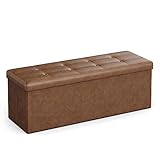
- 【QUICK ASSEMBLY, EASY FOLDAWAY】This storage ottoman from the SONGMICS MAZIE Collection has a foldable design that allows quick setup in seconds by simply inserting the bottom panel. Easily fold and store it under the bed or in a closet when not in use
- 【OODLES OF STORAGE】Unfold this storage box, insert the sturdy base plate, and you have 35 gal. (131 L) space for storing bed linen, books, or clothing
- 【GREAT STRENGTH】Built with thick MDF panels and reinforced with metal corner guards on the lid, this storage chest is strong enough to hold up to 660 lb (300 kg), so you can sit on it with your mind at ease
- 【COMFORTABLE SEATS】Padded with 1" (2.5 cm) thick, high-resilient, high-density foam, this storage bench is resistant to deformation, so you can sit on it comfortably
- 【MULTIPURPOSE】Place this storage chest in the bedroom as a bed end bench, in front of the sofa in the living room as a footrest, or in the hallway as a shoe bench—you have the final say!
Protect the circulation path
Before adding a basket or bin, walk the room carrying the objects it is meant to hold. If the container catches a foot, blocks a drawer or narrows the route to a door, move storage upward or inside a cabinet instead.
How much vintage decor is too much in a small room?
There is no universal object count. Vintage decor becomes too much when additions compete with the lead element, duplicate a function or remove the empty space that lets the room read clearly. Edit by category rather than making one emotional pass through the whole room.
- Gather each category. Put books together, then ceramics, framed prints, collectibles, textiles and accessories. Seeing duplicates at once makes decisions easier.
- Keep the strongest examples. Retain pieces that support the room’s story, are used, or have clear sentimental value. Remove duplicates and objects that have no practical or visual role.
- Create small groupings. Display a few related objects together and leave space around them. Vary height or texture within a grouping, but avoid making every surface a separate vignette.
- Store the remainder deliberately. A closed cabinet, labeled under-bed box or safely packed archive is better than a rotating pile on the floor.
KonMari’s category-based approach and its instruction to assign every retained item a home are useful here. Leaving a shelf or tabletop partly empty is not unfinished decorating; it is part of the composition.
Should I use one statement piece or many small accents?
In a compact room, one large artwork or mirror usually gives the eye a clearer anchor than many similarly sized pieces. Homes & Gardens experts caution that a gallery wall can add visual noise when wall area is limited.
| Wall strategy | When it works | How to keep it calm |
|---|---|---|
| One statement artwork | You want a focal point above a sofa, bed or cabinet | Relate its colors to the lead furniture and leave generous wall around it |
| One large mirror | You need light reflection and a strong vertical or horizontal anchor | Place it where it reflects a useful view rather than another cluttered surface |
| Small grouped display | The pieces form one clear category or story | Use fewer items, align their edges and keep surrounding wall visible |
| Gallery wall | The room has enough uninterrupted wall and the collection is tightly edited | Limit competing frames and avoid placing it where it collides with patterned furniture |
If you already own many small works, rotate them seasonally instead of displaying all of them. The stored pieces remain part of your collection without forcing the room to carry every signal at once.
What’s actually slowing this PC down?
Pick the symptom - the matching free tool is one click away.
Which colors and materials keep a retro room open?
Start with two or three related colors and a small set of repeating materials. A cohesive language lets a few saturated retro accents feel intentional rather than scattered. Repeat a wood tone, metal finish, upholstery color or textile texture in restrained ways.
Use a pale base when light is limited
Pale walls and subtly varied neutrals can reflect light and make boundaries easier to read. They do not make the room less retro when the period character comes from a teak cabinet, shaped chair, patterned rug, art or lamp.
Control saturated color
Stronger retro colors can work on one wall, a painted cabinet or a limited textile scheme. Painting every surface in a different intense color gives each plane equal weight and can make a small room feel smaller. Choose one accent family, then repeat it sparingly.
Reduce material noise
When wood, chrome, glass, glossy plastic and several competing textiles all appear in a small area, reflections and edges multiply. Keep a short material palette and let one finish provide contrast instead of introducing a new finish with every purchase.
Recommended Free Tools
Also popular on Amazon

- 【QUICK ASSEMBLY, EASY FOLDAWAY】This storage ottoman from the SONGMICS MAZIE Collection has a foldable design that allows quick setup in seconds by simply inserting the bottom panel. Easily fold and store it under the bed or in a closet when not in use
- 【AMPLE STORAGE】Measuring 15"D x 43"W x 15"H (38 x 110 x 38 cm), this storage bench offers a 35-gallon (131 L) volume. Its removable divider keeps your books, clothes, and blankets neatly sorted, or stores larger items like bed sheets
- 【STURDY AND DURABLE】Built with premium MDF panels and reinforced with metal corner guards on the lid, this ottoman is strong enough to support up to 660 lb (300 kg), making it a reliable seating or storage solution that will stand the test of time
- 【ELEGANT DESIGN, ENDURING COMFORT】This ottoman boasts a chic linen-look surface with an elegant tufting design, adding a stylish touch to your space. The double-layer fabric and high-resilience foam ensure lasting comfort for relaxation
- 【VERSATILE USES】This folding ottoman serves as a storage box, a footstool, and even a coffee table! It fits seamlessly into the living room, bedroom, entryway, or dressing room to meet various needs
How should I light a small retro room?
Layer warm light rather than relying on one bright ceiling fixture. Combine ambient ceiling light with task and accent lamps so the room can be lit for different activities without adding bulky floor equipment.
- Set the ambient layer. Use the ceiling fixture for general visibility, keeping its design simple enough not to compete with the focal object.
- Add task light. Place a lamp for reading, desk work or a specific chair. A slim table, wall bracket or shelf-mounted fixture preserves floor area.
- Add an accent layer. Light the lead cabinet, artwork or architectural feature selectively. Accent lighting should clarify the hierarchy, not illuminate every object equally.
- Choose a warm color temperature. IKEA recommends warmer light in living and sleeping areas. Check the bulb label and keep the room’s bulbs consistent so colors do not shift from one corner to another.
Hide spare bulbs, cords and adapters in the same closed storage used for other daily supplies. A beautiful lamp still contributes to clutter if its cable crosses the main path.
What is a practical order for fixing the room?
Work from the largest constraints to the smallest accessories. This sequence prevents you from styling shelves before discovering that a sofa or cabinet must move.
- Measure and photograph. Capture the room empty enough to see paths, outlets, doors and windows.
- Remove duplicates temporarily. Take out extra tables, chairs, accessories and wall pieces. Keep them nearby so decisions remain reversible.
- Select the lead retro element. Choose the one object that carries the era most convincingly and place it where it can be seen.
- Place essential furniture. Test the smallest suitable pieces against the taped footprints. Confirm doors, drawers and pathways work.
- Install vertical or hidden storage. Move active items to accessible shelves and everything visually noisy into cabinets, drawers or under-bed boxes.
- Choose the paint envelope. Use a pale cohesive base or one controlled saturated accent that frames the lead piece.
- Hang one wall anchor. Start with a large artwork or mirror. Add smaller pieces only if the wall still reads clearly.
- Layer warm lighting. Add task and accent sources on walls, shelves or slim surfaces rather than consuming floor space.
- Return objects by category. Keep only the strongest examples and leave deliberate gaps.
- Live with the edit. Resist filling newly empty surfaces. Add an item only when it solves a specific function or strengthens the focal story.
What should I do if the room still feels cluttered?
Use symptoms to identify the next edit instead of buying another organizer.
- You cannot see the focal piece: remove or relocate the nearest competing artwork, lamp or patterned textile.
- The walkway feels tight: measure the route again and replace a deep or redundant piece; do not solve a circulation problem with more containers.
- Every shelf looks busy: remove duplicates by category, close some storage and restore empty shelf space.
- The room feels dark after editing: use a pale supporting color, a mirror in a useful location and warmer layered lamps rather than adding more decor.
- The palette feels chaotic: keep two or three related colors and repeat one or two materials; move unrelated accents to storage.
- Storage is overflowing: reassess the category itself. Closed doors can hide objects temporarily, but they cannot compensate for more possessions than the room can hold.
Reassess after living with the arrangement. IKEA advises resisting the urge to fill every surface, while KonMari treats open space as part of downsizing. The room is finished when daily actions are easy and the chosen retro pieces can be read without visual competition.
How can I keep the room retro while making it quieter?
Preserve character in the pieces that are hardest to replace: a well-proportioned chair, a distinctive cabinet, a period lamp, a patterned rug or a meaningful artwork. Let paint, storage and supporting furniture do the quiet work. A small room does not need every decade reference at once; it needs a legible hierarchy, contained belongings and enough empty space for its best details to register.
Frequently Asked Questions
How often should I re-edit a small retro room?
Review the room when seasons change or when a new activity is added. Remove items that have not been used, rotate stored art or textiles, and check that furniture still leaves the same daily paths clear.
What should I do with sentimental collectibles I cannot discard?
Choose a representative subset for display and store the remainder together in a labeled, closed container. Keeping a complete collection does not require displaying every piece simultaneously.
Quick wins for a faster PC:
Clear out junk files and repair common Windows errorsFree Scan →Scan for outdated or missing drivers - takes under a minuteDriver Scan →Repair Windows errors before they cause bigger problemsFix Now →Can a small room have both a patterned rug and patterned upholstery?
Yes, if one pattern clearly leads and the other supports it through a related color or scale. Keep surrounding walls, storage fronts and accessories quieter so the patterns do not become competing focal points.
Is reupholstering an old chair worthwhile for a compact room?
It can be when the chair has an appropriate footprint and a silhouette that supplies the room’s strongest period signal. Confirm the frame, seat depth and final fabric choice against your measured layout before paying for the work.
Quick Recap

Product prices and availability are accurate as of the date/time indicated and are subject to change. Any price and availability information displayed on Amazon at the time of purchase will apply.

