Quick wins for a faster PC:
Fix the driver behind crashes, sound loss and screen glitchesFind Drivers →Repair Windows errors before they cause bigger problemsFix Now →
ThatPainter is reader-supported. When you buy through links on our site, we may earn an affiliate commission. Learn More
A strong professional self-introduction tells someone who you are, what relevant work or skills you bring, and what you hope to do next. If you are a painter, tailor those details to the setting: an interview, a networking conversation, or a career fair. Keep it focused on the listener rather than reciting your whole biography or résumé.
What a professional self-introduction should do
Think of your introduction as a short explanation of your professional direction—not a complete account of your life. Choose one or two relevant details that help the listener understand what you do, what you can contribute, and why you are speaking with them.
As an Amazon Associate I earn from qualifying purchases.
For a painter or someone pursuing work in the arts, the details might concern a current role, a body of work, a project, a skill, or an area of interest. Use only details that are true and relevant to the conversation. The format changes with the setting, but the aim stays the same: give the listener a clear starting point for the conversation.
How to introduce yourself in an interview
When an interviewer asks “Tell me about yourself,” “Walk me through your résumé,” or a similar question, answer with a concise connection between your relevant background and the role. Harvard FAS’s Mignone Center for Career Success recommends a past-present-future structure, while noting that it can also work to begin with the present. Its guidance suggests that many answers can take about 30 to 90 seconds, and cautions against going beyond two minutes. Treat those as practical recommendations, not fixed rules.
#1 Best Overall

- Optimized for sharp text and vibrant logos
- Measures 3.5 inches by 2 inches for a consistent fit in organizers
- Smooth coating designed to reduce glare and improve text readability
- High-resolution technology ensures sharp logos and clear contact details
- Suitable for networking events, appointment reminders, or loyalty programs, other events
Build a past-present-future answer
- Past: Briefly identify a relevant experience or turning point that helps explain your path.
- Present: Describe your current work, study, project, or strongest relevant skill.
- Future: Say what you want to do next and connect that direction to the opportunity.
For example, a painter applying for a role could adapt this outline: “I’m currently [role or area], where I’ve been developing [relevant skill] through [specific work, study, or project]. Earlier, [brief experience that explains the path]. I’m now interested in [next step], especially because [specific connection to this role].” Replace each bracket with a truthful, concrete detail; leave out any part that does not fit your experience.
You do not need to follow the chronology exactly. Starting with what you do now and then briefly explaining how you got there can be clearer when your current work is the most relevant detail.
Rank #2
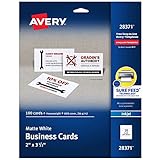
- Quality Cardstock: Crafted from white cardstock paper for printer, these custom business cards offer professional quality, making your business cards easily customizable and personal
- Sure Feed Technology: Get a reliable output for your blank business cards, Sure Feed Technology technology that reduces tmisalignments and jams so every detail is correctly printed on your custom cards
- Smooth, Clean Edges: With multiple precise cuts, these white cardstock business cards provide clean, smooth edges for easy separation, so your custom business cards maintain a professional appearance
- Customization: Use Avery business cards templates to design and print business cards that can be customized at home using card paper with an inkjet printer
- Crisp, Smudge-Free Printing: Compatible with inkjet printers, the white cardstock paper delivers crisp, smudge-free prints for business cards, allowing you to customize your designs on both sides
Keep the answer selective
The prompt is not an invitation to repeat your résumé line by line or give your full life story. Select information that explains a relevant choice, skill, or goal, and make the connection to the role explicit. Harvard FAS lists several variations of the prompt, including questions about your background, experience, professional journey, and what an interviewer should know that is not on your résumé; the same focused approach can help with each.
How to introduce yourself while networking
A networking introduction should identify your field or interest and give the other person a reason to continue the conversation. Harvard’s networking guidance describes an elevator pitch as an introduction to your interests, background, or skillset, and recommends preparing versions for different audiences and situations. It suggests 15-, 30-, and 60-second versions; these are flexible options, not a requirement to speak for a set time.
Rank #3

- PERSONALIZED BUSINESS CARDS – Customize your business cards with your company logo and text. Perfect for business professionals, salespeople, small businesses, and more.
- EASILY CREATE YOUR OWN – Upload your logo, add custom text, and select a background color. Include important details such as your name, company name, title, address, phone number, or website.
- MULTIPLE QUANTITIES – Available in quantities ranging from 50 to 10,000 business cards. Choose the perfect amount to suit your needs.
- STANDARD SIZE – Each business card measures the standard 2" x 3.5".
- 16PT CARDSTOCK – Crafted from premium 16PT cardstock for a sturdy, professional finish that makes a lasting impact.
For instance, if you are exploring painting-related work, you might say: “I’m [name], and I’m currently focused on [type of work or professional interest]. I’ve been developing [relevant skill or experience], and I’m hoping to learn more about [specific field, role, or question]. What has your experience been with [topic]?” Keep the details suited to the person you are meeting, and make the question genuine rather than treating the pitch as a monologue.
How to introduce yourself at a career fair
At a career fair, give the recruiter an efficient overview that makes it easy to identify a point of fit. Harvard FAS suggests including your name, area of study or work, year when relevant, and a relevant experience or skill. Its guidance recommends 30 to 60 seconds for this introduction; adjust if the conversation or event calls for something shorter.
Rank #4
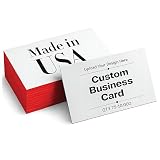
- CUSTOM DESIGN: Personalize every detail of your custom business cards with your own logo and brand colors using an intuitive design platform. Business card printing happens quickly once your layout is finalized, so you can move from design to finished product without delay. This flexibility helps any small business look polished and consistent across every printed piece handed out at meetings or events.
- DURABLE CARDSTOCK: Each card stock option, 16PT or 18PT, holds up well to repeated handling, keeping edges clean and corners crisp long after the first handoff. This heavier weight gives your business cards customizable design a substantial feel that stands apart from thin paper. Whether you are handing out name cards at a conference or leaving a stack at the front desk, the durable base keeps your design looking sharp through daily use and storage.
- VIBRANT FINISH: Full color printing brings your artwork and text to life with sharp detail and consistent accuracy across every batch of glossy business cards you order. The reflective coating makes logos and graphics pop under any lighting condition. These customized business cards work well for professional networking, promotional handouts, or everyday client communication, and the finish helps resist smudging from regular handling so your design stays looking fresh.
- FLEXIBLE LAYOUTS: Choose single or double-sided printing to fit more information, from contact details to a custom logo on the front and services listed on the back of your business card. This makes it simple to create thank you business cards, appointment reminders, or informational cards without cluttering the layout. Quantities range from 100 to 1000, so you can order exactly what fits your current needs for any event or reason.
- EVERYDAY USES: These cards work for far more than traditional networking, making them a practical choice for flyers for business promotions or referral handouts given directly to clients. The compact square business cards format is easy to carry in a wallet or planner for quick access. From service providers to retail shops, this business cards printable format adapts to a wide range of industries and everyday communication needs.
A simple outline is: “I’m [name], a [year, if relevant] [student or professional] focused on [field]. Through [project, class, internship, or role], I’ve developed [relevant skill]. I’m interested in [type of opportunity] and would like to hear more about [specific organization or work].” Mention only an experience or skill you can explain if the recruiter asks a follow-up question.
Independent reader supportYour contribution helps us test, update, and keep practical guides available for everyone.How the introduction changes by setting
| Setting | What to emphasize | Timing guidance |
|---|---|---|
| Job interview | A relevant part of your path, current experience or skills, and the next step you want to take in relation to the role. | Harvard FAS recommends about 30–90 seconds for many answers and advises against going beyond two minutes. |
| Networking | Your current role or interest, relevant background or skills, and what you hope to learn from this person or conversation. | Harvard’s networking guide suggests preparing 15-, 30-, and 60-second versions for different contexts. |
| Career fair | Your name, area of study or work, year when relevant, and a relevant experience or skill. | Harvard FAS suggests 30–60 seconds. |
These ranges are university career-service recommendations, not universal limits. Let the listener’s response and the setting guide how much more you say.
Best Value

- BUSINESS CARDS THAT STAND OUT: This beautiful jewel-toned butterfly and floral design says a lot about your natural outlook on life
- PERSONALIZED: Front: Specify 1 line up to 26 characters; Back: Specify Block or Script Font, 6 lines of personalization up to 30 characters per line
- MAKES A GREAT GIFT: Our customized business cards are great for giving out as gifts for new hires or entrepreneurs, or as a token of appreciation for your boss, business partner, or coworkers
- 100% SATISFACTION: If you are not completely satisfied with your purchase, you may return it for a refund or replacement within the return policy
- SPECIFICATIONS: This set includes 250 double-sided business cards printed on matte finish 80# cover stock; Each card measures 2 x 3-½ inches
How to practice without sounding memorized
- Write the through-line. In one sentence, identify the relevant experience or skill, what it demonstrates, and why it matters to this conversation.
- Draft for the setting. Use the interview arc for a role-specific answer; for networking or a fair, make your purpose and opening question easier to hear.
- Say it aloud. Rehearsing aloud can help you become comfortable with the order and timing. Edit out details that distract from your main point.
- Practice the ideas, not a performance. Know the points you want to cover, but leave room to respond naturally to the listener.
Mistakes that make an introduction less useful
- Repeating the résumé: Add brief context rather than listing every role or credential.
- Giving a full biography: Include personal history only when it explains a relevant choice, skill, or goal.
- Using one version everywhere: Change the detail and length to suit an interview, a networking conversation, or a career fair.
- Continuing after the point is clear: Stop when you have connected your relevant background to the opportunity or conversation.
- Sounding rehearsed: Practice enough to feel prepared, but avoid delivering a word-for-word script.
Choosing the right introduction for your situation
These examples and timing suggestions address professional introductions, particularly interviews, networking, and career fairs. A personal introduction at a school, social event, or in an international-language-learning setting may follow different conventions. There is no single formula that guarantees a successful conversation; choose a truthful, relevant starting point and adapt it to the person and purpose.
Quick Recap

Product prices and availability are accurate as of the date/time indicated and are subject to change. Any price and availability information displayed on Amazon at the time of purchase will apply.




