Outdated Drivers Are Slowing You Down
Outbyte Driver Updater · freeOne free scan finds every outdated or missing driver and matches the right update for your exact hardware.
Scan My Drivers Free →ThatPainter is reader-supported. When you buy through links on our site, we may earn an affiliate commission. Learn More
Keeping iguanas out of your yard works best when you remove the food and shelter that attract them, then physically protect the plants, trunks, beds or structures they are using. Water, sound and visual devices can add temporary pressure, but no single deterrent guarantees that iguanas will leave permanently.
The methods below are humane approaches supported by Florida wildlife and horticulture guidance. Green iguanas are established in Florida, so the capture and relocation rules in this article are specifically Florida guidance; elsewhere, check your state, provincial or local wildlife agency before trapping, moving or hiring someone to remove an iguana.
As an Amazon Associate I earn from qualifying purchases.
What should you do first when iguanas visit?
Start with an inspection rather than chasing the animal. Look for fallen fruit, outdoor pet food, tender plants with fresh bite marks, droppings, tracks near water, climbing routes and burrow entrances along foundations, seawalls, sheds or tree roots. Photograph damage and note the time of day; that helps you protect the exact place being used instead of covering the entire yard unnecessarily.
These methods are numbered in a practical order: remove attractants first, then add targeted exclusion and finally use temporary deterrents. The order is not a claim that one device has a measured success rate. Habitat modification is generally described by UF/IFAS as one of the most economical and effective long-term approaches for nuisance wildlife, but that general guidance is not a guarantee for every iguana or property.
Popular on Amazon

- Great Value Paint Brush Set: Soucolor 20 acrylic paint brushes come in 10 different sizes, making them ideal for fine detailing, model painting, rock painting, nail art, face painting, DIY crafts, and general art projects. The varied brush sizes give you better control for both delicate lines and broader color coverage, while the soft bristles deliver smooth, consistent results on acrylic, oil, watercolor, canvas, wood, ceramic, and more.
- Awesome Set of Paint brushes: Professional paint brushes can cover all of your needs. The multi-purposed brushes are ideal for Watercolor, Oil, Gouache, enamel, Acrylic Painting, Body, Nail, Face Painting, Miniature, Model, Wood, Glass, Cup, Ceramic, Fine work, Art class, Craft Art Painting, DIY Art Crafts etc.
- Soft and long-lasting: The bristles are soft and strong, with nickel metal ferrules and blue wooden handles. After cleaning, the bristles will become soft and fluffy again and will not fall off.
- Easy to clean: it’s very convenient to Wash well in soap and water. Retain shape after drying. the brushes hold up very well. Nice selection to beginners and professionals. Keep them clean and they last a long time.
- Perfect for All Painters & Occasions: Suitable for art beginners, hobbyists and professional artists. Great for art class, home creation, travel painting and DIY handmade projects. A practical art gift for students, teachers, family and craft lovers.
1. How do you stop feeding iguanas and remove easy food?
Remove dependable food sources before trying to scare an iguana away. The Florida Fish and Wildlife Conservation Commission’s direct instruction is: “Never feed iguanas.” Deliberate feeding can make animals associate your yard with food, while unattended food can attract them without anyone intending to feed them.
- Pick up fallen fruit and vegetables as soon as practical, particularly beneath trees and around raised beds.
- Harvest ripe produce rather than leaving it on the plant until it drops.
- Do not leave dog, cat or other pet food outdoors. Feed pets inside when possible, and remove bowls promptly if they must eat outside.
- Secure compost and garbage so scraps are not available at ground level.
- Ask neighbors and visitors not to feed iguanas near your property; a food source next door can continue to draw animals across the boundary.
This step can reduce repeat visits, but it will not remove a population that already has shelter or a route through the neighborhood. Pair it with a barrier or plant protection where damage continues.
Quick wins for a faster PC:
Clear out junk files and repair common Windows errorsFree Scan →Scan for outdated or missing drivers - takes under a minuteDriver Scan →2. How can you reduce hiding places and burrowing habitat?
Make the yard less convenient for resting and nesting by removing dense cover, debris piles and sheltered crevices. UF/IFAS recommends reducing features that provide hiding or burrowing opportunities, including clutter around structures and landscape edges.
- Clear lumber, scrap materials, dense piles of leaves and unused containers from likely shelter areas.
- Trim vegetation that forms a low, continuous tunnel to a wall, deck or foundation, while preserving any habitat you intentionally maintain for other wildlife.
- Inspect under decks, sheds, slabs, rock borders and seawalls for openings or burrows.
- Only address a burrow after you have reasonable evidence that it is vacant. Observe from a safe distance and do not put a hand, tool or chemical into an opening.
Never use gasoline, poisons or other chemicals to force an iguana out. Those methods can injure wildlife, contaminate soil or water and create hazards for people and pets. If you cannot determine whether a burrow is occupied, leave it alone and ask a qualified local wildlife professional for an assessment.
3. Which plants are less attractive to iguanas?
Replace or isolate the plants iguanas repeatedly browse, but treat plant choice as a way to lower attraction—not an iguana-proof guarantee. UF/IFAS and the Humane Society identify tender growth, leafy greens, squashes, melons, hibiscus and roses as commonly attractive foods. Tough or thick-leaved plants, citrus and milkweed are described as less-preferred choices in the cited guidance.
Use the information as a design filter:
- Put vulnerable vegetables and soft ornamental growth in a screened enclosure or cage rather than relying on a supposedly resistant cultivar.
- Place less-preferred, tougher foliage along the outside edge of a bed and reserve high-value plants for the protected interior.
- Check whether a plant is suitable for your climate, soil, irrigation and local ecology before buying it.
- Confirm plant toxicity and pet-safety information independently; “less preferred by iguanas” does not mean safe to eat or safe for every household.
Even an animal that usually ignores a plant may browse it when other food is scarce. Continue checking new growth after a planting change and protect individual favorites if bite marks remain.
4. How do wire cages and screened enclosures protect plants?
Physical plant protection is the most direct option for a vegetable bed, seedling, shrub or collection of high-value plants. A wire cage or screened enclosure prevents access instead of asking the iguana to react to a scare device.
Also popular on Amazon

- COMPLETE 5-PIECE BRUSH SET FOR EVERY PAINTING TASK — Includes 1 Inch Flat, 1.5 Inch Angle, 2 Inch Flat, 2 Inch Angle Stubby, and 2.5 Inch Angle brush giving you every size professional painters use daily. Get all 5 for less than the price of a single brush from hardware store brands — professional grade performance at a fraction of the cost. Perfect for walls, trim, cabinets, doors, furniture, and detailed cutting-in work on any project.
- ZERO BRISTLE LOSS — GUARANTEED BY PRECISION ADHESIVE BONDING — Every bristle is locked in place with precision-set adhesive that keeps them in the brush — not in your paint job. The coated steel ferrule provides structural support while the adhesive bond ensures clean performance on every stroke. Premium SRT synthetic filaments load more paint and release it evenly for a smooth streak-free finish on walls, ceilings, and trim. Works with latex, oil-based paint, primer, sealer, and wood stain.
- INCLUDES THE ANGLE STUBBY MOST SETS LEAVE OUT — Professional painters know the 2 Inch Angle Stubby is the go-to brush for tight cabinet interiors, window sashes, inside corners, and detailed trim where standard angle brushes are too long. Combined with the 1.5 and 2.5 inch angle sash brushes you have precision cutting-in covered at every scale — baseboards, crown molding, door casings, and ceiling lines.
- FLAT BRUSHES FOR BROAD SMOOTH COVERAGE ON ANY SURFACE — The 1 and 2 inch flat brushes deliver even coverage on walls, furniture, shelving, doors, fences, decks, and wood surfaces. Ideal for applying primers, stains, varnishes, polyurethane, and specialty coatings. Solid wood handles provide all-day comfort and control for both professional contractors and weekend DIY homeowners tackling interior or exterior painting projects.
- TRUSTED BY PROFESSIONAL PAINTERS AND CONTRACTORS NATIONWIDE — Pro Grade delivers professional-grade results at a price that makes sense for crews who go through brushes on every job. Ideal for property managers, remodeling contractors, apartment turnover crews, maintenance teams, and commercial painting operations. Backed by thousands of verified reviews from working painters. Washable and reusable for multiple projects.
Choose a mesh and frame that are sturdy enough not to collapse when an animal leans against them. Close the top when iguanas can climb surrounding structures and drop into the enclosure. Anchor the bottom edge so an iguana cannot push under it, and leave enough clearance for the plant to grow without touching the mesh.
Inspect the enclosure after storms, pruning and irrigation work. A gap created at a gate or a lifted corner can become the new entry point. Cages are usually practical for a defined bed or a few plants; screening an entire yard is more involved, so reserve full enclosures for sites where the damage justifies the installation.
5. How do you stop iguanas climbing tree trunks and dock pilings?
Install a smooth sheet-metal guard around a climbable trunk, palm or piling so the iguana cannot gain traction. UF/IFAS and municipal guidance from Oakland Park use a placement reference of about 18 inches above ground; confirm current local installation advice and the condition of the specific tree or structure before fixing a guard in place.
The Tool Desk
Outbyte PC Repair FREEClear out junk files and repair common Windows errorsFree Scan →Outbyte Driver Updater FREEScan for outdated or missing drivers - takes under a minuteDriver Scan →The guard must be smooth, continuous and free of nearby branches, trellises, fences or stacked objects that provide a bypass. Check the top and bottom edges regularly for gaps, corrosion or vegetation that has grown around the metal. Do not nail or tightly constrict a living tree; use an installation that protects the trunk as it grows and follow arboricultural guidance where necessary.
This method protects one climbing route, not the whole yard. If an iguana can reach a roof, wall, neighboring tree or dock from another direction, combine the guard with pruning and a protected destination such as a screened bed.
6. How do you block digging under beds and structures?
An L-shaped wire barrier can discourage iguanas from digging beneath a plant bed, fence line or small structure. Bury the vertical portion at the vulnerable edge and extend the wire outward as an underground apron so an animal meets the barrier while trying to start a tunnel. The exact depth and layout depend on the soil, slope and structure; the cited guidance supports the L-shaped concept rather than a universal dimension.
Burrow work requires special care. UF/IFAS says a vacant burrow may be packed with concrete or sand during the day, when animals are away. Do not seal an occupied burrow, and do not guess that an opening is empty simply because you did not see an iguana at one moment. If there are multiple entrances, fresh soil or repeated activity, stop and contact a local wildlife professional.
What’s actually slowing this PC down?
Pick the symptom - the matching free tool is one click away.
Also popular on Amazon

- 【All sizes of art brushes】: The 10 sizes of multi-functional brushes have various shapes, making the mixing color easier, which is very suitable for artists, students, teenagers, children and painters at all levels. Wonderful Present ideas for friends and family who like painting!
- 【general brush set】: Professional paint brush can meet all your needs. Multifunctional brush is very suitable for watercolor, oil, gouache, acrylic painting, body, nail, face painting, miniature, model, ceramics, arts and crafts painting, etc.
- 【high quality process】: It is designed with anti falling bristles, anti-rust nickel ferrule and solid wood handle. You can use the brush to focus on the painting and always be creative.
- 【easy to maintain】: After using the brush, it is very convenient to clean the brush with warm soapy water and reshape the tip of the brush. Air dry the brush and place it on top of the top for long use.
- 【100% satisfaction guarantee - buy now】1 packs of set brushes, you can also get friendly customer service, any questions feel free to contact us, within 24 hours to help you! There is no risk in buying our paint brush kit.
Before filling any opening, check for drainage, utility and structural issues. Blocking a route without correcting an adjacent opening can push the animal into a wall, crawlspace or another unsafe location.
7. Can water or a motion-activated sprinkler deter iguanas?
Yes, water can make a particular basking spot or path less comfortable without physical contact. The FWC and Humane Society identify spraying an iguana with a hose as a possible deterrent, and a motion-activated sprinkler can provide repeated disturbance when an animal enters a defined zone.
Use water to redirect behavior, not to injure or trap the animal. Aim at the ground or the animal’s general area, keep spray away from electrical equipment and avoid creating slippery surfaces. Position a motion sprinkler so it does not soak passersby, damage delicate plants or run unnecessarily during water restrictions.
Expect maintenance and habituation. Refill or adjust the device, keep its sensor clear and move it when the animal changes routes. Water is best layered with food removal and exclusion because it discourages use of one location but does not close a burrow or prevent climbing elsewhere.
Free tools Windows power users keep installed
One-click scans. No signup required.
8. How should you use sound and visual harassment humanely?
Intermittent noise and reflective objects may make a location less appealing for a time. Examples in the cited guidance include wind chimes and reflective items. The Humane Society recommends variety and periodic rotation so iguanas do not become accustomed to one device.
Place visual objects where sunlight reaches them and where they will not become litter or a hazard in high wind. Use sound with consideration for neighbors, sleeping areas and local noise rules; constant noise is not a humane or sustainable plan for a residential yard. Rotate or remove devices when they stop changing the animal’s behavior rather than adding more and more objects.
These tools are location-specific deterrents, not barriers. If the same iguana still has food, shelter and an unobstructed route to a preferred basking surface, it may tolerate the disturbance. Combine harassment with a cage, trunk guard or edge barrier aimed at the actual damage.
Also popular on Amazon

- 【KIDS PAINT BRUSHES SET】Anezus paint brushes for kids come with 10 pcs paint brushes of 5pcs round paintbrushes and 5 flat paint brushes with colorful handles, good for the young artist to explore their creativity in painting and crafting
- 【HIGH QUALITY PAINT BRUSHES FOR KIDS】These toddler paint brushes made of soft hog bristle, bright colored handles and rust proof ferrules. The bristles are firmly fixed in the kids paint brushes and no shedding. Each children paint brush measure 6 1/4 inches (16cm) in length and ferrules 1/2"(1.3cm) diameter, large enough for the little hand to grip and control
- 【WIDE APPLICATIONS】With combination of round and flat craft paint brushes for kids, work great with washable paint, tempera paint and acrylic paint. Great for arts and craft, rock, leather, gesso and ceramic, or body, nail and face art painting.
- 【EASY TO CLEAN 】After using paint brushes for acrylic, oil or watercolor painting, it’s very convenient to clean them with warm soapy water and reshape the paint brush tips. Keep these craft paint brushes clean and they last a long time.
- 【GREAT GIFT IDEA】Perfect for students, teens, kids, children and painters of all levels. Wonderful gift idea for girls, boys and kids who love painting! These all-purpose paint brushes for kids are ideal for kids' school projects, birthday parties, painting parties, art parties, back to school supplies, classroom decoration and more.
How do the eight methods fit different iguana problems?
| Problem | Most relevant methods | What they change | Maintenance or caution |
|---|---|---|---|
| Food attraction | 1 and 3 | Removes easy meals and lowers the appeal of plantings | Food can return daily; plant preference is not a guarantee |
| Damage to a bed or prized plant | 3 and 4 | Uses less-preferred planting and direct physical exclusion | Inspect cages and protect new growth |
| Climbing into trees, roofs or docks | 5 and 8 | Removes traction and makes a route less attractive | Eliminate bypasses; rotate visual or sound devices |
| Digging under an edge or structure | 2 and 6 | Removes cover and adds an underground L-shaped barrier | Never seal an occupied burrow |
| Basking in one repeated spot | 7 and 8 | Creates temporary disturbance without contact | Devices need water, power or repositioning and may lose effect |
Use the smallest intervention that protects what is being damaged, then expand only if the animal changes routes. For example, a caged vegetable bed plus fallen-fruit removal may be more practical than trying to exclude every iguana from a large lot.
Do these 3 things before closing this tab:
1Scan for outdated or missing drivers - takes under a minute2Clear out junk files and repair common Windows errors3Fix the driver behind crashes, sound loss and screen glitchesWhat is a practical order for putting these measures in place?
- Document the problem. Mark damaged plants, climbing points, basking locations and burrow entrances. Look for patterns rather than reacting to a single sighting.
- Remove attractants and shelter. Stop feeding, secure pet food, collect fallen produce and clear debris or dense cover.
- Protect the target. Add a wire cage, screened enclosure, trunk guard or L-shaped edge barrier where damage is occurring.
- Add a temporary deterrent. Use a hose, motion sprinkler, reflective object or intermittent sound at the specific route or basking site.
- Recheck every few days. Repair gaps, move deterrents that have become predictable and confirm that a suspected burrow is not occupied before any closure.
- Escalate safely. If an iguana is cornered, aggressive or inaccessible, stop handling attempts and contact a properly licensed local nuisance-wildlife operator.
What should you avoid?
Do not use poisons, gasoline, glue traps, steel body-gripping traps, drowning, freezing or other methods intended to injure or kill an iguana. UF/IFAS Extension guidance specifically warns against chemical methods, and local laws may prohibit particular traps or handling practices. These approaches also risk harming pets, children, non-target wildlife and the environment.
Do not grab, pin or corner an iguana. Iguanas can bite or scratch when threatened. Non-contact deterrence is safer, and a professional should handle difficult removals.
What are Florida’s rules about capturing and relocating iguanas?
Florida’s rules are not a general rule for every state. The FWC says captured green iguanas cannot be relocated and released at another location in Florida. A person who cannot safely remove one should seek a professional nuisance-wildlife trapper and confirm the operator’s licensing and the current local requirements.
Before trapping or transporting any iguana elsewhere, contact the relevant wildlife agency in your jurisdiction. Protected-species rules, animal-welfare requirements, municipal ordinances and restrictions on releasing nonnative wildlife vary by location. Never assume that a park, vacant lot or neighboring property is a legal release site.
How we picked these eight methods
The selection follows the problems a homeowner can actually control: food attraction, shelter, plant browsing, climbing, digging, basking and repeated use of one route. Priority goes to habitat modification and physical exclusion because they address access or attractants directly; water, sound and visual tools are included as non-contact, location-specific supplements. The list uses guidance from the Florida Fish and Wildlife Conservation Commission, UF/IFAS, the Humane Society’s iguana factsheet and UF/IFAS nuisance-wildlife guidance. Those sources do not provide a universal success percentage for any individual method, so none is presented here.
Frequently asked questions
Can I move an iguana to a nearby park?
Do not assume that moving it is legal or humane. In Florida, FWC guidance prohibits releasing a captured green iguana at another Florida location; elsewhere, ask the wildlife agency about the applicable rule before capture or transport.
Also popular on Amazon
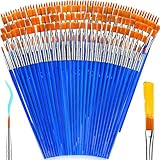
- 【162-Piece Bulk Set | Dual Brush System】Maximize versatility with 81 flat brushes (0.59 inch edge for bold strokes) and 81 round brushes (0.39 inch tips for details) – 3X more tools than standard kits! Pre-sorted in labeled compartments for instant access during painting sessions. Ideal for art classrooms, mural projects, and multi-artist households.
- 【Pro-Grade Durability | Zero Shedding Guarantee】 "Engineered with triple-crimped nylon bristles (43% higher resilience vs. standard) and aerospace aluminum ferrules tested for 10,000+ flex cycles. Lab-verified 0.01% shedding rate even with heavy impasto techniques – outperforms flimsy bristles in budget brushes."
- 【Multi-Scenario Readiness | Event & Daily Use】 Optimized for: Thanksgiving/Christmas face designs classroom projects ceramic decorating fabric printing and model painting; Lightweight plastic handles each reduce hand fatigue during prolonged sessions
- 【Effortless Maintenance | Long-Term Durability】 Clean with warm soapy water in 10 seconds; Reshape tips and air-dry vertically to preserve bristle integrity,After use, air-dry brushes thoroughly and store upright in the provided case to preserve bristle shape. The premium nylon filaments naturally regain their original form after each stroke. For cleaning, simply rinse in warm soapy water and gently reshape bristles with fingertips."
- 【Multiple Application】These acrylic paint brushes can be applied for most occasions,such as:watercolor,oil, gouache paint,face paint, acrylic paint, suitable for Thanks Giving Day, Christimas, Halloween face and body painting, canvas painting, fabric, rock, miniature, model, ceramics, arts and crafts painting, etc.
How often should I rotate reflective objects or noise devices?
The Humane Society recommends periodic rotation but does not specify a universal schedule. Change the location or type when the iguana resumes using the area, while keeping the setup safe for neighbors, pets and other wildlife.
Is a plant described as “iguana-resistant” guaranteed to survive?
No. “Less preferred” means the plant may be browsed less often under some conditions, not that it is immune to damage. Protect valuable specimens with a cage or screen and verify that any replacement plant suits your climate and household.
Recommended Free Tools
What if I cannot tell whether a burrow is occupied?
Do not fill or block it. Keep people and pets away, observe from a safe distance and ask a qualified local wildlife professional to assess it, especially if there are several entrances or signs of fresh activity.
When should I hire a wildlife professional?
Call one when an iguana is cornered, a burrow is connected to a building, access requires climbing or the animal cannot be removed without direct handling. Check licensing, insurance and local rules, and ask what humane, non-contact method will be used.
Frequently Asked Questions
Can I move an iguana to a nearby park?
Do not assume that moving it is legal or humane. In Florida, FWC guidance prohibits releasing a captured green iguana at another Florida location; elsewhere, ask the wildlife agency about the applicable rule before capture or transport.
How often should I rotate reflective objects or noise devices?
The Humane Society recommends periodic rotation but does not specify a universal schedule. Change the location or type when the iguana resumes using the area, while keeping the setup safe for neighbors, pets and other wildlife.
Crashes, No Sound, or Screen Glitches?
Random freezes, missing sound and display glitches usually trace back to one bad driver. Find and replace yours safely.Free scan · under a minuteWindows Errors? Fix Them Before They Spread
Repair common Windows errors and clear accumulated junk for a smoother, more stable PC - no reinstall needed.Free scan · no reinstallIs a plant described as “iguana-resistant” guaranteed to survive?
No. “Less preferred” means the plant may be browsed less often under some conditions, not that it is immune to damage. Protect valuable specimens with a cage or screen and verify that any replacement plant suits your climate and household.
What if I cannot tell whether a burrow is occupied?
Do not fill or block it. Keep people and pets away, observe from a safe distance and ask a qualified local wildlife professional to assess it, especially if there are several entrances or signs of fresh activity.
When should I hire a wildlife professional?
Call one when an iguana is cornered, a burrow is connected to a building, access requires climbing or the animal cannot be removed without direct handling. Check licensing, insurance and local rules, and ask what humane, non-contact method will be used.
Quick Recap


