Do these 3 things before closing this tab:
Recommended Free Tools
1Clear out junk files and repair common Windows errors2Fix the driver behind crashes, sound loss and screen glitches3Repair Windows errors before they cause bigger problems
ThatPainter is reader-supported. When you buy through links on our site, we may earn an affiliate commission. Learn More
Plan family storage in layers: use built-in cabinets for genuinely awkward geometry or a function likely to remain useful for many years, then use freestanding, modular and multipurpose pieces everywhere the room may change. That combination captures capacity without locking a playroom into a nursery, a guest room into an office, or a kitchen into one pattern of use.
A flexible system is one whose shelves, modules or furniture can move, be resized, replaced or repurposed without structural work. The practical method is to audit what the household owns, map fixed constraints, rank each storage location by reversibility, and check access and anchoring before buying anything.
As an Amazon Associate I earn from qualifying purchases.
What makes storage flexible in a family home?
Flexibility is a planning property, not a product label. Storage is flexible when its useful parts can be moved, reconfigured or given a new job as children grow, work patterns change, guests arrive or hobbies expand. A freestanding bookcase that can move from a nursery to a study is flexible; a cabinet permanently fitted to one room’s dimensions is not, even if it has adjustable shelves.
That distinction matters because a family home’s storage demand changes faster than its structure. Toys become school supplies, a nursery becomes a bedroom, a spare room becomes an office, and sports or craft equipment can outgrow an original cupboard. Government guidance on adaptable homes emphasises spaces that are easy to operate and change, while a peer-reviewed review of residential reconfiguration identifies movable partitions and multipurpose furniture as common ways to support change.
Popular on Amazon
- ELEGANT DISPLAY SHELF: Well-organized home makes you being at home more enjoyable. The modern fashionable plastic cube organizer by displaying multiple items, such as books, photos, toys, bags, potted plants, CDs make your house organized and neat
- LARGE CAPACITY STORAGE: Each cube size is 11.8"L × 11.8"W × 11.8"H. The overall product dimensions is 48.4"L × 12.4"W × 48"H. Fits storage bins that is smaller than 11" × 11". Gift hook can hang keys, ties, hats, umbrellas make your life convenience
- HIGH QUALITY MATERIAL: Our cube storage organizer is made of high quality PP materials, sturdy metal frame and ABS plastic connectors. Stable structure ensures that each cube can withstand a maximum weight of 11 lbs
- EASY TO ASSEMBLE: Easy for you to assemble the simple organizer. With the help of the instructional manual and wooden mallet, you can create different blocks to fit different spaces or shapes to meet your needs
- HAVE A BRAINSTORM: You can design different configuration according to your scene and usage. You can use one set as a storage cabinet, or assemble multiple sets into a display wall to display handicrafts, toys or yarns. Use your imagination
Use three tests for every proposed unit:
- Can it move? Check whether the whole unit, or at least its internal modules, can be relocated without rebuilding the room.
- Can it change job? A shelf, basket or cabinet should be able to hold a different category later.
- Can it be reversed? If the family no longer needs it, can the room return to another use without major demolition or wall repair?
A built-in can still pass some of these tests if its interior is adjustable, but its location remains fixed. Treat that permanence as a benefit only where the geometry or long-term function justifies it.
Why are families looking for storage beyond built-in cabinets?
Storage shortages are common, but the figures describe particular surveys rather than a universal requirement for every home. In Houzz’s 2026 survey of renovating U.S. homeowners, 76% added a specialty built-in feature; 84% upgraded kitchen cabinets and 94% integrated specialty storage into upgraded cabinetry. Those figures show strong demand for fitted solutions, not proof that every cabinet should be permanent.
Hippo’s 2025 homeowner survey found that 90% considered flexible spaces important. It also reported that 86% would pay more for a well-designed flex room, rising to 94% among new-construction homeowners. In the UK, 48% of Which? members reported storage problems in kitchens or bedrooms and 34% reported them in living rooms in 2026. Häfele Homes for Living reported that 44% of homeowners lacked enough kitchen space and 52% ranked a clean, tidy, clutter-free kitchen as their top priority.
These results explain the tension: households want more capacity and less visual clutter, but they also want rooms that can change. Häfele’s 2026 survey found 87% expected to remain in their current property for the next two years and 42% planned home improvements, so storage decisions often need to work within an existing home rather than a complete rebuild. Freedonia forecast U.S. modular home-organization demand to grow 2.9% annually to $3.4 billion in 2025, with closets, garages and utility areas among the important applications.
The useful conclusion is an allocation rule: make the difficult spaces permanent and keep ordinary, adaptable spaces movable.
How do I audit possessions before planning storage?
Start with the objects and activities, not with a cabinet catalogue. A short audit prevents you from giving premium, fixed space to items that are rarely used while leaving daily essentials in hard-to-reach places.
- List categories, not individual objects. Record clothes, school supplies, toys, books, cleaning products, food, sports equipment, tools, paperwork and sentimental items. Include items stored outside the main rooms.
- Record frequency. Mark each category as several times a day, weekly, seasonal, occasional or archival. Frequency determines the most useful height and location.
- Record the user. Note whether access is needed by a child, an adult, a guest, or only one person. A shelf that is technically reachable may still be impractical for the person who uses it.
- Estimate change. Mark categories likely to grow, shrink, disappear or split into subcategories. Children’s clothing, school materials and hobbies usually change faster than household linens.
- Separate risk levels. Identify hazardous products, breakables, confidential papers and heavy objects. These need controlled access or low, stable positions rather than open bins.
- Measure the actual volume. Count shelves, rails, bins and floor bays currently in use. Include the space consumed by awkward shapes, not just the nominal width of a cupboard.
Use the audit to create a simple brief for each room: what must be reached every day, what can be stored high or low, and what may need a new home within two or five years. Consumer guidance cited by Which? recommends keeping frequent-use items around eye level and using higher or lower positions for less frequent items; that principle is more useful than maximising every cubic centimetre.
How should I map the home’s fixed constraints?
Draw each room before selecting furniture. Mark doors and their swing arcs, windows, radiators, sockets, switches, stairs, ceiling height, circulation routes and any changes in floor level. Note where a tall unit would block daylight, heat, a door handle or a maintenance panel.
Also popular on Amazon

- Large Storage System: Each cube size is 11.8"x11.8"x11.8", 6 cube shelves units provide enough space to store books, clothes, toys, shoes, bags, purse, potted plants, files, yarn, artworks, etc. It is a multi-purpose room storage organization to store your daily items
- High Stability: Thick and tough pp panels, solid metal frame, high-hardness ABS resin connectors and unique internal interlocking design are together creating a sturdy and stable storage organizer. Each cube holds up to 11 lbs
- Custom Layout: DIY your unique style for storage cubes, you can stack up or move any panel to make different combinations or internal configurations as needed. Easy to assemble, just fix the panels with connectors according to the instructions
- Multi-purpose Shelf: This cube shelf organizer is widely used as closet organizer for bedroom, toy storage cabinet in kids room, clothes organizers in kid’s closet, book shelves, display rack in craft room
- Professional Service: A professional service team is always ready, if any problems, please contact us at any time, we will reply within 24 hours
Then mark awkward geometry: narrow pantry runs, under-stair voids, sloping ceilings, deep recesses and corners that standard furniture cannot use efficiently. These are the strongest candidates for built-ins because the architecture has already limited your options. A fitted unit can turn a triangular or very shallow space into useful capacity while leaving the rest of the room available for movable pieces.
Before drilling, identify the wall construction and any services behind it. Follow the fixing instructions for the selected rail, shelf or cabinet, and leave access to sockets, valves and heating controls. If the room may be repainted, avoid designing a unit that makes all wall surfaces inaccessible; a small clearance or removable back panel can make future decorating and maintenance easier.
Quick wins for a faster PC:
Repair Windows errors before they cause bigger problemsFix Now →Fix the driver behind crashes, sound loss and screen glitchesFind Drivers →Clear out junk files and repair common Windows errorsFree Scan →Keep a measured “change zone” in rooms with uncertain futures. It can be an open wall, a clear floor bay or a section of adjustable shelving. That reserve is what lets a desk, wardrobe or toy unit move later without forcing a full refit.
How do I decide which storage should be built in?
Use reversibility as the deciding factor. The less reversible a solution is, the stronger the case should be that its location and purpose will remain valuable for many years. This is a practical framework derived from adaptability guidance, not a measured universal ratio of built-in to movable storage.
| Reversibility | Typical solutions | Best use | What to verify |
|---|---|---|---|
| High | Cube organisers, bookcases, baskets, rolling carts, storage ottomans, folding desks and freestanding wardrobes | Rooms likely to change function; growing children’s spaces; rented or frequently rearranged homes | Stability, dimensions, caster locks and whether replacement parts are available |
| Medium | Adjustable closet systems, track shelving, wall-mounted rails and modular pantry components | Storage that needs structure but may need new shelf heights or accessories | Wall fixing, rail capacity, compatibility of future modules and load ratings |
| Low | Full-height fitted cabinetry, fixed benches and custom joinery tied to one room layout | Narrow pantries, under-stair voids, sloping alcoves and long-term functions with difficult geometry | Whether the geometry truly requires a custom fit, access for repairs and the cost of future alterations |
A low-reversibility installation is not automatically wasteful. It becomes a problem when a standard, movable unit could perform the same job with little loss of capacity or access. Conversely, refusing every built-in can waste awkward space and leave walkways crowded with freestanding furniture.
What is the best room-by-room mix of fixed and movable storage?
Entryway or mudroom
Put daily shoes, coats and bags at the point of entry. Hooks, a movable bench, baskets and a shoe rack can be rearranged as children grow. A single durable cabinet may be worthwhile where a narrow passage, cleaning routine or security requirement makes open pieces impractical; keep it shallow enough to preserve circulation and make the bench or baskets replaceable.
Free tools Windows power users keep installed
One-click scans. No signup required.
Kitchen and pantry
Reserve built-ins for narrow runs, corners, tall voids and other geometry that ordinary furniture cannot use safely. Inside those cabinets, use adjustable shelves, pull-out baskets or modular inserts so the interior can respond to changing cookware and food-buying habits. Specialty storage is popular in the Houzz 2026 survey, but popularity does not make every internal fitting permanent.
Keep daily dishes, lunch-making supplies and frequently used ingredients within comfortable reach. Put occasional appliances and seasonal serving items higher or lower, provided the shelf rating and safe lifting height are suitable. A freestanding trolley or narrow cart can add work surface and storage without committing another wall to cabinetry.
Also popular on Amazon

- Spacious 6-Cube Storage: Each 11.5"W x 11"H x 11.5"D cube offers generous space for books, toys, office supplies, and more. The compact footprint (36"W x 11.6"D x 24"H) keeps your essentials neatly stored and within reach without taking up too much floor space
- Sturdy & 60 Lbs per Cube: Built with premium MDF and reinforced removable back panels, this bookshelf supports 60 lbs per cube and 120 lbs on top—perfect for heavy books, vinyl records, or fully loaded storage bins. Durable construction you can rely on
- Removable Back Panels: Three removable back panels give you flexibility: keep them on to hide clutter and maintain a clean look, or remove them for an open, airy display that works from either side. Customize it to match your style
- Versatile for Any Room: Use it as a bookcase, TV stand, shoe cabinet, or display unit. Arrange it vertically as a space-saving tower or horizontally as a console—fits living rooms, bedrooms, home offices, and entryways with ease
- Quick 30-Min Assembly: Includes clear step-by-step instructions and all hardware. Most customers assemble it in under 30 minutes—no special tools needed. Plus, a complete anti-tip kit is included to securely fasten it to wall studs, meeting US safety standards
Living room
Choose pieces that support more than one activity. A storage ottoman can hold toys or blankets and serve as seating; a lift-top table can provide a temporary work surface; a tall bookcase or cube unit can divide zones without constructing a wall. Anchor tall units and use baskets or doors where open shelves would make visual clutter difficult to control.
Children’s bedrooms
Use adjustable wardrobes, under-bed boxes and freestanding shelving so clothing, toys and study supplies can change places. Keep favourite toys and everyday clothes within safe reach, while hazardous items, medicines and fragile objects require controlled adult access. Avoid arranging low boxes and shelves as a climbable route to a window or high surface.
The Tool Desk
Outbyte PC Repair FREEClear out junk files and repair common Windows errorsFree Scan →Outbyte Driver Updater FREEScan for outdated or missing drivers - takes under a minuteDriver Scan →Flex room or home office
Make the work surface the movable element. A folding desk, rolling cart and adjustable shelving can turn a guest room into a study, playroom or hobby space. A wall bed can release floor area for daytime use, but its mechanism and clearances must follow the manufacturer’s instructions; do not let surrounding storage obstruct the bed’s movement.
Garage, utility room or craft area
Modular bays are useful where tools, cleaning products or materials grow over time. Add one shelf or bay at a time rather than fitting the entire wall at once. Keep heavy loads low, reserve a clear maintenance area around equipment and use lockable storage for chemicals or sharp tools.
Which vertical and multipurpose pieces add capacity without locking the room?
Use height before adding more floor furniture, but keep stability and reach in view. Tall bookcases, cube units and freestanding wardrobes add volume on a small footprint; baskets and labelled boxes make the upper or lower zones usable. A rolling cart can move between kitchen, craft and homework tasks, while a folding desk disappears when the room returns to family use.
Multipurpose furniture earns its space by performing two jobs without a permanent change to the room: storage ottomans provide seating, lift-top tables provide a work surface, and wall beds combine sleeping with daytime floor area. Select a piece only if both functions are genuinely needed. A mechanism that is difficult to operate will leave one of its advertised uses idle.
What’s actually slowing this PC down?
Pick the symptom - the matching free tool is one click away.
Open storage improves visibility and quick access, especially for children, but it also exposes colour and clutter. Closed doors or fabric bins can calm a busy room and protect dust-sensitive items. A mixed arrangement—open space for daily items and closed space for less attractive or less frequent categories—usually gives better access than either extreme.
How do I make movable storage safe and easy to use?
Flexibility never overrides safety. Apply these checks before loading a unit:
Also popular on Amazon
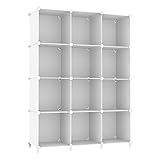
- Large Storage System: Each cube size is 11.8x11.8x11.8 inch, 12 cube storage shelf with enough storage space for you to store books, toys, yarn, shoes, clothes, bags, purse and more everyday things you want to store, a ideal home storage solution for you
- Custom Shape: DIY design allows you to assemble the cubes in different combinations to fit in the limited space and add the cubes to meet your increased storage needs any time
- Quality Material: Selected high hardness ABS connectors and thickened PP panel with metal frame, sturdy and durable, And the bottom of the upgraded version of the high foot connector, keep cube shelf off the wet and dust
- Multi-purpose Shelf: The 12 cube shelf organizer can be used as bookshelf in study, closet cube shelves in bedroom, toy cabinet in kids’ room, bathroom shelf, laundry storage bins, clothes storage cabinet, keep your life tidy and clean
- Easy Assembly: The cube storage organizer is easy to assemble and disassemble, no other tools required. We provide a 12-month warranty and professional customer service team If you have any questions, please feel free to contact us
- Anchor tall or climbable furniture. Use the supplied anti-tip hardware and fix it to a suitable structural point. Recheck the fixing after moving the unit.
- Follow load ratings. Verify the shelf, bracket, rail and caster limits, especially for books, kitchen appliances and tools. Spread weight rather than concentrating it on one shelf.
- Put heavy items low. This reduces the tipping moment and makes lifting safer. Keep daily items between comfortable reach heights for the person using them.
- Protect circulation. Do not let a movable unit narrow a stair, block a door swing or cover a radiator, socket or escape route.
- Control child access. Keep medicines, cleaning chemicals, cords, sharp tools and breakables secured. Do not create a series of footholds that invites climbing.
- Lock movement where needed. Engage caster brakes on carts and ottomans when they are being used as work or seating surfaces.
Manufacturer instructions govern the exact fixing method and maximum load. If a wall cannot accept the specified anchor, choose a different location or a supported design rather than treating the rating as optional.
How can I compare a built-in cabinet with a movable alternative?
Compare the whole-life usefulness of each option rather than its initial appearance. Score both choices against the same questions before deciding.
| Decision axis | Question to ask | Why it matters |
|---|---|---|
| Reconfigurability | Can shelves, cubes or modules move without new construction? | Determines whether the system can follow changing activities. |
| Capacity | How much usable volume is gained per metre of wall or floor? | Prevents a flexible piece from consuming space without solving the shortage. |
| Access | Can the person who needs the item reach and identify it? | Capacity is wasted when everyday items are buried or too high. |
| Safety | Can the unit be anchored and loaded within its rating? | Stability is a requirement, not an optional feature. |
| Reversibility | Can the room return to another use later? | Protects a nursery, office or guest room from becoming permanently specialised. |
| Installation | Does it require drilling, specialist fitting or only assembly? | Indicates disruption, skill needs and how easily the plan can be changed. |
| Longevity | Can parts be replaced or added as the family changes? | Modular repair may prevent a complete replacement. |
| Visual effect | Does open storage improve visibility or create visual clutter? | Addresses the household’s need for a tidy, calm room as well as capacity. |
| Cost over time | Will adaptability avoid a larger refit later? | Compare future changes, not just today’s purchase and installation. |
Choose the built-in when it wins clearly on geometry, safety or long-term capacity. Choose the movable option when the scores are close and the room’s purpose is uncertain. Record the reason for a permanent decision so a future owner or family member understands what problem the joinery was meant to solve.
Independent reader supportYour contribution helps us test, update, and keep practical guides available for everyone.What is a practical installation sequence?
Work from the least committed decisions to the most committed ones. This order reduces expensive rework and lets the family learn how each room is actually used.
- Complete the possession audit. Remove obvious duplicates and decide what should be donated, recycled, archived or stored elsewhere.
- Draw the constraints plan. Mark openings, heat sources, services, circulation and awkward geometry to scale.
- Assign each category a home. Give daily items the easiest access, then place seasonal, sentimental and hazardous categories according to frequency and risk.
- Fill flexible capacity first. Add baskets, carts, ottomans, bookcases or adjustable shelving and live with the arrangement long enough to see what is still missing.
- Identify the residual problem. If a narrow void, sloping alcove or unsafe passage remains unusable, define that specific problem for a built-in solution.
- Confirm fixings and loads. Check wall construction, manufacturer ratings, anti-tip hardware and maintenance access before installation.
- Protect finishes. Keep touch-up paint available for future anchor holes, use suitable pads under movable pieces and leave removable access where a wall or cabinet may need repainting.
- Review after a season. Reassign shelves when school, sports or weather-related storage changes. Add a module only after the category and its volume are clear.
What mistakes make flexible storage fail?
Fitting every wall at once
A complete wall of cabinetry can look orderly but may consume the only adaptable zone in a room. Install the minimum fixed capacity needed for awkward geometry, then leave at least one area that can accept a desk, shelf or different furniture later.
Buying for an imagined future
Oversized cupboards and deep shelves often become dead space or clutter. Buy for measured possessions and a plausible growth margin, not for every item the household might own someday.
Ignoring the retrieval path
A shelf can hold a lot and still fail if a child must ask for every book or an adult must unload three boxes to reach a pan. Test the movement from room entrance to item and keep the most frequent categories in the shortest, safest path.
Using unanchored tall furniture
Rearrangeable does not mean unsecured. A unit that can tip, slide into a doorway or roll while loaded needs anchoring, a brake or a different position.
Also popular on Amazon

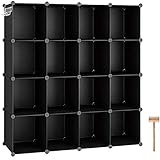
- Spacious 16-Cube Design: With 16 generous cubes, each measuring 11.8" x 11.8" x 11.8", this cube organizer offers ample room for clothes, toys, books, yarns, handicrafts, and more. Whether you’re organizing a closet, a craft room, or a kid’s play area, you’ll have plenty of space to keep everything neat and accessible.
- Stability & No Wobbling: Worried about plastic shelves feeling shaky? Ours won’t. Built with thickened polyethylene panels, a reinforced metal frame, and precision-fit ABS connectors, each cube holds up to 22 lbs. The structure is engineered to stay firmly in place—no tipping, no wobbling, even on slightly uneven floors.
- Strong Panels: Each cube features sturdy panels that provide solid support—perfect for holding standard 11" x 11"x 11" storage bins, books, or heavier items without sagging. No more soft bases that let your belongings sink or shift. Designed to work with the bins you already own.
- Unlimited DIY Configurations: This isn’t just a storage shelf—it’s a modular system that adapts to you. Use one set as a closet organizer, a room divider, or a toy cabinet. Combine multiple sets to build a full display wall, a craft station, or even a DIY pet play area. Your space, your layout.
- Easy to assemble: Simple modular structure makes it easy to install and disassemble. Following the guide, use the plastic hammer to check if every sheet is fully locked in the deepest layer of the connector after finishing every layer assembling, then you shall get a firm closet organizer.
Confusing open storage with organisation
Open shelves reveal both order and disorder. Add labelled baskets, a closed section or a regular reset routine where visibility alone would make the room feel chaotic.
Forgetting replacement and repair
Ask whether a damaged shelf, missing basket or discontinued connector can be replaced. A modular system is only as adaptable as its available parts and compatible dimensions.
PC Slower Than It Used to Be?
A free scan shows the junk files, broken settings and background clutter dragging Windows down - then fixes them in one click.Free scan · Windows 10 & 11Outdated Drivers Are Slowing You Down
One free scan finds every outdated or missing driver and matches the right update for your exact hardware.Free scan · exact hardware matchHow should the plan change as the family grows?
Design a sequence of likely transitions rather than one permanent layout. In early childhood, low toy storage and clear play space matter most. During school years, the same low units can hold books, projects and sports equipment while a folding desk or rolling cart supplies a temporary work zone. Teenagers may need more private, lockable or category-specific storage, while a later guest room or home office benefits from furniture that can leave the room without demolition.
Keep a simple inventory of module dimensions, fixing points and paint colours. When a unit moves, you can patch anchor holes, touch up the wall and reuse the same baskets or shelves elsewhere. That small record turns a series of rearrangements into a controlled plan instead of repeated emergency purchases.
What does a good final plan look like?
A balanced family home usually has a small number of permanent, geometry-led installations and a larger field of movable pieces. Built-ins solve the narrow pantry, under-stair void or sloping alcove; freestanding modules handle bedrooms, living rooms, flex rooms and changing hobbies. Daily items are reachable, heavy and hazardous items are controlled, tall pieces are anchored, and at least one clear area in each multifunctional room remains available for a new arrangement.
That balance delivers capacity without treating today’s household pattern as permanent. It also makes future decorating easier: movable storage can be cleared from a wall for painting, while a well-justified built-in remains where its architectural advantage continues to matter.
Do these 3 things before closing this tab:
1Repair Windows errors before they cause bigger problems2Scan for outdated or missing drivers - takes under a minute3Clear out junk files and repair common Windows errorsFrequently Asked Questions
Can renters create flexible family storage without drilling?
Yes. Use freestanding wardrobes, cube units, rolling carts, storage ottomans and tension-fit organisers where they are stable and permitted. If a tall unit could tip, choose a safer low profile or obtain written permission for an approved anti-tip fixing rather than relying on weight alone.
How much clearance should I leave around movable storage?
There is no single clearance number that suits every room or furniture type. Preserve the manufacturer’s required operating space, door and drawer travel, radiator airflow, socket access and an unobstructed route through the room; draw those paths on the floor before buying.
Are open shelves or closed cabinets better for a family?
Open shelves make books, toys and daily supplies visible and easier for children to return, while closed fronts reduce visual noise and protect dust-sensitive or hazardous items. A mixed layout usually works best: open access for frequent safe categories and closed or lockable storage for clutter, valuables and risks.
When is custom joinery worth the permanence?
It is most defensible when the architecture is unusually difficult—such as a narrow pantry, under-stair void or sloping alcove—or when the function is expected to remain valuable for many years. If a standard modular piece can provide similar access and capacity, its reversibility is usually the stronger choice.
How can I budget for storage that may move later?
Compare installation, moving, repair and replacement costs across the expected life of the room, not only the purchase price. Spend on durable frames, compatible modules and safe hardware first; postpone decorative fronts or extra capacity until the family’s actual categories and volumes are stable.
Quick Recap


