PC Slower Than It Used to Be?
A free scan shows the junk files, broken settings and background clutter dragging Windows down - then fixes them in one click.Free scan · Windows 10 & 11
Outdated Drivers Are Slowing You Down
One free scan finds every outdated or missing driver and matches the right update for your exact hardware.Free scan · exact hardware match
ThatPainter is reader-supported. When you buy through links on our site, we may earn an affiliate commission. Learn More
If a house was built before 1978, treat every painted surface you will disturb as lead-containing until a valid test shows otherwise. The safest option is an EPA- or state-certified lead-safe renovation contractor. If you are legally doing the work yourself, contain the room, keep children and pregnant people away, use wet and dust-minimizing methods, clean with a HEPA vacuum and damp wiping, control the waste, and complete the required cleaning verification or dust-lead testing before repainting or allowing anyone back in.
Why is lead paint a serious concern in an old house?
Lead-based paint was banned for residential use in 1978, but it remains common in older housing. The U.S. Environmental Protection Agency’s 2026 booklet, citing the American Healthy Homes Survey from 2011, reports that about half of homes built before 1978 contain lead-based paint, as do two out of three homes built from 1940 through 1960 and nine out of ten homes built before 1940. The Centers for Disease Control and Prevention reported in 2026 that approximately 29 million housing units have lead-paint hazards and about 2.6 million of those are occupied by young children.
Do these 3 things before closing this tab:
1Scan for outdated or missing drivers - takes under a minute2Repair Windows errors before they cause bigger problems3Fix the driver behind crashes, sound loss and screen glitchesAs an Amazon Associate I earn from qualifying purchases.
Renovation can turn an intact coating into chips and respirable dust. As the EPA puts it, any repair, renovation or painting project in a pre-1978 building that has lead paint can easily create dangerous lead dust. Young children are especially vulnerable, and exposure can occur from both deteriorated paint and contaminated dust.
Do not begin by sanding to see what is underneath. Establish the building’s age, occupancy and legal status first, then test the surfaces you will disturb or presume that they contain lead.
Popular on Amazon

- Upgraded Formulation for Optimal Lead Testing: NewPos lab specializes in researching the best lead test kit, starting with chemical formulations, we have global formulations of lead testing kits, and after 1,000 experiments, NewPos have upgraded our chemical formulations to make the test results more accurate
- It's the Vinegar-Activated Test that's Most Accurate: The 30 Swabs lead paint test kit must be dipped in vinegar to get accurate results; this is much more accurate than using water; take a bit of vinegar from the kitchen, put a lead test swabs in the vinegar, and wet it all down to test
- Results in 30 Seconds: Dip a lead test kit for dishes into white vinegar for a while, the tip of the lead swab turns orange yellow, then wipe the surface of the object with the tip of the lead swab for 30 seconds; when the swab turns red/purple or pink, it indicates the presence of lead, while Yellow signifies no lead detected
- Suitable for Many Surfaces Containing Lead: Caution is needed if you want to test valuable items such as antiques, as vinegar itself is acidic and can affect solid surfaces; at home lead testing kit are suitable for various painted metal & ceramic surfaces, such as dishes toys pottery jewelry water bottle woodwork cups glazes and plumbing
- Unable to Determine the Results & Any Problems with the Lead Detection Kit Please Contact us ! NewPos are responsible for every lead test strips NewPos produce, no matter there is any problem you can contact us on the packaging, we will help you solve the problem as soon as possible
Do I need a certified contractor to remove the paint?
That depends on who owns and occupies the property, who is doing the work and whether federal or state rules apply. The federal Renovation, Repair and Painting (RRP) requirements generally apply to paid firms disturbing paint in covered pre-1978 housing and child-occupied facilities.
| Situation | What the federal guidance says | Practical implication |
|---|---|---|
| Owner-occupant working on their own home | Generally outside the RRP certification requirement | EPA still recommends lead-safe practices, and state or local rules may be stricter. |
| Paid contractor in pre-1978 housing or a child-occupied facility | The firm must be certified and use trained workers for covered work | Ask for current EPA or state certification before work starts. |
| Rental property, in-home child care or house flipping | These activities can trigger the RRP rule | Do not assume an owner’s involvement makes the project exempt. |
| Federally assisted housing | Professional testing is required rather than relying on a do-it-yourself test route | Arrange testing by a qualified inspector or risk assessor and plan for post-work dust-lead testing. |
Employers can also have additional duties under OSHA. If the paint is badly deteriorated, peeling over large areas or likely to generate substantial dust, EPA and CDC guidance favors qualified professionals rather than an improvised DIY project.
How do I test old paint for lead?
Test every affected painted component or presume lead. A test on one wall, door or room does not clear other surfaces that will be disturbed.
Choose the testing route
- A certified inspector or risk assessor can collect paint chips for laboratory analysis or use X-ray fluorescence (XRF).
- A certified renovator may use an EPA-recognized test kit or laboratory paint-chip analysis where that route is allowed.
- HUD-assisted housing requires the professional inspector or risk-assessor route.
Do not rely on the apparent age of a paint layer or on an unqualified consumer kit. Record which components were tested, the method used and the result. If there is no valid result for a surface you will disturb, presume lead and follow lead-safe work practices.
How should I isolate the work area?
Containment keeps dust and chips from moving through the house or onto neighboring property. Remove furniture, rugs, curtains and other soft goods when possible; otherwise seal them completely. Close and cover doors, windows and heating, ventilation and air-conditioning openings that could carry dust.
Interior containment
Tape down impermeable plastic sheeting and extend it at least six feet from the area of disturbance. Use barriers to prevent entry by household members, visitors and pets. Post a clear “Warning – Lead Work Area” notice and keep the containment intact until cleanup and verification are complete.
Exterior containment
Extend ground sheeting at least ten feet beyond the exterior disturbance, or farther when falling debris could travel. Use vertical containment or equivalent precautions near a property line so chips and dust do not reach another lot, sidewalk or public area. Secure the sheeting against wind and inspect it throughout the work.
Keep children and pregnant people out of both the work and cleanup areas. If the room cannot be isolated from occupied space, postpone the work or use a qualified contractor who can establish professional containment.
Which methods remove lead paint with the least dust?
Use methods that keep the coating wet or capture dust at the tool. Mist the surface before scraping, sanding, drilling or cutting, except within one foot of a live electrical outlet.
Also popular on Amazon
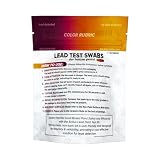
- Batch Traceability & Satisfaction Guarantee – Every swab is part of a rigorously tracked batch for full traceability and quality assurance. If you're not 100% satisfied, we’ll make it right—no questions asked.
- SCIENTIFICALLY FORMULATED: Scitus Labs; lead testing kits offer an exceptionally reliable method for detecting lead on painted surfaces—by using vinegar to activate, our swabs trigger a targeted chemical reaction that specifically identifies lead, ensuring greater consistency and accuracy compared to generic water-activated lead tests.
- MADE IN THE USA: Our lead tests are proudly manufactured in the United States for 100% quality assurance. We take pride in our exceptional product, delivering accurate, fast, and reliable lead testing results for personal and professional use.
- FOR USE ON PAINTED SURFACES: Our convenient lead test swabs are perfect for testing windows, doors, walls, floors, baseboards, ceilings, and any other painted surface in your home or office. Compact, reliable, and easy to use, these lead testing swabs are also perfect for new homeowners, renters, real estate agents, contractors, and anyone wanting to test for lead paint in their environment.
Preferred techniques
- Hand scraping after lightly misting the surface.
- Wet sanding with a sanding sponge or wet-abrasion method.
- Scoring and prying trim or other components apart instead of breaking them aggressively.
- Low-temperature heat below 1,100°F when heat is necessary.
- A chemical stripper that does not contain methylene chloride, used with the ventilation and protective measures required by its label.
- Power sanders or grinders only when they have the required shroud or containment and a properly controlled HEPA-vacuum attachment.
Work in small sections, misting again when the surface begins to dry. Pick up chips as they fall instead of allowing them to accumulate.
Practices to avoid
- Open-flame burning or torching.
- Heat guns operated above 1,100°F.
- Unshrouded high-speed sanding, grinding, power planing or needle-gun work.
- Abrasive blasting or sandblasting without the required shroud, containment and HEPA capture.
These methods can produce large amounts of contaminated dust. Even when a particular prohibition is written for contractors, EPA recommends that do-it-yourself owners avoid the same practices.
What respirator and protective clothing should be used?
When dust or chips are generated, the EPA booklet specifies a disposable N-100-rated respirator, disposable coveralls and shoe covers. Wear the protective clothing only in the contained area and remove it in a way that does not shake dust into clean space.
- Do not eat, drink or smoke inside the work area.
- Wash your hands and face at every break and before leaving containment.
- Launder reusable work clothes separately from household laundry.
- Follow any additional OSHA requirements that apply to an employer and its workers.
A respirator does not make poor containment safe. Dust control, isolation and cleanup remain essential, and occupants should not be present while protective equipment is being removed or the area is being cleaned.
How do I clean lead-paint dust before repainting?
Clean continuously during the job and again at completion. The objective is to remove chips and settled dust without spreading it to clean rooms.
- Pick up visible chips as work proceeds and place them directly into heavy-duty bags or wrapped plastic.
- Vacuum frequently with a HEPA vacuum fitted with appropriate attachments, including a powered beater bar where suitable.
- When removal is finished, mist the plastic sheeting and fold it dirty-side inward so dust stays inside.
- Seal the folded sheeting before taking it out of the work area.
- HEPA-vacuum walls and remaining surfaces from high to low.
- Damp-wipe noncarpeted surfaces with wet-cleaning wipes and an appropriate cleaner.
- Mop floors with clean solution and equipment; change contaminated water as needed.
The EPA cleaning list includes a HEPA vacuum with attachments and powered beater bar, wet-cleaning wipes, cleaner, a mop, buckets and heavy-duty bags. Do not use dry sweeping or compressed air, which can put settled dust back into the air.
What should I do with chips, sheeting and contaminated water?
Seal dust, paint chips, plastic, used filters, wipes, mop heads, disposable clothing, respirators, gloves and removed components in heavy plastic bags or tightly wrapped sheeting before they leave containment. Store and transport the packages so dust cannot escape.
Filter cleanup water and follow the disposal requirements of your state, tribe, county or municipality. Never pour contaminated water onto the ground or into a storm drain. Most routine residential renovation waste is generally handled as solid waste, but commercial projects and work in nonresidential child-occupied facilities may have additional requirements. Confirm the rules before the project begins; federal guidance does not create one disposal procedure for every jurisdiction.
How do I verify that the room is safe before repainting?
Do not repaint or return occupants until the applicable verification has passed.
Also popular on Amazon

- 2-in-1 LEAD DETECTION: Safe Home provides the only LEAD COMBO-KIT on the market which includes 10 DIY surface swabs that issue results in 30-seconds to a detection of 5 ppm AND a sample-submission kit for optional in-depth Lead testing at our EPA-certified lab to a detection of 0.006 ppm. All of this…in ONE KIT!
- DIY LEAD SCREENING: Safe Home provides the only Do-It-Yourself Lead screening kit that uses ultra-sensitive ACS (American Chemical Society) Grade Reagents, in our test swabs. This minimizes background interferences and issues more reliable results, than competitive brands. Safe Home costs a bit more, but you can trust the quality of our products.
- OPTIONAL LEAD TESTING AT OUR CERTIFIED LAB: Contractors and discerning homeowners can also use our Lead Sample Submission Kit, for optional testing at our EPA-certified lab. Testing at our laboratory meets EPA, NLLAP, RRP, and PPE guidelines. Our lab results can also be used for disposing of remediated materials to hazardous vs. non-hazardous landfills. NOTE: Lab fees are required for optional testing at our EPA-certified laboratory.
- MULTI-PURPOSE APPLICATIONS: Test for Lead in paint, dust, soil, wood, toys, furniture, metal, plastic, and more. Includes simple instructions for DIY screening and for sample collection and submission to our EPA-certified lab, for testing. MADE in the USA with domestic and international components. *Please Note: If testing surfaces that are sealed like ceramics, only the outer surface will be tested.
- EXPERIENCED CUSTOMER SUPPORT: Before, during, and after DIY screening or LAB testing for Lead, Safe Home provides qualified personnel with 40+ years of experience in testing Lead, to guide you. Reach out any time. We are happy to assist!
Covered RRP work
An EPA-certified renovator performs a visual inspection and cleaning verification with wet disposable cloths and the EPA verification card. If the visual inspection or cloth check shows remaining dust, clean again and repeat the verification.
Federally assisted housing
Post-renovation dust-lead testing must be performed by qualified personnel using an EPA-recognized laboratory. The EPA’s 2026 booklet lists these action levels: 5 micrograms per square foot on floors, 40 micrograms per square foot on window sills and 100 micrograms per square foot on window troughs. A result that meets or exceeds the applicable level requires additional cleaning and retesting before clearance.
State, tribal and local programs can require dust testing or procedures that are stricter than the federal baseline. Ask the authority administering the project which release standard applies before disturbing the paint.
Free tools Windows power users keep installed
One-click scans. No signup required.
What is the safest order for the whole project?
Use this sequence so a missing decision does not turn into a dust problem later.
- Establish the context. Confirm the construction date, whether the home is rented or used for child care, whether it receives federal assistance and whether anyone who is pregnant or under six lives there.
- Test or presume. Test each affected component through the permitted professional or certified-renovator route. Without valid information, presume lead.
- Choose the legal path. Hire an EPA- or state-certified firm when the RRP rule or another jurisdictional requirement applies.
- Set containment. Remove or seal belongings, close openings, install taped plastic and barriers, post the warning and keep people and pets out.
- Remove with dust control. Mist, scrape or wet-sand; use low-temperature heat, an appropriate chemical stripper or shrouded HEPA-captured tools when justified.
- Protect workers. Use the specified respirator and disposable clothing, maintain hand hygiene and keep food and smoking out of containment.
- Clean and package waste. HEPA-vacuum, damp-wipe and mop from high to low; seal all contaminated materials and manage wastewater under local rules.
- Verify release. Complete cleaning verification or required dust-lead testing, correct any failed result and only then repaint or reoccupy.
What problems should make me stop work?
- No reliable test result: Stop treating the surface as ordinary paint. Presume lead and arrange the correct testing or professional help.
- Unexpected peeling or widespread deterioration: Stop disturbing the area, mist exposed debris, reinforce containment and consult a qualified professional.
- Dust escaping containment: Halt the activity, keep occupants away, seal the breach, HEPA-vacuum affected clean areas and reassess the setup before restarting.
- Work near a live outlet: Do not mist within one foot of it. Use a safer alternative method or obtain qualified electrical and lead-safe assistance.
- Unclear waste or wastewater rules: Keep the material sealed and obtain instructions from the responsible local or state authority before disposal.
- Failed cleaning verification or dust test: Do not repaint or move people back. Re-clean the affected surfaces and repeat the required check.
What should I ask a lead-safe contractor before hiring?
- Are the firm and the workers certified or trained for the type of pre-1978 work planned here?
- Who will test the affected components, and will I receive the method and results in writing?
- What interior or exterior containment distances and entry controls will be used?
- Which removal methods will be used, and how will power tools capture dust?
- Who will perform cleaning verification or dust-lead testing, and what records will I receive before repainting?
- How will chips, plastic, filters and wastewater be packaged, transported and disposed of under local rules?
These questions distinguish a documented lead-safe plan from a contractor who intends to sand first and clean later.
Frequently Asked Questions
Can the construction year alone prove that a house has lead paint?
No. The year identifies a higher-risk category, but it does not establish whether a particular component contains lead. Test each surface that will be disturbed through an allowed professional or certified-renovator route, or presume lead when no valid result exists.
What if my state has rules that differ from federal RRP guidance?
State, tribal and local programs can impose stricter certification, testing or waste-disposal requirements. Confirm which agency administers the work and follow its rules in addition to the federal baseline.
What’s actually slowing this PC down?
Pick the symptom - the matching free tool is one click away.
How should I keep lead-safe work clothes from contaminating the house?
Remove disposable coveralls and shoe covers inside the controlled area, package them with other contaminated waste, and launder reusable clothing separately from household laundry. Wash your hands and face before entering clean parts of the home.
What records should I keep after the project?
Keep the component list, test method and results, contractor certification information, cleaning-verification or dust-test results, and disposal instructions or receipts required by your jurisdiction. These records show which surfaces were addressed and why the room was released.
Quick Recap

Product prices and availability are accurate as of the date/time indicated and are subject to change. Any price and availability information displayed on Amazon at the time of purchase will apply.

