Crashes, No Sound, or Screen Glitches?
Random freezes, missing sound and display glitches usually trace back to one bad driver. Find and replace yours safely.
Find the Right Drivers →Free scan · under a minute
As an Amazon Associate I earn from qualifying purchases.
ThatPainter is reader-supported. When you buy through links on our site, we may earn an affiliate commission. Learn More
PC Slower Than It Used to Be?
A free scan shows the junk files, broken settings and background clutter dragging Windows down - then fixes them in one click.Free scan · Windows 10 & 11Outdated Drivers Are Slowing You Down
One free scan finds every outdated or missing driver and matches the right update for your exact hardware.Free scan · exact hardware matchThe dependable way to identify vintage furniture is to inspect each component for an exposed cross-section, not to judge the piece by weight, grain beauty, finish, or one impressive joint. Solid wood continues through the full thickness of a board. Veneer is a thin sheet of real wood bonded to a core such as plywood, MDF, particleboard, or another timber; laminate is a manufactured decorative surface. Check the top, doors, sides, drawer fronts, frame, legs, back, shelves, and bottoms separately. Use existing edges, chips, holes, undersides, and drawer interiors, and never scratch or pry the finish just to investigate. If an edge is hidden by banding or a rounded profile, record that component as unconfirmed and ask the seller for written specifications and close-up photographs before you pay.
Popular on Amazon
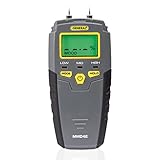
- HUMIDITY SENSOR: Our handy meter tool can quickly determine what level of remediation is needed to keep your family safe from black mold. High levels of dampness that go untreated are the leading cause of harmful fungus growth in the home.
- WATER LEAK DETECTOR: Finding the moisture content in your wood or drywall is the first step in early prevention. Continuously check and test suspicious water stains around the house so you can determine whether the area is wet or has already dried. Low, medium and high moisture tones and on-screen icons, Reading HOLD button
- MOISTURE READER: The mold test features large 0.3" high digits in a backlit LCD for quick and easy detecting. Our mildew scanner includes extra 8mm stainless steel pins, a protective cap that doubles as a calibration checker, and a “9V” battery.
- MOLD TESTER: For an accurate test read, stick the stainless steel pins into the surface of what you're measuring. The gauge has a broad range of 5 - 50% for wood and 1.5 - 33% for building materials such as concrete and drywall.
- GENERAL TOOLS: We're a recognized leader in designing and developing specialized precision tools dedicated to delivering exceptional customer service. We encourage artisans and DIYers to work smarter, measure better, and repair more productively.
What is the difference between solid wood, veneer, and laminate?
Solid wood is timber running through the component. Veneer is genuine wood used as a thin face over a supporting core, while laminate is a manufactured decorative layer that may contain little or no natural wood.
| Construction | What the surface is | What an exposed edge may show | What it means for a buyer |
|---|---|---|---|
| Solid wood | One or more timber boards, joined if necessary | Wood structure continues through the thickness, with end grain visible at a cut end | Usually leaves more material for sanding and repair, but still moves with humidity |
| Natural veneer | A thin sheet of real wood glued to a core | A thin face over plywood, MDF, particleboard, or another substrate; an edge seam or separate edging may be visible | Can be durable and stable, but deep sanding or a damaged core can go through the working layer |
| Printed laminate or wood effect | Manufactured decorative paper, film, or sheet with an imitation grain | A manufactured layer rather than continuous natural wood grain | Do not describe it as solid wood or natural veneer without documentation |
| Mixed construction | Different materials on different parts | For example, solid legs and frame around a veneered top or doors | Common in quality furniture; identify and price every component separately |
The National Park Service defines veneer as “a thin layer of wood glued to a solid base material for decorative purposes.” Its 2002 handbook gives a historical thickness range of 1/32 to 1/8 inch. That is a useful reminder that a beautiful real-wood surface can still be only a small fraction of the panel’s thickness.
How should I inspect a vintage piece without damaging it?
Start with a component-by-component inspection and use only evidence that is already exposed. Do not scratch, sand, pry up a loose corner, remove screws, or pull at a finish to create a test area.
- List the components. Write down top, doors, sides, drawer fronts, frame, legs, back, shelves, drawer bottoms, and any applied molding. Your conclusion should say “top unconfirmed” or “legs appear solid,” not simply “solid” for the whole item.
- Find an existing cross-section. Look for an exposed short end, old chip, cut-out, fixing hole, unfinished edge, or area where hardware has already revealed the material. A pre-existing opening is safer and more informative than making one.
- Read the edge and end grain. On a solid board, wood structure continues through the thickness and a cut end shows end-grain features. On a veneered panel, a thin face may stop at a seam or reveal a contrasting core beneath it.
- Inspect underneath and inside. Look under the top, inside drawers, behind doors, around visible fixing holes, and along the underside of shelves. A cabinet back can be plywood even when a top or frame is solid, so do not use the back as proof of the whole construction.
- Check the edging. A veneered panel may have a solid-timber front edge, veneer edge banding, or a manufactured strip. A substantial solid edge can make a veneered panel look solid from normal viewing angles.
- Compare face grain with end grain. Grain that turns or changes at a joint can be normal in solid timber. A fine seam, sideways grain on an applied band, or a repeated pattern supports a veneer or manufactured-surface hypothesis, but none is conclusive alone.
- Record condition separately. Note lifting, bubbles, raised edges, veneer checks, swelling, warping, loose joints, structural cracks, and fresh insect dust before deciding what the material is worth.
- Photograph what you found. Take a whole-component image and sharp close-ups of each edge, underside, interior, hole, and defect. This creates a record for a seller, restorer, insurer, or later price discussion.
What does an exposed edge tell me?
An exposed cross-section is the strongest non-destructive clue because it lets you see whether wood continues through the thickness. It still identifies only the component you can see.
Signs that support solid construction
- The short end or existing chip shows wood structure through the entire board.
- End grain appears at a cut or drilled opening rather than a separate thin face over a board core.
- Several joined boards form the panel; edge-to-edge glue lines do not make a tabletop veneer.
Signs that support veneer
- A thin natural-wood face stops at an edge and a plywood, MDF, particleboard, or other core appears underneath.
- A fine line marks a separate face or edge strip, especially where the grain on the strip runs sideways to the main face.
- At a pre-existing chip or hole, the decorative face is visibly thinner than the panel.
Concealed banding, rounded edges, heavy molding, and painted surfaces can hide the decisive evidence. In that situation, the correct conclusion is “not confirmed,” not “probably solid.” Ask for documentation or value the component conservatively.
Also popular on Amazon

- FIND HIDDEN WALL MOISTURE EARLY — Check suspicious drywall and building surfaces after a leak, water stain, or other moisture concern. Detect abnormal moisture before a small issue develops into more extensive damage and costly repairs
- CHECK BEFORE YOU REPAIR — Don't rely on a wall looking or feeling dry. Use the moisture meter to check questionable areas before painting, repairing, or covering the surface, helping you make decisions based on actual moisture readings.
- CHECK FIREWOOD BEFORE YOU BURN — Test firewood before placing it in your fireplace or wood stove. Knowing the moisture level of your firewood helps you choose wood that is ready for burning and avoid relying on appearance alone.
- PIN-TYPE TESTING FOR DIRECT MEASUREMENTS — The contact pins penetrate the material to measure moisture inside wood and building materials. This makes it useful for checking areas where surface conditions may not tell the whole story.
- ONE TOOL FOR TWO IMPORTANT HOME CHECKS — Keep it ready for two practical jobs: checking walls for hidden moisture and checking firewood before burning. A simple way to make informed decisions before a moisture problem becomes expensive or wood goes into the fireplace.
Can grain pattern prove that furniture is solid wood?
No. Grain continuity is supporting evidence only. Solid timber can change appearance at joints and across different cuts, while veneer may be selected, book-matched, or deliberately repeated to create a more impressive pattern.
- Repeated figures: A mirrored or repeated arrangement can indicate carefully matched veneer, although some solid boards have naturally similar figures.
- Book-matching: Symmetrical “open book” panels are commonly made by opening a veneer flitch like a book. Symmetry alone is not proof of a manufactured imitation.
- Texture: Embossed grain can be a finish or laminate. A flawless, uniform texture should prompt an edge inspection rather than a material verdict.
- Grain at joints: A change in direction where boards meet is normal in solid construction. Conversely, a veneer can be laid so well that its transitions are difficult to see.
Use pattern observations to decide where to look next. Do not use them as a substitute for an exposed cross-section.
Does a dovetail drawer prove the cabinet is solid wood?
No. A dovetail proves that the particular drawer parts use interlocking board edges; it does not establish the material of the top, sides, doors, or back.
The National Park Service describes dovetails as joints that interlock board edges and are often used on drawers and chests. Mortise-and-tenon joints, and frame-and-panel construction, likewise reveal how a particular assembly was made. A frame-and-panel design can let a wide panel move with humidity while the surrounding frame stays relatively stable. These details may indicate thoughtful, repairable construction, but they are not whole-piece material certificates.
- Inspect the drawer front, sides, back, and bottom separately.
- Look for a veneer face over a solid or engineered drawer part.
- Check whether the drawer bottom is thin plywood, which is common even in well-made furniture.
- Use joinery as evidence of workmanship and structural design, not as proof that every panel is solid timber.
How do I inspect mixed construction?
Treat mixed construction as normal rather than as a defect. A cabinet may combine solid legs and rails with veneered doors, a veneered top with solid edging, and plywood backs or drawer bottoms for stability and lower weight.
Also popular on Amazon
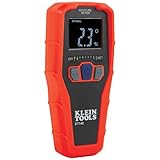
- WATER LEAK DETECTOR detects relative moisture content from leaks and flooding
- PINLESS MOISTURE METER measures relative moisture content in building materials
- NONDESRUCTIVE DETECTION up to 3/4-Inch deep using Electromagnetic field (EMF) technology
- USE ON DRYWALL, MASONRY, HARDWOOD, AND SOFTWOOD; calibrated for these materials only
- REVERSE-CONTRAST DISPLAY for easy viewing of reading and nine LED bars to indicate moisture range
| Component | Questions to answer | Why it matters |
|---|---|---|
| Top | Is the face solid timber, natural veneer, or printed laminate? What is the core and edge? | Usually the most visible and most valuable surface; repairs depend on remaining face thickness. |
| Doors and sides | Does the panel show a core at an edge or hinge hole? | Large panels often use veneer to control movement and allow wide matched figures. |
| Frame and legs | Is timber continuous through a visible joint or foot? | Solid structural members can coexist with veneered infill panels. |
| Drawer fronts | Is the decorative face applied to a separate substrate? | A solid-looking front does not establish the drawer box or cabinet sides. |
| Back and shelves | Are they plywood, thin board, or solid timber? | These parts are often built differently and should not be used to classify the top. |
| Drawer bottoms | What material and thickness are visible inside the drawer? | Replacement or repair costs can differ substantially from those for a solid bottom. |
What condition clues matter before I buy?
Material identification and condition assessment are separate decisions. Veneer can be durable, and solid wood can be badly damaged; inspect both the construction and the remaining repair margin.
Outdated Drivers Are Slowing You Down
One free scan finds every outdated or missing driver and matches the right update for your exact hardware.Free scan · exact hardware matchPC Slower Than It Used to Be?
A free scan shows the junk files, broken settings and background clutter dragging Windows down - then fixes them in one click.Free scan · Windows 10 & 11Veneer problems
- Lifting or bubbling: The bond may have failed, and pressing the surface flat may not repair a swollen or degraded core.
- Chipped edges: Missing veneer can expose the substrate and require a patch, replacement edging, or color matching.
- Veneer checks: Craig L. Forbes of North Carolina State University describes these as uniformly spaced hairline cracks in the finish or, in severe cases, cracks with ridges that can be felt. They run parallel with the grain and result from different shrinkage or swelling of the face veneer and its substrate.
- Over-sanded surfaces: A thin face may have little material left for another restoration cycle.
Solid-wood problems
- Splits, open joints, cupping, twisting, and end checks can require structural work even when the board is unquestionably solid.
- Previous sanding may have removed historical details or altered edges.
- Loose mortise-and-tenon or dovetail joints can be repairable, but they affect stability and cost.
Problems that affect either construction
- Fresh insect dust, soft spots, and unexplained holes may indicate active or recent infestation.
- Swelling, mold odor, corroded hardware, blooming finish, and warped panels suggest damp storage or unstable environmental conditions.
- Structural cracks deserve attention before cosmetic refinishing; a new finish cannot restore a failed joint or swollen core.
How does moisture affect the material and the repair decision?
Moisture is evidence about condition and risk, not a standalone test for solid wood. Both solid timber and veneer assemblies respond to humidity, but a veneer face and its core can move differently and stress the bond.
The National Park Service recommends an ideal relative humidity of 50% plus or minus 5% for wooden objects in most areas. It considers 35% to 40% acceptable in dry climates; above 70%, mold and insects may become problems, glue may weaken, finishes may bloom, hardware may corrode, and wood fibers may swell.
A rapid relative-humidity increase from 30% to 70% can expand wood as much as 2% across the grain. On a two-foot panel, that could mean almost one-half inch of movement, enough to contribute to splitting, veneer loss, or joint failure. The exact result depends on species, construction, restraint, finish, and exposure history.
North Carolina State University notes that 6–8% moisture content is most common for veneer and substrate before panel assembly. A moisture meter can therefore help you investigate storage damage or a suspiciously damp piece, but a reading cannot tell you whether a panel is solid or veneered. Use it to decide whether to look for swelling, checking, or weakened adhesive, not as a material verdict.
The Tool Desk
Outbyte PC Repair FREEClear out junk files and repair common Windows errorsFree Scan →Outbyte Driver Updater FREEFix the driver behind crashes, sound loss and screen glitchesFind Drivers →Also popular on Amazon

- 🌲【Accurate and fast measurements reveal hidden water leaks】: It has 2 high-precision pins that can penetrate the surface to be tested and quickly measure moisture content to estimate potential moisture increase throughout the home. COCZOW moisture meter is the ideal tool for measuring moisture.
- 🌲【Professional Wood Moisture Meter】: 6 calibrated scales. Our moisture meter is a great tool for manufacturers, floorers, inspectors and wood suppliers to quickly and easily measure moisture content (% Mc). You can quickly determine if the moisture content is low (5-12%), medium (12-17%) or high (17-60%). Checking moisture content prevents wood from cracking and warping.
- 🌲【Widely Used】: PM6811A moisture meter is ideal for carpentry, building construction, agricultural restoration and floor laying. Measure moisture content of wood products such as hardwood floors, cabinets, furniture, lumber, lath, beams, plywood, panels, composite boards, window frames, forestry wood, coils, building materials, etc.
- 🌲【User-friendly】: With LCD backlight, the backlight color is divided into three types of green, yellow and red, or display the moisture content of different measurement types. Hold function, maximum/minimum moisture measurement function and 5-minute automatic shutdown function (no power supply required).
- 🌲【Why choose COCZOW Wood Moisture Meter】: LED display function, large measuring range (wood: 2.0%-75.0%. Building materials: 1.5-30%), durable stainless steel needle, heat insulation, light weight and easy to carry. Get professional and accurate results with Peakmeter Wood Moisture Tester.
What should I ask an online seller?
Request component-specific answers and photographs before relying on a listing’s broad phrase such as “solid wood.” A seller who cannot identify a covered core leaves that component unconfirmed.
- Is the top solid timber, natural veneer, or printed laminate?
- What are the core and edging made from?
- What material forms the doors, sides, shelves, legs, back, drawer fronts, and drawer bottoms?
- What wood species is specified for each major component?
- Can you send unfiltered close-ups of the short edge, underside, drawer interior, fixing holes, and any chip or lifting?
- Has the piece been sanded, refinished, repaired, or stored in a damp area?
- Are there fresh insect droppings, swelling, severe warping, loose veneer, or structural cracks?
Ask the seller to state the construction in writing. Keep the message and photographs with the listing so an ambiguous description cannot later be treated as a promise of solid construction.
Independent reader supportYour contribution helps us test, update, and keep practical guides available for everyone.How should I compare two vintage pieces?
Compare evidence, condition, and repair risk rather than treating “solid” as an automatic quality ranking. A well-made veneer can provide stable wide panels and carefully matched grain, while solid wood offers more repair material and a different movement pattern.
| Comparison axis | What to examine | Decision question |
|---|---|---|
| Construction evidence | Exposed edges, holes, undersides, drawer interiors, and written specifications | Which components are confirmed, and which remain unconfirmed? |
| Core and edging | Plywood, MDF, particleboard, solid edge strips, or manufactured banding | Is the visible edge representative of the whole panel? |
| Condition and moisture | Lifting, bubbles, checks, swelling, mold, insects, and humidity history | Is damage cosmetic, repairable, or evidence of a weakened core or structure? |
| Joinery and stability | Mortise-and-tenon, frame-and-panel, dovetails, loose joints, and racking | Is the construction likely to remain stable after normal use? |
| Repairability | Remaining veneer thickness, solid material for sanding, access to damaged parts | Can the planned repair be done without removing the useful surface? |
| Provenance and documentation | Seller statements, photographs, repairs, and storage history | How much of the description is verifiable? |
| Price relative to evidence | Confirmed material and the cost of likely repairs | Does the price still make sense if an unconfirmed panel proves veneered? |
When should I walk away or renegotiate?
Pause the purchase when the material claim is central to the price but the seller will not expose or document the relevant component. A missing photograph is not proof of veneer, but it is a reason not to pay a solid-wood premium.
- Renegotiate when the top is described as solid but only the legs or edging are confirmed.
- Allow for restoration when veneer is lifting, bubbling, chipped, or checked, or when a core is swollen.
- Walk away from active insect evidence, major structural cracks, severe warping, or damp-related odor unless you have a realistic treatment and repair plan.
- Do not rely on a moisture-meter reading, heavy weight, a loud tap, or a single dovetailed drawer to resolve an otherwise undocumented construction claim.
What is the safest buying conclusion?
Classify each component as confirmed solid, confirmed veneered or manufactured, or unconfirmed. Pay for what the visible evidence and written description support, and treat hidden construction as a risk rather than silently assuming the best case. That approach protects both your budget and the furniture: you avoid damaging an old finish during inspection, and you make a repair plan based on the actual material that can be seen.
Also popular on Amazon

- Easy to Read with Large LCD Screen: This wood moisture meter is easy to get an accurate reading from the surface of materials and displays accurate moisture readings on the 2.25" big screen. Use this handheld meter to check the moisture content in firewood or drywall, it can stand up on the table, the moisture content is displayed with a bar graph and percentage (_%RH) on the screen. Date Hold and Max/Min function is used to freezes readings, useful for writing down data
- Tricolor Backlight Display, Easy to Use: TopTes Moisture Meter TS-630 features an HD tri-color backlight to easily know if the wood/wall humidity is Dry, Moist, or Wet. Green backlight for Low moisture, orange backlight for middle moisture, and red moisture for high moisture. After selecting the mode, and putting pins into the firewood, easy and quick to get a visible alert from the clear screen
- Seven Calibration Scales, Two Material Mode: It is designed with built-in characteristic parameters of 7 calibration scales for wood and building material, ranging from 0.0% to 57%. This humidity meter is perfect for woodworking, water damage restoration, building construction, and home renovation. Easily Check and test suspicious water leaks around the wall/floor so you can quickly determine what level of remediation is needed
- Pin Type & Battery Operated: TopTes TS-630 moisture meter is a pin-type moisture meter and operates on batteries. With a high precision multi-material sensor, DON’T need calibration. It’ll support an accurate reading after inserting the stainless steel pins into the surface of the wood or building materials. It will auto shut off after 10 minutes of non-use to help save energy. A low-battery indicator will appear on the screen when the battery is running out
- What's in the Box: One TS-630 Moisture Meter, three AAA Batteries, one User Manual, one Carry Pouch, one Pair of Test Pins, one Mini Wrench
Frequently Asked Questions
Can a veneer top be more desirable than a solid-wood top?
Yes. Carefully selected veneer can create wide, book-matched figures that would be difficult to obtain from a single solid board, while a stable core can reduce movement in a large panel. Desirability depends on workmanship, condition, design, provenance, and repair margin rather than the word “solid” alone.
Is heavy vintage furniture more likely to be solid wood?
Weight is affected by species, moisture, hardware, core density, construction, and added backing, so it cannot identify the material reliably. Use weight only as a handling and transport consideration, then inspect an existing edge or interior opening.
Should I buy a moisture meter for a furniture inspection?
It can be useful for detecting unusually damp storage or investigating swelling and checking. It cannot distinguish solid wood from veneer by itself, so pair any reading with cross-section evidence and a condition inspection.
Quick wins for a faster PC:
Repair Windows errors before they cause bigger problemsFix Now →Fix the driver behind crashes, sound loss and screen glitchesFind Drivers →Clear out junk files and repair common Windows errorsFree Scan →Can refinishing remove veneer?
Yes. Aggressive sanding can cut through a thin face and expose the substrate, especially where edges or raised details have already been worn. Before refinishing, establish whether the surface is veneer and how much usable thickness remains.
Quick Recap


