Free tools Windows power users keep installed
One-click scans. No signup required.
Do these 3 things before closing this tab:
1Repair Windows errors before they cause bigger problems2Scan for outdated or missing drivers - takes under a minute3Clear out junk files and repair common Windows errorsThatPainter is reader-supported. When you buy through links on our site, we may earn an affiliate commission. Learn More
The most reliable way to choose a wall color is to test a dried, two-coat sample in the actual room, then view it on more than one wall in daylight and under the lights you use at night. Use chips or a digital visualizer only to narrow the field. For the finalists, paint a large patch on a clean wall or mount the color on white foam-core board so you can move it around the room. This reveals undertones, brightness, contrast with trim and furnishings, and sheen far better than a tiny chip or screen image.
As an Amazon Associate I earn from qualifying purchases.
Plan for the sample to remain a temporary test, not a finished coating. Benjamin Moore says its liquid samples omit performance-enhancing components and are intended for color representation only, so the final paint may not have identical durability or application behavior.
Quick wins for a faster PC:
Repair Windows errors before they cause bigger problemsFix Now →Fix the driver behind crashes, sound loss and screen glitchesFind Drivers →Clear out junk files and repair common Windows errorsFree Scan →Why does a paint color look different after it is on the wall?
Color is perceived in context, not in isolation. The wall’s existing color, nearby trim, flooring, furniture and adjoining rooms all influence what you see. Sherwin-Williams summarizes the principle as “Color never stands alone.”
Popular on Amazon
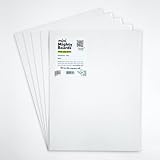
- PERFECT SAMPLES: These 12" x 9" white, styrene panels provide a smooth, warp-free surface for testing up to 5 color samples with paint, stain or other coatings.
- DURABLE MATERIAL: Made of sturdy styrene, these panels can withstand multiple coats and are non-absorbent so colors will stay true.
- CONVENIENT SIZING: At 12" x 9", the panels are just the right size for testing many common paint colors side by side before committing to a full project.
- PACKAGE INCLUDES: This value pack contains 5 white panels, enough for testing several color options on one purchase.
- VERY FLEXIBLE: Mighty Boards do not warp like foam core and you can bend them without breaking.
Light is the other major variable. Sunlight changes direction and intensity during the day, while warm or cool bulbs can shift a color’s apparent undertone at night. A gray can read blue, green or beige; a white can look distinctly warm or cool; and a deep color can appear lighter on one wall than another. A screen rendering cannot reproduce those room-specific effects consistently.
The purpose of a physical test is therefore not simply to ask whether you like the color on a card. It is to see whether the color works with your room’s light and fixed features after it has dried.
What is the most dependable way to test a paint color?
Use a three-stage process: narrow the family with chips or a digital tool, test two or three finalists physically, and make the decision only after observing dried samples in changing light. Sherwin-Williams recommends painting a section of the wall with a Color to Go sample and viewing it in different lighting throughout the day. Benjamin Moore recommends at least two coats for accurate color depiction.
The Tool Desk
Outbyte PC Repair FREERepair Windows errors before they cause bigger problemsFix Now →Outbyte Driver Updater FREEFix the driver behind crashes, sound loss and screen glitchesFind Drivers →- Shortlist. Compare display chips or digital renderings to identify a manageable group of related colors.
- Choose finalists. Select two or three shades whose value or undertone differences you genuinely need to compare.
- Prepare. Pick a clean, dull, dry area and decide whether a direct wall test or a movable board better suits the room.
- Apply two coats. Cover a large enough area to judge the color without the old wall showing through.
- Move or repeat the test. Check the wall that receives the most important light and adjacent walls, or move a board around the room.
- Observe. Look in morning, midday, afternoon and evening light, including the normal artificial lighting used in the room.
- Decide after drying. Compare undertone, apparent brightness, contrast, sheen and the way the color relates to furnishings and trim.
Should I paint the sample directly on the wall or use a board?
Choose a direct wall patch when the wall’s substrate, texture and surrounding colors are part of the decision. Choose white foam-core board when you need to move one neutral, consistent sample between walls without adding paint to the surface.
Direct wall sample
A wall patch gives the strongest evidence for how the color will behave on that room’s actual surface. It lets you judge texture, existing wall color, corner transitions and the apparent sheen in place. The trade-off is a visible test patch that must eventually be covered or otherwise dealt with, and the result can be misleading if the old wall is glossy, damaged or strongly colored.
White foam-core board
White foam core provides a neutral background and can be carried from a window wall to a shaded wall, across corners and beside trim. It is especially useful when you are renting or when several candidate colors need to be compared in many locations. It does not reproduce every wall texture or substrate effect, so use it as a portable aid rather than a perfect substitute for the finished wall.
Peel-and-stick sample
A peel-and-stick sample avoids wet paint and can be repositioned around the room. Benjamin Moore lists a current peel-and-stick format measuring 9 by 14.75 inches. Appearance can vary with the product’s surface, sheen and the light behind or around it, so treat it as a sampling tool, not as the final coating.
Which sample method should I use?
The best choice depends on whether you value room fidelity, portability, wall protection or speed most. Use chips and digital tools early, then use a physical method for the final decision.
| Method | Best use | Strength | Limitation |
|---|---|---|---|
| Display chip | Early color-family narrowing | Fast, inexpensive and easy to compare | Small scale and surrounding colors can distort perception |
| Liquid wall sample | Highest room-context fidelity | Real paint on the actual substrate | Leaves a test patch; sample formula may not be the final coating |
| White foam-core board | Portable comparison across walls | Neutral, movable and reusable during the decision | Does not reproduce every wall texture or substrate effect |
| Peel-and-stick sample | No-mess movable testing | Reusable and able to wrap around edges and corners | Appearance varies with product, sheen and lighting; intended for sampling |
| Digital visualizer | Very early exploration | Tests many colors quickly on a photo or camera view | Screen rendering cannot replace a physical room sample |
Compare each option on six practical axes: fidelity in the actual room, portability, impact on the wall, ability to judge sheen and texture, speed, and how readily you can obtain it. A display chip scores well for speed but poorly for scale. A liquid sample scores well for substrate fidelity but carries the greatest wall impact. A board or peel-and-stick sample offers mobility, while a digital tool is best reserved for eliminating obviously unsuitable families.
Also popular on Amazon

- suitable for various mailing and storage needs
- Soft and easy to use
- No batterries required
- No Assembly required
- Safe to use
How do I narrow the choices before buying samples?
Start with chips or a visualizer
Begin with a broad scan of chips or a digital visualizer rather than purchasing every color that catches your eye. A chip’s small size can make a color appear less intense than it will on a wall, and neighboring colors can influence your perception. Benjamin Moore recommends placing a white border around a chip so the existing wall color does not distort the comparison.
Keep the finalists meaningfully close
Choose two or three colors that are close enough in value or undertone for an in-room test to settle the question. Testing unrelated colors can make the exercise about preference rather than the subtle differences that usually cause a commitment mistake. Record each color name on its chip, board or sample so the shades cannot be confused after they are moved.
Recommended Free Tools
Identify the room’s decision points
Before applying anything, note which features the color must work with: white or colored trim, wood tones, stone, upholstery, artwork and adjoining rooms. Decide whether you are trying to solve a specific concern, such as a gray that might turn green or a white that could look too stark. That makes the later comparison intentional instead of relying on a quick first impression.
How should I prepare a wall before applying a sample?
Use a clean, dull and dry area. Dust, grease, chalky residue or a glossy film can change adhesion and the way light reflects from the patch. Remove temporary obstructions and choose a location large enough to show the color without being dominated by the old wall around it.
When should I use primer?
Assess primer when the existing surface is glossy, nonporous, damaged or strongly colored. Benjamin Moore identifies two common reasons for priming: improving adhesion and hiding a color change. A dark or saturated wall can influence a thin sample, while a slick surface can cause uneven coverage; a suitable primer can make the test more representative.
Do not prime merely to make a sample look perfect if the final project will use a different preparation system. The test should resemble the surface and preparation the finished paint will receive closely enough to answer the color question.
What temperature is suitable?
HGTV Home by Sherwin-Williams specifies applying its samples when the surface, air and product are between 50 and 90°F. Follow the instructions for the particular product you bought, and avoid applying to a cold, damp or overheated surface that could dry unlike the wall under normal conditions.
How do I apply a representative sample?
Use the same basic tool and application style you expect for the project. HGTV Home specifies a premium 3/8- to 3/4-inch-nap synthetic roller cover or a nylon/polyester brush. Deep or bright colors may require more coverage to hide the underlying surface.
- Stir the sample thoroughly according to its label.
- Lay down an even first coat over a broad patch. Avoid feathering the edges so thin areas do not become part of your color judgment.
- Allow the first coat to dry as directed.
- Apply a second full coat. Benjamin Moore recommends at least two coats for the most accurate color depiction.
- Let the second coat dry completely before judging undertone, brightness or sheen.
Benjamin Moore describes an 8-ounce liquid sample as covering approximately a 2-by-2-foot area with two coats. That area is large enough to reveal a meaningful impression while remaining practical for a test. If the patch is too small, the surrounding wall can dominate your perception; if it is covered unevenly, the old color can create a false undertone.
Also popular on Amazon

- Package Includes: this set includes 5 paint color test boards, allowing you to evaluate multiple color options at once, improving your color selection efficiency, and enabling you to choose colors for spaces such as the living room, bedroom, and kitchen
- Moderate Size: measuring about 12 x 9 inches, these paint sample boards provide a larger color display area, allowing you to judge the visual effect of paint on the actual wall surface, and can also be placed side by side for direct color comparison
- Quality Polystyrene Material: these color tester sample boards thickness about 1 mm crafted from polystyrene material, resisting warping after it dries, and you can use it multiple times
- Portable Design: after painting, you can place the sample in different rooms, on different walls, and facing different directions to observe it, helping you to evaluate the color effect under various lighting conditions
- Versatile Uses: except home painting projects, this polystyrene sheet is also an ideal paint sample board for artists who need a color tester sample board for practice; Use it to test color mixtures before applying to final canvases
Where should I place samples in the room?
Start on the wall that receives the light most relevant to how you use the room, then check adjacent walls. A color can shift noticeably between a sunlit wall and one in shadow, even when the paint is identical.
Check corners and transitions
Carry a foam-core or peel-and-stick sample across a corner when possible, or place wall patches on neighboring planes. Looking at the color only head-on can hide a change that becomes obvious where two walls meet. Also hold the sample beside trim, doors and large furnishings rather than judging it against an empty wall.
Check the room from normal viewing distances
Inspect the sample from the doorway, the main seating position and the places where you expect to spend time. A color that looks balanced close up can feel too strong when it fills the visual field. Conversely, a subtle shade may disappear at the distance from which the wall is normally seen.
How long and under what light should I observe the sample?
Watch the dried sample through the full cycle of light in the room. Sherwin-Williams recommends viewing a wall swatch at different times of day under both natural and artificial light, and Benjamin Moore’s handbook advises moving a sample to different parts of the room and watching how it changes throughout the day.
- Morning: Note the first daylight direction and whether the color appears cooler, brighter or more muted.
- Midday: Check the strongest natural light and the contrast with windows, trim and reflective surfaces.
- Afternoon: Look for undertones that emerge as the sun moves or the room becomes less evenly lit.
- Evening: Turn on the fixtures normally used in the room. Warm and cool lamps can change the apparent balance of the same color.
- Normal use: View the sample with curtains, furniture and lamps in their usual positions rather than in a staged, empty room.
Do not decide from a wet coat. Wet paint can reflect light differently from the dried film, and a digital rendering is an aid for exploration rather than a substitute for a physical test in context.
Windows Errors? Fix Them Before They Spread
Repair common Windows errors and clear accumulated junk for a smoother, more stable PC - no reinstall needed.Free scan · no reinstallOutdated Drivers Are Slowing You Down
One free scan finds every outdated or missing driver and matches the right update for your exact hardware.Free scan · exact hardware matchWhat exactly should I compare between finalists?
Evaluate each finalist against the same questions, in the same locations and lighting conditions.
- Undertone: Does the color lean blue, green, violet, yellow, beige or another direction that conflicts with fixed finishes?
- Apparent brightness: Does it make the room feel lighter, darker, airier or more enclosed than intended?
- Contrast: Is the relationship with trim, ceiling, doors and major furniture pleasing at a distance?
- Sheen: Does the reflection emphasize wall texture or create a look unlike the finish you plan to use?
- Consistency: Does the color remain acceptable on both the brightest and darkest walls?
- Transitions: Does it sit comfortably beside adjoining rooms and visible corridors?
Write observations while the samples are in front of you. A short note such as “too green beside the oak floor at night” is more useful later than trying to reconstruct a fleeting impression from memory.
Independent reader supportYour contribution helps us test, update, and keep practical guides available for everyone.What mistakes make a paint test misleading?
Testing only a tiny chip
A chip is useful for narrowing choices, but its scale and surrounding colors can hide how a shade will read across a wall. Use a larger physical sample for the final comparison.
Applying one thin coat
One coat can leave the old color showing through and exaggerate variation. Apply at least two coats, and give each coat time to dry.
Also popular on Amazon

- Core Color Matching: Paint color sample cards include 83 standard colors to support paint color sample cards, color matching cards for painting, and paint chips standard samples, helping users compare shades before selecting a final finish for floor paint, hardware, and other project needs
- Reliable Reference: Paint samples are made with color matching materials designed to support accurate color comparison, giving painters and DIY users a practical paint and paint color samples reference for selecting tones that fit the project surface and intended look
- Portable Format: Measuring 3.74 x 1.57 x 1.18 in and weighing 3.88 oz, this paint samples set is compact for a toolbox, work bag, or travel use, making it easier to carry color test card paint and check shades on site when planning paint work
- Wide Project Use: Paint sample cards are suitable for floor paint, paint hardware, and related color selection tasks, offering a useful paint chips samples reference for contractors, decorators, and home improvement users working on color coordination across different surfaces
- Simple Set Package: Each package includes 1 set of paint sample cards, giving users a straightforward paint sample standard cards option for daily work, project planning, and quick shade comparison when choosing among paint color cards and paint chips sample cards
Testing in only one location
A single wall may represent only one lighting condition. Check adjacent walls or move a board so the color is seen in both light and shadow.
Judging only in daylight
A color selected in strong daylight can look unexpectedly warm, cool or dark under the room’s evening fixtures. Include the artificial light used during normal occupancy.
Assuming sample paint equals the final product
Liquid samples are made to represent color, not necessarily to provide the performance of the finish you will buy for the project. Benjamin Moore explicitly says not to use sample paint as final wall paint and notes that its liquid samples lack performance-enhancing components.
Ignoring the existing surface
Gloss, damage, strong color and poor adhesion can make a sample look patchy or alter its apparent depth. Prepare the test area—or use a board—so the evidence answers the question you actually have.
Which method is safest for a rental or a recently finished wall?
Start with a white foam-core board or peel-and-stick sample when leaving a visible patch is unacceptable. Move the sample among the walls, around corners and beside trim to collect room-specific evidence without coating the surface. If the decision remains close, confirm the leading choice on a small, approved wall area using the property’s rules and the product instructions.
How should I make the final commitment?
Choose the color that remains convincing across the room’s real conditions, not the one that wins a single glance. Confirm that the leading sample is dry, inspect it in daylight and evening light, compare it beside fixed finishes, and check it from normal viewing distances. If two colors still look equally good, choose based on the undertone and brightness that best support the room’s trim, furnishings and adjoining spaces.
Once you have made the decision, keep the color name, finish and product details with your project records. The physical sample has answered the color question; the final purchase should then be the appropriate wall-paint formula and sheen rather than the small sample product.
Frequently Asked Questions
Can I test paint color on a wall that already has a dark or glossy finish?
Yes, but treat the existing surface as part of the test setup. A strongly colored wall may need a suitable primer to hide the change, while a glossy or nonporous wall may need preparation for adhesion; otherwise the sample can look uneven or more transparent than the finished system.
Free tools Windows power users keep installed
One-click scans. No signup required.
What if my room has almost no natural daylight?
Use the room’s actual artificial fixtures as the primary viewing condition and inspect the sample at the times those lights are normally on. A movable board is helpful because you can compare the color at the brightest and dimmest positions without repainting several walls.
Can I keep a peel-and-stick sample for another room?
Peel-and-stick samples are designed to be repositioned, so you can move one between rooms while comparing colors. Recheck it on each room’s walls because the surrounding finishes and lighting can change its apparent color.
Is an 8-ounce sample enough for a large room?
It is intended for color representation, not for coating the room. Benjamin Moore states that its 8-ounce sample covers approximately a 2-by-2-foot area with two coats, which is a test-sized patch rather than a finished-wall quantity.
Quick Recap

Product prices and availability are accurate as of the date/time indicated and are subject to change. Any price and availability information displayed on Amazon at the time of purchase will apply.
What’s actually slowing this PC down?
Pick the symptom - the matching free tool is one click away.

