Quick wins for a faster PC:
Clear out junk files and repair common Windows errorsFree Scan →Scan for outdated or missing drivers - takes under a minuteDriver Scan →Repair Windows errors before they cause bigger problemsFix Now →
ThatPainter is reader-supported. When you buy through links on our site, we may earn an affiliate commission. Learn More
Yes, you can use burgundy in a small or windowless powder room without making it feel gloomy. The reliable approach is to choose a warm, relatively clean burgundy; test it under the room’s actual daylight and installed bulbs; keep the ceiling and trim lighter; use a bathroom-suitable, moisture-resistant coating; and layer adjustable vanity lighting with a mirror or restrained metallic accents. These moves compensate for burgundy’s low light reflectance while preserving the intimate, dramatic effect that makes a powder room memorable.
The color decision should follow the room’s light, not a paint-chip impression. A north-facing or windowless room may need a warmer undertone, a lighter burgundy or an accent wall, while a room with dependable artificial light can support burgundy on every wall.
As an Amazon Associate I earn from qualifying purchases.
Why can burgundy make a powder room feel darker?
Burgundy belongs to the family of deep reds and maroons. Sherwin-Williams explains that maroon is a deep-tone color that reflects less light than a pale ivory, so it can make a room feel less spacious. In a tiny powder room, the effect is amplified because there is little wall area from which light can bounce.
Light reflectance is often discussed as Light Reflectance Value (LRV), a 0–100 scale defined by Sherwin-Williams. A higher LRV indicates that a color reflects more light; a deep, blackened burgundy sits toward the low-reflectance end. That does not make burgundy unusable. It means the ceiling, trim, lighting and reflective surfaces have to do more of the work.
Popular on Amazon
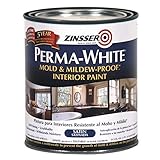
- Zinsser 02704 Quart Satin Gloss Perma-White Mildew-Proof Bathroom Paint
Darkness is also relative. A burgundy wall beside a bright white ceiling can look richer and more intentional than the same wall beside a dark ceiling. A mirror that catches a vanity fixture can return a small pool of light and make the room feel deeper. The goal is not to make burgundy behave like white paint; it is to keep the room legible, comfortable and visually balanced.
How should I read the room’s light before choosing a burgundy?
Start by identifying where the room gets light and whether that light is cool, warm or entirely artificial. Sherwin-Williams notes that north-facing rooms receive the least daylight and that warm undertones can counter the cool cast of that exposure. A windowless room needs the same evaluation using its installed fixtures rather than sunlight.
Check the daylight direction
- North-facing light: Expect a cooler, weaker wash. A burgundy with a warm or clean red undertone is less likely to turn gray, violet or blue.
- Limited or borrowed daylight: Treat the room as a low-light space even if it has a small window. Look for a burgundy that remains clear when the room is shadowed.
- Strong daylight: You have more flexibility, but still inspect the color after the sun moves. Direct light can make a deep red look brighter than it will appear at night.
- Windowless room: Judge the paint with the actual vanity and ceiling fixtures switched on. The bulb’s color and the fixture’s position become part of the paint color.
Map the surfaces that will stay light
Note the existing ceiling, casing, baseboards, countertop, sink and flooring. Light-colored surfaces can act as visual relief around the burgundy. If nearly every surface is already dark, use a lighter or cleaner burgundy, limit the color to one wall, or plan stronger layered lighting before buying paint.
Which burgundy undertone and value are safest in low light?
Choose a warm, relatively clean burgundy when the room has cool or limited light. “Warm” here means the red does not lean strongly blue or gray; “clean” means it is not heavily blackened or muddied. The right sample should still read as red wine rather than charcoal, purple or brown when the fixture is on.
Warm versus cool undertones
Warm undertones can balance the coolness of a north-facing room. A blue-leaning burgundy may look elegant in bright, warm light but can become inky or purplish in a dim powder room. This is a reason to sample rather than a rule that every cool burgundy will fail.
Use LRV as a comparison tool, not a target number
Sherwin-Williams defines LRV on a 0–100 scale, with higher values reflecting more light. The practical comparison is between the burgundies on your shortlist: the one with a slightly higher LRV or a cleaner formulation will generally feel less heavy in shadow than a nearly blackened alternative. The scale does not replace an in-room sample because surrounding finishes and bulbs change the appearance.
Do these 3 things before closing this tab:
1Clear out junk files and repair common Windows errors2Scan for outdated or missing drivers - takes under a minute3Repair Windows errors before they cause bigger problemsThree workable color roles
| Choice | Light demand | Visual effect | Best use |
|---|---|---|---|
| Cleaner or lighter burgundy | Lower than a blackened burgundy | Warm color with a brighter appearance in shadow | Rooms where you want burgundy without maximum visual weight |
| Burgundy on one wall | Moderate | Provides a focal color while reducing dark surface area | Windowless rooms or rooms with limited fixture output |
| Burgundy on all walls | Highest | Most enveloping and dramatic | Powder rooms with reliable, layered artificial lighting |
These are design applications of the reflectance and lighting principles described by Sherwin-Williams and Benjamin Moore, not manufacturer-prescribed formulas.
Also popular on Amazon

- Latex‐Base Mould & Mildew‐Proof Waterproofing Paint
- Guaranteed to stop water‐ resists up to 20 lbs. of water pressure
- Very smooth, bright white, non‐gritty finish applies easily to dry walls with brush or roller
- Ultra low odor, easy soap and water clean‐up
- Backed by two guarantees: 15 year waterproof and 10 year mold & mildew‐proof paint film
Should I paint every wall burgundy or use an accent wall?
Paint every wall when you want a cocooning room and can provide consistent artificial light. Use one burgundy wall when the room is windowless, the ceiling is low, or the existing finishes are already dark. An accent wall preserves the color’s drama while leaving more light-reflective area around the mirror and fixtures.
When full-room burgundy works
- The vanity area has a dedicated light rather than relying on a single ceiling lamp.
- The ceiling and trim can remain visibly lighter than the walls.
- A mirror has a clear view of a light source and can return that light into the room.
- You want an intimate, enveloping effect rather than a visually expanded one.
When one wall is the better compromise
- The room has no window and the installed lighting cannot be upgraded immediately.
- The ceiling is low or the floor and cabinetry are also deep colors.
- You want the burgundy behind the mirror or on the wall guests see first, with lighter walls to maintain openness.
Do not assume an accent wall must be the wall behind the sink. Put the color where it creates a clear focal point without blocking the strongest reflected light. A sample board can help you compare locations before committing.
What should I do with the ceiling, trim and casing?
Keep the ceiling lighter than the burgundy to protect the room’s perceived height. Sherwin-Williams and other color guidance describe lighter ceilings, contrast and reflected light as ways to make a dark room feel more open. A warm neutral or a tint related to the wall can look softer than a stark, cool white, especially when the burgundy is warm.
Quick wins for a faster PC:
Repair Windows errors before they cause bigger problemsFix Now →Scan for outdated or missing drivers - takes under a minuteDriver Scan →Ceiling choices
- Light warm neutral: Gives the strongest value contrast and helps the ceiling recede upward.
- Wall-color tint: Keeps a coordinated, enveloping look while remaining lighter than full-strength burgundy.
- Dark ceiling: Intensifies the cocooning effect and reduces visual height. Use it only when that mood is intentional and the lighting is generous.
Trim and casing
Keep casing and baseboards light enough to outline the deep wall color. Contrast makes architectural edges easier to read and creates small bands of reflected light. If the existing trim is medium or dark, repainting it may have more impact than changing the burgundy shade.
Which paint finish is suitable for a burgundy powder room?
Use a coating marketed for bathroom moisture and mildew resistance. Benjamin Moore describes Aura Bath & Spa as mildew resistant, humidity resistant and matte, and specifically notes that rich color can work in a powder room. Follow the product label for surface preparation, curing and cleaning.
Matte, pearl or satin?
- Moisture-resistant matte: Softens the contrast between a deep wall and hard bathroom fixtures. A matte surface absorbs more light than a higher sheen, so pair it with effective lighting and a lighter ceiling.
- Pearl or satin: Returns more light and can be useful when the room needs extra sparkle. Sheen also reveals dents, patches and uneven drywall, so preparation has to be careful.
There is no universal best sheen. In a dim room, a modestly reflective finish may help, but a flawless matte bathroom coating can look more sophisticated than a shiny wall that exposes every defect. Choose the finish that is both rated for the room’s humidity and appropriate for the condition of the walls.
How should I layer lighting so burgundy does not swallow the room?
The most direct remedy is more light. Sherwin-Williams’ lighting experts put it plainly: “The best solution to lighting and lightening up a room? Simple: Add more light.” In practice, combine general illumination with a dedicated vanity source instead of asking one ceiling fixture to do everything.
Free tools Windows power users keep installed
One-click scans. No signup required.
Also popular on Amazon

- Ideal for painting interior walls and spaces such as bathrooms, basements, kitchens, closets, laundry rooms and more
- Dries to the touch in 30 minutes and covers between 300-400 sq. ft. per gallon
- Creates a washable, semi-gloss finish
- Paint is self priming and will adhere to surfaces without sanding
General illumination
A ceiling fixture or other broad source prevents dark corners and lets the burgundy read as an even color. Aim for coverage across the whole room rather than a bright spot directly over the door. If the fixture is dimmable, set a comfortable level for guests and increase it when cleaning.
Vanity illumination
Place a dedicated light at the mirror or on both sides of it so faces are lit from the front. Adjustable or dimmable output lets you balance a dramatic wall with practical grooming light. The exact fixture style is less important than avoiding a single overhead source that casts the face into shadow.
Color temperature
Sherwin-Williams notes that cool-white light can read as more expansive than warm light. That can help a windowless room feel clearer, while a very warm lamp may deepen the burgundy’s red-brown appearance. Check the actual bulbs with your sample; the same paint can look markedly different under two color temperatures.
How do mirrors and metal details return light?
Place a mirror where it can reflect an available light source rather than a blank wall. The reflected fixture, ceiling or lighter trim creates a second visual plane and can make the room feel deeper. A larger mirror usually returns more of the room’s light, but even a modest mirror helps when it is aligned with the vanity light.
What’s actually slowing this PC down?
Pick the symptom - the matching free tool is one click away.
Use polished or lightly reflective metal for hardware, the faucet or a frame when you want small highlights. The aim is controlled reflection, not a room full of glare. A few bright points can break up a continuous burgundy field while keeping the color dominant.
How do I sample burgundy correctly before painting?
Color changes with light source and direction. Sherwin-Williams advises evaluating samples in natural and artificial light, and Benjamin Moore warns that strong wall colors can affect how skin looks in a mirror. Use a sample pot or large swatches rather than judging a tiny chip.
- Apply a generous sample: Paint a large area on more than one wall, or use large boards that can be moved around the room. A single small patch is too easily influenced by the surrounding wall.
- Include the vanity wall: Put one sample where the mirror and grooming light will sit. This is where reflected color matters most.
- Observe morning and afternoon: If the room has a window, note the strongest daylight direction and how the burgundy changes as the sun moves.
- Check after dark: Turn on the exact ceiling and vanity fixtures you plan to use. Let the bulbs reach their normal operating brightness before deciding.
- Compare undertones side by side: Place a warmer, cleaner option beside a more blue or blackened option. The comparison reveals a cast that may be hard to notice from memory.
- View the sample from the doorway and the mirror: The color can feel heavier from the entrance than at arm’s length, and the mirror may exaggerate red on the face.
- Keep the sample long enough to see repeated conditions: A decision that works only in daylight may fail during evening use, when many powder rooms are occupied.
Once you choose, paint the ceiling and trim samples as well if you are changing them. Burgundy’s perceived depth depends on the value contrast around it.
Also popular on Amazon

- All-Inclusive Complete Bath Tub Paint Kit: This 17.6oz/500g bath tub refinishing kit includes everything needed – Component A tile paint, component B Hardener, brush, rollers, sandpaper, tape, film, gloves, and manual. No extra tools required. Whether you're a DIYer or a pro, this tub and tile paint set handles residential or commercial bathroom renovations easily, giving old fixtures a fresh, updated look without hassle
- Low-Odor Water-Based Tile Paint: Our bathtub paint uses upgraded low-VOC, water-based ingredients for a safer, nearly odorless indoor experience. Unlike traditional harsh-smelling tile paint, tub paint requires minimal ventilation. Accidental spills and leftover paint rinse off effortlessly with plain water, cutting post-project cleanup time significantly – a major plus for any DIY bathroom project
- Superior Adhesion & Long-Lasting Durability: Tile paint Made with high-quality acrylic resin, bathtub paint delivers strong adhesion, scratch resistance, and waterproof performance. Tub and tile refinishing kit resists chipping, peeling, flaking, and fading even in humid bathrooms and kitchens. The cured coating endures long-term water exposure while keeping a smooth, glossy finish for years – reducing the need for frequent touch-ups
- Wide Compatibility for Multi-Scenario Use: This versatile white shower paint works perfectly on ceramic, tile, glass and marble – ideal for bathtubs, toilets, shower walls, floors, sinks, and countertops. For light surfaces, apply 2–3 coats; for darker bases, use additional coats or two kits for full, even coverage. Suitable for both indoor and outdoor home renovation projects
- User-Friendly DIY Operation & Standard Curing Cycle: This practical tub paint for bathtub kit includes step-by-step instructions for effortless DIY. Simply mix Component A and B at a 1g:0.015g ratio, stir for 2–3 minutes, then apply. Initial drying takes 24–48 hours, and full curing reaches maximum hardness and waterproof protection after 7 days. Tub and tile paint once fully cured, the surface can be used normally and safely withstands prolonged soaking
How can I prevent an unflattering color cast in the mirror?
Strong wall colors can tint the light that reaches a face. Benjamin Moore recommends checking that the color does not create an artificial or unflattering cast during grooming. Stand at the mirror with the vanity lights on, then compare the reflection with the door open and closed. If skin looks excessively red or gray, adjust the bulb color, increase the front-facing light or choose a cleaner burgundy rather than repainting the entire room immediately.
A mirror that reflects a burgundy wall back at the face can intensify the effect. Angling the mirror toward a lighter ceiling or a light source, or using side lighting, can reduce that concentrated red bounce.
Independent reader supportYour contribution helps us test, update, and keep practical guides available for everyone.What should I do if the room still feels too dark after painting?
Work through the causes in order instead of abandoning burgundy immediately.
If corners are dark
Add or reposition general illumination so light reaches the whole room. A brighter vanity lamp cannot compensate for a ceiling fixture that leaves the entry and corners unlit.
If the ceiling feels low
Recheck the ceiling value and trim contrast. A ceiling that is too close in depth to the walls removes the visual boundary that signals height. A lighter warm neutral or a related tint can restore that separation.
If the burgundy looks muddy
Compare it with the original sample under the installed bulbs. A warm, clean alternative may stay clearer than a blackened or blue-leaning formula in the same low light.
If the walls look flat
Use the mirror and a few polished details to create controlled highlights. A slightly more reflective bathroom finish can also add bounce, but only if the wall preparation is smooth enough to withstand the extra sheen.
Also popular on Amazon

- MOLD AND MILDEW DEFENSE: Powerful mildewcide additive helps prevent mold and mildew growth and inhibits regrowth for months - a simple alternative to specialty mold-resistant primers.
- EASY TO USE, ANY PAINT BRAND: Mixes directly into any interior or exterior paint, primer, or coating - no special equipment needed, and won't alter your paint's color or texture once dry.
- SAFE & NON-TOXIC: Environmentally friendly and safe for homes with children and pets - ideal for bathrooms, ceilings, kitchens, basements, and anywhere moisture causes mold and mildew.
- BUILT FOR BATHROOMS & CEILINGS: Purpose-suited for the rooms mold and mildew affect most - showers, bathroom ceilings, and walls - helping guard against stains and discoloration.
- RIGHT-SIZE YOUR TREATMENT: This size treats 1 gallon of paint. Paint-Guard is also available in 2 and 5-gallon treatment sizes for larger jobs.
If the room is visually busy
Reduce competing dark surfaces rather than adding more decoration. Keep the ceiling and trim light, let the burgundy be the primary statement and use reflection selectively.
What is a practical order of operations for the project?
- Inventory the light: Record window orientation, existing fixtures, bulb color and the areas that remain shadowed.
- Select two or three burgundy samples: Include a warm clean option and, if desired, a deeper option for comparison.
- Test in place: Paint large areas on multiple walls and inspect them in daylight, evening light and vanity light.
- Choose the coverage plan: Decide between all walls, one wall or a lighter burgundy based on the sample and the room’s lighting capacity.
- Set the surrounding values: Choose a lighter ceiling and trim before finalizing the wall color so you judge the complete combination.
- Confirm the coating: Select a bathroom-rated, mildew- and humidity-resistant product; decide between matte and a modestly higher sheen according to wall condition and desired reflection.
- Install or adjust lighting: Provide broad room illumination plus a vanity source, using dimming or adjustability where available.
- Place reflection intentionally: Position the mirror to catch light and add restrained metal highlights.
- Check the grooming view: Verify the wall color under the mirror lights before completing all walls.
Which burgundy strategy fits your powder room?
Use this quick decision framework after sampling:
- Choose all-wall burgundy when the room has dependable layered lighting, a light ceiling and trim, and you want the strongest enveloping mood.
- Choose one burgundy wall when the room is windowless, lighting is limited or you want a focal point with more surrounding reflectance.
- Choose a cleaner or lighter burgundy when you want the color’s warmth but the room’s shadows make deep shades look heavy.
- Choose a bathroom-rated matte when you want a soft, low-glare surface and the walls are well prepared.
- Choose pearl or satin when additional bounce matters and the wall can support a finish that reveals more surface variation.
Burgundy succeeds in a powder room when it is treated as part of a light plan. The paint supplies depth and drama; the ceiling, trim, fixtures, mirror and finish supply the contrast and reflected light that keep the small room from closing in.
PC Slower Than It Used to Be?
A free scan shows the junk files, broken settings and background clutter dragging Windows down - then fixes them in one click.Free scan · Windows 10 & 11Outdated Drivers Are Slowing You Down
One free scan finds every outdated or missing driver and matches the right update for your exact hardware.Free scan · exact hardware matchFrequently Asked Questions
Can a completely windowless powder room use burgundy walls?
Yes. Treat the installed fixtures as the room’s daylight, sample the color with those fixtures on, and provide both broad illumination and a dedicated vanity source. A one-wall application or a cleaner burgundy is the safer starting point if the current lighting is limited.
Should I use warm-white or cool-white bulbs with burgundy paint?
Cool-white light generally reads as more expansive, while warm light can make burgundy appear redder or browner. Choose the bulb that renders faces comfortably, then confirm the choice against a large wall sample because the paint’s appearance changes with the lamp.
Is a matte bathroom paint practical for a powder room?
A matte coating can work when it is specifically marketed for bathroom humidity and mildew resistance; Benjamin Moore describes Aura Bath & Spa in those terms. Matte reduces glare but does not hide poor wall preparation, so patch and smooth the surface before painting.
How do I know whether my mirror is making the burgundy look too strong?
Stand at the mirror with the vanity lights on and compare your reflection with the door open and closed. If the wall creates an overly red cast, add front-facing or side light, angle the mirror toward a lighter surface, or select a cleaner burgundy.
Quick Recap


