The Tool Desk
Recommended Free Tools
Outbyte Driver Updater FREEFix the driver behind crashes, sound loss and screen glitchesFind Drivers →Outbyte PC Repair FREEClear out junk files and repair common Windows errorsFree Scan →
ThatPainter is reader-supported. When you buy through links on our site, we may earn an affiliate commission. Learn More
For ordinary drywall, plaster, ceilings, and wood trim, buy an indoor-labeled, water-based acrylic latex wall paint—preferably one with a credible low-emission certification. An industrial coating is not automatically a tougher or better wall paint. It is a duty-specific system intended for exposures such as chemicals, heavy abrasion, corrosion, or persistent moisture. Use one in a home only when the substrate, exposure, label, preparation, ventilation, mixing, and curing requirements all fit your project. For a concrete garage floor, a two-part epoxy is the usual choice when chemical resistance or a colored high-performance surface matters; a compatible two-part polyurethane is used when a durable clear, abrasion-resistant finish is the priority.
The right purchase depends more on what the surface must withstand than on the word “industrial” or a small difference in can price.
As an Amazon Associate I earn from qualifying purchases.
The Tool Desk
Outbyte Driver Updater FREEFix the driver behind crashes, sound loss and screen glitchesFind Drivers →Outbyte PC Repair FREEClear out junk files and repair common Windows errorsFree Scan →Should I use industrial paint on my interior walls?
Usually, no. Residential walls need a coating formulated for indoor architectural surfaces, not an industrial-maintenance product designed for steel, machinery, tanks, floors, or severe service. Choose an interior water-based acrylic latex paint whose label identifies the intended substrate and indoor use.
Interior wall paint is balanced for appearance, hiding, touch-up, washability, drying behavior, and reasonable household durability. Industrial coatings trade some of that convenience for resistance to a defined hazard. A coating may be excellent against solvents or forklift abrasion yet be unnecessarily difficult to mix, slow to cure, unpleasant to apply, or unsuitable for occupied rooms.
Popular on Amazon
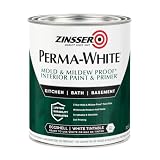
- Self-Priming formula - requires no sanding
- Mold & Mildew-Proof paint film - guaranteed for 5 years
- Resists dirt and moisture on film coating
- Finish is washable and scrubbable with soap and water
- Product contains a mildewcide to prevent the growth of mold and mildew on the paint film only
EPA guidance distinguishes interior architectural coatings from industrial-maintenance coatings. Industrial-maintenance products may be required to carry wording such as “For industrial use only,” “For professional use only,” “Not for residential use,” or “Not intended for residential use.” Treat any of those statements as a stop sign for a homeowner wall project.
The exception is a clearly identified exposure: for example, a concrete workshop floor exposed to vehicle fluids, or a utility area where the manufacturer specifies a compatible high-build system. Even then, select the coating for that substrate and duty rather than assuming an industrial label makes it suitable everywhere.
What is the difference between interior wall paint and industrial coating?
Both products form a protective film, but they are engineered for different service conditions. The comparison below shows the practical distinctions a homeowner should evaluate.
| Decision factor | Interior acrylic latex wall paint | Industrial or maintenance coating |
|---|---|---|
| Typical substrate | Drywall, plaster, ceilings, primed wood trim and similar architectural surfaces | Concrete, steel, masonry, industrial floors, equipment or other specifically listed substrates |
| Main exposure | Normal household scuffs, cleaning, humidity and light wear | A defined duty such as chemicals, heavy abrasion, corrosion, immersion or severe moisture |
| VOC and emissions | Water-based acrylic latex is generally lower in VOCs than solvent-based paint; low-emission certifications are available | Varies widely by resin, solvent and catalyst; a “low-VOC” claim does not establish overall safety |
| Label permission | Should state interior or architectural use and list compatible surfaces | May restrict use to industrial or professional settings or exclude residential use |
| Preparation | Clean, dull, repair, spot-prime and use the specified interior primer when needed | Often requires tighter moisture, profile, cleanliness and primer controls; concrete may need mechanical preparation |
| Mixing and application | Usually one component; brush, roller or approved sprayer | May be two-component, with a measured resin-to-hardener ratio, limited pot life and specified equipment |
| Cure and reoccupancy | Recoat and return-to-service times are listed on the technical data sheet | Full cure can control when foot traffic, vehicles, chemicals or furniture are allowed; follow the manufacturer’s schedule |
| Cleanup and waste | Water cleanup for many acrylic products, subject to the label | May require solvent cleanup and controlled disposal of mixed or leftover components |
| Life-cycle cost | Usually lower complexity and easier repainting | Can reduce failure under severe exposure, but preparation, labor, ventilation and downtime can dominate total cost |
The table is a decision aid, not a substitute for the product’s current label, technical data sheet (TDS) and safety data sheet (SDS). Formulations and legal limits differ by product and jurisdiction.
Which coating should I buy for each household surface?
Bedroom, living room, hallway and other ordinary walls
Buy a low-VOC, water-based acrylic latex interior wall paint. Confirm that the container says interior use, then choose sheen according to cleaning and appearance needs: a flatter finish hides minor wall irregularities, while higher sheens generally tolerate wiping better but can emphasize surface defects. Check the TDS for coverage, recoat interval, application temperature and humidity, and cleanup instructions.
For living spaces, a third-party low-emission certification is a useful screening tool. PNNL lists recognized paths including GREENGUARD Gold, Indoor Advantage Gold, products evaluated against CDPH Section 01350 criteria, Green Seal GS-11, Green Wise and MPI green-performance products. Certification does not remove the need to ventilate or follow the label, but it gives you more information than a vague “eco” claim.
Also popular on Amazon

- PAINT + PRIMER IN ONE: Evolve’s paint-and-primer formula helps you get great coverage from the start, sealing your surface and reducing the extra work of multiple coats.
- AVAILABLE IN MULTIPLE SHEENS, COLORS & SIZES: Choose from a curated palette of designer colors in Flat, Eggshell, Satin, and Semi-Gloss sheens to match any style, room, or project. Available in 1-Gallons & 5-Gallons.
- EGGSHELL SHEEN – Soft, Velvety Glow: Offers a gentle sheen that balances elegance with durability. Ideal for moderate-traffic areas like dining rooms, hallways, and family rooms. Easy to clean without compromising the finish.
- STAIN & SCRUB RESISTANT: Built to last in real spaces, Evolve helps resist marks, scuffs, and water spotting, so your home continues to look polished and well-maintained.
- DESIGNED FOR MOISTURE-PRONE AREAS: Formulated to perform well in bathrooms, kitchens, entryways, laundry rooms, and other high-humidity spaces.
Kitchen, bathroom and laundry-room walls
Use an interior acrylic latex product whose TDS and label support the room’s humidity and cleaning demands. Improve performance with sound substrate preparation, sealed repairs and adequate ventilation. Do not substitute a floor, tank or industrial coating merely because the room is damp; verify that the product is approved for vertical interior surfaces and regular household occupancy.
Concrete garage or workshop floor
Choose a purpose-made two-part epoxy floor coating when chemical resistance or a colored, high-performance finish is needed. The Canada Conservation Institute identifies two-part epoxy for concrete or wooden floors where chemical resistance is required. Sherwin-Williams specifically warns: “Do not use latex or oil-based floor paint in a garage because they can lift when they come in contact with car or truck tires.”
Epoxy is not a shortcut around preparation. Confirm that the slab is suitable, dry enough for the system, free of oil and curing compounds, and prepared to the profile required by the manufacturer. Verify compatibility with any existing coating before buying a kit.
Clear, abrasion-resistant floor finish
A two-part polyurethane floor coating or topcoat can be appropriate when you want a durable clear finish and the manufacturer confirms compatibility with the base system. The Canada Conservation Institute associates two-part urethane with abrasion resistance, while Sherwin-Williams describes heavy-duty polyurethane as a durable clear garage-floor finish. A clear coat will not hide stains, repairs or color variation beneath it, so the base surface and any decorative layer must already be acceptable.
Recommended Free Tools
Utility room, workshop wall or other unusual residential surface
Start with the exposure and substrate, not the product category. If a wall must resist a particular chemical splash, repeated scrubbing or unusual moisture, find a coating whose TDS explicitly lists that substrate and duty. Confirm residential permission, indoor-air requirements and the cure conditions before purchase. A standard washable wall paint may be the safer choice if the exposure is merely occasional household dirt.
Industrial or maintenance coating on a residential surface
Use one only when all of these conditions are met:
- The TDS identifies your exact substrate and service condition.
- The label permits residential use and does not carry an industrial-only or professional-only restriction.
- You can perform the required cleaning, profiling, priming, mixing and application.
- You can ventilate the area and keep people, pets and ignition sources away as required by the SDS.
- You can leave the surface undisturbed for the stated cure and reoccupancy period.
If any requirement is uncertain, select a product explicitly sold for residential architectural use or hire a qualified coating contractor.
Also popular on Amazon

- Use for a variety of indoor and outdoor project surfaces including wood, metal, plaster, masonry or unglazed ceramic
- Water-based acrylic formula is low odor, resist chips and provides long-lasting protection
- Covers up to 120 sq ft and dries to touch in 30 minutes for quick project completion
- Semi-gloss finish minimizes surface imperfections, goes on smoothly and provides excellent hide
- Prior to application sand surfaces with 180/200 grit sandpaper, then wash with a degreaser, allow the surface to dry and apply paint
Are low-VOC and zero-VOC claims enough to make a coating safe indoors?
No. EPA notes that low- and no-VOC paints can still differ in toxicity and performance. The VOC number does not describe every ingredient, emissions after application, or the ventilation needed for a two-component system.
The UK Health and Safety Executive (HSE) warns that coating solvents can irritate skin, eyes and mucous membranes and can cause headaches, dizziness, lung effects and nervous-system harm. Risk depends on VOC content, application method and enclosure. Spraying is especially significant because atomized droplets can raise airborne exposure rapidly in an enclosed room.
Before opening a container, read the label and SDS for required gloves, eye protection, respirator conditions, ventilation, flammability controls, storage and disposal. Keep the area unoccupied for the manufacturer’s stated period; “dry to touch” is not the same as fully cured or safe for normal use.
For occupied living spaces, favor a recognized low-emission certification, use the least hazardous product that meets the duty, and provide cross-ventilation without directing fumes into the rest of the home. Never mix components or add thinner unless the TDS specifically permits it.
How should I check an existing wall before painting?
Preparation protects both the finish and your health. Follow this sequence:
- Identify the substrate and previous coating. Determine whether the surface is drywall, plaster, wood, masonry or an existing industrial film. A coating approved for concrete may fail on a flexible gypsum wall.
- Check for moisture. Repair leaks, condensation and damp masonry before painting. Trapping moisture behind a low-permeability film can cause blistering or adhesion loss.
- Check old paint for lead. EPA advises determining whether painted surfaces are lead-free or assuming lead-based paint may be present. In homes built before 1978, use lead-safe certified renovators when applicable. Do not casually sand, scrape or heat suspect paint.
- Clean and repair. Remove grease, dust, chalk, soap residue and loose material. Fill defects with a compatible repair compound and allow it to dry.
- Prepare the surface specified by the product. Interior wall paint may need light dulling and spot priming; a floor system may require mechanical abrasion or other profile preparation. Follow the TDS rather than relying on a generic sanding instruction.
- Test adhesion when changing systems. On an existing glossy or unknown coating, perform the manufacturer’s recommended adhesion check in a discreet area. Stop if the film lifts, wrinkles or remains soft.
What is the correct process for applying a two-part garage coating?
Two-part systems are less forgiving than ordinary wall paint. Organize the job around the product’s stated pot life, temperature range and cure schedule.
Do these 3 things before closing this tab:
1Repair Windows errors before they cause bigger problems2Fix the driver behind crashes, sound loss and screen glitches3Clear out junk files and repair common Windows errorsAlso popular on Amazon

- ALL-IN-1 PAINT & PRIMER: A hardy multi-purpose and multi-surface one-coat paint and primer in one for almost any indoor or outdoor surface. A wall, ceiling, floor, skirting board, cabinet, furniture and door paint for your bathroom, kitchen, home and garden.
- DURABLE & VERSATILE: A highly pigmented, thick formula available in 12 bold colors and a Matte, Satin or Gloss finish. Ideal for interior and exterior paint jobs on wood, laminate, plastic/UPVC, metal, concrete, brick, masonry, stone, glass and more.
- EFFECTIVE MONEY & TIME SAVER: A quick painting solution for DIY or professional builders and painters; our luxuriously opaque formula requires just 1 coat and is fast drying for a premium finish.
- ADVANCED ECO FORMULA: Our UK-made chalk paint is water-based, non-toxic, low odor, and has low VOCs for an environmentally friendly decorating choice.
- EASY APPLICATION: Remove dirt with a damp cloth, wipe the surface clean and dry, sand/score the surface (optional based upon the finish required), stir to mix the color and paint with a brush or roller.
- Plan downtime. Remove vehicles and belongings, control dust, and ensure that no one needs the area before the stated return-to-service time.
- Confirm slab condition. Check for moisture, oil contamination, weak concrete, cracks and previous coatings. Resolve defects before coating.
- Prepare mechanically or chemically as specified. Degreasing alone may not create the required surface profile. Do not use an acid or solvent method unless the product instructions allow it and you can manage the hazards.
- Measure components accurately. Use the supplied ratio and mixing method. An incorrect ratio can leave a film soft, brittle or permanently tacky.
- Respect pot life. Once combined, the mixture may become unusable even if it still appears liquid. Mix only the amount you can place within the stated working time.
- Apply at the specified conditions. Temperature, slab temperature, humidity and dew point can affect adhesion and cure. Use the recommended roller, squeegee, brush or broadcast method.
- Observe recoat and cure windows. Applying a second layer too soon or too late can cause adhesion problems. Keep traffic and moisture off the surface until the manufacturer permits them.
- Dispose of leftovers safely. Mixed resin can heat as it cures. Follow the SDS and local waste rules; never pour coating or solvent into a drain.
What common mistakes cause coating failure?
Choosing by “industrial” marketing
A higher solids content or chemical-resistant resin does not make a wall look better or bond to every surface. Match the system to the actual exposure and substrate.
Ignoring label restrictions
Industrial-maintenance labels can legally exclude residential use. The phrases “For industrial use only,” “For professional use only,” “Not for residential use,” and “Not intended for residential use” are explicit restrictions, not suggestions.
Painting over contamination or moisture
Oil, salts, dust, uncured concrete and dampness can defeat even an expensive coating. Correct the cause and meet the product’s surface criteria before application.
Assuming low VOC means no ventilation
Water-based products can still contain ingredients that require ventilation and protective equipment. Two-component products may release reactive components during mixing and curing.
Quick wins for a faster PC:
Repair Windows errors before they cause bigger problemsFix Now →Fix the driver behind crashes, sound loss and screen glitchesFind Drivers →Clear out junk files and repair common Windows errorsFree Scan →Using the wrong cleanup method
Adding water to a solvent-based product or solvent to a water-based product can ruin the film and increase hazards. Use only the cleanup agent listed on the label and dispose of waste as directed.
Reoccupying too soon
A surface can feel dry while the coating is still developing chemical and abrasion resistance. Follow the TDS for light use, full use, vehicle parking, washing and chemical exposure separately when those times are provided.
Also popular on Amazon

- WHAT'S IN THIS 10 PIECE PAINT KIT FOR WALLS: includes one plastic paint tray; one 9 inch roller frame; one 4 inch mini roller frame; two 9 inch microfiber roller covers (1/2 inch nap); two 4 inch microfiber roller covers (1/2 inch nap); one 1 inch flat brush; one 1.5 inch angle sash brush; one 2 inch angle sash brush
- Versatile Application: Perfect for any project, this set includes paint rollers 9 inch for large surfaces and smaller brushes for detail work
- All-in-One Kit: This paint brush set and paint tray combo ensures you have all the paint supplies needed for any home improvement task
- Professional Grade: Get a smooth, even finish with our high-quality paint roller set; ideal for applying interior paint gallon or smaller quantities
- Cost-Effective: This paint brush and roller set provides unbeatable value; includes paint pan and paint trays for easy cleanup and reuse
Is an industrial coating worth the extra cost for a homeowner?
Compare total life-cycle cost, not the price of one container. A specialized coating may be economical when failure would expose concrete or steel to chemicals, require frequent shutdowns, or force repeated repainting. Its value is much lower on a bedroom wall where the main demands are appearance, cleanability and easy future touch-up.
Include preparation tools, primer, moisture testing, ventilation equipment, protective gear, waste disposal, rental equipment, contractor labor and the cost of keeping a garage or room out of service. A cheaper product that fails because the slab was damp is more expensive than a correctly specified system.
PC Slower Than It Used to Be?
A free scan shows the junk files, broken settings and background clutter dragging Windows down - then fixes them in one click.Free scan · Windows 10 & 11Outdated Drivers Are Slowing You Down
One free scan finds every outdated or missing driver and matches the right update for your exact hardware.Free scan · exact hardware matchLocal VOC rules also matter. The available formulations and legal limits vary by state, province and municipality. Verify the live label, TDS, SDS, emissions certification and local requirements at the time of purchase; do not rely on an old listing or a generic online description.
What should a homeowner verify before paying?
- Use: Does the label explicitly allow interior residential or the intended floor use?
- Substrate: Is your drywall, plaster, wood, masonry or concrete listed?
- Exposure: What chemical, abrasion, moisture, temperature or weather duty must it survive?
- Air quality: What are the VOC details, emissions certification, ventilation and PPE requirements?
- Preparation: What cleaning, moisture limit, profile and primer are required?
- Application: Is it one component or two? What ratio, pot life, tools and film thickness apply?
- Cure: When may people, pets, furniture, foot traffic, vehicles, washing or chemicals return?
- Maintenance: Can you touch up it up with the same system, and how will future repairs be handled?
- Rules: Are lead-safe renovation practices or local VOC and waste requirements triggered?
If the answers are not clear in the current product documents, do not guess. Choose a clearly labeled residential product or obtain advice from a qualified coatings professional.
Frequently Asked Questions
Can I use garage-floor epoxy on a basement or laundry-room wall?
Only if the manufacturer explicitly lists vertical interior masonry or the exact wall substrate and permits residential indoor use. Floor epoxies can have appearance, sagging, odor, or recoat requirements that make them unsuitable for walls.
Does a paint labeled zero-VOC contain no chemicals?
No. The claim generally addresses volatile organic compounds under a particular measurement definition, not every ingredient or emission. Read the SDS, follow ventilation instructions, and consider third-party low-emission certification.
How can I tell whether an old coating is compatible with a new one?
Identify the existing film if possible, follow the new product’s compatibility guidance, and perform the specified adhesion test in a hidden area. If the old coating is unknown, loose, soft, or contaminated, removal or professional assessment may be safer than coating over it.
Can I spray industrial coating inside a house?
Spraying can sharply increase airborne exposure because it atomizes the material. Use it indoors only when the product, equipment, enclosure, ventilation plan and respiratory protection are specifically approved for that application; otherwise use a residential brush-and-roller product or hire a qualified contractor.
Quick Recap


