Free tools Windows power users keep installed
One-click scans. No signup required.
What’s actually slowing this PC down?
Pick the symptom - the matching free tool is one click away.
ThatPainter is reader-supported. When you buy through links on our site, we may earn an affiliate commission. Learn More
Yes—but usually because of how technology is designed and used, not because technology is inherently uncreative. Digital tools, online communities, cameras, editing software, and generative AI can help painters research, experiment, revise, and reach an audience. They can also interrupt attention, encourage imitation, and make a polished result arrive before the artist has explored the problem.
As an Amazon Associate I earn from qualifying purchases.
The useful distinction is not “traditional versus digital” or “human-made versus AI-made.” It is whether a tool supports your observation, experimentation, judgment, and ownership—or substitutes for them.
Creativity is more than a finished-looking image
When painters ask whether technology is limiting creativity, they may mean several different things. A tool can improve one kind of creative performance while weakening another.
Popular on Amazon
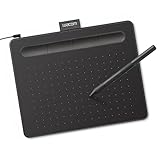
- Wacom Intuos Small Graphics Drawing Tablet: Enjoy industry leading tablet performance in superior control and precision with Wacom's EMR, battery free technology that feels like pen on paper
- Works With All Software: Wacom Intuos tablet can be used in any software program to explore new facets of digital creativity; draw, paint, edit photos/videos, create designs, and mark up documents
- What the Professionals Use: Wacom's industry leading pen technology and pen to paper feeling makes it the preferred drawing tablet of professional graphic designers
- Software and Training Included: Only Wacom gives you software with every purchase. Register your Intuos tablet and gain access to some of the best creative software and Wacom's online training
- Wacom is the Global Leader in Drawing Tablet and Displays: For over 40 years in pen display and tablet market, you can trust that Wacom to help you bring your vision, ideas and creativity to life
- Fluency: generating many possible ideas, compositions, or studies.
- Flexibility: moving between subjects, methods, viewpoints, and visual languages.
- Originality: making choices that are unusual or personally distinctive.
- Usefulness: solving the visual problem the painting is meant to address.
- Creative self-efficacy: believing you can make meaningful creative work.
- Individual quality: whether one painter produces a stronger result.
- Collective diversity: whether a group of painters produces genuinely different work.
- Creative ownership: whether the decisions still feel like your own.
A reference image may help you solve anatomy while narrowing your composition. A digital sketch may let you test ten color arrangements in minutes while tempting you to keep tweaking instead of committing. An AI-generated image may give a beginner a useful starting point while making ten artists’ starting points look strangely alike.
Four kinds of technology affect painting differently
1. Attention-capturing technology
Smartphones, notifications, social feeds, messages, short-form video, and constant multitasking affect the conditions in which painting happens. Creative work needs periods of sustained attention, tolerance for uncertainty, and enough quiet for an idea to develop. Repeated interruptions encourage the opposite: checking, switching, consuming, and reacting.
That does not mean every minute spent on a screen harms creativity. The purpose, duration, activity, and degree of control matter. A painter using a phone to photograph changing light is doing something different from a painter losing an hour to an endless feed before starting a study.
A 2024 study of 509 participants found that smartphone-use-disorder tendencies were inversely related to self-rated creative self-efficacy. It did not find a general negative relationship between technology-overuse measures and the number of ideas produced in divergent-thinking tasks. Results varied by subgroup, platform, age group, gender, and device type, and effects were mostly small. The evidence supports concern about compulsive, fragmented use—not the claim that smartphones “destroy imagination.” Read the study.
2. Digital production tools
Digital cameras, drawing applications, photo editors, video tools, 3D software, and collaborative whiteboards can dramatically lower the cost of experimentation. You can crop, layer, undo, recolor, enlarge, duplicate, and compare possibilities without wasting paint or waiting for a surface to dry.
These are real creative advantages, particularly for painters who are learning, working with limited materials, living with a disability, or developing ideas before committing them to canvas. Digital work can also make it easier to combine painting with photography, animation, projection, collage, and sound.
Also popular on Amazon

- Word-first 16K Pressure Levels: The upgraded stylus features 16,384 levels of pressure sensitivity and supports up to 60 degrees of tilt, delivering smoother lines and shading for a natural drawing experience. With no battery or charging needed, it operates like a real pen, making it easy for beginners to create effortlessly. This functionality helps novice artists develop their skills and explore their creativity without the intimidation of complex tools
- Designed for Beginners: This drawing pad desinged with 8 customizable shortcuts for both right and left-hand users, express keys create a highly ergonomic and convenient work platform
- Perfectly Adapted for Android: The XPPen Deco 01 V3 art tablet supports connections with Android devices running version 10.0 and above. It is recommended to download the XPPen Tools Android application, which adapts to your smartphone's screen aspect ratio, ensuring accurate mapping. It also supports mapping on Android screens with different aspect ratios in portrait mode
- Large Drawing Space, Bigger Bold Inspiration: This expansive drawing pad has10 x 6.25-inch helps you break through the limit between shortcut keys and drawing area
- Easy Connectivity for Beginners: The Deco 01 V3 offers USB-C to USB-C connectivity, plus adapters for USB C. This ensures easy connection to various devices, allowing beginner artists to set up quickly and focus on their creativity without compatibility concerns. Whether using a laptop, tablet, or desktop, the Deco 01 V3 provides a seamless experience, making it an ideal choice for those just starting their digital art journey
The limitation appears when the interface becomes the center of attention. Presets and templates can become aesthetic defaults. Endless adjustment can replace judgment. Knowing how to operate a program can be mistaken for having something to say. The question is not whether undo, layers, or filters are legitimate. It is whether they help you explore a visual idea or merely postpone a decision.
3. Recommendation systems
Search engines, image platforms, trending pages, and personalized feeds offer painters access to more references, artists, techniques, and communities than any previous generation had. They can introduce you to unfamiliar traditions and make collaboration possible across geography.
But recommendation systems are generally designed to keep showing you material likely to hold your attention. That can reinforce the styles you already like and expose you to popular images more reliably than obscure, difficult, or culturally distant ones. Painters may gradually converge on the same palettes, compositions, subjects, and surface effects—not because they lack imagination, but because the surrounding visual environment keeps rewarding recognizability.
Use references to study principles rather than copy surfaces. Ask what a painting is doing with scale, rhythm, edge control, temperature, value, or pacing. Then close the reference and make decisions that respond to your own subject.
4. Generative AI
Generative AI creates the clearest example of technology’s creative trade-off. It can brainstorm, produce variations, suggest titles, translate, organize research, remove tedious production work, and help people without formal training enter creative fields. It can also supply a plausible image or concept before the painter has observed, questioned, or imagined anything independently.
Free tools Windows power users keep installed
One-click scans. No signup required.
In a controlled Science Advances experiment involving 293 stories, participants who received AI-generated ideas produced stories that evaluators judged more creative, better written, and more enjoyable, especially among less creative participants. That is evidence of improved evaluated individual output in a particular task—not proof that AI develops every form of creativity. Read the study.
Also popular on Amazon
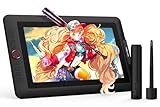
- PLEASE NOTE:XPPen Artist13.3 Pro drawing tablet Need to connect with computer,you need to use it with your computer or laptop, the 3 in 1 cable is included
- Drawing Tablet with Screen: Tilt Function- XPPen Artist 13.3 Pro supports up to 60 degrees of tilt function, so now you don't need to adjust the brush direction in the software again and again. Simply tilt to add shading to your creation and enjoy smoother and more natural transitions between lines and strokes
- Graphics Tablets: High Color Gamut- The 13.3 inch fully-laminated FHD Display pairs a superb color accuracy of 88% NTSC (Adobe RGB≧91%,sRGB≧123%) with a 178-degree viewing angle and delivers rich colors, vivid images, and dazzling details in a wider view. Your creative world is now as powerful as it is colorful
- Drawing Pad: One is enough- The sleek Red Dial on the display is expertly designed with creators in mind, its strategic placement allows for natural drawing postures. With just one wheel, you can effortlessly zoom in and out, adjust brush sizes, and flip the canvas—all tailored to suit the habits of everyday artists. The 8 customizable shortcut keys allow you to personalize your setup, streamlining your workflow and enhancing creative efficiency
- Universal Compatibility & Software Support:supports Windows 7 (or later), Mac OS X 10.10 (or later), Chrome OS 88 (or later), and Linux systems. Fully compatible with major creative software including Photoshop, Illustrator, SAI, and Blender 3D. Register your device to access additional programs like ArtRage 5 and openCanvas for expanded creative possibilities.
A 2025 meta-analysis of 28 studies involving 8,214 participants likewise reported a benefit when humans collaborated with generative AI on creative performance, with a standardized effect of g = 0.27. But it also reported a substantial negative effect on idea diversity, g = -0.86. Read the meta-analysis.
Research in Nature Human Behaviour reached a similar conclusion: ChatGPT-assisted brainstorming can improve the creativity of individual ideas while reducing diversity across the overall pool. Read the research.
For painters, the practical danger is anchoring. If the first generated image contains a dramatic pose, familiar cinematic lighting, or a fashionable painterly texture, it becomes difficult to imagine alternatives. When many artists use similar models, prompts, training examples, and visual conventions, the work may become individually polished but collectively predictable.
Do these 3 things before closing this tab:
1Scan for outdated or missing drivers - takes under a minute2Repair Windows errors before they cause bigger problems3Fix the driver behind crashes, sound loss and screen glitchesThe evidence is more complicated than “technology kills creativity”
A 2026 meta-analysis covering 31 studies, 71 effect sizes, and 10,156 participants found a small positive overall association between social-media use and creativity: r = 0.21, with a 95% confidence interval of 0.11 to 0.30. The relationship changed depending on the type of use, whether use was excessive, the creativity measure, and the context. Read the meta-analysis.
This is a correlation, not proof that social media makes people creative. Creative people may be more likely to use social platforms for sharing, collaboration, research, and feedback. Still, the result matters because it rejects a universal story of technological decline. A social platform can be a distracting feed, a useful community, a research archive, or a place to test an idea. “Screen time” is too crude a category to explain the difference.
The same logic applies to painting software and AI. A tool can expand access and experimentation while weakening independence if it supplies too much direction too early. It can improve today’s painting while weakening the long-term practice through which you learn to see.
Also popular on Amazon

- Customize Your Workflow: The 6 customizable press keys on Huion H640P drawing tablet for pc let you assign your most-used commands—like undo, zoom, brush switch, or save—so you can keep your hands on the tablet and your mind on the art. Whether you're a digital painter switching brushes, or a comic artist zooming in and out, these keys keep your workflow smooth and uninterrupted. Plus, the Huion driver lets you save different shortcut profiles for different apps, so you never have to reconfigure when switching software.
- Professional Pen Performance: Huion H640P drawing pad for computer comes with the battery-free PW100 stylus that's always ready when inspiration strikes. With 8192 levels of pressure sensitivity, every light sketch, or bold stroke responds naturally to your hand—just like a real pen. The 5080 LPI resolution and 233 PPS report rate deliver lag-free, precise strokes, so you can draw confidently without second-guessing your cursor. The pen side buttons help you switch between pen and eraser instantly.
- Compact and Portable: Huion H640P computer graphics tablet features a compact, ultra-portable design at just 0.3 inches thin and 0.61 lbs light, so it slides easily into your backpack—perfect for sketching in coffee shops, taking notes in class, or editing on the go between home and studio. The 6x4 inch active area offers enough room for natural pen movements while fitting comfortably on crowded desks, or lecture hall seats.
- Stable Compatibility: Huion H640P graphic drawing tablet works seamlessly with Mac, Windows, Linux PCs, and Android smartphones/tablets (OS version 6.0 or later). Left-handed friendly, and you just need to flip the tablet and adjust the settings in the driver. Please note: H640P does NOT support iPhone/iPad.
- Move Beyond the Mouse: Huion Inspiroy H640P is a pen tablet that replaces your mouse for more natural, precise control. Freehand draw, take notes, or even play OSU—everything you do with a mouse, you can do better with a pen. The precise tip makes it ideal for detailed photo editing, graphic design, or signing PDF. Meanwhile, the ergonomic pen grip helps you avoid the strain that comes from hours of using a mouse.
When technology helps a painter
- It increases attempts. You can test thumbnail compositions, value structures, or color relationships before using expensive materials.
- It lowers unnecessary cost. Digital studies, reference management, and non-destructive editing make revision less intimidating.
- It improves access. Screen magnification, speech tools, translation, adaptive interfaces, and digital workflows can help more people participate in painting.
- It connects you to useful criticism. Communities can offer feedback, historical context, demonstrations, and collaboration.
- It handles tedious work. File preparation, resizing, transcription, and routine organization do not necessarily deserve your best creative attention.
- It supports comparison. Photographing stages of a painting can reveal changes in value, structure, and focus that are hard to see while working.
Adobe’s 2026 research describes AI as redistributing creative work rather than simply replacing it. Its company-produced research used two waves of U.S. job-posting data, a survey of 1,433 working creatives, an eleven-country study of 3,300 people training for creative work, and qualitative research. Adobe reported an 8% increase in U.S. creative-professional job postings between September 2025 and April 2026. These findings are useful industry evidence, but they come from a commercial vendor and should not be treated as independent consensus. See Adobe’s methodology and findings.
The Tool Desk
Outbyte Driver Updater FREEScan for outdated or missing drivers - takes under a minuteDriver Scan →Outbyte PC Repair FREEClear out junk files and repair common Windows errorsFree Scan →Adobe’s creator survey reported that 87% of creators using creative AI said it accelerated business or audience growth, while 85% said the final creative decision should remain with the creator. Again, this describes a surveyed population of AI-using creators, not all artists. Its most relevant point for painters is that speed and authorship are not the same thing. Read the survey report.
When technology limits a painter
Technology is more likely to restrict creativity when it does one or more of the following:
- Monopolizes attention. Notifications and feeds break the uninterrupted time needed for observation and incubation.
- Encourages premature convergence. You accept the first attractive composition, prompt result, template, or reference instead of exploring alternatives.
- Rewards familiarity. Likes, trends, and recommendation systems push you toward what already performs.
- Removes productive friction. You avoid the uncertainty, mistakes, and material resistance through which your visual judgment develops.
- Substitutes for skill-building. You can produce a finished-looking image without learning to assess proportion, value, edges, color, or structure.
- Outsources judgment. The tool chooses the subject, mood, composition, style, or revision, leaving you mainly to approve it.
- Flattens your voice. Automatic polish removes awkward but meaningful decisions and replaces them with generic visual competence.
Separate removable friction from formative friction. Removing repetitive resizing or file conversion may free attention for painting. Removing every difficult choice may also remove the practice that makes your choices distinctive.
Independent reader supportYour contribution helps us test, update, and keep practical guides available for everyone.Individual improvement versus collective sameness
This distinction explains why apparently contradictory research can be correct. Imagine ten painters each using the same generative system to propose a series of exhibition concepts. Each painter may receive a polished, coherent, usable result. Yet the ten results may share the same lighting, composition, language, and emotional cues.
At the individual level, the tool has improved performance. At the group level, it has reduced variety. For a commercial assignment with a tight deadline, that trade may be acceptable. For a personal body of work, a classroom, or a culture that needs new visual directions, it may be costly.
Also popular on Amazon

- Working Area Configuration - HUION art tablet equips with a 10 x 6.25 inches working area, providing the user with the most comfortable size to work; the 10mm slim structure and minimalist design of appearance make the drawing tablet more attractive.
- Tilt Function Battery-free Stylus: This computer graphics tablet come with a battery-free stylus PW100, no need to charge, allowing for constant uninterrupted drawing. ±60° tilt support enables imitation of lines input with diverse drawing gestures, with accuracy ensured.
- Press Keys:12 programmable press keys plus 16 programmable soft keys, you can set shortcut keys on drawing tablet's driver based on your preferences, such as erase, zoom in/out, scroll up and down, and so on.
- Compatibility: HUION graphics tablet supports Windows 7 or later/ macOS 10.12 or later/ Android 6.0 or later/ Linux (Ubuntu). A USB adapter is required to connect to a Mac computer. H1060P supports various mainstream design and drawing software, including PS, SAI, AI, CDR, etc. (Please note: The H1060P is compatible with Ubuntu, but it requires the use of the Xorg display server. Wayland is not supported.)
- NOTE: You can easily connect your phone to the art tablet via the OTG connector; while iPhone and iPad are NOT at the moment. The cursor will not show up in the SAMSUNG Galaxy S series at present. If you are not sure whether the product is compatible with your Phone or any help, please contact us.
“Human-made” does not automatically mean original, and “AI-assisted” does not automatically mean uncreative. A painter can imitate a fashionable style without AI. Another can use AI to challenge a deeply personal idea and then transform the result beyond recognition. The meaningful question is who made the important decisions and whether the process allowed genuine alternatives to emerge.
A human-first workflow for painters
Before opening a feed, search engine, or AI tool
- Make a rough sketch, written concept, color note, or list of questions first.
- Generate at least three directions without trying to identify the “best” one immediately.
- Decide what must remain personal: the viewpoint, subject, memory, emotional intention, visual constraint, or mark-making.
- Choose the tool’s role: research, ideation, critique, execution, or polishing.
This first stage protects your own starting point. It does not need to be good. It needs to exist before outside suggestions begin shaping your thinking.
While using technology
- Ask for contrasts, objections, and unfamiliar directions rather than one finished solution.
- Compare different compositional principles, not merely ten cosmetic variations.
- Use AI to critique a human-made sketch or identify unanswered questions before asking it to generate imagery.
- Study references for structure, rhythm, value, and color relationships rather than copying their surface style.
- Keep discarded ideas. Returning to them later can reveal what the first attractive answer concealed.
After using technology
- Remove generic phrases, predictable compositions, and unnecessary polish.
- Compare the assisted version with a human-only study.
- Ask whether the tool improved the idea or merely made it more conventional.
- Check whether the painting still expresses the original intention.
- Make the final selection yourself, and be able to explain why.
Protect the attention painting requires
These are practical workflow choices, not proof that every screen activity is harmful:
What’s actually slowing this PC down?
Pick the symptom - the matching free tool is one click away.
- Turn off nonessential notifications during painting and ideation.
- Separate research sessions from making sessions where possible.
- Use a full-screen or distraction-free workspace.
- Schedule periods without feeds, search, or AI assistance.
- Keep a paper sketchbook or offline method available.
- Spend time looking at your subject before searching for images of how others handled it.
- Vary your sources instead of relying on one recommendation system.
- Use entertainment-feed limits without treating all digital work as equivalent.
A useful test is whether you can still work when the tool is unavailable. If a camera, app, feed, or AI assistant has become necessary for every decision, reserve regular sessions in which you work without it. The goal is not technological purity. It is maintaining the underlying capacity.
Choosing tools without expecting them to create for you
Buy or use software for a specific creative problem, not because a larger feature list promises more originality.
- Adobe Creative Cloud or Firefly: suited to professional painters and image-makers who need Photoshop, Illustrator, Lightroom, video, compositing, or an integrated production workflow. Adobe’s plans and pricing change; see the official plans page.
- Canva: useful for quick social graphics, presentations, classroom materials, and small-business marketing. Its templates improve speed and access, but can also encourage recognizable visual conventions. Check the official pricing page rather than relying on an old price.
- ChatGPT: most useful here for questions, critique, alternatives, outlines, and organizing research. It is safer for creative control after you have formed an initial view than as the source of your first visual direction. See current plan information.
- Figma: designed primarily for interface design, prototyping, design systems, and collaborative product work—not as a general painting application. See current plans.
Vendor research from Adobe and Canva can illuminate how working creators are adopting AI, but both companies sell creative software. More capable tools may increase output while also increasing sameness, dependence, distraction, and pressure to produce faster.
A five-question test for any technology
- Does this tool help me make more attempts, or make me stop at the first acceptable result?
- Am I using it after forming my own view, or before I have an idea?
- Does it expose me to difference, or mostly show me what is already popular?
- Am I learning a skill, or permanently avoiding it?
- Does the final creative decision remain mine?
The more often your answer points to experimentation, contrast, learning, and personal judgment, the more likely the tool is expanding your creativity. The more often it supplies the direction before you have observed or thought, the more likely it is narrowing it.
PC Slower Than It Used to Be?
A free scan shows the junk files, broken settings and background clutter dragging Windows down - then fixes them in one click.Free scan · Windows 10 & 11Outdated Drivers Are Slowing You Down
One free scan finds every outdated or missing driver and matches the right update for your exact hardware.Free scan · exact hardware matchVerdict
Technology is not automatically limiting your creativity. It is an amplifier: it can amplify access, iteration, collaboration, and execution, but also interruption, imitation, convenience, and conformity.
For painters, the essential protections are simple but demanding: observe before searching, sketch before prompting, explore before selecting, learn the underlying skill, and keep final judgment in human hands. Use technology to remove wasteful obstacles—not the uncertainty and attention through which an individual visual voice develops.
Quick Recap


