The Tool Desk
Recommended Free Tools
Outbyte Driver Updater FREEFix the driver behind crashes, sound loss and screen glitchesFind Drivers →Outbyte PC Repair FREERepair Windows errors before they cause bigger problemsFix Now →
ThatPainter is reader-supported. When you buy through links on our site, we may earn an affiliate commission. Learn More
Low-VOC paint contains fewer regulated volatile organic compounds than conventional paint, and it often produces less odor during drying. That label is useful, but it is not a complete health guarantee: some volatile chemicals are outside regulatory VOC definitions, and colorants can raise the VOC level of a finished color. For most interior walls, compare water-based acrylic or latex products by their final tinted VOC content, emissions certification, sheen, durability, substrate compatibility and ventilation requirements. Choose a zero-VOC formula when minimizing regulated VOC content and odor is the priority; choose a certified low-emission product when broader indoor-air performance matters.
What does low VOC mean in paint?
VOC stands for volatile organic compound: a carbon-containing chemical that can vaporize into indoor air. Paint manufacturers use solvents and other volatile ingredients to keep a coating workable; those ingredients can evaporate while the paint is applied and as it cures. Conventional solvent-based coatings generally release more VOCs than water-based acrylic or latex coatings.
As an Amazon Associate I earn from qualifying purchases.
Quick wins for a faster PC:
Clear out junk files and repair common Windows errorsFree Scan →Fix the driver behind crashes, sound loss and screen glitchesFind Drivers →Repair Windows errors before they cause bigger problemsFix Now →“Low VOC” and “zero VOC” usually describe the amount of regulated VOC in a coating, measured in grams per liter (g/L). They do not mean that the paint contains no volatile substances at all. The U.S. Environmental Protection Agency notes that architectural-coating rules were designed mainly to address outdoor ozone formation. Some toxic chemicals are exempt because they are not considered photochemically reactive, so a low regulatory VOC number does not automatically establish that a product is harmless indoors.
Read the number as one part of a specification, not as a safety certificate. The exact threshold depends on the finish, the standard being used and whether the number describes the untinted base or the paint after colorant is added.
Popular on Amazon
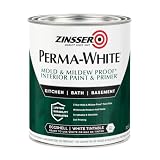
- Self-Priming formula - requires no sanding
- Mold & Mildew-Proof paint film - guaranteed for 5 years
- Resists dirt and moisture on film coating
- Finish is washable and scrubbable with soap and water
- Product contains a mildewcide to prevent the growth of mold and mildew on the paint film only
Common U.S. thresholds
| Label or framework | Typical limit | Important qualification |
|---|---|---|
| Zero VOC | Below 5 g/L | Common guidance from California and Green Seal; verify the product’s standard and whether tint is included. |
| Low VOC, flat finish | 50 g/L or less | Green Seal and California guidance use this range for flat architectural paint. |
| Low VOC, non-flat finish | Below 100 g/L under Green Seal; below 150 g/L in California guidance | Different jurisdictions and programs set different limits for eggshell, satin, semi-gloss and gloss products. |
South Coast Air Quality Management District distinguishes “regulatory VOC” (VOC after subtracting water and exempt compounds) from actual VOC. It also uses reactivity-based maximum incremental reactivity methods, which can change how ozone-forming potential is assessed. Consequently, two cans with similar g/L figures may not have identical indoor-emissions profiles.
Is low-VOC paint safer?
Low- and zero-VOC products can reduce regulated VOC exposure and often reduce paint odor, but neither label proves that every emitted chemical is benign. EPA school guidance warns that products marketed as low or zero VOC can still emit formaldehyde, pesticides or other undesirable compounds. The composition, emissions testing and application conditions matter as much as the headline number.
Do these 3 things before closing this tab:
1Repair Windows errors before they cause bigger problems2Fix the driver behind crashes, sound loss and screen glitches3Clear out junk files and repair common Windows errorsWater-based acrylic latex paints are generally lower in VOCs than solvent-based paints, according to EPA. That comparison is a broad tendency, not a guarantee for every formula. A water-based paint may still contain preservatives, coalescing agents, biocides or colorants that affect sensitive occupants. Conversely, a higher-VOC coating may be required for a demanding substrate or duty; poor adhesion and repeated repainting can create more disruption than selecting a suitable, durable product initially.
What “safer” should mean for your project
- Content: the final product’s regulated VOC concentration, in g/L.
- Emissions: chamber testing or certification that measures what enters room air after application.
- Ingredients: preservatives, antimicrobials and other chemicals relevant to an occupant’s sensitivity.
- Exposure control: ventilation, drying time and whether people remain in the room.
- Performance: hide, washability, durability and substrate compatibility, which determine whether the coating will last.
California Department of Public Health defines VOCs as carbon-containing chemicals that vaporize and can enter the body through breathing. It identifies activated carbon as likely the most reliable filter medium for removing VOCs from air, while warning that carbon becomes exhausted and must be replaced. Filtration is a supplement after painting, not a substitute for source control and ventilation.
What is the difference between low-VOC and zero-VOC paint?
Zero-VOC paint is a stricter content category, commonly below 5 g/L, while low-VOC paint allows a larger amount under the applicable finish and regulatory standard. Zero VOC therefore targets the regulated content number more aggressively; it does not mean zero emissions, zero odor or zero toxic ingredients.
Also popular on Amazon

- 【Paint and Brush in One】What is this product used for? This 180 ml white wood paint is designed for touching up, repainting, and refreshing small wooden surfaces. The paint container and brush are combined in one convenient applicator—gently squeeze the bottle to feed paint directly to the bristles, then start painting without a separate tray or brush.
- 【ldeal for Small Wood Projects】Who is this wood paint best for? It is a practical choice for homeowners, renters, DIY beginners, crafters, and anyone completing a small furniture repair. Use it on stools, chair legs, table legs, baseboards, door frames, shelves, wooden boxes, pallets, birdhouses, planters, picture frames, and other wood crafts.
- 【Controlled, Low-Mess Application】The integrated brush eliminates repeated dipping and helps control the amount of paint applied to the surface. Compared with traditional paint cans, it requires fewer tools and reduces drips, spills, paint waste, and cleanup. Its compact brush also makes it easier to reach corners, edges, grooves, and narrow areas.
- 【Fast-Drying, Low-Odor White Finish】Refresh faded, stained, scratched, or worn wood with a clean white finish. The fast-drying, low-odor formula is suitable for furniture touch-ups, household repairs, crafts, and DIY decorating. Apply thin, even coats and allow each coat to dry; dark, porous, or heavily worn wood may require additional coats.
- 【Indoor and Outdoor Wood Use】Suitable for properly prepared indoor and outdoor wooden surfaces. Once completely dry and fully cured, the coating provides water-resistant protection for everyday use. The 6.35oz size is convenient for small projects and occasional repairs without purchasing and storing a large can of paint.
| Decision factor | Low-VOC paint | Zero-VOC paint |
|---|---|---|
| Regulated VOC content | Often up to 50 g/L for flat finishes, with higher limits for non-flat finishes depending on the standard. | Commonly below 5 g/L. |
| Odor during application | Often lower than conventional solvent-based paint, but varies by formula, color and ventilation. | Often very low, but additives and colorants can still create odor. |
| Indoor-air evidence | Strongest when paired with an emissions certification. | Still benefits from independent emissions testing; content alone is incomplete. |
| Performance choices | Broad range of sheens, substrates and durability levels. | Many interior options exist, but a low number does not replace checking scrub resistance, hide and adhesion. |
| Best fit | Projects balancing air quality with washability, coverage, sheen and cost. | Bedrooms, nurseries or occupied spaces where minimizing regulated VOCs and odor is the leading objective. |
Does tinting add VOCs to paint?
It can. Colorants are added at the store or during manufacturing, and many tint systems contribute VOCs even when the untinted base is labeled zero VOC. Saturated colors may require more colorant and therefore show a larger increase. California guidance specifically warns that most tints add VOCs, while Green Seal evaluates how point-of-sale colorants affect the finished coating.
Ask for the VOC content of the exact tinted color and sheen, not just the base paint’s technical claim. If a retailer cannot provide a post-tint figure, treat the base number as incomplete evidence. For a sensitive room, also ask whether the colorant system is covered by the product’s emissions certification.
Is water-based paint better than oil-based paint indoors?
For most interior walls and ceilings, water-based acrylic or latex paint is the lower-VOC starting point. It typically dries faster, cleans up with water and produces less solvent odor than oil-based paint. Oil-based coatings can still be appropriate for specific trim, cabinetry, metal or stain-blocking jobs where hardness, flow or substrate requirements justify them.
Do not choose solely by “water-based” on the label. Compare adhesion to the existing surface, stain resistance, scrub rating, number of coats, recoat time and the sheen you need. A low-emission wall paint is not automatically suitable for a floor, a constantly wet bathroom surface or a glossy oil-painted trim without proper preparation and primer.
How do emissions certifications improve the decision?
Third-party emissions programs test more than the VOC content printed on a can. Depending on the program, a product may undergo chamber testing and limits on specific chemicals, giving you evidence about off-gassing after application. PNNL Building America lists GREENGUARD and GREENGUARD Gold, Indoor Advantage Gold, the CDPH Standard Method V1.2-2017, Green Seal GS-11, Green Wise and MPI Green Performance Standards as accepted certification routes.
Free tools Windows power users keep installed
One-click scans. No signup required.
Also popular on Amazon

- PAINT + PRIMER IN ONE: Evolve’s paint-and-primer formula helps you get great coverage from the start, sealing your surface and reducing the extra work of multiple coats.
- AVAILABLE IN MULTIPLE SHEENS, COLORS & SIZES: Choose from a curated palette of designer colors in Flat, Eggshell, Satin, and Semi-Gloss sheens to match any style, room, or project. Available in 1-Gallons & 5-Gallons.
- EGGSHELL SHEEN – Soft, Velvety Glow: Offers a gentle sheen that balances elegance with durability. Ideal for moderate-traffic areas like dining rooms, hallways, and family rooms. Easy to clean without compromising the finish.
- STAIN & SCRUB RESISTANT: Built to last in real spaces, Evolve helps resist marks, scuffs, and water spotting, so your home continues to look polished and well-maintained.
- DESIGNED FOR MOISTURE-PRONE AREAS: Formulated to perform well in bathrooms, kitchens, entryways, laundry rooms, and other high-humidity spaces.
Certifications to look for
- Green Seal GS-11: combines VOC limits with ingredient and performance requirements for architectural coatings.
- GREENGUARD Gold: uses stringent emissions limits intended for sensitive environments such as schools and healthcare settings.
- Indoor Advantage Gold: is an emissions certification used for building products and interior finishes.
- CDPH Standard Method V1.2-2017: a California chamber-testing method used to evaluate emissions.
- MPI Green Performance Standards and Green Wise: additional recognized routes identified by PNNL for low-emitting products.
Check the current certificate or listing for the exact product line, sheen and formulation. A brand-level sustainability statement is not enough if the can you are buying is a different variant.
Which low- or zero-VOC paint should you choose?
Start with the room and surface, then use air-quality criteria to narrow products that can actually perform there.
- Define the job. Record whether the project is interior or exterior, the substrate (drywall, plaster, wood, masonry or metal), the required sheen and the expected cleaning or moisture exposure.
- Set the air-quality priority. For a normally ventilated living room, a certified low-VOC water-based paint may balance performance and emissions. For a nursery, bedroom or chemically sensitive occupant, prioritize zero-VOC content plus an emissions certification.
- Read the technical data sheet. Find the VOC value in g/L, the measurement basis, permitted colorants, coverage, dry and recoat times, recommended primer and surface limitations.
- Verify the final color. Ask the seller or manufacturer for post-tint VOC information and confirm that the certification applies after tinting.
- Compare performance. Check hideability, number of coats, washability, scrub resistance, adhesion and expected service life. A paint needing three coats may use more material and keep the room occupied longer than a higher-performing two-coat product.
- Plan ventilation. Arrange open windows and fans where safe, isolate the work area and schedule drying when occupants can stay elsewhere.
- Review ingredients for sensitive occupants. Request the safety data sheet and look for preservatives, mildewcides, antimicrobials or other ingredients that a clinician has identified as problematic.
Examples of products with published claims
Benjamin Moore Eco Spec Interior Paint is described by its manufacturer as a waterborne acrylic/latex interior product with a zero-VOC range, a zero-emissions claim, low odor, coverage of about 400–450 square feet per gallon and Green Seal certification. Green Seal’s listing also identifies Eco Spec as zero VOC, zero emissions and GS-11 certified.
Sherwin-Williams Harmony Interior Acrylic Latex is described in an environmental product declaration as a zero-VOC formula with GREENGUARD and GREENGUARD Gold certification. These examples show how to read a specification; formulas, certifications, tint behavior and availability can change. The current technical data sheet and can label control for your purchase.
How should you ventilate and occupy a freshly painted room?
Ventilation is the most immediate way to lower airborne concentration while the coating dries. Open windows when outdoor conditions permit, use fans to exhaust air rather than simply blowing it around, and keep doors closed to prevent pollutants moving through the home. Follow the product’s recoat and cure instructions; “dry to touch” is not the same as fully cured.
Also popular on Amazon

- Use to repaint or refurbish interior appliances like refrigerators, laundry machines and more
- Epoxy formula dries to a smooth, hard enamel finish
- Dries enough to be handled in 5-9 hours and covers between 30-60 sq. ft. per can
- Durable epoxy withstands washing and everyday wear
- Creates the look and shine of a smooth epoxy finish
San Francisco Environment recommends water-based latex low- or no-VOC paint, avoiding oil-based paint where possible, and keeping pregnant people and young children away from freshly painted rooms for at least two to three days. Apply the same caution to anyone with asthma, chemical sensitivity or another condition affected by irritants. If outdoor air is polluted, very humid or unsafe for open windows, rely on mechanical exhaust and delay occupancy until the room is adequately dry and odor has cleared.
Using activated-carbon filtration
An activated-carbon filter can help manage residual VOCs after painting, especially when paired with ventilation. Carbon media eventually saturate; follow the filter maker’s replacement schedule and replace it sooner if odor returns or airflow falls. Particle-only filters do not remove gaseous VOCs effectively, so check that the unit actually contains a substantial activated-carbon stage.
What are the most common low-VOC paint mistakes?
- Trusting “zero” as “non-toxic.” Regulatory exemptions and non-VOC ingredients still matter.
- Checking only the untinted base. The finished color may contain more VOCs, particularly in deep or saturated shades.
- Ignoring sheen limits. A flat-paint threshold may not apply to satin, semi-gloss or gloss.
- Choosing air quality over substrate performance. Poor adhesion, mildew or rapid wear can force an early repaint.
- Assuming certification covers every variant. Confirm the exact line, sheen, colorant system and current certificate.
- Returning occupants too soon. Low odor does not prove that curing and emissions have ended.
- Using a purifier as the primary control. Source removal and outdoor-air ventilation come first; carbon filtration is a secondary measure.
What should you check before buying?
- Interior or exterior designation and substrate compatibility.
- Final tinted VOC content in g/L, with the applicable standard and finish category.
- Green Seal GS-11, GREENGUARD Gold, Indoor Advantage Gold, CDPH or MPI certification when emissions are important.
- Hide, coverage, number of coats, washability, durability and sheen.
- Primer requirements, dry/recoat time and cleanup method.
- Preservatives, antimicrobials and other ingredients relevant to occupant sensitivities.
- Local availability and the price of the exact color and sheen; these vary by retailer and region.
Frequently Asked Questions
How long should I wait before sleeping in a freshly painted bedroom?
Use the product’s cure guidance and keep the room ventilated; a low-odor label is not a substitute for drying time. For a conservative approach, arrange for sensitive occupants to stay out for two to three days, as San Francisco Environment advises for pregnant people and young children.
Can low-VOC paint still trigger asthma or chemical sensitivity?
Yes. Irritation can come from preservatives, biocides, colorants or exempt volatile chemicals rather than the regulated VOC total. Review the safety data sheet, choose an independently emissions-tested product and discuss known sensitivities with a qualified clinician.
Does a primer need to be low VOC too?
Yes, if indoor emissions are a central concern. A conventional primer can contribute much of the project’s emissions even when the topcoat is zero VOC, so compare the primer’s final VOC content and emissions certification separately.
Are exterior low-VOC paints appropriate for interior rooms?
Not automatically. Exterior formulas may contain mildewcides or additives intended for weather exposure and may not meet interior-emissions or occupant-use requirements. Use a product explicitly labeled for interior application unless the manufacturer documents another approved use.
Quick Recap

Product prices and availability are accurate as of the date/time indicated and are subject to change. Any price and availability information displayed on Amazon at the time of purchase will apply.

