ThatPainter is reader-supported. When you buy through links on our site, we may earn an affiliate commission. Learn More
Use matte or flat paint for the room’s broad field, then place gloss or high-gloss on one controlled element when you want a sharper, more uncomfortable visual experience. Matte suppresses reflected highlights and hides minor wall irregularities. Gloss concentrates light, produces glare and hard highlights, and makes every dent, patch and roller mark easier to see. The most controllable result usually comes from that contrast rather than from coating every surface in one extreme sheen.
As an Amazon Associate I earn from qualifying purchases.
This is an aesthetic strategy, not a clinically established way to cause psychological discomfort. The effect depends on sheen interacting with color, daylight, lamps, geometry and surface preparation. Sample the actual products in the room before committing, and let moisture, traffic and cleaning requirements override the look wherever a finish would be impractical.
Recommended Free Tools
What matte and gloss actually do to a room
Paint sheen is the amount of light a coating reflects. Sherwin-Williams describes gloss sheens as having the highest light-reflective characteristics. A flat or matte coating reflects little light, so large areas read as quiet, soft and slightly chalky. A gloss coating reflects much more light, creating visible highlights and a stronger sense that the painted surface is an object in the room.
Popular on Amazon
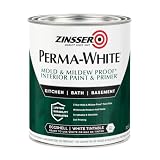
- Self-Priming formula - requires no sanding
- Mold & Mildew-Proof paint film - guaranteed for 5 years
- Resists dirt and moisture on film coating
- Finish is washable and scrubbable with soap and water
- Product contains a mildewcide to prevent the growth of mold and mildew on the paint film only
That optical difference changes how an intentionally harsh interior is perceived. A matte wall can make a saturated color feel dense because it does not bounce much light back into the space. A glossy stripe, door or ceiling band interrupts that calm field with a precise flash. The interruption attracts attention without requiring a second color.
Neither finish is inherently disturbing. A white high-gloss wall in bright daylight may feel crisp and energetic, while a black matte wall under low light may feel subdued. The “uncomfortable” quality comes from the relationship among reflectance, color, light direction, room proportions and the objects being reflected.
Matte or flat paint
Matte and flat labels generally indicate a low- or non-reflective surface. They are useful when you want broad planes to recede, absorb visual noise or conceal small flaws. Basic flat paint is typically harder to wipe than higher-sheen products and can burnish: rubbing may leave a shiny patch that catches light differently from the surrounding wall. Some newer matte products are formulated for better washability, so the product data sheet matters more than the label alone.
What’s actually slowing this PC down?
Pick the symptom - the matching free tool is one click away.
Gloss and high-gloss paint
Gloss and high-gloss finishes create the strongest highlights in the usual interior sheen range. They are generally easier to wipe and more resistant to staining than basic flat paint, which is why they are common on trim, doors and cabinets. The trade-off is visual honesty: reflections reveal dents, patched areas, raised texture, sanding scratches and uneven roller work.
Eggshell, satin and semi-gloss
Eggshell and satin sit between matte and gloss. They retain some softness while offering more practical cleanability and traffic tolerance. Semi-gloss moves closer to a crisp, reflective appearance and is often chosen for trim, wet-area walls and other surfaces that need regular wiping. These middle finishes are useful when a room needs tension without the glare or preparation risk of full gloss.
Matte versus gloss: the decision at a glance
| Decision axis | Matte or flat | Gloss or high-gloss |
|---|---|---|
| Light behavior | Low reflection; suppresses bright highlights and ambient bounce | High reflection; creates glare, specular highlights and visible reflected shapes |
| Surface reading | Hides minor wall irregularities and softens texture | Emphasizes dents, patches, texture, sanding marks and roller inconsistencies |
| Cleaning | Basic flat paint is harder to wipe and may burnish; modern washable matte products can perform better | Generally easiest to wipe and more stain resistant |
| Visual impact | Quiet, absorptive and chalky | Sharp, theatrical and attention-seeking |
| Good broad uses | Ceilings, uneven walls, bedrooms, formal rooms and low-traffic dramatic spaces | Trim, doors, cabinets and selected feature elements |
| Main risk | Scuffs, stains and shiny rub marks in busy areas | Glare and highly visible preparation defects |
Use five questions to choose: How much light should the surface return? How perfect is the substrate? How often will the surface be wiped? How much traffic or moisture will it see? How much visual tension should the room carry? A finish that wins on drama but fails those practical tests will not remain successful after the first stain or repair.
Also popular on Amazon

- PAINT + PRIMER IN ONE: Evolve’s paint-and-primer formula helps you get great coverage from the start, sealing your surface and reducing the extra work of multiple coats.
- AVAILABLE IN MULTIPLE SHEENS, COLORS & SIZES: Choose from a curated palette of designer colors in Flat, Eggshell, Satin, and Semi-Gloss sheens to match any style, room, or project. Available in 1-Gallons & 5-Gallons.
- EGGSHELL SHEEN – Soft, Velvety Glow: Offers a gentle sheen that balances elegance with durability. Ideal for moderate-traffic areas like dining rooms, hallways, and family rooms. Easy to clean without compromising the finish.
- STAIN & SCRUB RESISTANT: Built to last in real spaces, Evolve helps resist marks, scuffs, and water spotting, so your home continues to look polished and well-maintained.
- DESIGNED FOR MOISTURE-PRONE AREAS: Formulated to perform well in bathrooms, kitchens, entryways, laundry rooms, and other high-humidity spaces.
The most controllable uncomfortable scheme: an absorptive field with a reflective interruption
For a high-impact room, start with matte on most walls. This gives the eye a stable, low-reflection field. Add gloss to one plane or a sharply defined architectural detail: a single feature wall, a ceiling band, the inside face of a niche, a door, built-in cabinetry or a strip of trim. When the color is similar, the change in reflectance still makes the interruption legible.
Free tools Windows power users keep installed
One-click scans. No signup required.
One glossy plane
A gloss feature wall works best when its location has a clear reason: the wall behind a bed, the end wall of a narrow room, a fireplace surround or the plane visible from the entrance. Because gloss reflects windows and lamps, the wall’s position determines whether the effect is a controlled highlight or an unavoidable glare source. Avoid placing it directly opposite a large unshaded window unless that flash is intentional.
A hard architectural edge
Glossy trim against matte walls produces a thin, bright boundary. Use it on baseboards, door casings, picture rails or a ceiling cove when you want the room to feel drawn with a hard line. The matte ceiling can suppress ambient bounce while glossy trim supplies a precise edge, keeping the room controlled instead of uniformly shiny.
A glossy ceiling band or inset
A narrow band around the ceiling, a tray-ceiling inset or the underside of a beam can create a reflected interruption above eye level. Keep the band narrow enough that the ceiling does not become a continuous glare plane. Check it from seated and standing positions because a lamp reflected overhead can be more distracting than a wall highlight.
When to choose each finish by room and surface
Low-traffic dramatic rooms
Matte is the default for a living room, bedroom or formal room where the priority is a low-reflection field and wiping is occasional. If the walls will be touched frequently, eggshell or satin gives more tolerance while retaining a relatively soft appearance. Use gloss as a deliberate accent rather than a wall-wide default.
Hallways and family rooms
These areas collect fingerprints, scuffs and repeated contact. Eggshell or satin generally balances durability with moderate reflection. A gloss door, handrail surround or narrow trim detail can provide the theatrical note without turning every mark on the wall into a highlight.
Also popular on Amazon

- Use for a variety of indoor and outdoor project surfaces including wood, metal, plaster, masonry or unglazed ceramic
- Water-based acrylic formula is low odor, resist chips and provides long-lasting protection
- Covers up to 120 sq ft and dries to touch in 30 minutes for quick project completion
- Semi-gloss finish minimizes surface imperfections, goes on smoothly and provides excellent hide
- Prior to application sand surfaces with 180/200 grit sandpaper, then wash with a degreaser, allow the surface to dry and apply paint
Kitchens and bathrooms
Steam, splashes and frequent cleaning make basic flat paint a risky choice on most walls. Satin, semi-gloss or another moisture-tolerant formulation is more practical. Reserve high-gloss for a cabinet face, backsplash-adjacent detail or trim after confirming that the specific product is rated for the conditions. Ventilation and substrate preparation still matter; sheen does not make a damp wall sound.
Trim, doors and cabinets
Semi-gloss or gloss supplies a durable, wipeable surface and a deliberate highlight. High-gloss gives the strongest effect but also magnifies every preparation error. On old doors or cabinets with visible dents, a lower sheen may provide the desired contrast without making the defects the room’s main feature.
Ceilings and uneven walls
Flat or matte reduces reflected light and disguises irregularities, which is why it remains a common ceiling choice. If a ceiling is intentionally glossy, repair, prime and inspect it under the same lamps that will illuminate the finished room. A ceiling that looks smooth in diffuse daylight can show waves at night when a pendant casts a long reflection.
Using dark color without losing control of the glare
Dark paint absorbs more light than pale paint, but a glossy dark surface can still produce concentrated, high-contrast highlights. The result may feel theatrical, severe or visually abrasive. That reaction comes from the interaction of color, sheen and illumination, not from sheen alone.
Paint sample boards in the actual dark color and place them where the proposed feature will go. View them in daylight, with the room’s evening lamps on, and from the main entry and seating positions. A gloss that looks richly reflective on a workbench may create a bright rectangle at eye level once it reflects a window. Conversely, a dark matte wall may look nearly flat in daylight but become a deep, low-reflection field after sunset.
Do not assume that adding more gloss automatically increases impact. If every wall, ceiling and cabinet is reflective, the eye has no quiet area from which to read the highlights. Selective contrast usually tells a clearer visual story and is easier to live with.
Also popular on Amazon

- ALL-IN-1 PAINT & PRIMER: A hardy multi-purpose and multi-surface one-coat paint and primer in one for almost any indoor or outdoor surface. A wall, ceiling, floor, skirting board, cabinet, furniture and door paint for your bathroom, kitchen, home and garden.
- DURABLE & VERSATILE: A highly pigmented, thick formula available in 12 bold colors and a Matte, Satin or Gloss finish. Ideal for interior and exterior paint jobs on wood, laminate, plastic/UPVC, metal, concrete, brick, masonry, stone, glass and more.
- EFFECTIVE MONEY & TIME SAVER: A quick painting solution for DIY or professional builders and painters; our luxuriously opaque formula requires just 1 coat and is fast drying for a premium finish.
- ADVANCED ECO FORMULA: Our UK-made chalk paint is water-based, non-toxic, low odor, and has low VOCs for an environmentally friendly decorating choice.
- EASY APPLICATION: Remove dirt with a damp cloth, wipe the surface clean and dry, sand/score the surface (optional based upon the finish required), stir to mix the color and paint with a brush or roller.
Gloss demands better preparation
Gloss does not hide a poor substrate; it advertises it. Reflected light runs across a wall and turns shallow dents, joint ridges, sanding scratches and roller stipple into visible changes in brightness. Before using gloss on a large or prominent surface, plan for filling, sanding, dust removal and a compatible primer.
Recommended Free Tools
Preparation checklist
- Remove loose paint, grease, dust and chalking residue.
- Fill nail holes, dents and open joints with a suitable filler.
- Sand repairs until their edges disappear under raking light.
- Prime bare patches and any substrate that could produce uneven absorption.
- Scuff-sand an existing glossy coating when the product instructions require it.
- Use the recommended roller or brush for the product so the texture is consistent.
- Inspect the surface with the room’s actual lamps and daylight before the final coat.
Raking light is especially useful: place a lamp so light travels nearly parallel to the wall. This exaggerates waves and scratches before the gloss does. If the defects are part of the intended raw aesthetic, decide that deliberately and keep the rest of the finish consistent. Accidental defects read as incomplete preparation, not as controlled discomfort.
A step-by-step plan for designing the contrast
- Define the uncomfortable element. Decide whether the room should feel oppressive, clinical, theatrical, severe or simply high-contrast. This determines whether you need a small reflective interruption or a larger one.
- Map the light. Note windows, bare bulbs, pendants, sconces and strong daylight paths. Mark where those sources will reflect from the proposed glossy surface.
- Choose the broad field. Use matte or flat on most walls when low reflection and defect concealment are priorities. Choose washable matte, eggshell or satin instead if the wall must tolerate regular wiping.
- Choose one or two reflective targets. A door, trim run, cabinet bank, feature wall or ceiling band is easier to control than a room coated uniformly in high-gloss.
- Prepare sample boards. Paint the actual color and sheen on boards large enough to show a real highlight. Label each board so matte, satin, semi-gloss and gloss are not confused after drying.
- Evaluate at multiple times. Check daylight, evening lamps, seated eye level and the view from the doorway. Look for unwanted glare as well as the desired interruption.
- Sequence the work. Complete ceiling and broad wall repairs first. Paint the matte field, allow it to cure according to the product directions, then mask and apply the higher-sheen accents with clean edges.
- Reassess before expanding. If one glossy element supplies enough tension, stop there. Extending gloss to additional planes can erase the contrast that made the first element effective.
Cleaning, touch-ups and long-term maintenance
Basic flat paint is less forgiving of scrubbing. Repeated rubbing can create burnished spots that are shinier than the surrounding wall, and aggressive cleaning may remove pigment or leave a polished patch. For a matte wall in a busy area, select a product specifically described as washable and follow its care instructions.
Gloss and higher-sheen surfaces usually wipe more easily and resist staining better, but fingerprints and dust can be more visible because they interrupt the reflection. Clean with the least aggressive method that removes the mark, using the coating manufacturer’s guidance. A strong cleaner that dulls the film can permanently change the highlight pattern.
Keep the original product name, color, sheen and batch information. Touch-ups on matte walls often blend more readily than touch-ups on gloss, where a small difference in application thickness or sheen can outline the repair. If a glossy element is damaged, repainting the whole defined section from edge to edge may produce a more uniform reflection than feathering a small patch.
Common failure modes and how to correct them
The gloss looks cheap instead of intentional
Usually the surface preparation or edge work is inconsistent. Stop adding coats, allow the film to cure, then inspect under raking light. Correct ridges and scratches, prime repaired areas and repaint the complete architectural section rather than isolated spots.
Also popular on Amazon

- WHAT'S IN THIS 10 PIECE PAINT KIT FOR WALLS: includes one plastic paint tray; one 9 inch roller frame; one 4 inch mini roller frame; two 9 inch microfiber roller covers (1/2 inch nap); two 4 inch microfiber roller covers (1/2 inch nap); one 1 inch flat brush; one 1.5 inch angle sash brush; one 2 inch angle sash brush
- Versatile Application: Perfect for any project, this set includes paint rollers 9 inch for large surfaces and smaller brushes for detail work
- All-in-One Kit: This paint brush set and paint tray combo ensures you have all the paint supplies needed for any home improvement task
- Professional Grade: Get a smooth, even finish with our high-quality paint roller set; ideal for applying interior paint gallon or smaller quantities
- Cost-Effective: This paint brush and roller set provides unbeatable value; includes paint pan and paint trays for easy cleanup and reuse
The room feels shiny everywhere
Uniform gloss removes the quiet field that makes highlights meaningful. Keep the strongest sheen on one plane or detail and move surrounding surfaces toward matte, eggshell or satin. Recheck the lighting after the change.
The matte walls show every handprint
Basic flat paint may be the wrong maintenance choice for that location. Use a washable matte product if the appearance is essential, or move to eggshell or satin on contact-prone walls while preserving matte on the ceiling or a low-touch feature.
The dark glossy wall creates distracting glare
Change the reflected source before changing the color: adjust lamp position, add a shade, use a dimmer where appropriate or move the glossy element to a wall with a calmer view. If glare remains, reduce the sheen to satin or semi-gloss and keep the dark color.
Quick wins for a faster PC:
Repair Windows errors before they cause bigger problemsFix Now →Fix the driver behind crashes, sound loss and screen glitchesFind Drivers →Clear out junk files and repair common Windows errorsFree Scan →The contrast disappears
Two finishes can look similar under diffuse light. View them under directional light and verify that the products are genuinely different sheens. A small change in reflectance may be insufficient on a surface that receives little light; a broader edge or a more reflective accent may be needed.
Buying paint and samples
Choose by finish performance as well as color name. BEHR’s official comparison lists BEHR MARQUEE Interior Matte and BEHR DYNASTY Interior Matte as matte options. Those names can help you find the products, but current Amazon listings, stock, price and affiliate eligibility are not fixed; verify them before purchase. The same principle applies to any brand: confirm the sheen, washability claims, interior-use rating and recommended substrate.
Manufacturers and retailers commonly provide sheen cards, physical swatches or color visualizers. Use those tools to narrow the field, then rely on a real painted sample board for the final decision. A printed card cannot reproduce the way a glossy film reflects your window, lamp or furniture.
A practical decision framework
| If your priority is… | Start with… | Then consider… |
|---|---|---|
| A visually quiet, absorptive room | Matte or flat on broad walls | Gloss on one architectural detail for interruption |
| Maximum wipeability | Satin or semi-gloss on contact-prone surfaces | Gloss on trim or cabinetry where preparation is strong |
| Hiding uneven plaster or patching | Flat or matte | Repair and prime before introducing any reflective accent |
| A severe dark interior | Dark matte field | Dark gloss on a tested feature plane, with lighting checked at night |
| A crisp architectural outline | Matte walls and ceiling | Glossy trim, door or narrow ceiling band |
| A high-moisture room | Satin, semi-gloss or a moisture-tolerant formulation | Use high-gloss selectively only when the product and preparation suit the location |
The broad recommendation is simple: let matte control the room and let gloss create the event. Treat the uncomfortable quality as a composition of reflected light, dark or saturated color, geometry and viewing position—not as a guaranteed psychological response from a particular sheen. Sample first, prepare reflective surfaces meticulously and allow the room’s maintenance demands to set the limits.
The Tool Desk
Outbyte PC Repair FREERepair Windows errors before they cause bigger problemsFix Now →Outbyte Driver Updater FREEScan for outdated or missing drivers - takes under a minuteDriver Scan →Quick Recap


