Recommended Free Tools
Crashes, No Sound, or Screen Glitches?
Do these 3 things before closing this tab:
1Scan for outdated or missing drivers - takes under a minute2Repair Windows errors before they cause bigger problems3Fix the driver behind crashes, sound loss and screen glitchesFree scan · under a minute
PC Slower Than It Used to Be?
Free scan · Windows 10 & 11
Outdated Drivers Are Slowing You Down
Free scan · exact hardware match
ThatPainter is reader-supported. When you buy through links on our site, we may earn an affiliate commission. Learn More
Ocean Waves is a traditional quilt design built from repeated triangle units that create a moving, wave-like pattern. The name does not describe one universally standardized block: published versions differ in finished size, construction, color placement, and overall layout. This tutorial explains a practical 10-inch finished version made with half-square triangles (HSTs), while also showing how it differs from other Ocean Waves patterns.
As an Amazon Associate I earn from qualifying purchases.
The most important decision is to choose one specific pattern before cutting. A Fat Quarter Shop version produces a 10.5-inch unfinished block, while the AllPeopleQuilt version described here finishes at 10 inches. Their measurements and layouts are not interchangeable.
What an Ocean Waves quilt block looks like
Ocean Waves is usually recognized by rows of small triangular units arranged to suggest rising and falling waves. The visual movement comes from the direction of the light-and-dark triangle pairs, so an incorrectly rotated unit can change the character of the block even when every piece is technically the right size.
Popular on Amazon

- SEWING AND QUILTING RULER: Large acrylic ruler for precise measurement, with highlighted seam allowances, easy-to-read measurement lines, and broken grid lines for fabric edge visibility
- PRECISION ART SUPPLIES: Ideal for measuring and making precise cuts through fabric; Bold 3" x 18" measuring grid makes measurements easy to read with speed and accuracy; Non-slip vinyl feet can be removed or added for secure cuts
- LONG LASTING AND RELIABLE: Thick acrylic material for lasting durability after sustained use; Fiskars craft supplies and materials are built to last
- QUALITY TOOLS FOR ARTS AND CRAFTS: From scissors and cutting mats, rotary and paper cutters, to classroom essentials, scissors for kids, and quilting and scrapbooking supplies, Fiskars crafting tools are designed to help you express yourself
- INCLUDES: 1 Fiskars 3" x 18" Acrylic Sewing Ruler; Full lifetime warranty
In the 10-inch finished version covered here, the main components are:
- 13 half-square-triangle units made from light- and dark-blue fabric
- additional small triangles used around the pieced center
- two large red setting triangles added to the long edges
The block is assembled in five horizontal rows before the large setting triangles are attached. Use the published diagram for the exact orientation; the word “Ocean Waves” alone is not enough to determine every placement.
Quick wins for a faster PC:
Clear out junk files and repair common Windows errorsFree Scan →Scan for outdated or missing drivers - takes under a minuteDriver Scan →A brief history
Ocean Waves belongs to the group of traditional American pieced-quilt designs that became especially visible in nineteenth-century quiltmaking. The Smithsonian records Mary Ann Bishop’s Ocean Wave quilt as begun in 1875 and quilted in 1888. The Henry Ford also documents an Ocean Waves quilt made in Indiana around 1880 and describes the design as well known in the late nineteenth century.
Those museum records establish that the design was in use in the United States during the nineteenth century. They do not prove a single inventor, a precise first publication date, or one definitive original block geometry. Claims that the pattern began in a particular coastal region or at one exact date should therefore be treated as possible interpretations rather than settled history.
Historical examples also show that Ocean Waves is not limited to modern blue fabric. The Smithsonian quilt used roller-printed cottons, woven checks, plaids, a cream background, and a red sawtooth border. The Henry Ford example used roller-printed cotton calicoes and cotton muslin, with hand piecing, hand applique, and hand quilting. A scrappy, calico-inspired version is historically plausible, as is a strongly controlled blue-and-white design.
Materials for the 10-inch finished version
The following cutting list belongs to the specific AllPeopleQuilt version—not to every Ocean Waves pattern.
| Fabric | Cutting | Use |
|---|---|---|
| Light blue | Eight 27/8-inch squares, each cut diagonally | 16 small light triangles |
| Dark blue | Eight 27/8-inch squares, each cut diagonally | 16 small dark triangles |
| Red | One 67/8-inch square, cut diagonally | Two large setting triangles |
The small light and dark triangles are paired to make 13 triangle-squares. Each completed HST should measure 21/2 inches square, including seam allowances, according to this version’s instructions. The two large red triangles are added after the five-row center has been assembled.
Because cutting dimensions depend on the selected pattern, do not substitute these measurements into a 10.5-inch unfinished Fat Quarter Shop block or into a paper-pieced Ocean Waves variation.
Also popular on Amazon
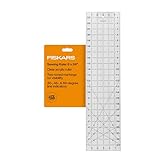
- ARTS AND CRAFTS STAPLE: Fiskars Sewing Ruler (6 in. x 24 in.) is an ideal size for cutting fabric from the bolt
- PRECISION ART SUPPLIES: Clear ruler has incremental grid lines and two-toned markings for visibility on light and dark material. 30-, 45- and 60-degree line indicators make it easy to cut at perfect angles.
- LONG LASTING AND RELIABLE: Fiskars craft supplies and materials are built to last
- QUALITY TOOLS FOR ARTS AND CRAFTS: From scissors and cutting mats, rotary and paper cutters, to classroom essentials, scissors for kids, and quilting and scrapbooking supplies; Essential for holiday gift wrapping supplies
- INCLUDES: Fiskars Sewing Ruler; Limited Warranty
Tools that make the construction easier
- Rotary cutter, cutting mat, and a quilting ruler
- Fabric scissors
- Patchwork pins or clips
- Thread suitable for piecing
- Iron and ironing surface
- A printed or digital pattern diagram
A ruler is particularly useful for checking the HSTs before assembly. The official Fat Quarter Shop Ocean Waves project supply list also identifies a Creative Grids ruler, Olfa rotary cutter, Clover patchwork pins, a self-healing rotating mat, Aurifil thread, scissors, and an iron. Those are examples of supplies used for that project, not mandatory brands for every version.
If you are making repeated HSTs, 2.5-inch half-square-triangle paper can be convenient. Fat Quarter Shop’s project video names Triangles on a Roll H250 among its supplies. Verify the required finished and unfinished sizes for your chosen pattern before buying paper: a paper size that matches one Ocean Waves project may not match another.
How to make the traditional HST units
1. Confirm the measurement system
Before sewing, write down three details at the top of your pattern: the finished block size, the HST size including seam allowances, and the required seam allowance. The measurements above are for a 10-inch finished block and 21/2-inch HSTs including seam allowances. Follow the cited pattern if its seam allowance or pressing instructions differ.
2. Cut the small triangles
Cut eight 27/8-inch light-blue squares and eight 27/8-inch dark-blue squares. Cut every square once on the diagonal to create 16 light triangles and 16 dark triangles.
Keep the cut triangles in separate groups. Diagonal cuts can produce pieces that look nearly identical but are oriented as mirror images, so avoid mixing them casually while you are laying out the block.
3. Pair the light and dark triangles
Pair the light and dark triangles according to the pattern diagram. Sew each pair along its diagonal seam using the seam allowance specified by the pattern. Press the seam consistently—either toward the darker fabric or open, as directed by your chosen instructions.
Make 13 triangle-squares. After pressing, trim each one to 21/2 inches square including the seam allowances. Trimming before assembly removes small differences that would otherwise accumulate across five rows.
4. Check the HST orientation
Lay all the HSTs on a flat surface before sewing the rows. Rotate each unit until the light and dark triangles match the published diagram. The same two fabrics can produce a different visual effect when an HST is turned 90 degrees or flipped.
Also popular on Amazon

- Premium Thick Acrylic Construction Made of high grade transparent acrylic material, this quilting ruler set features a sturdy, wear resistant build that resists cracking, warping and bending for long term daily use. The clear design offers full visibility of fabric underneath, while smooth polished edges protect hands and fabric from snags or damage, ideal for frequent sewing and quilting projects.
- Precise Clear and Crisp Green Markings Equipped with sharp, fade resistant green measurement markings and clear grid lines, including 1/8 inch incremental scales, 90 degree right angle and 45 degree diagonal guides for ultra precise cutting and measuring. The high contrast green scale stands out clearly on both light and dark fabrics, eliminating reading errors and ensuring flawless piecing, trimming and block squaring every time.
- Complete Multi Size Square Set Includes 4 essential square quilting rulers in 3.5", 5", 6.5" and 10.5" sizes, covering all daily quilting, sewing and fabric crafting needs. From small patchwork details and trimming tiny blocks to large fabric cutting and full quilt block finishing, this all in one set meets the demands of beginners, hobbyists and professional quilters alike.
- User Friendly and Stable Design Lightweight yet durable structure ensures easy handling and maneuverability during crafting. The flat balanced design stays securely in place when cutting with rotary cutters, no unwanted shifting or sliding. Each ruler is easy to use for all users, with easy to read numbering and clear measurement guides for hassle free operation.
- Multi Purpose Sewing and Craft Tool This versatile acrylic quilting ruler set is perfect for quilting, sewing, fabric cutting, patchwork, scrapbooking and other DIY craft projects. Compatible with all standard rotary cutters and cutting mats, it is a must have essential tool for sewing rooms, craft studios and classrooms. A practical and thoughtful gift for sewing enthusiasts, quilters and craft lovers.
Five horizontal rows:  arrange the HSTs and small triangles
according to the selected pattern diagram.

After the center is joined: attach one large setting triangle
to each long edge of the pieced unit.
This text diagram is only a construction reminder; it is not a substitute for the specific block diagram, because Ocean Waves layouts vary.
5. Assemble the five rows
Arrange the units in five horizontal rows. Sew each row separately, matching seam intersections carefully. Press the rows consistently, then join them in order. Check the direction of every wave after each row is attached rather than waiting until the entire center is sewn.
What’s actually slowing this PC down?
Pick the symptom - the matching free tool is one click away.
6. Add the large setting triangles
Cut the 67/8-inch red square diagonally to make two large triangles. Attach one to each long edge of the assembled center, following the pattern’s orientation. Press carefully and square the block only as much as the instructions permit.
Accuracy tips for cleaner waves
- Use a consistent seam allowance. Small HSTs magnify even slight variations when several are joined in rows.
- Trim before layout. The target size for this version is 21/2 inches square including seam allowances.
- Press consistently. A repeatable pressing direction makes seams nest more predictably and keeps the rows flatter.
- Photograph or label the layout. If you must clear the design wall, take a photo before stacking the pieces.
- Watch for mirror-image placement. A correctly sized triangle can still point the wrong way.
- Measure the assembled center before adding the setting triangles. If it is noticeably out of square, correct the row joins before proceeding.
These are general patchwork workflow recommendations, not claims of independent testing of the published pattern.
Fabric and color ideas
Blue and green water palette
Blue and green scraps can make the water reference immediately readable. Use a stable neutral—such as cream, white, or a low-contrast print—for the background or setting areas. A clear difference in value between the wave units and the background helps the triangular structure remain visible.
Two-color contrast
Ocean Waves can also be made from only two strongly contrasting fabrics. This gives the repeated geometry a crisp, graphic appearance and makes it easier to evaluate whether the wave direction is working before committing to a large quilt.
The Tool Desk
Outbyte Driver Updater FREEScan for outdated or missing drivers - takes under a minuteDriver Scan →Outbyte PC Repair FREEClear out junk files and repair common Windows errorsFree Scan →Scrappy and historical-looking fabrics
Small calicoes, checks, plaids, and reproduction-style prints are appropriate choices if you want a nineteenth-century appearance. Keep one element visually stable—often the background or the darker wave fabric—so the scrappiness does not erase the pattern.
A literal ocean palette is a modern design choice, not a historical requirement. The documented historical quilts demonstrate that Ocean Waves can accommodate a much broader range of fabrics.
Also popular on Amazon
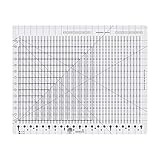
- Made in the USA with high quality acrylic and precision measurements ensuring accuracy for your quilting, sewing, patchwork, and crafting projects.
- Creative Grids exclusive non-slip grip allows you to easily slide the ruler over the fabric until positioned correctly. Then, when slight pressure is applied, the grip holds the ruler in place, eliminating slipping while you cut.
- Easy to read black and white markings, with cutting slots every 1/2in.
- Whole inch, half inch and quarter inch increments are marked. Additional markings for 1/4in and 3/4in cuts are also included.
- For quick reference, 1-1/2in cuts are highlighted with black stars and 2-1/2in cuts with black squares.
Layout options for a quilt
Once several blocks are complete, the directional geometry gives you more than one layout possibility:
- Straight set: Place blocks in regular rows and columns for a direct, orderly reading of the wave motif.
- Rotated blocks: Turn selected blocks to create changing directions or secondary movement.
- Monochromatic arrangement: Use one color family with a stable background for a controlled modern look.
- Controlled scrappy arrangement: Vary the wave fabrics while repeating one background fabric to unify the quilt.
Rotation and color placement can materially change the secondary pattern. Make a small paper or fabric mock-up before sewing a full quilt, especially if you plan to alternate block orientations.
Free tools Windows power users keep installed
One-click scans. No signup required.
Do not confuse these Ocean Waves patterns
Several published designs use the Ocean Waves name:
- 10-inch finished HST version: The practical version described in this tutorial uses 13 HSTs, additional small triangles, and two large red setting triangles.
- 10.5-inch unfinished Classic & Vintage version: Fat Quarter Shop publishes a different block size. Its associated project is designed as part of a larger quilt; the listed quilt top and binding dimensions are 65.5 by 85.5 inches for that particular project, not a universal Ocean Waves quilt size.
- Paper-pieced Ocean Waves/Storm at Sea interpretation: Victoriana Quilt Designs offers a six-part foundation-paper-pieced series. This is a distinct construction and should be identified as a paper-pieced or Storm-at-Sea-style variation.
- Other modern patterns: Riley Blake Designs and other designers have published their own Ocean Waves resources, with potentially different sizes, templates, and layouts.
When reproducing exact cutting diagrams or instructions, credit the specific designer or publisher. “Ocean Waves” is a family of related interpretations rather than a guarantee that two patterns will share measurements.
Independent reader supportYour contribution helps us test, update, and keep practical guides available for everyone.Troubleshooting
The block is smaller or larger than expected
First check whether you are comparing finished and unfinished measurements. A 10-inch finished block is not the same as a 10-inch unfinished block. Then measure the HSTs including seam allowances and confirm that your seam allowance matches the selected pattern.
The wave looks reversed
Inspect the block row by row against the pattern diagram. One or more HSTs may be rotated or mirrored. Unpick and turn only the affected unit if the rest of the row is correctly assembled.
Windows Errors? Fix Them Before They Spread
Repair common Windows errors and clear accumulated junk for a smoother, more stable PC - no reinstall needed.Free scan · no reinstallOutdated Drivers Are Slowing You Down
One free scan finds every outdated or missing driver and matches the right update for your exact hardware.Free scan · exact hardware matchThe rows do not line up
Check the HST dimensions before joining rows. Unequal units, inconsistent seam allowances, and pressing distortion can all shift the seam intersections. Trim the units before assembly and pin the row joins where the seams meet.
The pattern disappears into the background
Compare the fabrics in grayscale or take a quick phone photograph. If the values are too similar, replace some wave fabrics or the background with a clearer contrast. The design can remain scrappy while still using a controlled value range.
Also popular on Amazon

- All in one 4 piece quilting ruler kit for quilting sewing patchwork fabric cutting measuring and pattern making.
- COMPLETProfessional clear permanent scales deliver precise cutting accurate patchwork and high standard craft projects.E SET:Quilting rulers, perfect for various quilting projects
- Shatter resistant durable acrylic ensures stable rotary cutting repeated use and long lasting accuracy.
- Perfect for quilt block making patchwork assembly fabric trimming DIY sewing and home decoration projects.
- Necessary quilting tools sewing supplies fabric cutting tools and accessories for hobbyists and professionals.
Choosing the right method
| Method | Best suited to | Main consideration |
|---|---|---|
| Traditional HST piecing | A classic block, scrap projects, and flexible fabric choices | Accurate seams and trimming matter as units accumulate |
| Triangle paper | Many repeated HSTs with a consistent target size | Match the paper to the pattern’s required finished size |
| Foundation paper piecing | A more complex Ocean Waves/Storm at Sea interpretation | Use the designer’s templates and do not substitute the simple HST cutting list |
For a first attempt at the 10-inch block, traditional HST piecing is the most transferable approach. Triangle paper can streamline repetition, while foundation paper piecing is a separate design path rather than an upgrade to the basic block.
Frequently Asked Questions
Is Ocean Waves a traditional quilt block?
Yes. Museum records document Ocean Wave or Ocean Waves quilts made in the United States during the nineteenth century, including examples begun in 1875 and made around 1880. However, the name covers multiple layouts and does not identify one universally standardized block.
Recommended Free Tools
What size is an Ocean Waves quilt block?
It depends on the pattern. The AllPeopleQuilt version discussed here finishes at 10 inches. Fat Quarter Shop’s Classic & Vintage version lists a 10.5-inch unfinished block. Always confirm whether a measurement is finished or unfinished before cutting.
Can I make Ocean Waves with scraps?
Yes. Blue and green scraps can suggest water, and calicoes, checks, and plaids can create a historical-looking version. Keep enough value contrast between the wave units and background for the geometry to remain visible.
Are all Ocean Waves patterns made with half-square triangles?
No. Traditional versions commonly use HSTs, but some modern interpretations use different templates or foundation paper piecing. A six-part Ocean Waves/Storm at Sea paper-pieced series is a distinct variation.
How many half-square triangles does the 10-inch version use?
The published 10-inch version uses 13 triangle-squares in its central arrangement, made from paired light and dark triangles. The cutting list produces additional small triangles for the rest of the layout.
The Bottom Line
Ocean Waves is best approached as a family of related traditional designs, not as one fixed template. For the 10-inch finished HST version, cut the specified 27/8-inch squares, make and trim 13 HSTs to 21/2 inches including seam allowances, assemble the five rows from the diagram, and add the two large setting triangles last. Verify the pattern’s block size and layout before cutting, because other Ocean Waves versions use different dimensions and construction methods.
Quick Recap


