What’s actually slowing this PC down?
The Tool Desk
Outbyte PC Repair FREERepair Windows errors before they cause bigger problemsFix Now →Outbyte Driver Updater FREEScan for outdated or missing drivers - takes under a minuteDriver Scan →Pick the symptom - the matching free tool is one click away.
ThatPainter is reader-supported. When you buy through links on our site, we may earn an affiliate commission. Learn More
| # | Preview | Product | Price | |
|---|---|---|---|---|
| 1 |
|
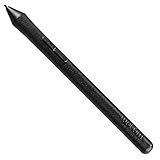
Wacom Intuos Pen LP190K | $34.95 | Buy on Amazon |
| 2 |

|
Wacom ACK22207 Ballpoint Refill | Buy on Amazon | |
| 3 |

|
Wacom ACK20001 Standard Nibs, Replacement Nibs | $4.95 | Buy on Amazon |
As an Amazon Associate I earn from qualifying purchases.
A Wacom pen problem can mean several different things: no cursor movement, no drawing, missing pressure, lag, hover strokes, an undetected tablet, or an offset pen display. Start with the least disruptive checks, then use Wacom Center diagnostics to decide whether the cause is the connection, driver, operating system, application, pen, or tablet.
Find the symptom that matches your problem
| Symptom | Most likely causes |
|---|---|
| No cursor movement | Tablet not connected, stopped driver, wrong cable or port, incompatible driver, or pen fault |
| Cursor moves but pen will not click | Pen switch or nib problem, driver issue, application conflict, or incorrect mapping |
| Pen clicks but does not draw | Application tool settings, Windows Ink/API mismatch, or disabled pressure/input support |
| No pressure sensitivity | Pressure disabled in the app, Windows Ink mismatch, driver settings, plugin conflict, or pen sensor fault |
| Lagging or jumping | Bluetooth interference, driver or USB problems, surface interference, or software conflict |
| Draws while hovering | Nib or pen sensor damage, electromagnetic interference, or driver failure |
| Works in Wacom Center but not Photoshop or Illustrator | Application settings, tablet API, Windows Ink, or an application plug-in |
| Tablet is not detected | Cable, port, power, Bluetooth pairing, driver, or tablet electronics |
| Pen display image works but input is offset | Wrong monitor mapping or calibration |
Wacom lists application pressure settings, driver settings, interference, software or plug-ins, and pen defects among the possible causes of pressure failure (Wacom pressure troubleshooting).
#1 Best Overall
- The Intuos Pen is compatible with Intuos Art, Comic, Draw and Photo tablets (CTH490AB, CTH490AK, CTH490CB, CTH490CK, CTH490PK, CTH690AB, CTH690AK, CTL490DB and CTL490DW)
- Cordless and battery free, programmable side switch
- 1024 levels of pressure sensitivity
- Not compatible with prior Intuos (CTL480, CTH480, CTH680), Intuos 3, 4, 5, Intuos Pro tablets or Cintiq products
1. Check the connection and hardware first
- Unplug and reconnect the tablet cable at both ends.
- Try another USB port. For the initial test, connect directly to the computer rather than through a hub, monitor, or docking station.
- Restart the computer with the tablet connected and check its status light, if the model has one.
- If the tablet uses Bluetooth, switch to USB temporarily. USB working while Bluetooth fails points to pairing, interference, or wireless configuration rather than a dead pen.
- Inspect the nib, pen body, connector, and tablet surface. Reseat or replace a loose or damaged nib if the model permits it.
- Test the original pen or another known-compatible pen. Do not assume that a similarly named Wacom pen will work; compatibility depends on the exact model and pen technology.
Many current Wacom EMR pens are battery-free, but power behavior differs by product. Do not charge a pen unless its model specifically requires it.
2. Check Wacom Center before reinstalling drivers
- Open Wacom Center and select the tablet.
- Open the Settings icon in the upper-right area.
- Scroll to Troubleshooting options and choose Driver check.
- Follow the prompt to restart the driver if an error is found. Even when no error is reported, a manual driver restart is a useful test.
- Test cursor movement, clicking, and pressure again.
Wacom Center also provides diagnostic information and reset functions (Wacom Center support and diagnostics). Wacom’s general sequence is to check the driver, restart it, perform a clean reinstall if necessary, then configure or calibrate the device (Wacom pen-input troubleshooting).
3. Install the driver for the exact model and operating system
- Find the exact model number on the tablet, packaging, Wacom Center, or your Wacom account.
- Open Wacom’s official driver page.
- Select the device and your current Windows or macOS version, then download the recommended driver.
- Install it, restart when prompted, reopen Wacom Center, and test the pen.
Do not choose a driver merely because its version number is newer. Older products may not be supported by the newest package, and Wacom says officially ended-support products may no longer receive compatibility updates (Wacom Driver Troubleshooting). The driver page displayed macOS version 6.4.13-4 when checked on August 18, 2026; that number is only a dated observation, not a permanent recommendation (driver page for CT products).
Do these 3 things before closing this tab:
1Clear out junk files and repair common Windows errors2Scan for outdated or missing drivers - takes under a minute3Repair Windows errors before they cause bigger problems4. Perform a clean driver reinstall
Windows
- Save work and close creative applications.
- Follow Wacom’s current Windows uninstall procedure.
- Restart Windows.
- Install the model-compatible driver from Wacom.
- Restart again if requested, reconnect the tablet directly, and test it in Wacom Center.
macOS
- Use Wacom’s official macOS uninstall and reinstall procedure.
- Restart the Mac.
- Install the driver for the exact model and macOS version.
- Approve requested Wacom permissions in System Settings > Privacy & Security, such as accessibility or input-monitoring access. Names and locations vary by macOS release, so follow the prompts shown on your Mac.
- Reopen Wacom Center and test before launching a creative application.
5. Fix missing pressure sensitivity
First determine whether pressure reaches the driver
Use Wacom Center’s diagnostic tools or Wacom’s pen diagnostic area and press the nib gradually. If pressure values change there but not in the art application, the pen and driver are communicating; investigate the application. If values remain at zero, investigate the driver, connection, pen, or hardware.
Match Windows Ink to the application
On Windows, applications can use Windows Ink or another tablet API. In Wacom Center, open the relevant pen or device settings and locate Windows Ink. Enable it when the application requires Windows Ink; if it creates press-and-hold circles or unwanted right-click behavior, test the application’s alternative API or the Wacom setting recommended for that application. Restart the application after changing the setting. Wacom’s explanation is documented in its pressure troubleshooting guide.
Rank #2
- Package Dimensions: 1.0 cms (L) x 5.6 cms (W) x 12.0 cms (H)
- Product Type: Input Pen
- Package Quantity: 1
- Country Of Origin: China
Check application settings
- Choose a brush that supports pressure.
- Enable pressure for size, opacity, or both, as appropriate.
- Confirm the application is using tablet input rather than mouse input.
- Check its tablet API preference.
- Restart the application after driver or Windows Ink changes.
- Temporarily disable plug-ins, input remappers, overlays, and remote-desktop tools that may intercept pressure.
6. Stop lagging, jumping, or hover drawing
- Test USB instead of Bluetooth and move other wireless equipment away from the tablet.
- Close the creative application and test in Wacom Center.
- Restart the Wacom driver; reinstall it if the symptom persists.
- Remove an unusually thick, bent, loose, or incorrectly fitted nib and test again.
- Try another compatible pen.
- Check whether the fault occurs across the whole surface or only one area.
- Disconnect other tablets and pen-input devices, and temporarily disable remote-desktop software, screen overlays, or input utilities.
If the pen draws while hovering everywhere, a damaged pen sensor or nib mechanism becomes more likely, but interference, driver failure, and tablet-sensor problems can produce similar behavior. See Wacom’s dedicated guidance for lagging, jumping, and hover drawing.
7. Troubleshoot Bluetooth separately
- Confirm Bluetooth is enabled on the computer.
- Remove the Wacom device from the operating system’s Bluetooth list if pairing is stuck, then restart the computer and tablet.
- Pair it using the setup method for that model.
- Keep the tablet charged when the model has internal power.
- Reduce nearby wireless interference.
- Use USB as a control test, then restart or reinstall the Wacom driver if USB works but applications still receive no input.
Bluetooth behavior differs by model: the tablet may use Bluetooth while the pen itself remains a battery-free EMR stylus. Wacom’s general troubleshooting page includes the model-specific Bluetooth path (Wacom pen-input troubleshooting).
Recommended Free Tools
8. Correct pen-display mapping and calibration
- Confirm the Cintiq or other pen display appears as an active monitor.
- In Wacom’s screen-mapping controls, assign the pen to the intended display.
- Temporarily disconnect extra monitors to expose a mapping conflict.
- On Windows, use Windows Settings > Hardware & Sound > Tablet PC Settings > Calibrate the screen for pen or touch input.
- If the calibration dialog opens on the wrong display, Wacom says pressing Enter advances to the next screen before you select the desired display.
A consistent offset is a calibration error; input appearing on another monitor is a mapping error; no input anywhere indicates a connection, driver, or pen problem. See Wacom’s documented procedure for calibration and mapping.
Independent reader supportYour contribution helps us test, update, and keep practical guides available for everyone.9. Reset Wacom settings
- Open Wacom Center and select the tablet.
- Open Settings and use the available reset option for the device or settings.
- Reconfigure screen mapping, buttons, pressure curves, and application profiles.
Resetting can erase customized shortcuts, mappings, pressure curves, and per-application profiles. Record or export them first if your Wacom software provides that option. Wacom documents reset and diagnostic functions in its Wacom Center support page.
10. Tell a bad pen from a bad tablet
A pen fault is more likely when
- The tablet is detected and Driver check passes.
- Another compatible pen works normally.
- Pressure or switch values do not respond with the suspect pen.
- The pen intermittently clicks, draws while hovering, or has visible damage.
- The problem follows that pen to another compatible Wacom tablet.
A tablet, cable, or port fault is more likely when
- Several known-compatible pens fail.
- Input fails only over one region of the surface.
- The tablet disconnects with different cables and computers.
- Wacom Center cannot detect it after a clean driver installation.
- There is liquid, impact, connector, or surface-sensor damage.
These are indicators, not proof. The most useful isolation test is a known-good compatible pen or a second compatible tablet.
Rank #3
- Compatible with Intuos4 pen, Intuos5 pen and Intuits Pro pen, grip pen, airbrush pen and classy pen
- Package Dimensions: 8.89 H x 0.254 L x 6.35 W (centimetres)
- Package Weight: 0.005 kilograms
- Country of Origin : China
11. Replace only the part the tests identify
Check Wacom’s accessory compatibility matrix before buying a pen. Product names such as “Wacom One” do not guarantee interchangeability, and a Pro Pen 3 is not suitable for every older tablet. Wacom’s official accessory listings are at pens and replacement nibs.
Free tools Windows power users keep installed
One-click scans. No signup required.
A nib is a sensible purchase when it is visibly worn, bent, loose, or causing unreliable contact. It will not repair a failed driver, Bluetooth connection, or pen sensor. A replacement pen makes sense after the tablet passes diagnostics and another compatible pen confirms that the original is at fault. A new tablet should be the last resort, after testing multiple compatible pens, reinstalling the driver, and checking support status. If you contact Wacom, record the model number, operating system, driver version, symptoms, tests performed, and diagnostic results; Wacom may also request driver logs.
When the normal fixes fail
- Test the tablet on another computer.
- Test the pen on another compatible Wacom device.
- Use the original cable.
- Temporarily remove other tablet drivers, including Huion or XP-Pen software.
- Restore Wacom settings to defaults.
- For a legacy model, install an older driver only when Wacom supplies it for that exact device and operating system.
Frequently Asked Questions
Does a Wacom pen need charging?
Many Wacom EMR pens are battery-free, but power requirements vary by model. Check the exact product documentation rather than assuming the pen needs charging.
Can I use any Wacom pen with my tablet?
No. Match the exact tablet model and pen technology using Wacom’s compatibility matrix.
Is my Wacom tablet too old for the latest driver?
Possibly. Wacom states that officially ended-support products may not appear in the newest driver or receive newer compatibility updates; use the model selector on Wacom’s driver page.
The Bottom Line
Start with a direct connection and Wacom Center’s Driver check. Then match the driver and application settings to the exact model and operating system, isolate Bluetooth and pressure issues, and use a known-compatible pen before buying replacements or declaring the tablet faulty.
Quick Recap





