Windows Errors? Fix Them Before They Spread
Outdated Drivers Are Slowing You Down
One free scan finds every outdated or missing driver and matches the right update for your exact hardware.Free scan · exact hardware matchWindows Errors? Fix Them Before They Spread
Repair common Windows errors and clear accumulated junk for a smoother, more stable PC - no reinstall needed.Free scan · no reinstallRepair common Windows errors and clear accumulated junk for a smoother, more stable PC - no reinstall needed.
Fix My PC Now →Free scan · no reinstall
ThatPainter is reader-supported. When you buy through links on our site, we may earn an affiliate commission. Learn More
As an Amazon Associate I earn from qualifying purchases.
A fat quarter is a wide, short rectangle containing approximately one-quarter yard of fabric, most commonly about 18 × 21 or 18 × 22 inches. A fat eighth is approximately one-eighth yard, commonly 9 × 21 or 9 × 22 inches, although some shops and patterns use 11 × 18 inches.
The word fat describes the shape, not the fabric’s thickness, weight, or quality. Compared with a regular quarter-yard strip, a fat quarter is wider and therefore often more useful for quilt blocks, appliqué, bags, pouches, accessories, and other small sewing projects.
#1 Best Overall
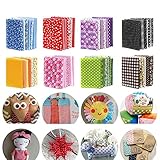
- Size:4 inch x 4 inch(10cm x 10cm) pre-cut squares.
- Material:100% cotton fabric,soft,comfortable and breathable.
- Style:150 pieces totally,more than 50 different random patterns printed in various colors and designs.
- Easy to tinker,ideal for many crafts and sewing DIY crafts,dresses of the dolls.
- Cotton fabric:Perfect for forms,costumes,decorating and school projects,suitable for quilts,pillow cases,small bags,toys,coin bags,tablecloths,really an endless list of possibilities.
Fat quarter versus regular quarter yard
A regular quarter yard is cut 9 inches along the length of the fabric bolt, leaving the full usable width of the fabric. If the fabric is 42 to 44 inches wide, the result is approximately 9 × 42–44 inches: a long, narrow strip.
A fat quarter is made differently. The cutter takes an approximately half-yard piece, usually 18 inches long by the full fabric width, and divides it across the width. From fabric about 44 inches wide, that produces two pieces approximately 18 × 22 inches.
Regular quarter yard:  9 inches × 42–44 inches
Fat quarter:          18 inches × 21–22 inches
Both cuts contain approximately the same nominal amount of fabric. Their shapes are different, however, and that difference matters more than the area when you are following a pattern. A fat quarter can accommodate wider squares, rectangles, triangles, and large motifs that may not fit across a 9-inch-wide regular quarter-yard strip. A regular quarter yard may be preferable when the pattern needs long, narrow strips.
What’s actually slowing this PC down?
Pick the symptom - the matching free tool is one click away.
AllPeopleQuilt’s precut guide compares the two shapes, while Missouri Star’s precut reference lists the common 18 × 22-inch fat-quarter format.
Area comparison
Using the common 44-inch fabric width:
- A regular quarter yard is approximately 9 × 44 = 396 square inches.
- An 18 × 22-inch fat quarter is 396 square inches.
- A regular eighth yard is approximately 4.5 × 44 = 198 square inches.
- A 9 × 22-inch or 11 × 18-inch fat eighth is 198 square inches.
These are nominal area comparisons before removing selvages, trimming crooked edges, allowing for shrinkage, or accounting for cutting waste. Equal area does not guarantee that two cuts can be used interchangeably.
What is a fat eighth?
A fat eighth is approximately half the area of a fat quarter. The name is less dimensionally consistent than fat quarter because two different cutting orientations are widely used.
The common 9 × 21 or 9 × 22-inch fat eighth
Many modern quilt patterns and quilting retailers define a fat quarter as approximately 18 × 21 or 18 × 22 inches, then cut it in half through the 18-inch dimension. Each half is approximately 9 × 21 or 9 × 22 inches.
Recommended Free Tools
Fat quarter:       18 inches × 21–22 inches
Cut in half:        9 inches × 21–22 inches
Result:             2 fat eighths
This is the format shown in guides from Fat Quarter Shop and used in Elizabeth Hartman’s Bunny pattern. In that pattern, one 9 × 21-inch fat eighth makes one block and one 18 × 21-inch fat quarter makes two blocks. That is a useful illustration of the relationship, not a yield that applies to every pattern.
The 11 × 18-inch fat eighth
Other references and patterns use an 11 × 18-inch fat eighth. In this method, an 18 × 44-inch half-yard piece is divided into four sections approximately 11 inches wide. Each section is 11 × 18 inches when written with the shorter dimension second.
Half yard:          18 inches × 44 inches
Divide width into:  4 sections of approximately 11 inches
Result:             4 fat eighths, each about 11 × 18 inches
Sewing.org’s precut guide includes the 11 × 18-inch convention, and a Janome eye-mask project specifies an 11 × 18-inch fat eighth.
A 9 × 22-inch fat eighth and an 11 × 18-inch fat eighth have approximately the same area, but not the same proportions. That difference can determine whether a pattern piece fits. Never buy a fat eighth based on the name alone when the cutting layout is tight; check the dimensions listed by the shop or pattern designer.
Free tools Windows power users keep installed
One-click scans. No signup required.
Rank #2

- Features: Unique designs pre-cut quilting fabric
- Package: 50 pcs fabric squares
- Material: Our high quality, 100% cotton fabric is soft and breathable
- Size:10" x 10". All fabrics are trimmed by hand, which result in some raw edge and may have 0.5-1cm deviation exist.
- Easy to work with: These quilting squares are ideal for many sewing projects including quilts, cushion covers, costumes, wallets, purses, baby clothes, kids’ bedding, hand puppets, tablecloths and more.
How fat quarters and fat eighths are cut from yardage
Cutting fat quarters from one yard
This example assumes quilting cotton approximately 44 inches wide:
- Cut 18 inches along the length of the one-yard piece. You now have a half-yard section approximately 18 × 44 inches.
- Divide that section across its 44-inch width, usually at approximately 22 inches.
- You have two fat quarters, each approximately 18 × 22 inches.
- A full yard can therefore produce four nominal fat quarters.
The geometry is:
One yard:             36 inches × 44 inches
Cut into two halves:  2 pieces, each 18 inches × 44 inches
Divide each half:     4 pieces, each about 18 inches × 22 inches
Fabric width, selvages, the accuracy of the cut, and the seller’s trimming practice affect the final measurements. Moda’s precut reference, Missouri Star’s guide, and AllPeopleQuilt’s explanation all describe this general process while using slightly different listed dimensions.
Cutting 9 × 21 or 9 × 22-inch fat eighths
- Cut one yard into four fat quarters.
- Cut each approximately 18 × 21 or 18 × 22-inch fat quarter in half through its 18-inch dimension.
- Each fat quarter produces two fat eighths approximately 9 × 21 or 9 × 22 inches.
- One yard produces eight such fat eighths.
Cutting 11 × 18-inch fat eighths
- Cut an approximately 18 × 44-inch half-yard piece.
- Divide the 44-inch width into four sections of approximately 11 inches.
- Each section is approximately 11 × 18 inches.
- One yard produces eight such fat eighths.
The two fat-eighth formats represent roughly the same quantity of fabric, but the orientation changes. If grain direction, print direction, or a fussy-cut motif matters, follow the pattern’s specified format.
Fat-quarter and fat-eighth size chart
| Cut | Common dimensions | Nominal amount | Typical shape or use |
|---|---|---|---|
| Regular quarter yard | About 9 × 42–44 inches | 1/4 yard | Long, narrow strip |
| Fat quarter | About 18 × 21 or 18 × 22 inches | 1/4 yard | Wide rectangle for blocks and small projects |
| Regular eighth yard | About 4.5 × 42–44 inches | 1/8 yard | Very long, narrow strip |
| Fat eighth | About 9 × 21 or 9 × 22 inches | 1/8 yard | Common modern quilting format |
| Alternative fat eighth | About 11 × 18 inches | 1/8 yard | Another established pattern and retail format |
| Half yard | About 18 × 42–44 inches | 1/2 yard | More length for strips and larger pieces |
In metric-based markets, a fat quarter is often around 50 × 55 centimeters. The exact measurement depends on the fabric width and the seller’s cutting convention. A metric fat quarter should not be assumed to have exactly the same proportions as an 18 × 22-inch imperial fat quarter. Examples of metric-market sizing appear at Cotton Patch and The Patchwork Shop.
Quick wins for a faster PC:
Fix the driver behind crashes, sound loss and screen glitchesFind Drivers →Repair Windows errors before they cause bigger problemsFix Now →Why is a fat quarter sometimes 18 × 21 instead of 18 × 22 inches?
There is no single universally enforced retail measurement for a fat quarter. The shorter dimension comes from half the fabric’s usable width:
- Fabric about 42 inches wide commonly produces a fat quarter around 18 × 21 inches after accounting for selvages.
- Fabric about 44 inches wide commonly produces a fat quarter around 18 × 22 inches.
- Trimming, crooked cuts, manufacturer tolerances, and whether the seller gives a raw or usable measurement can reduce the final size.
Reputable sources use both formats. AllPeopleQuilt commonly gives 18 × 21 inches, while Moda and Missouri Star commonly list 18 × 22 inches. The practical conclusion is to treat the term as a quilting convention and use the pattern’s assumed dimensions rather than relying on an abstract standard.
For a close cutting plan, measure the actual fabric. Do not assume that the last half-inch is available simply because a listing uses a larger nominal size.
What is a fat-quarter bundle?
A fat-quarter bundle is a group of fat quarters sold together, usually from one fabric collection or a coordinated assortment. It may contain one piece of each print, repeated prints, or a shop-selected combination.
Some manufacturer bundles are designed to include one of each print in a collection. Moda describes that format but also notes that collection runs vary. Missouri Star likewise explains that bundle sizes vary. Before ordering, check:
- The number of fat quarters in the bundle.
- Whether the cuts are approximately 18 × 21 or 18 × 22 inches.
- Whether each print appears once or some prints are duplicated.
- Whether the bundle is factory-produced or curated by the shop.
- Whether the pattern requires a particular number of unique fabrics.
A fat-quarter bundle is convenient for a scrappy quilt or sampler because the fabrics coordinate without requiring you to select every print individually. It is not automatically the exact fabric list a pattern expects.
What is a fat-eighth bundle?
A fat-eighth bundle contains multiple fat eighths, often from one collection or a coordinated selection. It is useful when a project needs many colors or prints but only small quantities of each.
Rank #3

- Pre-Cut Consistency:Each piece is a 10×10-inch precut fabric square (with a tolerance of 0.2 inches). These blue fabric squares serve as quilt squares, charm pack fabric, and layer cake fabric all at once; they’re ideal for quilt kits with fabric and pattern, and their uniform size supports seamless assembly whether you're using them as blue fabric scraps, quilting fabric, or authentic cotton fabric — including gingham fabric prints and other vintage fabric–inspired motifs.
- Cohesive Blue Palette:The full set features 25 distinct patterns — all rooted in a harmonious blue color family. This makes the blue fabric scraps exceptionally versatile: perfect as quilting fabric for modern projects or nostalgic pieces, as blue fabric squares for scrappy quilts, or as curated elements within precut quilt kits — with gingham fabric variations and tonal textures reinforcing both contemporary and vintage fabric aesthetics — all on premium cotton fabric.
- Quilting & Craft:Designed for real-world use, these quilt squares simplify every stage — from piecing to binding. As quilting fabric, they offer the trusted hand-feel and stability of natural cotton fabric; as precut fabric squares, they eliminate measuring and cutting; and as blue fabric scraps, they lend themselves beautifully to patchwork, doll clothes, pillows, and holiday decor — whether used alone or combined in quilt kits with fabric and pattern.
- Authentic Cotton Fabric Performance:Made from cotton fabric, This makes them suitable as layer cake fabric units, charm pack fabric selections, or blue fabric squares for intricate applique, gingham fabric–based designs, or vintage fabric–themed accessories — all while maintaining true cotton fabric integrity.
- Endless Creative Applications:In addition to traditional quilting, these blue fabric squares open doors to bags, home decor, toys, and more. Their blue fabric scraps nature invites mixing and matching; their precut quilt kits compatibility supports structured learning or group projects; and the inclusion of gingham fabric patterns, tonal prints, and vintage fabric–style motifs ensures relevance across skill levels — all built on the trusted foundation of cotton fabric.
Fat-eighth bundles work especially well for small quilt blocks, appliqué, mini quilts, samplers, accent pieces, pouches, and other projects where a full fat quarter would leave a large amount unused. As with fat-quarter bundles, verify the number of pieces, whether prints repeat, and whether the fat eighths are 9 × 21–22 or 11 × 18 inches. Fat Quarter Shop’s precut guide and Moda’s bundle example provide useful context.
The Tool Desk
Outbyte Driver Updater FREEFix the driver behind crashes, sound loss and screen glitchesFind Drivers →Outbyte PC Repair FREEClear out junk files and repair common Windows errorsFree Scan →What can you make with a fat quarter?
The wider shape makes a fat quarter practical for many pieces that are awkward or impossible to cut from a regular quarter-yard strip. Common uses include:
- Quilt blocks and larger patchwork pieces.
- Half-square triangles and other pieced units.
- Appliqué shapes.
- Small bags, totes, pouches, and cases.
- Napkins and other small home projects.
- Scrappy quilts using one fat quarter per color, block, or group of blocks.
- Bias binding.
For example, Missouri Star uses two or three fat quarters in a small tote project. Moda demonstrates a continuous-bias method that can produce up to approximately five yards of bias binding from one 18 × 22-inch fat quarter, depending on the strip width and cutting efficiency. That is a project-specific yield, not a guaranteed amount for every binding method.
Fat quarters can also be useful outside quilting. They are commonly used for small accessories and craft projects, including projects such as an eye mask, although the required dimensions and fabric type always come from the individual pattern.
What can you make with a fat eighth?
A fat eighth is best suited to projects with smaller pattern pieces or projects that intentionally use many different fabrics:
- Small quilt blocks and sampler quilts.
- Mini quilts.
- Appliqué.
- Small accessories and accent pieces.
- Doll or toy projects.
- Colorful patchwork where each fabric is used sparingly.
The 9 × 21–22-inch version is especially useful for long narrow pieces within a small block, while the 11 × 18-inch version may provide more width. Which one is better depends on the cutting diagram.
How many pieces can one fat quarter make?
The following are theoretical grid yields from an exact 18 × 22-inch rectangle, before allowing for selvages, squaring, seam allowances, directional layouts, fussy cutting, cutting errors, or waste:
| Piece size | Maximum grid yield |
|---|---|
| 2-inch squares | 99 |
| 2.5-inch squares | 56 |
| 3-inch squares | 42 |
| 3.5-inch squares | 30 |
| 4-inch squares | 20 |
| 4.5-inch squares | 16 |
| 5-inch squares | 12 |
| 5.5-inch squares | 12 |
| 6-inch squares | 9 |
| 6.5-inch squares | 6 |
These figures come from Sewing.org’s precut quilting guide. They are maximum geometric yields, not promises that a particular pattern will produce that many finished units. A pattern may require extra fabric for seam allowances, diagonal cuts, directional prints, matching motifs, or waste between cutting sections.
Which should you buy: fat quarters, fat eighths, or yardage?
| If you need… | Usually choose… | Reason |
|---|---|---|
| Larger squares, rectangles, or triangles | Fat quarters | The shortest dimension is usually about 18 inches. |
| Many different prints in small quantities | Fat eighths | You get more fabric variety with less of each print. |
| One fabric per block or color | Fat quarters | They offer more room for block layouts and cutting mistakes. |
| Long borders, sashing, binding, or backing | Yardage | Precuts are not long enough for many continuous strips. |
| Multiple identical pieces from one fabric | Yardage or a half yard | A larger continuous piece can be more efficient. |
| A tight or highly directional cutting plan | The exact cut specified by the pattern | Shape and grain direction may matter more than area. |
Fat quarters are often the more flexible choice for quilt blocks because they provide width. Fat eighths are economical in material terms when you need a range of fabrics for small units, but their smaller size leaves less room for inaccurate cutting or large pattern pieces. Yardage is usually the safer option for long strips, large motifs, repeated pieces, or projects that must be prewashed before cutting.
Quick wins for a faster PC:
Repair Windows errors before they cause bigger problemsFix Now →Fix the driver behind crashes, sound loss and screen glitchesFind Drivers →Clear out junk files and repair common Windows errorsFree Scan →Can you substitute one precut for another?
Sometimes. The safe substitution depends on the dimensions, grain direction, print orientation, and whether the pattern needs separate fabrics rather than simply a certain area.
| Pattern calls for | Potential substitute | Important limitation |
|---|---|---|
| 1 fat quarter | 1/2 yard of the same fabric | Usually provides extra fabric, but the cutting layout changes. |
| 1 fat quarter | 1 regular quarter yard | Same nominal area, but the 9-inch width may be too narrow. |
| 1 fat eighth | 1 fat quarter | Usually works if extra fabric is acceptable. |
| 1 fat eighth | 1/2 fat quarter | Works only if the required dimensions and orientation fit. |
| 1 fat eighth | 1 regular eighth yard | Usually does not work because a regular eighth is only about 4.5 inches wide. |
| 2 fat eighths of the same fabric | 1 fat quarter | Area is approximately equivalent, provided the pattern does not require separate prints or a particular orientation. |
| 1 fat quarter | 1 fat eighth | Not enough fabric; a fat eighth is approximately half the area. |
For example, a pattern piece measuring 8.5 × 20 inches may fit a 9 × 22-inch fat eighth but not an 11 × 18-inch fat eighth. A piece measuring 10 × 17 inches may fit the 11 × 18-inch format but not the 9-inch-wide format. Grain direction or a directional print may make one of those apparent fits unusable.
Rank #4

- Multi-pattern cotton fabric bundles - 42 pieces nice fine cotton fabric squares in 6 color series and each color has 7 piecs in different designs
- Size: approx. 10" x 10" ( 25 cm x 25 cm );
- Soft Material: 100% cotton Textile, soft, comfortable and breathable.
- Cotton fabric Squares have natural and fresh colors in 6 Color series: red green pink blue purple yellow
- Creative DIY Fabric - Suitable for home decorations, making doll’s clothes, costumes, pillows, wallet, purse, quilting patchwork, sewing and many other artcrafts.
What to check before buying a precut
- Read the dimensions. Look for the actual measurements, not only the words fat quarter or fat eighth.
- Check the pattern’s assumed size. A pattern designed around 18 × 21 inches may have a different cutting plan from one designed around 18 × 22 inches.
- Check the number of pieces. Bundle sizes vary.
- Check for duplicates. A bundle may contain one of each print, repeated prints, or a shop-curated assortment.
- Check the edge style. Factory precuts may have straight or pinked edges.
- Consider the usable area. Selvages, trimming, shrinkage, fraying, and crooked cuts reduce what can actually be cut.
- Inspect directional or large-scale prints. The design repeat may require a larger rectangle or a particular cutting orientation.
Preparing a fat quarter or fat eighth before cutting
- Unfold the fabric fully. Check for flaws, skewed edges, and the actual dimensions.
- Press it gently. Use a pressing motion rather than aggressively moving the iron back and forth, which can stretch the fabric.
- Decide whether to remove the selvages. Remove them when the pattern or cutting plan requires it, but do not discard usable width prematurely.
- Square the piece if necessary. A slightly skewed precut may need careful trimming before rotary cutting.
- Measure the usable area. Confirm that the critical pattern pieces fit before making the first cut.
- Plan directional and fussy cuts first. Position motifs and check grain direction before dividing the fabric into smaller pieces.
A Quilting Life recommends measuring precuts before sewing because an occasional piece may need minor trimming to reach the expected starting size. This is particularly important when a pattern uses nearly every inch of the advertised rectangle.
Independent reader supportYour contribution helps us test, update, and keep practical guides available for everyone.Should you prewash fat quarters and fat eighths?
There is no universal rule. Prewashing and not prewashing each have reasonable uses.
Reasons to prewash
- It can remove excess dye and reduce the risk of later color bleeding.
- It reduces some of the shrinkage that would otherwise occur after the project is made.
- It can remove dust or finishing substances.
- It may make shrinkage more predictable when combining fabrics or substrates with different treatments.
Reasons not to prewash a precut
- Raw edges may fray and reduce the available dimensions.
- The fabric may shrink below the size required by a precut pattern.
- Washing can distort the rectangle.
- The finish that helps stabilize fabric during cutting may be reduced.
Several quilting educators specifically caution against washing fat quarters and other small precuts because even a small amount of shrinkage or fraying can make a cutting plan fail. Other quilters prewash when color bleeding, mixed substrates, or a particular finished texture is a concern. See the balanced discussions from Missouri Star, Lo & Behold Stitchery, and A Quilting Life.
For a beginner using a pattern designed for precuts, a practical default is to leave the precut unwashed, press it carefully, and measure it before cutting. If you decide that washing is necessary, secure the raw edges, use a gentle process, and expect some loss of size. If the project is already close to the minimum dimensions, buy yardage or extra fabric rather than relying on a barely adequate precut.
What do pinked edges mean?
A pinked edge is a zigzag edge cut with pinking shears or a pinking blade. Some manufacturers use it to reduce fraying; other precuts have straight edges and may ravel more readily.
Pinking can make measurement confusing because the points extend farther than the valleys. Follow the pattern’s instructions and use one consistent measuring convention. A Quilting Life discusses measuring from the outer edge of pinking on certain smaller precuts, but that is not a universal rule for every brand. When in doubt, measure the actual usable fabric and prioritize the pattern’s instructions.
What’s actually slowing this PC down?
Pick the symptom - the matching free tool is one click away.
Directional and large-scale prints
A fat quarter gives you more width than a regular quarter-yard strip, but it does not remove print-direction limitations. With a directional fabric, the motif may need to run parallel or perpendicular to the selvage. A cutting diagram may also require a particular orientation.
Large-scale prints can benefit from the broader rectangle because it may provide room to preserve a motif or fussy-cut a design. That is a practical advantage, not a guarantee: the print repeat and the finished piece size determine whether the motif actually fits. Review the pattern’s fabric-direction instructions before cutting. Robert Kaufman’s Tangled pattern materials illustrate why directional fabric can require special cutting consideration.
Common mistakes to avoid
- Buying by name alone: A fat eighth may be 9 × 21, 9 × 22, or 11 × 18 inches.
- Assuming every fat quarter is 18 × 22: Some are closer to 18 × 21, and actual usable dimensions may be smaller.
- Treating a fat quarter as a square: It is a rectangle approximately 18 inches by 21 to 22 inches.
- Equating fabric area with interchangeability: A regular quarter yard and a fat quarter have similar nominal area but different widths.
- Washing before checking the cutting plan: Shrinkage and fraying can make the piece too small.
- Cutting before pressing: Fold lines and distortion can produce inaccurate measurements.
- Ignoring selvages: A listed size may include selvage while the pattern assumes usable fabric after selvages are removed.
- Assuming a bundle contains every print once: Confirm the piece count and duplicates in the listing.
- Fussy-cutting too late: Position large motifs and directional designs before subdividing the fabric.
The simplest way to remember the difference
A regular quarter yard is a long strip. A fat quarter is a broad rectangle with approximately the same amount of fabric. A fat eighth is approximately half a fat quarter, but its rectangle may be either 9 × 21–22 inches or 11 × 18 inches.
When a pattern calls for one of these cuts, match the listed dimensions, measure the piece you actually have, and check the cutting diagram before substituting. That approach prevents the most common problem: having technically enough fabric by area but not enough fabric in the required direction.
The Tool Desk
Outbyte Driver Updater FREEFix the driver behind crashes, sound loss and screen glitchesFind Drivers →Outbyte PC Repair FREERepair Windows errors before they cause bigger problemsFix Now →Frequently Asked Questions
Is a fat quarter the same as a quarter yard?
It contains approximately the same nominal amount of fabric, but it is not the same shape. A regular quarter yard is about 9 × 42–44 inches, while a fat quarter is commonly about 18 × 21 or 18 × 22 inches. Use the fat quarter when the pattern needs width; use a regular quarter yard when it needs a long, narrow strip.
Best Value
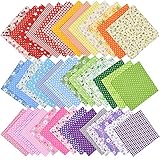
- 42 pieces 9.8 inches x9.8 inches (25cm x 25cm), fabric patchwork in 6 different color series, 7 pieces in each color, the sufficient quantity and bright colors will meet your various sewing needs in daily life,
- Material: 100% High Quality Cotton which is sweat and absorb moisture, environmentally friendly, soft, soft and breathable and it is safe for our health, suitable for all seasons. Color is Red/Pink/Yellow/Green/Blue/Purple.
- Vivid pattern design: we provide you 42 different floral patterns on patchwork bundles, which allow you to choose and mix them to decorate different fabric, the patterns are colorful and elegant, will enhance the whole effect.
- the set of quilting squares are easy to sew on. The precut squares are convenient for you to make various crafts or small quilting projects.
- Wide range of uses: Suitable for bag, wallet, purse, baby clothes, quilting patchwork, kids bedding, quilts, costumes, hand puppets, face masks, tablecloths, decorations, doll dresses, tissue holders, patchwork quilts for presents, quilt blocks, pillow covers, cushion covers and any DIY sewing craft projects.
How many fat quarters are in one yard?
One yard of suitable quilting fabric, commonly about 42 to 44 inches wide, can produce four nominal fat quarters. The final usable size may be reduced by selvages, trimming, crooked cuts, or fabric shrinkage.
How many fat eighths are in a fat quarter?
One fat quarter produces two fat eighths. Depending on the convention, those may be approximately 9 × 21–22 inches or approximately 11 × 18 inches.
Can I use a fat quarter instead of a fat eighth?
Usually, yes, if using extra fabric is acceptable and the grain or print direction works. The reverse is not safe: a fat eighth contains approximately half the area of a fat quarter.
Do these 3 things before closing this tab:
1Repair Windows errors before they cause bigger problems2Scan for outdated or missing drivers - takes under a minute3Clear out junk files and repair common Windows errorsWhy is my fat quarter 18 × 21 instead of 18 × 22 inches?
The difference usually reflects the width of the original fabric, selvages, trimming, or the seller’s measurement convention. Fabric about 42 inches wide commonly produces an 18 × 21-inch fat quarter, while fabric about 44 inches wide commonly produces an 18 × 22-inch cut.
Are fat eighths always 9 × 22 inches?
No. The 9 × 21 or 9 × 22-inch format is common, but some references and patterns use 11 × 18 inches. Check the pattern or product listing, especially when a piece must fit closely.
Can I wash fat quarters before using them?
You can, but it is a trade-off rather than a universal requirement. Washing may reduce later shrinkage and remove excess dye, but it can also cause fraying, distortion, and loss of usable size. If the pattern relies on a close precut measurement, press and measure the unwashed fabric first or buy extra fabric.
Can fat quarters be used for clothing?
They can be useful for small garment details, patch pockets, color blocking, doll clothing, and accessories. Most full-size garments require yardage because they need longer continuous pieces.
What is the difference between a fat quarter and a half yard?
A fat quarter is approximately 18 × 21–22 inches. A half yard is approximately 18 × 42–44 inches, so a half yard contains roughly two fat quarters’ worth of area but provides much more length. A half yard is often better for borders, long strips, or repeated pieces.
How do I cut a fat quarter from yardage?
For fabric about 44 inches wide, cut 18 inches along the length of the bolt to make an 18 × 44-inch half-yard section. Cut that section across its width at approximately 22 inches to create two fat quarters, each about 18 × 22 inches.
The Bottom Line
Remember: a fat quarter is approximately 18 × 21–22 inches, and a fat eighth is approximately 9 × 21–22 inches or 11 × 18 inches. The word fat describes the wider shape, not fabric quality or thickness.
For reliable substitutions, compare the actual dimensions and cutting orientation rather than fabric area alone. Measure the precut, account for selvages and pinked edges, and check the pattern before cutting.
Crashes, No Sound, or Screen Glitches?
Random freezes, missing sound and display glitches usually trace back to one bad driver. Find and replace yours safely.Free scan · under a minutePC Slower Than It Used to Be?
A free scan shows the junk files, broken settings and background clutter dragging Windows down - then fixes them in one click.Free scan · Windows 10 & 11Quick Recap

Product prices and availability are accurate as of the date/time indicated and are subject to change. Any price and availability information displayed on Amazon at the time of purchase will apply.




